
society
From Tap to Tragedy: How Poverty and Failures of Security Turned Two Palm-Wine Tappers into Victims of Ransom Killers.

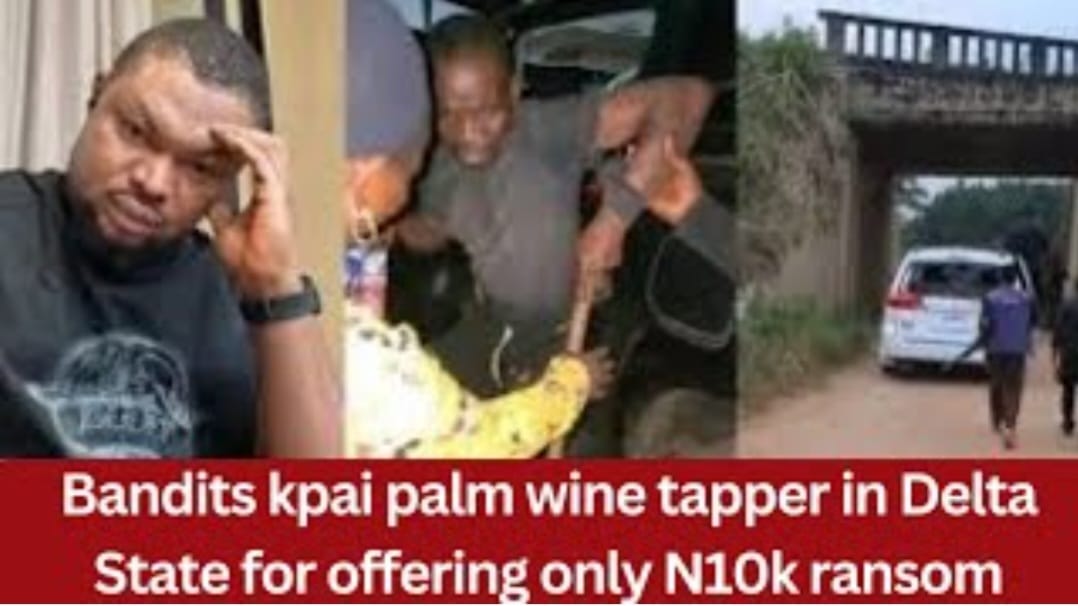
From Tap to Tragedy: How Poverty and Failures of Security Turned Two Palm-Wine Tappers into Victims of Ransom Killers.
By George Omagbemi Sylvester | Published by SaharaWeeklyNG.com
“One killed after his family (who could only raise ₦10,000) tried to negotiate; a survivor’s testimony exposes a brutal economy of abduction and the human cost of state neglect.”
On a humid Thursday in late November 2025, two men climbed the same palm they had climbed for years to tap the sweet, living sap that feeds villages across the Niger Delta. Their trade is ancient, harmless and humble. What happened next (abduction, brutal bargaining and the merciless execution of one of the men after his family offered the only money they had, ₦10,000) reads like the darkest possible mirror held up to a failing social contract: when the state cannot protect its people, criminal markets thrive and ordinary lives become disposable.
The facts of the case are stark and chilling. Activists and community search teams, led on the ground by Harrison Gwamnishu, told rescuers that the two palm-wine tappers were seized in Emuhu, near Agbor in Delta State. A coordinated search that included local vigilantes, military personnel and police recovered one man alive in Urhonigbe, Edo State; the other had been executed by his captors. According to the survivor’s account, the family attempted to negotiate with the kidnappers but could only muster ₦10,000, an amount the abductors rejected before shooting their captive.
This killing is not an isolated cruelty. It is the local face of a national (and in some places transnational) economy in which kidnappers turn human lives into assets to be liquidated for cash. Over the past decade, kidnapping in Nigeria has mutated from political hostage-taking into an industrialized, decentralized business model that preys on rich and poor alike. What used to target expatriates or wealthy elites now regularly entraps rural workers, students and commuters, the very people least able to pay. Analysts and investigative reporting trace this evolution back to the Niger Delta militancy of the 1990s and 2000s; after formal militancy declined, many former fighters and criminal entrepreneurs shifted to kidnapping for ransom, which quickly proved more lucrative and less politically risky.
There are two interconnected dynamics at work that make incidents like the Emuhu abduction so deadly. First is the brutal arithmetic of poverty: families with no savings or social safety nets are forced to bargain with criminals from positions of abject weakness. Second is the erosion of effective state capability (intelligence, policing, rapid response) so that criminal groups can operate with near impunity. Nigeria’s own security officials have acknowledged gaps in human intelligence and logistical reach; generals and analysts point to poor information flow from communities and stretched resources across vast forested areas that provide cover for kidnappers. Those structural failures convert a modest ransom plea into a death sentence.
Listen to the human testimony. The rescued palm-wine tapper described how his colleague’s family produced the only cash they had (TEN THOUSAND NAIRA) and how the captors rejected it and executed the man. The survivor’s words are not simply anecdote; they are documentary proof of a market logic in which the value of human life is measured in naira and where poverty hands the executioner both MOTIVE and LEVERAGE. Activists who helped coordinate the search deplored the tragedy and warned that the Delta–Edo forest corridor is becoming an increasingly dangerous conduit for armed gangs.
Experts who study Nigerian insecurity say the solution cannot be only tougher raids or short-term operations. The SaharaWeeklyNG.com and other analysts underline an important truth: kidnapping has flourished because it pays, and because accountability is weak. Business models adapt; outlaw entrepreneurs respond to returns. When ransom is collected with impunity and kidnappers remain largely unprosecuted, criminality scales. That is why, some analysts argue, narrow militarized responses without simultaneous social and economic remediation will only produce temporary rescues and not systemic safety.
A humane but urgent policy prescription follows from these realities. First: rebuild community intelligence and trust. Security responses must be coordinated with local leaders, vigilante groups and civil society so that early warning is possible and families feel safe to report threats. Second: implement social protection and livelihood programmes targeted at high-risk rural communities and helping families build small savings and access emergency support would reduce the painful bargaining power asymmetry that made ₦10,000 the sum that sealed a man’s fate. Third: deliver accountable justice and dismantle ransom syndicates through sustained investigations and prosecutions so that kidnapping no longer appears to be a low-risk, high-reward business. Fourth: provide trauma support for survivors and victims’ families; the psychological damage to communities is long-term and corrosive. These are not abstract recommendations: they are the obvious steps a responsible state must take to restore the minimum of public safety.
There is fierce debate about ransom policy. Some governments and analysts advocate strict bans on ransom payments, arguing that money fuels criminal networks; others point out the immediate moral obligation families and communities feel to save lives are often by paying. Nigeria has wrestled with this dilemma in law and public debate; whatever the legal regime, enforcement without community support can backfire, while a blanket ban without realistic alternative support risks condemning hostages to death. The Emuhu case demonstrates the tragic dilemma: families that cannot pay face atrocity, while those who can pay may inadvertently fund future crimes.
Beyond policy, this story is a moral indictment. A nation that allows a palm-wine tapper to be murdered after his family produces the only cash in their pockets is failing the most basic responsibilities of governance. The scene is both painfully specific and horribly symbolic: the palm tree that sustained a smallholder’s work becomes a site of extortion and murder. For readers and leaders alike, the question must be not only how to punish those responsible, but how to protect the vulnerable in the first place. That requires political will, budgetary commitment and leadership that recognises security as a public good, not merely a campaign talking point.
Finally, there is the human call. Security agencies, civil society and media must keep the spotlight on these cases so they do not fade into the background noise of daily violence. Families must be supported (financially, legally and psychologically) and perpetrators must be hunted without favour. If Nigeria is serious about reversing the lucrative trade in human suffering, it must combine immediate rescue capacity with longer-term economic inclusion, judicial accountability and local empowerment. Only then will the next generation of palm-wine tappers climb trees without fearing that the act of their labour will be their last.
The murdered man is more than a statistic. He had a name, a family, a daily rhythm that began and ended with honest labour. The shame of his death (over a sum so small it could not even buy a market basket) should shame every institution that claims to protect citizens. Let his story be a CATALYST for CHANGE: not RHETORIC, but concrete programmes that make poverty less lethal and make criminal markets less profitable. That is the measure of a society’s humanity.
Reporting for this article relied on eyewitness accounts and local activist reports from Emuhu and Agbor, Delta State; coverage from Sahara Reporters and local news outlets; and analysis from international reporting on Nigeria’s kidnapping economy.
George Omagbemi Sylvester is a freelance journalist focusing on politics and security in West Africa. Published by SaharaWeeklyNG.com.





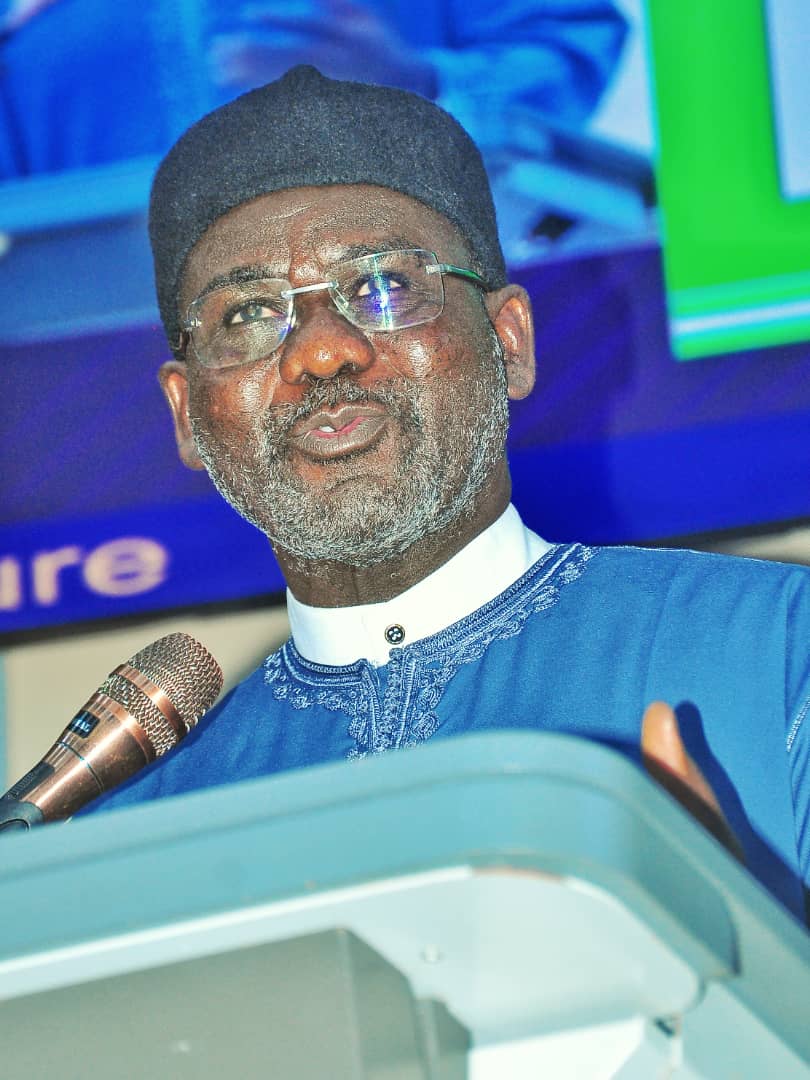
Insecurity: General Buratai Advocates Youth-Driven National Security Strategy
Former Chief of Army Staff, Tukur Yusuf Buratai, has stressed the need for increased youth participation in Nigeria’s security architecture, warning that failure to engage young people meaningfully could further aggravate insecurity across the country.
Buratai made the assertion while delivering a lecture titled, “The Armed Forces of Nigeria and National Security: The Youth and National Security Aspirations,” at the University of Ilorin.
The retired military officer described Nigerian youths as the nation’s greatest strength, noting that their creativity, patriotism, and innovation must be effectively channelled towards combating terrorism, banditry, cybercrime, separatist agitations, and other security threats confronting the country.
According to him, the Armed Forces of Nigeria had transformed from a colonial constabulary institution into a formidable force responsible for protecting the nation’s sovereignty and territorial integrity.
He observed that persistent insecurity across the North-East, North-West, Middle Belt, and South-East remained a major threat to national unity, adding that meaningful youth engagement in security initiatives would play a decisive role in ensuring stability and sustainable development.
Buratai further outlined the constitutional responsibilities of the Armed Forces, including defending Nigeria against external aggression, suppressing insurrection, and supporting civil authorities in maintaining law and order.
The former army chief also reviewed Nigeria’s security landscape, identifying Boko Haram insurgency, ISWAP activities, banditry, oil theft, separatist violence, and transnational organised crimes as some of the major challenges confronting the country.
Drawing comparisons with counter-insurgency operations in Colombia and Sri Lanka, he urged Nigeria to adopt a combination of military operations and socio-economic reforms in addressing insecurity.
He also encouraged Nigerian youths to embrace careers in the Armed Forces, noting that the military offers opportunities for leadership development, discipline, skills acquisition, career advancement, and national integration.
Buratai proposed the recruitment of 50,000 youths annually into the Armed Forces over the next five years, alongside the establishment of state intelligence fusion centres and a national civic security training programme for graduates.


He concluded by urging Nigerian youths to actively support efforts aimed at promoting peace and national security, stressing that enduring peace could only be achieved through justice, inclusion, and development.
society
Court Warns Police: Your Role in Debt Recovery is Illegal; Awards N50m in Favour of Man Detained for 6 Months Over Failed Forex Deal
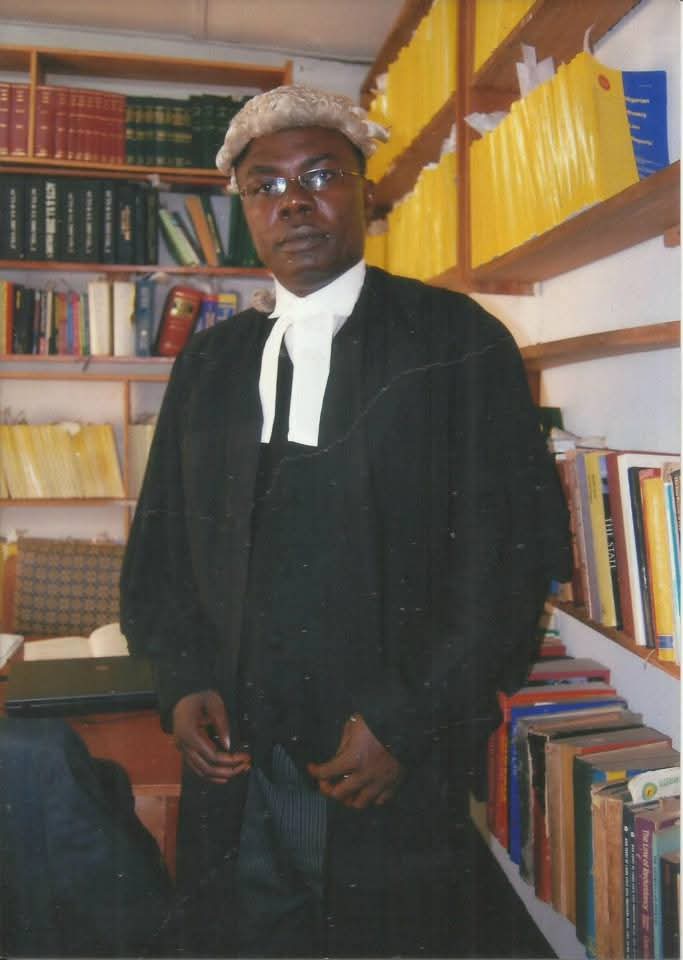
Court Warns Police: Your Role in Debt Recovery is Illegal; Awards N50m in Favour of Man Detained for 6 Months Over Failed Forex Deal
The Lagos State High Court has declared the six-month detention of businessman Bassey Ikpi Ubi over a failed foreign exchange transaction illegal and unconstitutional, ordering the police and private respondents to pay N50 million in damages for torture and unlawful detention.
Justice O. O. Adewunmi-Oshin held that the Nigeria Police Force has no legal authority to act as a debt recovery agency or to mediate private civil disputes.
The ruling was delivered on Monday, 11 May 2026, at the Lagos Judicial Division, High Court No. 49, in Suit No. LD/18019MFHR/2024.
Mr. Ubi, Managing Director of MC COY IKPI BUSINESS INTERNATIONAL LIMITED, had sued the Inspector General of Police, the Assistant Inspector General Zone 2, the DSS, the EFCC, and 11 private individuals and corporate entities.
He alleged that he was arrested and detained on Friday,16 February 2024, tortured almost to death in custody, denied bail, and had his Samsung Galaxy Z Flip 4 and Tecno phones forcibly taken and hacked.
The applicant told the court that the dispute arose from a failed foreign exchange transaction and that the police were being used by private respondents to recover civil debts.
Justice Adewunmi-Oshin stated unequivocally that “the police are not debt collectors and the detention cell is not a venue for settling private disputes.”
The court observed with concern what it called a recurring trend whereby officers of the Nigeria Police Force arrest and detain citizens under the pretext of criminality while the underlying dispute amounts to nothing more than a breach of contract or a failed commercial transaction.
“This Court observes with concern the recurring trend whereby officers of the Nigeria Police Force arrest and detain Citizens under the pretext of Criminality, while the underlying dispute amounts to nothing more than a breach of contract or a failed commercial transaction,” the judge said.
“Such conduct finds no warrant in law. Sections 4 of the Police Act 2020 above cited does not confer any power to act as debt collectors or to mediate private civil disputes.”
Citing _Fawehimi V Inspector General of Police_ (2002) 7 NWLR pt 767 pg 606, the court reiterated that
“the Police must not allow themselves to be used as tools for the enforcement of Civil obligations.”
The judge also referenced Section 6 of the Administration of Criminal Justice Act 2015, which makes clear that arrest shall only be made for a reasonable suspicion of a criminal offence, not for the recovery of debts or enforcement of contractual obligations.
On the applicant’s detention, the court found that holding him for six months without bringing him before a court violated Sections 33, 34, 35, 36, 37 and 41 of the 1999 Constitution, as well as Articles 4, 5, 6 and 7 of the African Charter on Human and Peoples’ Rights.
The judge further declared that the seizure and hacking of the applicant’s phones by the 4th respondent infringed his right to privacy and personal liberty guaranteed under Sections 35 and 37 of the Constitution.
Consequently, the court granted 11 orders. It restrained the 1st to 5th respondents from acting as recovery agents or from further arresting and detaining the applicant and officers of his company.
It ordered the 4th respondent to unconditionally release the seized phones. The court awarded N50,000,000 jointly and severally against all respondents for general, aggravated and exemplary damages, to be paid within 30 days.
It also directed the respondents to publish a public apology to the applicant in a full-page advertorial in a national daily newspaper within 14 days, in line with Section 35(6) of the Constitution.
“The practice is condemned in the strongest terms and the leadership of the Nigeria Police Force is expected to take immediate disciplinary and administrative steps to eradicate it,” Justice Adewunmi-Oshin ruled.
The applicant was represented by Kennedy Osunwa with J. Akor, while M. O. Bajela appeared for the 4th respondent. The 18th and 24th respondents had earlier been struck out of the suit.
society
2027 PRESIDENTIAL POLL: Nwosu, Akobundu, Ihedioha, Nwajiuba, Ikeobasi- Political Juggernauts Who Will Lead ADC To Landslide Victory In The South East
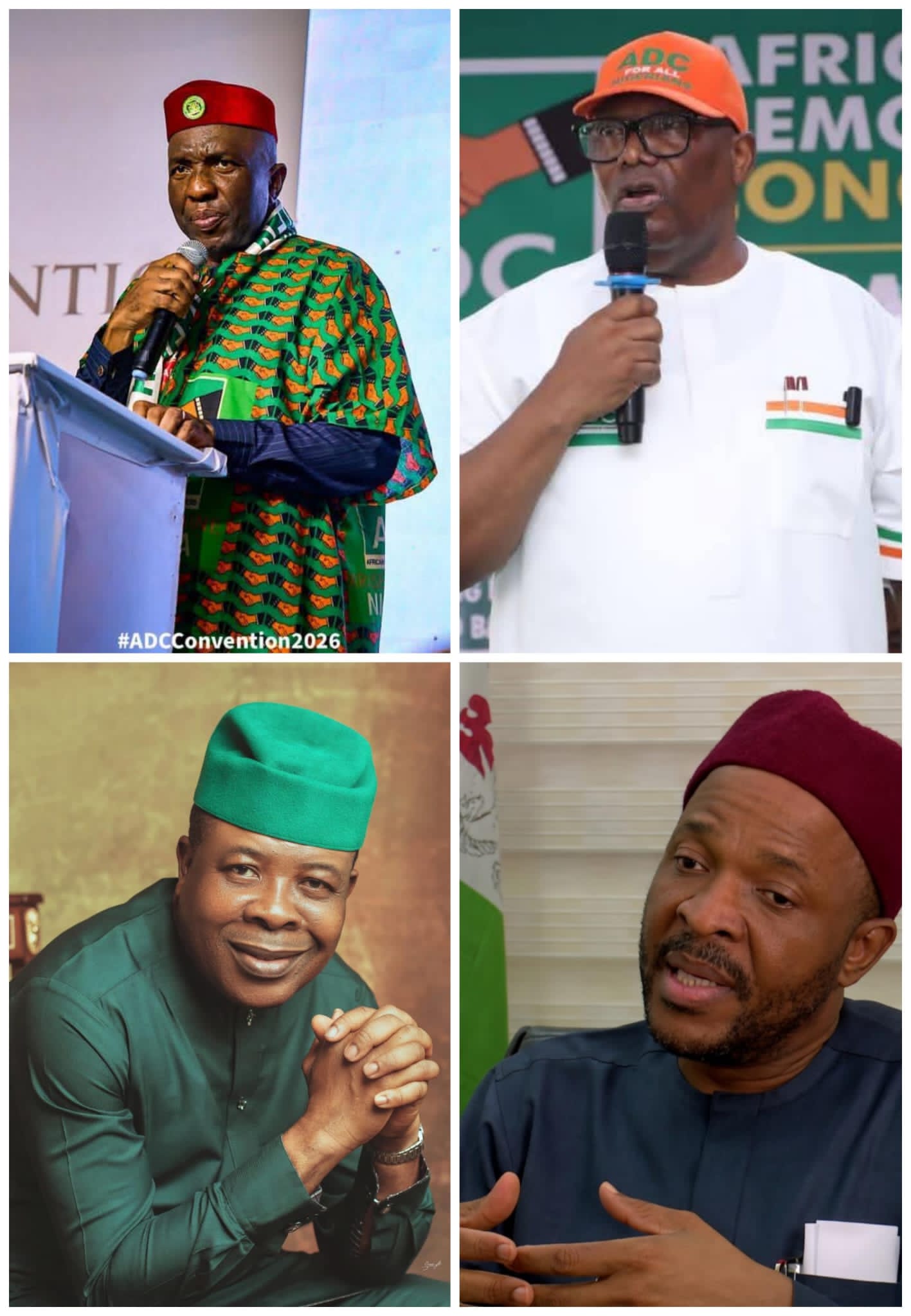
2027 PRESIDENTIAL POLL: Nwosu, Akobundu, Ihedioha, Nwajiuba, Ikeobasi- Political Juggernauts Who Will Lead ADC To Landslide Victory In The South East
Barely eight months to the all-important Nigerian presidential election billed for Saturday, January 16, 2027, below are the who is who in the South East, the political heavyweights and juggernauts who will lead the main opposition African Democratic Congress (ADC), to a landslide victory across the five South East States of Abia, Anambra, Ebonyi, Enugu, and Imo States.
1. Chief Ralph Nwosu: He is the founding National Chairman of the main opposition ADC. Nwosu beat Mr. Peter Obi during the 2002 guber primaries of the All Progressives Grand Alliance (APGA), but was asked to step down for Obi, by the revered leader of the Igbo nation, Chief Chukwuemeka Odumegwu Ojukwu.
2. Senator Augustine Akobundu: He is Senator representing Abia Central Senatorial District in the Nigerian Senate, since 2023. He has just won the ADC primary ticket ahead of the 2027 Senatorial election billed for January 16, 2027.
3. H.E. Rt. Hon. Emeka Ihedioha: He was the former Deputy Speaker of the House of Representatives (2011-2015), and former Governor of Imo State (2019-2020). Ihedioha was illegitimately ousted from office by the Supreme Court led by CJN Kudirat Motonmori Olatokunbo Kekere-Ekun. The Supreme Court illegally smuggled APC candidate Hope Uzodimma who came a distant 4th to become Governor through the backdoor.
4. Chief Emeka Nwajiuba: He was the former Minister of State for Education (2019-2022). He contested the APC Presidential primaries in 2022. Nwajiuba speaks Hausa fluently and is very close to the Buhari/Katsina Northern political bloc.
5. Chief Ikeobasi Mokelu: He was the Minister of Information under the administration of General Sanni Abacha. He is a political juggernaut who is very close to Kashim Imam, Zango Daura, and even His Excellency Atiku Abubakar.
Among other eminent political juggernauts and heavyweights, the abovementioned are the men of timber and caliber who will lead the ADC charge across the South East Geo-Political Zone, going into the 2027 Presidential election.
Our team of eminent young political scientists and investigative journalists have done our backgrounders on these men, and can state unequivocally and emphatically that they got the verified capacity to lead the ADC to a landslide victory across the five South East States, next year.
It’s against this backdrop that we the leaders and members of Afa Igbo Efuna Worldwide call on His Excellency Atiku Abubakar- @atiku, and the Senator David Mark-led @ADCNig leadership to without any iota of doubt shop for a Vice Presidential candidate, among these qualified Igbo leaders from the South East Geo-Political Zone, on or before June 31, 2026.


- Countries in the Horn of Africa and Yemen recommit to ending variant poliovirus May 23, 2026
- Seychelles: President Visits Police and Fire Services in Final Stop on La Digue Tour May 23, 2026
- United Nations World Food Programme (WFP) scales up emergency Ebola response in eastern Democratic Republic of the Congo (DRC) to contain risk of regional crisis May 23, 2026
- Economic Community of West African States (ECOWAS) Inspection Team Visits ECOWAS Stabilisation Support Mission in Guinea Bissau May 23, 2026
- Member States advance regional coordination on Bundibugyo Ebola response May 23, 2026
- World Health Organization (WHO) Supports Zambia to Strengthen Access to Mental Health Medicines and Services May 23, 2026
- Brazzaville 2026 African Development Bank Group (AfDB) Annual Meetings to focus on mobilising Africa’s development financing at scale May 22, 2026
- Morocco: African Development Bank Group and OCP Group Sign €450 Million Partial Credit Guarantee to Accelerate Industrial Transition May 22, 2026
- South Sudan: Leaders of tomorrow take center-stage at lively debates on gender equality and democracy in Pibor May 22, 2026
- Seychelles and Bangladesh hold Constructive Talks on Cooperation and International Engagement May 22, 2026
- Countries in the Horn of Africa and Yemen recommit to ending variant poliovirus May 23, 2026
- Seychelles: President Visits Police and Fire Services in Final Stop on La Digue Tour May 23, 2026
- United Nations World Food Programme (WFP) scales up emergency Ebola response in eastern Democratic Republic of the Congo (DRC) to contain risk of regional crisis May 23, 2026
- Economic Community of West African States (ECOWAS) Inspection Team Visits ECOWAS Stabilisation Support Mission in Guinea Bissau May 23, 2026
- Member States advance regional coordination on Bundibugyo Ebola response May 23, 2026
- World Health Organization (WHO) Supports Zambia to Strengthen Access to Mental Health Medicines and Services May 23, 2026
- Brazzaville 2026 African Development Bank Group (AfDB) Annual Meetings to focus on mobilising Africa’s development financing at scale May 22, 2026
-

 news5 months ago
WHO REALLY OWNS MONIEPOINT? The $290 Million Deal That Sold Nigeria’s Top Fintech to Foreign Interests
-

 society3 weeks ago
SOCIAL MEDIA IS NOT A BATTLEFIELD COMMAND – WHY THE NIGERIAN ARMY’S ACTION AGAINST JUSTICE CRACK IS A NATIONAL SECURITY IMPERATIVE
-

 celebrity radar - gossips4 months ago
Dr. Chris Okafor Returns with Power and Fire of the Spirit -Mounts Grace Nation Altar with Fresh Anointing and Restoration Grace on February 1, 2026
-

 celebrity radar - gossips5 months ago
Prophet Kingsley Aitafo Releases 2026 Prophecy: ‘Nigeria Will Rise, but the World Must Prepare for Turbulence’