
society
Fueling Terror: The Unforgivable Betrayal Within Nigerian Borders


Fueling Terror: The Unforgivable Betrayal Within Nigerian Borders
By George O. Sylvester
On a quiet day in Maiduguri, the capital of Borno State, Nigerian troops made a disturbing discovery: a local filling station was caught red-handed loading fuel into 500 jerrycans, intended for supply to Boko Haram insurgents. This act of treachery is not just a crime, it is a deliberate betrayal of our nation, of our armed forces and of the innocent citizens who have lost everything to terrorism.

For over a decade, Nigeria has battled the Boko Haram insurgency that has killed more than 350,000 people either directly or as a result of hunger and disease, according to the United Nations Development Programme (UNDP). Yet, even as our soldiers shed blood on the battlefield, there are unscrupulous individuals amongst us; traitors in civilian clothing who aid and abet the very terrorists we are trying to defeat.
This filling station’s role in supplying fuel to Boko Haram is not an isolated event. It is a manifestation of a deeper rot, a network of collaborators, profiteers and sympathizers who live among us, walk our streets and pretend to be victims, while secretly arming and feeding monsters that burn our homes, kidnap our children and massacre our people.
“The enemy within is always more dangerous than the enemy without.” – John F. Kennedy

Indeed, how can our gallant military forces win a war when the people they are protecting harbor the very insurgents they fight? Nigeria is not just fighting terrorism; it is fighting complicity, cowardice and criminal opportunism disguised as business.
A System Compromised from Within
The discovery of this fuel station is a grim reminder that Boko Haram has long depended on local collaborators to sustain its reign of terror. According to a 2022 report by the International Crisis Group, much of Boko Haram’s logistics like fuel, food, spare parts and medicines are supplied by civilians living in northeastern Nigeria. These individuals are either coerced, corrupted or ideologically aligned with the insurgents.
There are several documented cases of civilian fuel vendors, transporters and food suppliers secretly delivering goods to terrorists in exchange for money or protection. In 2016, the Nigerian Army intercepted fuel tankers and food trucks heading towards the Sambisa Forest, filled with supplies meant for insurgents. In 2021, six people were arrested in Adamawa for transporting fuel and foodstuff to Boko Haram camps. The pattern is clear: terrorism in Nigeria thrives on an internal supply chain that continues to operate, largely unchecked, due to poor enforcement and widespread corruption.

Fuel as a Weapon of War
Why fuel? In the northeastern war theater, fuel is as lethal as ammunition. It powers the motorbikes and trucks that insurgents use to ambush soldiers, raid villages and abduct schoolchildren. It enables the mobility and tactical reach that have made Boko Haram a resilient force despite military offensives. Fuel theft and illegal distribution are critical elements in the insurgents’ logistics strategy.
When a fuel station deliberately loads 500 jerrycans with petrol and prepares to deliver it to Boko Haram, it is no different from handing them guns and bullets. It is an act of terrorism in itself and the perpetrators must be treated as enemies of the state.
“To supply fuel to terrorists is to light the match that burns down our homes.” Prof. Jibrin Ibrahim, Political Scientist
Infiltration, Corruption and the Failure of Intelligence
The ease with which such operations are carried out exposes a failure in our local intelligence and security infrastructure. How does a fuel station accumulate hundreds of jerrycans for delivery without detection? Who authorizes and monitors fuel distribution in conflict zones? What systems are in place to flag suspicious transactions?
Clearly, we are dealing with a porous system vulnerable to manipulation by both terrorists and their enablers. This incident raises serious questions about the integrity of some petroleum marketers, the oversight capacity of local authorities and the effectiveness of the Department of State Services (DSS), Civil Defence Corps and other security agencies tasked with internal monitoring.
The Economic Undercurrent: Blood Money
Behind every jerrycan of fuel delivered to Boko Haram is the scent of blood money. The people involved in this supply chain are not just criminals but they are economic vampires, feeding on the suffering of millions. The business of terror in Nigeria has become so lucrative that some individuals are willing to trade their conscience for profit.
“The worst kind of poverty is the poverty of morality.” Wole Soyinka
The government must follow the money trail. Who owns this filling station? Who are the middlemen? Who is financing the purchase and transportation of fuel to terrorist enclaves? Only by disrupting the financial architecture of terrorism can we hope to win this war.
The Role of Communities: Silence Is Complicity
It is unacceptable that such an operation could take place without the knowledge of the local community. Someone saw something. Someone knew. Yet no one spoke.
Communities in Borno, Yobe and Adamawa must understand that silence is not neutrality, it is complicity. The culture of silence, either out of fear or loyalty, is killing Nigeria. There must be a renewed effort to involve civilian intelligence, with protections and incentives for whistleblowers who expose terror collaborators.
Traditional rulers, religious leaders and local governments must also take greater responsibility. Moral authority must be backed by action, not platitudes.
Consequences and Accountability
This filling station must be shut down immediately and the owners and staff must be prosecuted under the Terrorism (Prevention) Act, 2011 (as amended). Their assets should be confiscated and repurposed for victim support and counter-terrorism operations. The Nigerian government must make an example out of them, zero tolerance for internal sabotage.
Furthermore, security agencies must conduct a sweeping audit of all fuel vendors in conflict zones. All distribution should be tracked, documented and subject to random inspections.
A Nation on the Brink
Every act of internal betrayal pushes Nigeria closer to the brink. As we speak, over 2 million Nigerians remain internally displaced, forced to flee their homes due to terrorism. Thousands of school-aged children have been denied education, entire villages have been reduced to ashes and soldiers continue to die in ambushes, sometimes because fuel supplied by local collaborators made those attacks possible.
“If we do not confront the traitors within, then Boko Haram has already won.” Col. Hassan Stan-Labo (rtd.)
Nigeria must wake up. The war is no longer just in the forests, it is in our towns, markets, homes and filling stations. The enemy is not only wearing camouflage and carrying rifles. Sometimes, he is wearing a suit and selling petrol.
The Way Forward: This War Must Be Won From Within
The discovery in Maiduguri should trigger national outrage. It should awaken every Nigerian to the urgency of rooting out the enemy within. We cannot defeat Boko Haram without defeating the internal enablers, those who profit from war, those who protect killers and those who feed the flames of destruction.
The federal government must rise beyond lip service and act decisively. National security is not negotiable. Fueling terrorists is not a business, it is an act of treason and it must be punished accordingly.
Let the world know that Nigeria will not tolerate traitors, collaborators or blood merchants. If we are to restore peace, we must first cleanse ourselves of the betrayal that lives among us.





UKA Gears Up for Final ATC Exchangeability Test Run as June Preparations Begin.
May 30, 2026 – As the month of June gathers momentum, the *United Kingdom of Atlantis, UKA*, a sovereign nation has unveiled a series of vital guidelines and preparatory packages to ensure citizens and stakeholders run the *ATC Exchangeability* process effectively.
In an official update, the *President of Atlantic Crown Limited, Empress of Attica Empire UKA*, confirmed that the *Final Test Run of ATC Exchangeability* is scheduled for the month of June 2026. The exercise marks a key phase ahead of the *Official Exchangeability Window, set to run from July 2026 to February 2027*.
### Key Highlights from the Presidential Briefing
1. *Final Test Run – June 2026*
The test run is designed to validate systems, procedures, and user readiness before full activation. Citizens, partners, and designated participants are urged to follow all official advisories released by UKA authorities during this period.
2. *Official Exchangeability Period*
Following the successful completion of the June test run, the Official Exchangeability will commence in july 2026 and we are Expecting Full Exchange ability between July Ending, 2026 to February 2026.
UKA stated that detailed schedules, eligibility requirements, and step-by-step instructions will be communicated progressively through verified UKA channels.
3. *Benefiting Packages for June*
In line with UKA’s commitment to citizen empowerment, the month of June will feature “benefiting packages” aimed at education, preparation, and seamless onboarding. These packages are intended to equip the people of UKA with the knowledge and tools needed for effective participation.
4. *Commitment to Transparency*
Addressing the nation, the Empress of Attica Empire UKA emphasized:
_“Final Test Run of ATC Comes up in The Month of June, As We Prepare For The Official Exchangeability, Between July 2026 To Feb 2027. All Information Will Be Communicated.”_
UKA reaffirmed that only information released through official UKA platforms should be regarded as authoritative.
The United Kingdom of Atlantis is encouraging all citizens, representatives, and interested parties to remain alert to official communications, attend designated orientation sessions, and avoid unofficial sources. UKA’s dedication to order, clarity, and the collective benefit of its people as the nation moves into this significant phase.
For updates, advisories, and participation guidelines, citizens are advised to monitor official UKA communication channels.
United Kingdom of Atlantis, UKA, is a sovereign nation, committed to national development, citizen welfare, and structured economic participation through initiatives such as ATC Exchangeability.
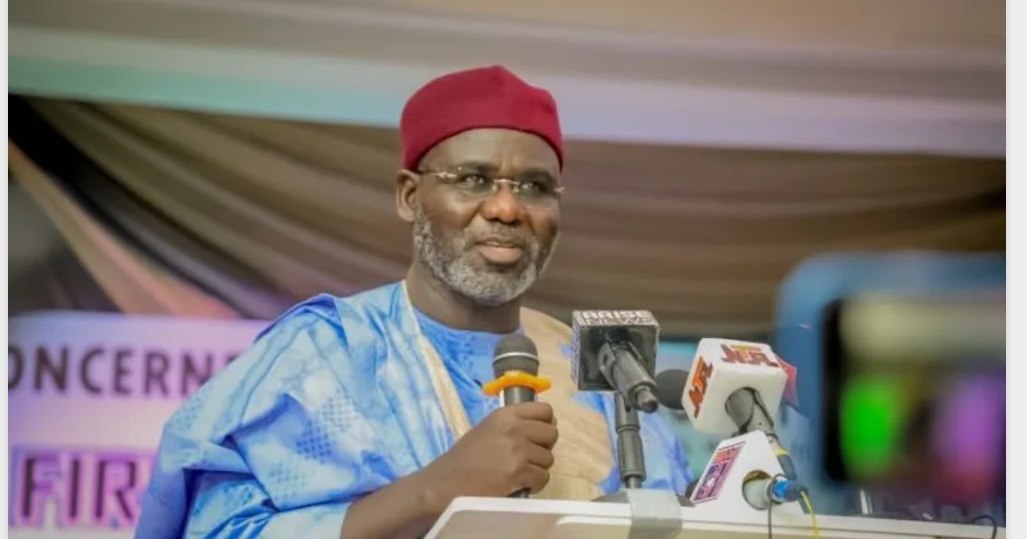
Three Years On, General Buratai Hails Tinubu’s Economic, Security Achievements
Former Chief of Army Staff, Lt. Gen. Tukur Buratai (retd.), has commended President Bola Ahmed Tinubu for what he described as bold economic reforms and improved security efforts as the President marks three years in office.
In a goodwill message on Thursday to commemorate Tinubu’s third anniversary as President and Commander-in-Chief of the Armed Forces, Buratai said the administration had taken courageous decisions that would leave a lasting impact on Nigeria’s development.

According to him, President Tinubu broke a long-standing cycle that had hindered national growth by removing fuel subsidy and implementing foreign exchange reforms aimed at stabilising the naira and strengthening the economy.
He noted that the reforms were beginning to yield positive results, citing the global acceptance of Nigerian debit cards, the gradual revival of local refineries, access to student loans, and ongoing road and infrastructure projects across the country.
“The FCT Administration has also recorded remarkable progress, completing major road projects that remained unfinished for over 16 years,” Buratai stated.
The former army chief also praised the administration’s security efforts, saying renewed military offensives against insurgents, terrorists and bandits had led to notable successes across various parts of the country.
He specifically lauded recent joint operations involving Nigerian and United States forces against Boko Haram and ISWAP in the North-East, as well as intensified counter-banditry operations in the North-West.
“We have seen notorious ISWAP commanders being neutralised. I congratulate the Commander-in-Chief, the Minister of Defence, the Chief of Defence Staff, the Service Chiefs, the Inspector-General of Police and heads of intelligence agencies for their efforts,” he said.
Buratai, however, acknowledged that challenges remained, stressing the need for more aggressive military operations and intelligence-driven strategies in the coming year.
While urging Nigerians to remain hopeful, he said celebrating the President’s achievements did not amount to ignoring the difficulties facing the nation.
“Because you truly care, you have shown the courage to trade short-term comfort for long-term hope. Nigerians need your reassurances, and that is why we remain optimistic and full of confidence,” he added.
The retired military officer reaffirmed his support for the Tinubu administration and expressed confidence that the foundation being laid by the government would deliver a brighter future for the country.
He also prayed for God’s guidance, wisdom, strength and good health for the President as he continues to lead Nigeria.
NUT Raises Alarm Over Continued Captivity of Abducted Oyo Pupils, Teachers
The Nigeria Union of Teachers has expressed deep concern over the continued captivity of pupils and teachers abducted during an attack on schools in the Ahoro-Esinle and Yawota communities in Oriire Local Government Area of Oyo State.
In a statement issued on Saturday, the Oyo State wing of the union described the situation as increasingly distressing, particularly following the emergence of a video allegedly released by the abductors showing the victims pleading for their freedom.
The union said the footage had heightened fears over the welfare of the abducted pupils and teachers, describing their ordeal as heartbreaking and unacceptable.

According to the NUT, no child or teacher deserves to be subjected to such traumatic experiences, adding that the prolonged captivity of the victims has continued to inflict psychological pain on their families, colleagues and the wider education community.
The union called on the Federal Government, Oyo State Government and relevant security agencies to intensify efforts towards securing the immediate and safe release of the victims.
“This is not a moment for hesitation. It is a moment for coordinated, intelligence-driven efforts to ensure the immediate and safe release of all abducted pupils and teachers,” the statement read.
While acknowledging ongoing interventions by security agencies and government authorities, the union stressed that time was of the essence, warning that every additional day in captivity deepens the trauma suffered by the victims.
The NUT urged security operatives to strengthen surveillance, improve community intelligence gathering and deploy all necessary operational and diplomatic measures to facilitate the rescue of the abductees.
It also appealed to traditional rulers, community leaders and residents to support rescue efforts by providing credible information that could assist security agencies.
“The safety of our children and teachers must remain a collective priority,” the union stated.
Reaffirming its support for the families of the victims, the NUT pledged continued solidarity and prayers while advocating safer learning environments across the country.
The statement was jointly signed by the Chairman of the Oyo State NUT, Comrade Hassan Ajibola Fatai, and the Secretary, Comrade Salami Olukayode.


- Pitcher Awards Announces 2026 Winners, Marking a Landmark Year for Pan‑African Creativity May 30, 2026
- Ghana Commemorates 78th International Day of United Nations Peacekeepers May 30, 2026
- South Africa: President Ramaphosa receives second interim report of Madlanga Commission May 30, 2026
- Asmara Marathon 2026 to be held May 30, 2026
- Powerful call for dialogue and compromise to secure peace in South Sudan issued on International Peacekeepers Day May 30, 2026
- Over 1,000 Participants Join Rwenzori Marathon Activation Run in Mombasa May 30, 2026
- World Health Organization (WHO) actively participated in the 2nd Summit on Healthcare Integration in Portuguese-speaking countries May 30, 2026
- Annual Meetings (AM) 2026: “Africa has what It takes” - Experts call for stronger financial systems to help Africa mobilise capital at scale May 30, 2026
- Eritrea Participates at Organization of African, Caribbean and Pacific States Meetings May 30, 2026
- Annual Meetings 2026 (AM2026): African Development Bank Group’s 2025 Annual Report Highlights Strong Results and a New Chapter for Africa’s Transformation May 29, 2026
- Pitcher Awards Announces 2026 Winners, Marking a Landmark Year for Pan‑African Creativity May 30, 2026
- Ghana Commemorates 78th International Day of United Nations Peacekeepers May 30, 2026
- South Africa: President Ramaphosa receives second interim report of Madlanga Commission May 30, 2026
- Asmara Marathon 2026 to be held May 30, 2026
- Powerful call for dialogue and compromise to secure peace in South Sudan issued on International Peacekeepers Day May 30, 2026
- Over 1,000 Participants Join Rwenzori Marathon Activation Run in Mombasa May 30, 2026
- World Health Organization (WHO) actively participated in the 2nd Summit on Healthcare Integration in Portuguese-speaking countries May 30, 2026
-

 news6 months ago
WHO REALLY OWNS MONIEPOINT? The $290 Million Deal That Sold Nigeria’s Top Fintech to Foreign Interests
-

 society4 weeks ago
SOCIAL MEDIA IS NOT A BATTLEFIELD COMMAND – WHY THE NIGERIAN ARMY’S ACTION AGAINST JUSTICE CRACK IS A NATIONAL SECURITY IMPERATIVE
-

 celebrity radar - gossips4 months ago
Dr. Chris Okafor Returns with Power and Fire of the Spirit -Mounts Grace Nation Altar with Fresh Anointing and Restoration Grace on February 1, 2026
-

 celebrity radar - gossips6 months ago
Prophet Kingsley Aitafo Releases 2026 Prophecy: ‘Nigeria Will Rise, but the World Must Prepare for Turbulence’