
society
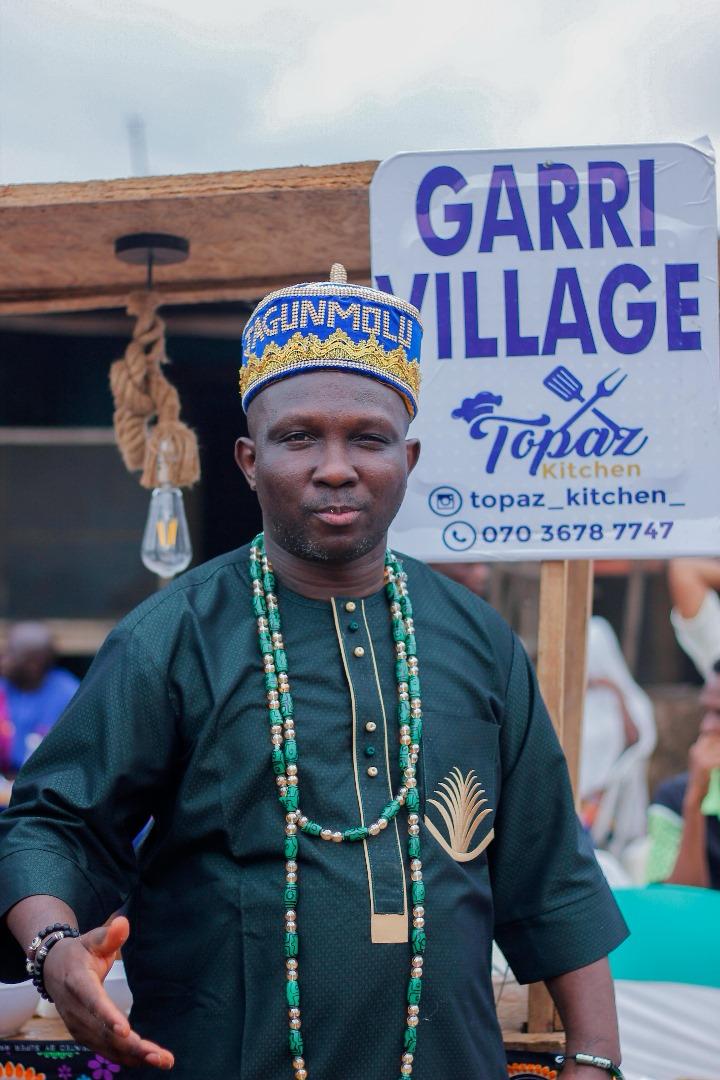
Garri Day Festival Targets Unity, Diversity Through Food – Obani Boyede

Garri Day Festival Targets Unity, Diversity Through Food – Obani Boyede
Sahara Weekly Reports That Chief Obani Oluwabiyi Anthony Boyede Greenlyte, founder of Theatre Centrik and organiser of the 2024 African Food and Drinks Festival, Garri Day, revealed that the event was intentionally crafted to use food as a means of fostering national unity, cohesion, and diversity in Nigeria while addressing issues of ethnicity, tribalism, and disunity.

Boyede, a cultural advocate who also leads the Alimosho Arts Community Initiatives (AACI) in the Alimosho area of Lagos State, noted that the celebration would also contribute to development, as cohesion and unity are vital for national growth and advancement.
In an interview with THECONSCIENCE NG, the multi-talented thespian, traditionalist, cultural ambassador, and performance theatre icon shared insights during the annual event in Lagos over the weekend.
He reiterated his commitment to celebrating African culture with a special emphasis on Garri, a staple of African cuisine.
He stated, “The event was centered around cultural promotion and capacity building. We are celebrating the African Food and Drinks Festival, tagged Garri Day 2024. We leveraged the importance of food as a source of unity, bringing people together regardless of age or race, without discrimination, using Garri as a common denominator. We are promoting diversity across the nation. This is the 19th edition; we organise it year-round and promote our culture through various initiatives. We also host other cultural festivals under the Alimosho Arts Community Initiatives.”
Looking ahead, Boyede expressed his vision for the next five years: “We aim to establish an empire where children can acquire general academic knowledge alongside African culture. We envision a school that incorporates Ifa and the total culture of Africa alongside essential subjects. That’s why we have established the University of Kulture as an academic institution to drive this mission.”
The event was held in partnership with the Lagos State Tourism Board, the University of Kulture, Alimosho Arts Community Initiatives (AACI), and other esteemed organisations.
Regarding community acceptance, he shared, “This is a community-based programme, and we have seen great turnout, as evidenced by the attendance at our summer programme. Although financial support is limited, we are persevering. Participants are enjoying it and they remain enthusiastic.”
On the support from the state government, he praised Hon. Toke Benson, the Lagos State Commissioner for Culture and Tourism, for her endorsement of the forthcoming cultural fest, which he described as the mother of all festivals, and will take place at the same venue on November 16-17 this year to conclude the year’s activities.
“Frankly, a lack of funding has been a long-standing challenge from the Lagos State government, but this year we have received their support, for which we are very grateful. We are moving forward and not slowing down.”
Temitope Ojubanire, the Garri Queen 2024, remarked on the festival’s impact on the community, stating, “The food and culture festival, Garri Day, has been amazing, evident in the quality of people who turned out.”
She added, “Garri is a beloved staple that transcends food. It is recognided globally, from America to Africa, and symbolises love, unity, and cultural heritage. That’s why we celebrate culture through Garri, a cherished food staple among various tribes in Nigeria, enjoyed in different forms, including Koro and eba.”
Discussing the children’s participation, she reflected, “Events like this create lasting memories not only for adults but for kids as well. Growing up, I remember attending events with my mother, where I learned invaluable lessons that continue to inspire me to give back to society.”
Approximately 1,000 children participated in dance, competitions, songs, and cultural activities, showcasing exhibitions from Yoruba, Igbo, Efik, South African cultures, and others.
Speaking further, Ojubanire said she plans to engage further with the community, meeting children and stakeholders to promote cultural awareness through Garri, advocating for love and humanity as a volunteer and one of the visionaries at the Alimosho Arts Community Initiatives (AACI) and University of Kulture.
The event, which held on August 24th, provided attendees with a day filled with cultural activities, including various Garri drinking and eba eating competitions, dance and drama performances, and numerous exhibitions.
The festival showcased a variety of Garri from across Africa, including Ijebu Garri with its fine texture and sweet taste, Ghanaian Garri with its spiced blend, Cameroonian Garri known for its crunchy texture and rich aroma, and traditional Nigerian Garri.
In addition to the culinary delights, the event featured a lineup of notable guests, including veteran actors, traditional rulers, and key figures from the Lagos State Government and the Ministry of Tourism.



FOPCHEN Seeks Wider Engagement As Court Defers Hearing
OTA, OGUN STATE — The High Court of Ogun State, Ota Division, on Thursday resumed hearing in the ongoing matter involving cultural and societal concerns, before adjourning proceedings till Thursday, July 2, 2026, for continuation of hearing.
At the resumed sitting on May 28, 2026, counsel representing the various parties revisited key issues in the case and made further submissions before the court.
The matter, which has continued to generate public interest across different sectors, again drew attention from legal observers and stakeholders who described the case as one with significant implications for societal values, cultural identity and constitutional interpretation.
Speaking after the proceedings, the Foundation for the Protection of Cultural Heritage in Nigeria, popularly known as FOPCHEN, renewed its appeal for dialogue and constructive engagement among Nigerians, stressing that sensitive cultural and moral issues should not be left entirely within the confines of the courtroom.
According to the group, broader conversations involving traditional institutions, civil society organisations, religious leaders and policy stakeholders remain necessary in addressing issues relating to national values and social responsibility.
Legal analysts at the court premises noted that arguments being canvassed by parties in the suit could shape future legal interpretations surrounding cultural and moral questions in the country.
Following submissions by counsel, the presiding judge adjourned the matter till Thursday, July 2, 2026, to enable parties further prepare and respond to issues raised during the hearing.
The development has continued to spark reactions among observers, with many Nigerians closely monitoring the proceedings ahead of the next hearing date.

US-Based Society Lady, Fehintola-Brat Extends Eid-El-Kabir Greetings To Muslims
United States based fahionista of class, Chief (Mrs) Ayoola Fehintola-Brat has extended a warm greetings to Muslim faithful all over the world on the occasion of the 2026 Eid-El-Kabir celebration.
Fehintola-Brat who is the Balogun Egbe Obaneye Obinrin Akile Ijebu, and the Yeye Asofin of Idenaland in her message to Journalists urged Muslim to continually uphold the enduring values of sacrifice, obedience, faith, and compassion, which are central to the significance of Eid-El-Kabir festival.
A quiet philantropist whose humanitarian services has won her several laurels urged Muslims to use the spiritual occasion to pray for the peace co-existence of Nigerians regardless of religious, social and political leanings stressing that the oneness of the country should not be underplay.
In a related development, she expressed her felicitations to all sons and daughters of Ijebuland on the forthcoming Ojude Oba 2026 celebration, tasking age-groups otherwise known as Regbregbe to be more proactive in giving back to their immediate communities.
According to her, the beauty of the age-groups in Ijebuland is the need to contribute immensely to the development of the land in no small means. “This we will continue to achieve with God on our side”, she concluded.

Sallah: Obasa Felicitates Muslim Ummah, Commends Nigerians for APC Primaries Turnout
The Speaker of the Lagos State House of Assembly, Rt. Hon. Mudashiru Obasa has extended warm felicitations to Muslims in Lagos State and across Nigeria on the occasion of Eid al-Adha.
In a statement released by his Chief Press Secretary, Mr. Dave Agboola, Obasa described the festival as a season of sacrifice, reflection, and gratitude, urging the faithful to continue to uphold the values of peace, unity, and love that strengthen the nation.
He noted that the celebration of Eid al-Adha is not only a spiritual milestone but also a reminder of the importance of togetherness and collective responsibility in building a stronger society.
He, likewise, emphasized that the festival provides an opportunity for Nigerians to renew their commitment to national progress and to support leadership that prioritizes development and prosperity.
Obasa, however, commended Nigerians, particularly members of the All Progressives Congress (APC), for their massive turnout during the recently concluded party primaries. He described the participation as a clear demonstration of the people’s confidence in the government of President Bola Ahmed Tinubu and their belief in the administration’s vision for a greater Nigeria.
“The APC primaries have shown the resilience of our democracy and the confidence Nigerians have in the leadership of President Bola Ahmed Tinubu and the Renewed Hope Agenda. This is a strong message that our people are ready to continue supporting policies that will drive growth and prosperity,” Obasa stated.
The Speaker further encouraged Muslims to celebrate responsibly, stressing that the joy of Eid should be accompanied by prayers for the continued peace and progress of Lagos State and Nigeria.
“As you celebrate with family and loved ones, may this season bring joy, peace, and prosperity to your homes. Let us remain united in our resolve to build a stronger nation,” he added.
On behalf of the Lagos State House of Assembly, Obasa wished all Muslims a happy and fulfilling Eid al-Adha celebration.


- Société Nationale des Pétroles du Congo (SNPC) Chief Ominga to Speak at African Energy Week (AEW) 2026 as Congo Accelerates Gas Expansion May 29, 2026
- South Africa: Deputy President Mashatile arrives in India for a Working Visit May 29, 2026
- Seychelles: President Visits Key Development Sites on Coetivy Island May 29, 2026
- Accelerating regional action to advance mental health care in Africa May 29, 2026
- President of the Republic of Seychelles Meets Young La Digue Talent Ahead of London Showcase May 29, 2026
- United Nations Economic Commission for Africa (ECA) launches regional initiative to accelerate women’s digital entrepreneurship across four African countries May 29, 2026
- Ethiopia: International community must act to safeguard press freedom ahead of national election May 29, 2026
- CORRECTION: Annual Meetings 2026 (AM2026): African Development Bank (AfDB) 2025 Trade Finance Report Highlights Resilience of African Financial Institutions After Covid-19 May 29, 2026
- Why Big Tech Could Become Nigeria’s New Gas Partner May 29, 2026
- African Energy Chamber (AEC)-Venezuela Alliance Accelerates Pathways into South-South Energy Expansion May 29, 2026
- Société Nationale des Pétroles du Congo (SNPC) Chief Ominga to Speak at African Energy Week (AEW) 2026 as Congo Accelerates Gas Expansion May 29, 2026
- South Africa: Deputy President Mashatile arrives in India for a Working Visit May 29, 2026
- Seychelles: President Visits Key Development Sites on Coetivy Island May 29, 2026
- Accelerating regional action to advance mental health care in Africa May 29, 2026
- President of the Republic of Seychelles Meets Young La Digue Talent Ahead of London Showcase May 29, 2026
- United Nations Economic Commission for Africa (ECA) launches regional initiative to accelerate women’s digital entrepreneurship across four African countries May 29, 2026
- Ethiopia: International community must act to safeguard press freedom ahead of national election May 29, 2026
-

 news6 months ago
WHO REALLY OWNS MONIEPOINT? The $290 Million Deal That Sold Nigeria’s Top Fintech to Foreign Interests
-

 society4 weeks ago
SOCIAL MEDIA IS NOT A BATTLEFIELD COMMAND – WHY THE NIGERIAN ARMY’S ACTION AGAINST JUSTICE CRACK IS A NATIONAL SECURITY IMPERATIVE
-

 celebrity radar - gossips4 months ago
Dr. Chris Okafor Returns with Power and Fire of the Spirit -Mounts Grace Nation Altar with Fresh Anointing and Restoration Grace on February 1, 2026
-

 celebrity radar - gossips6 months ago
Prophet Kingsley Aitafo Releases 2026 Prophecy: ‘Nigeria Will Rise, but the World Must Prepare for Turbulence’