
society
GBAJABIAMILA: THE MAN WHOSE LEGISLATIVE WORK IS CHANGING NIGERIA’S EDUCATIONAL LANDSCAPE

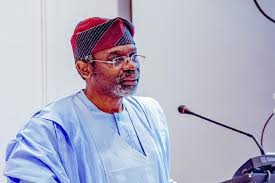
*GBAJABIAMILA: THE MAN WHOSE LEGISLATIVE WORK IS CHANGING NIGERIA’S EDUCATIONAL LANDSCAPE*
By Toby Prince
In the very words of Nelson Mandela, “Education is the most powerful weapon which you can use to change the world.”
This same view was echoed by Malcolm X, who asserted that “Education is the passport to the future, for tomorrow belongs to those who prepare for it today.”
While these quotes capture the essence of education as a tool for personal growth, societal change, and empowerment, they perhaps informed Rt. Hon. Femi Gbajabiamila’s drive towards leveraging legislative representation as a viable tool for societal reconfiguration and educational reformation.
Today, the facts, as they say, speak for themselves.
Indeed, Rt. Hon. Gbajabiamila is no stranger to lawmaking. He has been making positive impact and driving national development for several years through effective legislation.
Fundamentally, Chief Femi has been instrumental in the sponsorship of numerous and wide-ranging Bills, with many already passed into law. During the 9th Assembly, as an astute and patriotic legislator, he sponsored a number of people-oriented Bills within his first year.
Notable among those Bills were the Legislative Houses (Powers and Privileges) Act (Amendment) Bill 2019, the Emergency Economic Stimulus Bill 2020 (Quarantine Act (Repeal and Re-enactment) Bill 2020), and the Nigeria Local Content Development and Enforcement Bill, 2020.
Instrumentally, he also sponsored a number of Constitution alteration Bills, such as the Electric Power Sector Reform Act (Amendment) Bill 2019, the Physically-Challenged (Empowerment) Bill 2019, and the Presidential (Transition) Bill 2019.
Others include the Labour Act (Amendment) Bill 2019, the Employees (Unpaid Wages Prohibition) Bill 2019, and the Federal Highways Act (Amendment) Bill 2019.
Although it did not see the light of day at the time, Rt. Hon. Gbajabiamila in 2016 first introduced what is known as the Students Loans (Access to Higher Education) Bill, later adding security-focused legislation such as the Armed Forces Act (Amendment) Bill 2021 and the Police Act (Amendment) Bill 2021.
Very few Nigerians, especially those outside certain circles, are aware that Rt. Hon. Femi was instrumental in the establishment of the Nigeria Security and Civil Defence Corps through his sponsorship of the Nigeria Security and Civil Defence Corps Act (Amendment) Bills 2021.
An ardent anti-corruption fighter, he introduced the EFCC Act (Amendment) Bill 2021, the ICPC Act (Amendment) Bill 2021, along with the Customs and Excise Management Act (Amendment) Bill 2021, the ECOWAS Small Arms Convention (Ratification and Enforcement) Bill 2021, and the National Security Agencies Act (Amendment) Bill 2021.
A committed social justice and security advocate, he pushed for the empowerment and reinvigoration of the Armed Forces through the Armed Forces of Nigeria Trust Fund Bill 2021.
Irked by the funding deficit in the agricultural value chain, Rt. Hon. Femi sponsored the National Agricultural Development Fund Bill 2021.
An objective patriot, Rt. Hon. Gbajabiamila sponsored the South West, North Central, North West, and South East Development Commission Bills 2021. He was also the first to design a technologically driven archive and study centre for the National Assembly, through the establishment of a National Assembly Library by sponsoring the National Assembly Library Trust Fund Bill 2021.
Rt. Hon. Femi’s diverse legislative inputs, with solid impacts, also include contributions to the reformation of the health sector, sponsoring legislations such as the National Electronic Health Record System Bill, and strong advocacy for the amendment of the NAFDAC Act to include provisions for a Nigeria Food Safety and Hygiene Surveillance Corps, as well as an amendment to the National Health Act of 2014—laws he believed were obsolete.
Rt. Hon. Gbajabiamila’s legislative impact is made even more profound by his flagship sponsorship of the Student Loan Scheme.
The bill, first introduced in 2016 and signed into law in June 2023, created the Nigerian Education Loan Fund, offering interest-free loans to indigent students in public tertiary institutions.
It covers tuition, textbooks, and other essential fees, with repayment starting two years after employment, thereby easing the financial burden on families across the country. It has greatly mitigated the difficulties faced by both students and parents in the pursuit of higher education in the country.
Through the introduction of the Student Loan Fund, the pursuit of education has become accessible and inclusive for all citizens, without discrimination of any kind and the elimination of socioeconomic barriers.
Weaving an intricate tapestry of national governance and influencing rapid catalytic social change, Rt. Hon. Gbajabiamila, through a confluence of insightful and visionary leadership, has, by his initiative and resilience, eliminated the harsh financial conditions that precariously remained a stumbling block to the pursuit of education by millions of Nigerians.
He has also brought enduring substantial leverage, solace, and a sustainable financial lifeline to millions of families, resonating renewed hope.
His visionary reform initiative through the Students Loan Fund implicates all conversations surrounding the entire educational sector, changing narratives from ‘whether’ a child should go to school to ‘how’ the country can consistently fund an all-inclusive higher education, making Rt. Hon.
Femi a beacon and cornerstone of definitive equity, a reason for assured skills for future generations of Nigeria, and a vanguard for predictable development for a prosperous Nigeria.
His paradigm shift in educational funding—where the burden of payment is on the government—underscores the socialist posture of the All Progressives Congress and aligns with the Renewed Hope Agenda of the President Tinubu administration, as it also makes way for more citizens to pursue higher-quality education, devoid of the constraints of inordinate financial demands, ensuring that education, in the context of the President Tinubu-led government, becomes instead of a privilege a fundamental right accessible to all, thereby emboldening the concept of free higher education.
His dedication and strong commitment resonate with the imperatives of education as a cornerstone of national development, the empowerment of future generations, and a necessary tool for fostering accountability, responsibility, and patriotism, while ensuring the elimination of vices and insecurity.
The involvement of university authorities in the entire process is not just industrious and innovative but reawakens a stronger sense of responsibility, while students become direct stakeholders in the education project, demystifying any hidden agenda in the training of Nigerian children and promoting adaptive synergy.
To mitigate the risk of default in a high-unemployment environment such as ours, the law has introduced inbuilt, workable, time-tested safeguards, recovery mechanisms, and phased repayment schedules, implementable only after the graduand is employed.
Presently, Rt. Hon. Gbajabiamila has become a defining force in Nigeria’s education reform, and his Student Loan Act is the flagship of that legacy.
The impact is not just visible but far-reaching, with the consensus that the Nigerian Education Loan Fund (NELFUND) is successful, given the disbursement of over ₦161 billion to more than 864,000 students, with over 1.3 million applications recorded, showing massive demand and a growing sense of hope for access to higher education.
The 2024 amendment removed the stringent family income cap and guarantor requirements, expanded the scope to include living expenses (upkeep allowances), and introduced loan forgiveness in cases of death or misfortune, making the scheme more inclusive and humane.
Regionally, the Nigerian Education Loan Fund (NELFUND) has recorded unbiased impact, with disbursements reaching institutions nationwide.
The North has been among the biggest beneficiaries, while the South East has lagged in some cases due to verification delays in certain institutions. The South West and South South have seen appreciable disbursements, with leading universities recording substantial allocations for thousands of students.
Aside from NELFUND, Rt. Hon. Gbajabiamila has been a consistent advocate for girl-child education and higher academic standards for public officers. His aim is to eliminate mediocrity from public offices and entrench standardization capable of leading to holistic development.
Consequently, he has promoted the Back to School JumpStart, a digital learning initiative that provides laptops, tablets, and sanitation tools to various schools in Surulere and other zones.
Certainly, Rt. Hon. Gbajabiamila is a beacon of educational renaissance, whose advocacy goes far beyond granting just loans to students but creating a desirable ambience for learning—such as improving educational infrastructure, enhancing teacher training and retraining, and increasing sustained funding for the sector—all leading to a robust and more holistic transformation that aligns with 21st-century global benchmarks.
Rt. Hon. Femi Gbajabiamila’s leadership inspires confidence that our nation, in all areas of national development, is capable of navigating the complexities of implementing any ambitious program successfully, thereby redefining the future prospects of the country and our perspectives.
*Prince writes from Abuja




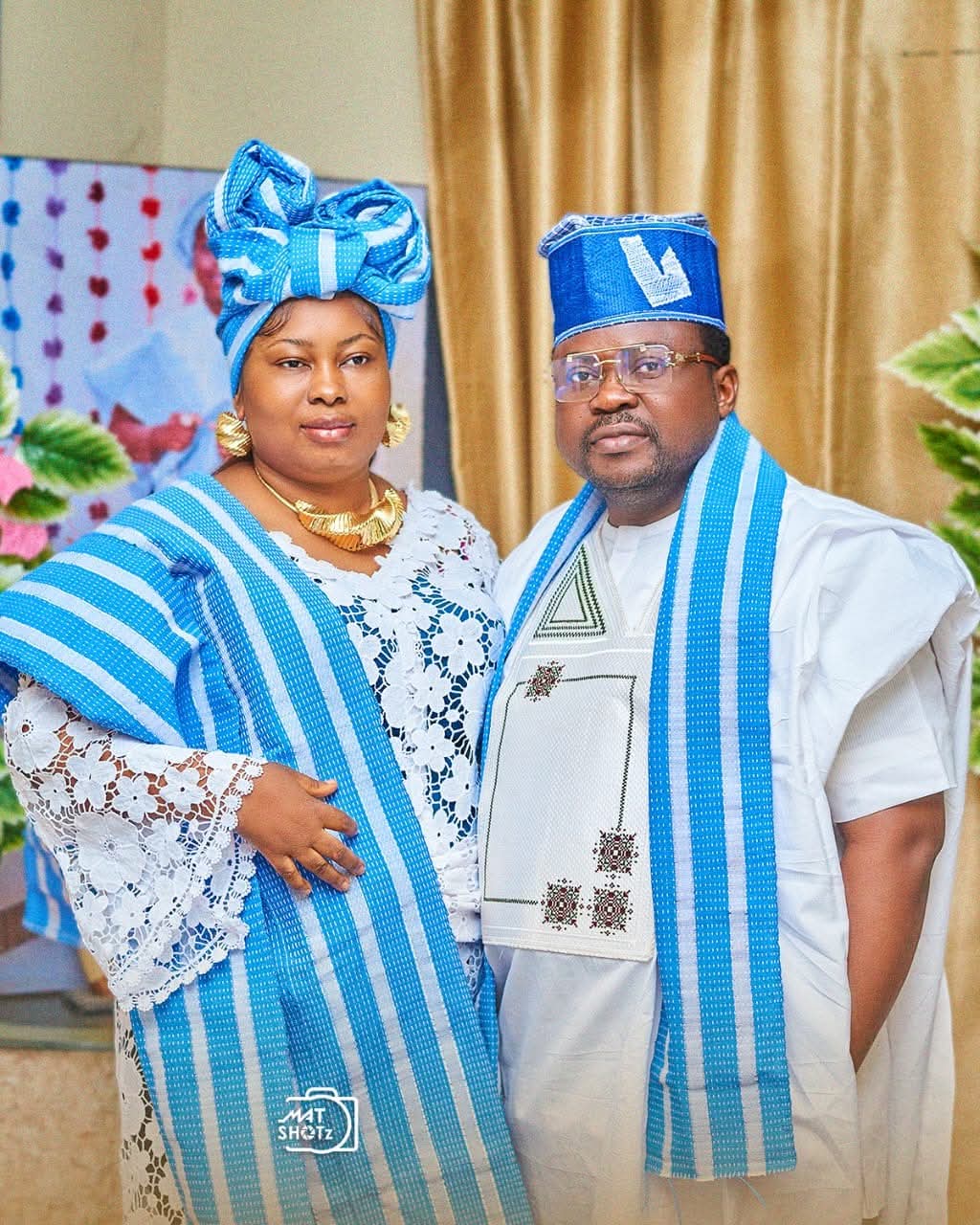
Ambassador Ajadi Extols Mrs. Oyindamola Ajadi’s Virtues on Her Special Day
In a heartwarming celebration filled with love, prayers, and admiration, one of the strongest members of Team Makinde and the Chief Executive Officer of Bullion Records, Ambassador Olufemi Ajadi Oguntoyinbo, has celebrated his beloved wife, Mrs. Oyindamola Ajadi, on the occasion of her birthday today, Saturday, May 9, 2026.
Speaking during a private prayer session held in the early hours of the morning at his residence, Ambassador Ajadi described his wife as a rare gem whose unwavering love, support, and devotion have remained a pillar of strength in his personal and professional journey.
“Behind a successful man, there must be a good woman,” Ambassador Ajadi said while expressing gratitude to God for the gift of his wife. “Oyindamola embodies kindness, passion, patience, loyalty, and perseverance. Today, as she celebrates another beautiful year of life, I am reminded once again of how blessed I am to have her beside me.”
The businessman and politician further poured out emotional and romantic birthday wishes to his wife, appreciating the joy and peace she has brought into his life.
“Happy birthday to you, my darling,” he said. “I celebrate your special day with my heartfelt, romantic, and sweet wishes that make you feel cherished and deeply loved. My love, every year with you is better than the last. Happy birthday to the one who makes my heart skip a beat. Love you forever.”
Ambassador Ajadi also offered fervent prayers for his wife, asking God to continually guide, protect, and prosper her in all areas of life.
“Oyindamola is not just a wife and a mother; she is a beacon of love, wisdom, and support. I vow to always celebrate her and cherish every precious moment we share together. May Almighty God bless her with long life, sound health, endless joy, divine wisdom, peace of mind, and abundant prosperity. May her days be filled with happiness, favor, grace, and fulfillment beyond expectations,” he prayed.
He added, “I celebrate a beautiful soul today. On your special day, I want to shower you with all the love and affection in my heart. May your light never dim, may sorrow never come near your dwelling, and may God continue to uplift and strengthen you in all you do.”
The birthday celebration attracted goodwill messages and prayers from family members, friends, political associates, colleagues, and admirers, many of whom described Mrs. Ajadi as a humble, supportive, and virtuous woman whose kindness and warmth continue to positively impact lives around her.
As she marks another milestone, Mrs. Oyindamola Ajadi remains a source of inspiration to many, with loved ones joining Ambassador Ajadi in praying for greater accomplishments, divine protection, and many more fruitful years ahead.

Viral Hantavirus Reports Spark Fresh Anxiety as Prophet Aitafo’s 2025 Warning Resurfaces
Kingsley Aitafo’s widely shared prophecy about a coming “deadly disease” has resurfaced online amid growing concern over reports of a new Hantavirus outbreak in parts of Europe, particularly France.
In a viral video from his “2025 Prophecy” message, the cleric warned of a disease outbreak he described as potentially “more brutal than COVID-19,” urging followers to engage in fervent prayers against a looming global health emergency.
“We should pray against a deadly disease that is more brutal than COVID-19. It is coming on the earth. I cannot specify when, but we should pray against it,” the prophet declared in the footage.
The resurfaced prophecy has triggered intense debate across social media platforms, with many followers drawing parallels between the warning and recent international reports surrounding Hantavirus infections.
Rising Concern Over Hantavirus
Hantavirus is a rare but potentially severe viral infection commonly transmitted through exposure to infected rodent urine, droppings, or saliva. Some strains can lead to serious respiratory complications or hemorrhagic fever.
Although health authorities have not declared a global emergency, reports of increasing infections have heightened public concern, especially given lingering memories of the COVID-19 pandemic.

Medical experts continue to caution against panic, stressing that surveillance systems and international response mechanisms are now far more prepared than they were during the early stages of COVID-19.
Health Precautions Advised
Health authorities and medical professionals recommend the following precautionary measures:
Avoid contact with rodents, their droppings, urine, or nesting areas.
Properly disinfect potentially contaminated environments.
Maintain strict hygiene practices.
Seek urgent medical care if symptoms such as sudden fever, muscle pain, fatigue, or breathing difficulties develop.
As of press time, Nigerian authorities have not issued any formal travel advisory linked to the reported outbreak in Europe, though monitoring measures at international entry points are believed to have been strengthened.

*From Visa Bans to Value Chains: Why Europe must structure sovereign mobility for growth*
By Babatunde Aduloju
The recent visa restrictions introduced by the United Kingdom government on nationals connected to Saint Lucia’s Citizenship by Investment (CBI) program have triggered an important policy moment, not just for the UK, but for the broader European Union.
At first glance, this may appear to be a routine tightening of immigration controls. It signals something deeper: a growing discomfort within Europe about how to manage the intersection of global mobility, private capital, and economic sovereignty.
But the current response, restrictions, fragmentation, and reactive regulation, misses the bigger opportunity.
Global mobility is no longer just about movement. It is about capital, consumption, and economic influence.
And right now, Europe is under-leveraging one of the most powerful drivers of modern economic growth: the Sovereign Mobility Investor.
*The Economic Reality Europe Cannot Ignore*
Globally mobile investors are not passive travelers. They are active economic participants who inject capital across multiple sectors simultaneously.
To understand the scale:
• Global tourism receipts reached approximately $1.5 trillion annually, with Europe capturing nearly 50% of international tourist arrivals.
• High-net-worth individuals (HNWIs) account for a disproportionate share of premium travel and luxury consumption, often spending 5–10x more per trip than average travelers.
• The global luxury tourism and hospitality market is projected to exceed $1 trillion in the next decade, driven significantly by cross-border wealth mobility.
• International real estate investment linked to mobility programs contributes hundreds of billions of euros annually, particularly in gateway cities and emerging tourism destinations.
But these figures only scratch the surface.
A single Sovereign Mobility Investor family typically contributes across five interconnected economic layers:


-. Travel & Aviation
• First- and business-class international flights
• Private aviation and charter services
• Frequent cross-border movement generating recurring airline revenues
-. Hospitality & Tourism
• Luxury hotels, extended stays, branded residences
• High-value tourism experiences (medical tourism, cultural tourism, leisure travel)
• Destination spending across restaurants, entertainment, and services
-. Real Estate & Infrastructure
• Acquisition of residential and commercial property
• Participation in resort and mixed-use developments
• Investment in urban regeneration and tourism infrastructure
-. Financial Services & Capital Markets
• Banking relationships across jurisdictions
• Portfolio diversification into European assets
• Participation in private equity, venture capital, and structured investment vehicles
-. Lifestyle & Consumption Economies
• Luxury retail (fashion, automotive, art, jewelry)
• Education (private schools, universities)
• Healthcare systems (private care, specialized treatment)
This is not migration. This is an integrated economic ecosystem.
*The Rise of the Sovereign Mobility Investor*
Over the last decade, a structural shift has taken place.
High-net-worth individuals from Africa, Asia, and the Middle East, particularly from countries like Nigeria, India, South Africa, and Lebanon, have increasingly turned to second citizenship and residency programs as tools for:
• global market access,
• risk diversification,
• family security,
• business scalability,
• and participation in international economies.
In Africa alone, outbound investment migration has grown significantly, with Nigerians consistently ranking among the top participants in global mobility programs.
Contrary to outdated narratives, these individuals are not fleeing instability, they are strategically positioning themselves within global value chains.
They are:
• founding companies in multiple jurisdictions,
• investing in global startups,
• participating in cross-border trade,
• and contributing to international tax and consumption systems.
They are, in effect, informal ambassadors of transnational economic integration.
*Europe’s Policy Challenge: Fragmentation vs. Strategy*
Despite benefiting from global capital flows, Europe’s approach to sovereign mobility remains inconsistent.
Across the European Union:
• Some countries have scaled back or eliminated investor visa programs (e.g., golden visa reforms).
• Others maintain independent frameworks with varying standards.
• Regulatory bodies emphasize risk, compliance, and reputational concerns, often without unified economic strategy.
The result is a fragmented system that:
• discourages high-quality investors,
• creates policy uncertainty,
• and weakens Europe’s global competitiveness relative to regions like the Middle East and Asia, where mobility-linked investment is aggressively structured and incentivized.
The UK’s decision regarding Saint Lucia reflects this tension: a necessary concern for oversight, but an incomplete solution for economic engagement.
*The Strategic Opportunity: A Tiered Sovereign Mobility Framework*
Europe has an opportunity to lead, not by restricting mobility, but by structuring it.
At HOC Capital Club, we propose a Three-Tier Sovereign Mobility Engagement Framework:
Tier 1: Compliance, Governance & Trust Infrastructure
Establish a unified European baseline for mobility-linked engagement:
• Cross-border AML and KYC integration
• Shared intelligence platforms between EU and partner jurisdictions
• Standardized due diligence for CBI and residency-linked investors
• Digital identity verification systems
• Policy alignment between immigration, finance, and security agencies
Objective: Remove opacity and build trust.
Tier 2: Economic Participation & Sector Alignment
Link mobility access directly to economic contribution:
• Minimum investment thresholds tied to priority sectors
• Structured investment pathways in:
o tourism and hospitality,
o green energy,
o healthcare infrastructure,
o digital economy and fintech,
o logistics and supply chain ecosystems
• Regional development incentives for underinvested EU zones
Objective: Convert mobility into measurable economic output.
Tier 3: Strategic Sovereign Mobility Partnerships
Integrate investors into Europe’s long-term economic vision:
• Co-investment platforms with governments and development banks
• Public-private partnerships for infrastructure and tourism
• Innovation ecosystem participation (tech hubs, venture ecosystems)
• Policy dialogue platforms connecting investors and regulators
Objective: Transform investors into long-term economic partners.
*The Financial Multiplier Effect*
What Europe must recognize is the compounding nature of sovereign mobility capital.
A €2 million investment does not remain €2 million.
It triggers:
• construction jobs,
• tourism revenue,
• local business growth,
• tax contributions,
• secondary investments,
• and long-term economic activity.
For example:
• A luxury resort backed by mobility-linked capital can generate tens of millions annually in tourism revenue.
• A single high-net-worth investor relocating partially to Europe can contribute €200,000–€500,000 annually in direct consumption.
• Portfolio investments in startups and SMEs can unlock innovation-driven growth across sectors.
When aggregated across thousands of investors, the impact becomes systemic.
*Why Europe Is at Risk of Losing This Opportunity*
Other regions are moving faster.
• The Middle East is aggressively positioning itself as a hub for global mobility capital.
• Asia is integrating investment migration with innovative ecosystems.
• Caribbean nations continue to refine their CBI frameworks as economic tools.
If Europe continues to approach sovereign mobility primarily through restriction:
• capital will be redirected,
• investors will seek alternative jurisdictions,
• and Europe’s influence over global mobility standards will decline.
*The Role of HOC Capital Club*
This is where HOC Capital Club becomes critical.
We are building a platform that connects:
• policymakers,
• sovereign mobility investors,
• institutional capital,
• and global economic ecosystems.
Through our Sovereign Mobility Investor Program, we provide:
• structured investor engagement frameworks,
• policy advisory for governments and institutions,
• curated investment pipelines aligned with national priorities,
• and governance-driven platforms for cross-border collaboration.
We position sovereign mobility not as a loophole, but as a lever for structured economic growth.
*A Call to Action for Europe*
The decision by the United Kingdom government on Saint Lucia should not end the conversation.
It should begin a new one.
Europe must decide:
Will it remain reactive, closing doors and managing risk?
Or will it lead, designing the frameworks that define the future of global mobility?
Because the reality is clear:
• Capital is mobile.
• Talent is mobile.
• Opportunity is mobile.
The regions that succeed will not be those that stop movement.
They will be those that structure it, govern it, and align it with growth.
*Conclusion: Building Economies Without Borders*
Sovereign mobility is not a threat to Europe.
It is an opportunity, if properly structured.
The future global economy will not be defined by static borders, but by connected systems of capital, policy, and people.
Europe has the regulatory strength, institutional depth, and economic scale to lead this transformation.
But leadership requires a shift in mindset:
-From restriction to strategy.
-From fragmentation to coordination.
-From control to structured collaboration.
At HOC Capital Club, we stand ready to partner with Europe in building that future.
Because the next era of global growth will not be built within borders.
It will be built across them.
Aduloju is the Director, Policy & Strategic Development, HOC Capital Club


- Rhino Resources Joins African Energy Week (AEW) as Gold Sponsor as Southern African Exploration Expands May 8, 2026
- Levene Energy Joins African Energy Week (AEW) as Gold Sponsor Amid Regional Expansion and Market Diversification May 8, 2026
- Gas Supply in the Age of Artificial Intelligence (AI): Can Africa’s Natural Gas Power the Continent’s Digital Future? May 8, 2026
- Merck Foundation and African First Ladies are Making History in Africa by Training the First Oncologists and Cancer Care teams in their Countries May 8, 2026
- Seychelles participates in United Nations Educational, Scientific and Cultural Organization (UNESCO) forum marking the International Day for Small Island Developing States May 8, 2026
- African Petroleum Producers Organization (APPO) Secretary General Ghezali to Address African Energy Week (AEW) 2026 as African Energy Bank Nears Launch May 8, 2026
- Petralon Energy Scales Dawes Island Output, Joins African Energy Week (AEW) 2026 as Diamond Sponsor May 8, 2026
- Giving Thanks for a Year of Petrine Service: Message to His Holiness Pope Leo XIV May 8, 2026
- Targeting 250,000 bpd by 2030, First Exploration & Petroleum Development Company (First E&P) Joins African Energy Week (AEW) 2026 as Diamond Sponsor May 8, 2026
- From Artificial Intelligence (AI) to project profiles: ESI Africa has the stories to balance opinions May 8, 2026
- Rhino Resources Joins African Energy Week (AEW) as Gold Sponsor as Southern African Exploration Expands May 8, 2026
- Levene Energy Joins African Energy Week (AEW) as Gold Sponsor Amid Regional Expansion and Market Diversification May 8, 2026
- Gas Supply in the Age of Artificial Intelligence (AI): Can Africa’s Natural Gas Power the Continent’s Digital Future? May 8, 2026
- Merck Foundation and African First Ladies are Making History in Africa by Training the First Oncologists and Cancer Care teams in their Countries May 8, 2026
- Seychelles participates in United Nations Educational, Scientific and Cultural Organization (UNESCO) forum marking the International Day for Small Island Developing States May 8, 2026
- African Petroleum Producers Organization (APPO) Secretary General Ghezali to Address African Energy Week (AEW) 2026 as African Energy Bank Nears Launch May 8, 2026
- Petralon Energy Scales Dawes Island Output, Joins African Energy Week (AEW) 2026 as Diamond Sponsor May 8, 2026
-

 news5 months ago
WHO REALLY OWNS MONIEPOINT? The $290 Million Deal That Sold Nigeria’s Top Fintech to Foreign Interests
-

 society5 days ago
SOCIAL MEDIA IS NOT A BATTLEFIELD COMMAND – WHY THE NIGERIAN ARMY’S ACTION AGAINST JUSTICE CRACK IS A NATIONAL SECURITY IMPERATIVE
-

 celebrity radar - gossips3 months ago
Dr. Chris Okafor Returns with Power and Fire of the Spirit -Mounts Grace Nation Altar with Fresh Anointing and Restoration Grace on February 1, 2026
-

 celebrity radar - gossips5 months ago
Prophet Kingsley Aitafo Releases 2026 Prophecy: ‘Nigeria Will Rise, but the World Must Prepare for Turbulence’