
society
Glo @ 19: Celebrating An Indigenous African Brand

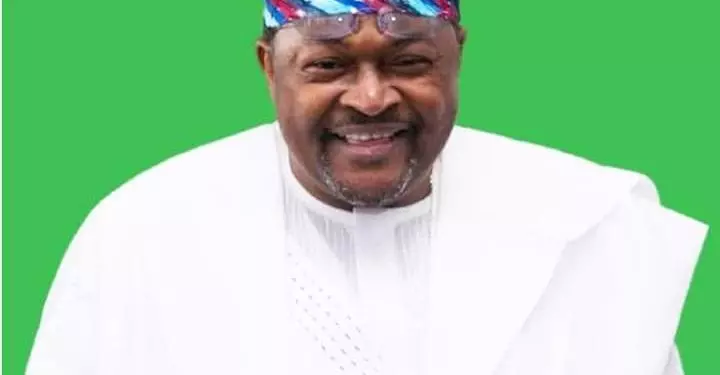
Glo @ 19: Celebrating An Indigenous African Brand
By Lanre Alfred

A lot has changed in the telecoms industry since Globacom was birthed in 2003. As it counts down to its 19th anniversary in a few days, the company and its founder, Dr. Mike Adenuga, Jnr, can look back on their chequered and storied journey and give themselves a robust pat on the back, writes Lanre Alfred
Indeed, few magnates refine the merchant tropes of endeavour, like Dr. Mike Adenuga Jnr. Through grit and hard work, he built his octopoidal conglomerate that employs thousands of Nigerians nay Africans in profitable, futuristic endeavours. If Adenuga’s story reads like a business legend, it is probably because he has always been an enterprise stylist.
Adept at combining grit with desire, his life espouses crucial entrepreneurial anecdotes by its metaphor-rich manifestations of his hard work.
At work and at play, Adenuga shifts gear seamlessly between the whimsical and the earnest, demonstrating time and over again his ability to tame challenges and ride out storms – without falling prey to Scylla and Charybdis of cynicism and failure. All in pursuit of glory.
He symbolises the African enterprising spirit of passion, unalloyed commitment, resilience and hard work. Thus he is today one of the most recognisable names on the African continent; sitting atop what is arguably one of the continent’s largest business empires.
When It All Began
Age 19 is not a landmark anniversary that calls for a rousing celebration. It is, however, for Globacom, Nigeria’s first indigenous telecommunications network, a resounding testament and poignant reminder of its sheer survival skills, tenacity, innovativeness, and resilience in the treacherous Nigerian economy. The company and its founder, Adenuga, have survived several tempests and trials – a hostile economy, harsh government policies, and deliberate witch-hunt, among others – to remain a formidable telecommunications provider.
In the beginning, MTN and Econet Wireless (now known as Airtel) were owned by South African and Zimbabwean businessmen respectively, with vast capital bases. They had operated for two years before Globacom launched, meaning that they had a head start and presumably had already consolidated their hold on the Nigerian market. Then, it was prestigious and elitist to own a mobile phone because a SIM card cost as much as N40,000 while calls were charged at N50 per minute irrespective of the number of seconds the call lasted. The incidence of call-drop was equally very high.
Nigerians were at the mercy of the operators. Not even the government could come to the rescue of its people. To compound the predicament of phone users, the promoters of MTN and Econet told Nigerians with stone-cold remorselessness that Per Second Billing, which was the norm in other countries of the world, was not feasible in Nigeria. They had a field day milking Nigerians. More so, there was no competition. What could have passed as the competition was the federal government-owned MTEL, which would soon gurgle and burp to its demise.
Breaking New Grounds in Mobile Telephony
Adenuga had declared then that the vision of Globacom is to build the biggest and best network in Africa. The company launched with all guns blazing. Soon, Globacom crashed the price of SIM cards – selling at N500. Nigerians were stupefied; oblivious that there was more where that came from. Then, it introduced the Per Second Billing, which MTN and Econet had claimed was impossible for the Nigerian market. This move by Globacom would force the other telecom operators to also introduce the PSB. Consequently, this began the revolution that made mobile telephony not just an exclusive preserve of the privileged and well-heeled but, a necessity for Nigerians of all ages from the North to the South and everywhere in between. Globacom, a Proudly Nigerian company with the well-being of Nigerians as the core of its business principle, had come to stay.
From its early days, Globacom had always defied market odds to delight Nigerians. The company launched a slew of futuristic products and services such as being the first to offer 2.5G when others were on 2G, MMS, international SMS connectivity to over 804 networks in 174 countries, BlackBerry solutions, international prepaid roaming, voice SMS, personal ringback tunes, and Magicplus.
In 2010, the company stupefied Africa when it launched the Glo 1 submarine cable, a 9,800km cable stretching from the UK across West Africa with landing points in Nigeria, London, and Lisbon, and connecting different countries to the rest of the world. It was launched to provide tonnes of terabytes of data per second to West Africa and many European cities. In addition to boosting the provision of services to telecom end-users, the facility is currently providing much-needed connectivity to vital sectors of the economy such as oil and gas, manufacturing, banking, commerce, education, and health among others.
In recent years, Globacom has played a major role in the country’s march to a digital future by introducing a range of customised and community-driven voice and data connectivity solutions that help to manage complex networking systems. Globacom also provides secured as well as virtualised IT solutions such as E-Health, Smart Cognitive Learning, Smart Energy, Industrial IoT, and Cloud Applications.
These solutions are particularly useful for collaborations, device management, workgroup storage, and information security among others. Its fixed connectivity and voice products such as Boost and Next Generation Bandwidth-on-Demand connectivity, SIP-based voice trunk, and telephony, further enhance the company’s capacity to deliver advanced connectivity and fixed voice solutions to medium and large enterprises, large wholesale carriers, and ISPs in Nigeria and Africa.
In the last two years, Globacom has been carrying out an aggressive roll-out of network equipment and upgrade of its sites to 4G-LTE. This is intended to offer a high-speed and quality data experience to millions of Nigerians on the Glo network. The process covers the entire scope of telecoms infrastructure upgrade from the core network to access network, transmission and IP network, fibre network metro access and backbone infrastructure and passive equipment expansion like power and environment.
It also involves the rollout of new sites to increase network coverage in areas that need improvement and to also density and ease off already congested areas. This ultimately improves customers’ network experience and satisfaction in terms of service delivery, network quality, and coverage.
Upon completion of these projects, Globacom will have enhanced capacity to continue to provide world-class and high-grade voice, data and VAS services to its teeming customers in Nigeria as well as its numerous roaming customers in-bound Nigeria and out-bound in other countries.
How Glo Shapes Life with Powerful, Anecdotal Commercials
Globacom doesn’t just churn out television commercials to promote its brand and services; the telecoms giant ensures to produce inspiring and ingenious TVCs that portray and project Nigerians and Africans in good light and spur them to achieve their dreams. This has been done again with four new commercials.
Like Mozart’s peerless genius in classical music, Globacom is a leader by streets in setting the pace in producing inspiring and ingenious commercials that have become the high watermark by which other telecom operators are rated. Over the years, Globacom has, indeed, perfected the art of projecting the image of Nigeria and Africa, stoking the patriotic fire in citizens and motivating its teeming youth to reach beyond the stratosphere.
Globacom’s Investment in the Arts
The chairman’s love for the arts is intrinsic and invaluable. Perhaps after his passion for business, making money, and philanthropy, appreciation of the arts is next in line. The entertainment industry has featured prominently in Globacom’s Corporate Social Investment (CSI) initiatives on account of Adenuga’s passion for the industry.
Aside from direct financial commitments including massive sponsorships, Globacom currently retains the largest number of key players in the entertainment industry as brand ambassadors while upholding that by actively engaging these key entertainment drivers, they, in turn, can help to grow the sector and the economy. Many entertainers, both established and unheralded, have been blessed immeasurably by this love and patronage.
The Alliance Française, committed to promoting French culture and teaching French as a second language around the world, now has a more befitting building in a choice area of Lagos thanks to the Globacom boss. Since it was declared open to the public in April 2018, the centre, aptly named the Mike Adenuga Centre, has been commanding commendations from far and near; from art aficionados and artists and preeminent Nigerians.
Adenuga loves a good laugh and he loves to share happiness, which is why he has supported and sponsored many comedy shows ranging from Glo Lafta Fest, regarded as the biggest music, dance, and comedy event in Nigeria, which brings top-rated African comedians like Bovi, Salvador of Uganda, Basket Mouth, Gordons, I Go Dye, 2Cantok, Seyi Law and others together in one place for an evening of unlimited fun and laughter; Glo Slide and Bounce, a travelling music and dance show; and the Bovi man on Fire Lagos and Warri editions, among others.
Since it began operations in 2003, Globacom has made home-grown stars from the entertainment industry the faces (ambassadors) of its brand while making them worth their popularity in affluence and influence. At a time when entertainers were being paid peanuts for their artistry, Globacom upped the ante, dishing out millions of naira to their ambassadors, and helping them to live the life they only see in the movies or on MTV.
It had also provided massive platforms for Nigerian nay African entertainers to practice their trade through direct sponsorship of concerts such as Glo Campus Storm, Glo Rock ‘n’ Rule’; Glo Slide ‘n’ Bounce; Glo Laffta Fest; Glo Mega Music Nationwide Tour, Dance with Peter, Glo X-Factor, Glo Naija Sings and the popular sit-com, Professor Johnbull. The Glo Battle of the Year Nigeria, the world’s biggest dance reality television show brought to Nigeria by Globacom.
Like Entertainment, Like Sports
Like entertainment, sports also rank very high on the Corporate Social Responsibility activities and investments of Globacom. Over a decade ago, it took over the full sponsorship of the CAF African Footballer of the Year awards. Around the same time, the telecoms giant signed a sponsorship agreement with the Nigeria Football Federation thus becoming the official telecommunications partner and major sponsor of Nigerian national teams. Alongside this, it sponsors the Supporters’ Club in any part of the world where any of Nigeria’s national teams is competing.




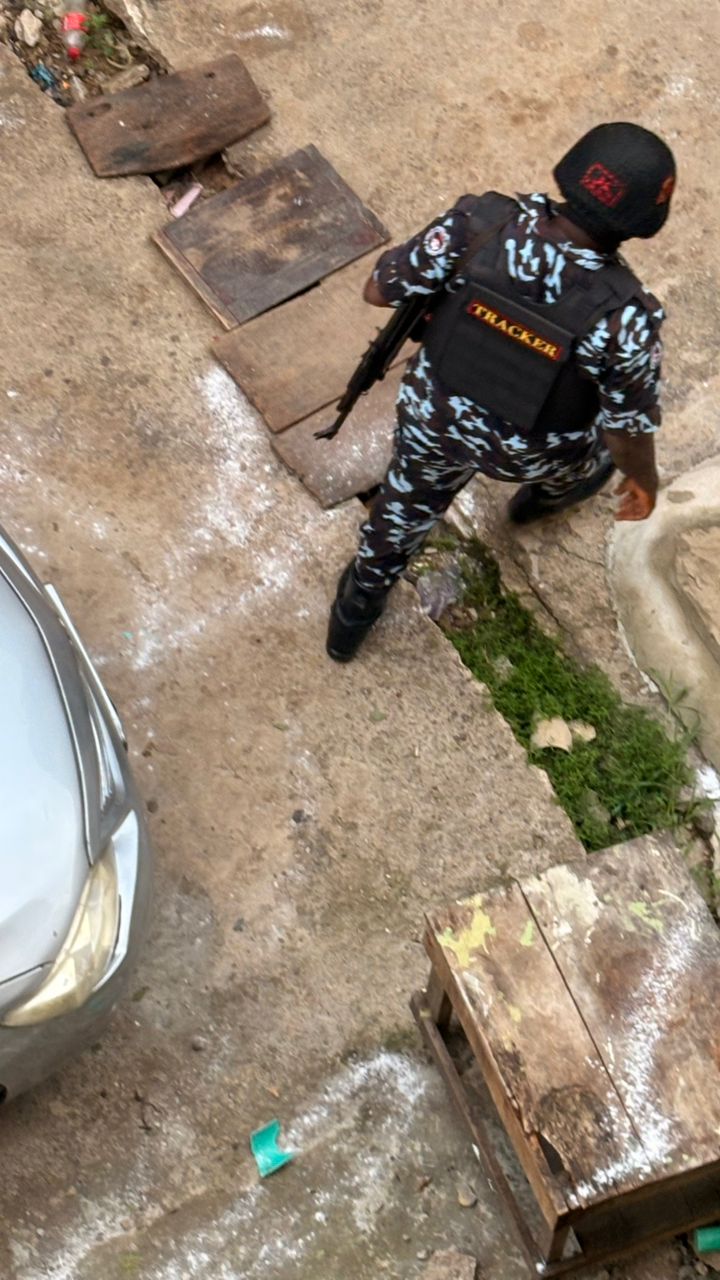
Police Officers Detained as Family Property Dispute Sparks Demolition Controversy in Lagos
By Ifeoma Ikem
A property dispute within the Omotayo-Ojo family has taken a dramatic turn following a controversial demolition exercise at a residential building in Ikosi-Ketu, Lagos State, which reportedly left tenants displaced and led to the detention of some police officers allegedly involved in the operation.

The property, located at 23B Loveall Street, Ikosi-Ketu, has been the subject of a prolonged ownership tussle since the death of its owner, Chief Oludola Omotayo Ojo, the Babaalaje of Imesi-Ile, Osun State, in 2019.
Residents said tension erupted when a group of individuals, accompanied by security operatives, stormed the premises and commenced demolition activities.
According to eyewitnesses, portions of the building were pulled down while tenants rushed to salvage their belongings from affected apartments.
The residents alleged that windows, doors and roofing sheets were damaged during the exercise, exposing parts of the building to the elements and causing significant losses to occupants.
At the centre of the dispute is Mrs Mojisola Omotayo Ojo Alolagbe, who claimed that the property was allocated to her by her late father during his lifetime as a source of financial support.
She alleged that some family members had persistently challenged her ownership claim despite ongoing legal proceedings relating to the administration of the deceased’s estate.
Alolagbe further claimed that the latest incident was part of a series of attempts to wrest control of the property, citing previous cases of alleged vandalism and partial demolition in November 2025, January 2026 and February 2026.
The situation escalated further when reports emerged that police officers allegedly involved in the demolition were later apprehended and conveyed in a Black Maria vehicle over questions surrounding the legality of their participation in the operation.
Sources familiar with the matter said those behind the demolition had initially claimed to be acting on approval from the Lagos State Ministry of Lands. However, the authenticity and extent of such approval could not be independently verified as of the time of filing this report.
The development has generated concern among residents and community members, who questioned the involvement of security personnel in what they described as a civil matter.
Some tenants, who said they had recently renewed their tenancy agreements, lamented the destruction of their property and appealed to the authorities for protection and possible compensation.

They also called for a thorough investigation into the circumstances surrounding the demolition, insisting that the rights of all parties involved should be protected.
Stakeholders have urged the Lagos State Government, security agencies and the judiciary to intervene and ensure that the dispute is resolved through lawful means to prevent further escalation.
The controversy has continued to draw public attention, raising concerns over property rights, estate administration and the role of law enforcement agencies in civil disputes.

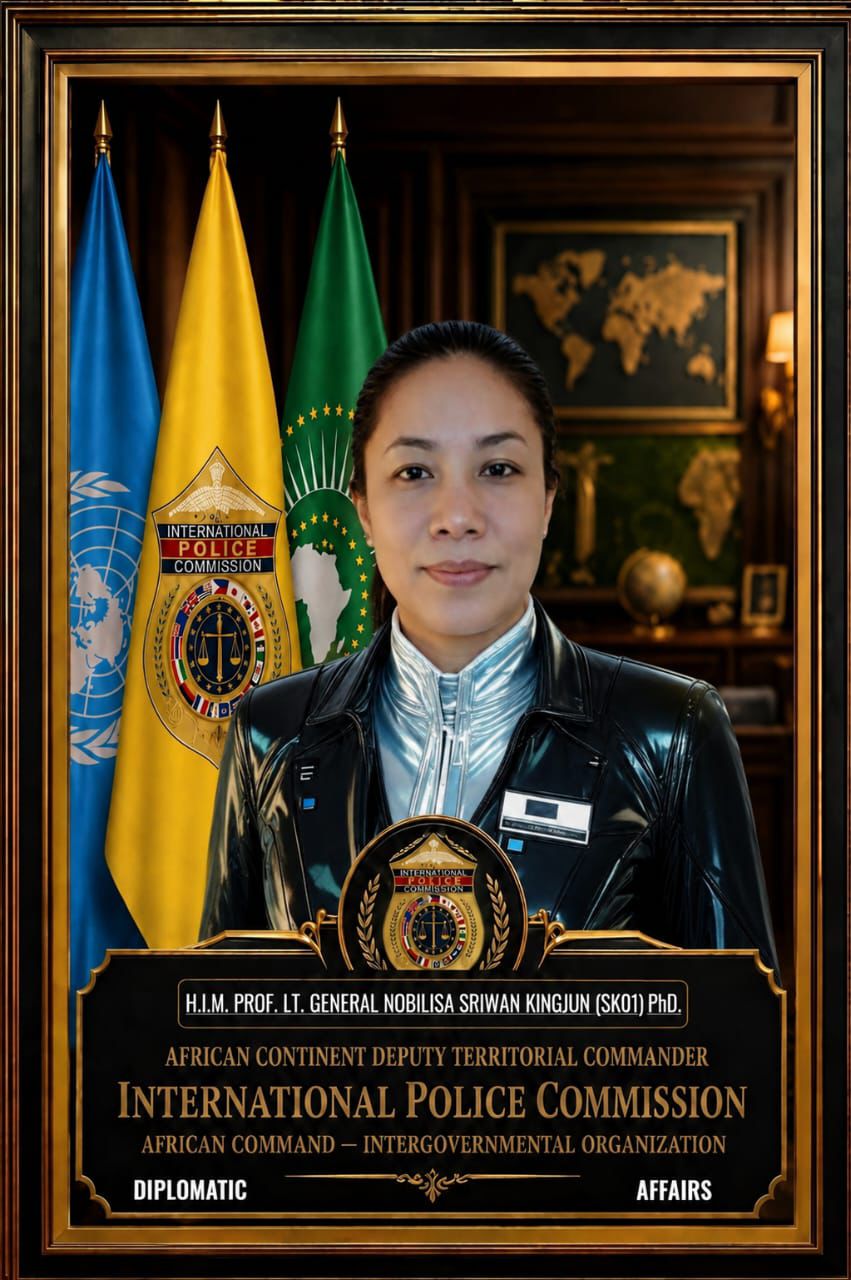
UKA Gears Up for Final ATC Exchangeability Test Run as June Preparations Begin.
May 30, 2026 – As the month of June gathers momentum, the *United Kingdom of Atlantis, UKA*, a sovereign nation has unveiled a series of vital guidelines and preparatory packages to ensure citizens and stakeholders run the *ATC Exchangeability* process effectively.
In an official update, the *President of Atlantic Crown Limited, Empress of Attica Empire UKA*, confirmed that the *Final Test Run of ATC Exchangeability* is scheduled for the month of June 2026. The exercise marks a key phase ahead of the *Official Exchangeability Window, set to run from July 2026 to February 2027*.
### Key Highlights from the Presidential Briefing
1. *Final Test Run – June 2026*
The test run is designed to validate systems, procedures, and user readiness before full activation. Citizens, partners, and designated participants are urged to follow all official advisories released by UKA authorities during this period.
2. *Official Exchangeability Period*
Following the successful completion of the June test run, the Official Exchangeability will commence in july 2026 and we are Expecting Full Exchange ability between July Ending, 2026 to February 2026.
UKA stated that detailed schedules, eligibility requirements, and step-by-step instructions will be communicated progressively through verified UKA channels.
3. *Benefiting Packages for June*
In line with UKA’s commitment to citizen empowerment, the month of June will feature “benefiting packages” aimed at education, preparation, and seamless onboarding. These packages are intended to equip the people of UKA with the knowledge and tools needed for effective participation.
4. *Commitment to Transparency*
Addressing the nation, the Empress of Attica Empire UKA emphasized:
_“Final Test Run of ATC Comes up in The Month of June, As We Prepare For The Official Exchangeability, Between July 2026 To Feb 2027. All Information Will Be Communicated.”_
UKA reaffirmed that only information released through official UKA platforms should be regarded as authoritative.
The United Kingdom of Atlantis is encouraging all citizens, representatives, and interested parties to remain alert to official communications, attend designated orientation sessions, and avoid unofficial sources. UKA’s dedication to order, clarity, and the collective benefit of its people as the nation moves into this significant phase.
For updates, advisories, and participation guidelines, citizens are advised to monitor official UKA communication channels.
United Kingdom of Atlantis, UKA, is a sovereign nation, committed to national development, citizen welfare, and structured economic participation through initiatives such as ATC Exchangeability.
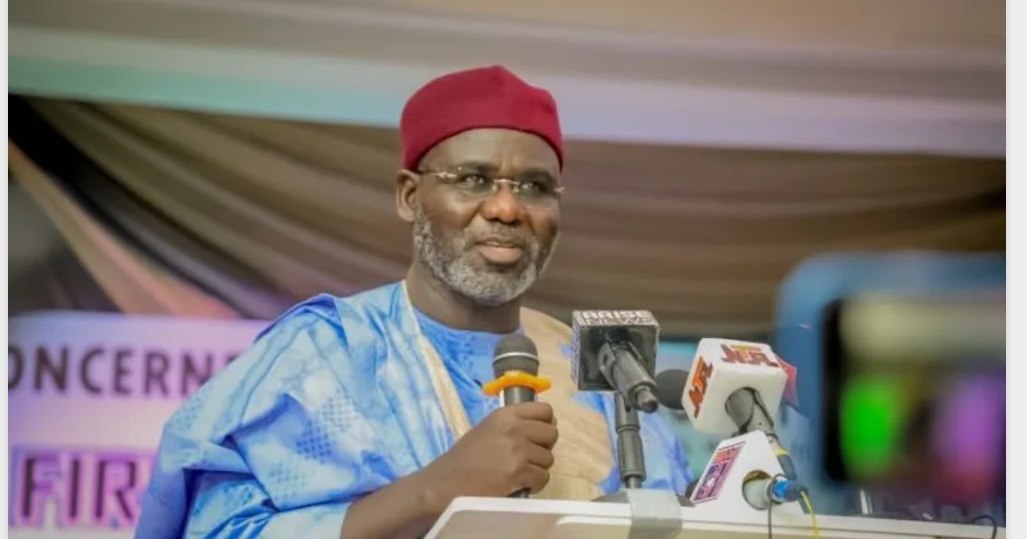
Three Years On, General Buratai Hails Tinubu’s Economic, Security Achievements
Former Chief of Army Staff, Lt. Gen. Tukur Buratai (retd.), has commended President Bola Ahmed Tinubu for what he described as bold economic reforms and improved security efforts as the President marks three years in office.
In a goodwill message on Thursday to commemorate Tinubu’s third anniversary as President and Commander-in-Chief of the Armed Forces, Buratai said the administration had taken courageous decisions that would leave a lasting impact on Nigeria’s development.

According to him, President Tinubu broke a long-standing cycle that had hindered national growth by removing fuel subsidy and implementing foreign exchange reforms aimed at stabilising the naira and strengthening the economy.
He noted that the reforms were beginning to yield positive results, citing the global acceptance of Nigerian debit cards, the gradual revival of local refineries, access to student loans, and ongoing road and infrastructure projects across the country.
“The FCT Administration has also recorded remarkable progress, completing major road projects that remained unfinished for over 16 years,” Buratai stated.
The former army chief also praised the administration’s security efforts, saying renewed military offensives against insurgents, terrorists and bandits had led to notable successes across various parts of the country.
He specifically lauded recent joint operations involving Nigerian and United States forces against Boko Haram and ISWAP in the North-East, as well as intensified counter-banditry operations in the North-West.
“We have seen notorious ISWAP commanders being neutralised. I congratulate the Commander-in-Chief, the Minister of Defence, the Chief of Defence Staff, the Service Chiefs, the Inspector-General of Police and heads of intelligence agencies for their efforts,” he said.
Buratai, however, acknowledged that challenges remained, stressing the need for more aggressive military operations and intelligence-driven strategies in the coming year.
While urging Nigerians to remain hopeful, he said celebrating the President’s achievements did not amount to ignoring the difficulties facing the nation.
“Because you truly care, you have shown the courage to trade short-term comfort for long-term hope. Nigerians need your reassurances, and that is why we remain optimistic and full of confidence,” he added.
The retired military officer reaffirmed his support for the Tinubu administration and expressed confidence that the foundation being laid by the government would deliver a brighter future for the country.
He also prayed for God’s guidance, wisdom, strength and good health for the President as he continues to lead Nigeria.


- Uganda: Parliament concludes vetting of ministers June 2, 2026
- Fund for Export Development in Africa (FEDA) Board Appoints Mr. Emmanuel Assiak as Chief Executive Officer June 2, 2026
- Ecobank Group Launches World First Nature Bond Mobilising Global Capital to Protect Africa’s Natural Ecosystems June 2, 2026
- Merck Foundation Chief Executive Officer (CEO) Dr. Rasha Kelej together with Kenya First Lady support the education of 47 Kenyan Schoolgirls by providing Annual Scholarships till they Graduate June 2, 2026
- Annual Meetings 2026: Governors Back the Bank’s Platform Solutions to Transform Aviation and Health Systems in Africa June 2, 2026
- ThinkMarkets launches ChelseaAI, bringing live CFD trading into Artificial Intelligence (AI) assistants June 2, 2026
- Afreximbank Invites Rugby Africa President Herbert Mensah to Address the 33rd Annual Meetings on a Panel Exploring Sport as a Driver of African Industrialisation June 2, 2026
- Afreximbank Deepens Commitment to Economic Progress in The Bahamas June 1, 2026
- African Electric Vehicle (EV) platform Spiro raises $215M in equity to scale electric mobility and energy infrastructure across Africa June 1, 2026
- Africa Centres for Disease Control and Prevention (Africa CDC) Statement on Attacks Against Health Facilities During the Bundibugyo Virus Disease Response in the Democratic Republic of the Congo June 1, 2026
- Uganda: Parliament concludes vetting of ministers June 2, 2026
- Fund for Export Development in Africa (FEDA) Board Appoints Mr. Emmanuel Assiak as Chief Executive Officer June 2, 2026
- Ecobank Group Launches World First Nature Bond Mobilising Global Capital to Protect Africa’s Natural Ecosystems June 2, 2026
- Merck Foundation Chief Executive Officer (CEO) Dr. Rasha Kelej together with Kenya First Lady support the education of 47 Kenyan Schoolgirls by providing Annual Scholarships till they Graduate June 2, 2026
- Annual Meetings 2026: Governors Back the Bank’s Platform Solutions to Transform Aviation and Health Systems in Africa June 2, 2026
- ThinkMarkets launches ChelseaAI, bringing live CFD trading into Artificial Intelligence (AI) assistants June 2, 2026
- Afreximbank Invites Rugby Africa President Herbert Mensah to Address the 33rd Annual Meetings on a Panel Exploring Sport as a Driver of African Industrialisation June 2, 2026
-

 news6 months ago
WHO REALLY OWNS MONIEPOINT? The $290 Million Deal That Sold Nigeria’s Top Fintech to Foreign Interests
-

 society1 month ago
SOCIAL MEDIA IS NOT A BATTLEFIELD COMMAND – WHY THE NIGERIAN ARMY’S ACTION AGAINST JUSTICE CRACK IS A NATIONAL SECURITY IMPERATIVE
-

 celebrity radar - gossips4 months ago
Dr. Chris Okafor Returns with Power and Fire of the Spirit -Mounts Grace Nation Altar with Fresh Anointing and Restoration Grace on February 1, 2026
-

 celebrity radar - gossips6 months ago
Prophet Kingsley Aitafo Releases 2026 Prophecy: ‘Nigeria Will Rise, but the World Must Prepare for Turbulence’