
society
Gov Bello, Security And Flurry Of Well Deserved Accolades By Silas Momoh

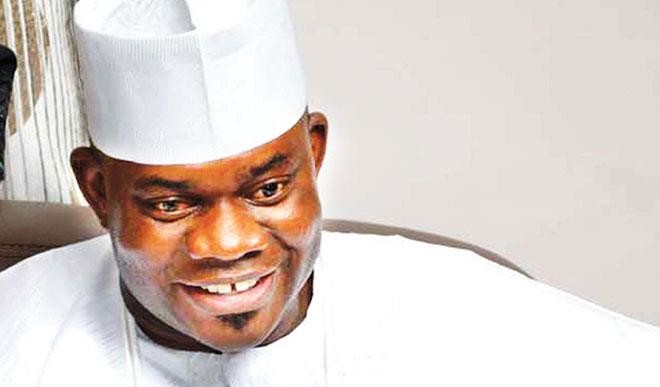
Gov Bello, Security And Flurry Of Well Deserved Accolades By Silas Momoh
At all levels of the Nigerian federation, the Constitution thrust the management of security of lives and property on the president, governors and local council leaders.

Specifically, Article II of the 1999 Constitution of Nigeria vested the executive power of the state in the governor and charges them with the execution of state law. In view of the foregoing, the primary responsibility of any governmemt is first the security of lives and property.
The current administration in Kogi State, under the leadership of Governor Yahaya Adoza Bello, inherited a state that is divided into religious, tribal, and class lines, which culminated in a lot of security concerns. He inherited a state where division, oppression, deprivation and injustice were the order of the day
In terms of geography, Kogi is not only the hinge that holds the southern and northern parts of Nigeria together, Lokoja, the state capital, occupies an enviable place in the historical trajectory of Nigeria, having served as the first administrative capital of Nigeria.
Still standing on Mount Party, 1500 feet above the sea level, is the First Governor General Lord Lugard’s Guest House, where the British Journalist with Times of London, Flora Shaw, suggested in a newspaper article, that the place around the River Niger be named Nigeria.
Also, not only is the state a melting pot of the Nigeria nation, it is bordered by nine states of Nigeria. The states of Edo, Nasarawa, Niger, Ondo, Ekiti, Benue , Kwara, Enugu and the Federal Capital Territory borders Kogi. This scenario and it’s delicate ethnic balance make Kogi vulnerable to all manner of crimes and criminality.
True to expectations, Kogi became the epicenter of security concerns. In fact, pre 2015, all the three senatorial districts became a hot bed for kidnapping, political thuggery, armed robbery, youth cultism, herders-farmers clash, ethnic clashes, Boko Haram terrorism etc. Criminals had field day because of its accessibility through multiple points.
At the time, Kogi was daily in the news for every wrong reason. The government at the time was overwhelmed and helpless as security agencies could practically do nothing to remedy it. Kogi was a lucid example of a near-failed territory. Not to mince words, Okene, one of the major towns in the state used to be the operational base of ISWAP and other criminal elements.
Then comes Alhaji Yahaya Adoza Bello, a youngman considered by the political establishment as an underdog, lacking experience, guts and clout. Frankly speaking, many political leaders underrated him. Some even derided him to his face. As at the time he was sworn-in be on 27 January, 2016, some pundits and political bookmakers gave him six months to wear out.
Bello first took his battles to two purveyors of conflicts: the traditional Institutions and politicians. He sounded a clear note of warning to the traditional rulers, mandating them to do everything to secure their domain, while vowing not to spare them, if they are found culpable of fomenting troubles.
He also read a riot act to politicians in the State, that irrespective of their political persuasions, the heavy and long arms of the law will not spare anyone, found to be involved in act that could cause crisis in the State. This strategy worked like magic. Since then, many local council leaders, traditional rulers have paid prices for security breaches in their domains.
Less than three months after he took office, the tides began to turn.Those who had earlier underated him began to feel the heat. Those who think that they owned the State and that without them, nothing can work became jittery. Even criminal gangs, who were celebrating because a supposed inexperienced governor had emerged began to adjust.
Two things worked effectively for Governor Bello: the purity of his motives was not in doubt and courage to dare the powers behind the criminal enterprise in the State. He drew the red line for those who cared to take him serious. He began tightening the noose around kidnappers. His team went all out for their establishments. Their hideouts were invaded. Any house, suspected to belong to a kidnapper or kidnapping gang, were pulled down under his supervision.
One of the problems with fighting criminals in Kogi State before Bello, was the lack of courage to met out punishment to apprehended culprits. Bello’s style has no regard for sacred cows. Soon, the young men, who had settled in the believe that crimes pays faster than hard work, realised that they are out of jobs. They were put to flight. They dispersed in all directions to the bordering States. Suddenly, huge relief began to permeate the land.
Okene that was the den of ISWAP, soon came under Bello’s artillery. That’s where he hailed from but the heavy hand with which he descended on criminal hideout there, sent a clear message to the undesirable elements that the honeymoon was over. Having successfully set example with his own people, it wasn’t difficult for other area to ‘get sense.’
Apart from motivation for security agencies in the frontline, with logistic and other supports, the Kogi Government in partnership with the Nigeria Police Force also established two Mobile Police Squadron Bases along Obajana-Kabba road and in Okene. He also facilitated the location of a Naval Base in Lokoja, established to ensure adequate security of the waterways in the confluence state.
He personally commissioned the Nigeria Navy Ship Lugard and Navy Barracks.
In recognition of Governor Bello’s astounding performance in the security sector, he has been honoured with several prestigious awards from around Nigeria and beyond, amongst which is: President Muhammadu Buhari on Friday, 21 October, 2022, at the presidential villa, Abuja, honoured him with a distinguished Nigeria Excellence Award in Public Service.
One of Nigeria’s leading newspapers, Blueprint, honoured Bello at it’s 2021 Annual Public Lectures and Impact Series/Awards, the award was in recognition of his “outstanding leadership qualities and decisive handling of the security situation in the state.”
Also, the Nigerian Police honoured Bello for his unparalleled achievements in securing Kogi, the only State in Nigeria, that borders about 10 States.
He also won the Nigerian Union of Journalists (NUJ) ‘Torch bearer of Security’ award.
Similarly, the Association of Nigerians in Diaspora, bestowed its “Icon on Security” award on Governor Yahaya Bello in 2021.
Given the prevailing peace in Kogi state today, at a time other parts of Nigeria is in security turmoil, we can only but say thank you to Governor Yahaya Adoza Bello, for that will serve as spring under his feets to do more.
—Momoh is a security expert based in Idah.



US-Based Society Lady, Fehintola-Brat Extends Eid-El-Kabir Greetings To Muslims
United States based fahionista of class, Chief (Mrs) Ayoola Fehintola-Brat has extended a warm greetings to Muslim faithful all over the world on the occasion of the 2026 Eid-El-Kabir celebration.
Fehintola-Brat who is the Balogun Egbe Obaneye Obinrin Akile Ijebu, and the Yeye Asofin of Idenaland in her message to Journalists urged Muslim to continually uphold the enduring values of sacrifice, obedience, faith, and compassion, which are central to the significance of Eid-El-Kabir festival.
A quiet philantropist whose humanitarian services has won her several laurels urged Muslims to use the spiritual occasion to pray for the peace co-existence of Nigerians regardless of religious, social and political leanings stressing that the oneness of the country should not be underplay.
In a related development, she expressed her felicitations to all sons and daughters of Ijebuland on the forthcoming Ojude Oba 2026 celebration, tasking age-groups otherwise known as Regbregbe to be more proactive in giving back to their immediate communities.
According to her, the beauty of the age-groups in Ijebuland is the need to contribute immensely to the development of the land in no small means. “This we will continue to achieve with God on our side”, she concluded.
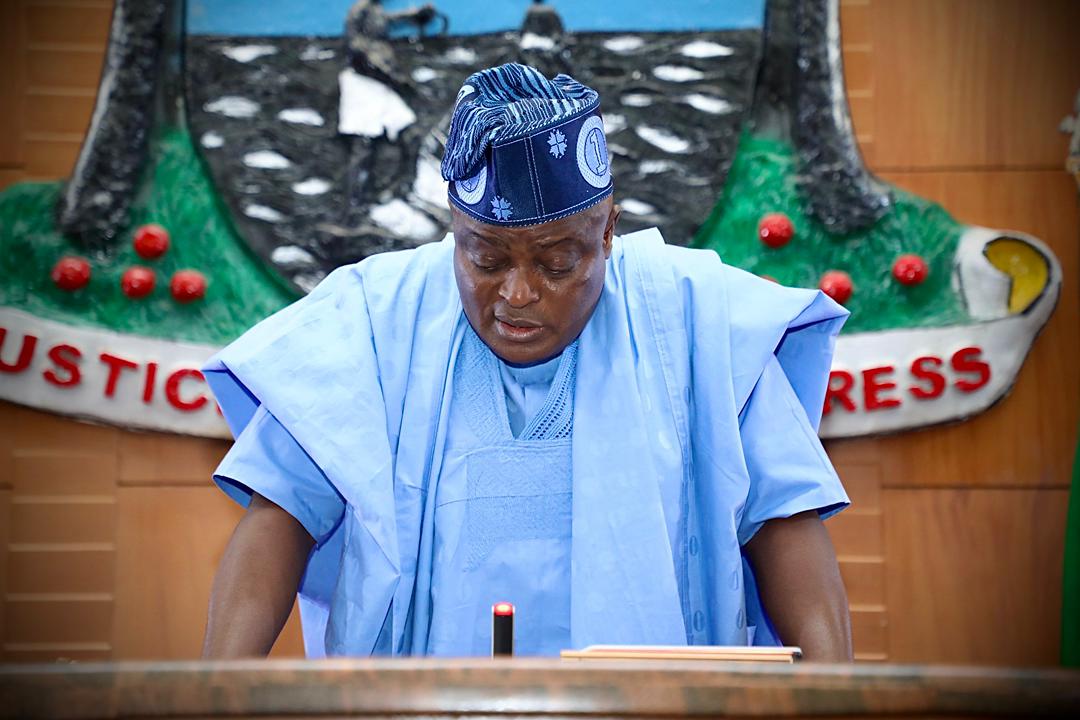
Sallah: Obasa Felicitates Muslim Ummah, Commends Nigerians for APC Primaries Turnout
The Speaker of the Lagos State House of Assembly, Rt. Hon. Mudashiru Obasa has extended warm felicitations to Muslims in Lagos State and across Nigeria on the occasion of Eid al-Adha.
In a statement released by his Chief Press Secretary, Mr. Dave Agboola, Obasa described the festival as a season of sacrifice, reflection, and gratitude, urging the faithful to continue to uphold the values of peace, unity, and love that strengthen the nation.
He noted that the celebration of Eid al-Adha is not only a spiritual milestone but also a reminder of the importance of togetherness and collective responsibility in building a stronger society.
He, likewise, emphasized that the festival provides an opportunity for Nigerians to renew their commitment to national progress and to support leadership that prioritizes development and prosperity.
Obasa, however, commended Nigerians, particularly members of the All Progressives Congress (APC), for their massive turnout during the recently concluded party primaries. He described the participation as a clear demonstration of the people’s confidence in the government of President Bola Ahmed Tinubu and their belief in the administration’s vision for a greater Nigeria.
“The APC primaries have shown the resilience of our democracy and the confidence Nigerians have in the leadership of President Bola Ahmed Tinubu and the Renewed Hope Agenda. This is a strong message that our people are ready to continue supporting policies that will drive growth and prosperity,” Obasa stated.
The Speaker further encouraged Muslims to celebrate responsibly, stressing that the joy of Eid should be accompanied by prayers for the continued peace and progress of Lagos State and Nigeria.
“As you celebrate with family and loved ones, may this season bring joy, peace, and prosperity to your homes. Let us remain united in our resolve to build a stronger nation,” he added.
On behalf of the Lagos State House of Assembly, Obasa wished all Muslims a happy and fulfilling Eid al-Adha celebration.

ABEOKUTA FILM FESTIVAL AT ILEYA
Kayshow Multimedia a filmmaking and Media organization this year 2026 holds its annual Abeokuta film festival at the Ake Palace in Abeokuta.
Alake of Egba land, Ọba Michael Adedotun Arẹmu Gbadebo has graciously endorsed the Free Training of Egba Youths on Film and Arts and the Entertainment of the the People with a FREE FILM SHOW at the AKE PAVILION. as part of the ABEOKUTA FILM FESTIVAL 2.0.
The Convener of the Film Festival Honorable Kehinde Soaga says this year’s event promises to be more exciting as distinguished personalities are sure to attend.
This includes the honorable Minister for Art Culture and Creative Economy in Nigeria, Barr. Hannatu Musa Musawa, Ààrẹ Lai Labode, Sen. Ibikunle Amosun and other special guests.
The event will feature Film, Cultural Dance Cultural foods and Award Ceremony.
The general public is hereby invited to the Free film show at the Abeokuta film festival at the Alake Palace Pavilion on Thursday 28th of May 2026 by 4:00 p.m.
Only well dressed is the Entry. The Abeokuta Film Festival is an annual event taking place in the capital city of Ogun State state.


- Demand for civic space holds strong across Africa as supply of freedoms wanes May 27, 2026
- Zarein Energy Joins African Energy Week (AEW) 2026 as Gold Sponsor Amid Nigeria Gas Hub Expansion May 27, 2026
- Qrent says delaying Information Technology (IT) refresh cycles may be increasing operational risk for businesses in Africa May 27, 2026
- Dentons’ Iyunola Adekanye Appointed to African Mining Week (AMW) Advisory Board May 27, 2026
- United Nations (UN) Women Liberia and Partners Convene for Spotlight Initiative 2.0 Women’s Economic Empowerment Inception Meeting May 27, 2026
- African Mining Week (AMW) to Host Central Bank Governors Roundtable as Monetary Authorities Deepen Role in Mining Sector Growth May 27, 2026
- Eritrea: Diaspora Nationals Celebrate Independence Day Anniversary May 27, 2026
- Africa Unveils Landmark Humanitarian Coordination Platform to Strengthen aligned Response to Humanitarian Crises May 27, 2026
- Seychelles: President Herminie Engages with Police and Fire Services on Praslin May 27, 2026
- Issue 3 of Mining Review Africa now available for free download May 27, 2026
- Demand for civic space holds strong across Africa as supply of freedoms wanes May 27, 2026
- Zarein Energy Joins African Energy Week (AEW) 2026 as Gold Sponsor Amid Nigeria Gas Hub Expansion May 27, 2026
- Qrent says delaying Information Technology (IT) refresh cycles may be increasing operational risk for businesses in Africa May 27, 2026
- Dentons’ Iyunola Adekanye Appointed to African Mining Week (AMW) Advisory Board May 27, 2026
- United Nations (UN) Women Liberia and Partners Convene for Spotlight Initiative 2.0 Women’s Economic Empowerment Inception Meeting May 27, 2026
- African Mining Week (AMW) to Host Central Bank Governors Roundtable as Monetary Authorities Deepen Role in Mining Sector Growth May 27, 2026
- Eritrea: Diaspora Nationals Celebrate Independence Day Anniversary May 27, 2026
-

 news5 months ago
WHO REALLY OWNS MONIEPOINT? The $290 Million Deal That Sold Nigeria’s Top Fintech to Foreign Interests
-

 society3 weeks ago
SOCIAL MEDIA IS NOT A BATTLEFIELD COMMAND – WHY THE NIGERIAN ARMY’S ACTION AGAINST JUSTICE CRACK IS A NATIONAL SECURITY IMPERATIVE
-

 celebrity radar - gossips4 months ago
Dr. Chris Okafor Returns with Power and Fire of the Spirit -Mounts Grace Nation Altar with Fresh Anointing and Restoration Grace on February 1, 2026
-

 celebrity radar - gossips6 months ago
Prophet Kingsley Aitafo Releases 2026 Prophecy: ‘Nigeria Will Rise, but the World Must Prepare for Turbulence’