
Politics
Gov.Dapo ABIODUN’S JUNE 12 ADDRESS

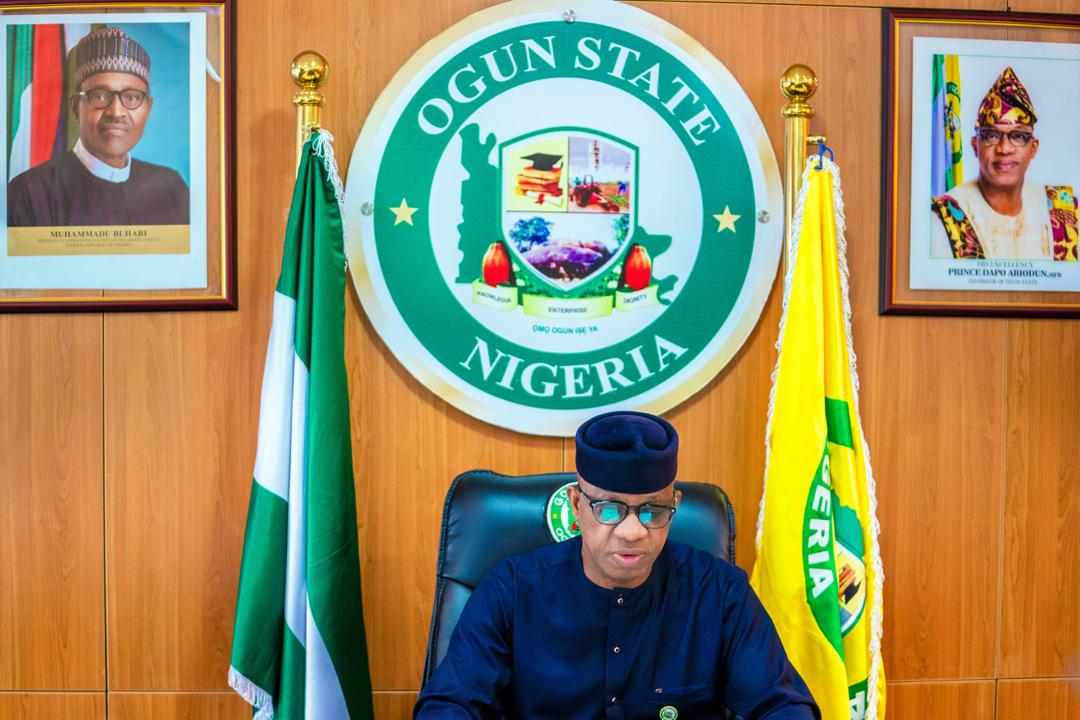
ADDRESS DELIVERED BY THE GOVERNOR OF OGUN STATE, HIS EXCELLENCY, PRINCE DAPO ABIODUN MFR, AT THE YEAR 2020 JUNE 12 COMMEMORATION ANNIVERSARY, HELD ON FRIDAY, 12TH JUNE, 2020
My dear people of Ogun State,
This day 27 years ago, Nigerians defied all their traditional fault-lines to vote en-mass for Chief Moshood Kasimawo Olawale Abiola as the President of our great nation. That day, there was no North, South, East or West. Nobody cared about tribes and tongues. It did not matter that it was a Muslim-Muslim ticket. Everybody wanted progress and voted for change in a manner unparalleled in the history of Nigeria.
2.It was a day Nigeria came together and there has never been a day like it again. This is because MKO Abiola won the election, fair and square. Abiola scored 58.36% of the 14 million votes cast. Abiola won in 20 of the then 30 States of the federation. He had a spread across all the geo-political zones. The election was declared Nigeria’s freest and fairest Presidential election by national and international observers, with Abiola even winning in his opponent’s home-State. June 12 is, thus, a day to remember Chief Moshood Kashimawo Olawale Abiola as well as other democracy martyrs.
3.I am talking about: (i) Free and fair elections; (ii) Uncoercedexpression of voters’ preference in election; (iii) Respect for electorate as unfettered final arbiter on elections; (iv) Decorum and fairness on the part of the electoral umpires; (v) Absolute respect for the rule of law. MKO remains the iconic reference for and symbol of ONE NIGERIA and our closest link to DEMOCRACY. Had we sustained the momentum, perhaps our great Nation, Nigeria, would have moved from its Third World Status to First World like Lee Kwan Yew’s Singapore.
4.Indeed, beside the Day the Union Jack flag was lowered for the Nation’s Green-White-Green flag, on October 1, 1960, there is no day with national significance like June 12, 1993. This is because in spite of the uniqueness and peculiarities of Nigeria, the election of MKO Abiola demystified all stereotypes about the so-called centrifugal and centripetal forces. June 12 was complete in answering to all the prerequisites which constitute an irreducible minimum for democracy.
5.Many Nigerians have always been of the opinion that June 12 should be a national holiday. However, only some Nigerian States were actually celebrating it until Tuesday, 6th June, 2018, when President Muhammadu Buhari, GCFR surprised the whole nation by choosing June 12 to replace the hitherto May 29 as the fair, right and proper day to celebrate our National Rebirth and real day of Democracy.
6.Let me use this opportunity to once again thank President Muhammadu Buhari GCFR, for conferring the highest National honour of Grand Commander of the Order of the Federal Republic (GCFR) on Late (Chief) Moshood Kashimawo Abiola on Tuesday, 12th June, 2018. That the President understood the need to correct the injustice done to a proud son of Ogun State and redressed it as a pre-requisite for peace and unity is not only commendable, it is worthy of emulation. As President Buhari rightly observed, we should consider this honour of Democracy Day as part of the process of healing and reconciliation as a National apology from our leaders to all of us. And, as today is the first year anniversary since our President recognized the day, we should ordinarily roll out the drums in Ogun State. We would have had a better and bigger celebration of June 12 if not for the global pandemic of COVID-19. Even if he had been around, President MKO Abiola, GCFR, would not have endorsed such indiscretion at this grievous period of the dreaded virus.
7.But even at that, we recognize that we have to do what we need to do in recognition of the Late MKO Abiola because we are all beneficiaries of his democratic sacrifice, which paved way for the democracy we all enjoy today. We know that democracy has been fully watered by the blood of some Martyrs and Abiola occupies a prime position in this respect. It was then not a surprise when he was given the posthumous highest award in Nigeria, the Grand Commander of the Federal Republic of Nigeria (GCFR).
8.As the Nation commemorates June 12, 1993, General Election, we celebrate Chief Abiola, the great Ogun State avatar, selfless philanthropist, successful businessman and social democrat. This is not just because the election remains a watershed in the political history of our country but because it is an attestation to the demonstrable show of love and patriotism that reverberate across the country and the rest.
9.Let me say that another significant element of the success of the June 12 election is based on the vision of the Late (Chief) MKO Abiola as anchored in his programme of creating prosperity for all the people of Nigeria. He believed that the wealth of Nigeria was sufficient enough for all her citizens, regardless of geographical location, sex, age, religion or tribes. It is in record that MKO Abiola was the first Presidential candidate that would campaign far and wide to all States of Nigeria before election. He had therefore felt the pulse and feelings of the people, even at the grassroots level. And, he always confirmed that he knew what poverty means, but he was also lucky to have education.
10.Thus, he saw education as a veritable vehicle for emancipation of the people. We are not surprised that Abiola aligned himself to education from all sides of the world . This is why he named two different educational facilities after his father, Salawu AbiolaComprehensive High School, Osiele; and, also his mother, ZulikhaAbiola College of Arabic and Islamic Studies, both in the State Capital.Furthermore, the late MKO knew the centrality of people as a focus of good governance and emancipation. That was why he anchored the entire campaign of “Hope 93” towards providing prosperity for the citizens of Nigeria – he wanted to banish poverty from Nigeria.
11.We are proud to identify with the dreams and vision encapsulated in “HOPE 93”. This also provided the compass to fashionour “Building our Future Together” Agenda to rekindle hope in the people of our dear State. I believe that the best way to immortalize thelate MKO Abiola is to ensure that the ideals that he lived and fought for,continue to live even after him. We must continue to propagate the evolution of democratic ideals and principles for further development of the Nigerian as a Nation. Our “Building our Future Together” Agenda is following the narrative of Abiola’s HOPE projects in education, agriculture, poverty alleviation, affordable healthcare, provision of infrastructure and good governance. These form the bases for our Administration’s unalloyed commitment towards upholding the principles of good governance of inclusiveness, openness, transparency, accountability, fairness, justice, equity, and obedience to the rule of law.We believe this will in turn engender more contributions from the people to the continued development of our dear State.
12. Let me once again reassure our people that we will continue to ensure that the dividends of democracy and benefits of good governance get to the generality of the people of Ogun State under our watch. We are committed to giving priority to the people as the focus of our Administration. We will continue to rekindle the hope of the people and reawaken their belief in their government. That is the best memorial we could ever give MKO. As an Administration, we will continue to live up to the ideals of Bashorun Moshood Kashimawo Olawale Abiola GCFR, and keep his dreams alive through continued and faithful implementation of our policies and programmes as reflected in our ISEYA acronym, that is:
I –Infrastructure
S – Social Welfare and Wellbeing
E – Education
Y – Youth Development, and
A – Agriculture and Food Security
13.Distinguished ladies and gentlemen, as we reflect today on the unquantifiable, selfless sacrifice and contributions of Chief Moshood Kashimawo Olawale Abiola to the development of our fatherland, let us remember in his words that “Only real democracy can move our Nation forward towards progress, and earn her the respect she deserves from the international community”. I therefore enjoin us all to rededicate ourselves to the service of the nation and continue to remain united and patriotic. No greater honour can be bestowed on Late Chief Abiola than this. This is when the labour of the highly revered politician, businessman and philanthropist as well as other heroes shall not be in vain.
14.Ladies and gentlemen, on a concluding note, I enjoin all of you to continue to pray for the repose of the soul of the gallant father of democracy, our own dear uncle, father, great-grandfather and symbol of Nigeria’s unity, late Moshood Kasimawo Olawale Abiola GCFR. There was no humiliation that he did not endure; no snare that was not put in his path; no setup that was not designed for him in his endeavour to use the path of peace to enforce the mandate that was bestowed on him. We remember today, as always, that you died that Democracy may survive in Nigeria. We pray that your beloved wife, Alhaja Kudirat, and other patriots whose blood water the field of democracy that we now enjoy find peace with their Creator. May the soul of Chief MKO Abiola continue to rest in perfect peace. Amen!
15.I thank you all for listening, and God bless.
Igbega Ipinle Ogun, ajose gbogbo wa ni o!
Prince Dapo Abiodun, MFR
Governor of Ogun State, Nigeria
Friday, 12th June, 2020




Politics
Ogun 2027: Senator Adeola Yayi Promises Inclusive Governance, Says, Ogun APC Primaries Peaceful, Transparent
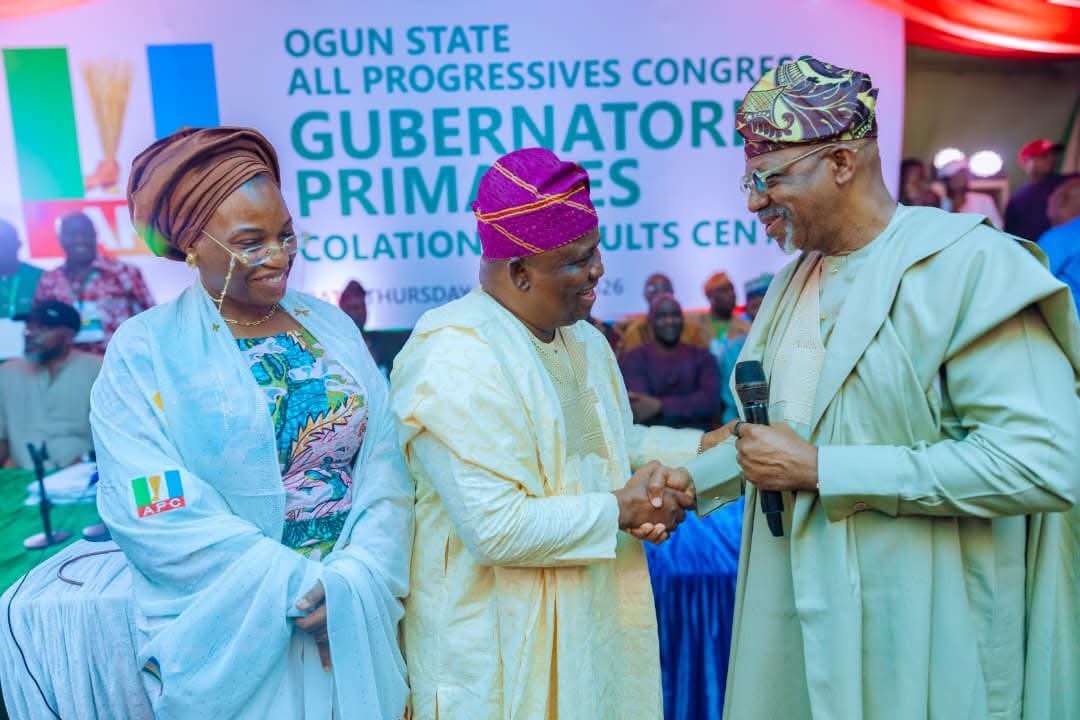
Ogun 2027: Senator Adeola Yayi Promises Inclusive Governance, Says, Ogun APC Primaries Peaceful, Transparent
…Dismisses Claims of Discontent Over Emergence as APC Consensus Candidate
ILARO-YEWA, OGUN STATE, NIGERIA – The Ogun State All Progressives Congress (APC) consensus candidate for the 2027 governorship election, distinguished Senator Solomon Olamilekan Adeola, has assured the people of the state that he would run an all-inclusive government if elected governor in 2027.
Fondly called Yayi, the senator currently representing Ogun West in the Red Chamber of the National Assembly made this known on Thursday, May 21, 2026, shortly after participating in the governorship primary at Pahayi, Ilaro Ward 1.
Speaking with journalists, Senator Adeola Yayi assured party members that he would not disappoint them if elected governor, pledging to deliver good governance while sustaining the developmental strides of the administration of Governor Dapo Abiodun.
According to him, “I want to assure the people that I will run an inclusive government and carry everyone along. It will be an administration that leaves no group or interest behind.”
The senator commended party faithful for the peaceful and orderly conduct of the governorship primaries, noting that the exercise reflected the unity and cohesion within the party.
Senator Adeola Yayi further expressed delight that the primary election was conducted peacefully across the state, describing the turnout of party members during the direct primary exercise as a strong indication that the APC remains formidable and well-positioned to record landslide victories in the 2027 general elections.
He also expressed gratitude to President Bola Ahmed Tinubu and Governor Dapo Abiodun for sustaining the internal democracy for which the ruling party is reputed, while reiterating his readiness to run an open and inclusive administration.
Fielding questions during the press interaction, the Ogun State APC consensus governorship candidate dismissed claims that some aspirants were aggrieved over his emergence as the party’s consensus candidate.
According to him, his emergence was not imposed on the party but was the outcome of extensive consultations and consensus among stakeholders and party leaders across the three senatorial districts of the state.
“I am not aware of any aggrieved aspirants over my emergence as the governorship consensus candidate of our dear party. The decision to present me as the consensus candidate was not foisted on the party.
“Rather, it was the result of far-reaching consultations and agreements among stakeholders and leaders of the party across the three senatorial districts of the state.
“To my knowledge, nobody was cheated and nobody was disenfranchised. I received overwhelming support at the Ogun State APC strategic meeting held at the party secretariat. Thereafter, I met with other aspirants, and we are all committed to working together for the betterment of the people of Ogun State”, he stated.
The senator, who was widely cheered across Ilaro metropolis, polled 3,023 votes at Pahayi Ilaro Ward 1, 2,601 votes in Ilaro Ward 2, and 2,419 votes in Ward 3. He later monitored the exercise in Ilaro Ward 2 and Ward 3, where party members and supporters hailed him enthusiastically at every stop.
The massive turnout of APC members across polling units in Ogun West, and indeed across Ogun State, was seen by observers of the scene as a demonstration of the widespread acceptance and popularity of the Chairman of the Senate Committee on Appropriations among the people, without any form of inducement.


*Rainbow Coalition Ambassadors Hails Rivers APC Over Peaceful Conduct of Guber Primaries*
Charges Chinda to Be Magnanimous in Victory as a Patriot
The Rainbow Coalition Ambassadors (RCA) has commended the All Progressives Congress (APC) in Rivers State for the peaceful and orderly conduct of its governorship primaries, describing the process as a shining example of political maturity and a departure from the state’s history of acrimonious contests.
In a statement signed by Comrade Jude Chuks and issued shortly after the declaration of Rt. Hon. Kingsley Ogundu Chinda as the party’s candidate for the 2027 governorship election, the group praised the APC leadership and stakeholders for ensuring a rancour-free exercise.
The Rainbow Coalition Ambassadors, a prominent support structure aligned with the broader Rainbow Coalition political movement in the state, noted that the smooth conduct of the primaries reflects growing commitment to unity, dialogue, and collective progress ahead of the 2027 polls.
“We congratulate the Rivers State APC for conducting a credible, transparent, and peaceful primary. This achievement underscores the maturing democratic culture in our state and sets a positive tone for the political season,” Chuks read.
The group specifically hailed the withdrawals of key aspirants, including Governor Siminalayi Fubara and Tonye Cole, which paved the way for Chinda’s emergence, describing the moves as “statesmanlike decisions taken in the supreme interest of peace and party cohesion.
While celebrating the outcome, the Rainbow Coalition Ambassadors charged the new flag bearer to remain magnanimous in victory and demonstrate the spirit of a true patriot.
“Victory at the primary is not an end in itself but a call to higher responsibility. We urge Hon. Kingsley Chinda to extend a hand of fellowship to all other aspirants, stakeholders, and even those outside the APC.
“True leadership demands inclusivity, humility, and the ability to heal divides rather than widen them,” the ambassadors emphasised.
They further appealed to Chinda to prioritise broad-based consultations, youth and women inclusion, and the welfare of Rivers people in his campaign and future governance plans, noting his legislative experience and cross-party relationships as key assets.
The group, however, expressed optimism that, knowing Chinda’s antecedents as a seasoned lawmaker, bridge-builder, and consistent advocate for good governance, he will unify the party, foster inclusive development, and deliver people-oriented leadership that prioritises the welfare of all Rivers people across party lines.
Obasa Warns Dissidents as Agege Affirms Hamzat as APC governorship candidate
Speaker of the Lagos State House of Assembly, Rt. Hon. Mudashiru Obasa, has issued a strong warning to dissidents within the All Progressives Congress, APC, that are spreading false reports about the House of Assembly primaries held Wednesday, May 20 across all the wards in the local government.
Supervising officers from the Independent National Electoral Commission (INEC) announced the immediate past Executive Chairman of Agege Local Government Area, High Chief Ganiyu Kola Egunjobi, and Barrister. Azeez Oladapo Ninalowo as winners of Agege Constituencies I and II respectively. Egunjobi polled 10, 126 votes while Ninalowo scored 12, 455 votes. Both candidates had earlier emerged as consensus aspirants during a caucus meeting of the party presided over by Speaker Obasa last Tuesday.
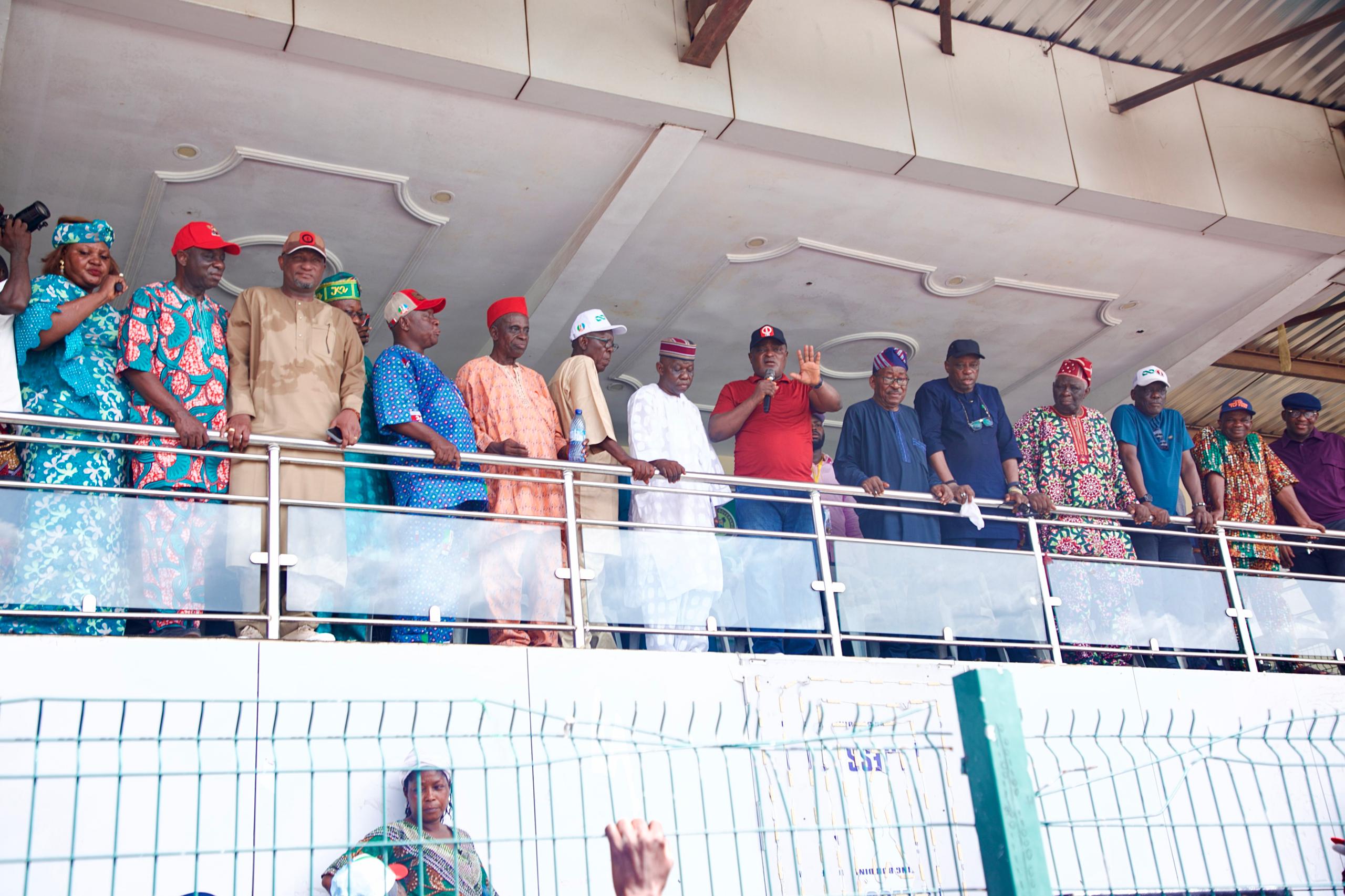
Obasa spoke at the Agege Stadium earlier today, Thursday, May 21, as the APC faithful and stakeholders converged in their thousands to affirm incumbent deputy governor, Dr Obafemi Hamzat, as the consensus candidate of the party in the 2027 governorship election.
Speaking on the outcome of the primaries, Obasa declared: “We’ve done everything according to the dictates of the party. Dr Obafemi Kadiri Hamzat is our governorship candidate. Senator Idiat Adebule is our candidate in the Lagos West Senatorial District, and Mudashiru Obasa is the candidate for Agege Federal Constituency in the House of Representatives. Collectively, we have decided and we are standing by the decision of our members.”
He commended INEC and security agencies “for helping us to have a free, fair, and transparent exercise devoid of violence and disorderliness.” The Speaker also praised party members for their loyalty and steadfastness, stating: “Agege is always here for the party. We are always present. When you are a member of a party, you should always participate in all its activities. Why will anyone who isn’t here claim to be part of us?
“You can’t be absent from all primaries and still claim that you are with us. We have conducted House of Representatives, Senate, House of Assembly, and Governorship primaries, yet some disgruntled party members have consistently stayed away. It is not possible. They are not part of us.”
Further, Obasa said: “We should be mindful of the people we send to represent us in any position. If they disregard us, we will wait until their tenure expires and remove them. The beauty of any political structure is continuity. Agege remains a shining example of a well-structured political organisation at the local government level.
“Nothing was done by subterfuge; everything was done in the open. INEC, DSS, Police, the media, and party leaders were all present. There’s nothing to fear. If anybody is initiating fake reports, let them continue. Anybody who has a problem should go and challenge the result in court. After the general election, maybe they will wake up,” he added.
With Hamzat’s candidacy sealed and Obasa drawing a hard line against internal dissent, Agege has sent a clear message: the APC’s fortress stands on loyalty and discipline, and those unwilling to march in step will be left behind as the party advances toward 2027.


- Strengthening Zambia’s Readiness for Health Emergencies: From Surveillance to Pandemic Preparedness May 21, 2026
- Economic Community of West African States (ECOWAS) Strengthens Regional Integration Through Cross-Border Cooperation Stakeholders’ Meeting in Abuja, Nigeria May 21, 2026
- Senegal Retains Title as Overall Champion at ECOWAS African Wrestling Tournament (TOLAC 14) May 21, 2026
- Eritrea: Diaspora Nationals Celebrate Independence Day Anniversary May 21, 2026
- Seychelles: President Herminie Visits District Administration Office and Library on La Digue May 21, 2026
- Egypt: President El-Sisi Meets Tunisian Minister Mohamed Ali Nafti May 21, 2026
- Joint statement welcoming the Republic of Togo’s announcement on Visa facilitation for African nationals May 21, 2026
- Advancing Regional Political Commitment and Cross Border Coordination for Ebola Preparedness and Response May 21, 2026
- Morocco: African Development Bank commits €200 Million to boost employability and develop future skills May 21, 2026
- Société Nationale des Pétroles du Congo (SNPC) Targets Global Operator Status as African Energy Chamber (AEC) Engagement Reinforces Congo’s Energy Ambitions May 21, 2026
- Strengthening Zambia’s Readiness for Health Emergencies: From Surveillance to Pandemic Preparedness May 21, 2026
- Economic Community of West African States (ECOWAS) Strengthens Regional Integration Through Cross-Border Cooperation Stakeholders’ Meeting in Abuja, Nigeria May 21, 2026
- Senegal Retains Title as Overall Champion at ECOWAS African Wrestling Tournament (TOLAC 14) May 21, 2026
- Eritrea: Diaspora Nationals Celebrate Independence Day Anniversary May 21, 2026
- Seychelles: President Herminie Visits District Administration Office and Library on La Digue May 21, 2026
- Egypt: President El-Sisi Meets Tunisian Minister Mohamed Ali Nafti May 21, 2026
- Joint statement welcoming the Republic of Togo’s announcement on Visa facilitation for African nationals May 21, 2026
-

 news5 months ago
WHO REALLY OWNS MONIEPOINT? The $290 Million Deal That Sold Nigeria’s Top Fintech to Foreign Interests
-

 society3 weeks ago
SOCIAL MEDIA IS NOT A BATTLEFIELD COMMAND – WHY THE NIGERIAN ARMY’S ACTION AGAINST JUSTICE CRACK IS A NATIONAL SECURITY IMPERATIVE
-

 celebrity radar - gossips4 months ago
Dr. Chris Okafor Returns with Power and Fire of the Spirit -Mounts Grace Nation Altar with Fresh Anointing and Restoration Grace on February 1, 2026
-

 celebrity radar - gossips5 months ago
Prophet Kingsley Aitafo Releases 2026 Prophecy: ‘Nigeria Will Rise, but the World Must Prepare for Turbulence’