
society
GOV. LAWAL MOURNS VICTIMS OF BANDITS’ ATTACK IN BUKKUYUM

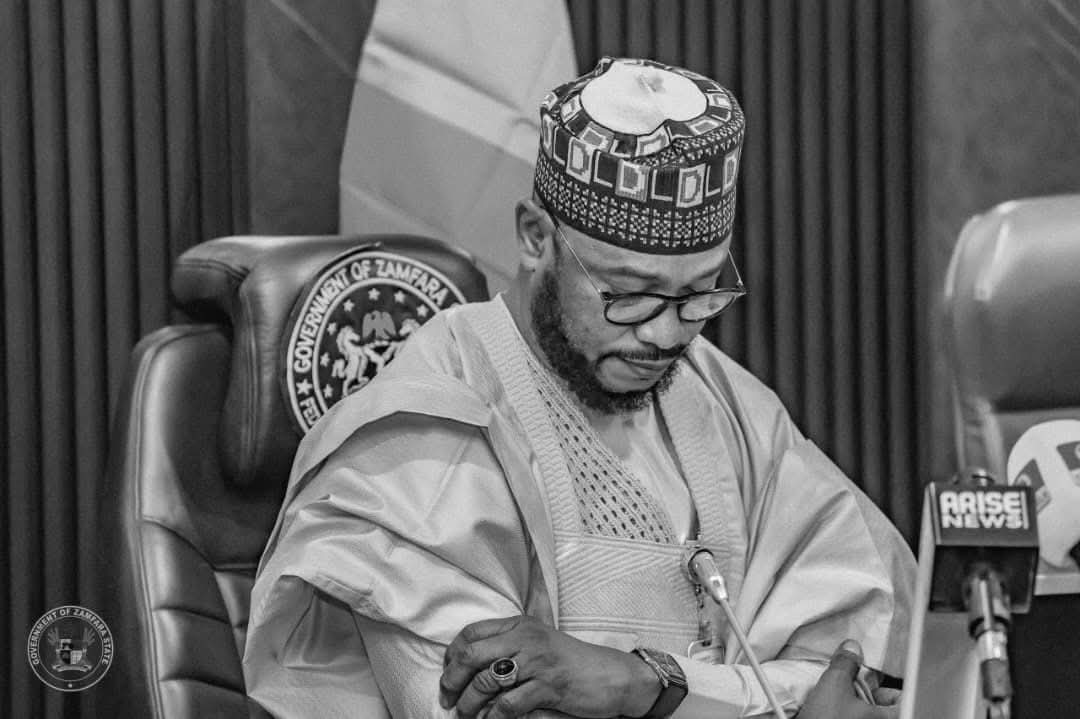
GOV. LAWAL MOURNS VICTIMS OF BANDITS’ ATTACK IN BUKKUYUM
Governor Dauda Lawal has expressed profound grief and deep sorrow over the tragic bandits’ attack on communities in Bukkuyum Local Government Area, which claimed innocent lives and left many others injured.
The Governor described the night assault on Bunkasau, Yar Galma (Zarumai Ward), and Dogon Daji (Adabka Ward) as a heartbreaking and senseless act of violence against defenceless citizens.
He extends his heartfelt condolences to the bereaved families, sharing in their pain and grief at this moment of immense loss and devastation.
Governor Lawal has directed the immediate deployment of a high-level delegation led by the Deputy Governor to convey condolences, provide support to affected families, and ensure prompt medical attention for the injured.
He reassures the people of Zamfara State of the government’s resolve to intensify efforts to safeguard lives and restore peace across all communities.




*GIVING WELL DESERVED KUDOS TO A TIRELESS REFORMER.
By Philip Agbese
In this present generation, institutions like the Nigerian Communications Commission (NCC) has been blessed with a leader whose tenure has become a reference point for courage, clarity, and uncommon administrative excellence. This leader has not simply supervised the agency, he has breathe a new life into the system that may have become cumbersome or directionless. The current Executive Vice Chairman and Chief Executive Officer of the Nigerian Communications Commission, Dr. Aminu Maida, is the dignified tireless reformer and leader who has performed beyond expectations in the NCC.
He came to the helm of the Commission at a time when the Nigerian telecom ecosystem required not ceremonial leadership, but strategic intelligence that needed to give results and not complacency. He came when courageous reforms were highly needed. Since he assumed office in November 2023, Dr. Maida’s transformative leadership style has produced immense results that were gotten from his numerous executed reforms. Today, these reforms has helped improve the growth of the commission and Nigeria at large.
Presently, the telecommunications industry remains one of the most consequential sectors in modern economies. It powers banking, education, commerce, governance, health systems, innovation, and social connectivity. For a nation as vast and dynamic as Nigeria, the regulator of such a sector requires a good combination of innovation with order, firmness with flexibility, and consumer protection with investor confidence. Right here is where Dr. Aminu Maida has distinguished himself from other leaders.
Under his leadership, the NCC has embraced what may be called “Intelligent Regulation”; a modern regulatory philosophy that is data-driven, transparent, responsive, and future-facing. Rather than rely on outdated bureaucratic methods, the Commission has evolved towards evidence-based governance, measurable standards, and public accountability.
This shift has not only improved the confidence of the institution alone but has also reassured operators, consumers, investors and development partners that Nigeria’s telecom industry is in a competent hand that will never leave any room for managerial failure.
The year 2025 was a significant year which saw another dimension in the evolution of the sector under Maida’s leadership.
One of the most consequential steps attributed to the NCC in 2025 was the return toward market-determined pricing principles in segments of the telecom economy. Despite not being a decision that was politically convenient or simplistic, it was economically strategic. This happened because foreign exchange volatility, tariff rigidity, and the rising cost in operation had strained operators’ ability to reinvest meaningfully in infrastructure for many years. According to available reports, these reforms have helped unlock more than $1 billion in fresh infrastructure commitments in 2025. This was a move that required foresight, courage, and the ability to prioritize long-term sustainability over short-term.
Moreover, reforms where made to see to infrastructural expansion. This led to the influx of fresh capital that translated into network upgrades, base station expansion, and procurement of modern equipment after hesitation. In practical terms, this means there will be wider coverage, stronger signals, and better user experience for millions of Nigerians. Maida’s reformist direction passed the performance test that measured leadership by an improved system and not by oratory or political alliance.
However, the NCC under Dr. Maida has also strengthened sanctions for operators who failed to deliver quality-of-service in their obligations. Reports indicate that non-compliance penalties rose significantly, including fines tied to reporting areas and persistent infractions. This reveals a working of a regulator that is unwilling to allow consumers become helpless victims of poor service delivery, further sending a clear message that profitability must coexist with responsibility. Nigerians are now saying goodbye to an era where operators act lawlessly without facing it consequences.
The year 2025 represented the act of courageous restructuring within the NCC, and so far, the year 2026 reflects measurable gains and consolidation of sacrifices made in executing big reforms in the previous year. The NCC’s fourth quarter of 2025 performance review was released in early 2026, and it pointed to clear improvement in national connectivity. It was recorded that there was increase in the median download speeds across urban and rural areas, while the quality gap between cities and remote communities narrowed. This is no ordinary achievement because it requires relentless coordination to improve digital inclusion in a country with diverse terrains, infrastructural limitations, and socioeconomic disparities,
Another laudable reform is revolutionary in its implications has been the Commission’s support for open performance data and nationwide network coverage mapping tools. These systems allow citizens to compare network quality by location and operator.
Additionally, the introduction of a Quality of Experience portal, which was designed to help monitor service performance in real time, further reflects a culture of transparency and measurable accountability. It speak more of a sector is keen on onboarding every available tools for achieving modern governance.
The renewed attention shown towards underserved and unserved communities has become one of the noblest dimensions of Maida’s tenure. Reports show that the NCC collaboration with the Association for Progressive Communications, focused on community networks and rural connectivity models through high-level engagements.
This particularly commendable because development cannot be exclusive for urban settlers. A child on a remote village also deserves access learning just as much students in Abuja or Lagos. A farmer in rural community deserves connectivity just as much as a trader in a commercial center. Breaching this gap was a very necessary and commendable effort.
In the case of cable theft, vandalism, fibre cuts, and accidental damage from road construction, the leadership of NCC under Maida has welcomed stronger legal protections for telecom infrastructure and aligned with security institutions to reduce disruptions. Now, there are new security frameworks and collaborative rapid response concepts.
Another refreshing Hallmark of Maida’s administration is the push for clearer tarrif structures and easier comprehension of service plans which would reflect good public communication and transparent pricing system. Under Maida’s stewardship, the NCC has become a regulator that is conscious of protecting consumers from being taken advantage of by operators. In the real sense, trust increases when citizens understand what they are paying for. When trust increases, markets deepen. When markets deepen, investment grows. This elegant alignment of market efficiency and consumer welfare is nothing but the writings of thoughtful leadership.
Perhaps most impressive is that Dr. Maida’s focus has not been confined to present challenges alone. In preparing Nigeria for the future, he has repeatedly emphasized on the readiness for new technologies and the urgency of ensuring that is up-to-date on global telecom evolution. While many are still adjusting to 4G and 5G realities, the world is already discussing advanced network futures. Maida is a tireless reformer who is solving today’s challenges must while preparing for tomorrow’s opportunities.
Dr Maida is not just a leader, he is a reformer is keen on fixing the present while taking care of the future. His rare and invaluable advance reforms are worthy of commendation despite inheriting a sensitive sector. His accomplishments are not accidental episodes, they are the cumulative results of when competence meets opportunity. Maida has demonstrated that Nigeria’s regulatory agencies can be modern, responsive, respected, and results-oriented.
Kudos to the tireless reformer who has shown that public service can still produce measurable progress when embraced with seriousness. Dr. Aminu Maida is steadily carving the reputation of a builder, and his fingerprints of leadership are visible and clearer for all to see.
Agbese is the Deputy Spokesperson of the 10th House of Representatives.
AMUPITAN-DALUNG CONTROVERSY: FORMER STUDENT DEFENDS INEC CHAIRMAN’S INTEGRITY
A legal scholar and alumnus of the University of Jos, Dr. John B. Mahwel, has come to the defence of the Chairman of the Independent National Electoral Commission (INEC), Prof. Joash Amupitan (SAN), amid ongoing public criticisms by former Minister of Youth and Sports, Hon. Solomon Dalung.
In a detailed account made public, Mahwel, a member of the University of Jos Faculty of Law’s 2009 graduating class, dismissed allegations questioning Prof. Amupitan’s integrity, describing them as “false, misleading and unacceptable.”
Mahwel, who holds multiple law degrees from the institution, including a PhD, said his intervention was necessary to “set the record straight” given his direct experience as both a student and later a lecturer under Prof. Amupitan.
He acknowledged both Amupitan and Dalung as distinguished products of the Faculty but stressed that his position was based on facts rather than sentiment or shared state origin.
Providing insight into his relationship with both men, Mahwel recalled being taught Law of Evidence by Prof. Amupitan and later working alongside him for over a decade. He described the INEC chairman as a mentor who supported his academic career based strictly on merit.
On Hon. Dalung, Mahwel recounted his time as a course coordinator known for a distinctive teaching style before transitioning into politics, eventually becoming a federal minister.
Addressing the core of the controversy, Mahwel rejected claims that Amupitan was involved in any form of academic misconduct during the 2009 academic session. He explained that issues of result manipulation did occur at the time but were traced to lapses in administrative processes involving non-academic staff.
According to him, it was under Amupitan’s leadership as Dean that the discrepancies were uncovered and corrected through an internal investigation. The process, he noted, led to the reversal of improperly awarded grades and, in some cases, delayed graduations for affected students.
He described the action as a “demonstration of institutional integrity” rather than evidence of wrongdoing.
Mahwel also refuted claims that a serving Deputy Inspector General of Police graduated in the 2009 set with a disputed result, stating that no such individual existed in his class to his knowledge.
On allegations that Amupitan frustrated Dalung academically, Mahwel argued that the timeline did not support such claims, noting that Amupitan was not Dean when Dalung pursued his postgraduate studies. He further emphasized that academic decisions are made collectively, limiting the ability of any single official to victimise a student.
While expressing respect for both figures, Mahwel cautioned against the politicisation of sensitive institutional matters, particularly in a period of heightened political activity.
He urged public figures to exercise restraint in their statements, warning that unverified claims could mislead the public and undermine confidence in key national institutions.
Mahwel concluded by reaffirming his stance that Prof. Amupitan’s record reflects integrity and professionalism, calling on the public to rely on verifiable facts rather than politically charged narratives.
INEC CHAIRMAN HAS NO ACCOUNT ON X, DISREGARD PARTISAN FABRICATIONS
ABUJA — The Independent National Electoral Commission (INEC) has firmly denied claims that its Chairman, Joash Amupitan, operates a personal account on X (formerly Twitter), describing the allegation as “entirely baseless and fabricated.”
In a press statement issued Friday, the Commission said the viral post allegedly linked to the Chairman was a deliberate attempt to tarnish his reputation and undermine the neutrality of the electoral body.
INEC stressed that its Chairman has no presence on X and has never engaged in partisan commentary or political activity, either publicly or privately.
“This claim is a figment of the imagination of its purveyors,” the statement noted, adding that the post was part of a coordinated misinformation campaign.
The Commission warned that the false narrative comes at a critical time when it is focused on electoral reforms and preparations for upcoming polls, describing the development as a “needless distraction.”
INEC also raised concerns over rising cyber fraud, revealing that fake accounts bearing the Chairman’s identity have previously been used to deceive unsuspecting Nigerians.
According to the statement, such accounts have been reported to security agencies, with the latest incident seen as a continuation of a broader criminal pattern.
The electoral body disclosed that it is now working with security and cyber-intelligence agencies to track down those responsible for the impersonation and misinformation.
INEC emphasized that offenders would face prosecution under Nigeria’s Cybercrimes laws, warning that identity theft and the spread of forged digital content remain serious criminal offences.
The Commission urged the public to ignore the false claims and rely only on official INEC communication channels for verified information.
Despite the controversy, INEC reaffirmed its commitment to conducting free, fair, and credible elections across the country.


- Seychelles Backs United Arab Emirates (UAE) Statement, Calls for De-escalation and Respect for International Law April 11, 2026
- TotalEnergies’ Africa Senior Vice President (SVP) Mike Sangster to Spotlight Expanding Project Pipeline at Paris Forum April 11, 2026
- Ascott expands in Nairobi with new Citadines signing, reinforcing the city’s position as a regional hub April 11, 2026
- Century Group Joins African Energy Week (AEW) 2026 as Floating Production Storage and Offloading (FPSO) Partner, Showcasing Regional Offshore Expansion April 10, 2026
- Climate Litigation Surge Reshapes Energy Policy as Africa Seeks Stronger Legal Voice April 10, 2026
- ES-KO Secures Five-Year Catering & Facilities Management Contract Renewal with TotalEnergies EP Congo April 10, 2026
- Beyond the Court: The Kalahari Conference Solidifies its Status as Africa’s Premier Sports & Lifestyle Destination April 10, 2026
- Africa Sports Unified Launches Pan-African Sports Deals Tracker to Improve Market Visibility and Decision-Making April 10, 2026
- Nigeria and Senegal Must Follow Ghana and Mozambique Against Exclusionary Practices April 10, 2026
- Sheraton Nouakchott marks the entry of Marriott International in Mauritania April 10, 2026
- Seychelles Backs United Arab Emirates (UAE) Statement, Calls for De-escalation and Respect for International Law April 11, 2026
- TotalEnergies’ Africa Senior Vice President (SVP) Mike Sangster to Spotlight Expanding Project Pipeline at Paris Forum April 11, 2026
- Ascott expands in Nairobi with new Citadines signing, reinforcing the city’s position as a regional hub April 11, 2026
- Century Group Joins African Energy Week (AEW) 2026 as Floating Production Storage and Offloading (FPSO) Partner, Showcasing Regional Offshore Expansion April 10, 2026
- Climate Litigation Surge Reshapes Energy Policy as Africa Seeks Stronger Legal Voice April 10, 2026
- ES-KO Secures Five-Year Catering & Facilities Management Contract Renewal with TotalEnergies EP Congo April 10, 2026
- Beyond the Court: The Kalahari Conference Solidifies its Status as Africa’s Premier Sports & Lifestyle Destination April 10, 2026
-

 news4 months ago
WHO REALLY OWNS MONIEPOINT? The $290 Million Deal That Sold Nigeria’s Top Fintech to Foreign Interests
-

 celebrity radar - gossips3 months ago
Dr. Chris Okafor Returns with Power and Fire of the Spirit -Mounts Grace Nation Altar with Fresh Anointing and Restoration Grace on February 1, 2026
-

 celebrity radar - gossips4 months ago
Prophet Kingsley Aitafo Releases 2026 Prophecy: ‘Nigeria Will Rise, but the World Must Prepare for Turbulence’
-

 celebrity radar - gossips6 months ago
End of an Era: Nigeria Mourns Evangelist Dr. Uma Ukpai, 80