
society
History as a Binding Glue: How Nigeria’s Collective Memory Can Hold Us Together

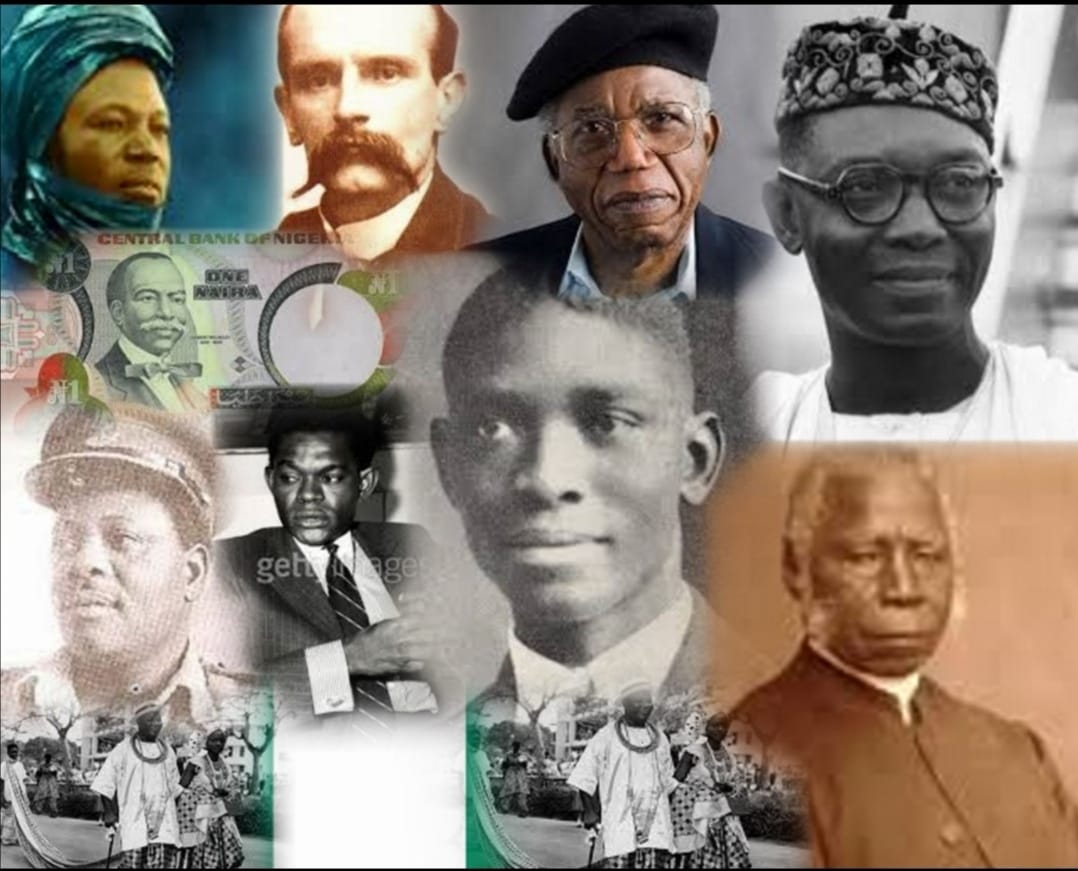
History as a Binding Glue: How Nigeria’s Collective Memory Can Hold Us Together.
By George Omagbemi Sylvester | Published by saharaweeklyng.com
Remember the cost our past paid for the freedoms we squabble over today.
Nigeria’s past is not an optional footnote. It is the adhesive that can bind a fractured nation, the story of a people who fought COLONIAL MASTERS, survived a devastating CIVIL WAR and refused to let authoritarian theft of the BALLOT STAND. Those episodes are not simply chapters of grievance; they are testimonies of sacrifice, resilience and prices paid in blood and dignity. If we tell those stories honestly (with the scale of suffering and the faces of those who resisted in full view) we can turn memory into moral capital and common purpose.

On October 1, 1960, Nigeria formally emerged from British colonial rule into an uncertain independence, a moment of euphoria that masked deep regional and structural fault lines. Independence was the fruit of decades of organized struggles by nationalists (Nnamdi Azikiwe, Obafemi Awolowo, Ahmadu Bello and COUNTLESS UNSUNG PATRIOTS who worked in political parties, unions, churches, mosques and market squares) insisting that Nigerians be masters of their fate. That victory was not inevitable. It was won by organizing, argument and sacrifice. Remembering the public courage that produced independence anchors us, it reminds citizens that rights were claimed, not gifted and that vigilance is required to keep them.
Yet INDEPENDENCE did not INOCULATE Nigeria against the CENTRIFUGAL forces of ethnicity, economic inequality and political exclusion. Those tensions birthed the Nigerian Civil War from 1967 to 1970 a conflict that left an indelible moral scar on the NATION. The human cost was immense, scholars and modern historians estimate civilian and military deaths ranging from hundreds of thousands to several million, with famine and displacement devastating entire communities. The war’s memory is not merely a record of loss; it is a stern lesson about what happens when the state fails to forge inclusive political institutions and when political disputes are resolved by force instead of dialogue. To ignore that lesson is to court a repetition of the catastrophe.

Memory becomes moral only when it names names not to perpetuate vendettas, but to catalogue the forces that undermined our shared life. The stories of ordinary Nigerians who fed the starving, sheltered the displaced and resisted abuses should be made central in schoolrooms, memorials and public ceremonies. Commemoration should not be a STATE-MANAGED spectacle that airbrushes inconvenient truths; it must be a living archive that teaches future citizens how and why freedoms were won and how easily they may be lost. When history is taught as a series of human choices instead of a parade of anonymous disasters, we sharpen the civic instincts necessary for democracy.
The appeal of shared memory is not sentimental; it is strategic. June 12, 1993 (the day of what many historians call Nigeria’s freest and fairest election) is a prime example. The annulment of that election and the subsequent suffering of its presumed winner, Chief Moshood Kashimawo Olawale (MKO) Abiola, galvanized a nation and produced a generation of activists who would not accept democratic theft. That collective insistence on the sanctity of the ballot ultimately became one of the reference points for modern Nigerian democratic theology. Honoring June 12 and teaching why the people rose, cements a civic ethic that prizes electoral legitimacy over personalist power.

Though memory only binds, if it is told with moral clarity rather than partisan rancour. Our public narratives too often collapse into two traps; either they MYTHOLOGIZE leaders while excusing historical sins or they WEAPONIZE history into perpetual grievance that paralyses constructive engagement. Instead, Nigeria needs memory that is capacious enough to embrace both sacrifice and critical appraisal; to praise courage where it existed and to call out failures of leadership that betrayed the public trust.
Literature and public intellectuals have long urged such a balanced approach. Wole Soyinka, a living repository of Nigeria’s conscience, has warned against trivialising the struggles that birthed democratic claims; he insists that those who reduce these sacrifices to personal ambition are the “REAL ENEMIES” of democratic progress. That is a clarion call, memory must be reverent without being worshipful, forensic without being vindictive.

The mechanics of turning memory into glue are practical and urgent. First: education. Civic curricula must foreground the independence movement, the causes and human cost of the civil war and the democratic struggles of 1993, not as distant trivia but as foundational civic literacy. Second: public commemoration should include museums, oral-history projects and community memorials that center ordinary citizens testimonies, market women, soldiers mothers, teachers and the imprisoned. Thirdly, the media and arts should be incentivized to dramatize and interrogate these histories rather than sensationalize them. When children see a classroom play about a community that rescued refugees during the war, they learn empathy and responsibility in ways that abstract lectures cannot deliver.
There is also a political duty. Leaders must refuse the cynical erasure of history for political expediency. They should sponsor TRUTH-SEEKING and RECONCILIATION where necessary, fund the preservation of archives and create public spaces that facilitate honest national dialogue. When governments act as historians by omission (suppressing uncomfortable records, rewarding amnesia) they fracture the social compact that history is meant to preserve.
Memory’s binding force also demands civic rituals that are nonpartisan. National holidays and commemorations should be infused with real substance: testimonies, public hearings and the awarding of civic honors to unsung heroes. When citizens see that sacrifices made by previous generations are publicly acknowledged, they are likelier to invest in the common good. Conversely, when memory is monopolized as a partisan trophy, it loses legitimacy and slips into polarising myth.
Finally, the moral energy drawn from shared history must be converted into accountability. The memory of those who suffered should demand better governance today and transparent institutions, a justice system that works and economic policies that reduce inequality. To venerate past sacrifice while tolerating present rot is moral hypocrisy; history binds only when it creates obligations in the present.
Nigeria’s story (independence wrested from empire, a civil war that almost dissolved the nation and democratic struggles that risked and sometimes lost lives) gives us a profound choice. We can let those stories be trophies for factional VIRTUE-SIGNALING or we can make them the mortar for a durable civic architecture. If we choose the latter, history becomes more than memory: it becomes a binding glue; the shared narrative that holds citizens accountable to one another, resists demagogues and demands a politics worthy of the price that previous generations paid.
The past did not deliver us a perfect country. It delivered us a country with an obligation to honor sacrifice with institutions that protect liberty, to honor resilience with policies that expand opportunity and to honor those who fought for democracy with an unflinching commitment to the rule of law. Remembering is not merely retrospective mourning; it is FORWARD-LOOKING resolve. Let us tell the stories properly, teach them widely and act on them fiercely; because the better future we seek must be built on the full truth of where we have been.
– George Omagbemi Sylvester




US-Based Society Lady, Fehintola-Brat Extends Eid-El-Kabir Greetings To Muslims
United States based fahionista of class, Chief (Mrs) Ayoola Fehintola-Brat has extended a warm greetings to Muslim faithful all over the world on the occasion of the 2026 Eid-El-Kabir celebration.
Fehintola-Brat who is the Balogun Egbe Obaneye Obinrin Akile Ijebu, and the Yeye Asofin of Idenaland in her message to Journalists urged Muslim to continually uphold the enduring values of sacrifice, obedience, faith, and compassion, which are central to the significance of Eid-El-Kabir festival.
A quiet philantropist whose humanitarian services has won her several laurels urged Muslims to use the spiritual occasion to pray for the peace co-existence of Nigerians regardless of religious, social and political leanings stressing that the oneness of the country should not be underplay.
In a related development, she expressed her felicitations to all sons and daughters of Ijebuland on the forthcoming Ojude Oba 2026 celebration, tasking age-groups otherwise known as Regbregbe to be more proactive in giving back to their immediate communities.
According to her, the beauty of the age-groups in Ijebuland is the need to contribute immensely to the development of the land in no small means. “This we will continue to achieve with God on our side”, she concluded.
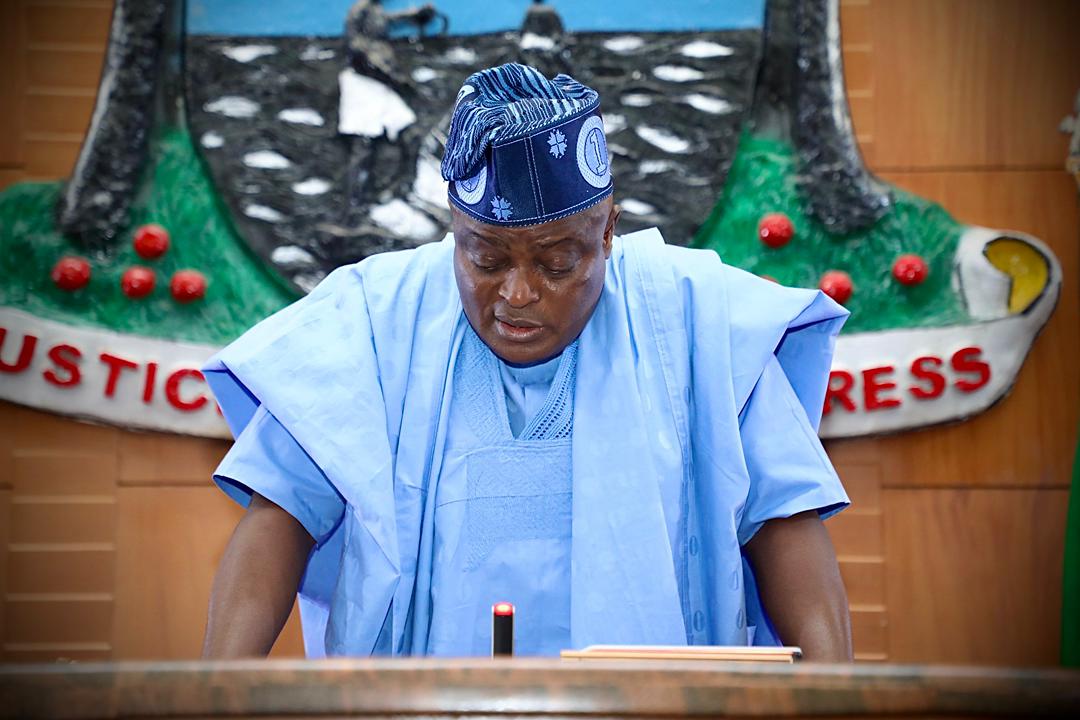
Sallah: Obasa Felicitates Muslim Ummah, Commends Nigerians for APC Primaries Turnout
The Speaker of the Lagos State House of Assembly, Rt. Hon. Mudashiru Obasa has extended warm felicitations to Muslims in Lagos State and across Nigeria on the occasion of Eid al-Adha.
In a statement released by his Chief Press Secretary, Mr. Dave Agboola, Obasa described the festival as a season of sacrifice, reflection, and gratitude, urging the faithful to continue to uphold the values of peace, unity, and love that strengthen the nation.
He noted that the celebration of Eid al-Adha is not only a spiritual milestone but also a reminder of the importance of togetherness and collective responsibility in building a stronger society.
He, likewise, emphasized that the festival provides an opportunity for Nigerians to renew their commitment to national progress and to support leadership that prioritizes development and prosperity.
Obasa, however, commended Nigerians, particularly members of the All Progressives Congress (APC), for their massive turnout during the recently concluded party primaries. He described the participation as a clear demonstration of the people’s confidence in the government of President Bola Ahmed Tinubu and their belief in the administration’s vision for a greater Nigeria.
“The APC primaries have shown the resilience of our democracy and the confidence Nigerians have in the leadership of President Bola Ahmed Tinubu and the Renewed Hope Agenda. This is a strong message that our people are ready to continue supporting policies that will drive growth and prosperity,” Obasa stated.
The Speaker further encouraged Muslims to celebrate responsibly, stressing that the joy of Eid should be accompanied by prayers for the continued peace and progress of Lagos State and Nigeria.
“As you celebrate with family and loved ones, may this season bring joy, peace, and prosperity to your homes. Let us remain united in our resolve to build a stronger nation,” he added.
On behalf of the Lagos State House of Assembly, Obasa wished all Muslims a happy and fulfilling Eid al-Adha celebration.

ABEOKUTA FILM FESTIVAL AT ILEYA
Kayshow Multimedia a filmmaking and Media organization this year 2026 holds its annual Abeokuta film festival at the Ake Palace in Abeokuta.
Alake of Egba land, Ọba Michael Adedotun Arẹmu Gbadebo has graciously endorsed the Free Training of Egba Youths on Film and Arts and the Entertainment of the the People with a FREE FILM SHOW at the AKE PAVILION. as part of the ABEOKUTA FILM FESTIVAL 2.0.
The Convener of the Film Festival Honorable Kehinde Soaga says this year’s event promises to be more exciting as distinguished personalities are sure to attend.
This includes the honorable Minister for Art Culture and Creative Economy in Nigeria, Barr. Hannatu Musa Musawa, Ààrẹ Lai Labode, Sen. Ibikunle Amosun and other special guests.
The event will feature Film, Cultural Dance Cultural foods and Award Ceremony.
The general public is hereby invited to the Free film show at the Abeokuta film festival at the Alake Palace Pavilion on Thursday 28th of May 2026 by 4:00 p.m.
Only well dressed is the Entry. The Abeokuta Film Festival is an annual event taking place in the capital city of Ogun State state.


- Qrent says delaying Information Technology (IT) refresh cycles may be increasing operational risk for businesses in Africa May 27, 2026
- Dentons’ Iyunola Adekanye Appointed to African Mining Week (AMW) Advisory Board May 27, 2026
- United Nations (UN) Women Liberia and Partners Convene for Spotlight Initiative 2.0 Women’s Economic Empowerment Inception Meeting May 27, 2026
- African Mining Week (AMW) to Host Central Bank Governors Roundtable as Monetary Authorities Deepen Role in Mining Sector Growth May 27, 2026
- Eritrea: Diaspora Nationals Celebrate Independence Day Anniversary May 27, 2026
- Africa Unveils Landmark Humanitarian Coordination Platform to Strengthen aligned Response to Humanitarian Crises May 27, 2026
- Seychelles: President Herminie Engages with Police and Fire Services on Praslin May 27, 2026
- Issue 3 of Mining Review Africa now available for free download May 27, 2026
- NOV Joins African Energy Week (AEW) 2026 as Gold Sponsor Amid Africa’s Offshore Expansion Push May 26, 2026
- African Union of Broadcasting (AUB) and United Nations University Institute for Water, Environment and Health (UNU-INWEH) Launch Landmark Webinar Series on Africa’s Water Crisis, Starting June 2, 2026 May 26, 2026
- Qrent says delaying Information Technology (IT) refresh cycles may be increasing operational risk for businesses in Africa May 27, 2026
- Dentons’ Iyunola Adekanye Appointed to African Mining Week (AMW) Advisory Board May 27, 2026
- United Nations (UN) Women Liberia and Partners Convene for Spotlight Initiative 2.0 Women’s Economic Empowerment Inception Meeting May 27, 2026
- African Mining Week (AMW) to Host Central Bank Governors Roundtable as Monetary Authorities Deepen Role in Mining Sector Growth May 27, 2026
- Eritrea: Diaspora Nationals Celebrate Independence Day Anniversary May 27, 2026
- Africa Unveils Landmark Humanitarian Coordination Platform to Strengthen aligned Response to Humanitarian Crises May 27, 2026
- Seychelles: President Herminie Engages with Police and Fire Services on Praslin May 27, 2026
-

 news5 months ago
WHO REALLY OWNS MONIEPOINT? The $290 Million Deal That Sold Nigeria’s Top Fintech to Foreign Interests
-

 society3 weeks ago
SOCIAL MEDIA IS NOT A BATTLEFIELD COMMAND – WHY THE NIGERIAN ARMY’S ACTION AGAINST JUSTICE CRACK IS A NATIONAL SECURITY IMPERATIVE
-

 celebrity radar - gossips4 months ago
Dr. Chris Okafor Returns with Power and Fire of the Spirit -Mounts Grace Nation Altar with Fresh Anointing and Restoration Grace on February 1, 2026
-

 celebrity radar - gossips6 months ago
Prophet Kingsley Aitafo Releases 2026 Prophecy: ‘Nigeria Will Rise, but the World Must Prepare for Turbulence’