
society
History Is Knocking: Memory as Weapon; Will Nigeria Lift the Shield or March Blind into Repetition?


History Is Knocking: Memory as Weapon; Will Nigeria Lift the Shield or March Blind into Repetition?
By George Omagbemi Sylvester | Published by SaharaWeeklyNG.com
“REMEMBER or REPEAT; Nigeria’s future depends on whether we choose MEMORY over AMNESIA.”
Nigeria lives in the long shadow of its past. The country that emerged on October 1, 1960 (radiant with promise, vast in diversity and rich in human and natural resources) has been repeatedly battered by choices made in the present that forget the LESSONS of HISTORY. To treat history as a dusty archive is to hand the future to forces that thrive on collective amnesia. Corruption, impunity, ethnic manipulation and policy myopia. If memory is indeed a weapon, Nigeria’s survival depends on whether its citizens and leaders are brave enough to wield it. {Independence – Oct 1, 1960; sources on Nigeria’s founding and constitutional arc.}

We must first admit a simple fact, MEMORY is POLITICAL. Who remembers and how we remember shapes power. Chinua Achebe’s blunt admonition remains essential: “Until the lions have their own historians, the history of the hunt will always glorify the hunter.” That line is not mere literary flourish (it is a diagnosis. When state narratives elevate rulers and erase victims, justice withers and policy becomes propaganda. The Nigerian story has repeatedly seen official versions triumph over inconvenient truths, coups sanitised as necessary correctives; economic mismanagement repackaged as temporary sacrifice; violence rationalised as inevitable. Reclaiming national memory means restoring the histories of those sidelined) the poor farmer whose land was drained by a policy he never consented to, the activists whose warnings were ignored, the communities displaced by avoidable violence.
Concrete reminders of what happens when memory is abandoned are stark. The Nigerian Civil War -1967/1970- (a human catastrophe that cost hundreds of thousands, possibly millions, of lives) was not simply a regional conflict but a national wound born of ethnic fear, political exclusion and resource competition. Its lessons (the cruelty of blockades; the human cost of political exclusion; the fragility of a federation without trust) must be institutionalized (memorials, properly funded history curricula, and truth-telling commissions) lest the CYCLE REPEAT. The facts are not negotiable, the war’s dates and the scale of the suffering remain foundational to any honest national narrative.

Similarly, the annulment of the June 12, 1993 election (a moment that exposed the rot of military patronage and elite collusion) should be taught, commemorated and used as a political touchstone. The denial of that mandate left a generational scar on civic trust that still influences political behaviour. Commemoration is not mere ritual; it is a political act that says to society that WE REMEMBER INJUSTICE and we will not let it be normalized.
The cost of forgetting is measurable. Recent independent assessments show Nigeria wrestling with alarming socio-economic indicators and poverty levels that remain staggeringly high and a public sector reputation stained by pervasive corruption. The World Bank has documented deep and growing numbers of people pushed into poverty in the last decade; Transparency International places Nigeria low on its Corruption Perceptions Index, indicating that impunity remains a major structural problem. When governance is short-term and amnesic (leaders failing to heed past policy failures) outcomes weaken and ordinary citizens pay with hunger, displacement and lost opportunity. These are not abstract metrics; they are human lives.
Memory must therefore be institutional, not episodic. Plaques and occasional speeches are insufficient. Real memory requires three pillars: TRUTHFUL EDUCATION, TRANSPARENT ARCHIVES and CIVIC RITUALS that bind people across ethnicity and region. Our schools must teach the hard chapters honestly and not only triumphs but THE BETRAYALS, THE CORRUPTION SCANDALS, THE PROTEST MOVEMENTS and THE POLICY MISTAKES. National archives must be accessible; public records preserved and digitized; commissions set up to investigate and publish findings on major national failures. Finally, CIVIC RITUALS (memorial days, inclusive commemorations of struggle, and public dialogue) will stitch individual memory into national consciousness. Without these pillars, memory remains a private act rather than a public defence. (On curriculum and archival reform: see international best practice and calls from civil-society scholars.)
Of course, memory alone is not a magic cure. It is useful only insofar as it leads to accountability and reform. Remembering the Civil War without addressing the economic and political grievances that fuelled it is a hollow exercise. Honouring June 12 without institutional safeguards for electoral integrity is symbolic theatre. Therefore, memory must feed mechanisms of justice: judicial independence, anti-corruption agencies that work, robust investigative journalism and empowered parliaments that exercise meaningful oversight. Where memory prompts policy changes (land reform, fiscal transparency, inclusive governance) it becomes a true weapon of collective defence.

Voices from Nigeria’s intellectual tradition demand no less. Wole Soyinka has repeatedly insisted that nations must “CONFRONT HISTORY HONESTLY”, a call that is both MORAL and STRATEGIC. Honest confrontation means naming perpetrators, acknowledging errors and creating institutional constraints that prevent recurrence. It also means cultivating a civic culture where criticism is not criminalized but welcomed as necessary oxygen for democracy. These are not soft ideals; they are practical steps proven in democracies that have moved from trauma to stability.
There is also resistance. ELITES BENEFIT WHEN THE PAST IS BLURRED. For them, selective memory is a shield. They confect myths of inevitability (that corruption is the price of unity, that emergency decrees are love letters to stability) hoping citizens will forget the alternatives. Combatting this requires an active civil society and media that refuse co-option. Independent journalism, civic education programs and grassroots truth-telling gatherings must be supported. Funding channels that promote investigative reporting and community-based history projects are investments that pay dividends in accountability. Recent reporting and investigations have already exposed the consequences of policy amnesia; food crises compounded by poor planning, infrastructure projects announced without follow-through, fiscal policies that punish the poor. These reports must be amplified, protected and acted upon.
Finally, memory is a democratic practice. It invites ordinary citizens into the national conversation and makes them custodians of truth. The young, who form a majority of Nigeria’s population, must be handed accessible narratives; not SACCHARINE PATRIOTISM, but GRITTY STORIES of how institutions failed and how citizens fought back. When young people inherit a robust, critical memory, they will be less likely to accept cynical elites and easier to mobilize for honest reform. When elders pass down TRUTHFUL, PLURALISTIC HISTORIES rather than PAROCHIAL MYTHS, the nation’s shield grows stronger.
History is knocking. Will Nigeria lift the shield or continue marching blind into repetition? The answer depends on whether we choose to remember with courage and act with conviction. Memory without action is nostalgia; action without memory is recklessness (together and through honest education, open archives, public commemoration and accountable institutions) Nigeria can turn memory into a lasting defence. The choice is ours. If we embrace it, the next generation may finally inherit more than rhetoric: a nation that remembers, reforms and rises.
– George Omagbemi Sylvester





UKA Gears Up for Final ATC Exchangeability Test Run as June Preparations Begin.
May 30, 2026 – As the month of June gathers momentum, the *United Kingdom of Atlantis, UKA*, a sovereign nation has unveiled a series of vital guidelines and preparatory packages to ensure citizens and stakeholders run the *ATC Exchangeability* process effectively.
In an official update, the *President of Atlantic Crown Limited, Empress of Attica Empire UKA*, confirmed that the *Final Test Run of ATC Exchangeability* is scheduled for the month of June 2026. The exercise marks a key phase ahead of the *Official Exchangeability Window, set to run from July 2026 to February 2027*.
### Key Highlights from the Presidential Briefing
1. *Final Test Run – June 2026*
The test run is designed to validate systems, procedures, and user readiness before full activation. Citizens, partners, and designated participants are urged to follow all official advisories released by UKA authorities during this period.
2. *Official Exchangeability Period*
Following the successful completion of the June test run, the Official Exchangeability will commence in july 2026 and we are Expecting Full Exchange ability between July Ending, 2026 to February 2026.
UKA stated that detailed schedules, eligibility requirements, and step-by-step instructions will be communicated progressively through verified UKA channels.
3. *Benefiting Packages for June*
In line with UKA’s commitment to citizen empowerment, the month of June will feature “benefiting packages” aimed at education, preparation, and seamless onboarding. These packages are intended to equip the people of UKA with the knowledge and tools needed for effective participation.
4. *Commitment to Transparency*
Addressing the nation, the Empress of Attica Empire UKA emphasized:
_“Final Test Run of ATC Comes up in The Month of June, As We Prepare For The Official Exchangeability, Between July 2026 To Feb 2027. All Information Will Be Communicated.”_
UKA reaffirmed that only information released through official UKA platforms should be regarded as authoritative.
The United Kingdom of Atlantis is encouraging all citizens, representatives, and interested parties to remain alert to official communications, attend designated orientation sessions, and avoid unofficial sources. UKA’s dedication to order, clarity, and the collective benefit of its people as the nation moves into this significant phase.
For updates, advisories, and participation guidelines, citizens are advised to monitor official UKA communication channels.
United Kingdom of Atlantis, UKA, is a sovereign nation, committed to national development, citizen welfare, and structured economic participation through initiatives such as ATC Exchangeability.
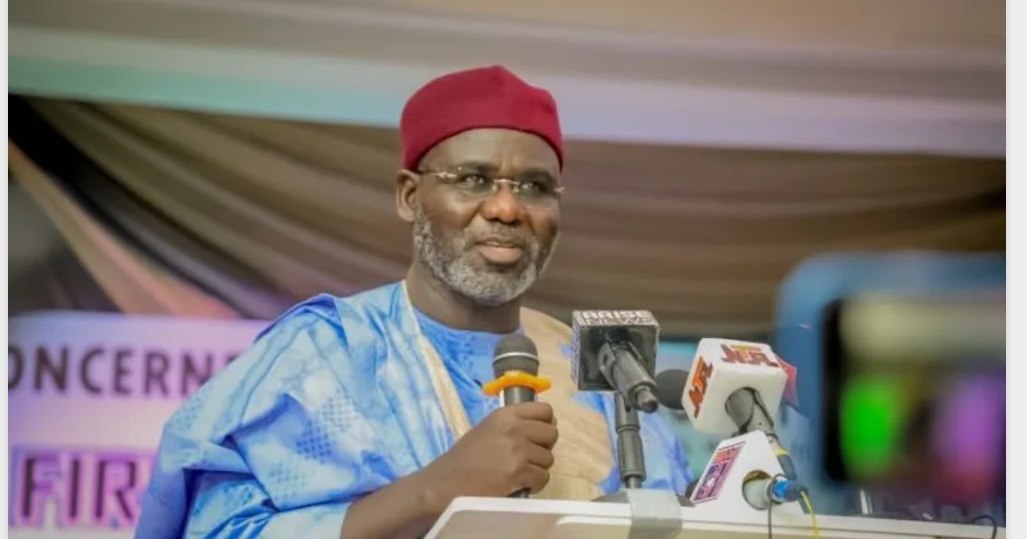
Three Years On, General Buratai Hails Tinubu’s Economic, Security Achievements
Former Chief of Army Staff, Lt. Gen. Tukur Buratai (retd.), has commended President Bola Ahmed Tinubu for what he described as bold economic reforms and improved security efforts as the President marks three years in office.
In a goodwill message on Thursday to commemorate Tinubu’s third anniversary as President and Commander-in-Chief of the Armed Forces, Buratai said the administration had taken courageous decisions that would leave a lasting impact on Nigeria’s development.

According to him, President Tinubu broke a long-standing cycle that had hindered national growth by removing fuel subsidy and implementing foreign exchange reforms aimed at stabilising the naira and strengthening the economy.
He noted that the reforms were beginning to yield positive results, citing the global acceptance of Nigerian debit cards, the gradual revival of local refineries, access to student loans, and ongoing road and infrastructure projects across the country.
“The FCT Administration has also recorded remarkable progress, completing major road projects that remained unfinished for over 16 years,” Buratai stated.
The former army chief also praised the administration’s security efforts, saying renewed military offensives against insurgents, terrorists and bandits had led to notable successes across various parts of the country.
He specifically lauded recent joint operations involving Nigerian and United States forces against Boko Haram and ISWAP in the North-East, as well as intensified counter-banditry operations in the North-West.
“We have seen notorious ISWAP commanders being neutralised. I congratulate the Commander-in-Chief, the Minister of Defence, the Chief of Defence Staff, the Service Chiefs, the Inspector-General of Police and heads of intelligence agencies for their efforts,” he said.
Buratai, however, acknowledged that challenges remained, stressing the need for more aggressive military operations and intelligence-driven strategies in the coming year.
While urging Nigerians to remain hopeful, he said celebrating the President’s achievements did not amount to ignoring the difficulties facing the nation.
“Because you truly care, you have shown the courage to trade short-term comfort for long-term hope. Nigerians need your reassurances, and that is why we remain optimistic and full of confidence,” he added.
The retired military officer reaffirmed his support for the Tinubu administration and expressed confidence that the foundation being laid by the government would deliver a brighter future for the country.
He also prayed for God’s guidance, wisdom, strength and good health for the President as he continues to lead Nigeria.
NUT Raises Alarm Over Continued Captivity of Abducted Oyo Pupils, Teachers
The Nigeria Union of Teachers has expressed deep concern over the continued captivity of pupils and teachers abducted during an attack on schools in the Ahoro-Esinle and Yawota communities in Oriire Local Government Area of Oyo State.
In a statement issued on Saturday, the Oyo State wing of the union described the situation as increasingly distressing, particularly following the emergence of a video allegedly released by the abductors showing the victims pleading for their freedom.
The union said the footage had heightened fears over the welfare of the abducted pupils and teachers, describing their ordeal as heartbreaking and unacceptable.

According to the NUT, no child or teacher deserves to be subjected to such traumatic experiences, adding that the prolonged captivity of the victims has continued to inflict psychological pain on their families, colleagues and the wider education community.
The union called on the Federal Government, Oyo State Government and relevant security agencies to intensify efforts towards securing the immediate and safe release of the victims.
“This is not a moment for hesitation. It is a moment for coordinated, intelligence-driven efforts to ensure the immediate and safe release of all abducted pupils and teachers,” the statement read.
While acknowledging ongoing interventions by security agencies and government authorities, the union stressed that time was of the essence, warning that every additional day in captivity deepens the trauma suffered by the victims.
The NUT urged security operatives to strengthen surveillance, improve community intelligence gathering and deploy all necessary operational and diplomatic measures to facilitate the rescue of the abductees.
It also appealed to traditional rulers, community leaders and residents to support rescue efforts by providing credible information that could assist security agencies.
“The safety of our children and teachers must remain a collective priority,” the union stated.
Reaffirming its support for the families of the victims, the NUT pledged continued solidarity and prayers while advocating safer learning environments across the country.
The statement was jointly signed by the Chairman of the Oyo State NUT, Comrade Hassan Ajibola Fatai, and the Secretary, Comrade Salami Olukayode.


- Africa Centres for Disease Control and Prevention (Africa CDC) Statement on Attacks Against Health Facilities During the Bundibugyo Virus Disease Response in the Democratic Republic of the Congo June 1, 2026
- Putting consumers at the centre of Africa’s dairy transformation June 1, 2026
- International Rescue Committee (IRC) warns Democratic Republic of the Congo (DRC) Ebola outbreak likely far larger than official figures suggest June 1, 2026
- South Africa: Portfolio Committee on Health Marks National Cancer Survivor Day and Reaffirms Importance of Early Detection and Public Awareness June 1, 2026
- Rwanda’s RSSB Tigers Crowned 2026 Basketball Africa League Champions June 1, 2026
- Uganda: Appointments Committee Begins Vetting of Ministerial Nominees June 1, 2026
- Sudan braces for worsening child malnutrition as pre-harvest season starts June 1, 2026
- Etu Energias Strengthens Angolan Footprint, Returns to Angola Oil & Gas (AOG) 2026 as Champion Sponsor June 1, 2026
- PayAngel Expands Global Payout Capabilities Through Collaboration with Visa and Currencycloud June 1, 2026
- From Commitment to Classrooms: Advancing Refugee Education through the United Nations High Commissioner for Refugees (UNHCR)–TECNO’s Global Partnership June 1, 2026
- Africa Centres for Disease Control and Prevention (Africa CDC) Statement on Attacks Against Health Facilities During the Bundibugyo Virus Disease Response in the Democratic Republic of the Congo June 1, 2026
- Putting consumers at the centre of Africa’s dairy transformation June 1, 2026
- International Rescue Committee (IRC) warns Democratic Republic of the Congo (DRC) Ebola outbreak likely far larger than official figures suggest June 1, 2026
- South Africa: Portfolio Committee on Health Marks National Cancer Survivor Day and Reaffirms Importance of Early Detection and Public Awareness June 1, 2026
- Rwanda’s RSSB Tigers Crowned 2026 Basketball Africa League Champions June 1, 2026
- Uganda: Appointments Committee Begins Vetting of Ministerial Nominees June 1, 2026
- Sudan braces for worsening child malnutrition as pre-harvest season starts June 1, 2026
-

 news6 months ago
WHO REALLY OWNS MONIEPOINT? The $290 Million Deal That Sold Nigeria’s Top Fintech to Foreign Interests
-

 society4 weeks ago
SOCIAL MEDIA IS NOT A BATTLEFIELD COMMAND – WHY THE NIGERIAN ARMY’S ACTION AGAINST JUSTICE CRACK IS A NATIONAL SECURITY IMPERATIVE
-

 celebrity radar - gossips4 months ago
Dr. Chris Okafor Returns with Power and Fire of the Spirit -Mounts Grace Nation Altar with Fresh Anointing and Restoration Grace on February 1, 2026
-

 celebrity radar - gossips6 months ago
Prophet Kingsley Aitafo Releases 2026 Prophecy: ‘Nigeria Will Rise, but the World Must Prepare for Turbulence’