
news
House of Assembly Crisis: Why CBN, Accountant General Must Stop Monthly Allocations To Benue, Zamfara — Group

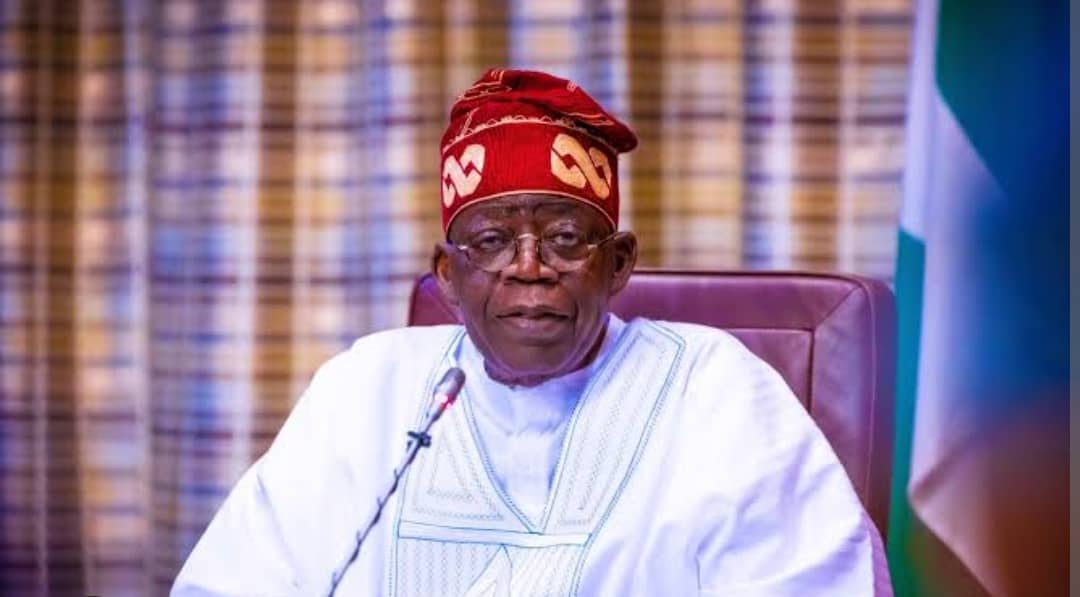
The Concerned Citizens Network for Democracy (CCND) has given the Benue and Zamfara State Houses of Assembly a 72-hour ultimatum to recall all suspended lawmakers or face legal action seeking to halt statutory monthly allocations to the two states.
In a statement issued in Abuja and signed by Moses Adamu, the group’s Secretary-General, CCND accused the state governments of supervising an ongoing constitutional breach, stressing that both Houses of Assembly currently lack the legal quorum required to function and pass appropriation laws.
The group threatened to file a suit at the Federal High Court to compel the Central Bank of Nigeria (CBN) and the Accountant General of the Federation to withhold monthly FAAC disbursements until constitutional order is restored.
“This is not just an internal matter within the legislature of two states. It is a clear case of abuse of democratic institutions, where state governors, in collaboration with the speakers, are running their states without the minimum legislative legitimacy required by law. It is a rape of democracy,” Adamu said.
According to CCND, both Benue and Zamfara Assemblies have unlawfully suspended nearly half of their members, leaving behind insufficient numbers to meet the constitutionally stipulated two-thirds quorum. Yet, these minority legislators continue to sit, deliberate, and pass critical motions — including budget-related matters.
“No House of Assembly can validly function, debate, or legislate without a legal quorum. When the majority of duly elected lawmakers are suspended under questionable circumstances, the assembly ceases to be legitimate. This undermines every law, appropriation, and oversight action carried out by the remaining minority members.”
He added that the direct consequence of this illegality is that both governors — Hyacinth Alia of Benue and Dauda Lawal of Zamfara — are currently running governments that no longer have the endorsement of their state assemblies as constituted by law.
“Without a legally constituted assembly, any action taken by the executive lacks the moral and legal seal of the people. These governors are not kings. They are elected heads of government, expected to govern with legislative oversight and institutional balance,” he added.
CCND argued that the only peaceful and constitutional means to correct the ongoing abuse is to apply financial pressure by halting monthly allocations until the crisis is resolved.
“Public funds are being released to state executives who are acting outside of constitutional provisions. The CBN and the Accountant General of the Federation must not continue to fund illegality. By continuing to disburse FAAC allocations to Benue and Zamfara states, federal institutions are aiding and abetting constitutional violations,” the statement added.
The group likened the current situation to a private company operating without a functioning board of directors, stating that no legitimate financial institution would continue to release money in such circumstances.
“The state Houses of Assembly are the people’s boardrooms. You cannot suspend half the directors and claim to be conducting lawful business.”
Beyond the technical breach, the group raised concerns over the pattern of political intimidation behind the suspensions. In both states, suspended lawmakers are known critics of the executive arm, and many were removed after raising concerns about security, budget implementation and constituency project transparency.
“This is not about disorderly conduct or gross misconduct as the speakers claim. This is about silencing opposition, clearing the path for unchecked control, and removing voices that demand transparency. It is dictatorship in democratic clothing,” the group said.
Adamu said the CCND had credible information that some of the suspended lawmakers in Benue were denied access to the assembly complex and had their benefits frozen without due process.
The group warned that the failure of civil society, federal institutions, and the judiciary to respond firmly to the situation could set a dangerous precedent where governors, in collaboration with pliant speakers, cripple state assemblies and rule without accountability.
“If this pattern continues unchecked, governors across the country will see it as a playbook: suspend dissenters, shrink the assembly, rule without scrutiny, and get paid for it. Nigeria’s democracy is too fragile to permit such a loophole,” the statement read.
The CCND said it is giving the governments of Benue and Zamfara three days to recall all suspended members and reinstate the constitutional balance of their assemblies.
“If by the end of 72 hours there is no concrete step to resolve this, our lawyers will file a suit asking the Federal High Court to declare the current assemblies illegal and compel the federal government to freeze statutory allocations until due process is restored,” Adamu concluded.


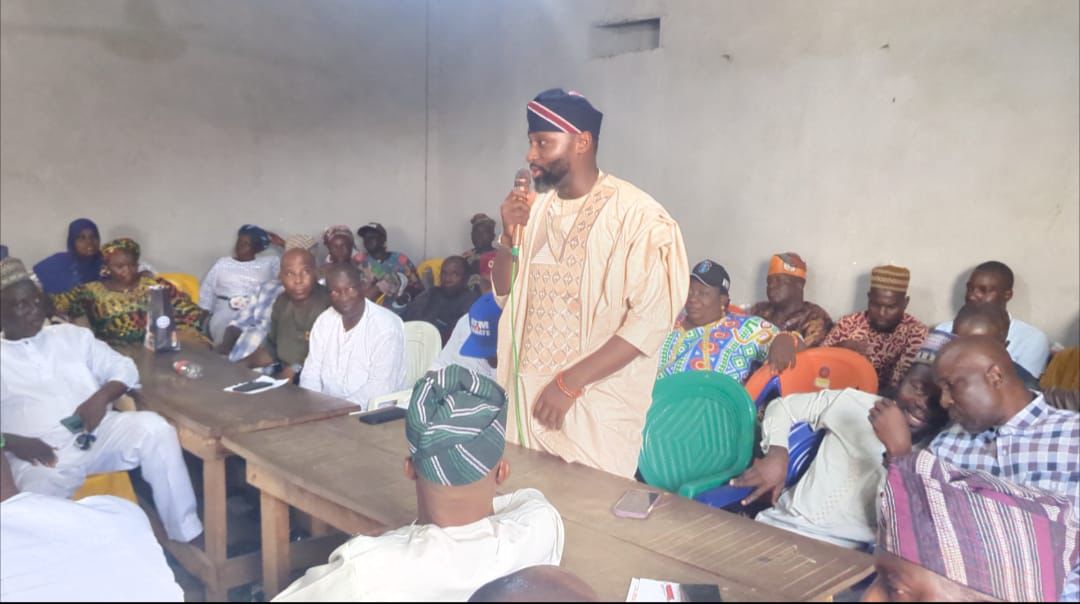
Reports from the field in Ondo North Senatorial District indicate that voters, officers, and agents at the voting centers across the wards have put Abdul Tunji Mohammed (ATM) in the lead.
According to the current figures collated from the centers, ATM is polling with wider margins of votes
Going by these figures, ATM is poised to win all the six Local Government in the Senatorial Districtt.
We urge all party members and supporters to remain peaceful as collation continues.
news
Senate Leader Opeyemi Bamidele Hosts Ondo North Aspirant Abdul Tunji Mohammed, Backs Grassroots Development Agenda

Senate Leader Opeyemi Bamidele recently hosted Chief Abdul Tunji Mohammed (ATM), a prominent aspirant for the Ondo North senatorial seat.
The meeting highlighted a strategic alignment between progressive forces, with both leaders emphasizing a shared vision for grassroots development and legislative excellence.
Senator Bamidele, a respected figure in Nigerian politics, is recognized for his contributions to national cohesion and impactful policymaking, drawing on his experience as a legal luminary and human rights activist.
Chief Mohammed, an astute businessman and dedicated grassroots mobilizer, has made a notable impact on Ondo North through his philanthropic work and commitment to constituents’ welfare. His approach blends corporate discipline, economic ingenuity, and a deep concern for people—qualities that have reshaped the region’s political narrative.
The two leaders discussed the district’s critical needs, exploring avenues for socioeconomic growth, legislative reform, and stronger community integration. Senator Bamidele stressed the importance of supporting President Bola Ahmed Tinubu’s Renewed Hope Agenda, a sentiment echoed by Chief Mohammed.
The convergence of Chief Mohammed’s vision with Senator Bamidele’s legislative experience offers hope for Ondo North. This synergy between grassroots ambition and seasoned mentorship points to a promising future for the district’s representation in the Senate. With ATM’s drive and the guidance of leaders like Senator Bamidele, Ondo North is positioned for progress and transformative governance.

APC Senatorial aspirant for Ondo North, Abdul Tunji Mohammed, popularly known as ATM, received a resounding endorsement on Thursday during a high-profile visit to Ikare-Akoko.
The endorsement came from the Olukare of Ikare, His Royal Majesty Oba Akadiri Momoh IV, the Owa Ale of Ikare, His Royal Majesty Oba Adeleke Adedoyin, and the Ikare Council of Chiefs, who described ATM as a credible son of the soil with the capacity to represent Ondo North effectively at the Senate.
Speaking at the palace, the Olukare commended ATM for his consistent engagement with the people and his track record in business and community development. “We have watched your contributions to Ondo North over the years. You are one of us, and we believe you have the experience and character to speak for our people in Abuja,” the monarch said.
The Owa Ale, in his remarks, stressed the need for unity and quality representation. He urge him to continue the help to the people at home that he’s doing. He urged other stakeholders to support aspirants with proven commitment to the district’s progress, noting that Ikare and Akoko land require strong voices at the National Assembly.
In his response, Abdul Tunji Mohammed thanked the monarchs and chiefs for their blessings and trust. He reaffirmed his commitment to prioritize infrastructure, education, healthcare, youth empowerment, and agricultural development if elected.
“Ikare is central to Ondo North, and your support strengthens my resolve to serve with integrity and results. I will not betray this trust. My campaign will remain issue-based, and my representation will reflect the hopes of our people,” ATM stated.
The visit was marked by prayers, cultural displays, and solidarity from party leaders, youth, and women groups across Ikare-Akoko.


- Statement of the International Contact Group for the Great Lakes (ICG) on the situation in the eastern Democratic Republic of the Congo (DRC) May 24, 2026
- Eritrea: Messages of Congratulations May 24, 2026
- African Development Bank (AfDB) – 2026 Annual Meeting: Full live coverage on Africa 24 May 24, 2026
- Countries in the Horn of Africa and Yemen recommit to ending variant poliovirus May 23, 2026
- Seychelles: President Visits Police and Fire Services in Final Stop on La Digue Tour May 23, 2026
- United Nations World Food Programme (WFP) scales up emergency Ebola response in eastern Democratic Republic of the Congo (DRC) to contain risk of regional crisis May 23, 2026
- Economic Community of West African States (ECOWAS) Inspection Team Visits ECOWAS Stabilisation Support Mission in Guinea Bissau May 23, 2026
- Member States advance regional coordination on Bundibugyo Ebola response May 23, 2026
- World Health Organization (WHO) Supports Zambia to Strengthen Access to Mental Health Medicines and Services May 23, 2026
- Brazzaville 2026 African Development Bank Group (AfDB) Annual Meetings to focus on mobilising Africa’s development financing at scale May 22, 2026
- Statement of the International Contact Group for the Great Lakes (ICG) on the situation in the eastern Democratic Republic of the Congo (DRC) May 24, 2026
- Eritrea: Messages of Congratulations May 24, 2026
- African Development Bank (AfDB) – 2026 Annual Meeting: Full live coverage on Africa 24 May 24, 2026
- Countries in the Horn of Africa and Yemen recommit to ending variant poliovirus May 23, 2026
- Seychelles: President Visits Police and Fire Services in Final Stop on La Digue Tour May 23, 2026
- United Nations World Food Programme (WFP) scales up emergency Ebola response in eastern Democratic Republic of the Congo (DRC) to contain risk of regional crisis May 23, 2026
- Economic Community of West African States (ECOWAS) Inspection Team Visits ECOWAS Stabilisation Support Mission in Guinea Bissau May 23, 2026
-

 news5 months ago
WHO REALLY OWNS MONIEPOINT? The $290 Million Deal That Sold Nigeria’s Top Fintech to Foreign Interests
-

 society3 weeks ago
SOCIAL MEDIA IS NOT A BATTLEFIELD COMMAND – WHY THE NIGERIAN ARMY’S ACTION AGAINST JUSTICE CRACK IS A NATIONAL SECURITY IMPERATIVE
-

 celebrity radar - gossips4 months ago
Dr. Chris Okafor Returns with Power and Fire of the Spirit -Mounts Grace Nation Altar with Fresh Anointing and Restoration Grace on February 1, 2026
-

 celebrity radar - gossips5 months ago
Prophet Kingsley Aitafo Releases 2026 Prophecy: ‘Nigeria Will Rise, but the World Must Prepare for Turbulence’