
Business
How i took over my wife’s drug trafficking business – Evangelist reveals

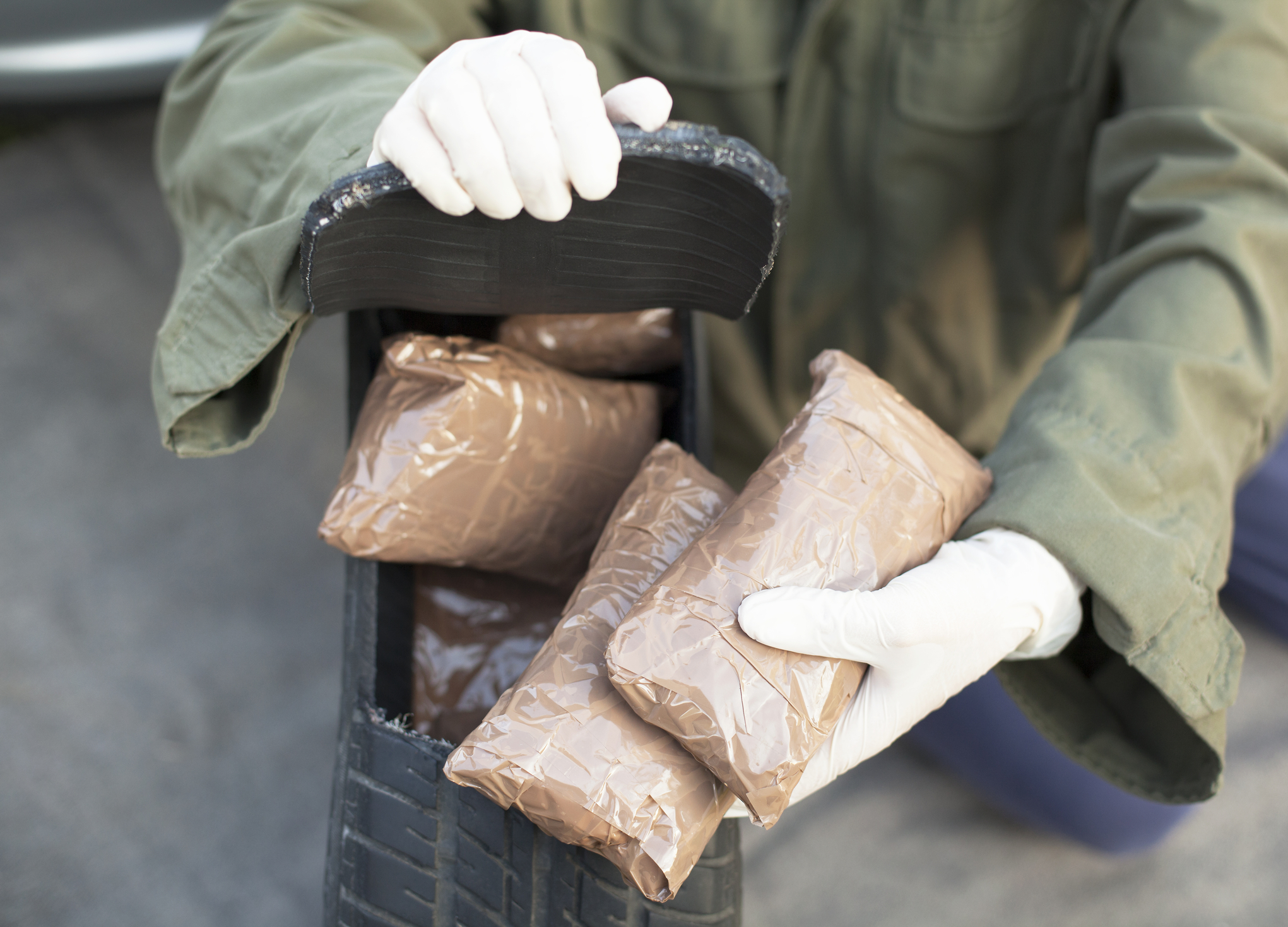

A 52-year-old Nigerian evangelist based in South Africa, John Arinze, has been arrested by the National Drug Law Enforcement Agency, NDLEA, for allegedly attempting to export N1.4bn worth of narcotics to South Africa.
Arinze who hails from Ara village, Nise in Awka South Local Government Area of Anambra State, reportedly concealed the drugs made of 92kgs methamphetamine and 73kgs ephedrine, inside two containers of foodstuff meant for export to South Africa at the Apapa Seaport in Lagos State.
Other items in the container were said to include hair cream, bags of melon, kegs of palm oil, beans, biscuits and sardine. Sniffer dogs belonging to the agency reportedly detected the drugs during screening operation.
This disclosure was made known by the NDLEA spokesperson, Mitchell Ofoyeju, on Friday.
In a statement, the spokesperson said the suspect was under interrogation following an intense undercover operation by the agency.
Ofoyeju added that the suspect had confessed to the crime.
The statement reads, “During examination of the containers marked MSKU 388274-1 and MSKU 424717-0; anti-narcotic officials detected 20kg of Methamphetamine and 50kg of Ephedrine inside the first container. Also, 72Kg of Methamphetamine and 23Kg of Ephedrine were detected in the second container. The total weight of the drugs is 165kg.
“Officers successfully traced the illicit consignment to a 52 year old man who claimed to be an evangelist by name John Vincent Arinze who was arrested in his hotel room in Lagos.
“A Mercedes Benz sport utility vehicle belonging to him was also impounded at the time of arrest.
“Arinze who had lived in South Africa for over a decade accepted ownership of the illicit shipment.
“The drugs were hidden inside packs of melon, concealed in foodstuff and cosmetics such as gaari (cassava flakes), noodles, food seasoning, yam powder, some alcoholic and non-alcoholic drinks, pepper, milk, herbal hair cream and cereals,” the statement added.
The Chairman/Chief Executive of NDLEA, Col. Muhammad Abdallah (retd.), commenting on the arrest, said the seizure would have a positive influence on the campaign against narcotic and psychotropic substances in the country.
Abdallah was quoted as saying “This is a product of careful planning and meticulous tracking of narcotic drugs movement. The consignments were closely monitored by our undercover agents and intercepted at Apapa Seaport, Lagos following the detection of narcotics by NDLEA sniffer dogs during screening operation. This will definitely have a positive influence on Nigeria’s drug control efforts.
“I am very happy with the success recorded in this operation. The Agency will remain painstaking and professional in the fight against illicit drug production, trafficking, abuse and prosecuting offenders. We hope to unmask the drug syndicate behind this shipment and make more arrests soon.
“The statement said the suspect would soon be charged to court.”
Confessing to the crime, the suspect reportedly told operatives in his statement that he made a big mistake by taking over the business of his late wife, who was into drug trafficking.
“I am an evangelist living in Durban South Africa. My late wife was into drug trafficking before she died few years ago. I made a mistake venturing into her business. It is my fault,” he was quoted as saying.




Business
Alpha Morgan Bank Reinforces Commitment to Education at Redeemer’s University Business School Commissioning
Alpha Morgan Bank Reinforces Commitment to Education at Redeemer’s University Business School Commissioning
Alpha Morgan Bank has reaffirmed its commitment to education and institutional development through its support for the commissioning of the Redeemer’s University Business School.
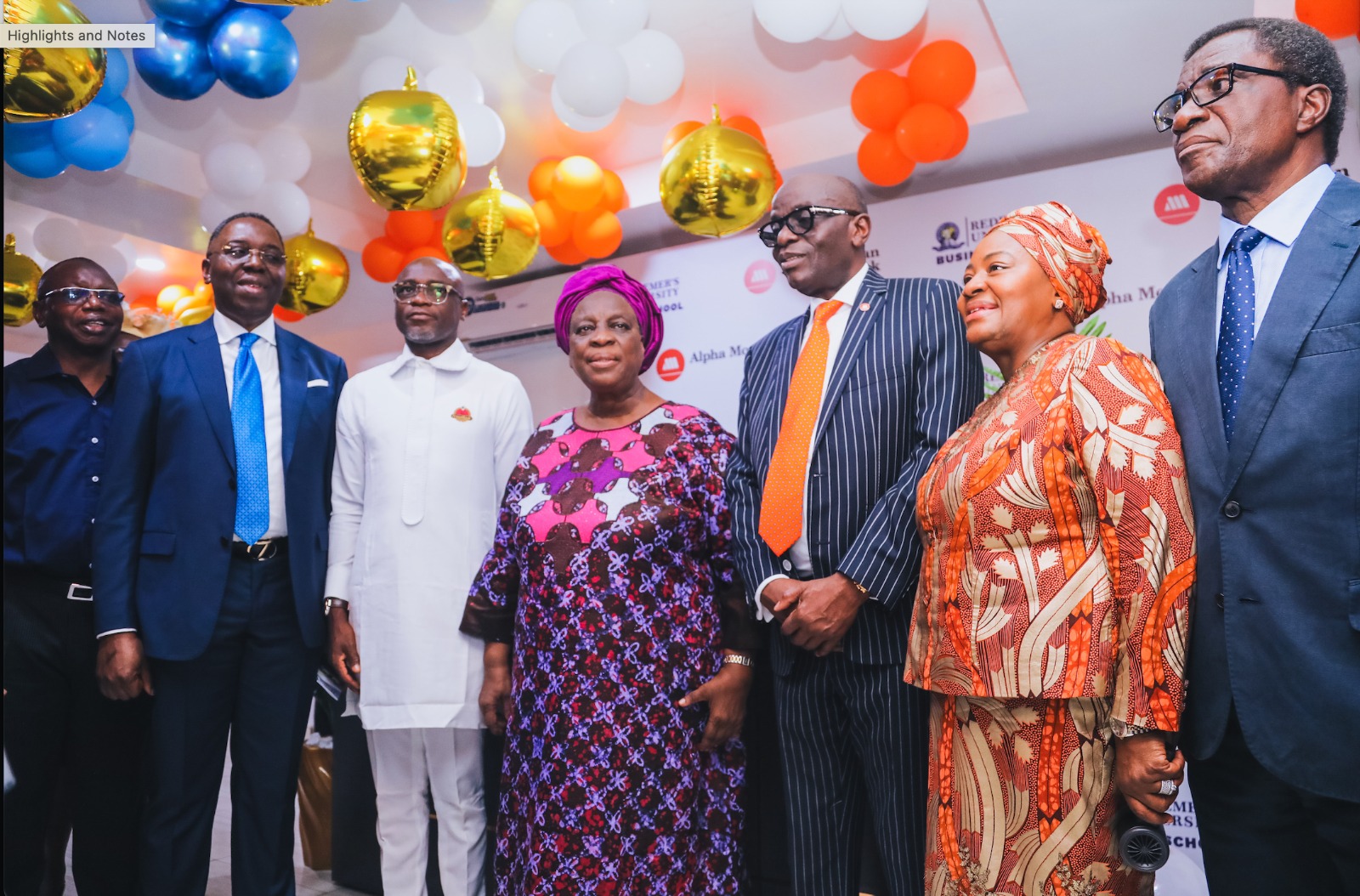
The Business School was officially inaugurated by Pastor (Mrs.) Folu Adeboye, at the commissioning ceremony attended by distinguished guests including Her Excellency, Mrs. Bola Obasanjo; the Pro-Chancellor and Chairman, Governing Council of Redeemers University, Professor Oluwatoyin Ogundipe; the Vice Chancellor, Professor Shadrach Olufemi Akindele; and other notable dignitaries.
Speaking at the event, the Managing Director of Alpha Morgan Bank reiterated the Bank’s commitment to supporting institutions that drive intellectual growth and national development.
As part of its broader focus on knowledge sharing and thought leadership, Alpha Morgan Bank will host its Economic Review Webinar in May 2026, bringing together experts to share insights on key economic trends and opportunities.
The Bank’s involvement reflects its continued dedication to empowering institutions and shaping the future of business and leadership in Nigeria.
Read more about Alpha Morgan Bank on www.alphamorganbank.com
PHOTO
L-R: Prof. Shadrach Olufemi Akindele, Vice Chancellor, Redeemers University, Engr. Eloka Eje, Dr Perez Araka, Pastor (Mrs) Folu Adeboye, Mother-In-Israel, The Redeemed Christian Church of God, Mr Ade Buraimo, MD/CEO Alpha Morgan Bank, Dr (Mrs) Oluwatomi Somefun, Dr. Simeon Ifere, at the inauguration of the Redeemer’s University Business School, Redemption City, Ogun State on Thursday 2nd April, 2026

Tinubu Aide Rebuts Rufai Oseni Over ₦3.3tn Power Debt Deal
Business
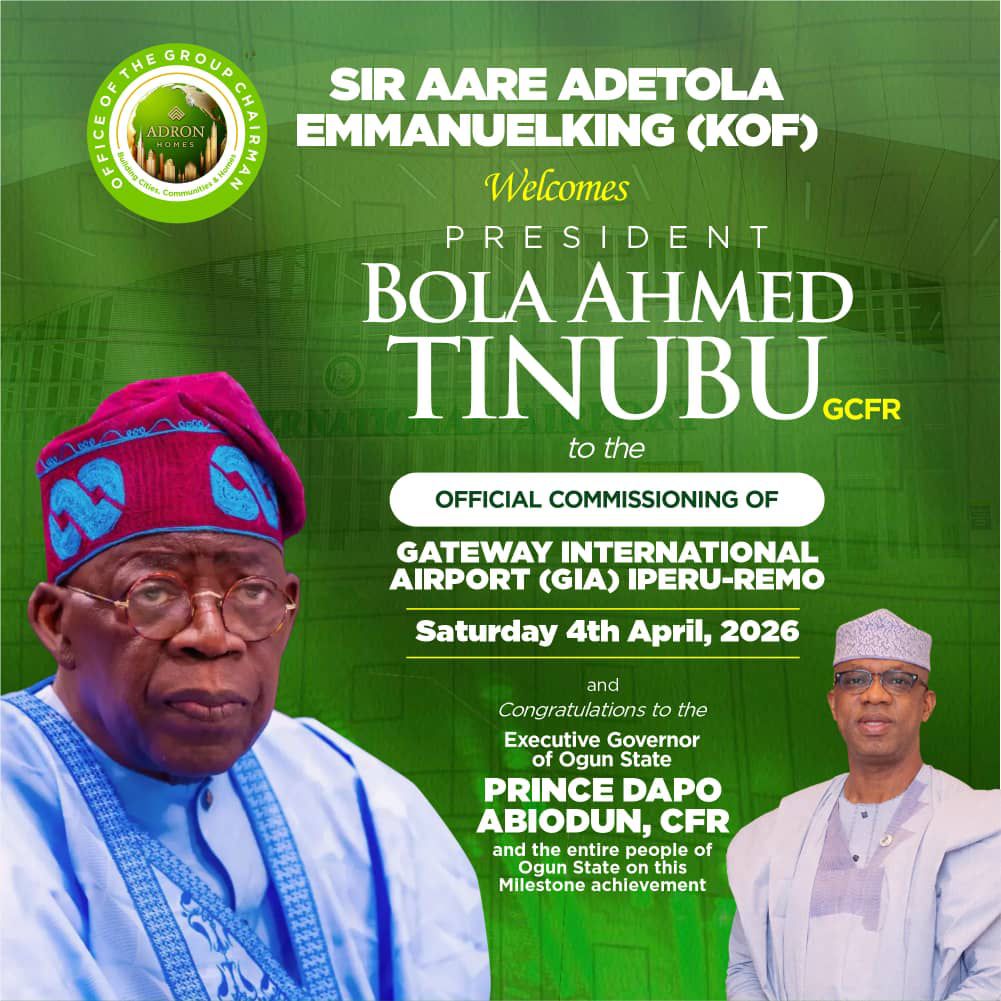
Aare Adetola Emmanuelking Welcomes President Tinubu to Gateway International Airport Commissioning in Iperu-Remo
Aare Adetola Emmanuelking Welcomes President Tinubu to Gateway International Airport Commissioning in Iperu-Remo
In a momentous occasion that underscores the rapid infrastructural advancement of Ogun State, renowned real estate mogul and philanthropist, Aare Adetola Emmanuelking, warmly received the President of the Federal Republic of Nigeria, Bola Ahmed Tinubu, at the official commissioning of the Gateway International Airport, located in Iperu-Remo.
The landmark event, held under the visionary leadership of the Ogun State Governor, Dapo Abiodun, marks a significant stride in the state’s economic transformation agenda, positioning Ogun as a key hub for aviation, commerce, and investment in Nigeria.
Aare Emmanuelking, who is also the Chairman/CEO of Adron Homes and Properties, commended the Ogun State Government for its foresight and commitment to infrastructural excellence. He described the airport project as a “game-changer” that will not only boost connectivity but also stimulate real estate growth, tourism, and industrial expansion across the region.
Speaking during the commissioning, President Tinubu lauded Governor Abiodun’s administration for delivering a world-class facility that aligns with the Federal Government’s Renewed Hope Agenda, emphasizing the importance of strategic infrastructure in driving national development.
The Gateway International Airport is expected to serve as a critical gateway for investors and travelers, further enhancing Ogun State’s reputation as one of Nigeria’s most business-friendly environments.
The presence of top dignitaries, industry leaders, and stakeholders at the event underscores the project’s significance and its anticipated impact on the state’s socio-economic landscape and beyond.


- Seychelles Strengthens Human Rights Reporting through National Workshop April 8, 2026
- ABB’s Application Configurator brings speed and precision to grid-feeding protection system design April 7, 2026
- Can Equatorial Guinea Reposition as West Africa’s Gas Hub? April 7, 2026
- Afreximbank Partners with African Energy Week 2026 to Drive Africa-Led Energy Deals April 7, 2026
- Merck Foundation Marks ‘World Health Day’ 2026 – Transforming Patient Care in Africa and Beyond through 2600+ Scholarships for Healthcare Providers From 52 Countries April 7, 2026
- Morocco Gas Plan Reset Could Open Door to New Investment Models April 7, 2026
- African Petroleum Producers Organization (APPO) Secretary General Joins Angola Oil & Gas (AOG) 2026 as African Energy Bank Eyes June 2026 Debut April 7, 2026
- Ghanaian Biomedical Specialist Receives International Award April 7, 2026
- Grey Connects the Africa-Canada Money Corridor With Instant Transfers via Interac April 7, 2026
- Nigeria’s Oil Revival in Focus as Petroleum Minister Lokpobiri Joins Paris Energy Forum April 7, 2026
- Seychelles Strengthens Human Rights Reporting through National Workshop April 8, 2026
- ABB’s Application Configurator brings speed and precision to grid-feeding protection system design April 7, 2026
- Can Equatorial Guinea Reposition as West Africa’s Gas Hub? April 7, 2026
- Afreximbank Partners with African Energy Week 2026 to Drive Africa-Led Energy Deals April 7, 2026
- Merck Foundation Marks ‘World Health Day’ 2026 – Transforming Patient Care in Africa and Beyond through 2600+ Scholarships for Healthcare Providers From 52 Countries April 7, 2026
- Morocco Gas Plan Reset Could Open Door to New Investment Models April 7, 2026
- African Petroleum Producers Organization (APPO) Secretary General Joins Angola Oil & Gas (AOG) 2026 as African Energy Bank Eyes June 2026 Debut April 7, 2026
-

 news4 months ago
WHO REALLY OWNS MONIEPOINT? The $290 Million Deal That Sold Nigeria’s Top Fintech to Foreign Interests
-

 society7 months ago
“You Are Never Without Help” – Pastor Gebhardt Berndt Inspires Hope Through Empower Church (Video)
-

 celebrity radar - gossips2 months ago
Dr. Chris Okafor Returns with Power and Fire of the Spirit -Mounts Grace Nation Altar with Fresh Anointing and Restoration Grace on February 1, 2026
-

 celebrity radar - gossips4 months ago
Prophet Kingsley Aitafo Releases 2026 Prophecy: ‘Nigeria Will Rise, but the World Must Prepare for Turbulence’
You must be logged in to post a comment Login
You must log in to post a comment.