
Politics
Humpty Dumpty: Godwin Obaseki’s Loud Fall and Adams Oshiomhole’s Unyielding Flame in Edo Polity

Humpty Dumpty: Godwin Obaseki’s Loud Fall and Adams Oshiomhole’s Unyielding Flame in Edo Polity
By Bolaji Israel
The phrase “Humpty Dumpty” brings to mind fond memories from early school years, referencing a beloved nursery rhyme about a tragi-comic character who fell and shattered beyond repair.
The tale dates back to the late 18th century, featuring an egg-shaped figure who fell off a wall, broke apart, and could never be pieced back together. In contemporary terms, it symbolises a person or entity that, once overthrown, cannot be restored.
The political landscape of Edo State has recently been rocked by the dramatic downfall of outgoing Governor Godwin Obaseki, a situation that has unfolded like a meticulously crafted drama. The decisive triumph of Monday Okpebholo over PDP’s Asue Ighodalo marks not the beginning, but the climax of the unfolding drama.
This saga, marked by betrayal, ambition, and fierce rivalry, saw Obaseki face off against his former political godfather, Senator Adams Oshiomhole, who has emerged victorious in this bitter contest.
Once celebrated as a protégé, Obaseki’s trajectory was propelled by Oshiomhole, who played a pivotal role in his ascent to the governorship.
However, the relationship soured, leading to a public fallout that captivated the attention of political observers. What began as a partnership soon devolved into a fierce rivalry, with accusations of overreach and betrayal flying between the two men.
So intense was the battle that Governor Obaseki had to seek shelter far away from his party, APC, which gave him the platform for his first term in office, to a rival political party, the PDP, to realise his second term ambition.
Though the move afforded the embattled governor who was then in the intensive care unit politically the golden opportunity to complete his eight years administration but the battle never stopped between the gladiators.
Obaseki himself has said one key issue his administration had with the former governor of the state, Senator Adams Oshiomhole, was that he (Obaseki) organised a state burial for the Peoples Democratic Party leader, Chief Tony Anenih due to Anenih’s overwhelming contributions to the state.
He explained: “When Chief Tony Anenih died, I gave him a state burial as an APC member and this is one of the thing that caused problem between Oshiomhole and I. He (Oshiomhole) said since he (Anenih) was not an elected official, why would I give him a state burial? I said the man had done more than many governors. So, he deserved it.”
Those sympathetic to Obaseki also insisted that Oshiomhole was one political figure who had consistently condemned political godfatherism and whittled down the political influence of leaders before him including Lucky Igbinedion who had ruled the state between 1999 and 2007. For them, Oshiomhole was wrong to have exerted much influence and pressure on Obaseki as his godfather.
Those who disagreed however didn’t make things easy for Obaseki. They labelled him a betrayal. They hold the view that during the re-election saga, Obaseki cornered and used his then fellow governors even from APC, including Kayode Fayemi etal and also Wike to achieve his aims but later insulted him.
They insist that Obaseki has proven to be a serial betrayal and an ungrateful person who doesn’t respect even the highly reverred Oba of Benin.
As the battle rages, news filtered that Obaseki also initiated several projects but abandoned them midway. The episode of the 18 lawmakers that he refused the state legislators to swear in has also remained a reference.
So, going into the recent gubernatorial elections, the stakes were high. Oshiomhole threw his weight behind Senator Monday Okpebholo, the candidate for the All Progressives Congress (APC), while Obaseki aligned himself with the Peoples Democratic Party (PDP) and its candidate, Asue Ighodalo. The election became not just a contest of candidates, but a battle of wills between the two former allies, and ultimately, a test of their political mettle.
As the dust settled, the results were a resounding affirmation of Oshiomhole’s enduring influence in Edo State politics. Okpebholo emerged victorious, securing 291,667 votes against Ighodalo’s 247,274, while Obaseki’s failure was underscored by the fact that he lost in his own local government area, Oredo.
The defeat has been described as nothing short of humiliating for a sitting governor, raising questions about his political acumen and strategic prowess.
Oshiomhole takes no prisoners. So his verdict after the PDP’s loss was swift and brutal – Obaseki is politically dead!
He went further. “They now understand if a man can speak like the King of England, but can’t build classrooms and their children are sitting on the floor, where is the value of the English?
“If you have signed millions of MoUs, brought all manner of consultants, even though you are one of the consultants anyways. The hospital that was built by Governor Oshiomhole you converted it to a private hospital. You ran it by consultants and only the rich can go there. The poor have been forbidden from going there. You demolished the other side of the hospital and replaced it with a museum. You think the poor are stupid?” Oshiomhole queried.
The fallout from this political debacle has not only affected Obaseki but has also ensnared other key players, notably his deputy, Philip Shaibu. Once a loyal ally,
Shaibu found himself sidelined during Obaseki’s administration, with his office relocated and his aides dismissed. The dynamics of their relationship shifted dramatically, leading to speculation about Shaibu’s future in Edo politics.
In a twist of fate, Shaibu has emerged from the shadows, mocking Obaseki’s electoral defeat. His comments during a recent interview highlighted his belief in his own political strength, contrasting it with Obaseki’s lack of electoral success.
Shaibu stated, “I feel vindicated; even the governor couldn’t win his local government. I won my unit, ward, and local government.” His assertion that he had been instrumental in Obaseki’s previous victories adds another layer to this complex political narrative.
The election results have opened the door for a reevaluation of loyalties and alliances in Edo State. Oshiomhole’s triumphant return to power has not only reinstated him as a significant political force but has also left Obaseki grappling with the reality of his diminished influence.
The political tide has turned, and the former governor is now faced with the task of rebuilding his reputation and reconciling with a constituency that has seemingly rejected him.
As the political landscape shifts, one thing is clear: the battle between godfather and protégé serves as a cautionary tale about loyalty, ambition, and the volatile nature of political alliances.
With Oshiomhole basking in his victory and Shaibu relishing his vindication, Obaseki must now navigate the choppy waters of post-governorship life, where the echoes of his political fall continue to resonate throughout Edo State.
Bolaji is a writer, public affairs analyst, poet and public relations strategist.




Politics
APC Group Endorses Fubara for 2027, Calls on Tinubu and APC to Prioritise Performance Over Politics in Backing Governor’s Second Term Ambition
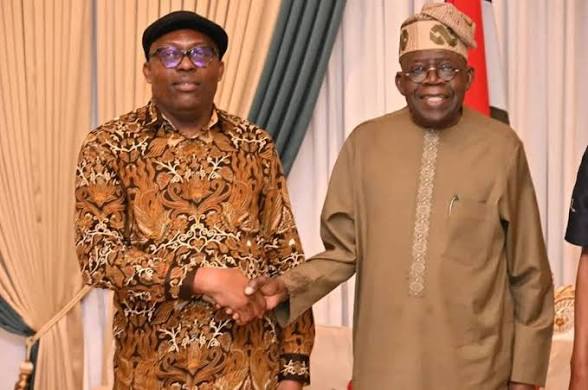
*APC Group Endorses Fubara for 2027, Calls on Tinubu and APC to Prioritise Performance Over Politics in Backing Governor’s Second Term Ambition*
The APC National Vanguard has appealed to President Bola Ahmed Tinubu and the leadership of the All Progressives Congress (APC) to support a second term in office for Siminalayi Fubara, citing what it described as “impressive and verifiable developmental strides” across Rivers State.
In a statement issued on Thursday by its National President, Dr Gbenga Salam (JP), the group said its position followed an extensive assessment tour of key infrastructure and public service projects executed under the Fubara administration.
The APC National Vanguard said the appeal was based strictly on performance, arguing that governance outcomes should outweigh partisan considerations, particularly in a state as economically significant as Rivers.
“We respectfully urge President Bola Ahmed Tinubu and the leadership of the All Progressives Congress to support the continuity of Governor Siminalayi Fubara beyond his current tenure, in recognition of his commitment to development, prudent resource management, and people-focused governance,” the statement read.
According to the group, its delegation visited multiple project sites across the state, observing ongoing and completed works spanning road construction, urban renewal, and public infrastructure upgrades.
It noted that the scale and distribution of these projects reflect a deliberate effort by the state government to extend development beyond traditional urban centres and into underserved communities.
“Our findings from the tour reveal a government that is not only active but intentional in its development agenda. The execution of capital projects across various parts of Rivers State demonstrates a clear understanding of the needs of the people and a commitment to addressing them,” Dr Salam said.
The group particularly commended what it described as prudent financial management by the administration, noting that the projects reviewed showed evidence of careful planning and efficient allocation of resources.
“At a time when economic pressures are evident across the country, it is commendable that the Rivers State government has managed its resources in a way that delivers visible and impactful development without signs of fiscal recklessness,” the statement added.
The APC National Vanguard further observed that despite political tensions in the state, the Fubara administration has maintained focus on governance, ensuring continuity in project execution and service delivery.
The group argued that such stability is critical for sustained development and should be encouraged rather than disrupted.
“Leadership must ultimately be judged by results. In Rivers State, there is clear evidence of progress—projects that are not only announced but executed, and policies that translate into real benefits for citizens,” Dr Salam noted.
The group warned that discontinuity in leadership could stall ongoing projects and reverse gains already recorded, stressing the importance of allowing a performing administration to consolidate its achievements.
“Rivers State is at a pivotal stage where continuity will allow for the completion of ongoing initiatives and the deepening of development gains. Supporting Governor Fubara for a second term is, therefore, a decision in the best interest of the people,” the statement said.
In addition to its call on the APC leadership, the group reaffirmed its support for President Tinubu, expressing confidence in his administration’s broader economic and governance reforms.
The APC group urged Nigerians to remain supportive of efforts aimed at stabilising the economy and strengthening public institutions.
“We reiterate our endorsement of President Bola Ahmed Tinubu for a second term in office, in recognition of his leadership and commitment to national development. With sustained support, the administration can consolidate its reform agenda for the benefit of all Nigerians,” Dr Salam added.
The APC National Vanguard concluded by calling on political actors to prioritise development and public interest over partisan divides, insisting that governance should always be guided by performance and accountability.
“Where leadership demonstrates prudence, delivers development, and remains focused on the welfare of the people, it deserves continuity. This is the position we have reached after a careful and independent assessment of Rivers State,” the statement added.
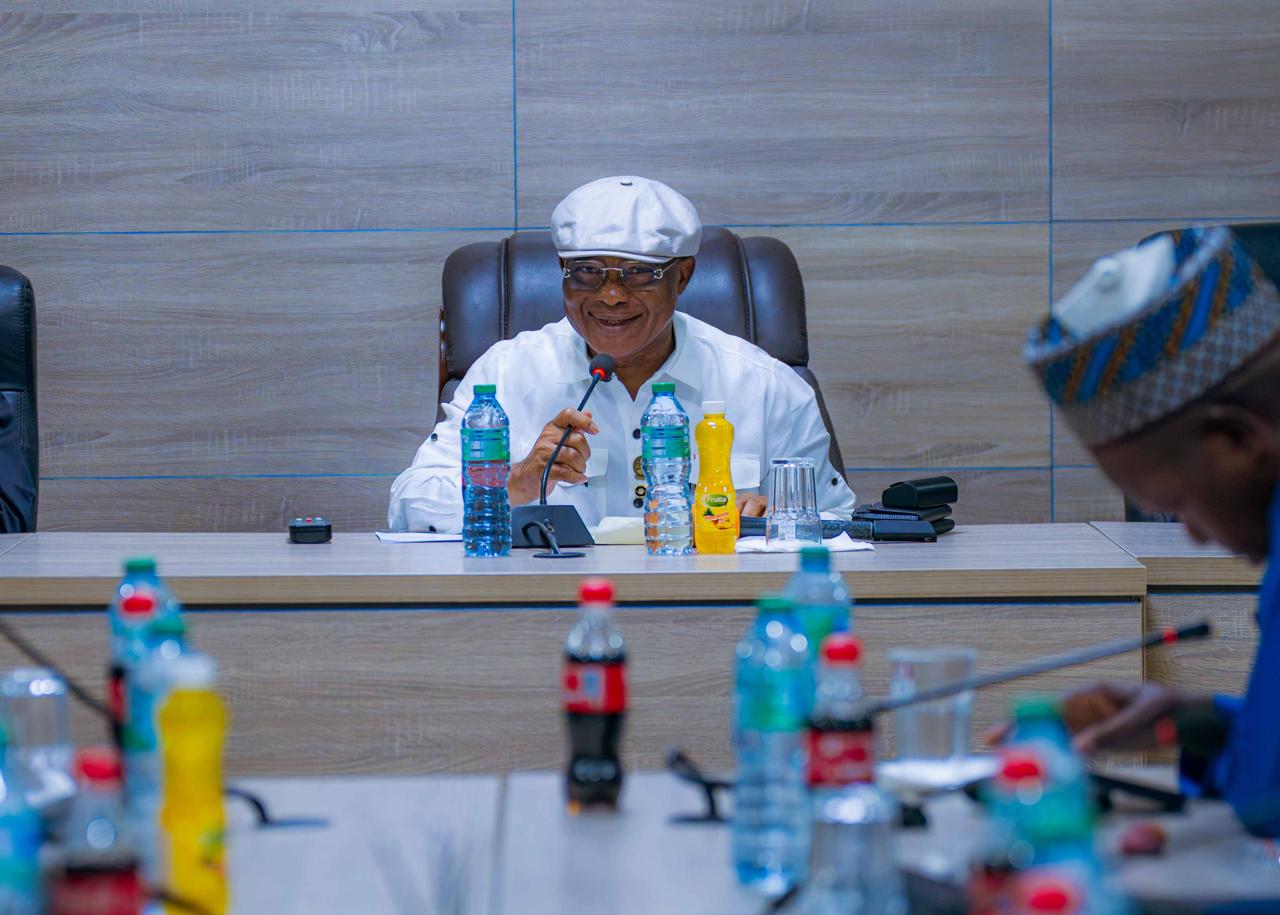
*Renewed Hope Ambassadors Step Into the Next Phase
Fresh from the successful APC 2026 National Convention, the Renewed Hope Ambassadors National, Zonal, and State leadership gathered in Abuja over the weekend, for its fourth strategic meeting, setting the tone for nationwide grassroots activation ahead of 2027.
Chaired by Governor Hope Uzodinma (Imo State) the Director General and National Coordinator of the Renewed Hope Ambassadors, alongside Deputy Director-General, Governor Uba Sani of Kaduna State, and Governor Inuwa Yahaya of Gombe State as Secretary, the session reinforced one clear direction: One Party. One Message. One Mobilization whilst also laying out a strategic roadmap for the activation of the network across all communities in Nigeria.
Backed by the strength of 31 APC-led states, the Renewed Hope Agenda is taking Bola Ahmed Tinubu’s message of progress and reform to every corner of Nigeria.
From bold economic restructuring to initiatives like NELFUND, the increase in the national minimum wage from ₦30,000 to ₦70,000, and strategic investments in critical sectors, including PNiCGI, the mission remains clear: helping Nigerians understand both the purpose and the progress of the Renewed Hope vision.
This is coordination at scale. This is grassroots engagement with purpose. This is the next phase of Renewed Hope with One Party, One Message, and One Mobilisation framework
#RenewedHopeAmbassadors #APC #WeAreAPC


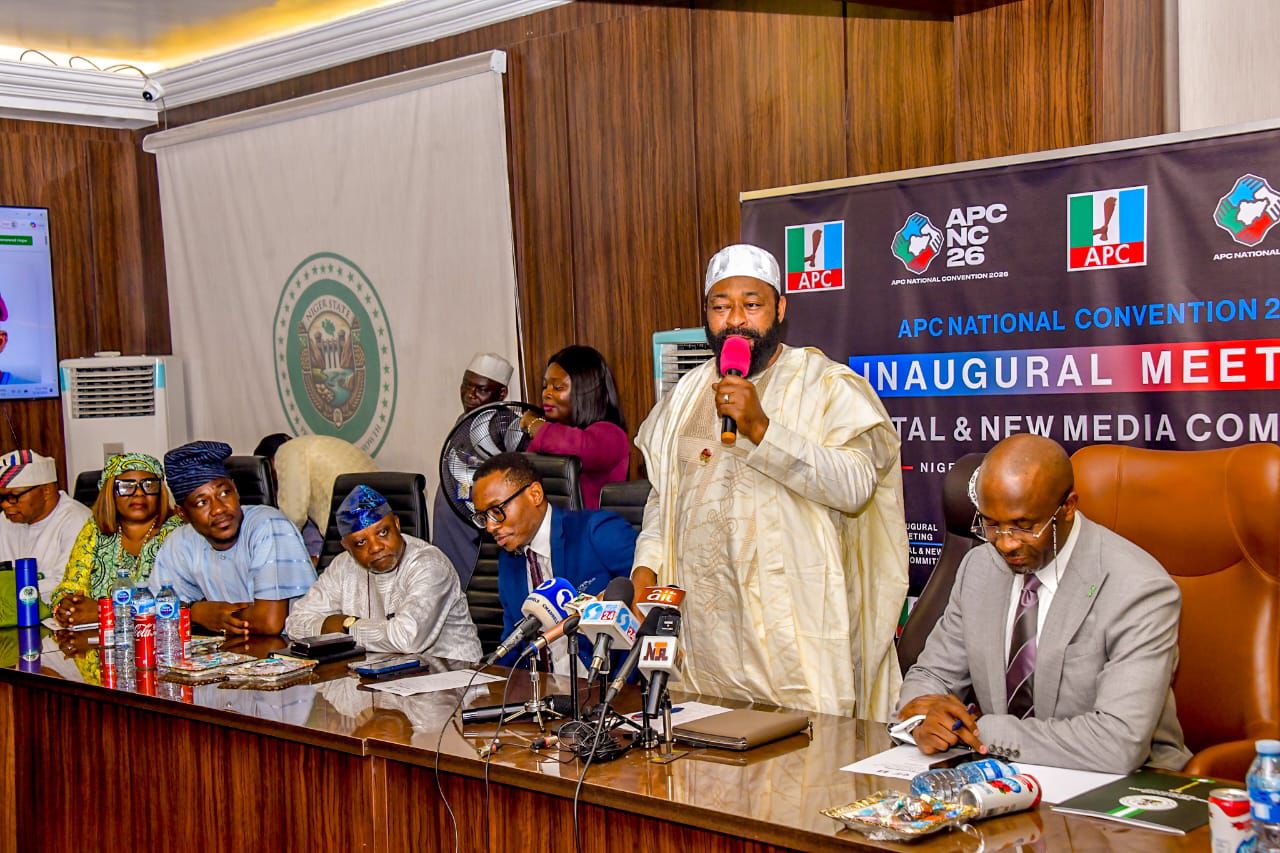
Governor Bago Inaugurates APC Digital Media Sub-Committee Ahead of National Convention.
Governor Umaru Bago has inaugurated the Digital Media Sub-Committee for the forthcoming National Convention of the All Progressives Congress (APC), scheduled to hold on March 27 and 28, 2026 in Abuja.
Chairing the sub-committee, Governor Bago tasked members with the responsibility of effectively communicating the party’s manifesto to the public.
He emphasized the need to leverage social media platforms to highlight the achievements and ongoing efforts of President Bola Ahmed Tinubu, noting that communication gaps have posed challenges that must now be decisively addressed.
The Co-Chair of the sub-committee, Hon. Benjamin Kalu, Deputy Speaker of the House of Representatives, echoed the Governor’s position, urging members to project the activities of both the party and the government to a broader audience.
He called for a deliberate and coordinated effort to showcase the party’s achievements and policy direction, stressing the importance of shaping a compelling and consistent narrative across all digital platforms.
Delivering a presentation to the committee, Otega Ogra, SSA to the President on New Media, who serves as Secretary of the sub-committee, outlined strategic focus areas to guide the team’s operations.
His presentation highlighted communication priorities and actionable steps to achieve the committee’s mandate and strengthen the party’s digital engagement.


-

 society7 months ago
Religion: Africa’s Oldest Weapon of Enslavement and the Forgotten Truth
-

 news4 months ago
WHO REALLY OWNS MONIEPOINT? The $290 Million Deal That Sold Nigeria’s Top Fintech to Foreign Interests
-

 society6 months ago
“You Are Never Without Help” – Pastor Gebhardt Berndt Inspires Hope Through Empower Church (Video)
-

 celebrity radar - gossips2 months ago
Dr. Chris Okafor Returns with Power and Fire of the Spirit -Mounts Grace Nation Altar with Fresh Anointing and Restoration Grace on February 1, 2026