
Politics
Humpty Dumpty: Godwin Obaseki’s Loud Fall and Adams Oshiomhole’s Unyielding Flame in Edo Polity

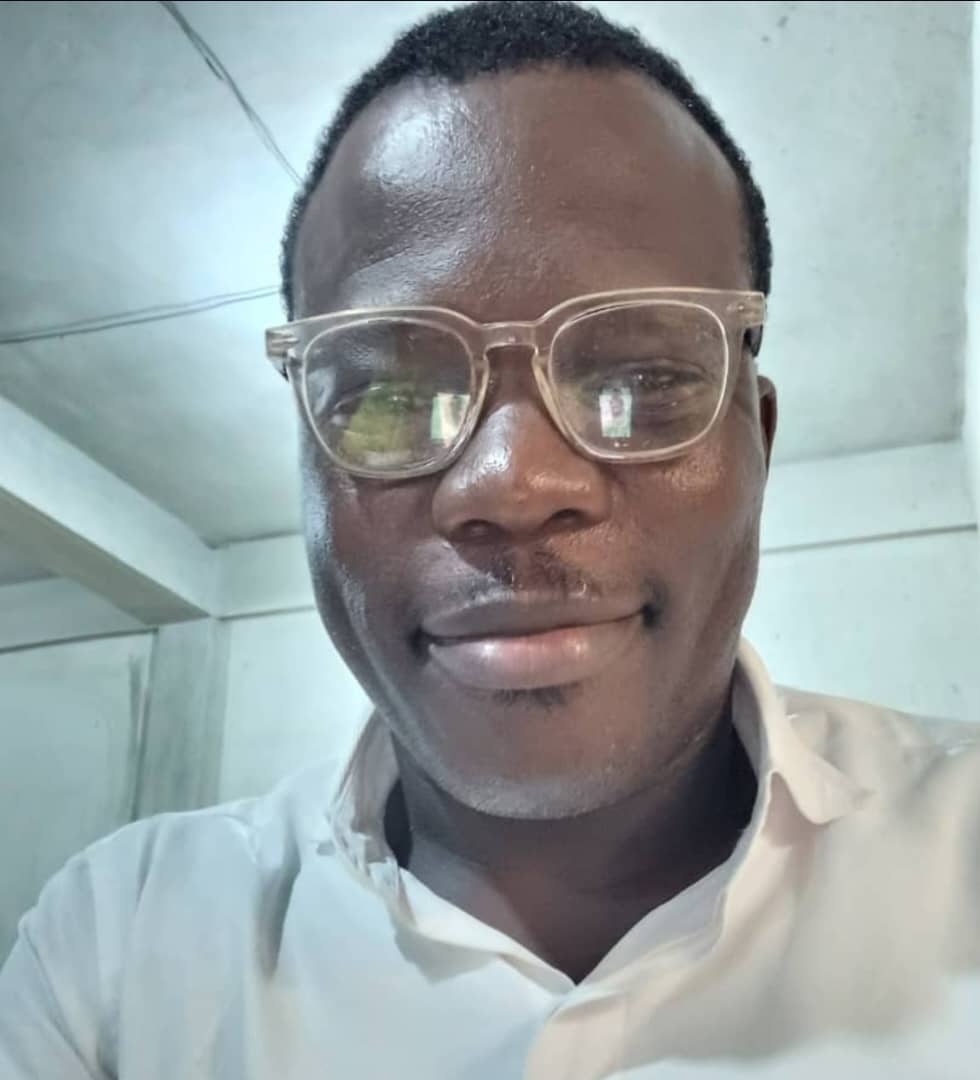
Humpty Dumpty: Godwin Obaseki’s Loud Fall and Adams Oshiomhole’s Unyielding Flame in Edo Polity
By Bolaji Israel
The phrase “Humpty Dumpty” brings to mind fond memories from early school years, referencing a beloved nursery rhyme about a tragi-comic character who fell and shattered beyond repair.
The tale dates back to the late 18th century, featuring an egg-shaped figure who fell off a wall, broke apart, and could never be pieced back together. In contemporary terms, it symbolises a person or entity that, once overthrown, cannot be restored.
The political landscape of Edo State has recently been rocked by the dramatic downfall of outgoing Governor Godwin Obaseki, a situation that has unfolded like a meticulously crafted drama. The decisive triumph of Monday Okpebholo over PDP’s Asue Ighodalo marks not the beginning, but the climax of the unfolding drama.
This saga, marked by betrayal, ambition, and fierce rivalry, saw Obaseki face off against his former political godfather, Senator Adams Oshiomhole, who has emerged victorious in this bitter contest.
Once celebrated as a protégé, Obaseki’s trajectory was propelled by Oshiomhole, who played a pivotal role in his ascent to the governorship.
However, the relationship soured, leading to a public fallout that captivated the attention of political observers. What began as a partnership soon devolved into a fierce rivalry, with accusations of overreach and betrayal flying between the two men.
So intense was the battle that Governor Obaseki had to seek shelter far away from his party, APC, which gave him the platform for his first term in office, to a rival political party, the PDP, to realise his second term ambition.
Though the move afforded the embattled governor who was then in the intensive care unit politically the golden opportunity to complete his eight years administration but the battle never stopped between the gladiators.
Obaseki himself has said one key issue his administration had with the former governor of the state, Senator Adams Oshiomhole, was that he (Obaseki) organised a state burial for the Peoples Democratic Party leader, Chief Tony Anenih due to Anenih’s overwhelming contributions to the state.
He explained: “When Chief Tony Anenih died, I gave him a state burial as an APC member and this is one of the thing that caused problem between Oshiomhole and I. He (Oshiomhole) said since he (Anenih) was not an elected official, why would I give him a state burial? I said the man had done more than many governors. So, he deserved it.”
Those sympathetic to Obaseki also insisted that Oshiomhole was one political figure who had consistently condemned political godfatherism and whittled down the political influence of leaders before him including Lucky Igbinedion who had ruled the state between 1999 and 2007. For them, Oshiomhole was wrong to have exerted much influence and pressure on Obaseki as his godfather.
Those who disagreed however didn’t make things easy for Obaseki. They labelled him a betrayal. They hold the view that during the re-election saga, Obaseki cornered and used his then fellow governors even from APC, including Kayode Fayemi etal and also Wike to achieve his aims but later insulted him.
They insist that Obaseki has proven to be a serial betrayal and an ungrateful person who doesn’t respect even the highly reverred Oba of Benin.
As the battle rages, news filtered that Obaseki also initiated several projects but abandoned them midway. The episode of the 18 lawmakers that he refused the state legislators to swear in has also remained a reference.
So, going into the recent gubernatorial elections, the stakes were high. Oshiomhole threw his weight behind Senator Monday Okpebholo, the candidate for the All Progressives Congress (APC), while Obaseki aligned himself with the Peoples Democratic Party (PDP) and its candidate, Asue Ighodalo. The election became not just a contest of candidates, but a battle of wills between the two former allies, and ultimately, a test of their political mettle.
As the dust settled, the results were a resounding affirmation of Oshiomhole’s enduring influence in Edo State politics. Okpebholo emerged victorious, securing 291,667 votes against Ighodalo’s 247,274, while Obaseki’s failure was underscored by the fact that he lost in his own local government area, Oredo.
The defeat has been described as nothing short of humiliating for a sitting governor, raising questions about his political acumen and strategic prowess.
Oshiomhole takes no prisoners. So his verdict after the PDP’s loss was swift and brutal – Obaseki is politically dead!
He went further. “They now understand if a man can speak like the King of England, but can’t build classrooms and their children are sitting on the floor, where is the value of the English?
“If you have signed millions of MoUs, brought all manner of consultants, even though you are one of the consultants anyways. The hospital that was built by Governor Oshiomhole you converted it to a private hospital. You ran it by consultants and only the rich can go there. The poor have been forbidden from going there. You demolished the other side of the hospital and replaced it with a museum. You think the poor are stupid?” Oshiomhole queried.
The fallout from this political debacle has not only affected Obaseki but has also ensnared other key players, notably his deputy, Philip Shaibu. Once a loyal ally,
Shaibu found himself sidelined during Obaseki’s administration, with his office relocated and his aides dismissed. The dynamics of their relationship shifted dramatically, leading to speculation about Shaibu’s future in Edo politics.
In a twist of fate, Shaibu has emerged from the shadows, mocking Obaseki’s electoral defeat. His comments during a recent interview highlighted his belief in his own political strength, contrasting it with Obaseki’s lack of electoral success.
Shaibu stated, “I feel vindicated; even the governor couldn’t win his local government. I won my unit, ward, and local government.” His assertion that he had been instrumental in Obaseki’s previous victories adds another layer to this complex political narrative.
The election results have opened the door for a reevaluation of loyalties and alliances in Edo State. Oshiomhole’s triumphant return to power has not only reinstated him as a significant political force but has also left Obaseki grappling with the reality of his diminished influence.
The political tide has turned, and the former governor is now faced with the task of rebuilding his reputation and reconciling with a constituency that has seemingly rejected him.
As the political landscape shifts, one thing is clear: the battle between godfather and protégé serves as a cautionary tale about loyalty, ambition, and the volatile nature of political alliances.
With Oshiomhole basking in his victory and Shaibu relishing his vindication, Obaseki must now navigate the choppy waters of post-governorship life, where the echoes of his political fall continue to resonate throughout Edo State.
Bolaji is a writer, public affairs analyst, poet and public relations strategist.




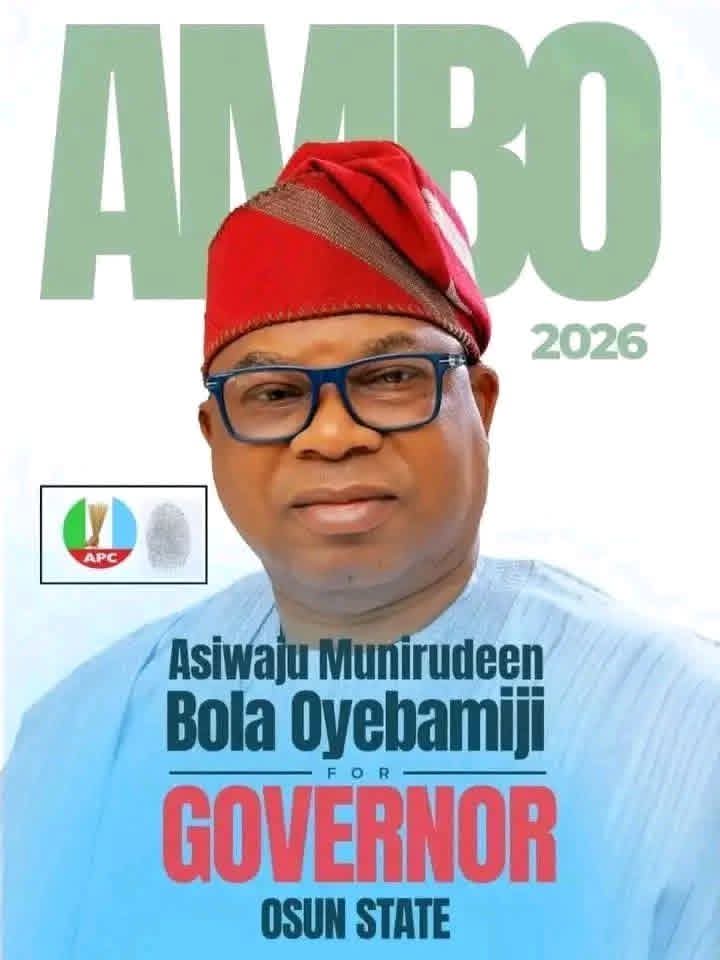
AMBO and the Osun Governorship Race: Assessing the Man, the Politics and the Vision
As political activities gather momentum ahead of the 2026 Osun State governorship election, a public affairs commentator, Oluseyi Olonade, has described the emergence of Asiwaju Munirudeen Bola Oyebamiji, popularly known as AMBO, as a significant development in the state’s political landscape.
In an article titled “Oyebamiji: The Man, The Politics and The Aspiration,” Olonade argued that the All Progressives Congress governorship hopeful possesses the character, experience and vision needed to reposition Osun State for sustainable growth.
According to the writer, Oyebamiji’s appeal stems from his extensive background in the banking sector, where he spent nearly three decades working with institutions including Wema Bank, Trans International Bank, Spring Bank and Enterprise Bank.
A native of Ikire in Irewole Local Government Area, Oyebamiji was described as a technocrat whose experience in corporate governance, finance and risk management has shaped his approach to public administration.
The article noted that his public service journey gained prominence in 2012 when he was appointed to oversee the then Osun State Investment Company Limited. Under his leadership, the organisation was reportedly restructured and transformed into Omoluabi Holdings Limited.
The writer further highlighted Oyebamiji’s tenure as Commissioner for Finance under successive APC administrations, where he was credited with managing the state’s finances during challenging economic periods.
Olonade also referenced Oyebamiji’s appointment as Managing Director of the National Inland Waterways Authority, describing it as further evidence of his administrative and leadership capabilities.
The article contrasted Oyebamiji’s governance philosophy with that of the current administration in Osun State, arguing that the APC aspirant favours institutional reforms, economic diversification and fiscal discipline.

According to the writer, Oyebamiji’s proposed agenda includes strengthening transparency in government spending, expanding internally generated revenue, attracting private-sector investments and promoting industrial and agricultural development.
The article also highlighted youth empowerment, entrepreneurship development and digital skills acquisition as key components of his vision for the state.
Olonade concluded that the forthcoming governorship election would present voters with a choice between different approaches to governance, expressing confidence that Oyebamiji’s experience and developmental agenda make him a strong contender in the race.
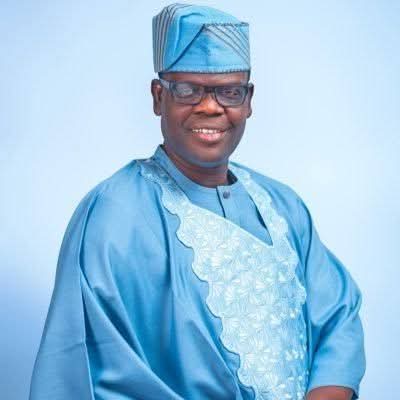
*Oselu Tiwa nTiwa Endorses Oriyomi Hamzat for Oyo Governorship*
A sociopolitical support group in Oyo State, Oselu Tiwa nTiwa, has declared its support for Alhaji Oriyomi Hamzat as the authentic governorship candidate of the Accord Party ahead of the forthcoming governorship election in the state.
The group made its position known in a statement jointly signed by its President, Mr. Adewale Oluwaseyi and Secretary, Alh. Adebayo Oyewole, on Thursday, describing Hamzat as a grassroots figure with strong connection to the people and a track record of humanitarian interventions across Oyo State.

According to the group, the endorsement followed what it described as careful observation of Hamzat’s leadership qualities, compassion and dedication to the welfare of ordinary citizens.
“Oriyomi Hamzat has consistently demonstrated empathy, courage and selfless commitment to humanity. Through his numerous interventions in the lives of ordinary citizens, he has become a symbol of hope to many families and communities,” the statement read.
Oselu Tiwa nTiwa also appealed to the national leadership of the Accord Party to prioritise the long-term future and electoral growth of the party in its decision-making process.
The group noted that Hamzat’s candidacy presents an opportunity for the party to strengthen its grassroots support base and expand its political relevance across Oyo State.
“We respectfully appeal to the National Leadership of the Accord Party to look beyond immediate political calculations and consider the bigger picture, the future growth, stability and electoral success of the party in Oyo State and beyond,” the statement added.
The group further expressed confidence in the leadership of the party, saying it believes the party’s national officers and stakeholders would take decisions that reflect fairness, inclusiveness and the collective interest of members.
While calling on party loyalists to remain calm and united, Oselu Tiwa nTiwa said continued consultations among stakeholders would help strengthen the Accord Party ahead of the election.
Signed:
Alh. Adebayo Oyewole,
Secretary.
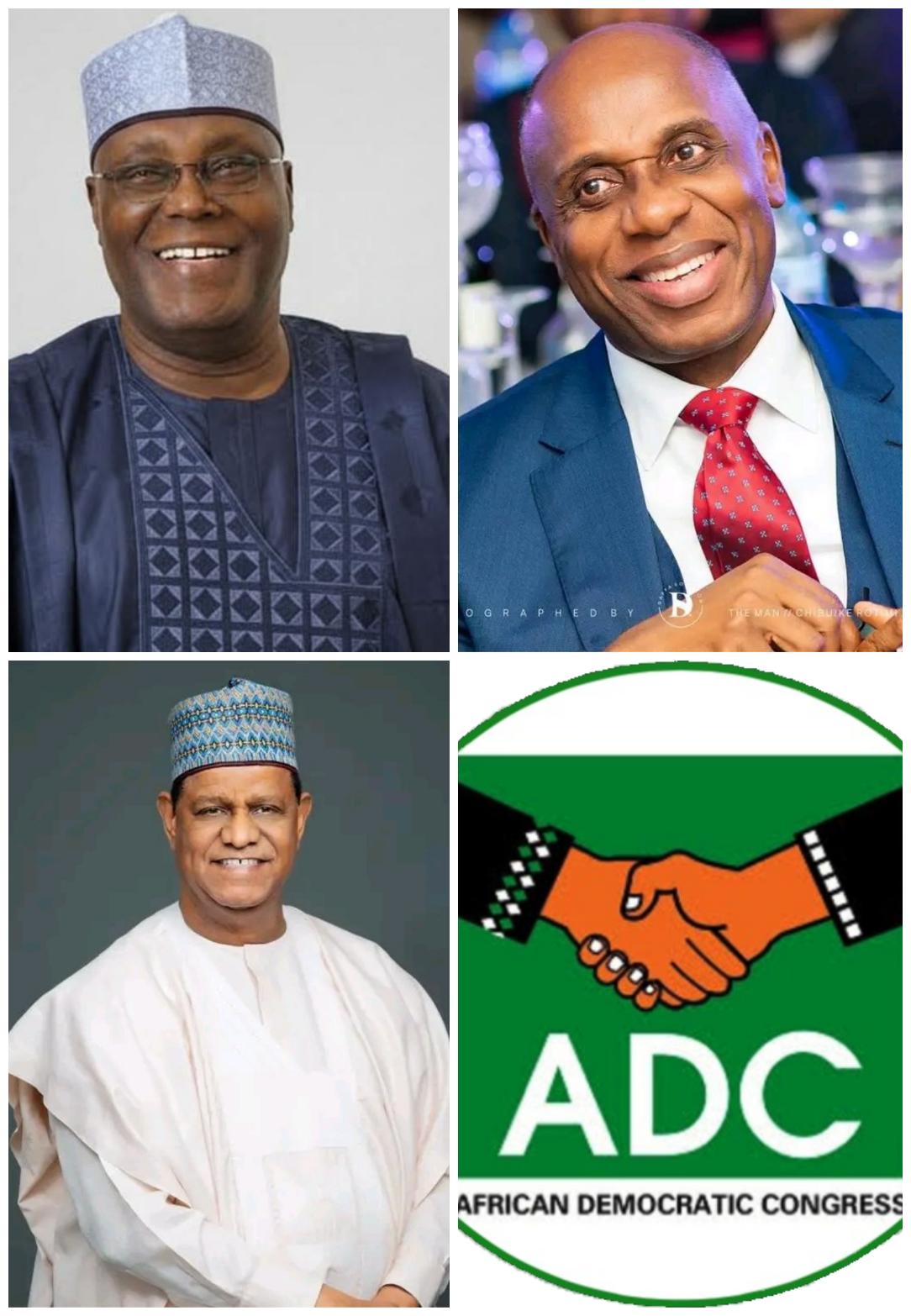
Atiku Set To Clinch ADC Presidential Ticket, Leads Amaechi, Hayatu-Deen In 34 States
Former Vice President of Nigeria and frontline presidential aspirant of the African Democratic Congress (ADC), Atiku Abubakar, is projected to emerge winner of the party’s presidential primaries, according to impeccable sources in Abuja.
The primaries, conducted across over 8,000 wards in the 36 states of the federation and the Federal Capital Territory, reportedly placed Atiku far ahead of his closest rivals — former Rivers State Governor, Rotimi Amaechi, and former Chairman of the Nigerian Economic Summit Group, Mohammed Hayatu-Deen.

Highly placed party insiders disclosed that Atiku is currently leading in 34 states, including the FCT, after securing dominance across the 19 Northern states, the five South-East states, and the six South-West states, while also maintaining a strong showing in at least three states in the South-South geopolitical zone.
The sources added that the outcome reflects what they described as “an overwhelming nationwide acceptance” of the former vice president within the opposition party ahead of the 2027 general election.
Meanwhile, the ADC leadership has invited members of the press to the official announcement of the final collated results scheduled for 11:00 a.m. on Tuesday, May 26, 2026, in Abuja.
The declaration of results is expected to be broadcast live on ARISE Television and two other major television stations, while also being livestreamed on the party’s official social media platforms on X and Facebook.
Speaking ahead of the announcement, the founding National Chairman of the ADC, Chief Ralph Nwosu, said the decision to televise the exercise live was aimed at promoting transparency and democratic accountability.
“We want millions of Nigerians at home and in the Diaspora to witness democracy in action,” Nwosu said.
He further revealed that the party leadership would encourage all three presidential aspirants to publicly embrace a peace accord and commit themselves to working together in unity for the party’s success.
According to him, the move is necessary to strengthen internal cohesion and position the ADC for victory in the presidential election scheduled for January 16, 2027.
Details later.


- Uganda: Parliament concludes vetting of ministers June 2, 2026
- Fund for Export Development in Africa (FEDA) Board Appoints Mr. Emmanuel Assiak as Chief Executive Officer June 2, 2026
- Ecobank Group Launches World First Nature Bond Mobilising Global Capital to Protect Africa’s Natural Ecosystems June 2, 2026
- Merck Foundation Chief Executive Officer (CEO) Dr. Rasha Kelej together with Kenya First Lady support the education of 47 Kenyan Schoolgirls by providing Annual Scholarships till they Graduate June 2, 2026
- Annual Meetings 2026: Governors Back the Bank’s Platform Solutions to Transform Aviation and Health Systems in Africa June 2, 2026
- ThinkMarkets launches ChelseaAI, bringing live CFD trading into Artificial Intelligence (AI) assistants June 2, 2026
- Afreximbank Invites Rugby Africa President Herbert Mensah to Address the 33rd Annual Meetings on a Panel Exploring Sport as a Driver of African Industrialisation June 2, 2026
- Afreximbank Deepens Commitment to Economic Progress in The Bahamas June 1, 2026
- African Electric Vehicle (EV) platform Spiro raises $215M in equity to scale electric mobility and energy infrastructure across Africa June 1, 2026
- Africa Centres for Disease Control and Prevention (Africa CDC) Statement on Attacks Against Health Facilities During the Bundibugyo Virus Disease Response in the Democratic Republic of the Congo June 1, 2026
- Uganda: Parliament concludes vetting of ministers June 2, 2026
- Fund for Export Development in Africa (FEDA) Board Appoints Mr. Emmanuel Assiak as Chief Executive Officer June 2, 2026
- Ecobank Group Launches World First Nature Bond Mobilising Global Capital to Protect Africa’s Natural Ecosystems June 2, 2026
- Merck Foundation Chief Executive Officer (CEO) Dr. Rasha Kelej together with Kenya First Lady support the education of 47 Kenyan Schoolgirls by providing Annual Scholarships till they Graduate June 2, 2026
- Annual Meetings 2026: Governors Back the Bank’s Platform Solutions to Transform Aviation and Health Systems in Africa June 2, 2026
- ThinkMarkets launches ChelseaAI, bringing live CFD trading into Artificial Intelligence (AI) assistants June 2, 2026
- Afreximbank Invites Rugby Africa President Herbert Mensah to Address the 33rd Annual Meetings on a Panel Exploring Sport as a Driver of African Industrialisation June 2, 2026
-

 news6 months ago
WHO REALLY OWNS MONIEPOINT? The $290 Million Deal That Sold Nigeria’s Top Fintech to Foreign Interests
-

 society1 month ago
SOCIAL MEDIA IS NOT A BATTLEFIELD COMMAND – WHY THE NIGERIAN ARMY’S ACTION AGAINST JUSTICE CRACK IS A NATIONAL SECURITY IMPERATIVE
-

 celebrity radar - gossips4 months ago
Dr. Chris Okafor Returns with Power and Fire of the Spirit -Mounts Grace Nation Altar with Fresh Anointing and Restoration Grace on February 1, 2026
-

 celebrity radar - gossips6 months ago
Prophet Kingsley Aitafo Releases 2026 Prophecy: ‘Nigeria Will Rise, but the World Must Prepare for Turbulence’