
Uncategorized
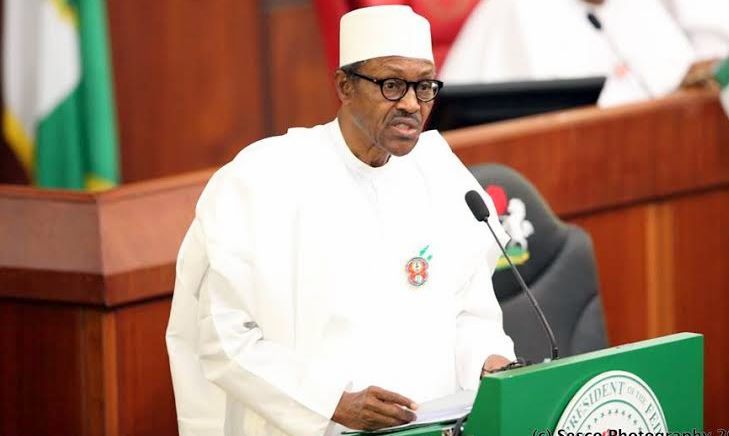
I Share Your Pains, I’ll Ensure Free and Fair Elections In 2023 —- Buhari Delivers Last Independence Day Speech As President [FULL TEXT]

I Share Your Pains, I’ll Ensure Free and Fair Elections In 2023 —- Buhari Delivers Last Independence Day Speech As President [FULL TEXT]

Ahead of next year’s general elections, the President, Major General Muhammadu Buhari (retd.), on Saturday, promised Nigerians that he would ensure free and fair elections come 2023.
Buhari also said he shared the pains of Nigerians occasioned by the spate of insecurity nationwide.
This was as he assured citizens, for the umpteenth time, of his government’s drive to strengthen the security agencies to better “deal with all forms of security challenges.”
In his last independence day speech as president, Buhari said he had been a “victim of unfair electoral processes” in the past, as a result, he would bequeath a robust electoral institution that would ensure the emergence of credible leaders.
He also called for more youth and women’s participation in the electoral cycle.
He said, “Having witnessed at close quarters, the pains, anguish, and disappointment of being a victim of an unfair electoral process, the pursuit of an electoral system and processes that guarantee the election of leaders by citizens remains the guiding light as I prepare to wind down our administration.
“It is for this reason that I have resolved to bequeath a sustainable democratic culture that will remain lasting. The signing of the Electoral Act 2021 as amended with landmark provisions, further assures us of a more transparent and inclusive electoral process.”
He promised that the success recorded in the Anambra, Ekiti, and Osun state governorship elections will be scaled up come 2023.
Here is the full speech of President Muhammadu Buhari on Nigeria’s 62nd independence anniversary.
Fellow Nigerians,
I address you today, with a deep sense of gratitude to God and a high level of appreciation to all Nigerians whose tremendous goodwill gave me the opportunity to provide leadership for our great country at one of the trying times in her history.
2. Conscious that today’s address would be my last on an Independence Day as your President; I speak to the millions of Nigerians, who believed in me, propelled and stood by me in my quest to bequeath a country where all citizens have equal opportunities to achieve their lives desires in a peaceful atmosphere.
3. I am honoured to say that my story in the annals of Nigeria’s history is no household secret. My various attempts, failures and eventual success in being elected as a Democratic President in 2015 was made possible by the majority of Nigerians.
4. When you elected me, I readily acknowledged that the tasks before me were daunting but surmountable because of the growing national consensus that our chosen route to national development was democracy.
5. This democracy was to be anchored on a clear understanding, application and the principles of separation of powers supported by a reformed public service that is more effective.
6. I then pledged to Improve the Economy, Tackle Corruption, and Fight Insecurity and this was further strengthened by my commitment to lift 100 million Nigerians out of poverty in ten years as the central plank of my second term in 2019.
7. To the Glory of God and His Grace as well as the commitment and passion displayed by many Nigerian supporters, we have made appreciable progress in these areas but not yet at our destination.
8. Mindful of the task before us, we took some time in settling down and we re-positioned the Economy by providing strategic interventions in core areas at both the Federal and Sub-National levels.
9. One of the areas where we have made significant progress is in the eradication of deeply entrenched corruption that permeates all facets of our national development.
10. We strengthened the Institutions for tackling corruption and also cultivated international support, which aided the repatriation of huge sums of money illegally kept outside the country.
11. The increasing number of prosecutions and convictions, with associated refunds of large sums of money is still ongoing. Furthermore, we would continue to block opportunities that encourage corrupt practices.
12. In order to address Insecurity, we worked methodically in reducing Insurgency in the North East, Militancy in the Niger Delta, Ethnic and Religious Tensions in some sections of Nigeria along with other problems threatening our country.
13. Our efforts in re-setting the economy manifested in Nigeria exiting two economic recessions by the very practical and realistic monetary and fiscal measures to ensure effective public financial management. In addition, the effective implementation of the Treasury Single Account and cutting down on the cost of governance also facilitated early exits from recessions.
14. Fellow Nigerians, this administration removed several decades uncertainty for potential Investors in the Oil & Gas sector with the passage of the Petroleum Industry Act, 2021. This landmark legislation created opportunities for foreign investments in addition to improving transparency in the management of the sector.
15. Our administration has given the desired priority to the Agricultural Sector through a series of incentives to Micro, Small and Medium Scale Enterprises that resulted in creating millions of jobs. Leading this initiative, the Central Bank of Nigeria’s intervention in a number of areas as well as the Anchor Borrowers Programme had created the required leverages for Nigerians towards self-sufficiency in food and the necessary attraction for farming as a business.
16. The growing contribution of non-oil exports, especially in agriculture, information and communication technology as well as the performing arts to our national economy will enhance our foreign exchange earning capacity.
17. We are confronting current economic challenges such as debt burden, growing inflation, living standards and increasing unemployment accentuated by our growing youthful population. These problems are globally induced and we would continue to ensure that their negative effects are addressed in our policies.
18. This administration will continue to ensure that our fiscal policies are supported by a robust and contemporary monetary policy that recognises our peculiarities in the midst of the growing global economic difficulties.
19. This is evidenced by the recent Monetary Policy Committee decision to maintain all parameters, especially interest rates and marginally increased the Monetary Policy Rate (MPR) from 14% to 15.5% and the Cash Reserve Ratio (CRR) from 27.5% to 32.5%. It is projected that this would further insulate our economy from over exposure to uncertainties at the international market by restraining growth in core inflation.
20. As we continue to de-escalate the security challenges that confronted us at inception of this administration, newer forms alien to our country began to manifest especially in the areas of kidnappings, molestations/killings of innocent citizens, banditry, all of which are being addressed by our security forces.
21. I share the pains Nigerians are going through and I assure you that your resilience and patience would not be in vain as this administration continues to reposition as well as strengthen the security agencies to enable them to deal with all forms of security challenges.
22. At the inception of this administration in 2015, I provided the funding requirements of the security agencies which was also improved in my second tenure in 2019 to enable them to surmount security challenges. We will continue on this path until our efforts yield the desired results.
23. As we put in place all measures to ensure that Nigeria takes her place in the Comity of Nations, we recognize the importance of a well-educated populace as a panacea to most of the challenges we face.
24. We have, therefore, pursued policies and implemented programmes designed to create a literate and proficient society that ensures that citizens are availed with opportunities for life-long achievements.
25. I must confess that I am very pained by the recurring disruption to our tertiary education system and I am using this Independence Day celebration to re-iterate my call for the striking Academic Staff Union of Universities (ASUU) to return to the classroom while assuring them to deal with their contending issues within the limits of the scarce resources available. This administration has made appreciable progress in redressing these issues that have been lingering for over eleven years.
26. The Federal Government will continue to mobilize resources both internationally and nationally towards funding education to ensure that our citizens are well educated and skilled in various vocations in view of the fact that education is a leading determinant of economic growth and employment generation.
27. Fellow Nigerians, we have also improved our health facilities, especially during and after the outbreak of the COVID-19 pandemic, which attracted commendation of the global community.
28. As you are aware, Nigeria was one of the countries that defied global predictions of the socio-economic impacts of the COVID-19 pandemic because of our resilience, commitment and passion with which we individually and collectively managed the pandemic.
29. This administration embarked on addressing critical ecological challenges across the country in order to mitigate the impact of Climate Change manifesting in the form of flood, soil erosion, desertification, air pollution amongst others
30. We will continue to ensure that our infrastructure drive remains the key to Nigeria’s economic growth and for which every Nigerian will feel the impact.
31. The Federal Government is already expanding ports operations to ensure that they provide opportunities for the growth of the Nigerian economy.
32. We have also continued to accelerate our infrastructure development through serviceable and transparent borrowing, improved capital inflow & increased revenue generation by expanding the tax bases and prudent management of investment proceeds in the Sovereign Wealth Fund.
33. To further open up our communities to economic activities, we have continued to boost our railway infrastructure with the completion of a good number of critical railways and at the same time rehabilitating as well as upgrading obsolete equipment.
34. I am pleased to inform my fellow citizens that besides our emphasis on infrastructural development with its attendant opportunities for job creation, employment generation and subsequent poverty reduction, our focused intervention directly to Nigerians through the National Social Investment Programme is also yielding benefits.
35. There is hardly any ward, village or local government in Nigeria today that has not benefited from one of the following: N-Power, trader-moni, market moni, subsidized loans, business grants or Conditional Cash Transfers.
36. All the aforementioned programmes along with various interventions by the National Social Investment programme, direct support to victims of flooding and other forms of disasters have provided succor to the affected Nigerians.
37. Fellow Nigerians, no matter what gains we make, without a good governance system anchored on electing credible leaders on the basis of free, fair, credible and transparent elections, our efforts would not be enough.
38. It is for this reason that I have resolved to bequeath a sustainable democratic culture which will remain lasting. The signing of the Electoral Act 2021 as amended with landmark provisions further assures us of a more transparent and inclusive Electoral Process.
39. Having witnessed at close quarters, the pains, anguish and disappointment of being a victim of an unfair electoral process, the pursuit of an electoral system and processes that guarantee election of leaders by citizens remains the guiding light as I prepare to wind down our administration.
40. You would all agree that the recent elections in the past two years in some states (notably Anambra, Ekiti and Osun) and a few federal constituencies have shown a high degree of credibility, transparency and freedom of choice with the people’s votes actually counting. This I promise would be improved upon as we move towards the 2023 General Elections.
41. As we begin the transition process to another democratically elected government, I want to implore all aspirants to conduct issues-based campaigns devoid of hate speeches as well as other negative and divisive tendencies.
42. I also want to express my wish that we see more female and youth participation in the forthcoming electoral cycle. I am sure that our teeming and energetic youths now realise that violence generally mar elections and so should desist from being used by politicians for this purpose.
43. Reforms in the public sector are already yielding results especially in the delivery of services. On this note, I urge the general public to demand for citizen-centred services from the relevant authorities.
44. On the international front, we have continued to take advantage of our bilateral and multilateral platforms to explore cooperation with friendly countries and partners whenever these areas of cooperation are to the advantage of Nigeria.
45. Fellow Nigerians, in the past few years we have witnessed and overcome a good number of challenges that would ordinarily have destroyed our Nation. However, the indefatigable spirit of the Nigerian people has ensured that we overcome our challenges.
46. It is in this spirit that I call on all of us to individually and collectively bring to the fore in dealing with all our development issues.
47. I was called to serve, along with my team, I saw an opportunity to create a better Nigeria which we have done with the support of Nigerians. Almighty God and the good people of Nigeria supported us in laying a solid foundation for the Nigeria of our dreams.
I thank you all and God bless the Federal Republic of Nigeria.





FOPCHEN Calls for Dialogue as Court Fixes May 28 for Continuation
OTA, OGUN STATE — Proceedings in a widely followed legal case resumed on March 24, 2026, at the High Court of Ogun State, Ota Division, ending with a fresh adjournment as the court fixed May 28, 2026, for continuation.
During the session, legal representatives for all parties restated their positions and addressed preliminary matters, laying the groundwork for more substantive arguments at the next hearing. Observers noted that the case continues to attract significant public attention due to its perceived implications for law, culture, and societal values.
The Foundation for the Protection of Cultural Heritage in Nigeria (FOPCHEN) used the occasion to reiterate its call for constructive national dialogue. The group emphasized that while the judicial process must be respected, broader societal engagement remains essential.
According to the organization, issues relating to values, responsibility, and cultural identity should not be confined solely to courtroom deliberations but should involve active participation from various sectors of society.
Legal analysts present at the proceedings described the matter as one with far-reaching implications, noting that arguments advanced in court could shape future interpretations surrounding sensitive cultural and moral questions.
The presiding judge subsequently adjourned the case to May 28, granting all parties time to refine their submissions and respond to issues raised during the hearing.
As anticipation builds ahead of the next court date, Nigerians across different sectors continue to monitor developments closely, keen to see how the judiciary navigates the delicate balance between constitutional rights and cultural expectations.
Uncategorized
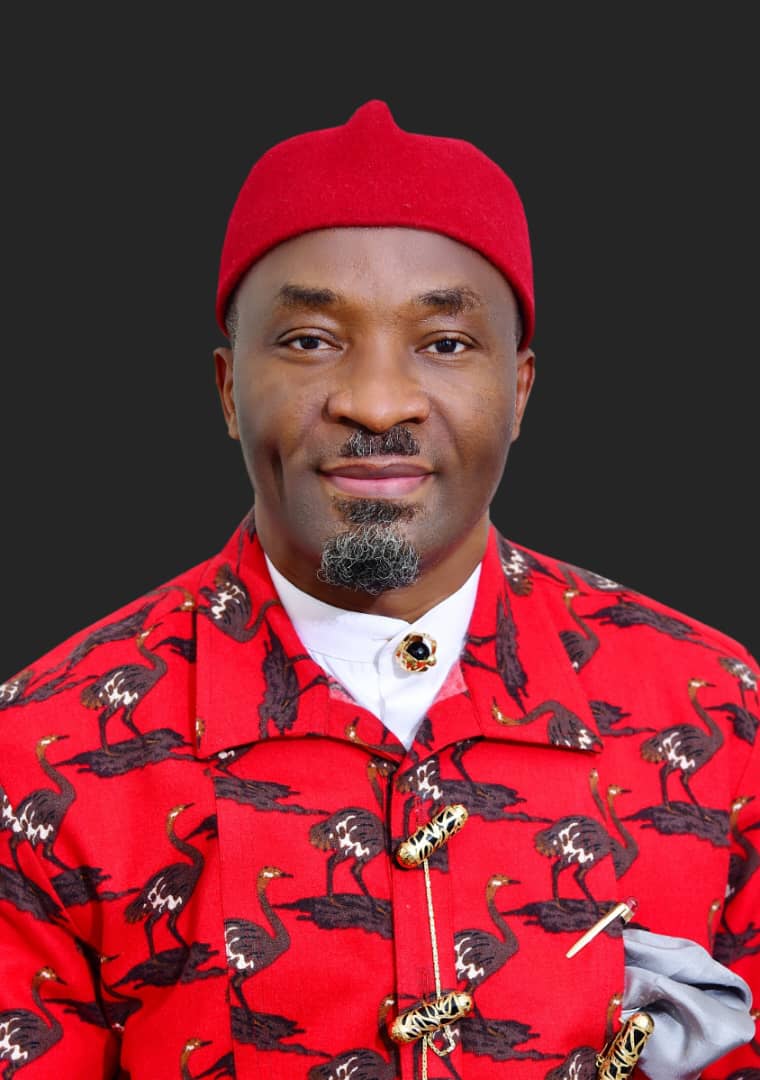
CRG: Politicians Must Stop Witch-Hunting, Focus on Nation Building — Says NYSC Cleared Deputy Speaker Since 2023
CRG: Politicians Must Stop Witch-Hunting, Focus on Nation Building — Says NYSC Cleared Deputy Speaker Since 2023
By: Boye Ola
The Centre for Responsible Governance (CRG) has called on political actors and interest groups to desist from what it described as needless witch-hunting of the Deputy Speaker of the House of Representatives, Benjamin Okezie Kalu, following renewed controversies surrounding his National Youth Service Corps records.
The organisation noted that the clarification by the National Youth Service Corps (NYSC) regarding the matter is not a recent development, as a formal verification letter had already been issued as far back as May 23, 2023.
The letter, referenced NYSC/CCD/VER/10/5.1/VOL1/02, had already addressed and cleared the questions surrounding the Deputy Speaker’s NYSC records.
Reacting to the renewed debate, the spokesman of the Centre,
Obande George, said it was troubling that issues which had already been clarified by a competent national institution were being resurrected for political purposes.
According to him, the time has come for political actors to move away from destructive engagements and concentrate on building the nation.
“It is important to note that the NYSC had already issued a verification letter dated May 23, 2023 addressing the matter.
Reopening issues that have already been clarified by a competent authority suggests that some individuals are more interested in political witch-hunting than in national progress,” George said.
The CRG stressed that democracy thrives when institutions are respected and their determinations are accepted in good faith rather than constantly questioned for political advantage.

George also commended the Deputy Speaker for demonstrating maturity and composure throughout the controversy, despite what he described as sustained provocations.
“Honourable Benjamin Kalu has shown remarkable calm and maturity in the face of intense public scrutiny and political provocation.
Instead of engaging in unnecessary public confrontation, he allowed institutions to speak through their records.”
The Centre warned that Nigeria’s political culture must evolve beyond constant character attacks and sensational allegations, which often distract public officials from their responsibilities.
According to the organisation, the country’s development requires constructive engagement among political actors rather than continuous attempts to discredit opponents.
“Nigeria cannot move forward if political energy is constantly spent on digging up allegations and amplifying rumours. Our leaders and political actors must redirect their focus to governance, policy and nation building.”
CRG therefore urged Nigerians to rely on verified information from credible institutions and avoid spreading speculative claims that could damage reputations or destabilise public discourse.
The organisation reiterated that respect for due process and institutional integrity remains essential for strengthening Nigeria’s democracy.

@The Centre for Responsible Governance, Email: [email protected], Instagram: crgngo6, Twitter: crgng06, Threads: crgngo6
Uncategorized
IWD 2026: Ajadi Celebrates Women, Urges Them To Seek More Elective Positions In Future Elections

IWD 2026: Ajadi Celebrates Women, Urges Them To Seek More Elective Positions In Future Elections
A Leading People’s Democratic Party, (PDP) Governorship Aspirant in Oyo State, Ambassador Olufemi Ajadi Oguntoyinbo has felicitates with women in the country on the occasion of this year’s International Women’s Day.
The international Women’s Day is celebrated on 8 March, commemorating women’s fight for equality and liberation along with the women right’s movement. It gives focus to issues such as gender equality and reproductive rights. International Women’s Day originated from labour movements in Europe and North America during the early 20th century.
In a statement issued on Sunday to commemorate this year’s edition of the International Women’s Day, Ajadi said the role of the women in nation building cannot be over emphasised.
He recalled the role played by prominent Nigerian women like Mrs Funmilayo Ransome- Kuti, Margaret Ekpo and Wuraola Esan towards the liberalization and the growth of the country and urges women to follow their footsteps by not only participate in the political process but seek more elective positions.
He urges the political leaders to encourage and give more chances to women for them to contest and occupy elective positions in the country.
Ajadi also called for more respect for women, saying they are definitely behind whatever success recorded by the menfolk.
He said domestic violence against women should be stopped, saying they deserves respect for their role in moulding the future leaders.
According to the statement, “I celebrate and congratulate our women on this year’s occasion of International Women’s Day. We cannot underestimate the role played by our women both at home, in the social circle and in politics. They deserve more respect.
“I equally called on them not only to be a passive participants in politics but to determine to seek more elected positions in future elections. They should aspire more from the position of dancing and singing at campaigns to seek more elective positions. The ratio of men to women in elective positions in the country is embarrassing. Women should stand up and fight for more elective positions.
“I also use the occasion of this year’s Women’s Day to appeal to Nigerians to stop domestic violence against the women. If we treat our women well, our country will witness unprecedented developments”.


-

 society7 months ago
Religion: Africa’s Oldest Weapon of Enslavement and the Forgotten Truth
-

 news4 months ago
WHO REALLY OWNS MONIEPOINT? The $290 Million Deal That Sold Nigeria’s Top Fintech to Foreign Interests
-

 society6 months ago
“You Are Never Without Help” – Pastor Gebhardt Berndt Inspires Hope Through Empower Church (Video)
-

 celebrity radar - gossips2 months ago
Dr. Chris Okafor Returns with Power and Fire of the Spirit -Mounts Grace Nation Altar with Fresh Anointing and Restoration Grace on February 1, 2026