
society
IBEJU-LEKKI: THE SOUGHT-AFTER NEWEST OIL MONEY by Dennis Isong


IBEJU-LEKKI: THE SOUGHT-AFTER NEWEST OIL MONEY by Dennis Isong
On the 24th of January, 2023, it was an honor for the Lagos State Government to receive the President of the Federal Republic of Nigeria, President Muhammadu Buhari to commission the:
- Dangote Oil Refinery
- Lekki Deep Seaport
- Imota Rice
- 4th Mainland flag off

All of these places are in Ibeju-Lekki axis.
In the Lekki Free Zone Lagos, Nigeria, the Dangote Oil Refinery is a 650,000 barrels per day (BPD) integrated refinery project. It is anticipated to be both the largest single-train facility in the world and the largest oil refinery in Africa.
With 1,100 kilometers of pipeline infrastructure and the capacity to handle 3 billion standard cubic feet of gas per day, the Dangote Petroleum Refinery has the largest pipeline infrastructure in the whole globe. The Refinery alone has a 435MW Power Plant that can supply all of Ibadan DisCo’s energy needs.
The Refinery will have a surplus of each of these goods for export in addition to meeting the whole Nigerian demand for all refined products. A $21 billion market for Nigerian crude will be created by the multi-billion dollar Dangote Petroleum Refinery. With the ability to process various crudes, it is intended to process Nigerian crude.
THE LEKKI DEEP SEAPORT
The federal government, acting through the Nigerian Ports Authority (NPA), the Lagos State Government, the Tolarams Group (owners of the Lagos Free Zone), and China Harbour Engineering Company are partners in the $1.5 billion LEKKI DEEP SEAPORT project.
Executive Secretary, Nigerian Shippers Council (NSC), Emmanuel Jime said,
“Lekki deep seaport represents a dynamic change as far as the maritime domain is concerned. This is a fully automated port. The implication of that is that for once we are going to have a port that will ensure not only that things are conducted diligently but also seamlessly.”
THE LAGOS STATE IMOTA RICE MILL manufacturing facility in Ikorodu was inaugurated by President Muhammadu Buhari on Monday, increasing Nigeria’s capacity to produce rice.
The mill is anticipated to increase the nation’s ability to produce domestic parboiled rice. The mill aspires to dominate the market as a producer of luxury brands.
“The Imota Rice Mill is an effort by Lagos State to support the country’s rice revolution,” Babajide Sanwo-Olu, governor of Lagos State said at the commissioning. “It will create jobs and help drive sustainable growth and we are glad to be part of the country’s agricultural revolution.”
The Lagos State Government announced on Friday that the FOURTH MAINLAND BRIDGE project’s scheduled development will be finished in 2027.
Once finished, the bridge will be the second-longest in Africa and feature three toll plazas, nine interchanges, a 4.5-kilometer Lagoon Bridge, and an environmentally favorable setting.
It is anticipated to be around 37 kilometers long and will begin at Abraham Adesanya in Ajah on the Eti-Osa-Lekki-Epe corridor, travel via Ikorodu, Nigeria’s Owutu/Isawo, and end at the Lagoon Expressway beachfront. In 2027, the project will be finished.
Ibeju Lekki is a rapidly developing area in Lagos, Nigeria that has seen significant growth in recent years.
The area is known for its beautiful beaches, natural resources, and proximity to major business and industrial centers.
Buying a property in Ibeju Lekki can be a great investment decision for several reasons, most especially, now that there are 4 massive projects commissioned to run concurrently.
What does that imply? Buying property in this area is the potential for significant appreciation in value.
As the area continues to develop and attract more businesses and residents, the demand for real estate in Ibeju Lekki is likely to increase now, leading to higher property values.
Another benefit of buying property in Ibeju Lekki is the potential for rental income. As more people move to the area for work at these sites and leisure, the demand for rental properties is likely to increase. This can provide investors with a steady stream of passive income.
Ibeju Lekki is also known for its beautiful beaches and natural resources, making it a popular tourist destination. This can open up opportunities for investors to develop and operate hotels, resorts, and other tourism-related businesses.
Another important factor to consider when buying a property in Ibeju Lekki is the infrastructure and amenities in the area.
The government has been making significant investments in improving the infrastructure in the area, including the construction of new roads, power and water supply, and other basic amenities. The commissioning of the huge projects is another fact that signifies the interest of the government in Ibeju-Lekki.
For instance, the Lekki Epe Expressway which connects Ibeju Lekki to the rest of Lagos and other parts of Nigeria has significantly improved the accessibility of the area. This has made it easier for residents and businesses to move in and out of the area, boosting the economy and overall development.
There are also several high-quality educational institutions, healthcare facilities, and shopping centers in the area, providing residents with access to essential services and amenities.
Furthermore, Ibeju Lekki is also home to several gated estates and estates like Eleko beach and La Campaign Tropicana Beach Resort, where you can find luxury amenities like swimming pools, gyms, and recreational parks.
In conclusion, for individuals wishing to profit from the region’s potential for growth and development, purchasing real estate in Ibeju Lekki is a wise investment choice. Ibeju Lekki is positioned to become one of the most sought-after districts in Lagos, Nigeria, thanks to its stunning beaches, abundant natural resources, proposed government projects, and expanding infrastructure and facilities.
Before making any investment decisions, it’s crucial to conduct your research and speak with a real estate agent and financial advisor.
Dennis Isong is a TOP REALTOR IN LAGOS.He Helps Nigerians in Diaspora to Own Property In Lagos Nigeria STRESS-FREE. For Questions WhatsApp/Call 2348164741041




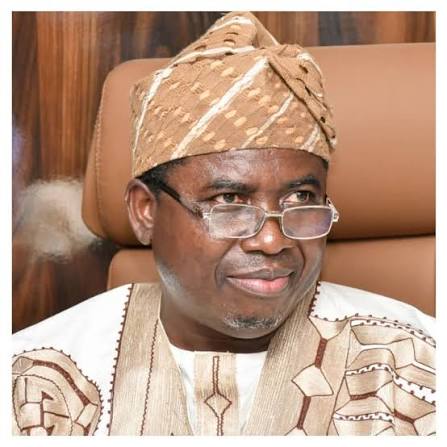
INEC CHAIRMAN HAS NO ACCOUNT ON X, DISREGARD PARTISAN FABRICATIONS
ABUJA — The Independent National Electoral Commission (INEC) has firmly denied claims that its Chairman, Joash Amupitan, operates a personal account on X (formerly Twitter), describing the allegation as “entirely baseless and fabricated.”
In a press statement issued Friday, the Commission said the viral post allegedly linked to the Chairman was a deliberate attempt to tarnish his reputation and undermine the neutrality of the electoral body.
INEC stressed that its Chairman has no presence on X and has never engaged in partisan commentary or political activity, either publicly or privately.
“This claim is a figment of the imagination of its purveyors,” the statement noted, adding that the post was part of a coordinated misinformation campaign.
The Commission warned that the false narrative comes at a critical time when it is focused on electoral reforms and preparations for upcoming polls, describing the development as a “needless distraction.”
INEC also raised concerns over rising cyber fraud, revealing that fake accounts bearing the Chairman’s identity have previously been used to deceive unsuspecting Nigerians.
According to the statement, such accounts have been reported to security agencies, with the latest incident seen as a continuation of a broader criminal pattern.
The electoral body disclosed that it is now working with security and cyber-intelligence agencies to track down those responsible for the impersonation and misinformation.
INEC emphasized that offenders would face prosecution under Nigeria’s Cybercrimes laws, warning that identity theft and the spread of forged digital content remain serious criminal offences.
The Commission urged the public to ignore the false claims and rely only on official INEC communication channels for verified information.
Despite the controversy, INEC reaffirmed its commitment to conducting free, fair, and credible elections across the country.
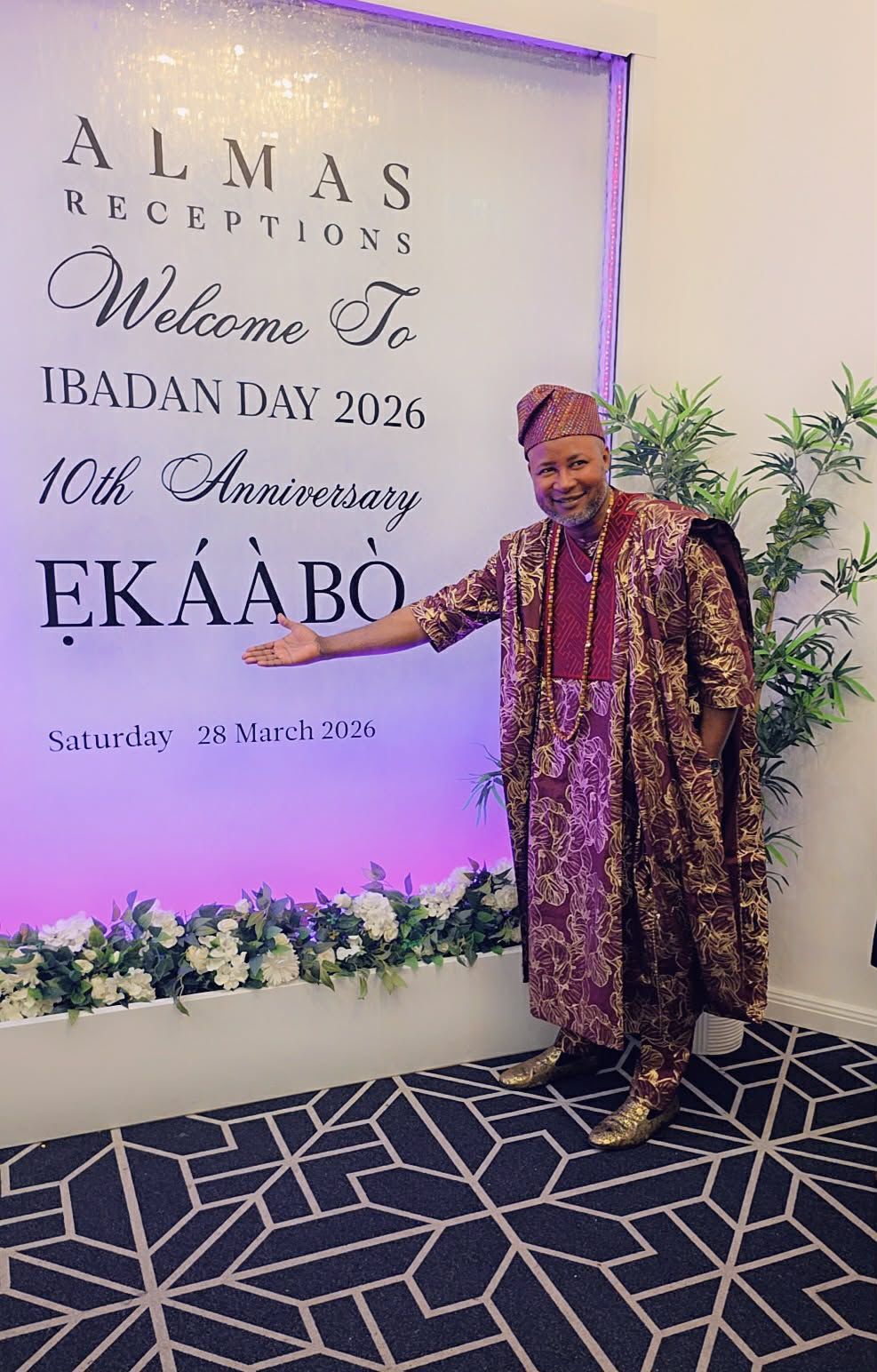
Ishola Congratulates CCII on Ibadan Cultural Festival
Hon. Adekunle Ishola (Ojuabere) has congratulated the Central Council of Ibadan Indigenes (CCII) on the successful hosting of the Ibadan Cultural Festival, describing the event as a powerful celebration of the rich heritage and enduring unity of the Ibadan people.
In a statement, Ishola, a member of the Ibadan Progressive Association of Australia, IPAA, an affiliate club of CCII in the diaspora, commended the leadership of the council for sustaining the cultural legacy of the ancient city through consistent promotion of its traditions and values.
He noted that the festival serves as a unifying platform for sons and daughters of Ibadan across the globe, fostering cultural pride, community development, and intergenerational connection.
Hon. Ishola, who hails from Ibadan North West, also highlighted his deep-rooted connection to the council, being the son of a former Secretary of CCII, Chief Gbade Ishola.
He said this legacy continues to inspire his commitment to the progress and preservation of Ibadan’s cultural identity.
While congratulating the organizers on a successful outing, the House of Representatives aspirant for Ibadan North West/South West Federal Constituency reaffirmed his dedication to initiatives that promote culture, youth engagement, and socio-economic development in Ibadanland.
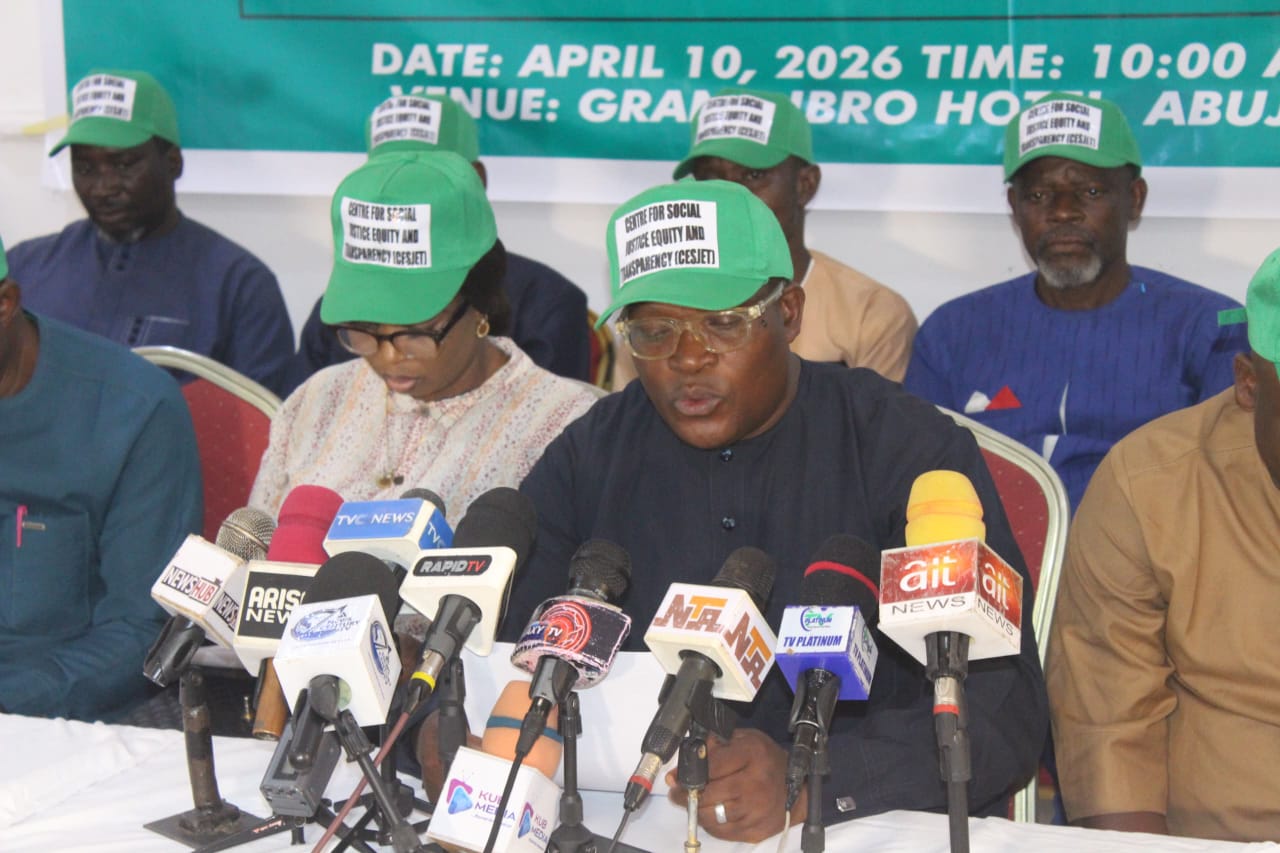
*Centre defends due process in appointment of IST Chairman Aminu Junaidu*
*…says reforms boosting investor confidence in capital market*
The Centre for Social Justice, Equity and Transparency (CSJET) has defended the appointment of Barrister Aminu Junaidu as Chairman of the Investment and Securities Tribunal (IST), insisting that due process was followed and rejecting claims that the appointment violated the Investment and Securities Act 2025.
Speaking at a press conference held on Friday in Abuja, Executive Director of the Centre, Pastor David D. Yakubu, said the appointment was approved by President Bola Ahmed Tinubu within his constitutional authority, and that there was no evidence of any breach of established legal or administrative frameworks.
CSJET said much of the public debate surrounding the appointment had been shaped by misinterpretation of governance processes, stressing that executive decisions must be understood within the context of institutional needs and constitutional powers.
“The appointment was duly approved by President Bola Ahmed Tinubu, acting within the constitutional powers vested in his office. In a constitutional democracy, such authority is exercised within defined legal and administrative frameworks, not arbitrarily,” Yakubu said.
The Centre also urged caution in interpreting administrative developments as illegality, warning against what it described as “selective readings” of government actions.
“The existence of differing narratives does not automatically translate into illegality. What must guide public judgment is the totality of the process, not isolated fragments of it,” he added.
CSJET further noted that appointments of heads of agencies are processed through the Office of the Secretary to the Government of the Federation, with formal letters issued through established channels.
“For clarity, appointments of Heads of Agencies are processed through the Office of the Secretary to the Government of the Federation, and formal letters of appointment are issued accordingly. This is a well-established administrative procedure,” Yakubu said.
The group also defended Junaidu’s qualifications, describing him as a seasoned legal practitioner with extensive experience in governance and public administration.
“Barrister Aminu Junaidu is a seasoned legal practitioner with extensive experience in governance and public administration. As a former Attorney-General of Zamfara State, he operated at the highest levels of legal advisory and institutional management,” CSJET stated.
The group added that his experience was relevant to the demands of the tribunal, which operates at the intersection of law and economic regulation.
“The argument that qualification must be narrowly restricted to a specific segment of capital market practice overlooks the broader competencies required for modern institutional leadership—analytical depth, legal expertise, and administrative capacity,” the Centre said.
On performance, CSJET said the tribunal had recorded improvements since Junaidu assumed office following a formal handover on October 26, 2025.
“Since assuming office, Barrister Aminu Junaidu has demonstrated a commitment to restoring order, stability, and efficiency within the Investment and Securities Tribunal,” he said.
The group added that there had been improvements in efficiency, inclusiveness, and case management, which it said had contributed to rising confidence among legal practitioners.
“More lawyers are increasingly bringing new cases before the Tribunal, encouraged by a growing reputation for timely and efficient dispute resolution,” CSJET said.
He also highlighted international engagements as evidence of growing institutional credibility, citing visits by foreign delegations.
“On March 13, 2026, the Ethiopian Ambassador to Nigeria paid an official visit to the tribunal to understudy its processes and engage with its leadership,” the group said.
“On March 27, 2026, a delegation from Ethiopia’s capital market institutions visited the tribunal to exchange ideas and learn from its evolving systems. These visits reflect increasing confidence in the tribunal’s direction,” he said.
CSJET said such engagements demonstrated that Nigeria’s capital market institutions were gaining recognition beyond the country’s borders.
“These visits reflect increasing confidence in the tribunal’s direction and the reforms being implemented. They show that Nigeria’s capital market institutions are being recognised beyond our borders,” he stated.
The organisation warned against what it described as narratives that could undermine institutional stability.
“We must be careful not to elevate disagreement into crisis, or to reinterpret administrative developments as constitutional breaches without clear and compelling evidence,” he said.
CSJET further stressed that investor confidence depended on stability and trust in regulatory institutions.
“The capital market thrives on trust, predictability, and stability. It is important that discourse around its institutions remains factual and balanced,” the group added.
The Centre reiterated that the appointment of Junaidu followed due process and was consistent with constitutional provisions.
“The appointment of Barrister Aminu Junaidu followed due process and reflects the lawful exercise of constitutional authority,” he added.


- Seychelles Backs United Arab Emirates (UAE) Statement, Calls for De-escalation and Respect for International Law April 11, 2026
- TotalEnergies’ Africa Senior Vice President (SVP) Mike Sangster to Spotlight Expanding Project Pipeline at Paris Forum April 11, 2026
- Ascott expands in Nairobi with new Citadines signing, reinforcing the city’s position as a regional hub April 11, 2026
- Century Group Joins African Energy Week (AEW) 2026 as Floating Production Storage and Offloading (FPSO) Partner, Showcasing Regional Offshore Expansion April 10, 2026
- Climate Litigation Surge Reshapes Energy Policy as Africa Seeks Stronger Legal Voice April 10, 2026
- ES-KO Secures Five-Year Catering & Facilities Management Contract Renewal with TotalEnergies EP Congo April 10, 2026
- Beyond the Court: The Kalahari Conference Solidifies its Status as Africa’s Premier Sports & Lifestyle Destination April 10, 2026
- Africa Sports Unified Launches Pan-African Sports Deals Tracker to Improve Market Visibility and Decision-Making April 10, 2026
- Nigeria and Senegal Must Follow Ghana and Mozambique Against Exclusionary Practices April 10, 2026
- Sheraton Nouakchott marks the entry of Marriott International in Mauritania April 10, 2026
- Seychelles Backs United Arab Emirates (UAE) Statement, Calls for De-escalation and Respect for International Law April 11, 2026
- TotalEnergies’ Africa Senior Vice President (SVP) Mike Sangster to Spotlight Expanding Project Pipeline at Paris Forum April 11, 2026
- Ascott expands in Nairobi with new Citadines signing, reinforcing the city’s position as a regional hub April 11, 2026
- Century Group Joins African Energy Week (AEW) 2026 as Floating Production Storage and Offloading (FPSO) Partner, Showcasing Regional Offshore Expansion April 10, 2026
- Climate Litigation Surge Reshapes Energy Policy as Africa Seeks Stronger Legal Voice April 10, 2026
- ES-KO Secures Five-Year Catering & Facilities Management Contract Renewal with TotalEnergies EP Congo April 10, 2026
- Beyond the Court: The Kalahari Conference Solidifies its Status as Africa’s Premier Sports & Lifestyle Destination April 10, 2026
-

 news4 months ago
WHO REALLY OWNS MONIEPOINT? The $290 Million Deal That Sold Nigeria’s Top Fintech to Foreign Interests
-

 society7 months ago
“You Are Never Without Help” – Pastor Gebhardt Berndt Inspires Hope Through Empower Church (Video)
-

 celebrity radar - gossips3 months ago
Dr. Chris Okafor Returns with Power and Fire of the Spirit -Mounts Grace Nation Altar with Fresh Anointing and Restoration Grace on February 1, 2026
-

 celebrity radar - gossips4 months ago
Prophet Kingsley Aitafo Releases 2026 Prophecy: ‘Nigeria Will Rise, but the World Must Prepare for Turbulence’