
Politics
RE: ON ICAO’S DAMNING REPORT ON NIGERIAN AIRSPACE SECURITY.


RE: ON ICAO’S DAMNING REPORT ON NIGERIAN AIRSPACE SECURITY.
— A REPLY TO ONE ILIYASU GADU WHO HAS BEEN HIRED TO ATTACK FESTUS KEYAMO, SAN
Tunde Moshood
Sahara Weekly Reports That We are aware that a certain former Minister met with some so-called ‘online influencers’ and some hack writers in Abuja some weeks ago and the agenda was simply on how to generate comments, articles and editorials and plant them in various media against no other person than the current Minister of Aviation and Aerospace Development, Mr. Festus Keyamo, SAN to water down the efforts he’s presently making to reposition the aviation sector as mandated by President Bola Ahmed Tinubu.

They have since embarked on a well-oiled campaign of calumny against the Honourable Minister of Aviation and Aerospace Development, Festus Keyamo SAN CON, FCIarb (UK). This coordinated attack is clearly driven by their total discomfort over the Honourable Minister’s commendable performance and focus on key issues in that sector which has confounded even his fiercest critics.
So, we know where Iliyasu Gadu is coming from.
Of course, the push-back by the reactionary forces should be expected. Beneficiaries of the old, decadent order will hardly ever give up old privileges without a fight. But, definitely, in the eyes of right-thinking Nigerians, the honourable minister is doing a damn good patriotic job by restoring the culture of sanity, efficiency and accountability in the aviation sector, consistent with President Tinubu’s renewed Hope Agenda.
In the last few weeks, the paymaster and his hirelings wrote and planted an editorial in one of the nation’s major dailies complaining about Keyamo’s alleged ‘interference’ in what they see as ‘regulatory issues on safety’. Apparently pained by the wide applause that has greeted the Minister’s bold initiatives both in the media and civic space, these disgruntled elements decided to generate a laughable and warped ‘fact-check’ on the stated achievements with a view to discrediting them. But knowledgeable folks who read the so-called ‘fact-check’ only laughed out so loud that they could not help but call for another fact-check to check the fact-checker!
In the latest baseless criticism, Iliyasu Gadu referred to Mr. Keyamo as ‘embattled’. Haba! Who could be more embattled than his paymaster who has been running from pillar to post to clear himself of barrage of corruption charges, ineptitude during his tenure and fraudulent projects he embarked upon?
The Honourable Minister has consistently demonstrated exemplary leadership and strategic acumen, earning him accolades and admiration from members of the public. Any attempt to discredit him, particularly by a former Minister whose reputation is already tarnished, is not only baseless but also a desperate bid to deflect from his own failures.
“Alarmist” Gadu’s spurious claims, particularly regarding the ICAO score, are unfounded. The recent 71% ICAO score is a reflection of systemic issues inherited from previous administration, and not as a result of Mr. Keyamo’s stewardship of just nine months. It was Mr. Keyamo’s brilliance and managerial expertise that steered the nation through the ICAO audit process, mitigating what could have been worse situation. Mr. Keyamo has since set up a Ministerial team, headed by himself and to be meeting monthly, to prepare for the next audit, something never done before in the sector. In fact, in Gadu’s confused state, on the one hand, he blames Mr. Keyamo for the ICAO’s score which happened under Keyamo’s watch (he feels Mr. Keyamo could have done more to remedy the situation), yet in the same breath, he criticises Mr. Keyamo for ‘interference’ in regulatory matters. Haba! He needs to clear his head properly and further consult his paymaster as to whether they should criticise Mr. Keyamo for safety issues or tell Mr. Keyamo to totally keep off safety issues.
Furthermore, on the issue of the Abuja second runway and the land dispute with the Jiwa Community, the facts speak for themselves. The head of the Jiwa Community himself, HRH Dr. IDRIS MUSA (MFR) (Sarkin jiwa), at different public fora openly acknowledged the sterling role Mr. Keyamo played the moment he assumed office in resolving the major part of the issues, allowing the contractors to immediately move to site. He was ably assisted by his counter-part in the FCT Ministry. This information is readily available and corroborated by numerous sources, contrary to the misleading narratives propagated by “Alarmist” Gadu and his cohorts. And at no point did he claim to have resolved, singlehanded, the issue. It is purely an Inter-Ministerial synergy between the FCT and the Ministry of Aviation and Aerospace Development. So what’s the basis of the fact-check agenda for? Envy or vendetta?
Regarding the payment of backlog of funds owed to foreign airlines, the Honourable Minister’s diplomatic engagements were pivotal in resolving an issue that had threatened to paralyze the nation’s aviation sector, inflicting untold hardship and financial stress on the travelling public. His efforts, both domestically and internationally, underscore his commitment to the sector’s growth and stability. It was clear that he worked closely with the CBN to highlight the importance of prioritising his sector and the CBN heeded his passionate plea and responded. So, the question is: if the CBN itself has not disputed his claims, who are these faceless fellows disputing his claim?
The claim that the Air Peace Lagos- Gatwick route was secured during the last administration is equally laughable. The CEO of AIR PEACE himself, Allen Onyeama, went round media houses, reeling out the various efforts of Mr. Keyamo to make this happen, including several trips to the UK and the pressure he put on the UK authorities. That is hearing from the proverbial horse’s mouth. As reported by Daily Independent Newspapers on January 27, 2024, Mr. Keyamo led a delegation to the United Kingdom to tidy up the final conversations of the Airpeace London Gatwick operations. Here’s the link, https://independent.ng/fg-reinstates-commitment-towards-supporting-nigerian-airlines-growth/. It is, therefore, foolhardy of anyone to suggest that the Minister needs another meeting with his UK counterpart after the inaugural flight. Of what relevance will that be?
In summary, the baseless attacks orchestrated by Iliyasu Gadu and his cohorts are a feeble attempt to malign Honourable Minister Keyamo. It is clearly the voice of Esau and the hand of Jacob. Such efforts will not deter the Minister from his mission to enhance the aviation sector and deliver on his mandate. The public is encouraged to see through these unfounded allegations and recognize the significant strides being made under Minister Keyamo’s leadership.
We advise Iliyasu and his gang of “influencers” that Mr. Keyamo is an old war-horse in various battles for many decades now and they are very much welcome to this one.
Tunde Moshood
SA Media and Communications to the Honourable Minister of Aviation and Aerospace Development




Politics
APC Group Endorses Fubara for 2027, Calls on Tinubu and APC to Prioritise Performance Over Politics in Backing Governor’s Second Term Ambition
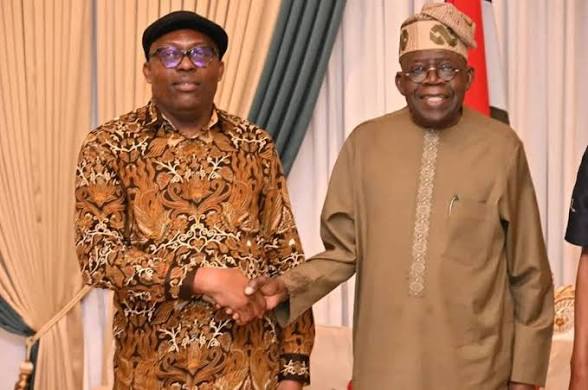
*APC Group Endorses Fubara for 2027, Calls on Tinubu and APC to Prioritise Performance Over Politics in Backing Governor’s Second Term Ambition*
The APC National Vanguard has appealed to President Bola Ahmed Tinubu and the leadership of the All Progressives Congress (APC) to support a second term in office for Siminalayi Fubara, citing what it described as “impressive and verifiable developmental strides” across Rivers State.
In a statement issued on Thursday by its National President, Dr Gbenga Salam (JP), the group said its position followed an extensive assessment tour of key infrastructure and public service projects executed under the Fubara administration.
The APC National Vanguard said the appeal was based strictly on performance, arguing that governance outcomes should outweigh partisan considerations, particularly in a state as economically significant as Rivers.
“We respectfully urge President Bola Ahmed Tinubu and the leadership of the All Progressives Congress to support the continuity of Governor Siminalayi Fubara beyond his current tenure, in recognition of his commitment to development, prudent resource management, and people-focused governance,” the statement read.
According to the group, its delegation visited multiple project sites across the state, observing ongoing and completed works spanning road construction, urban renewal, and public infrastructure upgrades.
It noted that the scale and distribution of these projects reflect a deliberate effort by the state government to extend development beyond traditional urban centres and into underserved communities.
“Our findings from the tour reveal a government that is not only active but intentional in its development agenda. The execution of capital projects across various parts of Rivers State demonstrates a clear understanding of the needs of the people and a commitment to addressing them,” Dr Salam said.
The group particularly commended what it described as prudent financial management by the administration, noting that the projects reviewed showed evidence of careful planning and efficient allocation of resources.
“At a time when economic pressures are evident across the country, it is commendable that the Rivers State government has managed its resources in a way that delivers visible and impactful development without signs of fiscal recklessness,” the statement added.
The APC National Vanguard further observed that despite political tensions in the state, the Fubara administration has maintained focus on governance, ensuring continuity in project execution and service delivery.
The group argued that such stability is critical for sustained development and should be encouraged rather than disrupted.
“Leadership must ultimately be judged by results. In Rivers State, there is clear evidence of progress—projects that are not only announced but executed, and policies that translate into real benefits for citizens,” Dr Salam noted.
The group warned that discontinuity in leadership could stall ongoing projects and reverse gains already recorded, stressing the importance of allowing a performing administration to consolidate its achievements.
“Rivers State is at a pivotal stage where continuity will allow for the completion of ongoing initiatives and the deepening of development gains. Supporting Governor Fubara for a second term is, therefore, a decision in the best interest of the people,” the statement said.
In addition to its call on the APC leadership, the group reaffirmed its support for President Tinubu, expressing confidence in his administration’s broader economic and governance reforms.
The APC group urged Nigerians to remain supportive of efforts aimed at stabilising the economy and strengthening public institutions.
“We reiterate our endorsement of President Bola Ahmed Tinubu for a second term in office, in recognition of his leadership and commitment to national development. With sustained support, the administration can consolidate its reform agenda for the benefit of all Nigerians,” Dr Salam added.
The APC National Vanguard concluded by calling on political actors to prioritise development and public interest over partisan divides, insisting that governance should always be guided by performance and accountability.
“Where leadership demonstrates prudence, delivers development, and remains focused on the welfare of the people, it deserves continuity. This is the position we have reached after a careful and independent assessment of Rivers State,” the statement added.
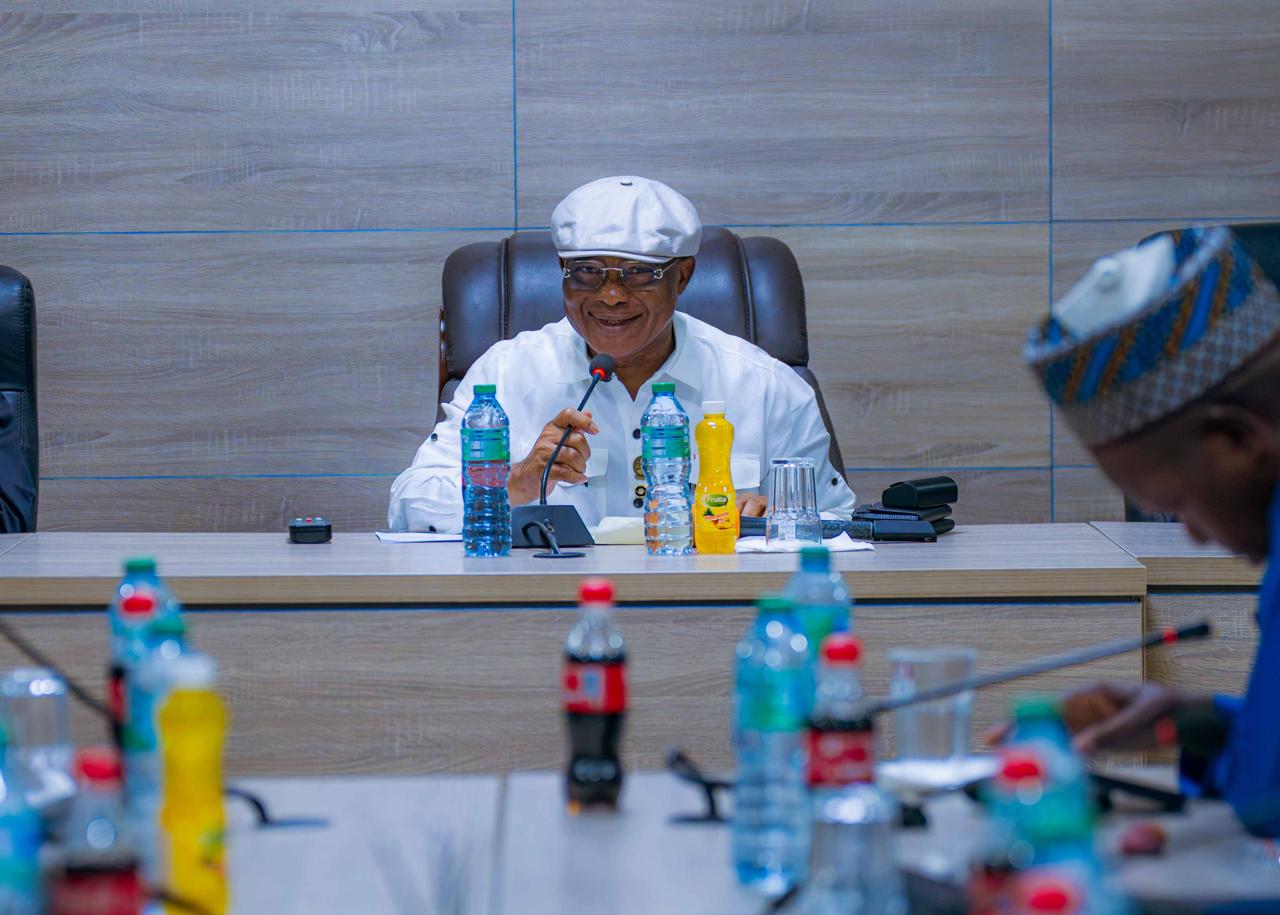
*Renewed Hope Ambassadors Step Into the Next Phase
Fresh from the successful APC 2026 National Convention, the Renewed Hope Ambassadors National, Zonal, and State leadership gathered in Abuja over the weekend, for its fourth strategic meeting, setting the tone for nationwide grassroots activation ahead of 2027.
Chaired by Governor Hope Uzodinma (Imo State) the Director General and National Coordinator of the Renewed Hope Ambassadors, alongside Deputy Director-General, Governor Uba Sani of Kaduna State, and Governor Inuwa Yahaya of Gombe State as Secretary, the session reinforced one clear direction: One Party. One Message. One Mobilization whilst also laying out a strategic roadmap for the activation of the network across all communities in Nigeria.
Backed by the strength of 31 APC-led states, the Renewed Hope Agenda is taking Bola Ahmed Tinubu’s message of progress and reform to every corner of Nigeria.
From bold economic restructuring to initiatives like NELFUND, the increase in the national minimum wage from ₦30,000 to ₦70,000, and strategic investments in critical sectors, including PNiCGI, the mission remains clear: helping Nigerians understand both the purpose and the progress of the Renewed Hope vision.
This is coordination at scale. This is grassroots engagement with purpose. This is the next phase of Renewed Hope with One Party, One Message, and One Mobilisation framework
#RenewedHopeAmbassadors #APC #WeAreAPC


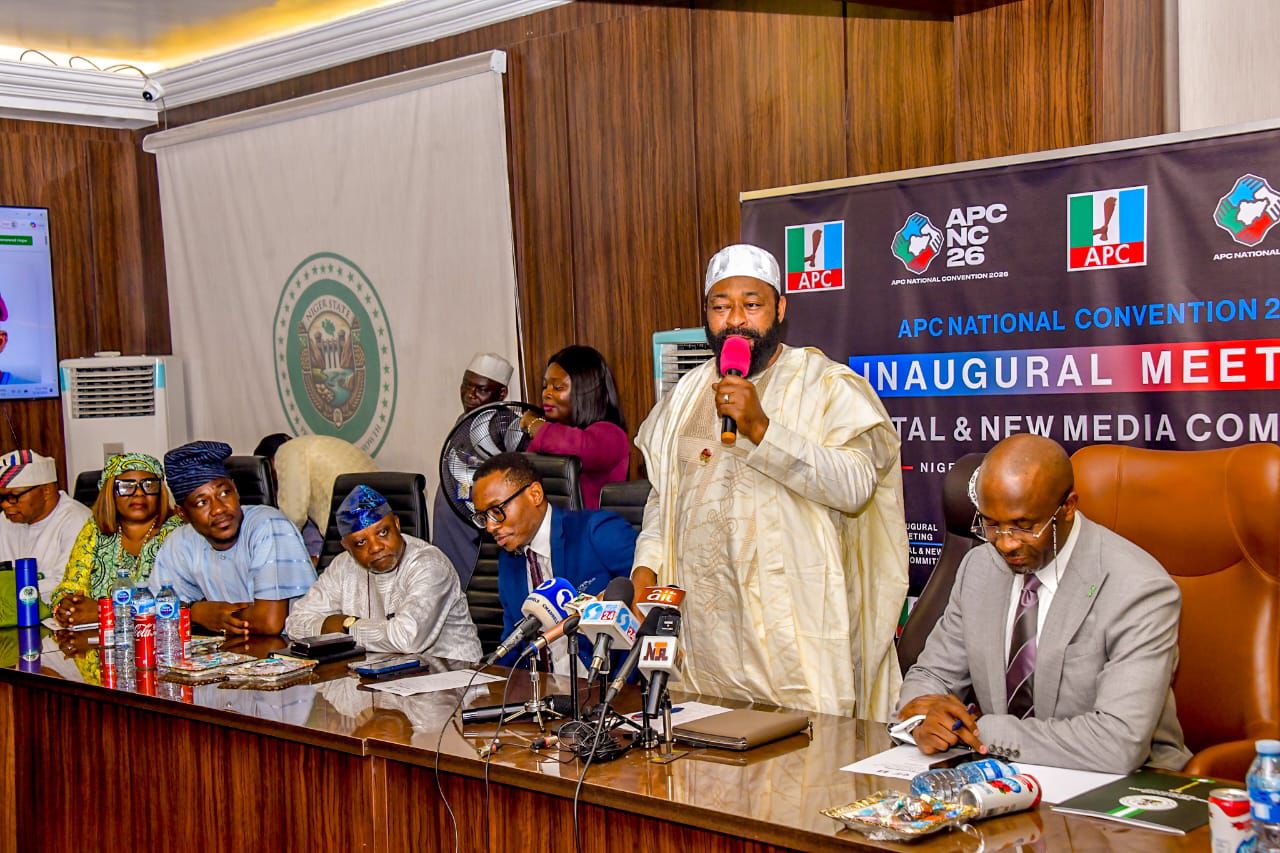
Governor Bago Inaugurates APC Digital Media Sub-Committee Ahead of National Convention.
Governor Umaru Bago has inaugurated the Digital Media Sub-Committee for the forthcoming National Convention of the All Progressives Congress (APC), scheduled to hold on March 27 and 28, 2026 in Abuja.
Chairing the sub-committee, Governor Bago tasked members with the responsibility of effectively communicating the party’s manifesto to the public.
He emphasized the need to leverage social media platforms to highlight the achievements and ongoing efforts of President Bola Ahmed Tinubu, noting that communication gaps have posed challenges that must now be decisively addressed.
The Co-Chair of the sub-committee, Hon. Benjamin Kalu, Deputy Speaker of the House of Representatives, echoed the Governor’s position, urging members to project the activities of both the party and the government to a broader audience.
He called for a deliberate and coordinated effort to showcase the party’s achievements and policy direction, stressing the importance of shaping a compelling and consistent narrative across all digital platforms.
Delivering a presentation to the committee, Otega Ogra, SSA to the President on New Media, who serves as Secretary of the sub-committee, outlined strategic focus areas to guide the team’s operations.
His presentation highlighted communication priorities and actionable steps to achieve the committee’s mandate and strengthen the party’s digital engagement.


-

 society6 months ago
Religion: Africa’s Oldest Weapon of Enslavement and the Forgotten Truth
-

 news4 months ago
WHO REALLY OWNS MONIEPOINT? The $290 Million Deal That Sold Nigeria’s Top Fintech to Foreign Interests
-

 society6 months ago
“You Are Never Without Help” – Pastor Gebhardt Berndt Inspires Hope Through Empower Church (Video)
-

 celebrity radar - gossips2 months ago
Dr. Chris Okafor Returns with Power and Fire of the Spirit -Mounts Grace Nation Altar with Fresh Anointing and Restoration Grace on February 1, 2026