
society
IGBO PRESIDENCY PROJECT:(WHERE WE ARE COMING FROM, WHERE WE ARE, AND WHERE WE ARE GOING TO)

IGBO PRESIDENCY PROJECT:(WHERE WE ARE COMING FROM, WHERE WE ARE, AND WHERE WE ARE GOING TO)
Since the formation of political parties in Nigeria in early forties, the igbos have been very active, particularly in respect of the struggle for self- government and eventual independence. Inso doing, they looked at Nigeria as one unit, hence they were very accommodating to all Nigerians, irrespective of tribe, religion and ethnicity.
During Dr. Nnamdi Azikiwe’s leadership tenure of then national council of Nigeria and the Cameroon which later became the National Council of Nigeria citizens towards Nigeria’s Independence ( when southern cameroon joined Nothern Cameroon) all tribal groups in the N.C.N.C were equitably represented. The party under his leadership had from the North, people like Alhaji Zaria Buka Dipcharima and his colleagues while Chief Olu Akinfosile, Alhaji Adegoke Adelabu, T.O.S Benson( to mention a few)we’re from Western Nigeria. Chief Adeniran Ogunsanya from Lagos was also a top leader. It had top leaders from all over then Eastern Nigeria. This geographical spread demonstrated the igbos belief in one indivisible Nigeria.
It is on record that this leadership accepted all Nigerians as brothers. It will be recalled that the first leader of Government Business in the then Eastern Nigeria in the early fifties was Professor Eyo Ita, an Efik or Ibibio man. Also the first and only Mayor of Enugu was Alhaji Umaru Altine- an indigene of Katsina. Dr. Balogun, a Yoruba indigene, was the Deputy Mayor of Port Harcourt in Eastern Nigeria. There are many more of this demonstration of oneness on the part of the Igbo-controlled political institution in Nigeria. But sometime in 1951 or thereabout, Dr. Nnamdi Azikiwe and the N.C.N.C. won elections to the Western House of Assembly, which would have made him the Leader of Government Business in Western Nigeria. What happened? Tribalism came into play, and he was denied his victory by his two prominent party members at the eleventh hour, who switched their votes to Chief Obafemi Awolowo, their fellow Yoruba. The two N.C.N.C. members who betrayed Zik and voted for the would-be opposition leader, who now emerged as the Leader of Government Business, were the first and only mayor of Lagos, Dr. Olorunimbe and Prince Adesola Adedoyin.
In 1957, the British government offered self-government status to the three regions, if two out of the three accepted self-government which would lead to independence. Chief Obafemi Awolowo’s Western Nigeria opted for it; the Sardauna declared that the North was not yet ripe for self-government. The balance of scale rested with Dr. Azikiwe, the sole leader whose decision would make or mar the offer.
This offer stemmed from the political progress mounted by the Igbos in Eastern and Western Nigeria. The late leader, Dr. Nnamdi Azikiwe, in keeping with the Igbo belief and principle of one Nigeria, rejected the offer. His reason being that the North should not be left behind. But buttressing his argument, he stated that if one of a fleet of ships was left behind in a voyage, it would be vulnerable to attack by pirates, therefore the rest would wait.
Again, in 1959 after general elections leading to independence, Chief Obafemi Awolowo, seeing that his party, the Action Group, if joined with Dr. Azikiwe’s N.C.N.C., would secure a parliamentary majority in the National Assembly, sought coalition with Azikiwe’s N.C.N.C. offering him (Azikiwe) the post of Prime Minister, while he (Awolowo) would be Deputy Prime Minister and Minister of Finance. This was during the parliamentary system.
Dr. Azikiwe again rejected the offer, stating that if two Southern political parties joined together against a Northern one, it would create a political crisis of great dimension. Instead, he accepted the coalition offer from the N.P.C. Party, the Sardauna’s, which secured majority votes in the North to balance the North and South participation in the Federal Government. Dr. Azikiwe then accepted the post of Senate President and later the post of Governor-General of Nigeria when the British occupant of the post, Sir James Robertson, left.
In reply to an unwarranted attack on Dr. Azikiwe as Governor-General by one Alhaji Galadima Pategi— then N.P.C. general secretary and minister in the Northern Nigeria government — Dr. Azikiwe stated that he accepted the position of a “prisoner in a gilded cage” in order that the ship of state sailed smoothly, in preference to the powerful Prime Minister position that would have created misgivings from the North. On behalf of the erring minister, the then Premier ahmadu Bello, the Sardaunna of Sokoto apologized to Dr Azikiwe, acknowledging his leadership sacrifices for one Nigeria. These are few amongst the countless sacrifices the Igbo made in the interest of peace and stability in Nigeria.
WHERE WE ARE
Having made these sacrifices, what has the Igbo been rewarded with? Starting from the end of the civil war, the Igbo people have not only been marginalized but have always been treated below the status of second class citizens in a country they contributed a lot to build. Let it be known that apart from Nigeria, there is no other country the Igbos live as citizens of such country. Any Igbo in any part of the world migrated from Nigeria to that part of the world. This is not the case with other major tribes where their tribes in Nigeria where their tribes constitute origins of the countries they live in. In Benin Republic, Cameroon, Guinea, Bukina-faso and even Ghana, one finds these Nigerian tribes as bonafide citizens of these countries. The Igbos can only be found as citizens in Nigeria and no where else.
After the civil War, the Igbos who had accounts in the banks, and who operated them in the then Biafran enclave, were given a paltry twenty pounds sterling even though many had millions in their accounts. This was followed by declaring their landed properties, including buildings as “abandoned properties” all over Nigeria. In Rivers State in particular, the federal government not only set up the so-called Abandoned properties Authority that collected the state government-stipulated monthly ₦1.50(one naira fifty Kobo) rent per room, which was not paid to the owners of such houses, the federal government went further by authorizing the selling, by the Abandoned Properties Authority, of such houses at government stipulated undervalued prices, but went further to state that only buyers who were origins of Rivers State would be allowed to buy them.
In other parts like Lagos, West and the North, money was paid to the Igbo owners as rent collected and the properties given back to their owners.
There was a case where the government of Lagos State ejected the owner of the property at Vilaska in Ikoyi area of the State. The man’s belongings were thrown out and the owner sat by the side of his household belongings.
This man approached a high court in Lagos for redress. Fortunately for the plaintiff, the judiciary then was alive to it’s responsibilities, unlike now. The court ruled in favour of the plaintiff-and he regained his property. The plaintiff was Emeka Odumegwu Ojukwu, the defendant was the Lagos State government of Commodore Mudasiru Lawal. During the 1979 elections, NPP led by Nnamdi Azikiwe went into coalition with shagari’s NPN to form the federal government. When Shagari felt he had stood, he unilaterally terminated the coalition agreement. It is on record that both the UPN and the NPN approached NPP for a coalition, leading to Zika describing the NPP as a “beautiful bride” Sought for by many suitors. While terminating the accord, Shagari described the NPP as a “baren bride ” to which Dr. Azikiwe responded by describing the NPN leadership as a groom that could not perform. This was the end of that accord.
Immediately after the second second tenure swearing in of Shehu Shagari in 1983, a coup by Buhari and his group of Northern officers took over power. This was meant to thwart Dr. Ekwueme from taking over from Shagari after his second tenure. In his median broadcast Buhari stated that Nigerian government hospitals were mere consulting clinics. Yet both in his twenty months military regime and the recently concluded eight years of disastrous Presidential leadership, the hospitals became worse. A situation where two Nigerian former heads of State were admitted at the same period in a hospital outside Nigeria is a price to pay for crucifying merit on the alter of mediocrity/hypocrisy and incompetence.
When Babangida sent Buhari away through the process by which he (Buhari) took power, he (Babangida) appointed Commodore Ebitu Ukiwe(an Igbo man) as his deputy with the designation of Chief of General Staff. There were behind the scene activities to remove him. Notwithstanding the fact that he was next to General Babangida in the order of protocol, these behind the scene wire pullers ignored protocol order and procedures and usurped Commodore Ukiwe’s position. The climax came when one of the cabals went and occupied an accommodation reserved for Commodore Ebitu Ukiwe in Abuja during the yearly national day celebration. The end of this intrigue was his removal as Chief of general staff and retirement from the Navy.
Igbo traders in Lagos are always relocated to interior places in Lagos and when such places became developed, the Lagos State government offered one excuse to dispossess them of the place and relocate them to another interior place and this has become a norm. Sometimes ago, in Kwara State, the Igbo traders had an arrangement with the Kwara State government agency responsible for tax collection. The accord had been going on for years. All of a sudden the Kwara State government unilaterally increased the individual traders tax beyond what they could afford.
There was an uproar. The Igbos were not the only traders in the market. So why were they singled out for increased taxation?
The creation of states since the overthrow of General Ironsi has been the exclusive preserve of Northern Nigerian military heads of state, starting from General Gowon to Babangida and Abacha. It is on record that apart from the South-East zone, which has only five states, the remaining five zones have six states each, with the North-West having seven, apart from the Federal Capital Territory, Abuja, which enjoys the status of a state.
The leader of MACBAN, Bello, is always in the news threatening. On one occasion, he was arrested and later released, while his herdsmen continued with their mission of killing, raping, and morally dispossessing people.
Since Igboho is back and free, the Nigerian courts and the ECOWAS Court have declared Nnamdi Kanu’s detention unlawful and ordered his release. Yet, the democratic and law-abiding government of Nigeria is still holding him. He is an Igbo.
Government agencies keep jumping from branch to branch in a forest of confused prosecution and persecution to justify his detention.
Sheikh Gumi, the self-appointed federal government ambassador to the territories and caves, gathers information from terrorists, gives it to the federal government, and vice versa. Gumi even sought federal government approval to build an institution in the bush to train terrorists.
A governor from the West sent a terrorist commander, his ADC, unarmed, to negotiate directly with a terrorist leader. If an Igbo man or people of Igbo extraction were doing what these people are doing, the entire armed forces would have been unleashed on them — “a dot in a circle.”
(Apologies to Buhari.)
A notorious kidnapping kingpin was arrested after years of terror. The police officers who caught him were killed on their way back. Wadume was said to have been taken away by a Nigerian Army captain who killed the policemen, after which Wadume fled. Nothing has been heard since then.
If this happened during Muhammadu Buhari’s administration, who is the captain?
A terrorist negotiator was arraigned for trial for over a year, yet nothing has been done. The question is: if these were Igbos, would they have been left free to move from territory to camp, mingling at will, without being given “the treatment” — a dot in a circle?
These Igbos are considered unfit to be Chief Justice of Nigeria, Inspector-General of Police, or Chief of Army Staff. Even when an Igbo is next in line to succeed an incumbent, the incumbent’s tenure is extended so that the Igbo person retires before the time.
The recent scenario concerning the Comptroller-General of Customs is a clear case of marginalization and nepotism against the Igbos in Nigeria and its MDAs..
An Igbo lady appointed to head the Climate Change Agency has not spent up to one year in that office before she was replaced by another woman of Yoruba extraction. This action negates the Federal Character principle, the “no victor, no vanquished” declaration, and the policy of rehabilitation, reconstruction, and reconciliation. Though tribes and tongues may differ, in brotherhood we stand — lyrics as contained in the old and newly reconstructed National Anthem. This is most unfortunate.
These same rejected Igbos have continued to prove their mettle in every endeavour they engage in — commerce, industry, and manufacturing. A foreign head of state once introduced Ngozi Okonjo-Iweala to a Nigerian head of state. We all know her capacity. She contributed immensely to Nigeria’s debt forgiveness, among other roles.
The fastest computer in the world was invented by an Anambra-born Philip Emeagwali. Dr. Ezekiel Izuogu started the production of Completely Knocked Down (CKD) parts of motor vehicles. Had this been encouraged, it would have been the first indigenous vehicle manufactured in Nigeria. Innoson Motors has competed favourably in manufacturing, but have the federal and state governments patronized him? If so, to what extent, considering that he is an Igbo man?
There was a time when two Igbo students in a tertiary institution produced a rocket that flew beyond expectations. Were they encouraged? What about the one who produced a helicopter prototype that successfully flew? Another Igbo child produced a radio broadcasting station known as NBC Radio Station. Yet another produced a small prototype of a tipping truck. These inventors were not encouraged; hence their innovations were lost or abandoned. If they belonged to another extraction, the story would have been different.
Nigeria talks about consuming what is made in Nigeria. China, under Mao Zedong, adopted a policy of producing what the Chinese consumed and consuming what China produced. This policy, coupled with teaching people how to fish rather than giving them fish, contrasts sharply with Nigeria’s charity-driven dependence on imports.
Those who are of Igbo extraction are not — and have never been — encouraged because they do not “belong.” Unfortunately, many Igbos do not realize this attitude toward them. Where we want to be and should be, one must assert themselves before someone else dictates where you belong.
This marginalization and negligence of Igbo potential can only be corrected through collective and deliberate efforts of all Igbos, particularly in politics. In this regard, efforts should be directed toward aligning with other groups to form a strong political party that will not only rescue Nigeria from its unfortunate and degrading status as a “capital of poverty” but also restore the dignity of this “clay-footed giant of Africa.” The potential and capacity to achieve this are present, but deliberate refusal to tap into this abundance — potentially a result of ignorance-born hatred — has hindered greatness.
As long as the politics of “we” versus the Igbos continue, progress will be one step forward and twenty steps backward. The victims of this retrogressive policy must unite and collaborate with like-minded individuals from the North, West, and South, while cooperating with the East, to change this self-inflicting trend.
It is on record that the Igbos have not been allowed to occupy the topmost political leadership positions of the country, despite their sacrifices during and after the colonial era. The Igbos are not lacking in capable, effective, and productive personnel to occupy these positions.
For the first time in the East of Nigeria, a Nigerian ruled a state for eight years and ended his tenure owing no civil servants, pensions, contractors, or any financial obligations. He cleared all government liabilities and, in addition, left a credit balance of $150 million and about 75 billion Naira, even while the federal government was issuing loans to state governments. His state government did not take any federal loans.
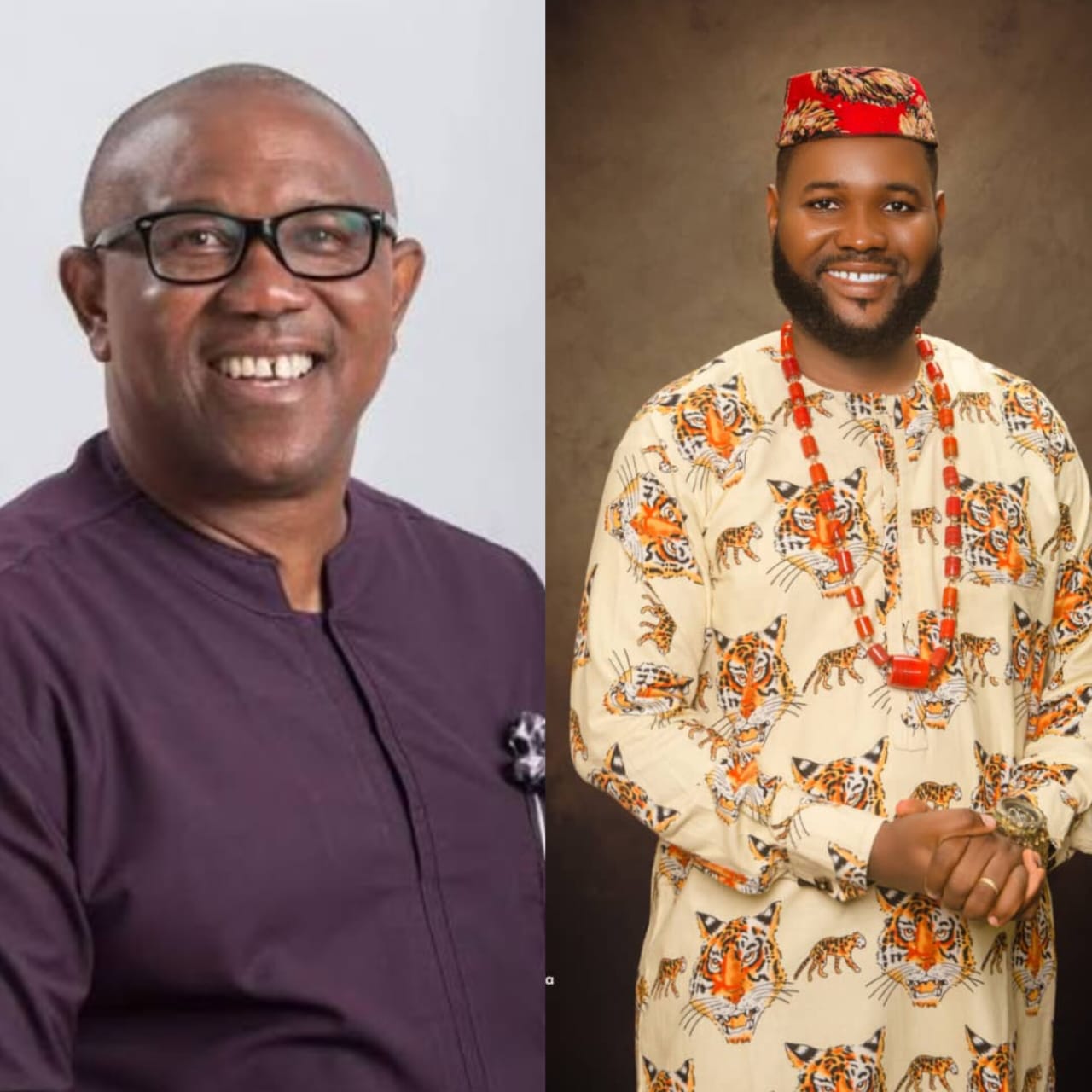
This state is not among the top revenue-generating states, yet it achieved feats that no president, governor, or local government chairman in Nigeria has ever done to date. This political guru and exceptional administrator is Peter Obi. If he could achieve this in Anambra, not known to be among the top revenue states, it is a clear indicator of what he is capable of doing if elected President of the Federal Republic of Nigeria.
Peter Obi is naturally equipped to transform Nigeria from a consumer country to a producer country. There is no doubt that he will succeed in this regard.
Therefore, we appeal to all Nigerians, irrespective of tribe, religion, party affiliation, or ethnic group, who are interested in ending the suffering in Nigeria and uplifting the country to a respectable position. Mr. Peter Obi, in his quest to make Nigeria great, presents an opportunity we cannot afford to miss.
Peter Obi is Nigeria’s Liu Kuo-shiung, our own South Korean general; Sechin, our own Frederick Douglass Roosevelt and John F. Kennedy of the United States; and finally, our comrade Adedol of January Mounsuni of China. These men have one thing in common: they rescued their countries and their people when circumstances were tough and hopeless. We must give capable men like Peter Obi a chance.
Moreover, no one from the Igbo ethnic group has been allowed to occupy this post since the inception of the current dispensation. Once again, this appeal is directed to all Nigerians interested in positioning Nigeria appropriately in the community of nations. This leadership post has been vacant due to decades of mismanagement.
This appeal is directed to Nigerians who:
Do not support continued borrowing that mortgages the future of our children, including generations yet unborn;
Do not want Nigerians to remain the world’s poverty capital;
Do not condone the production of large numbers of out-of-school children;
Do not endorse the enthronement of corruption and mediocrity;
Do not wish to elevate leaders who take more than they give, rather than offering solutions to improve Nigeria.
This appeal is for the majority who have been deprived, trampled upon, suppressed, dehumanized, and left to suffer amidst poverty. These six or seven largest oil-producing nations where fuel costs more than a teaspoon highlight the injustice in a nine-pound-producing country like Nigeria.
SIGNED
HON. PRINCE CHINEDU NSOFOR (KPAKPANDO NDIGBO)
NATIONAL COORDINATOR IGBO PRESIDENCY PROJECT AND FOUNDING PRESIDENT IGBO HEROES AND ICONS FOUNDATION




FOPCHEN Seeks Wider Engagement As Court Defers Hearing
OTA, OGUN STATE — The High Court of Ogun State, Ota Division, on Thursday resumed hearing in the ongoing matter involving cultural and societal concerns, before adjourning proceedings till Thursday, July 2, 2026, for continuation of hearing.
At the resumed sitting on May 28, 2026, counsel representing the various parties revisited key issues in the case and made further submissions before the court.
The matter, which has continued to generate public interest across different sectors, again drew attention from legal observers and stakeholders who described the case as one with significant implications for societal values, cultural identity and constitutional interpretation.
Speaking after the proceedings, the Foundation for the Protection of Cultural Heritage in Nigeria, popularly known as FOPCHEN, renewed its appeal for dialogue and constructive engagement among Nigerians, stressing that sensitive cultural and moral issues should not be left entirely within the confines of the courtroom.
According to the group, broader conversations involving traditional institutions, civil society organisations, religious leaders and policy stakeholders remain necessary in addressing issues relating to national values and social responsibility.
Legal analysts at the court premises noted that arguments being canvassed by parties in the suit could shape future legal interpretations surrounding cultural and moral questions in the country.
Following submissions by counsel, the presiding judge adjourned the matter till Thursday, July 2, 2026, to enable parties further prepare and respond to issues raised during the hearing.
The development has continued to spark reactions among observers, with many Nigerians closely monitoring the proceedings ahead of the next hearing date.
US-Based Society Lady, Fehintola-Brat Extends Eid-El-Kabir Greetings To Muslims
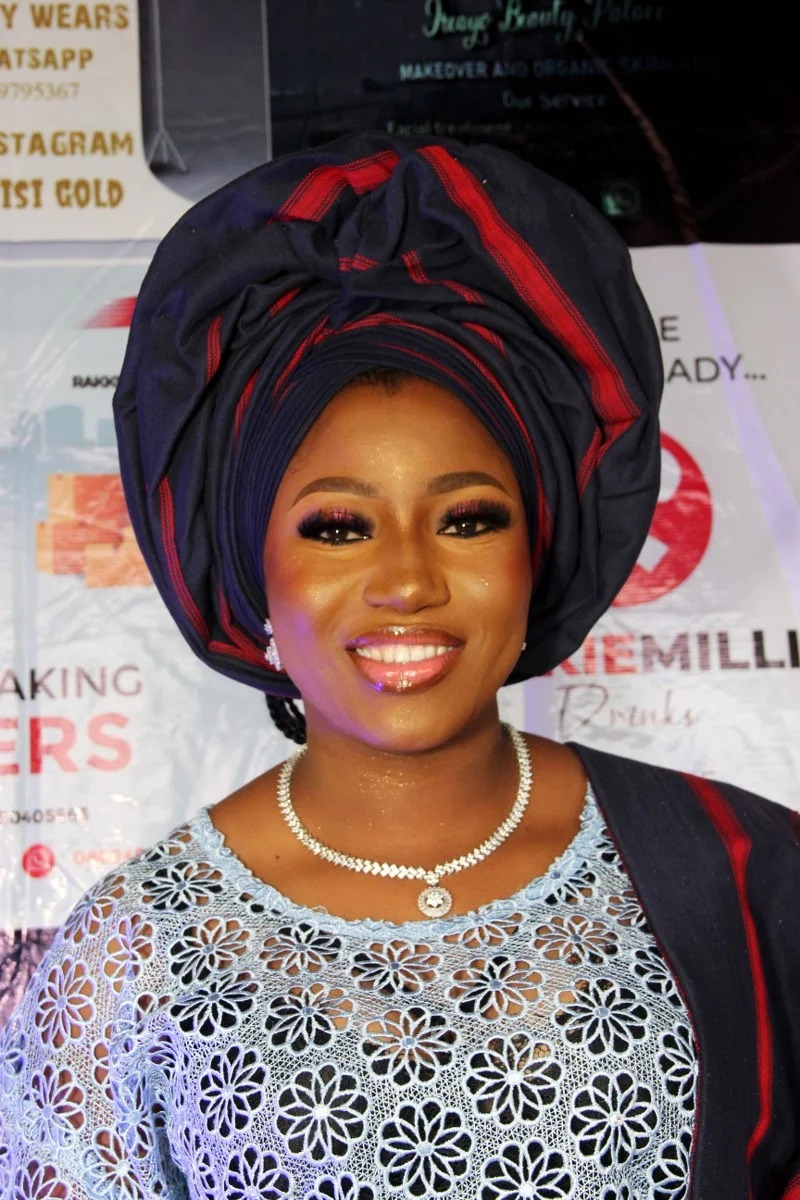
United States based fahionista of class, Chief (Mrs) Ayoola Fehintola-Brat has extended a warm greetings to Muslim faithful all over the world on the occasion of the 2026 Eid-El-Kabir celebration.
Fehintola-Brat who is the Balogun Egbe Obaneye Obinrin Akile Ijebu, and the Yeye Asofin of Idenaland in her message to Journalists urged Muslim to continually uphold the enduring values of sacrifice, obedience, faith, and compassion, which are central to the significance of Eid-El-Kabir festival.
A quiet philantropist whose humanitarian services has won her several laurels urged Muslims to use the spiritual occasion to pray for the peace co-existence of Nigerians regardless of religious, social and political leanings stressing that the oneness of the country should not be underplay.
In a related development, she expressed her felicitations to all sons and daughters of Ijebuland on the forthcoming Ojude Oba 2026 celebration, tasking age-groups otherwise known as Regbregbe to be more proactive in giving back to their immediate communities.
According to her, the beauty of the age-groups in Ijebuland is the need to contribute immensely to the development of the land in no small means. “This we will continue to achieve with God on our side”, she concluded.
Sallah: Obasa Felicitates Muslim Ummah, Commends Nigerians for APC Primaries Turnout
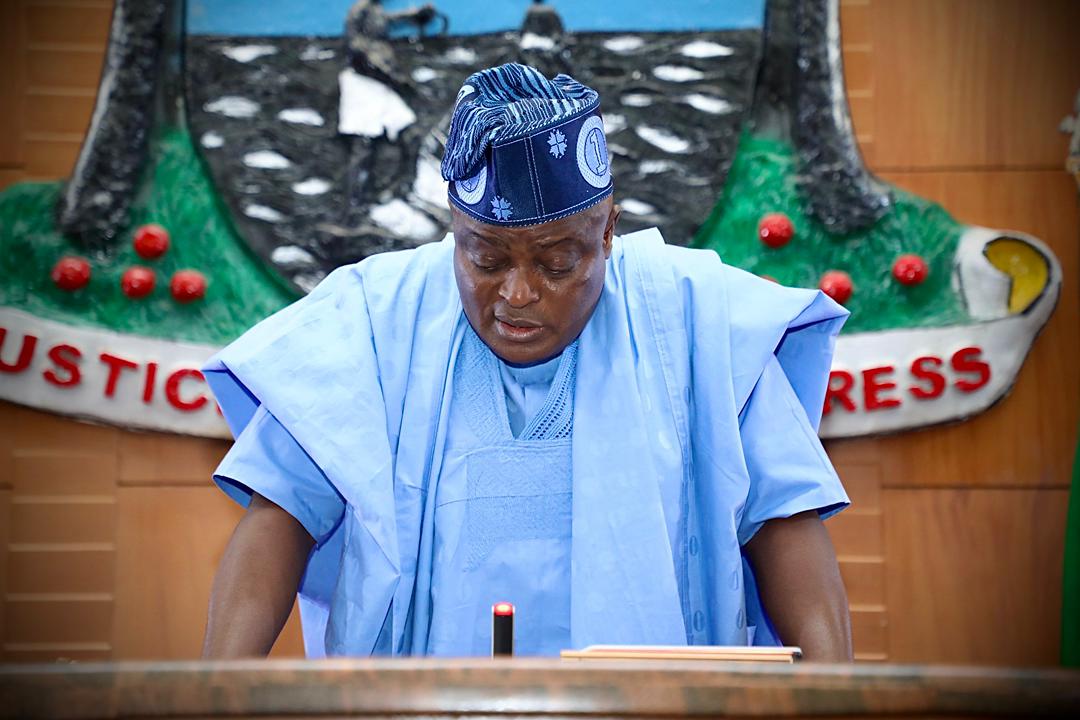
The Speaker of the Lagos State House of Assembly, Rt. Hon. Mudashiru Obasa has extended warm felicitations to Muslims in Lagos State and across Nigeria on the occasion of Eid al-Adha.
In a statement released by his Chief Press Secretary, Mr. Dave Agboola, Obasa described the festival as a season of sacrifice, reflection, and gratitude, urging the faithful to continue to uphold the values of peace, unity, and love that strengthen the nation.
He noted that the celebration of Eid al-Adha is not only a spiritual milestone but also a reminder of the importance of togetherness and collective responsibility in building a stronger society.
He, likewise, emphasized that the festival provides an opportunity for Nigerians to renew their commitment to national progress and to support leadership that prioritizes development and prosperity.
Obasa, however, commended Nigerians, particularly members of the All Progressives Congress (APC), for their massive turnout during the recently concluded party primaries. He described the participation as a clear demonstration of the people’s confidence in the government of President Bola Ahmed Tinubu and their belief in the administration’s vision for a greater Nigeria.
“The APC primaries have shown the resilience of our democracy and the confidence Nigerians have in the leadership of President Bola Ahmed Tinubu and the Renewed Hope Agenda. This is a strong message that our people are ready to continue supporting policies that will drive growth and prosperity,” Obasa stated.
The Speaker further encouraged Muslims to celebrate responsibly, stressing that the joy of Eid should be accompanied by prayers for the continued peace and progress of Lagos State and Nigeria.
“As you celebrate with family and loved ones, may this season bring joy, peace, and prosperity to your homes. Let us remain united in our resolve to build a stronger nation,” he added.
On behalf of the Lagos State House of Assembly, Obasa wished all Muslims a happy and fulfilling Eid al-Adha celebration.


- Société Nationale des Pétroles du Congo (SNPC) Chief Ominga to Speak at African Energy Week (AEW) 2026 as Congo Accelerates Gas Expansion May 29, 2026
- South Africa: Deputy President Mashatile arrives in India for a Working Visit May 29, 2026
- Seychelles: President Visits Key Development Sites on Coetivy Island May 29, 2026
- Accelerating regional action to advance mental health care in Africa May 29, 2026
- President of the Republic of Seychelles Meets Young La Digue Talent Ahead of London Showcase May 29, 2026
- United Nations Economic Commission for Africa (ECA) launches regional initiative to accelerate women’s digital entrepreneurship across four African countries May 29, 2026
- Ethiopia: International community must act to safeguard press freedom ahead of national election May 29, 2026
- CORRECTION: Annual Meetings 2026 (AM2026): African Development Bank (AfDB) 2025 Trade Finance Report Highlights Resilience of African Financial Institutions After Covid-19 May 29, 2026
- Why Big Tech Could Become Nigeria’s New Gas Partner May 29, 2026
- African Energy Chamber (AEC)-Venezuela Alliance Accelerates Pathways into South-South Energy Expansion May 29, 2026
- Société Nationale des Pétroles du Congo (SNPC) Chief Ominga to Speak at African Energy Week (AEW) 2026 as Congo Accelerates Gas Expansion May 29, 2026
- South Africa: Deputy President Mashatile arrives in India for a Working Visit May 29, 2026
- Seychelles: President Visits Key Development Sites on Coetivy Island May 29, 2026
- Accelerating regional action to advance mental health care in Africa May 29, 2026
- President of the Republic of Seychelles Meets Young La Digue Talent Ahead of London Showcase May 29, 2026
- United Nations Economic Commission for Africa (ECA) launches regional initiative to accelerate women’s digital entrepreneurship across four African countries May 29, 2026
- Ethiopia: International community must act to safeguard press freedom ahead of national election May 29, 2026
-

 news6 months ago
WHO REALLY OWNS MONIEPOINT? The $290 Million Deal That Sold Nigeria’s Top Fintech to Foreign Interests
-

 society4 weeks ago
SOCIAL MEDIA IS NOT A BATTLEFIELD COMMAND – WHY THE NIGERIAN ARMY’S ACTION AGAINST JUSTICE CRACK IS A NATIONAL SECURITY IMPERATIVE
-

 celebrity radar - gossips4 months ago
Dr. Chris Okafor Returns with Power and Fire of the Spirit -Mounts Grace Nation Altar with Fresh Anointing and Restoration Grace on February 1, 2026
-

 celebrity radar - gossips6 months ago
Prophet Kingsley Aitafo Releases 2026 Prophecy: ‘Nigeria Will Rise, but the World Must Prepare for Turbulence’