
Business
‘I’m still using my personal cars’ – Aisha Buhari speaks on Alleged Car gift by IGP

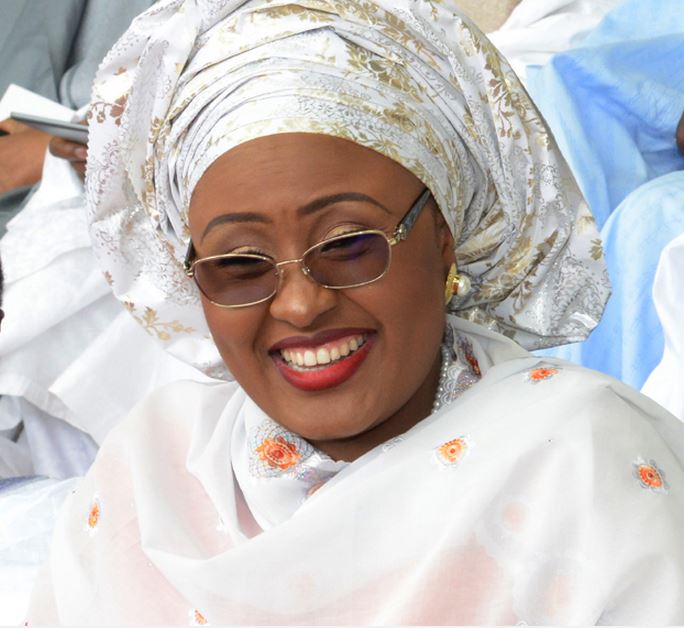

President Muhammadu Buhari’s wife, Aisha, has reacted to an allegation that she received two Sports Utility Vehicles, SUVs, illegally from the Inspector General of Police, Ibrahim Idris.
In a brief response on Twitter, Mrs. Buhari said she was still using her personal cars, but stopped short of categorically confirming or denying the allegation.
Isah Misau, Bauchi-APC senator, made the allegation when he appeared before the Senate ad-hoc committee investigating allegations by the lawmaker against the IGP.
Mr. Misau said the IGP gave Mrs. Buhari the two vehicles, adding that the details of the donation were contained in the documents the police boss submitted to the court in the suit instituted against him by the Attorney-General of the Federation, Abubakar Malami, on behalf of the Federal Government.
“I still have some contract papers that the IG himself submitted to the court, where the First Lady through her aide-de-camp. ADC requested a Toyota Hiace and a Sienna jeep. The same day that the ADC wrote, the IG minuted that she should be given two cars. And it is not part of the appropriation. If you look at the appropriation, there is nowhere they said the First Lady should be given two jeeps,” Mr. Misau had told the committee.
“The letter came from the ADC to the wife of the President. The most unfortunate thing is that even in the letter, the ADC wrote that they wanted the vehicles for her ‘private engagements’. They wrote that they wanted Sienna and Hiace but the IG said they should be given two Sports Utility Vehicles. And he supplied the document to the court,” he said.
The police in a statement on Thursday said the vehicles, which they said were not SUVs, were given to police officers serving as aides to the wife of the President.
Mrs. Buhari on Thursday took to her Twitter handle, @aishambuhari, to comment on the allegation.
“I am still using my personal cars,” she tweeted.
She however did not make any comment on whether she received SUVs as alleged by the lawmaker or not.
The tweet was greeted by criticisms and questions from some Nigerians who asked whether she received the cars or not.
One of them @ShedrackFubara replied: “Haha the retractions have started. Aisha the question is: did you ask Idris for vehicles & did he purchase SUV’s for you? Where is Lai Moh?”
@HMCMmadudili replied: “Hello @aishambuhari using your personal cars doesn’t mean IGP didn’t buy you 2 SUV as misau asserted. Come up with stronger defense.”
@shalystar01 also wants Mrs. Buhari to take a stand on the allegation.
“Hello ma, the question is that DID IGP IDRIS BUY 2 PRADO JEEPS FOR U? A simple question that needs YES or NO. Do we need to ask GOOGLE??,” she tweeted.
No further official statement or comment has been made through Mrs. Buhari’s office.




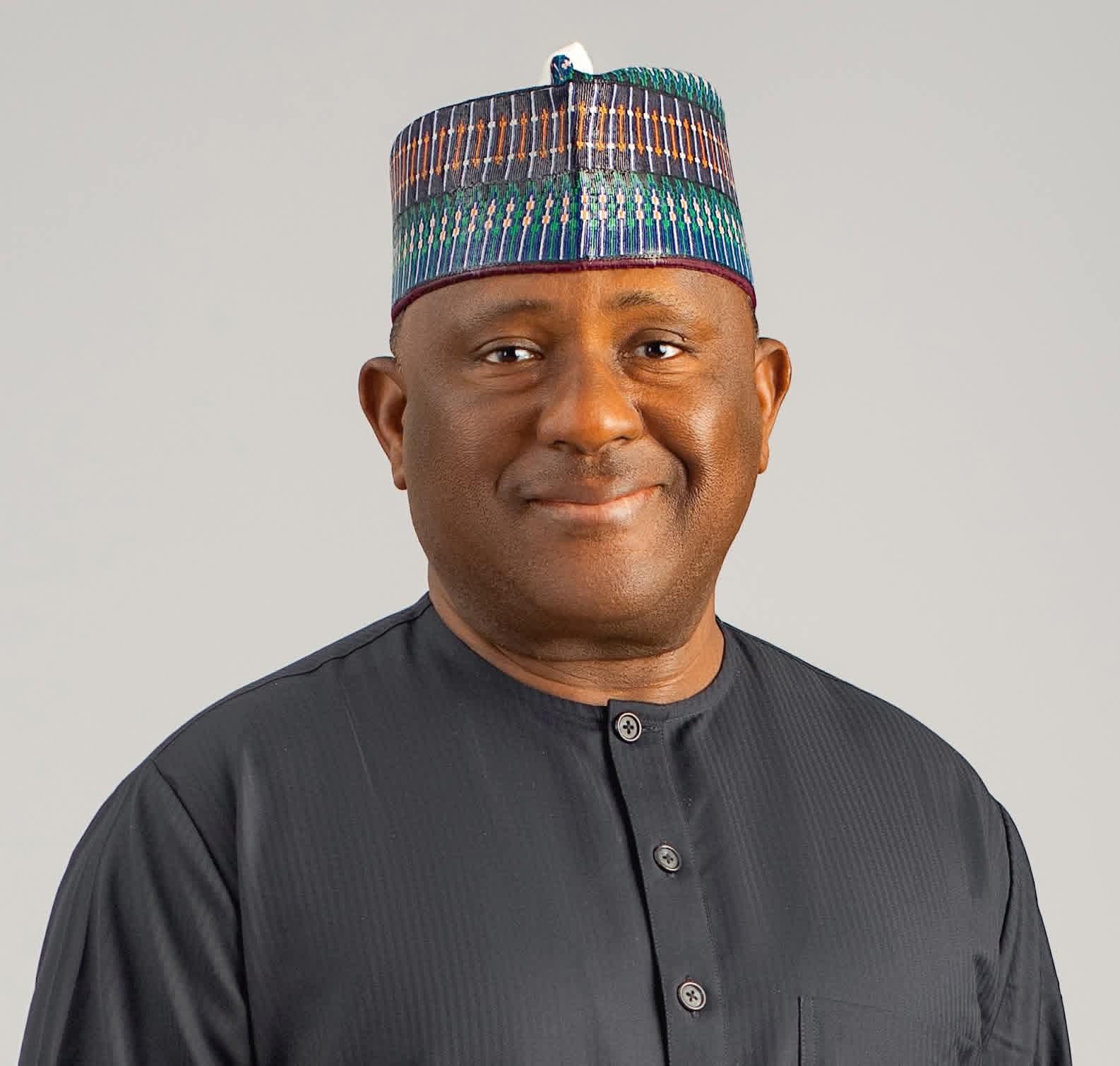
BUA Chairman Abdul Samad Rabiu Rises to Become Africa’s Second Richest Man
LAGOS – In a notable reshuffle of Africa’s wealth hierarchy, Abdul Samad Rabiu, Chairman of BUA Group, has climbed to the position of the continent’s second richest individual. The development highlights the accelerating growth of his industrial empire and the increasing global relevance of Nigeria’s manufacturing sector.
Recent valuations show the billionaire businessman overtaking long-standing contenders to secure the number two spot, behind only Aliko Dangote. His rise has been driven largely by the strong market performance of his publicly listed firms, BUA Cement Plc and BUA Foods Plc, both of which have recorded significant gains on the Nigerian Exchange (NGX).
Rabiu’s ascent reflects years of strategic expansion and vertical integration. BUA Cement, Nigeria’s second-largest cement producer, has scaled up operations with new production lines to meet rising infrastructure demand. At the same time, BUA Foods has strengthened its leadership in key segments such as sugar, flour, and pasta, reinforcing its role in regional food supply.
Analysts note that his focus on essential goods has provided stability, helping his businesses maintain steady revenues despite broader economic fluctuations. By prioritizing domestic production, BUA Group has also reduced exposure to external shocks.
Philanthropy and Development Impact
Beyond business, Rabiu has earned global recognition for his philanthropic efforts through the ASR Africa Initiative, a $100 million annual intervention fund supporting education, healthcare, and social development across Africa.


His rise in the rankings is widely viewed as evidence of the power of African-driven industrialization—not only in building wealth but also in delivering meaningful social impact. As Africa’s economic landscape evolves, the shifting billionaire rankings underscore the growing influence of Nigeria’s private sector in shaping the continent’s future.
Bank
ZENITH BANK EXPANDS FRONTIERS WITH CÔTE D’IVOIRE SUBSIDIARY, DEEPENS FRANCOPHONE WEST AFRICA PUSH

ZENITH BANK EXPANDS FRONTIERS WITH CÔTE D’IVOIRE SUBSIDIARY, DEEPENS FRANCOPHONE WEST AFRICA PUSH
Zenith Bank Plc has taken a major step in its Pan-African growth journey with the official launch of its Côte d’Ivoire subsidiary, reinforcing its strategic ambition to dominate key markets across the continent.
The grand opening ceremony, scheduled for Wednesday, April 29, 2026, is expected to draw top-tier government officials and regulators from Nigeria and Côte d’Ivoire, alongside leading business executives and members of the diplomatic corps—underscoring the growing economic ties and investment flows between Anglophone and Francophone Africa.
Licensed in December 2025 by Côte d’Ivoire’s Ministry of Finance and Budget and regulated by the UMOA Banking Commission, the new subsidiary will operate from its headquarters at SCI Wall Street, Avenue Noguès, Plateau, Abidjan—one of the region’s most important financial hubs.
The move signals a calculated expansion into Francophone West Africa and positions Zenith Bank as a key financial bridge within the West African Economic and Monetary Union. The subsidiary is designed to drive cross-border trade, offering corporate banking, trade finance, offshore banking, and structured financial solutions tailored to businesses operating across Africa and beyond.
Speaking on the milestone, Group Managing Director/CEO Adaora Umeoji said the expansion aligns with the founding vision of Chairman Jim Ovia to build a globally competitive African bank.
“The launch of Zenith Bank Côte d’Ivoire is a bold step in realising that vision. It opens a strategic corridor into Francophone West Africa and reinforces our commitment to facilitating trade, investment, and enterprise growth across the continent,” she stated.
The subsidiary will be led by Managing Director/CEO Cédric Tano, who brings over two decades of industry experience. He noted that the bank is entering the Ivorian market at a time of strong economic momentum and increasing regional integration.
“Our goal is to position Zenith Bank as a customer-centric institution that blends global best practices with deep local expertise, while supporting businesses with innovative financing and enabling seamless cross-border transactions,” Tano said.
Beyond Côte d’Ivoire, Zenith Bank is accelerating its expansion into Central Africa, with plans underway to enter the Central African Economic and Monetary Community, using Cameroon as a strategic gateway.
With an established presence in multiple markets—including Ghana, Sierra Leone, The Gambia, the United Kingdom, France, the UAE, and China—the bank continues to strengthen its role as a conduit linking African economies to global capital and trade networks.
Founded in 1990, Zenith Bank has evolved into one of Africa’s most formidable financial institutions, maintaining the highest Tier-1 capital position in Nigeria’s banking industry for 16 consecutive years. Built on its core pillars of People, Technology, and Service, the bank has consistently delivered strong financial performance and earned widespread local and international recognition.
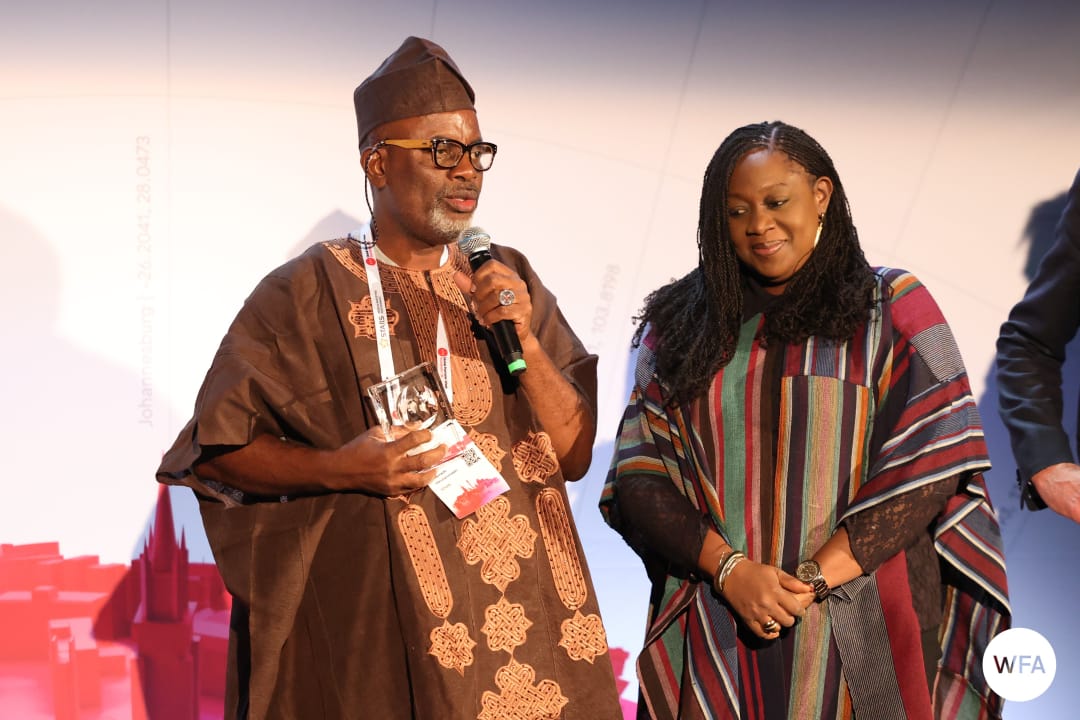
ADVAN Earns Global Recognition As WFA President’s Award Winner For “Project Freedom”
The Advertisers Association of Nigeria (ADVAN) has been recognised on the global stage as a recipient of the prestigious WFA President’s Award, presented by the World Federation of Advertisers during its Global Marketer Week in Stockholm. The recognition places ADVAN among a select group of leading industry associations worldwide acknowledged for driving meaningful impact in marketing and society.
The WFA President’s Awards, established in 2010, celebrate national industry associations whose initiatives advance the marketer’s agenda and contribute to positive change. This year’s honours were awarded following a rigorous selection process involving 38 submissions from associations across the WFA’s global network, with winners chosen for their measurable impact and potential for replication across markets.
ADVAN’s recognition comes through its advocacy initiative, Project Freedom, a bold and strategic effort focused on addressing the challenges of stifling, non–data-driven regulations affecting businesses in Nigeria and across Africa. The initiative underscores the importance of evidence-based policymaking while championing the constitutional right to freedom of commerce.
Through Project Freedom, ADVAN has taken a proactive leadership role in engaging key stakeholders and shaping conversations around fair, balanced, and transparent regulation. The initiative reflects a shift toward constructive dialogue and collaboration, ensuring that regulatory frameworks support innovation, protect consumer interests, and enable sustainable business growth.
By earning this global recognition, ADVAN reinforces the growing influence of African marketing institutions in shaping international discourse. Its work highlights how local advocacy, when rooted in data and guided by clear principles, can deliver impact not just within national borders but across the global marketing ecosystem.
The award also affirms ADVAN’s commitment to strengthening self-regulation within the industry, fostering accountability, and promoting standards that align with global best practices while remaining relevant to local realities.
As the marketing landscape continues to evolve, ADVAN’s recognition by the World Federation of Advertisers signals a strong endorsement of its leadership and vision. It positions the association as a key voice in advancing responsible marketing, advocating for enabling policies, and ensuring that businesses can operate in an environment that supports both innovation and economic freedom.


- World Press Freedom Day: Africans endorse media watchdog role, but perceptions of freedom are mixed May 1, 2026
- Sonangol Takes Emerald Sponsorship at African Energy Week (AEW) 2026 as Angola Expands Deepwater and Gas Portfolio April 30, 2026
- Invest Africa and United Kingdom (UK) Government announce strategic partnership for The Africa Debate – London April 30, 2026
- Organization of the Petroleum Exporting Countries (OPEC) Secretary General to Address African Energy Week 2026 as Energy Markets Enter New Geopolitical Phase April 30, 2026
- South Sudan Declines to Renew Oranto’s License for Block B3 April 30, 2026
- APO Group Wins Gold Stevie® Award In 2026 Middle East & North Africa Stevie® Awards April 30, 2026
- High-End Smart New Energy Vehicle (NEV) Brand VOYAH Advances Global Layout with Multidimensional Efforts; VOYAH Taishan X8 Draws Widespread Attention April 30, 2026
- Grey Registers as Payment Service Provider Under Canada’s Retail Payment Activities Act (RPAA) Framework April 30, 2026
- Minerals Council Chief Executive Officer (CEO) Joins African Mining Week (AMW) as South Africa Improves Sectorial Investment Climate April 30, 2026
- Aurionpro expands its multi-country transaction banking engagement with Diamond Trust Bank (DTB) April 30, 2026
- World Press Freedom Day: Africans endorse media watchdog role, but perceptions of freedom are mixed May 1, 2026
- Sonangol Takes Emerald Sponsorship at African Energy Week (AEW) 2026 as Angola Expands Deepwater and Gas Portfolio April 30, 2026
- Invest Africa and United Kingdom (UK) Government announce strategic partnership for The Africa Debate – London April 30, 2026
- Organization of the Petroleum Exporting Countries (OPEC) Secretary General to Address African Energy Week 2026 as Energy Markets Enter New Geopolitical Phase April 30, 2026
- South Sudan Declines to Renew Oranto’s License for Block B3 April 30, 2026
- APO Group Wins Gold Stevie® Award In 2026 Middle East & North Africa Stevie® Awards April 30, 2026
- High-End Smart New Energy Vehicle (NEV) Brand VOYAH Advances Global Layout with Multidimensional Efforts; VOYAH Taishan X8 Draws Widespread Attention April 30, 2026
-

 news5 months ago
WHO REALLY OWNS MONIEPOINT? The $290 Million Deal That Sold Nigeria’s Top Fintech to Foreign Interests
-

 celebrity radar - gossips3 months ago
Dr. Chris Okafor Returns with Power and Fire of the Spirit -Mounts Grace Nation Altar with Fresh Anointing and Restoration Grace on February 1, 2026
-

 celebrity radar - gossips5 months ago
Prophet Kingsley Aitafo Releases 2026 Prophecy: ‘Nigeria Will Rise, but the World Must Prepare for Turbulence’
-

 Business5 months ago
BUA Rewards 510 Employees with ₦30bn in Historic Night of Excellence
You must be logged in to post a comment Login
You must log in to post a comment.