
celebrity radar - gossips
In Chief Dr Emmanuel Iwuanyanwu : Death took away one of Africa’s best and Nigeria’s brightest. By Comrade Oladimeji Odeyemi.

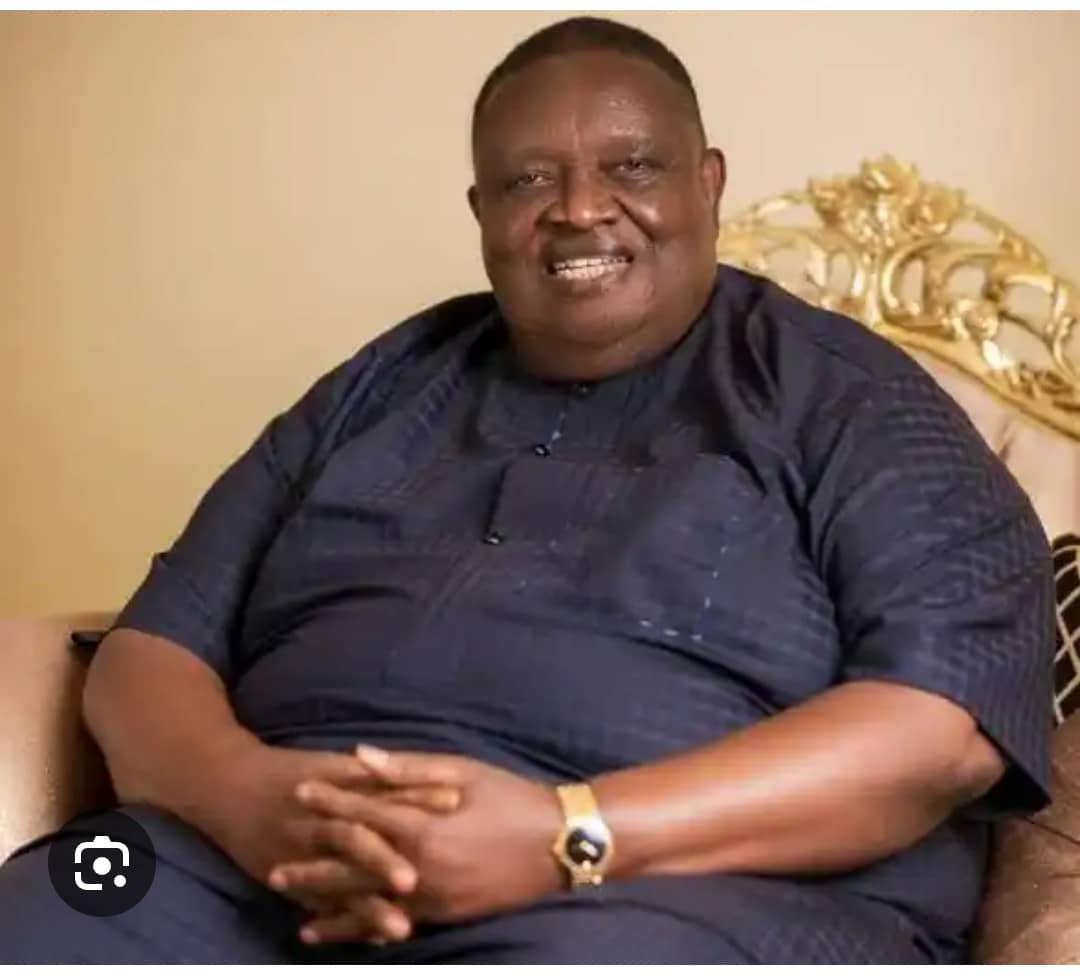
In Chief Dr Emmanuel Iwuanyanwu : Death took away one of Africa’s best and Nigeria’s brightest.
By Comrade Oladimeji Odeyemi.
One of Africa’s greatest icon, Chief Dr, Engr Emmanuel Iwuanyanwu MFR, OFR, CFR, FNSE, KSC died on Thursday 25th July, 2024. In a Country like our own, where the teaching of history is no longer a priority, many young Nigerians may not readily remember most of the accomplishments and contributions of Chief Dr Emmanuel Iwuanyanwu to nation building and consolidation of our country’s democracy and truly know the man that died at the ripe age of eighth one years (81years).
Though, he has retired from business and politics, but trust me, if you’re talking of old money, good business and good character, he was a colossus, a giant amongst men physically and literally.
It is easy to imagine that Chief Iwuanyanwu made his mark only in business and politics. But, for those who have known him for quite some times. His remarkable exploits in his chosen field is no news. In fact it was on record that before he ventured into politics and then sports, he was already an accomplished engineer with notable feats in Nigeria, including the design of an ocean barge using hydraulic technology, design of an innovative rocket system as well as the design of the Enugu airport runway among others. Chief Iwuanyanwu was a colossus whose reputation was as big as his frame. Straight out of the blocks, as a young engineering graduate, Chief Iwuanyanwu showed remarkable character far exceeding the capacity of his age and experience. He cut his teeth as an employee of a foreign engineering firm that he later acquired and expanded into a business empire spanning over twenty companies. In the world of mortals, this feat only exists, in the realm of fairytale.
Few men could have ventured into the realm of private enterprise and public service and left such monumental marks in both sector. Fewer still could have built an empire while devoting unquantifiable time and resources to the service of the society. Chief Iwuanyanwu managed to accomplished this feat and much more. He demonstrated that with hard work and dedication to duty, there is no limit to what any man can accomplish and that was why he was a role model for many members of my generation.
Like too many people have openly attested too. It will be difficult, if not impossible to replace Chief Dr Emmanuel Iwuanyanwu. He came, he saw, he conquered.
Chief Iwuanyanwu has flew away on the wings of time into eternity and the sure hands and embrace of our Lord, when he finished his assignment on Earth. Even as we lovers and admirers of his ideals, politics and characters still feel that we need him more.
Such is the unchangeable ways of the Almighty God, that we must give thanks for his monumental life.
A life in which he gave his all for us. Even as a writer, words still fails me as I try to pen this tribute to a very special man to me and my household. Apart from a father to son, mentor to mentee relationship, Chief Emmanuel Iwuanyanwu and I share the same birthday of Fourth September, (4th September).
Some people are just too wonderfully created, that one would expect that they will live forever. Chief Iwuanyanwu is one of such person, though he has transformed from mortal to immortal,.and has departed this sinful world. I know he will live in my heart forever.
Before we met close to two decades ago, his great name and pedigree had preceded him. He was a shinning star in the Engineering and Political firmament and one of the truly dedicated political actor renowned as totally dedicated, committed, determined, principled and fearless about nation building.
I am delighted to call Chief Iwuanyanwu my father, mentor and benefactor, in fact a lot of young men of my generation, aside from their biological father, equally have Chief Iwuanyanwu as a father too.
Apart from knowing Chief Iwuanyanwu closely, I equally had the privilege of enjoying a close and harmonious relationship with him, hence I named my first son, Emmanuel after a man I have come to love and adore.
I was honored to have been welcomed into his inner circle so warmly and privilege to have had unrestricted access to him, to all his homes, offices and bedrooms in Nigeria. Chief Iwuanyanwu would make sure you enjoyed the good food, drinks and the hospitality of the Iwuanyanwu’s every time we had the opportunity of meeting.
Because of my love and adoration for Chief Emmanuel Iwuanyanwu, for years, I spent most of my Christmas season with him and his extremely accommodating family in his expansive Country home in Umuohii Atta, Ikeduru LGA of Imo State.
Chief Iwuanyanwu is an extremely highly detrabalize Nigerian patriot and a dedicated Soldier of Christ, through him, I became a worshipper at his Church, St Matthew Anglican Church, Atta, Ikeduru, and at the Church of the Transfiguration of our Lord (CATOL) in Owerri. I recalled with nostalgia how he supported his people to get the Anglican Diocese of Ikeduru. Where I equally joined other eminent Nigerians from the Diocese to the Bishop Conference at Ife Osun State, where the Diocese was pronounced.
Chief Emmanuel Iwuanyanwu equally introduced me into active politics, as a activist, he admonished and reawakening my consciousness and vibrancy to participate in the political process in order to change the society for good than seating on the fence.
Though he and his late friend and In law, His Eminence, Alhaji Azeez Arisekola Alao, the Aare Musulumi of Yoruba Land and the Aare of Ibadan Land tried, albeit unsuccessfully to put me forward as a Federal Legislator from Ibadan, Oyo State. After the failed attempt and the disappointment, Chief Iwuanyanwu invited me into his inner recess, where he gave me a quality lesson that has changed my life for good using himself as an example. He counselled and admonished me that, for me to be a successful social crusader, and a true voice for the oppressed. I should work hard to build a strong economic means, hence politics will only be a passion combined with my vocation.
With Chief Iwuanyanwu’s advice and through him, with absolute faith in the Almighty God, I have been able to build a good social base, a formidable politics structure and a strong economic means.
More importantly, I have never met a man who loved his background and upbringing and glorious heritage so passionately. Despite being surrounded by a motley crowd of various Nigerians, but everyone knows him and referred to him as the big Iroko from Umuohii Atta in Ikeduru LGA of Imo State. For every Christmas season and celebrations, Chief Iwuanyanwu would at least spend a Month in his Country home at Umohii Atta, Ikeduru LGA of Imo State, where the gate of his house is opened widely for every member of the community to see him and he will meticulously attend to the need of each member of the community, including providing resources for households to celebrate the Christmas and New Year celebrations.
Chief Emmanuel Chukwuemeka Iwuanyanwu, a distinguished Member of the Federal Republic (MFR), Officer of the Federal Republic (OFR), Commander of the Federal Republic (CFR), winner of the most distinguished Alumnus of the University of Nigeria Award, Ahaejiagamba Ndigbo, Balogun Bobagunwa of Ibadan, Obong Unwana Efik Eburutu, a scientist, a humanist, an entrepreneur, an industrialist, a patriot, a philanthropist, a leading politician, a pace setter and an image setter, was born on 4th September, 1942, into the humble family of Pa and Madam Hulder Iwuanyanwu of Umuohii Atta in Ikeduru LGA, of Imo State, a Christian family that has solid genealogy and rich heritage. His names Emmanuel (God with us), Chukwuemeka (God has done wonderfully well).
Chief Iwuanyanwu rose to become an outstanding national giant of superlative class. He was an Iroko tree who gave economic and political shelter to everyone that came across him.
Most of his childhood days were spent at Port Harcourt, Rivers State where he had his elementary education at St Patrick’s School in Port Harcourt. He later transferred to Holy Trinity School, Rumuopara also in Port Harcourt. He attended New Bethel College, Onitsha and did his higher school at Federal Emergency School of Science, Onikan, Lagos. He was later admitted to the University of Nigeria Nsukka, where he studied Civil Engineering.
In his first year at the University, he won the German Government Academic Exchange Scholarship by scoring the highest grade in the Faculty of Engineering. By this award, all his fees and expenses at the University of Nigeria was paid by the German Government. The motto of his alma mater, “to restore the dignity of man” this became the lodestar of Chief Emmanuel Iwuanyanwu’s career.
Though, his university education was unfortunately distrupted by the Civil War, he eventually graduated with honors degree in engineering in 1971. Also in addition to his cambridge school certificate, he also completed many post graduate courses and he possessed the following academic qualifications,
B. Sc (Hon), Civil Engineering, University of Nigeria.
D. Sc Engineering, Morgan State University, Baltimore, USA.
L. Ld (Hon) Shaw University, Releigh, North Carolina, USA.
D. Ba (Hon) University of Nigeria, Nsukka.
D. Sc (Hon) University of Jos.
D. Sc (Hon) University of Calabar.
D. Tech, Federal University of Technology, Owerri, Imo State
D. Ba (Honoris Causa), Edo State University.
D. Sc (Honoris Causa), Imo State University.
He was a professional engineer and a scientist.
As a young engineer, he published several books on the engineering profession, which included, the role of road in agricultural development in Nigeria. The Nigerian Engineer in the 1990 decade. The Engineer as a Politician etc. He was also a fellow of the Nigerian Society of Engineers and also a fellow of more than thirteen other professional associations. He was also a lover of sports, as a true sports enthusiast channelling his financial weight towards the development of sports at all levels. It was this enthusiasm that made him answered the clarion call from the Imo State Government for the take over of the Spartan Football Club, which was renamed Iwuanyanwu Nationale Football Club.
Chief Emmanuel Iwuanyanwu was a complete family man, who married his late first wife, Chief Mrs Eudora Iwuanyanwu on May 10, 1969, and the marriage is blessed with successful Children. After the demise of his loving wife, Chief Emmanuel Iwuanyanwu remarried to an equally outstanding woman, Princess Frances Chinonyerem on Saturday 14th September 2023, and the marriage is also blessed with Children.
Chief Emmanuel Iwuanyanwu was commissioned into the Biafran army during the Civil War, where he served in the research and production unit of Biafra, he was an infantry officer of the Biafran army who was one of the personnel that developed the dreaded locally fabricated bomb popularly called the “Ogbunigwe”.
Chief Emmanuel Iwuanyanwu held over eighty traditional titles harvested around the Country, but the pinnacle of these title was his conferment as the Ahaejiagamba Ndigbo, which was conferred on him on 12th October 1997 by all traditional rulers representing all the Igbo states in Nigeria.
In the corporate field, Chief Emmanuel Iwuanyanwu’s activities spanned across virtually all fields of human endeavors including, Engineering, Industries, Insurance, Advertising, Publishing, Airlines, Banking, Sports and Politics, some of his establishment included the Champion Newspaper, Hardel and Enic Construction Company, Oriental Airlines, Hetco Limited, Sunrise Insurance Brokers, Enic Advertising Agency Limited, Subterranean and Aerial Lines Limited, Iwuanyanwu Nationale Football Club, First Atlantic Petroleum Company Limited and others.
Chief Iwuanyanwu shown outstanding leadership in virtually all fields. He was involved as a Trustee, Patron, Life Member, Chairman and Grand Patron of over a hundred associations within and outside Nigeria. But among all these, he did distinguished himself as the Chairman of the National Productivity Merit Award of the Federal Republic of Nigeria and also on his last assignment as the President General of the Ohaneze Ndigbo worldwide.
In politics, Chief Emmanuel Iwuanyanwu blazed the entire landscape like a Legend. For so many years, he flew the flag of his people, the Ndigbo, as a front line Presidential Aspirant. In a nation that has experienced more than its fair dose of identity politics, Chief Emmanuel Iwuanyanwu’s desire to be President of our dear country was more a mark of his faith in the Nigerian project than a product of ambition. But even at that, his commitment to national integration was not at the expense of his immediate constituency. He was a proud Igbo man who would never compromise the good of his people for any thing. He was at the forefront of exhorting his kinsmen to embrace mainstream politics by seeking the highest office of the land, rather than the pursuit of self determination. Rarely has a Nigerian politician managed to promote national cohesion and also look out for the interest of his community, without conflict in both objectives. Indeed, it was a mark of this dexterity that Ahaejiagamba attracted multiple national honours as well as traditional titles from different parts of the country, indeed Chief Iwuanyanwu could only be described as a quintessential Nigerian.
He ventured into the Nigerian political terrain since 1978. From being a member of the Nigerian People’s Party (NPP). Chief Emmanuel Iwuanyanwu later emerged as the National Chairman of the formidable but unregistered All Nigeria Congress (ANC), which he cofounded with the likes of Late Malam Adams Ciroma, the Late Umaru Shinkafi and other prominent politicians. He later ran for the Presidency of Nigeria under the National Republican Convention (NRC). With the return to civil rule in 1999, Chief Emmanuel Iwuanyanwu emerge again as a front line presidential aspirant of the All Progressive Party (APP), before he lost confidence in the ideals of the APP, which led him and his teeming supporters across the Country into the Peoples Democratic Party (PDP). In the PDP, he was a member of the National Executive Committee, a Member of the Board of Trustees and also a member of the National Caucus of the party representing the Southeast geopolitical zone before his eventual resignation from active politics.
Chief Emmanuel Iwuanyanwu, before his last assignment as the President General of the Ohaneze Ndigbo, was the Chairman of the Ohaneze Ndigbo State Creation Planning Committee, he was also the Chairman of the Strategy and Planning Committee of the same body.
Chief Emmanuel Iwuanyanwu also served the Federal Republic of Nigeria in different sector where he brought his wealth of experience in the areas of nation building to bear on the governance of the Country. He was the pioneer Chairman of the Raw Materials Research and Development Council, a Former board Chairman of the Federal Road Maintenance Agency, (FERMA) the board under him built the Ultra Modern Headquarters for FERMA, Board Chairman of the Nigerian Investment Promotion Commission, he wa also at a time the Pro Chancellor of the University of Calabar and other various national assignments.
On 18th December 2016, the Nigerian Society of Engineers (NSC), conferred one of the highest honors that can possibly be bestowed on an individual in any field of endeavor, on one of their own. The prestigious body instituted the Emmanuel Iwuanyanwu Annual Lecture Series. It was in honor of his contributions to the engineering profession in Nigeria and to the service of humanity. This initiative by the NSE was unprecedented considering that the lecture series was instituted during the life time of Chief Emmanuel Iwuanyanwu.
He was also given corpus international recognition and was cited in WHO is WHO in Nigeria, WHO is WHO in Africa, WHO is WHO in the Commonwealth and WHO is WHO in the World.
In pursuant of his various philanthropic disposition, he established the Iwuanyanwu Foundation which has made substantial contributions in the field of education, health care delivery and community development.
His philosophy of life was appropriately portrayed in his speech on Monday 11th November 1985, when he handed over a Blood Transfusion Centre, built and furnished by him to the Imo State Government, where he stated thus;
I believe in the Supreme Being. He is Omnipresent. He is all loving and all wise. He is the Almighty God. I believe that the highest fulfillment, the greatest happiness and the widest usefulness of the individual can only be realized in harmony with the divine will of the Almighty God.
I believe in the supreme worth of the individual, in his right to life and liberty and pursuit of happiness. I believe in the sacredness of human life and human rights.
I believe that every right implies a responsibility, every opportunity, an obligation and every possession a duty. I believe in the dignity of labour whether with the head or with the hand.
I believe that the good God in his infinite mercy has bestowed mankind with sundry gifts and whatever gift bestowed to any man is given to him by the good Lord in sacred trust and man should use such gifts to promote love, happiness and peace among the people of all races and creed.
I believe that the world owes no man a living but it owes every man an opportunity to make a living. I believe that love is the greatest thing in the world and it can overcome hate, greed and rancor.
I believe that the rendering of useful service is the common duty of mankind and the greatest happiness and peace of the human soul can be attained in rendering such services.
I believe that truth, justice and equity are fundamental prerequisites to an enduring social order and that right can and will always triumph over might. I believe in the sacredness of promise, that a man’s word should be as good as a bond, that character not wealth or power or possession is of supreme worth.
I believe that prudence is essential to a well ordered living and that economy is a prerequisite of a sound financial structure whether in government, business or personal affairs.
And finally, I believe that law is made for man and not man for law and that government is the servant of the people and not the master, and no individual can be greater than the society which he lives.
Chief Emmanuel Iwuanyanwu during his live time was a man who believed in Nigeria. He was a true Nigerian who had friends and associates from every part of the Country. He was always optimistic about the future.
I always found him interested and up to date about current development. I found him engaging to converse with and he always had a suggestion to make about how things could be improved. He continued to believe that the best was yet to come for Nigeria. I believe that the greatest tribute we can all pay to Chief Emmanuel Iwuanyanwu, and all those other public spirited persons of his generation, who worked had to improve things in Nigeria is to commit individually and collectively to continue to work hard to achieve the Nigeria of our dreams. Chief Emmanuel Iwuanyanwu has left us for his well deserved rest, but his dreams of a better Nigeria must never be allowed to die.
To his immediate family, especially the spouse, Princess Frances Chinonyerem Iwuanyanwu, Dr Nwadiuto Iheakanwa nee Iwuanyanwu, Mr Jide Iwuanyanwu and the other children, Pastor Uche Iheakanwa and the other in-laws of the Iwuanyanwu family, the Arisekola family of Ibadan land and all other family members and close associate who might be too numerous to mention, I join you all in prayers to mourn a man we all have come to love and adore.
Adieu, my mentor and benefactor, Chief Emmanuel Iwuanyanwu, you have played your part and I wish you peaceful repose.
Fare the well!!!
This Tribute is by Comrade Oladimeji Odeyemi.




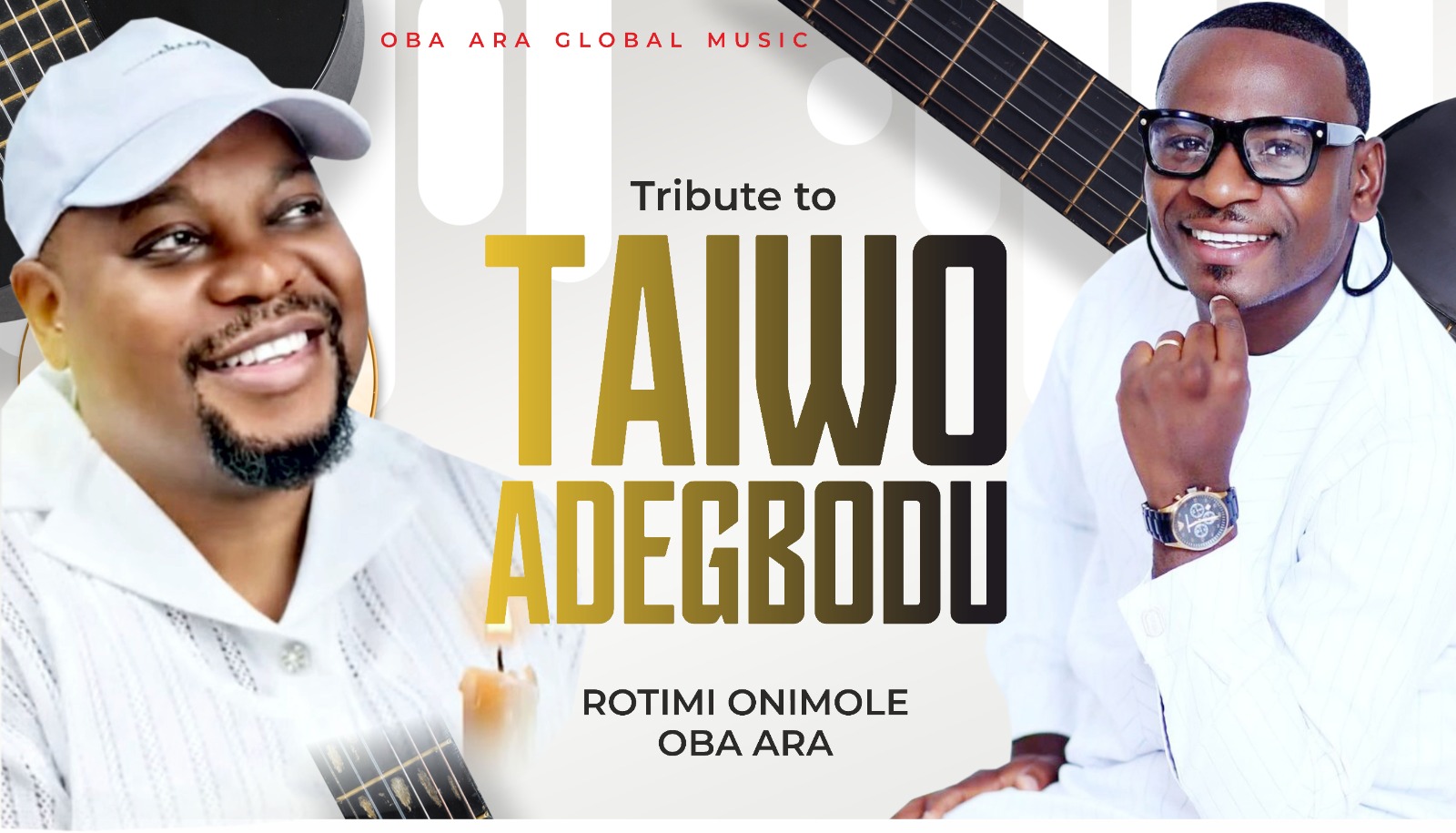
Oba Ara Releases Emotional Tribute to Late Taiwo Adegbodu
Taofik Afolabi
The gospel music community continues to grieve the painful loss of Taiwo Adegbodu, a beloved figure whose sudden departure left a deep void among fans, colleagues, and loved ones. In response to this loss, renowned gospel minister Rotimi Onimole, popularly known as Oba Ara, has released a moving tribute song that captures both the sorrow of the moment and the enduring legacy of the late singer.
Oba Ara, a proud son of Isale Eko, channels raw emotion throughout the song, using heartfelt lyrics and soul-stirring melodies to reflect on his personal connection with Taiwo Adegbodu. In the tribute, he openly expresses how deeply the news of Adegbodu’s passing shook him, describing it as a painful and unexpected loss that is difficult to come to terms with.
The song goes beyond mourning, it celebrates the life, ministry, and impact of Taiwo Adegbodu. Oba Ara highlights the late artist’s dedication to spreading the gospel through music, his inspiring voice, and the spiritual influence he had on many within and beyond Nigeria. Through powerful verses, he paints a picture of a man who lived for God and touched countless lives through his ministry.
Listeners have described the tribute as both comforting and deeply emotional, as it resonates with the collective grief of the gospel music community. It serves as a reminder that although Taiwo Adegbodu is no longer physically present, his music, message, and legacy will continue to live on.
In honoring his late colleague, Oba Ara not only pays his respects but also offers a source of healing for fans and fellow ministers, using music as a tool to process grief and celebrate a life well lived.
celebrity radar - gossips
Buratai, Fagbemi , Shagaya, Olofa, Others Eulogise Olowu Kuta’s Olori On 60th Birthday, Foundation Launch
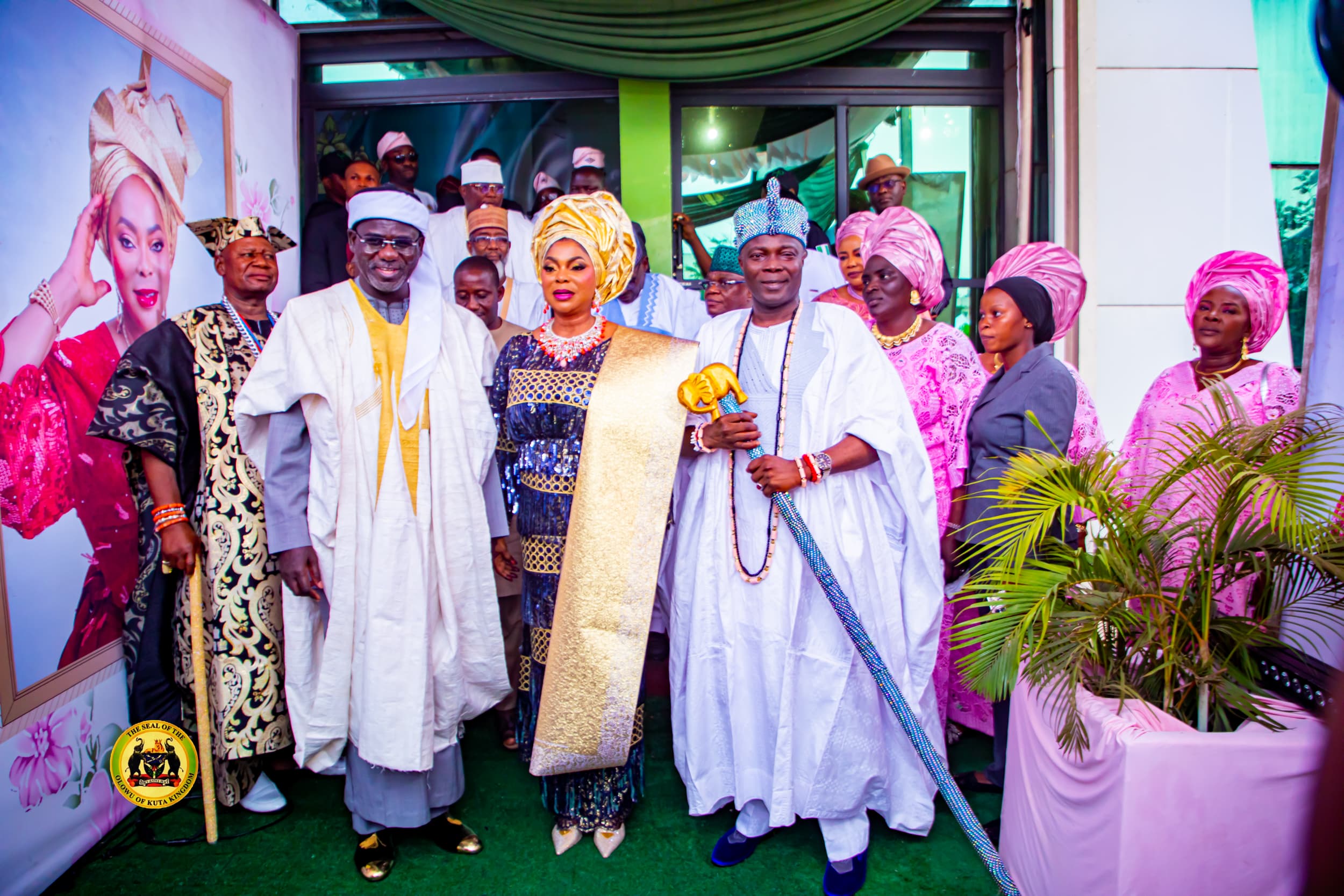
Buratai, Fagbemi , Shagaya, Olofa, Others Eulogise Olowu Kuta’s Olori On 60th Birthday, Foundation Launch
Eminent personalities across the Nigeria stormed the TFK Event Centre, Bala Mohammed Way, Guzape, Abuja, to celebrate the 60th birthday of Olowu Kuta’s Olori, Queen Jumai Amoke and her Foundation Launch on Saturday 28, March 2026.

From former Chief of Army Staff, Lt Gen TY Buratai rtd, to the Minister of Justice and Attorney-General of the Federation, Prince Lateef Fagbemi; Olofa of Offa, HRM Oba Mufutau Gbadamosi. Even top businesswoman and socialite, Chief (Mrs) Bola Shagaya, was in attendance.


Other dignitaries were newly promoted Deputy Inspector-General of Police and former AIG Zone 2 , Lagos , Adegoke Fayoade, Major General Abdumalik, Major General Samuel Adebayo rtd (Fmr CDI);
Major General Anthony Omozoje rtd (Fmr Copp);
Alhaji Tajudeen Owoyemi (Asiwaju of Offa and CEO Radisson Hotel Nigeria;
Dr Waheed Olagunju, former managing director of Bank of Industry, Oniba of Iba, Lagos State, HRM Oba Dr Suleiman Raji ;
Justice Falola, Olu of Ile-Ogbo , Oba Adetoyese amongst many traditional rulers and captains of industry too numerous to mention.
Speaking at the occasion, the Chief Host, Olowu of Kuta, HRM Oba Dr Adekunle Oyelude Makama, CON , Tegbosun iii, who is also the husband of the celebrant commended Queen Jumai for ‘ her slender arms full of kindness’ to establish such humanitarian Foundation, ‘Amoke Children and mother in Need Foundation’ at a time Nigerians are going through economic crisis occassioned by the global meltdown.
Olowu also commended her steadfastness and love for the less privileged and downtrodden.
The monarch refrenced the task before his wife’s humanitarian gesture said her best is yet to come.
” Olori Amoke Jumai, I celebrate you. You will celebrate 70, 80, 90 and continue to shine as you continue to put a smile on people’s faces. I love you, “Olowu Kuta added.
To Lt Gen Buratai, a former army chief and former Nigerian Ambassador to Benin Republic, the reward of hard work is more work.
Buratai, who also doubles as Balogun Agba of Owu Kuta, a chieftaincy title reserved for a generalismo congratulated Queen Jumai for attaining the age of 60 in good health.
The retired army General said he’s not surprised by the turn out of eminent personalities across the country to celebrate the Olowu Kuta’s Olori because she merited it through her hospitality to all, adding that Allah the most merciful, most beneficial would accept all her act of ibadah.
The minister of Justice, Prince Fagbemi, was full of praises for Queen Jumai for deeming it fit to have a place in her heart to accommodate the needy and less privileged in ‘our society.’
Prince Fagbemi urged the guests to contribute generously to support the Foundation in order to continue to alleviate poverty and put a smile on the faces of the people.
” I congratulate you on your 60th birthday and Foundation Launch. I wish you many happy returns of the day and many more fruitful services to the country and motherland”, Prince Fagbemi added.
The celebrant, Queen Jumai who was grining from ear to ear thankfully said she was excited by the turn out and the response of the people to her foundation.
Queen Jumai, however, promised to continue to use her resources and donations received for the good of the needy and less privileged in the society.
” I want to appreciate my own Kabiesi Olofa of Offa , for his presence and im I’m using him as a point of contact to all other Kabiesis present here, the minister of justice and Attorney-General, you’re welcome, sir; Mrs Bola Shagaya, I salute your enterprise, Lt Gen Buratai, I’m grateful, sir; DIG Fayoade, Justice Falola and other dignitaries too numerous to mention, I thank you, all. To my darling husband, Kabiesi Olowu , I thank you immensely for your support. And to my family and friends, I thank you , all. E se pupo!”, she said.
celebrity radar - gossips
Adron Homes Elevates Cultural Pride as Dignitaries Grace 39th Lisabi Festival in Abeokuta
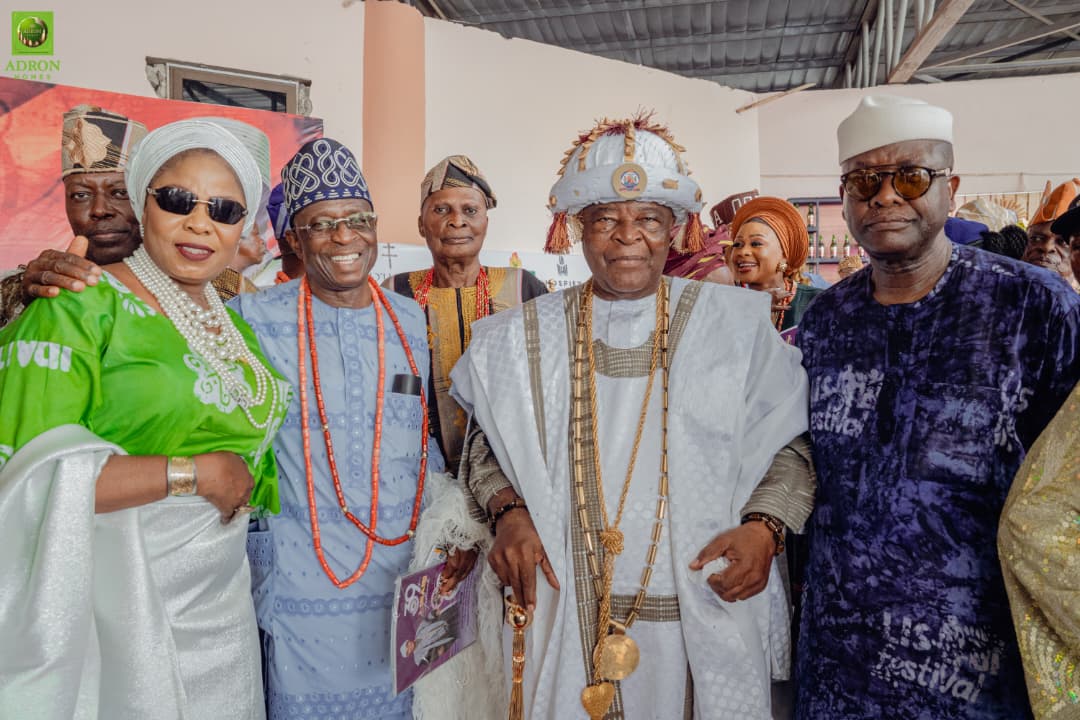
Adron Homes Elevates Cultural Pride as Dignitaries Grace 39th Lisabi Festival in Abeokuta
The ancient city of Abeokuta came alive in a grand display of culture, history, and unity as dignitaries from across Nigeria converged at the iconic Ake Palace Ground for the 39th edition of the Lisabi Festival, an annual celebration deeply rooted in the Egba people’s heritage.
The event, proudly supported by Adron Homes and Properties Limited, witnessed an impressive parade of distinguished personalities, traditional rulers, government officials, business leaders, and cultural enthusiasts, all captured in vibrant pictures that tell the story of a people united by history and pride.
From richly adorned monarchs in regal attire to elegantly dressed guests reflecting the depth of Yoruba tradition, the images from the festival encapsulate moments of honour, reverence, and celebration. Each photograph portrays not just faces, but influence, leaders, and stakeholders who continue to shape cultural preservation and community development.
At the heart of the celebration was the revered Oba Adedotun Aremu Gbadebo, whose presence underscored the festival’s significance as a symbol of Egba resilience and identity. Surrounding him were eminent dignitaries whose attendance further amplified the prestige of the event.
Adron Homes and Properties Limited stood out prominently, not only as a sponsor but as a key driver of cultural sustainability. Through its strategic support, the company reinforced its commitment to preserving indigenous heritage while fostering community engagement. The brand’s visibility across the venue and within the pictorial highlights reflects a deliberate alignment with culture, tradition, and people-centered development.
Beyond real estate, Adron Homes has continued to position itself as a cultural partner, investing in platforms that celebrate history and strengthen communal bonds. Its involvement in the Lisabi Festival is a testament to its broader vision of building not just homes, but legacies rooted in identity and pride.
The 39th Lisabi Festival, as captured through the lens of dignitaries in attendance, is more than an event, it is a narrative of continuity. And through its unwavering support, Adron Homes has once again set the pace, demonstrating that corporate institutions can play a vital role in sustaining the cultural heartbeat of a people.
As the echoes of drums fade and the colours of the festival linger in memory, one thing remains clear: the story told through these images is one of unity, heritage, and the enduring partnership between tradition and progress.


-

 society6 months ago
Religion: Africa’s Oldest Weapon of Enslavement and the Forgotten Truth
-

 news4 months ago
WHO REALLY OWNS MONIEPOINT? The $290 Million Deal That Sold Nigeria’s Top Fintech to Foreign Interests
-

 society6 months ago
“You Are Never Without Help” – Pastor Gebhardt Berndt Inspires Hope Through Empower Church (Video)
-

 celebrity radar - gossips2 months ago
Dr. Chris Okafor Returns with Power and Fire of the Spirit -Mounts Grace Nation Altar with Fresh Anointing and Restoration Grace on February 1, 2026