
Business
Investigation: Top MLM Leaders Daniel Onoja, Tomiwa Orunnipin, Samuel Ajibare, Leo Bonaventure Others Indicted Over OmegaPro Fraud

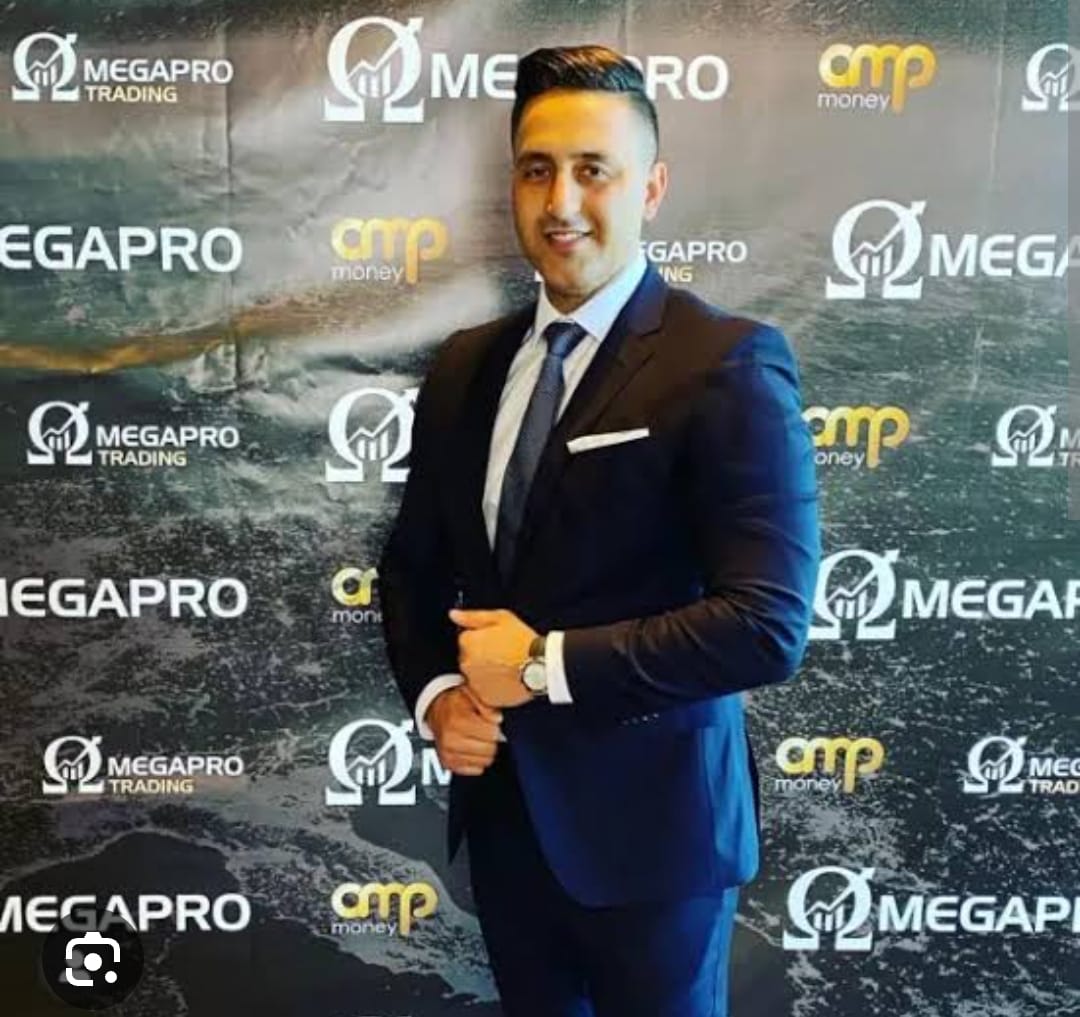
Investigation: Top MLM Leaders Daniel Onoja, Tomiwa Orunnipin, Samuel Ajibare, Leo Bonaventure Others Indicted Over OmegaPro Fraud
MLM leaders such as Tomiwa Orunnipin, Samuel Ajibare, Leo Bonaventure and others have been alleged by some Nigerian investors of aiding and abetting a Dubai-based company identified as OmegaPro Forex and Investment Trading Company to defraud Nigerians.
This is according to a statement signed by Dr. Ope Banwo, the Coordinating Attorney of OmegaPro Action Nigeria Class (OANC), a group formed by affected investors.

Photo Caption: Dilawar Singh, Co-founder, OmegaPro Forex and Investment Trading Company
According to the statement, the investors affected include widows, retirees, high-net-worth individuals, big business people, and even young people just starting in life.
In the statement seen by www.theoctopusnews.com, Dr. Banwo noted that the fraud cost Nigerians over $100,000,000 (over N100 Billion), with over $1 Billion of investors’ money allegedly stolen in over 70 countries around the world.
How The Fraud Was Hatched
OmegaPro Forex and Investment Trading Company emerged on the scene, promising Nigerians and investors in general a pathway to financial success.
The investment scheme gained popularity and trust among Nigerians and in the world, as many saw it as a ticket to financial freedom. However, little did they know that it was going to be one of the biggest investment tragedies in Nigeria’s history.
With an intricate web of deception and manipulation, alleged promoters of the scheme including Daniel Onoja, Tomiwa Orunnipin, Samuel Ajibare, Leo Bonaventure, and several top leader MLM Diamonds, painted the image of a foolproof investment opportunity with high returns and a secure investment environment.
Alleged promoters and agents such as Grace Udenwa Udoye, Wuraola Fadairo Orunupin, Olasebikan Oladapo, Maryann Ilorah, Chinwe Ikpe, Ajibare Olushola Ebunoluwa, Dotun Fatoyinbo,. Dr Afoma Nwolisa, and Matthew Ogunmodede, marketed the venture aggressively, touting its legitimacy and potential for lucrative earnings.
At that rate of marketing, investors couldn’t help but take the bait, especially as top agents and promoters in the MLM industry who carried significant influence within their networks also participated in the marketing exercise for OmegaPro.
They leveraged their status, persuading thousands of investors to entrust their hard-earned money with OmegaPro. Their endorsements created an illusion of credibility that typically lured in unsuspecting Nigerians.
Aside from this, they kept assuring Nigerian investors that rigorous due diligence had been conducted by them on OmegaPro’s Dubai-based owners and operations, implying that it was a legitimate and low-risk investment.
This way, investors put in their entire life savings, and pensions, while some even sold their houses and properties to invest in the OmegaPro ‘Forex’ trading activities.
For their services, these top promoters allegedly collected a 10 per cent commission from the OmegaPro Dubai company as a finders fee from the investment of every unsuspecting investor they referred to the scheme by selling it as a forex trading company.
At the height of what has now been declared a mega scam by investors, several of these top agents and promoters like Daniel Onoja, Tomiwa Orunnipin and Bonaventure Igboanugo allegedly earned over $50,000 weekly as finders’ fee commissions from 1000s of unsuspecting Nigerians whom they kept leading to believe that OmegaPro was a legit Forex Trading Company. Cumulatively, they allegedly earned over $2million each in over just a couple of years.
The Dubai company allegedly owned by known Dubai-based scammers such as Andreas Szackas, Dilawar Singh, Mike Simms with a long history of scamming people went as far as giving the investors a back office that showed that forex trading was going on in the company. These alleged forex trading activities have since been exposed by the USA CFTC as an elaborate scam to lure in people interested in forex trading on a global level.
According to Barrister Banwo, top promoters and agents of the biggest global forex scams in history allegedly used the illegal commissions and proceeds from this OmegaPro Ponzi scheme to buy huge mansions in choice places in Nigeria, Canada, the USA, and the United Kingdom leaving investors in pain.
“Daniel Onoja recently celebrated the purchase of a multi-million-dollar house in Canada, while Leo Bonaventure, recently posted videos of the housewarming of his own amazing multi-billion naira estate in Lagos. On his part, Leo Bonaventure, recently obtained a micro-banking license,” Banwo said.
While the promoters of the alleged scam smiled at the bank, investors have been crying having realised that the alleged due diligence said to have been conducted was non-existent, and their funds gone.
Interestingly, investigation has now shown that experts in forex trading had for the past three years been sounding the alarm bells that Omegapro was a scam and a Ponzi scheme.
These experts wrote articles and posted videos about OmegaPro, however, these Nigerian top agents and promoters pretended they did not see any of these warning signs as they continued to promote OmegaPro as a foolproof investment.
Climax Of The Scam
The pains of OmegaPro’s investors began in September 2022, when OmegaPro Dubai leaders, their collaborators all over the world, and Nigeria suddenly announced that its system had been hacked, and it stopped releasing payments of matured investments to investors all over the world. A few weeks later, the Dubai owners announced that they were migrating all their investors’ accounts to a new company called Brokers Domain until they could fix the breach in their system. Investors all over the world started getting nervous with some asking tough questions.
Then around April 2022, while over $1 billion of investors’ money in over 70 countries remained frozen, the owners and their top agents and collaborators announced the formation of a new company called Go Global and began aggressively recruiting Omegapro investors to invest in the new company with promises that their investments in OmegaPro would soon be released.
Many investors fell for this and started promoting the new Go Global company, while others started seeing the handwriting on the wall.
Finally, in August 2023, the OmegaPro owners based in Dubai, and their top promoters and agents announced that they would not be able to pay anyone’s Omegapro investment because the United States CFTC had frozen their accounts over some investigations affecting one of their partners named Mike Simms. However, they could not explain how Omegapro money could have been seized in the USA when they had earlier confirmed that the company does not have any office in the USA and did not have any license to operate direct or financial transactions in the USA.
As suspicions grew, with many investors asking for more details of this shocking announcement, OmegaPro leaders abruptly closed its doors, and many of their top Nigerian agents and promoters also went underground, leaving thousands of investors all over the world, including over 250,000 Nigerian investors in despair.
The company’s Dubai-based owners, Dilawar, Singh, and Paulo, and other top agents allegedly made off with millions of dollars in investments from over 70 countries all over the world, including an estimated N200 billion coming from Nigerian investors.
Amidst reports of a petition to the Economic and Financial Crimes Commission (EFCC), Interpol, and a pending class action lawsuit by affected Nigerian investors in the name of OmegaPro Action Nigeria, one is forced to X-ray the involvement of these agents and promoters all over the world, especially those of OmegaPro agents in Nigeria who aided and abetted the Dubai company to scam their citizens.
Questions such as were they complicit in the scheme, did they knowingly promote a fraudulent venture, or were they also victims of deception, were they willing accomplices, unwitting victims, should they be made to refund the billions of Naira they received in commissions for luring unsuspecting members of the public into parting with their hard-earned money into this global scam have been asked.
Typically, some maintain that the promoters are guilty of not doing their due diligence while promoting OmegaPro thus leading to the loss of thousands of Dollars.
For this sect, the ruling is simple, a refund, at the minimum, the commissions earned from the illegal forex trading scheme is a must.




Business
Alpha Morgan Bank Reinforces Commitment to Education at Redeemer’s University Business School Commissioning
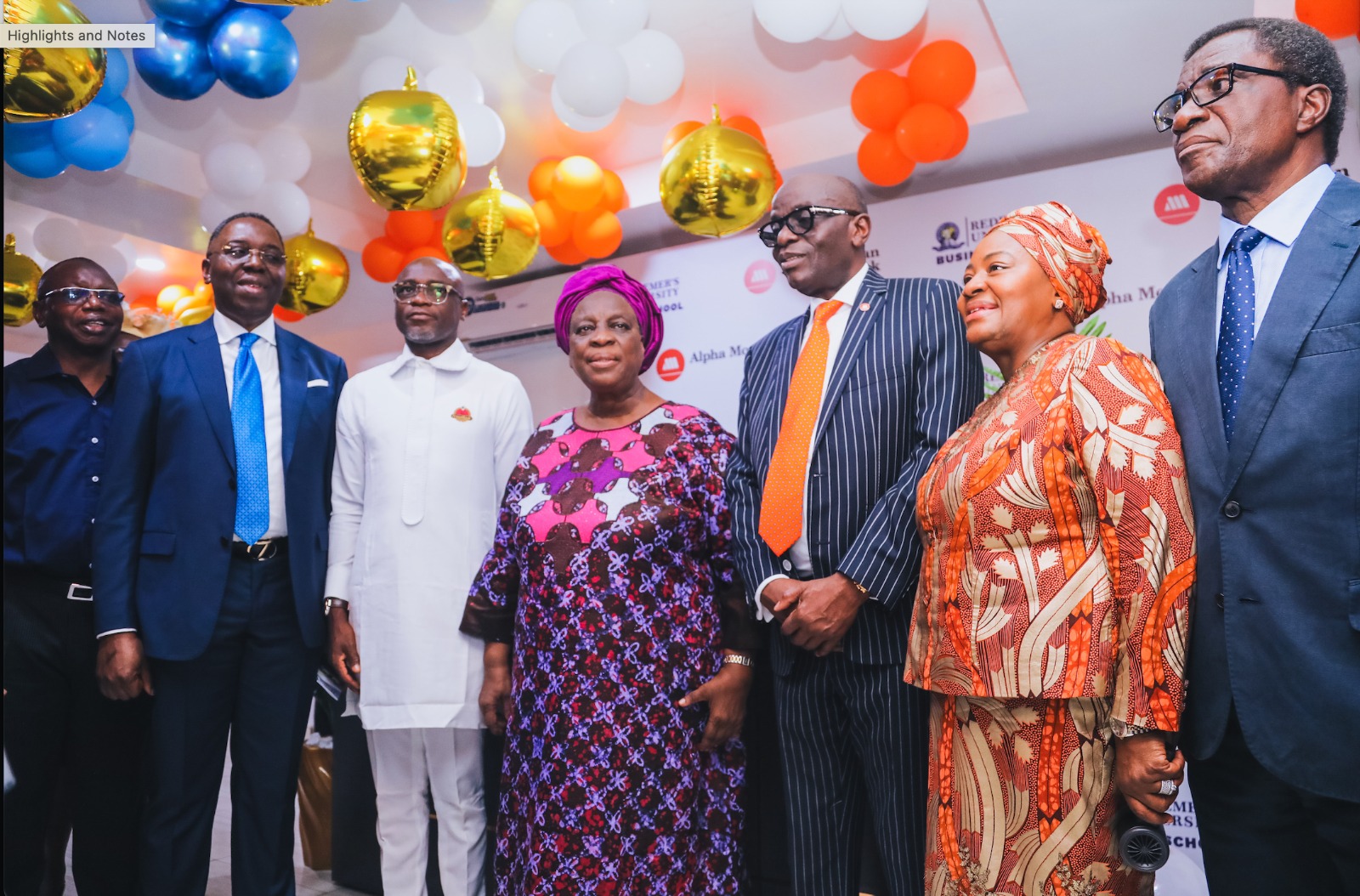
Alpha Morgan Bank Reinforces Commitment to Education at Redeemer’s University Business School Commissioning
Alpha Morgan Bank has reaffirmed its commitment to education and institutional development through its support for the commissioning of the Redeemer’s University Business School.
The Business School was officially inaugurated by Pastor (Mrs.) Folu Adeboye, at the commissioning ceremony attended by distinguished guests including Her Excellency, Mrs. Bola Obasanjo; the Pro-Chancellor and Chairman, Governing Council of Redeemers University, Professor Oluwatoyin Ogundipe; the Vice Chancellor, Professor Shadrach Olufemi Akindele; and other notable dignitaries.
Speaking at the event, the Managing Director of Alpha Morgan Bank reiterated the Bank’s commitment to supporting institutions that drive intellectual growth and national development.
As part of its broader focus on knowledge sharing and thought leadership, Alpha Morgan Bank will host its Economic Review Webinar in May 2026, bringing together experts to share insights on key economic trends and opportunities.
The Bank’s involvement reflects its continued dedication to empowering institutions and shaping the future of business and leadership in Nigeria.
Read more about Alpha Morgan Bank on www.alphamorganbank.com
PHOTO
L-R: Prof. Shadrach Olufemi Akindele, Vice Chancellor, Redeemers University, Engr. Eloka Eje, Dr Perez Araka, Pastor (Mrs) Folu Adeboye, Mother-In-Israel, The Redeemed Christian Church of God, Mr Ade Buraimo, MD/CEO Alpha Morgan Bank, Dr (Mrs) Oluwatomi Somefun, Dr. Simeon Ifere, at the inauguration of the Redeemer’s University Business School, Redemption City, Ogun State on Thursday 2nd April, 2026
Tinubu Aide Rebuts Rufai Oseni Over ₦3.3tn Power Debt Deal
Business
Aare Adetola Emmanuelking Welcomes President Tinubu to Gateway International Airport Commissioning in Iperu-Remo
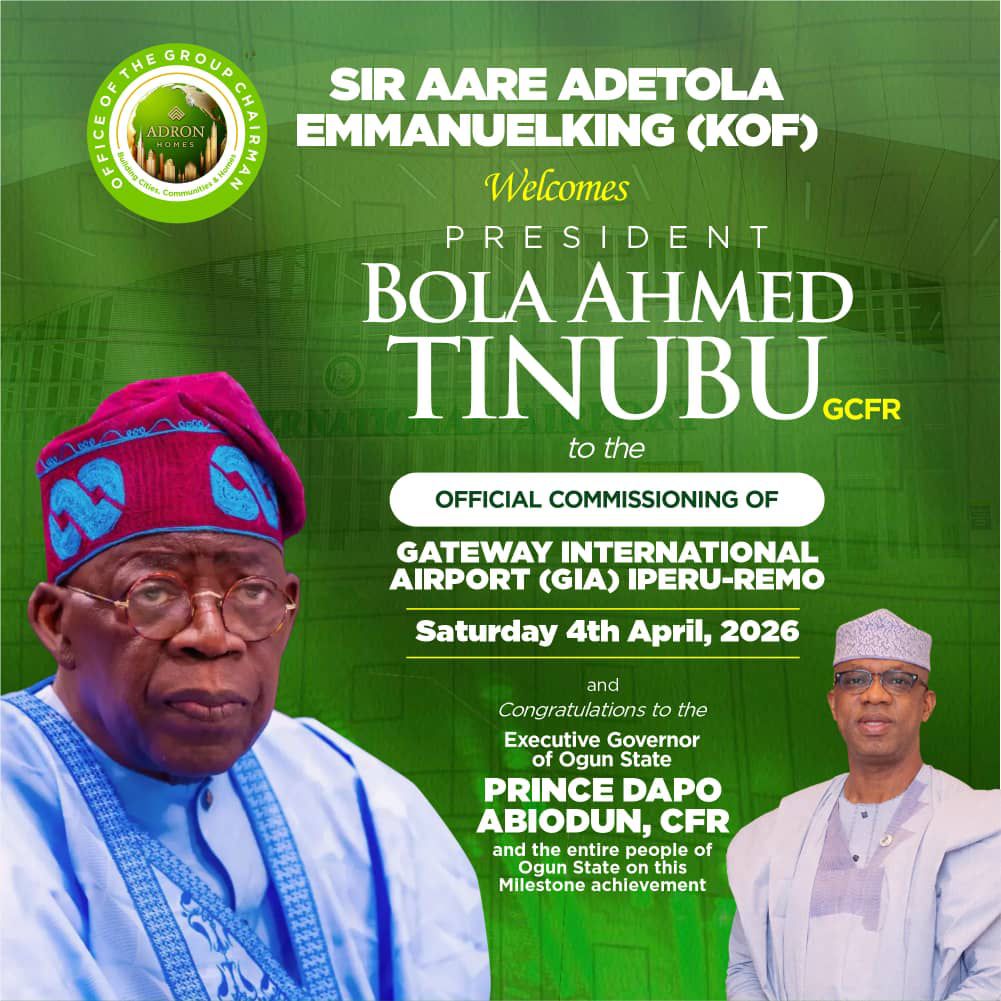
Aare Adetola Emmanuelking Welcomes President Tinubu to Gateway International Airport Commissioning in Iperu-Remo
In a momentous occasion that underscores the rapid infrastructural advancement of Ogun State, renowned real estate mogul and philanthropist, Aare Adetola Emmanuelking, warmly received the President of the Federal Republic of Nigeria, Bola Ahmed Tinubu, at the official commissioning of the Gateway International Airport, located in Iperu-Remo.
The landmark event, held under the visionary leadership of the Ogun State Governor, Dapo Abiodun, marks a significant stride in the state’s economic transformation agenda, positioning Ogun as a key hub for aviation, commerce, and investment in Nigeria.
Aare Emmanuelking, who is also the Chairman/CEO of Adron Homes and Properties, commended the Ogun State Government for its foresight and commitment to infrastructural excellence. He described the airport project as a “game-changer” that will not only boost connectivity but also stimulate real estate growth, tourism, and industrial expansion across the region.
Speaking during the commissioning, President Tinubu lauded Governor Abiodun’s administration for delivering a world-class facility that aligns with the Federal Government’s Renewed Hope Agenda, emphasizing the importance of strategic infrastructure in driving national development.
The Gateway International Airport is expected to serve as a critical gateway for investors and travelers, further enhancing Ogun State’s reputation as one of Nigeria’s most business-friendly environments.
The presence of top dignitaries, industry leaders, and stakeholders at the event underscores the project’s significance and its anticipated impact on the state’s socio-economic landscape and beyond.


- Afreximbank supports Dangote Group as it targets US$100 billion annual revenue by 2030 April 8, 2026
- Africa's top-ranked Global Reporting Initiative (GRI) Training Partner launches 15th cohort of globally recognized sustainability reporting certification April 8, 2026
- African Energy Chamber (AEC) Intervenes in Landmark Climate Case to Defend Africa’s Energy Future April 8, 2026
- Eswatini opens to investors for first-of-its-kind roadshow April 8, 2026
- Egypt: President El-Sisi Meets Ministers of Electricity, Petroleum April 8, 2026
- Seychelles and Japan explore expanded cooperation and future partnerships April 8, 2026
- President Mahama to headline The Africa Debate 2026 as Ghana-United Kingdom (UK) investment ties deepen April 8, 2026
- Angolan Production Gets New Uplift as Eni’s Guido Brusco Joins Angola Oil & Gas (AOG) 2026 April 8, 2026
- Liquid C2 launches Africa’s first Google Cloud-powered Experience Centre to accelerate Artificial Intelligence (AI) adoption April 8, 2026
- Uganda: Opposition calls for reforms amid rising debt burden April 8, 2026
- Afreximbank supports Dangote Group as it targets US$100 billion annual revenue by 2030 April 8, 2026
- Africa's top-ranked Global Reporting Initiative (GRI) Training Partner launches 15th cohort of globally recognized sustainability reporting certification April 8, 2026
- African Energy Chamber (AEC) Intervenes in Landmark Climate Case to Defend Africa’s Energy Future April 8, 2026
- Eswatini opens to investors for first-of-its-kind roadshow April 8, 2026
- Egypt: President El-Sisi Meets Ministers of Electricity, Petroleum April 8, 2026
- Seychelles and Japan explore expanded cooperation and future partnerships April 8, 2026
- President Mahama to headline The Africa Debate 2026 as Ghana-United Kingdom (UK) investment ties deepen April 8, 2026
-

 news4 months ago
WHO REALLY OWNS MONIEPOINT? The $290 Million Deal That Sold Nigeria’s Top Fintech to Foreign Interests
-

 society7 months ago
“You Are Never Without Help” – Pastor Gebhardt Berndt Inspires Hope Through Empower Church (Video)
-

 celebrity radar - gossips2 months ago
Dr. Chris Okafor Returns with Power and Fire of the Spirit -Mounts Grace Nation Altar with Fresh Anointing and Restoration Grace on February 1, 2026
-

 celebrity radar - gossips4 months ago
Prophet Kingsley Aitafo Releases 2026 Prophecy: ‘Nigeria Will Rise, but the World Must Prepare for Turbulence’