
society
JUSTIFICATIONS FOR IGBO PRESIDENCY

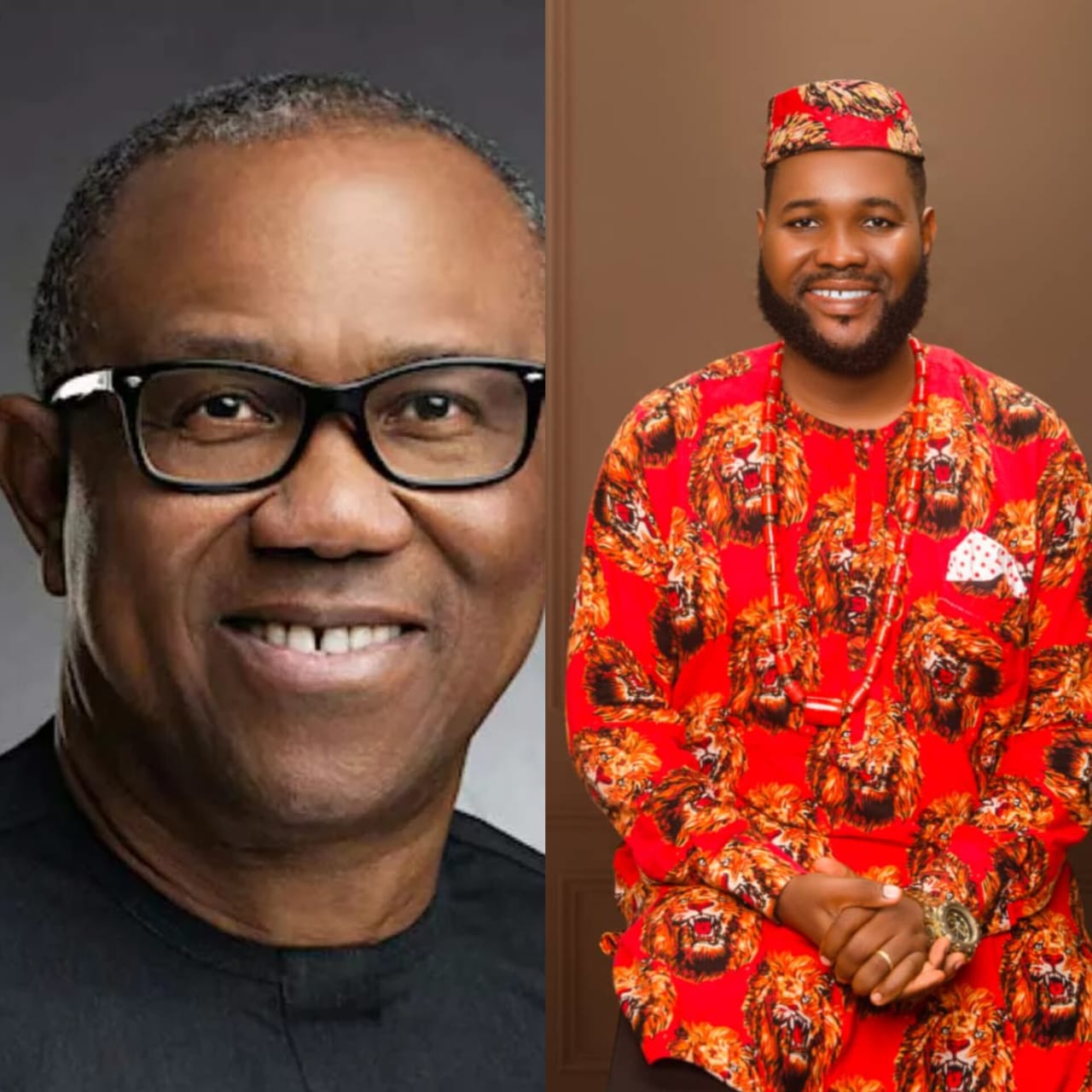
JUSTIFICATIONS FOR IGBO PRESIDENCY
The Igbos, as a people, have been the original occupants of the areas they have inhabited even before colonization and the amalgamation of the various ethnic nationalities that now constitute the geographical entity called Nigeria — a British colonialist brainchild.
In keeping with their natural instinct of improving their environment, the Igbos have contributed immensely to the progressive development of Nigeria in all spheres of human endeavour, ranging from agriculture, commerce, industry, education, health, to sports and other social activities.
The Igbos are naturally hospitable people. They relate to individuals from other ethnic groups as brothers and sisters, even when living outside their ancestral homeland. In many cases, they give their children born outside Igbo land names from their host communities. For instance, there was a Yoruba-named footballer, Okoye, who played for a football club in Northern Nigeria. Many Igbo students born in Western Nigeria bear Yoruba names. Dr. Nnamdi Azikiwe’s first four children, born in Lagos, were given Yoruba names such as Abiodun.
It is also on record that Igbos marry widely within their host communities. Igbo women, likewise, marry men from other ethnic groups. The Igbos are known for inter-tribal marriages more than any other ethnic group in Nigeria. Many offspring of these inter-ethnic unions have become prominent sons and daughters of Nigeria, with national and international recognition.
In commerce, beyond importation and exportation, the Igbos are leaders in internal trade, dealing in a wide variety of commodities. There is virtually no part of Nigeria where Igbos are not found engaging lawfully in one form of trade or another. Commercial activity is part and parcel of Igbo life.
Consequently, Igbos are found in every nook and cranny of Nigerian towns, engaging in legitimate means of livelihood — as mechanics, tailors, plumbers, carpenters, household repairers, artisans, and builders of structures ranging from modest homes to large edifices. They are dependable and resourceful when called upon.
At higher professional levels, the Igbos are equally present and distinguished. They are versatile, adaptable, and innovative. One unique characteristic of the Igbo people is that they are independent by nature, yet deeply interdependent. This explains why the Igbos are naturally republican in outlook.
They believe in healthy competition and constantly strive to excel in any career they choose to pursue. As a result, the Igbos have produced not only men and materials but also individuals of exceptional character, resilience, and capacity — men and women of timber and calibre.
(Apologies to Dr. K. O. Mbadigwe, of blessed memory.)
In sporting activities, Igbo sons and daughters have consistently placed Nigeria on the global map. Dick Tiger became a world-renowned figure by winning the World Middleweight and Light Heavyweight Boxing Championships, bringing international recognition to Nigeria. Emmanuel Ifeanyi Okala and other Igbo athletes contributed immensely to Nigeria’s early sporting dominance, while Emmanuel Ifeanyi Juma won Nigeria’s first gold medal at the Commonwealth Games in London.
In football, Dan Anyiam and Onye Wuna were part of the pioneering team that produced Nigeria’s first set of professional footballers. Nwankwo Kanu captained the Nigerian Olympic football team to historic gold at the 1996 Atlanta Olympics. Christian Chukwu led Nigeria to its first Africa Cup of Nations victory as team captain. Chioma Ajunwa made history by winning Nigeria’s first Olympic gold medal in athletics. Power Mike Okpala also etched Nigeria’s name in global sports history by winning the World Heavyweight Wrestling Championship.
In the early 1960s, shortly after Nigeria’s independence from Britain, an Igbo political leader of exceptional vision, Dr. Michael Okpara, then Premier of the Eastern Region of Nigeria, demonstrated remarkable foresight in industrial development. Following a world economic tour, Dr. Okpara sought federal approval to secure a loan of £50 million sterling for the establishment of a steel complex in Eastern Nigeria.
The proposed steel industry was strategically planned, with raw materials to be sourced from Plateau State, where iron ore and tin were abundant. However, the federal government declined approval, acting on advice allegedly influenced by foreign interests whose steel industries were operating at a loss and feared competition from a Nigerian steel industry within the Commonwealth and African markets.
Ironically, during the civil war, the same federal government that rejected the steel project on economic grounds later approached the former Soviet Union to establish a steel industry. Instead of locating it in the East as originally planned, the project was fragmented into three locations: Ajaokuta in the North, Osogbo in the West, and Aladja in the then Mid-West Region.
This decision not only altered the original vision but also deprived Eastern Nigeria of an industrial foundation that could have accelerated its economic development. It stands as another example of missed opportunities and structural imbalance in Nigeria’s developmental history.
The fact that initiated the proposal was eventually excluded from its execution. This exclusion occurred during the political crisis of 1964–1965, which later escalated into the Nigerian Civil War of 1967–1970. These developments further entrenched structural decisions that marginalized the Eastern Region in critical national projects.
A relevant historical parallel can be drawn from Britain’s experience in managing its steel industry. A British national, who was then heading the Canadian steel industry, had successfully turned it into a prosperous enterprise. Recognizing his exceptional managerial competence, the British government sought his return to manage its own ailing steel industry.
It is on record that Britain paid the sum of £2 million sterling to the Canadian steel industry as compensation to secure the release of this technocrat, Mr. John McGregor, so he could assume leadership of the British steel industry. Under his leadership, the British steel industry broke even in less than five months and soon began making substantial profits.
The transferred steel technology, expertise, and managerial competence became the turning point for the revival of the British steel industry. This example underscores the importance of visionary leadership, technical competence, and deliberate investment in national industrial capacity—qualities that were present in the original Igbo-led steel proposal but were unfortunately disregarded at the time.
This deliberate sidelining of well-conceived initiatives further illustrates how political considerations often overrode economic logic in Nigeria’s developmental trajectory, particularly when such initiatives originated from the Eastern Region.The transfer fee was cost-effective.
After the civil war, the Nigerian government engaged one of the deputies from the Canadian steel industry, Dr. Eze Melari, to aid in the construction of Ajaokuta Steel Company and its associated subsidiaries. Dr. Melari, alongside Russian engineers, worked harmoniously and completed up to 90% of the project when General Buhari overthrew Shagari and assumed power as another military dictator.
Buhari’s first act was not only to remove the highly qualified Igbo technocrat, Dr. Eze Melari — who had earned his PhD in 1957 and had more than 24 years of working experience abroad — but to replace him with an engineer, Arthur, who held only a BSc, obtained in 1977, twenty years after Dr. Melari had earned his doctorate in the same discipline.
Is it any wonder, then, that the Nigerian steel industry has produced many billionaires but not a single sheet of steel? Had this industry been established at the time envisioned by the foresighted initiator, the cost of investment would have been lower, employment would have been generated, foreign exchange earnings increased, and tin and iron ore mines would have flourished. Instead, short-sighted leadership deprived Nigeria of a critical economic breakthrough.
What can one expect from a policy that moves “one step forward and twenty steps backward,” driven by economic illiteracy and shallow-mindedness? The failure of the steel industry is symptomatic of a broader cycle of mismanagement and negligence — a kind of national “karma” that persists until Nigeria confronts the structural mistakes of its past.
It is important to note that the victims of this mismanagement were the Eastern Nigerian government and its people. Even today, Nigeria is unlikely to complete this project, yet continues to expend trillions in paying workers’ salaries without producing anything tangible. This mirrors the situation with the non-productive oil refineries, which remain a drain on the economy while failing to deliver results.
Political Exclusion: The Cause
Before the civil war, Nigeria practised true federalism. However, since after the war, the country has operated more like a military-styled, constrained federation, where states go to Abuja cap in hand for allocations, and where some states are more favoured than others.
The centre of leadership has been restricted to certain groups, with the particular exclusion of an ethnic group that has the capacity to rescue the nation from its malevolent journey into bottomless economic pits. The result is that our national currency has lost its value, while those of other competing nations continue to appreciate. Our products have become comparatively cheaper, not because of productivity, but due to economic weakness.
The Igbos have, on several occasions, sought to occupy the presidency of Nigeria but have been denied the opportunity, sometimes through pre-emptive manoeuvres. Other ethnic groups have had their turns through democratic, near-democratic, or even undemocratic routes.
It is plain to see that those who do everything to rule are often more concerned with what they can take from office rather than what they can offer. If a Nigerian president is officially paid about one million five hundred thousand naira monthly, or eighteen million naira per annum—amounting to seventy-two million naira for a four-year tenure—how then can one justify the payment of one hundred million naira for nomination and expression-of-interest forms? (Courtesy of All Progressives Congress nomination and expression fees.)
It is only in Nigeria that such practices exist, where politics has become a lucrative business for opportunists and political merchants. It is therefore high time that a Nigerian of Igbo extraction is given the opportunity to lead Nigeria.
Fortunately, there are many individuals of Igbo extraction with the capability, human efficiency, and patriotic interest to prove that Nigeria’s problems—though man-made—are difficult but not impossible or insurmountable. Some of them have already demonstrated their competence at lower levels, thereby qualifying them for even greater responsibilities at higher mandates.
Second tenure in any elective office is neither automatic nor a right. It is dependent solely on performance during the first tenure. A failed performer is eliminated—root and branch. The principle of checks and balances is always appropriate in this regard.
The American federal constitution stipulates a maximum of two tenures for a president. However, President Franklin Delano Roosevelt, who was elected during the Great Depression, was allowed to contest the presidential election for four successive terms. Towards the end of his second tenure, the United States Congress voluntarily lifted the law that limited presidents to a maximum of two terms, enabling him to contest for a third term, which he won overwhelmingly. This resolution was again repeated towards the end of his third tenure, qualifying him to contest and win a fourth term, during which he died on April 12, 1945.
The unique aspect of this historic exception is that the motion was not moved by members of the president’s party. The resolution, in essence, stated: “In view of your efficiency and contribution to the economic stability of the nation, Congress hereby lifts the stipulated two-term limit to enable you to contest for another term. This resolution remains valid as long as you remain in office.” No other American president has ever been so honoured.
To further demonstrate that the Igbos deserve to hold the office of President of Nigeria, below is a list of the occupants of the office of Head of Government and Head of State since Nigeria’s independence in 1960. Notwithstanding that the office of Prime Minister began in 1957 and was held by the same individual until 1966, the records are as follows:
Sir Abubakar Tafawa Balewa (1957–1966) – North-East
General J.T.U. Aguiyi-Ironsi (1966 – six months) – South-East
General Yakubu Gowon (1966–1975) – North-Central
General Murtala Mohammed (1975–1976) – North-West
General Olusegun Obasanjo (1976–1979) – South-West
Alhaji Shehu Shagari (1979–1983) – North-West
General Muhammadu Buhari (1983–1985) – North-West
General Ibrahim Babangida (1985–1993) – North-Central
Chief Ernest Shonekan (August–November 1993) – South-West
General Sani Abacha (1993–1998) – North-West
General Abdulsalami Abubakar (1998–1999) – North-Central
Chief Olusegun Obasanjo (1999–2007) – South-West
Umaru Musa Yar’Adua (2007–2010) – North-West
Goodluck Jonathan (2010–2015) – South-South
Bola Ahmed Tinubu (2015–date) – South-West
From the above, it is clear that the South-East is long overdue for the presidency. Equity demands fairness. When one approach has consistently failed to produce balance, wisdom requires a shift to avoid injustice. All equals must be treated equally.
The Igbos are naturally gifted with men who can make things happen—men imbued with the capacity, intellect, and material understanding required to effect positive change. It is time to give them a chance to do what the Nigerian political “Napoleons” could not do, rather than continually allowing mouth-watering, economically selfish political machineries whose stock-in-trade is the engagement in reckless investments and the diversion of public resources for infinitesimal returns on huge sums invested.
Like the infamous Dr. Joseph Goebbels of the German Nazi Party, some individuals daily dish out white lies in the name of propaganda, erroneously believing they have convinced the people, forgetting that the best brains in the country have largely been outside government since 1970. The criteria for appointments into government have been largely based on ethnicity, religion, kinship, party affiliation, or political compensation. Merit has been completely sidelined and rendered a non-factor.
Added to this is the indomitable and pervasive culture of corruption, which remains the major ulterior motive behind the quest for public office. This singular factor largely explains why Nigeria is where it is today. These traits, however, can be overcome by those who genuinely desire to serve and make a lasting name through selfless service to the nation, rather than by cabals of greedy looters whose past records are unencouraging, yet who continue to seek and be granted mandates to rule—thereby mortgaging the future of over 200 million unfortunate citizens and generations yet unborn.
It is therefore justifiable—morally, politically, and equitably—to give the hitherto marginalized South-East a chance to clean up the politically, economically, and security-wise messed-up table. Cleaning this table politically, economically, and above all addressing the current state of insecurity, though an uphill task, is not insurmountable. This has been demonstrated in the past at the state level during difficult periods.
The interest and welfare of Nigeria must always supersede the interest and welfare of any particular section of the country.
SIGNED
HON. PRINCE CHINEDU NSOFOR(KPAKPANDO NDIGBO) NATIONAL COORDINATOR IGBO PRESIDENCY PROJECT AND FOUNDING PRESIDENT IGBO HEROES AND ICONS FOUNDATION




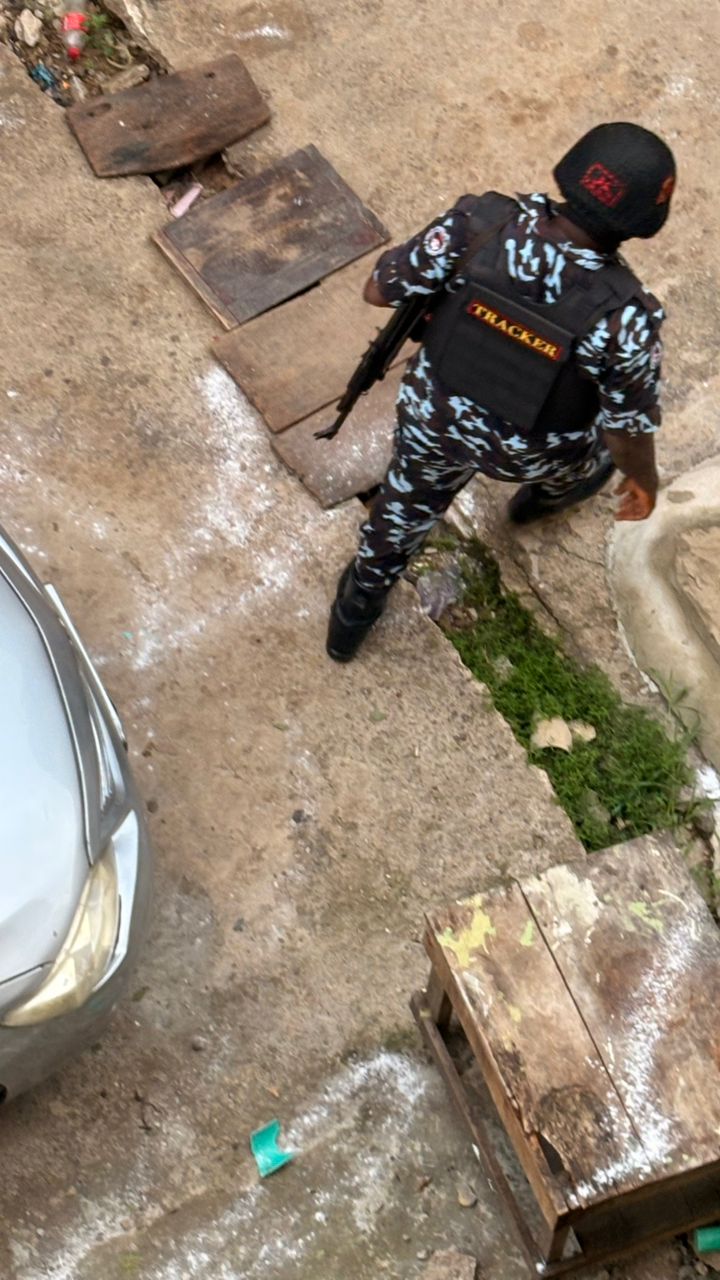
Police Officers Detained as Family Property Dispute Sparks Demolition Controversy in Lagos
By Ifeoma Ikem
A property dispute within the Omotayo-Ojo family has taken a dramatic turn following a controversial demolition exercise at a residential building in Ikosi-Ketu, Lagos State, which reportedly left tenants displaced and led to the detention of some police officers allegedly involved in the operation.

The property, located at 23B Loveall Street, Ikosi-Ketu, has been the subject of a prolonged ownership tussle since the death of its owner, Chief Oludola Omotayo Ojo, the Babaalaje of Imesi-Ile, Osun State, in 2019.
Residents said tension erupted when a group of individuals, accompanied by security operatives, stormed the premises and commenced demolition activities.
According to eyewitnesses, portions of the building were pulled down while tenants rushed to salvage their belongings from affected apartments.
The residents alleged that windows, doors and roofing sheets were damaged during the exercise, exposing parts of the building to the elements and causing significant losses to occupants.
At the centre of the dispute is Mrs Mojisola Omotayo Ojo Alolagbe, who claimed that the property was allocated to her by her late father during his lifetime as a source of financial support.
She alleged that some family members had persistently challenged her ownership claim despite ongoing legal proceedings relating to the administration of the deceased’s estate.
Alolagbe further claimed that the latest incident was part of a series of attempts to wrest control of the property, citing previous cases of alleged vandalism and partial demolition in November 2025, January 2026 and February 2026.
The situation escalated further when reports emerged that police officers allegedly involved in the demolition were later apprehended and conveyed in a Black Maria vehicle over questions surrounding the legality of their participation in the operation.
Sources familiar with the matter said those behind the demolition had initially claimed to be acting on approval from the Lagos State Ministry of Lands. However, the authenticity and extent of such approval could not be independently verified as of the time of filing this report.
The development has generated concern among residents and community members, who questioned the involvement of security personnel in what they described as a civil matter.
Some tenants, who said they had recently renewed their tenancy agreements, lamented the destruction of their property and appealed to the authorities for protection and possible compensation.

They also called for a thorough investigation into the circumstances surrounding the demolition, insisting that the rights of all parties involved should be protected.
Stakeholders have urged the Lagos State Government, security agencies and the judiciary to intervene and ensure that the dispute is resolved through lawful means to prevent further escalation.
The controversy has continued to draw public attention, raising concerns over property rights, estate administration and the role of law enforcement agencies in civil disputes.

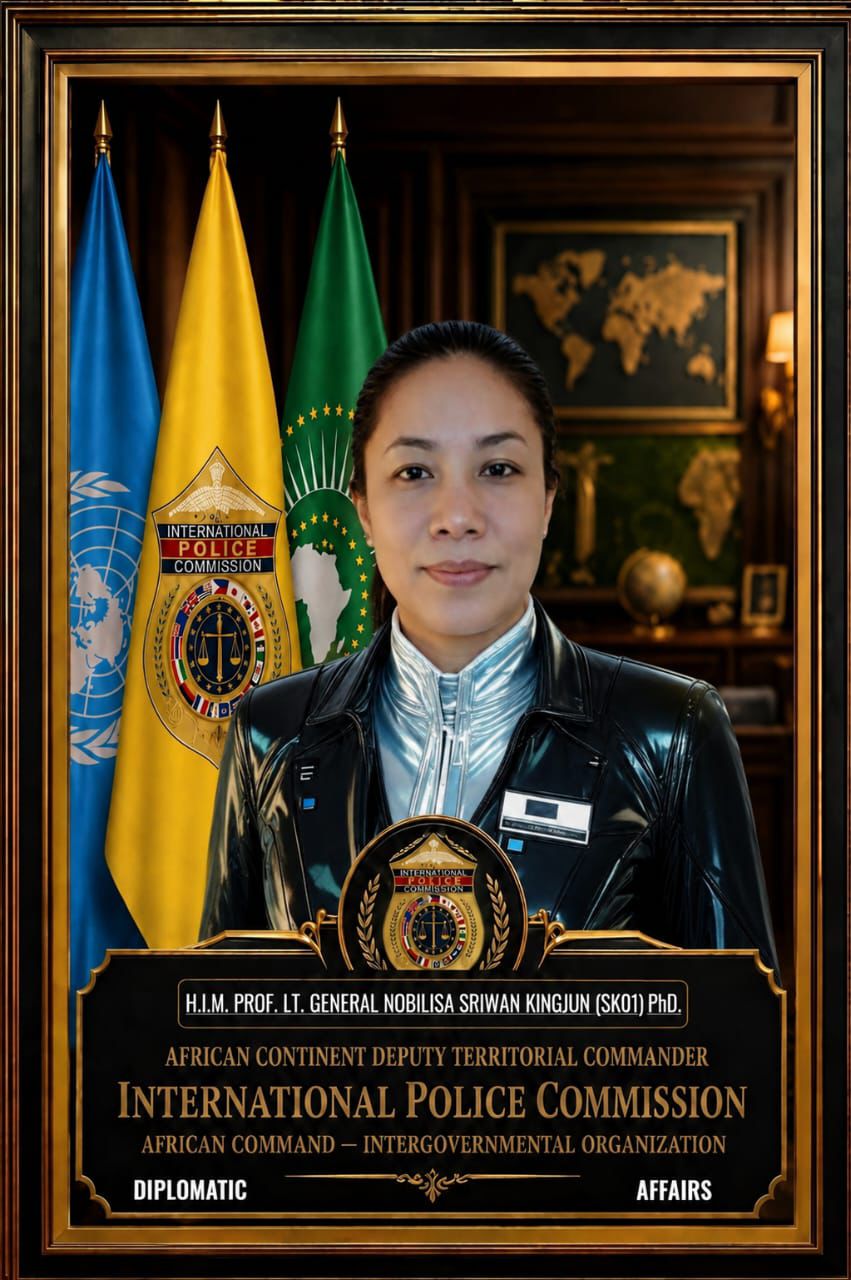
UKA Gears Up for Final ATC Exchangeability Test Run as June Preparations Begin.
May 30, 2026 – As the month of June gathers momentum, the *United Kingdom of Atlantis, UKA*, a sovereign nation has unveiled a series of vital guidelines and preparatory packages to ensure citizens and stakeholders run the *ATC Exchangeability* process effectively.
In an official update, the *President of Atlantic Crown Limited, Empress of Attica Empire UKA*, confirmed that the *Final Test Run of ATC Exchangeability* is scheduled for the month of June 2026. The exercise marks a key phase ahead of the *Official Exchangeability Window, set to run from July 2026 to February 2027*.
### Key Highlights from the Presidential Briefing
1. *Final Test Run – June 2026*
The test run is designed to validate systems, procedures, and user readiness before full activation. Citizens, partners, and designated participants are urged to follow all official advisories released by UKA authorities during this period.
2. *Official Exchangeability Period*
Following the successful completion of the June test run, the Official Exchangeability will commence in july 2026 and we are Expecting Full Exchange ability between July Ending, 2026 to February 2026.
UKA stated that detailed schedules, eligibility requirements, and step-by-step instructions will be communicated progressively through verified UKA channels.
3. *Benefiting Packages for June*
In line with UKA’s commitment to citizen empowerment, the month of June will feature “benefiting packages” aimed at education, preparation, and seamless onboarding. These packages are intended to equip the people of UKA with the knowledge and tools needed for effective participation.
4. *Commitment to Transparency*
Addressing the nation, the Empress of Attica Empire UKA emphasized:
_“Final Test Run of ATC Comes up in The Month of June, As We Prepare For The Official Exchangeability, Between July 2026 To Feb 2027. All Information Will Be Communicated.”_
UKA reaffirmed that only information released through official UKA platforms should be regarded as authoritative.
The United Kingdom of Atlantis is encouraging all citizens, representatives, and interested parties to remain alert to official communications, attend designated orientation sessions, and avoid unofficial sources. UKA’s dedication to order, clarity, and the collective benefit of its people as the nation moves into this significant phase.
For updates, advisories, and participation guidelines, citizens are advised to monitor official UKA communication channels.
United Kingdom of Atlantis, UKA, is a sovereign nation, committed to national development, citizen welfare, and structured economic participation through initiatives such as ATC Exchangeability.
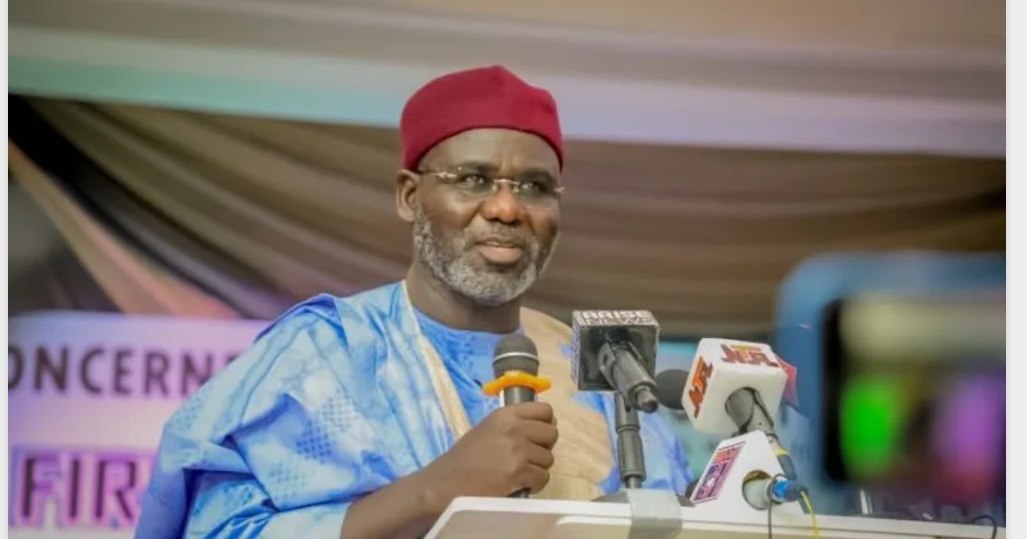
Three Years On, General Buratai Hails Tinubu’s Economic, Security Achievements
Former Chief of Army Staff, Lt. Gen. Tukur Buratai (retd.), has commended President Bola Ahmed Tinubu for what he described as bold economic reforms and improved security efforts as the President marks three years in office.
In a goodwill message on Thursday to commemorate Tinubu’s third anniversary as President and Commander-in-Chief of the Armed Forces, Buratai said the administration had taken courageous decisions that would leave a lasting impact on Nigeria’s development.

According to him, President Tinubu broke a long-standing cycle that had hindered national growth by removing fuel subsidy and implementing foreign exchange reforms aimed at stabilising the naira and strengthening the economy.
He noted that the reforms were beginning to yield positive results, citing the global acceptance of Nigerian debit cards, the gradual revival of local refineries, access to student loans, and ongoing road and infrastructure projects across the country.
“The FCT Administration has also recorded remarkable progress, completing major road projects that remained unfinished for over 16 years,” Buratai stated.
The former army chief also praised the administration’s security efforts, saying renewed military offensives against insurgents, terrorists and bandits had led to notable successes across various parts of the country.
He specifically lauded recent joint operations involving Nigerian and United States forces against Boko Haram and ISWAP in the North-East, as well as intensified counter-banditry operations in the North-West.
“We have seen notorious ISWAP commanders being neutralised. I congratulate the Commander-in-Chief, the Minister of Defence, the Chief of Defence Staff, the Service Chiefs, the Inspector-General of Police and heads of intelligence agencies for their efforts,” he said.
Buratai, however, acknowledged that challenges remained, stressing the need for more aggressive military operations and intelligence-driven strategies in the coming year.
While urging Nigerians to remain hopeful, he said celebrating the President’s achievements did not amount to ignoring the difficulties facing the nation.
“Because you truly care, you have shown the courage to trade short-term comfort for long-term hope. Nigerians need your reassurances, and that is why we remain optimistic and full of confidence,” he added.
The retired military officer reaffirmed his support for the Tinubu administration and expressed confidence that the foundation being laid by the government would deliver a brighter future for the country.
He also prayed for God’s guidance, wisdom, strength and good health for the President as he continues to lead Nigeria.


- Deputy (Dep.) Finance Minister Courts Investors to Transform Ghana’s rice Economy June 4, 2026
- Mobile health services in Kenya reduce the risk of stillbirths June 4, 2026
- JustMarkets Research Highlights Global Growth Divergence as a Key Market Driver June 4, 2026
- African Development Bank Group approves $125 million investment in African Trade and Investment Development Insurance (ATIDI) to expand risk insurance capacity in Africa June 4, 2026
- Congo Energy & Investment Forum 2027 to Position Brazzaville as a Hub for Global Energy Deal-Making June 4, 2026
- Africa Skills Hub (ASH) Transitions to ASH Africa as it Marks 10 Years of Impact June 4, 2026
- When women farm better, Eswatini eats better June 3, 2026
- Togo Hosts the 8th Annual Forum of National Volunteer Agencies in the Economic Community of West African States (ECOWAS) Region June 3, 2026
- Indigenous Peoples gravely vulnerable to Ebola epidemic, warn United Nations (UN) independent experts June 3, 2026
- Meeting between Parliamentary Vice-Minister ONISHI and His Excellency (H.E.) Mr. Cosgrow, Principal Minister and Minister for Agriculture, Fisheries and Blue Economy of Seychelles June 3, 2026
- Deputy (Dep.) Finance Minister Courts Investors to Transform Ghana’s rice Economy June 4, 2026
- Mobile health services in Kenya reduce the risk of stillbirths June 4, 2026
- JustMarkets Research Highlights Global Growth Divergence as a Key Market Driver June 4, 2026
- African Development Bank Group approves $125 million investment in African Trade and Investment Development Insurance (ATIDI) to expand risk insurance capacity in Africa June 4, 2026
- Congo Energy & Investment Forum 2027 to Position Brazzaville as a Hub for Global Energy Deal-Making June 4, 2026
- Africa Skills Hub (ASH) Transitions to ASH Africa as it Marks 10 Years of Impact June 4, 2026
- When women farm better, Eswatini eats better June 3, 2026
-

 news6 months ago
WHO REALLY OWNS MONIEPOINT? The $290 Million Deal That Sold Nigeria’s Top Fintech to Foreign Interests
-

 society1 month ago
SOCIAL MEDIA IS NOT A BATTLEFIELD COMMAND – WHY THE NIGERIAN ARMY’S ACTION AGAINST JUSTICE CRACK IS A NATIONAL SECURITY IMPERATIVE
-

 celebrity radar - gossips4 months ago
Dr. Chris Okafor Returns with Power and Fire of the Spirit -Mounts Grace Nation Altar with Fresh Anointing and Restoration Grace on February 1, 2026
-

 celebrity radar - gossips6 months ago
Prophet Kingsley Aitafo Releases 2026 Prophecy: ‘Nigeria Will Rise, but the World Must Prepare for Turbulence’