
news
Kalabari Kingdom Witnesses Historic Rite as King Dokubo- Asari Installs Son as Chief, rolls out a Boat Regatta

Kalabari Kingdom Witnesses Historic Rite as King Dokubo- Asari Installs Son as Chief, rolls out a Boat Regatta
By; Al Humphrey Onyanabo
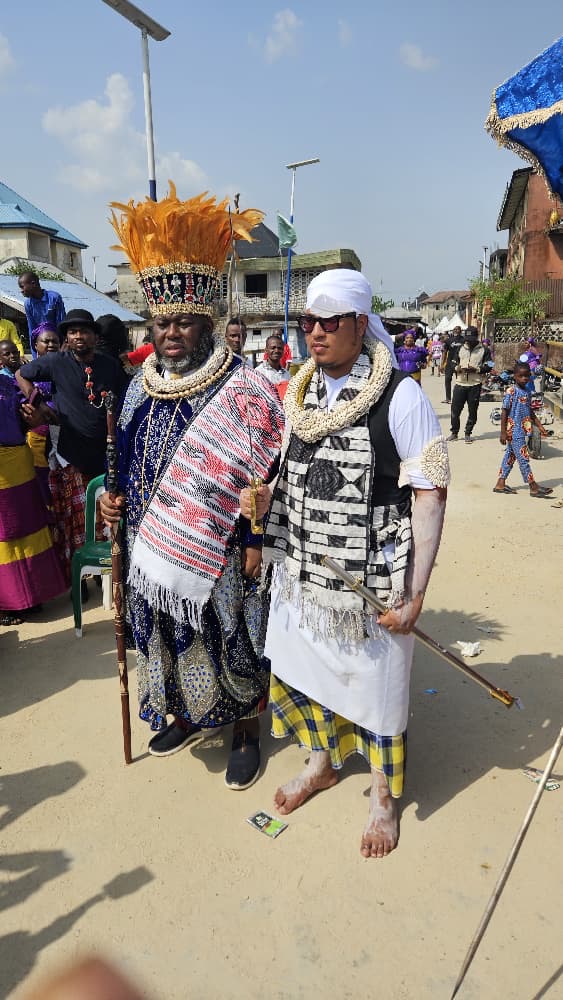
The rich customs and time-honoured traditions of the ancient Kalabari kingdom came alive in Buguma, Rivers State today, February 28, 2026 as Da Amakiri Tubo, Alhaji Mujahid Abubakar Dokubo-Asari, Dabaye Amakiri 1, Amanyanabo of Elem Kalabari ( The Source) formally presented his son, Briebibo Dienyefa, to the Kalabari nation as a chief.

The ceremony marked the culmination of over two months of meticulous traditional processes — a demanding journey rooted in ancestry, honour and communal validation. In Kalabari land, chieftaincy is neither symbolic nor automatic. It is earned through a rigorous rite of passage that requires the candidate to be presented before chiefs of various houses and families with which he has paternal affiliation.
At each stage, Briebibo Dienyefa was introduced,scrutinised and affirmed. The chiefs examined not only his lineage but also his character, reputation and conduct. In keeping with tradition, he had to be accepted as worthy and without blemish — fit to lead, represent and uphold the dignity of his people.
With the traditional requirements satisfied, he was formally put forward by his father, the Amanyanabo of Elem Kalabari, to sit on his personal stool as Dokubo-Asari II — a title that carries both heritage and responsibility.
The presentation ceremony drew traditional rulers, chiefs, elders and well-wishers from across Kalabari land, underscoring the cultural weight of the moment. It was not merely a family milestone but a reaffirmation of Kalabari’s enduring governance structure — one that blends ancestry, moral authority and communal consensus.

The chieftaincy journey of Alabo Briebibo Dienyefa Dokubo-Asari began on January 17, 2026, with a colourful outing in Buguma.(He is taking over the personal chieftaincy stool initiated by his father since 2004).
On that day, he was formally presented to the Edi Polo family at the Edi Polo Memorial Hall, marking the first step in a process deeply rooted in Kalabari custom.
A week later, on January 24, 2026, the second stage — Polo Diye, the traditional compound presentation — took place at the Omubo Birinaomoni Memorial Hall. Close to one hundred chiefs were in attendance, underscoring the seriousness of the rite and the weight of communal endorsement required for the path he had chosen.
On Saturday, February 27, 2026, he advanced further in consolidating his chieftaincy as he was presented at the Kariboye-Abi Princewill Memorial Hall, Buguma. The day carried historic significance. His father, the Amanyanabo of Elem Kalabari, was also presented to the Abi Royal Family in fulfilment of custom ahead of his coronation — a reminder that in Kalabari land, even a king must submit to ancestral protocol.
Early morning showers that Friday were interpreted by many as a sign of divine alignment with the solemnity of the moment.
This weekend stands as a defining chapter for Da Amakiri Tubo, The Amanyanabo of Elem Kalabari. Father and son move through tradition side by side — one affirming his kingship rites, the other stepping fully into chieftaincy responsibility.
The royal convoy reflected the stature of the occasion. The Amanyanabo rode in a cream Rolls-Royce, followed by a 2025 Toyota Land Cruiser VXR and a Mercedes-Benz Brabus 800. The Amama Soldiers maintained tight security throughout the proceedings.
Today, at the King Kariboye-Abu Princewill Amachree Memorial Hall in Buguma, both father and son are being formally presented to the Abi Family chiefs, as tradition demands. The Abi Royal Family — custodians of ancestral legitimacy — play a central role in affirming both the king and the chief.
Proceedings are being overseen by the Regent of the Kalabari Kingdom, Chief Charles Numbere.
In keeping with Kalabari tradition, no coronation as Amanyanabo is complete without this presentation to the Abi Royal Family. It is a reaffirmation that authority flows not merely from title, but from lineage, acceptance and adherence to sacred custom.
After the opening speech of the Regent, The Amanyanabo’s hand was raised by Chief Basoene Abiyesuku raised the hand of the monarch and presented him to the Regent of the Kalabari Kingdom.
Thereafter it was the turn of King Dokubo-Asari to present his son Breibibo Dienboye formally to his kinsmen of the Kariboye Abi Royal family. That accomplished, step out into the afternoon sun,
The crowd accompanying us had ballooned. We move to the King Amachree town hall where a massive crowd waited at about 12 noon.
The Presentation ceremony is simple. The Regent of the Kalabari Kingdom, Chief Charles Numbere is running the show. There is a quiz to test the fidelity of the new chief. First he is asked to identify two items, a canoon ball and a tuber of yam on the table in front of the Regent and to choose one between both, afterwards he is asked what action he will take if he learns of an insurgency against the king.
Thereafter, A family chief raises his hand and presents him to the Regent. After the successful presentation of any chief, Cannon balls are fired.
There were about ten chiefs who came to show themselves today like the son of Amanyanabo of the Source but beyond doubt, the King stood out. Musical Entertainment outside was provided by the Ogele cultural troupe of the Amanyanabo and the members of the Alhaji Mujahid Abubarkr Dokubo-Asari Cultural Centre. Each tried to outdo each other. They sang and danced in the scorching son for other two hours non stop in honour of their patron. Today was payback day.
Today, Saturday February 28 is the grand finale, King Dokubo-Asari is championing the Se Diye( Presentation to the Kalabari nation) of his son, Alabo Briebibo Dienboye Dokubo-Asari.
To commemorate the installation, the kingdom staged a colourful boat regatta — a vibrant maritime display deeply woven into Kalabari cultural identity. The spectacle of decorated boats gliding across the waters, accompanied by music, chants and traditional pageantry, symbolised continuity, celebration and the living spirit of a riverine people.
For the Kalabari nation, the event stood as both a preservation of heritage and a declaration of succession — ensuring that the traditions of leadership remain intact, respected and passed from one generation to the next.
This afternoon, King Amachree Memorial Hall in Buguma is filled to capacity.
Influential chiefs and figures from every stratum of the Kalabari Kingdom — including members of the diaspora and invited friends — are present for the historic gathering.
Inside and around the hall, traditional drums thunder without pause. Dancers move in tight formations, voices rise in rhythmic chants, and the tempo of celebration has reached a fevered intensity.
The atmosphere is electric, and the crowd’s exuberance leaves no doubt that this is a moment of collective pride and cultural. Today, five chiefs from the Edi Compound — also headed by King Asari-Dokubo have advanced to the final and most prestigious stage of their chieftaincy journey: the Se Diye.
Those being presented
are: Alabo West Oburulele,
Alabo Seliman of Sama,
Alabo Dr Ebi Robinson Braide, Alabo Obiobra Pankin Braide, Alabo Briebibo Dienyefa Dokubo-Asari,
and Alabo Tubidikiba Braide.
The Se Diye — the formal presentation to the Kalabari nation — represents the highest level of chieftaincy installation in the Kalabari Kingdom. It comes only after a chief has successfully passed through the preceding stages of scrutiny and family endorsements.
By the time a candidate reaches this point, he has already been examined by his compound and lineage.
The Se Diye extends that validation to the entire Kalabari nation.
It is an undertaking of immense cultural and financial weight. The cost is substantial, but more importantly, the responsibility it confers is profound. The Se Diye is similar to the Ama Diye but to a wider audience.
At this stage, the chief (known in Kalabari as Alabo) publicly presents himself before fellow chiefs from across Kalabari land — men who have themselves undergone the same rites. It is both introduction and affirmation: a declaration that he stands as a full Kalabari chief, recognised by tradition and accepted by his peers.
For the Kalabari people, the Se Diye is not a mere ceremony; it is institutional continuity. It ensures that leadership remains rooted in ancestry, accountability and communal consent.
With its completion, Alabo Briebibo Dienyefa Dokubo-Asari steps fully into the privileges and symbolism of his office. He may now wear the Don attire — the distinctive regalia of Kalabari chiefs — anywhere in the kingdom. The walking stick with added swagger, is no longer ornamental. It signifies authority earned through process and endurance.
And truth be told, he has earned it. Today, he stands affirmed.
Congratulations, Alabo Briebibo Dienyefa Dokubo-Asari, (Dokubo-Asari 11). Continue to soar.
By: Al Humphrey Onyanabo,
The Storyteller,


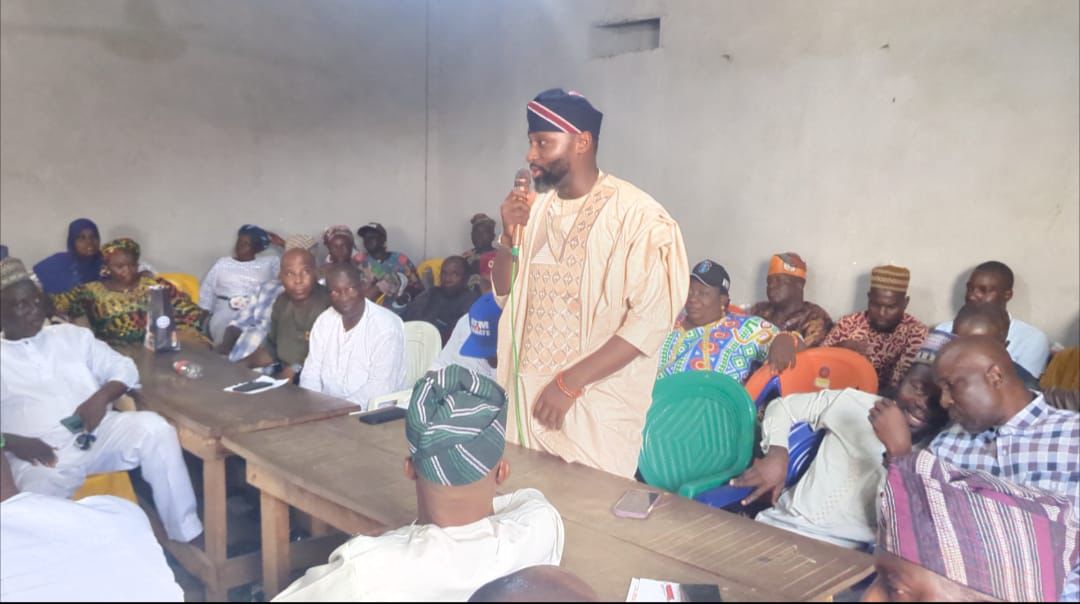
Reports from the field in Ondo North Senatorial District indicate that voters, officers, and agents at the voting centers across the wards have put Abdul Tunji Mohammed (ATM) in the lead.
According to the current figures collated from the centers, ATM is polling with wider margins of votes
Going by these figures, ATM is poised to win all the six Local Government in the Senatorial Districtt.
We urge all party members and supporters to remain peaceful as collation continues.
news
Senate Leader Opeyemi Bamidele Hosts Ondo North Aspirant Abdul Tunji Mohammed, Backs Grassroots Development Agenda
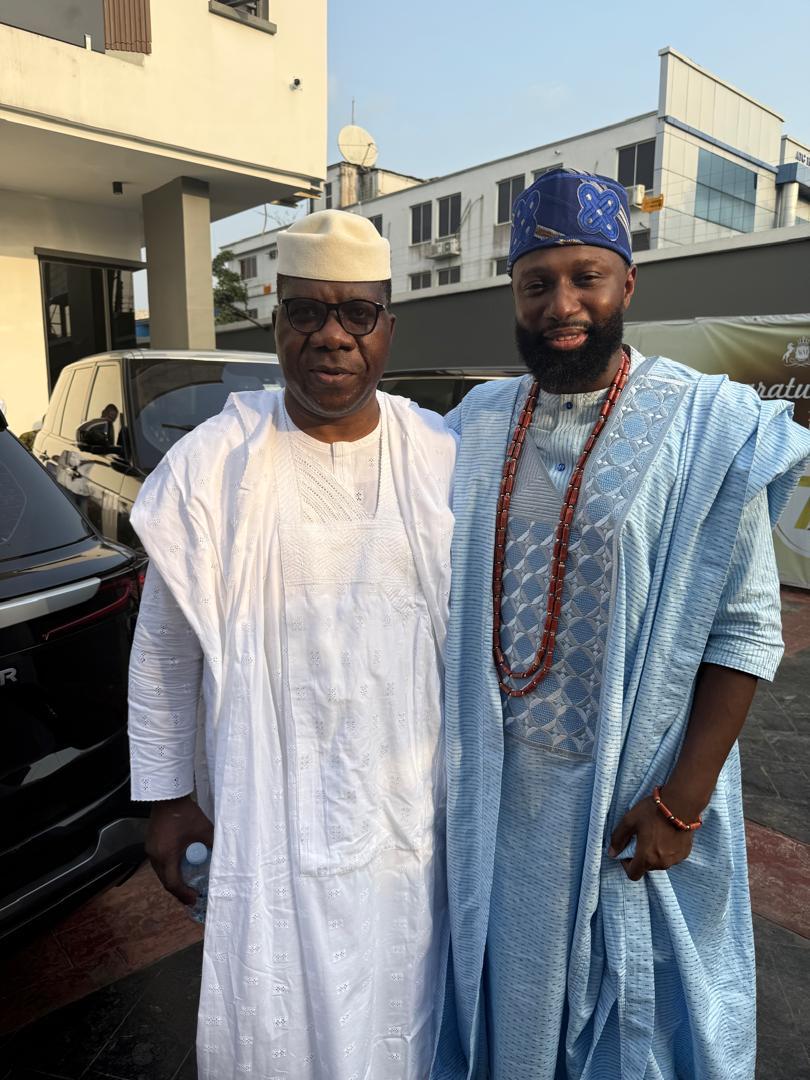
Senate Leader Opeyemi Bamidele recently hosted Chief Abdul Tunji Mohammed (ATM), a prominent aspirant for the Ondo North senatorial seat.
The meeting highlighted a strategic alignment between progressive forces, with both leaders emphasizing a shared vision for grassroots development and legislative excellence.
Senator Bamidele, a respected figure in Nigerian politics, is recognized for his contributions to national cohesion and impactful policymaking, drawing on his experience as a legal luminary and human rights activist.
Chief Mohammed, an astute businessman and dedicated grassroots mobilizer, has made a notable impact on Ondo North through his philanthropic work and commitment to constituents’ welfare. His approach blends corporate discipline, economic ingenuity, and a deep concern for people—qualities that have reshaped the region’s political narrative.
The two leaders discussed the district’s critical needs, exploring avenues for socioeconomic growth, legislative reform, and stronger community integration. Senator Bamidele stressed the importance of supporting President Bola Ahmed Tinubu’s Renewed Hope Agenda, a sentiment echoed by Chief Mohammed.
The convergence of Chief Mohammed’s vision with Senator Bamidele’s legislative experience offers hope for Ondo North. This synergy between grassroots ambition and seasoned mentorship points to a promising future for the district’s representation in the Senate. With ATM’s drive and the guidance of leaders like Senator Bamidele, Ondo North is positioned for progress and transformative governance.
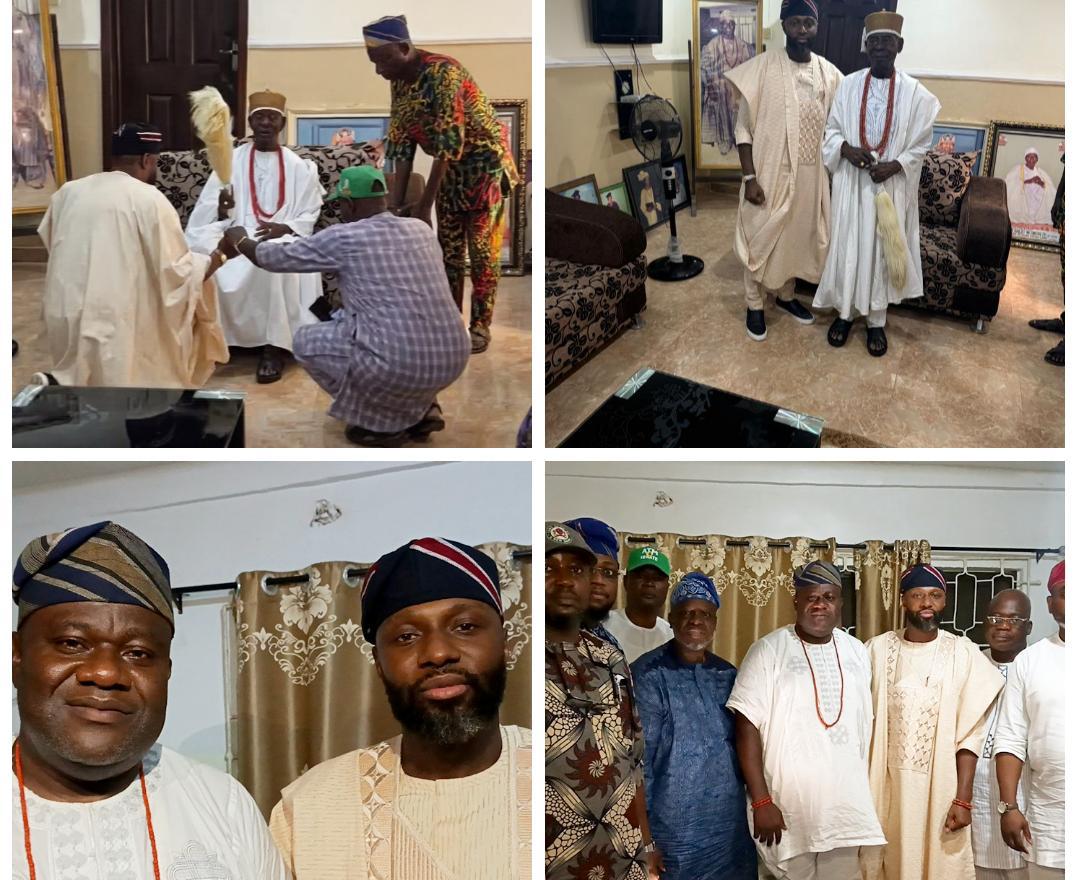
APC Senatorial aspirant for Ondo North, Abdul Tunji Mohammed, popularly known as ATM, received a resounding endorsement on Thursday during a high-profile visit to Ikare-Akoko.
The endorsement came from the Olukare of Ikare, His Royal Majesty Oba Akadiri Momoh IV, the Owa Ale of Ikare, His Royal Majesty Oba Adeleke Adedoyin, and the Ikare Council of Chiefs, who described ATM as a credible son of the soil with the capacity to represent Ondo North effectively at the Senate.
Speaking at the palace, the Olukare commended ATM for his consistent engagement with the people and his track record in business and community development. “We have watched your contributions to Ondo North over the years. You are one of us, and we believe you have the experience and character to speak for our people in Abuja,” the monarch said.
The Owa Ale, in his remarks, stressed the need for unity and quality representation. He urge him to continue the help to the people at home that he’s doing. He urged other stakeholders to support aspirants with proven commitment to the district’s progress, noting that Ikare and Akoko land require strong voices at the National Assembly.
In his response, Abdul Tunji Mohammed thanked the monarchs and chiefs for their blessings and trust. He reaffirmed his commitment to prioritize infrastructure, education, healthcare, youth empowerment, and agricultural development if elected.
“Ikare is central to Ondo North, and your support strengthens my resolve to serve with integrity and results. I will not betray this trust. My campaign will remain issue-based, and my representation will reflect the hopes of our people,” ATM stated.
The visit was marked by prayers, cultural displays, and solidarity from party leaders, youth, and women groups across Ikare-Akoko.


- Venezuela Under Rodriguez: Turning Back Toward Stability and Opportunity (By NJ Ayuk) May 25, 2026
- Dubai Chamber of Commerce concludes trade mission in Addis Ababa with series of bilateral business meetings between companies from Dubai and Ethiopia May 25, 2026
- How Congo’s Offshore Legacy Fields Are Powering a New Production Upswing May 25, 2026
- Rugby Africa Appoints Former National Basketball Association (NBA) Africa Executive Aïcha Diop as Chief of Staff to the President May 25, 2026
- Global Africa Business Initiative shifts Digital and Health Action Pathways into higher gear to accelerate continent’s economic transformation May 25, 2026
- The Board of Trustees of the Al-Sumait Prize for African Development announces the award winner for the year 2025; It has been awarded to an African institution and researcher in the field of food security May 25, 2026
- Statement of the International Contact Group for the Great Lakes (ICG) on the situation in the eastern Democratic Republic of the Congo (DRC) May 24, 2026
- Eritrea: Messages of Congratulations May 24, 2026
- African Development Bank (AfDB) – 2026 Annual Meeting: Full live coverage on Africa 24 May 24, 2026
- Countries in the Horn of Africa and Yemen recommit to ending variant poliovirus May 23, 2026
- Venezuela Under Rodriguez: Turning Back Toward Stability and Opportunity (By NJ Ayuk) May 25, 2026
- Dubai Chamber of Commerce concludes trade mission in Addis Ababa with series of bilateral business meetings between companies from Dubai and Ethiopia May 25, 2026
- How Congo’s Offshore Legacy Fields Are Powering a New Production Upswing May 25, 2026
- Rugby Africa Appoints Former National Basketball Association (NBA) Africa Executive Aïcha Diop as Chief of Staff to the President May 25, 2026
- Global Africa Business Initiative shifts Digital and Health Action Pathways into higher gear to accelerate continent’s economic transformation May 25, 2026
- The Board of Trustees of the Al-Sumait Prize for African Development announces the award winner for the year 2025; It has been awarded to an African institution and researcher in the field of food security May 25, 2026
- Statement of the International Contact Group for the Great Lakes (ICG) on the situation in the eastern Democratic Republic of the Congo (DRC) May 24, 2026
-

 news5 months ago
WHO REALLY OWNS MONIEPOINT? The $290 Million Deal That Sold Nigeria’s Top Fintech to Foreign Interests
-

 society3 weeks ago
SOCIAL MEDIA IS NOT A BATTLEFIELD COMMAND – WHY THE NIGERIAN ARMY’S ACTION AGAINST JUSTICE CRACK IS A NATIONAL SECURITY IMPERATIVE
-

 celebrity radar - gossips4 months ago
Dr. Chris Okafor Returns with Power and Fire of the Spirit -Mounts Grace Nation Altar with Fresh Anointing and Restoration Grace on February 1, 2026
-

 celebrity radar - gossips5 months ago
Prophet Kingsley Aitafo Releases 2026 Prophecy: ‘Nigeria Will Rise, but the World Must Prepare for Turbulence’