
news
KAREN AKPAGHER AND PREMIERE ACADEMY: THE “TRUTH” THEY ARE TRYING TO BURY

By Noah Christopher
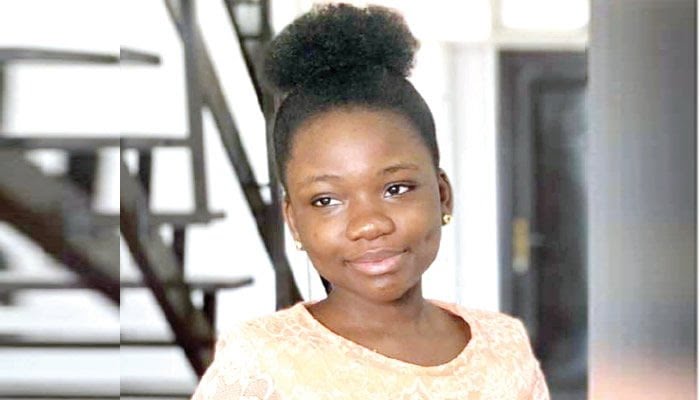
Nearly six months ago, Premiere Academy entered media spotlight when news broke that one of its students, Karen Happuch Akpagher, had died in a hospital in Abuja. The news of the death of the 14-year old diabetics’ patient which occurred on 22nd June, 2021 soon became a hot issue as several media stories authoritatively claimed she was raped to death, sodomized and forced into an oath of secrecy to booth.
Expectedly, the Nigerian Police, first through the FCT Police Command and, later, the Office of the Inspector General of Police, promptly commenced investigations into the matter same June, leading to an autopsy conducted in July. Several other government agencies such as the Ministry of Education, the Directorate of Quality Assurance, National Human Rights Commission and a few other external bodies also waded into the case by conducting probes and investigations on diverse scales and to cover different angles. The Premiere Academy PTA and Board also conducted internal investigations. However, despite all the probes, answer to the key question of Who/What killed Karen has not been found. Interestingly, none of these probes has indicted the school or led to halting its operation.


Perhaps, tired of waiting for official police reports on the autopsy and investigation and seeking to prevent the issue from being swept into silence, Lemmy Ughegbe, an Abuja based journalist, human rights activist and school proprietor instantly activated his NGO, Coalition of Gender Based Violence Responders, to promote the cause of championing justice for Karen Akpagher. With Karen’s mother by his side, Lemmy Ughegbe and GBV Responders have launched a coordinated multi-pronged advocacy spanning media and political institutions, with the aim of getting the death of Karen hanged on Premiere Academy. The evidence, according to the media interventions by the group, is a report allegedly issued to the Akpagher family by Queen’s Hospital, Abuja that said decomposed condom particles were found in the late teenager’s genital, in addition to dead spermatozoa. No audio or video recording of the victim accusing the school or any staff of raping or sexually molesting her; no notation on rape or sexual molestation in the victim’s diary (from which a few media stories have lifted entries); no conclusive report from the autopsy witnessed by all parties and supervised by the police; no report from the police or any private investigator has surfaced to back the claim of rape to date.
Perverting Cause of Justice…
In what appears like frustration by failure of the coordinated campaign to nudge the relevant state and non-state institutions into a mob-styled condemnation of the school, the GBV Responders has further accused the school of blocking the Akpagher family from getting justice. The coordinated social media campaign to push this viewpoint claimed because the owner of the school is a highly connected Nigerian, he was using his connection to obstruct justice for Karen. However, to accuse a school that has opened its doors to and provided its officials for not less than sixteen (16) investigations, invitations, probes and interviews on this Karen matter by several interested bodies from June 25th to December 9th of persecuting the cause of justice seems unfair. Curiously, a check at the school revealed that the GBV Responders that has been championing this claim was one of the NGOs that visited the school on July 3rd to conduct an investigation. Others that have also visited the school, apart from the Police, include the Federal Competition & Consumer Protection Council (2nd July), Directorate of Quality Assurance, FCT Headquarters (2nd July), NAPPS, FCT Chapter (9th July), Abuja Municipal Area Council (9th July), Federal Ministry of Education (8th October), Association of Nigerian Female Students, FCT Chapter (22nd July), NANS, FCT Chapter (22nd July) and FCIID (Severally between 9th November and 9th December).
None of the visitors has accused the school of non-cooperation or obstructing investigation. This may be what has prompted the school to continue to declare that it has nothing to hide and would always welcome every noble effort made to get to the bottom of this sad event.
In trying to prove its innocence and disprove the charge of perverting the cause of justice, the school said it has written three letters to the police pleading for the public release of the autopsy report and report of investigation in the case. From copies sighted, the first letter dated 27th August, 2021 was addressed to the FCT Police Command while two other letters dated 1st December, 2021 and 6th December, 2021 respectively were addressed to the Inspector General of Police. While the police acknowledged receipt of the three letters, it has not responded to any of them or granted the school’s prayer. It is doubtful if the school’s action fits the charge of obstructing the cause of justice
Twisting the story to fit a purpose…
It appears in order to get the school hanged for the allegation of rape, efforts had to be made to show that Karen left the school premises on the 19th June in “serious pains and barely able to walk” (to quote a respected columnist and social commentator who has weighed in on the matter) when she went home, never to return to the school.
Facts are sacred. So, here are a few incontrovertible facts our investigation turned up on how Karen left the school campus on the fateful day.
First, she was picked from school by her mother in person (together with an uncle of hers who had always been coming to pick and drop her on the mother’s instruction). She walked out of the school gate unaided, carrying her luggage to meet her mother. Her mother received her; they rode in the same vehicle and was taken home by her mother. It is doubtful that if she was in pains and unable to walk or manifesting any sign of unwell, the mother would not make immediate contact with the school and/or take her straight to the hospital. But, the mother drove with her from the school without any complaint and they went home together.
Moreover, she was at home with the mother from 19th to 21st when the mother said she developed a health crisis that made her to be taken to the hospital IMMEDIATELY on the 21st.
School’s CCTV clips on You Tube (https://youtu.be/hqOa2jg_Ym8) shows Karen in school from 17th June to the moment she exited school on the 19th. Before leaving school, she went to see an ophthalmologist outside the school, on the mother’s instruction, same 19th June. School’s academic record also shows she wrote CA tests on Friday, 18th June.
Could a 14-year old have been so super human to hide her pains effortlessly and appear bubbly while undertaking all the multiple tasks that filled her day in the manner the late Karen did?
The late Karen, it should be recalled, was a Diabetics’ patient constantly under strict health watch. She had been diagnosed to be diabetic since age nine years.
DNA As a way pointer…
The House of Representatives has directed that DNA test be conducted on all male staff of Premiere Academy, to fish out the alleged rape culprit. While the directive is commendable, our investigation shows that there is need to even cast the net wider in view of certain peculiarities uncovered about the Akpagher family environment.
For instance, it was discovered that Karen has two elder brothers who were also students of same Premiere Academy with her. While one graduated in 2020, the other was still a student in the school until after the unfortunate event.
She also has a custodian uncle who, it was discovered, was always going to pick and drop her in school. Unconfirmed report said this uncle organised a birthday party for Karen and some of her friends in a restaurant in town on April 10th to mark her 14th birthday. The uncle, it was further learnt, took her to the party.
It was also learnt that the same uncle picked only Karen from school during the id-el-fitri break on 12th May while leaving his brother behind to observe the break in school. This, from investigation, was found to be a departure from the regular practice of picking and dropping both students together.
Upon further probe, it was discovered that while the said Salah break was meant to end on 16th May, Karen was only returned to the school by her uncle on 23rd May, clear 7 days after resumption.
She was to die one month later; allegedly from a rape incident whose features, according to her mother and GBV Responders, left decayed condom particles in her genitals.
With the late Karen surrounded by two brothers who have their other male friends visiting the Akpagher home as well as an uncle who was found to have been mostly responsible for picking and dropping her in school, it is only fair and commonsensical to look way beyond the school in order to unravel the question of who could have raped the teenager, if indeed she was raped.
Justice Begins With Disclosures…
For justice to be done and seen to be done in the case of Karen Akpagher, the police needs to release the autopsy and investigations reports. So many questions begging for answers may remain unresolved until the Police reports are released. According to a cross section of analysts’ opinion, all parties in the case – the Akpagher family, GBV Responders and Premiere Academy – should jointly and individually put pressure on the police to do the needful rather than continue to throw mud around and promote wild, unfounded accusations. Unless the mud throwing is designed to achieve an end that the larger public does not yet know.
[END]
(Reports by Khalid Akorede and Christian Obeya in Abuja)




More than ₦3 billion was targeted, but about ₦677 million reached the culprits, with recovery and prosecutions underway, reflecting how banks are responding to more sophisticated fraud risks.
Nigeria’s expanding digital banking sector is facing increasingly sophisticated fraud attempts, as financial institutions adapt to faster transactions and broader online services.
A recent case involving First City Monument Bank (FCMB), linked to fraudulent activity detected in December 2025, has drawn attention to how banks are responding to such incidents, with a focus on limiting exposure, recovering funds and working with law enforcement.
According to findings referenced in proceedings before the Lagos State Special Offences Court, the incident involved unauthorised transactions tied to a digital product. Early reports erroneously suggested more than ₦3 billion was lost. Subsequent clarification shows that over ₦3 billion was targeted, ₦2.4 billion was blocked and recovered, while ₦677 million got into the possession of the culprits. This outcome reflects the bank’s cyber security and monitoring capabilities, as well as improved collaboration among regulated financial institutions and with law enforcement agencies. Several suspects and beneficiaries have been apprehended, while recovery and prosecution efforts are ongoing, led by the Economic and Financial Crimes Commission (EFCC).
Proceedings at the Lagos State Special Offences Court have resulted in convictions, including that of a repeat offender, with restitution orders issued. Related matters are also being handled at the Federal High Court in Lagos, where additional suspects are being tried in connection with the scheme. This process is aimed at ensuring that bad actors are identified and permanently blacklisted from the financial system.
Authorities say recovery efforts are continuing as additional funds are traced.
Analysts note that the pace of legal action reflects closer coordination between financial institutions and enforcement agencies in addressing cyber-related financial crime.
The case comes as banks contend with more complex fraud methods, including social engineering and automated exploitation of system processes.
As digital products and platforms expand, so too does the risk associated with cyber-crime and related fraud.
“The scale of digital banking means risks are evolving alongside the systems,” said a Lagos-based financial analyst. “Institutions are now judged by how they manage these events.”
Observers say the sector is moving toward a stronger focus on response and recovery, rather than prevention alone.
This includes improving monitoring capabilities, strengthening transaction controls and enhancing collaboration with regulators and law enforcement. The FCMB case, with limited exposure relative to the amount targeted and ongoing recovery, reflects that shift.
For customers, the primary concern is the safety of their funds. In this case, there has been no indication of losses affecting customer deposits. Maintaining that level of protection remains central to sustaining trust in the financial system.
Nigeria’s financial sector continues to grow, supported by digital innovation and expanding access to banking services.
However, analysts say fraud attempts are likely to persist as systems become more complex and interconnected.
They say institutions will increasingly be judged not only on their ability to prevent incidents, but on how effectively they respond and recover when they occur.
news
Ex-APC Deputy Guber flag bearer, Joshua MacIver backs Tinubu, express fears over implosion in Bayelsa APC

….congratulates new State Party Chairman, Warman Ogoriba
APC Deputy Governorship Candidate in the 2023 general elections in Bayelsa State, Great Joshua MacIver has declared his total commitment to the re-election of President Bola Tinubu come 2027, declaring that the Tinubu re-election project is non-negotiable.
Great Joshua MacIver, in his statement titled ” BAYELSA APC CONGRESSES: GOING FORWARD, A CALL TO LOOK INWARDS” and made available to newsmen in Yenagoa, warned APC leaders in the state to look Inward and take note of certain factors which may hinder or cut short our victory.
According to Great Joshua MacIver, such noticeable pitfalls include the imbalance in the united front being put up by the State Governor,Senator Douye Diri among various political blocs in the state.
In the statement issued at the weekend. Great Joshua MacIver stated that “First, before His Excellency, Senator Douye Diri, joined the APC in the state, there were clearly two political blocs that made up the party, with the approximate population ratios of the blocs standing at 95% to 5%.”
“After the entrance of His Excellency, Senator Douye Diri, ONLY THE SMALLER BLOC IS BEING CARRIED ALONG IN THE AFFAIRS OF THE PARTY, leaving the greater percentage to their fate, and this situation has the potential to build anger and dissatisfaction in our dear party.”
” The consequence of this has been the high level defection we have witnessed in the party recently and we believe more may likely follow, if we do not put our house in order.”
” If we do not pull together as a party, we may witness a situation where we will lose key stakeholders, especially after the State and National Assembly Primaries as well the Gubernatorial Primaries.”
“Finally, while it is very clear that we are the party to beat in the 2027 elections and that our loyalty to Mr. President IS NON-NEGOTIABLE, we must make haste to say that we cannot afford to create situations or loopholes in our unity which will be exploited by other political interests in the state. We cannot afford to under-rate anyone.”
“Our core interest remains the re-election of Mr. President, a project to which we have committed our all. We also pledge our total loyalty to the party as we have no alternative to the APC. However, our concern is that we must, as a party, look inwards and ensure that we do not create loopholes that can impede our common goal.”
Great Joshua MacIver, however congratulated the newly elected State Executives of the APC in Bayelsà State led by Hon. Warman Ogoriba, saying their emergence is welcomed at this critical time in our national history.


- Century Group Joins African Energy Week (AEW) 2026 as Floating Production Storage and Offloading (FPSO) Partner, Showcasing Regional Offshore Expansion April 10, 2026
- Climate Litigation Surge Reshapes Energy Policy as Africa Seeks Stronger Legal Voice April 10, 2026
- ES-KO Secures Five-Year Catering & Facilities Management Contract Renewal with TotalEnergies EP Congo April 10, 2026
- Beyond the Court: The Kalahari Conference Solidifies its Status as Africa’s Premier Sports & Lifestyle Destination April 10, 2026
- Africa Sports Unified Launches Pan-African Sports Deals Tracker to Improve Market Visibility and Decision-Making April 10, 2026
- Nigeria and Senegal Must Follow Ghana and Mozambique Against Exclusionary Practices April 10, 2026
- Sheraton Nouakchott marks the entry of Marriott International in Mauritania April 10, 2026
- Eritrea: Seminar to Nationals in Nairobi and Its Environs April 10, 2026
- African financial institutions call for coordinated financing solutions to unlock Africa’s digital transformation April 9, 2026
- African Energy Chamber (AEC) Supports Perenco Partnership to Advance Industry 4.0 Skills in Central Africa April 9, 2026
- Century Group Joins African Energy Week (AEW) 2026 as Floating Production Storage and Offloading (FPSO) Partner, Showcasing Regional Offshore Expansion April 10, 2026
- Climate Litigation Surge Reshapes Energy Policy as Africa Seeks Stronger Legal Voice April 10, 2026
- ES-KO Secures Five-Year Catering & Facilities Management Contract Renewal with TotalEnergies EP Congo April 10, 2026
- Beyond the Court: The Kalahari Conference Solidifies its Status as Africa’s Premier Sports & Lifestyle Destination April 10, 2026
- Africa Sports Unified Launches Pan-African Sports Deals Tracker to Improve Market Visibility and Decision-Making April 10, 2026
- Nigeria and Senegal Must Follow Ghana and Mozambique Against Exclusionary Practices April 10, 2026
- Sheraton Nouakchott marks the entry of Marriott International in Mauritania April 10, 2026
-

 news4 months ago
WHO REALLY OWNS MONIEPOINT? The $290 Million Deal That Sold Nigeria’s Top Fintech to Foreign Interests
-

 society7 months ago
“You Are Never Without Help” – Pastor Gebhardt Berndt Inspires Hope Through Empower Church (Video)
-

 celebrity radar - gossips2 months ago
Dr. Chris Okafor Returns with Power and Fire of the Spirit -Mounts Grace Nation Altar with Fresh Anointing and Restoration Grace on February 1, 2026
-

 celebrity radar - gossips4 months ago
Prophet Kingsley Aitafo Releases 2026 Prophecy: ‘Nigeria Will Rise, but the World Must Prepare for Turbulence’