
news
Kashamu Narrates How Bayo Dayo Allegedly Killed Four People Over Kingship Tussle

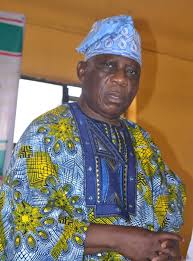

A former senator representing Ogun East, Buruji Kashamu has cried out to the Ogun state police over an alleged threat to life by Bayo Dayo, a former chairman of the Peoples Democratic Party in the state.
Kashamu in a petition written to the Commissioner of Police in the state, Kenneth Embrimson complained that Bayo Dayo had personally threatened to kill him either in Lagos or whenever he step his feet Into his home town in Ijebu-Igbo.
He alleged that it became necessary to raise concern following the antecedent of the former PDP chairman.
The PDP chieftain also expressed concern that many PDP leaders have been living in fear over the alleged threat.
He added that the PDP leaders including himself have been receiving several threat messages from unknown numbers.
His petition reads partly, “following the suspension of Engr. Dayo as State Chairman, many leaders and elders of the PDP in Ogun State and members of the State Working Committee/State Executive Committee have been living in fear of being attacked.
“Some of us have been seeing strange faces and unregistered vehicles trailing us lately. At other times, we get strange calls from unknown numbers, warning us to be careful or else we would be dealt with.
“Since they could not have their way, credible information at my disposal shows that Engr. Dayo and his allies have been threatening to attack us either directly or by proxies.
“Although Engr. Dayo had personally threatened to kill me either in Lagos or whenever I step my feet into my home town in Ijebu-Igbo, I never took it to heart until I remembered that a fellow party member, Samuel Olayinka Soneye had warned me to beware of Engr. Dayo because of his murderous antecedents.
“Soneye told me of how Engr. Dayo personally shot and killed one Titilayo Poroye during his fight to become the traditional ruler of Japara, Ijebu-Igbo, Ogun State.
“A reprisal attack that followed, I was further informed, led to the death of Engr. J. Ola Oduyemi and Olola Ogunnaike. When dust settled on the brawl, three people had been killed. Kindly refer once more to Soneye’s voluntary statement referenced above
“I am also aware that Engr. Dayo has threatened to kill a certain Rasaq Bakare, who worked closely with his son for seven years, if he dared to reveal all that his son, Bola, had acquired with the monies he stole from me.
“Engr. Dayo is always armed with pump action and other rifles that he keeps in his house in Japara, Ijebu-Igbo and its environs. He keeps the guns under the guise of being a hunter. But, we all know the kind of guns that hunters should have and even at that they should obtain licence for them.
“It was one of his many guns that he used to kill one Titilayo Poroye in broad-day light as revealed in the Soneye’s statement.
“History and facts have shown that crime and criminalities run in Dayo’s family. Engr. Dayo’s father was popularly known as “Baba Fadiya” which is an euphemism for a rapist. He was known for committing incest and defiling underage girls. Both Chief Dayo and his son, Bola have inherited the same criminal tendencies which are manifesting in various ways such as stealing, betrayal and fraudulent conversion of other people’s properties to theirs.
“All the above witnesses have sworn to affidavits and made statements to the Police. They are willing to testify in court and support the law enforcement agencies in their investigations.
“Further to his desperate moves, Engr. Dayo has gone diabolical. He goes from the house one juju man to the other mentioning my name and mother’s name to juju men in Japara, Ijebu-Igbo. He wants them to kill me through diabolical means. Two of the juju men that he has gone to are Ifa Sunday and Landlord. This was confirmed to me by Olayinka Soneye (a.k.a Sugar) and other people in Ijebu-Igbo.
“I humbly urge the security agencies to invite these juju men for justice. In the alternative, Soneye can take them to their houses. I stand on the power of Almighty Allah sub hanna wata ala for protection and safety.”
Speaking on the petition written by Bayo Dayo against him, Kashamu said, “what is clearly an afterthought and a belated counter-move meant to divert attention from the weighty allegations against him, he told people that he has written petitions to the Ogun State Command of the State Security Service (SSS), alleging threat to his life, and that he would teach me the lesson of a life time.
“He has now made good his threats through the petitions written by his lawyer, Chief Adebiyi Odugbesan, who is also my lawyer. He confirmed to me that he has written petitions to the Inspector-General of Police, Director-General of the State Security Service and the Ogun State Command of DSS. But, I told him that his action was unethical because he knows the truth of the whole matter. I reported Engr. Dayo to him (Chief Adebiyi Odugbesan) and told him all that he has done. Upon hearing my account of the whole matter, he condemned Engr. Dayo for his actions.
“He want to use the petitions to protect himself and cover his criminal antecedents and actions as a case of alibi in order to assassinate me.
“You may wish to call for the statement he made to the Police at the Divisional Police Office in Ijebu-Igbo, Ogun State in order to identify the missing links and his belated moves and after In spite of all these, the suspended Chairman and his co-travellers have been meeting and purportedly taking decisions on behalf of the State Working Committee/State Executive Committee whereas by a letter dated 3rd of March, 2020, to the law firm representing the Ogun State PDP Executive, Engr. Dayo himself listed the authentic members of the State Working Committee.
“This is a clear case of deceit, impersonation and forgery meant to cause confusion and mislead unsuspecting members of the public
“All these usurpers should be invited and questioned on why they are impersonating the real members of the Ogun State Working Committee of the PDP.
“They have also been going about saying the Ward, Local Government and State congresses never held when they are in no position to make such declaration. Nothing could be further from the truth, as the Ward, Local Government and State Congresses were held on the 7th of March, 2020, 21st of March, 2020 and 3rd of April, 2020 respectively.
“Their outlandish claim is meant to prepare the grounds for their planned invasion of the state party secretariat on IBB Boulevard, Oke-Mosan, Abeokuta, with armed thugs and hoodlums who will maim and kill innocent party members, workers and officials.
“I wish to respectfully urge you to confront them with all these evidence and asked why he and others are carrying out acts of impersonating and fraud with intent to cause chaos in Ogun State. Failure to offer satisfactory justification should make them to be prosecuted for conspiracy, fraud, impersonation and conduct likely to cause a breach of public peace accordingly.
The former senator also raised concerned over an alleged security operatives attached to the former PDP chairman.
According to Kashamu, it has also been brought to my attention that four armed policemen have been attached to Engr. Dayo and he goes about our community in Ijebu-Igbo and its environs terrorising the people under the protection of the policemen.
He further said, “he is boasting and telling anyone who cares to listen that he has paid the authorities to keep the policemen with him for as long as he wants and that anyone who crosses his path will be severely dealt with by his armed policemen.
“According to the Police Act, Engr. Dayo is neither a Very Important Personality (VIP) nor is he a public or political office holder. He is also not business entrepreneur, a multi-national organisation or corporate individual or entity. Therefore, he does not meet the basic requirement for the attachment of police escorts.
“He claims that upon his application for police escorts, the Adebutus intervened and helped him to sort it. I do not know how far true this is. Hon. Ladi Adebutu told his political associates that Engr. Dayo’s application for Policemen was refused. But, he (Adebutu) had to give Dayo four policemen from the ones attached to their family and/or businesses. This is clearly an illegal act and abuse of privilege that should not be condoned and allowed to continue.
“You may wish to use your good offices to investigate how he got the Police escorts attached to a killer that can cause problem and endanger the lives of the innocent policemen.
The PDP stalwart concluded saying, “it is in the light of the above that we wish to respectfully urge you to use your good offices to invite Engr. Dayo and their cohorts, investigate the allegations against them and if found culpable, charge them to court for impersonation, forgery, threats to life and acts capable of breaching public peace.
“They should also be made to give an undertaking not to attack party officials, leaders and members after the lock down, just as they stay clear of the Party Secretariat until they purge themselves of violent tendencies.
“Kindly note that the DSS has been directed by the Federal High Court in Abeokuta to maintain status quo antebellum (i.e. to maintain the situation of things before the matter was brought to court which is the emergence of the Hon. Samson Bamgbose-led new Ogun State PDP Executive).
“Specifically, the court, on the 24th of April, 2020, ordered in Suit FHC/AB/CS/44/2020 that, “…the parties shall respect the principle of lis pendens and maintain status quo antebellum pending the hearing and determination of the Applicants’ Motion on Notice which is already filed before this court.” (ANNEXURE 23).
“Therefore, the DSS has a duty to ensure that parties comply with the orders of the court and not allow anyone to resort to self-help until the determination of the matter in court.
“While I trust that you will treat this petition with the urgency and the best professional attention that it deserves, kindly accept the assurances of my highest regards, always.”



More than ₦3 billion was targeted, but about ₦677 million reached the culprits, with recovery and prosecutions underway, reflecting how banks are responding to more sophisticated fraud risks.
Nigeria’s expanding digital banking sector is facing increasingly sophisticated fraud attempts, as financial institutions adapt to faster transactions and broader online services.
A recent case involving First City Monument Bank (FCMB), linked to fraudulent activity detected in December 2025, has drawn attention to how banks are responding to such incidents, with a focus on limiting exposure, recovering funds and working with law enforcement.
According to findings referenced in proceedings before the Lagos State Special Offences Court, the incident involved unauthorised transactions tied to a digital product. Early reports erroneously suggested more than ₦3 billion was lost. Subsequent clarification shows that over ₦3 billion was targeted, ₦2.4 billion was blocked and recovered, while ₦677 million got into the possession of the culprits. This outcome reflects the bank’s cyber security and monitoring capabilities, as well as improved collaboration among regulated financial institutions and with law enforcement agencies. Several suspects and beneficiaries have been apprehended, while recovery and prosecution efforts are ongoing, led by the Economic and Financial Crimes Commission (EFCC).
Proceedings at the Lagos State Special Offences Court have resulted in convictions, including that of a repeat offender, with restitution orders issued. Related matters are also being handled at the Federal High Court in Lagos, where additional suspects are being tried in connection with the scheme. This process is aimed at ensuring that bad actors are identified and permanently blacklisted from the financial system.
Authorities say recovery efforts are continuing as additional funds are traced.
Analysts note that the pace of legal action reflects closer coordination between financial institutions and enforcement agencies in addressing cyber-related financial crime.
The case comes as banks contend with more complex fraud methods, including social engineering and automated exploitation of system processes.
As digital products and platforms expand, so too does the risk associated with cyber-crime and related fraud.
“The scale of digital banking means risks are evolving alongside the systems,” said a Lagos-based financial analyst. “Institutions are now judged by how they manage these events.”
Observers say the sector is moving toward a stronger focus on response and recovery, rather than prevention alone.
This includes improving monitoring capabilities, strengthening transaction controls and enhancing collaboration with regulators and law enforcement. The FCMB case, with limited exposure relative to the amount targeted and ongoing recovery, reflects that shift.
For customers, the primary concern is the safety of their funds. In this case, there has been no indication of losses affecting customer deposits. Maintaining that level of protection remains central to sustaining trust in the financial system.
Nigeria’s financial sector continues to grow, supported by digital innovation and expanding access to banking services.
However, analysts say fraud attempts are likely to persist as systems become more complex and interconnected.
They say institutions will increasingly be judged not only on their ability to prevent incidents, but on how effectively they respond and recover when they occur.
news
Ex-APC Deputy Guber flag bearer, Joshua MacIver backs Tinubu, express fears over implosion in Bayelsa APC
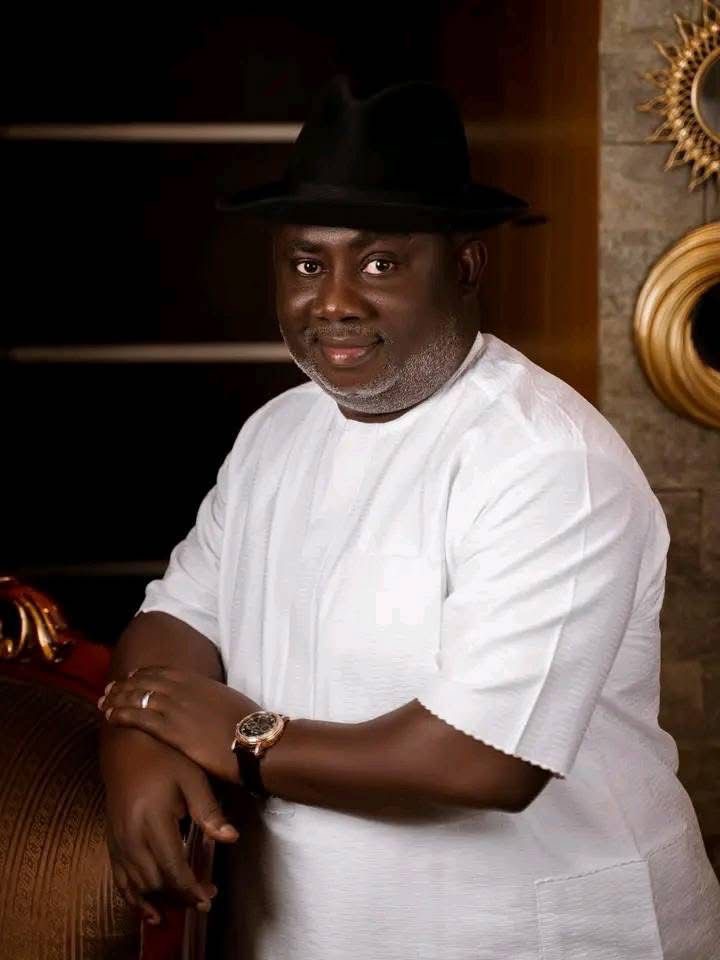
….congratulates new State Party Chairman, Warman Ogoriba
APC Deputy Governorship Candidate in the 2023 general elections in Bayelsa State, Great Joshua MacIver has declared his total commitment to the re-election of President Bola Tinubu come 2027, declaring that the Tinubu re-election project is non-negotiable.
Great Joshua MacIver, in his statement titled ” BAYELSA APC CONGRESSES: GOING FORWARD, A CALL TO LOOK INWARDS” and made available to newsmen in Yenagoa, warned APC leaders in the state to look Inward and take note of certain factors which may hinder or cut short our victory.
According to Great Joshua MacIver, such noticeable pitfalls include the imbalance in the united front being put up by the State Governor,Senator Douye Diri among various political blocs in the state.
In the statement issued at the weekend. Great Joshua MacIver stated that “First, before His Excellency, Senator Douye Diri, joined the APC in the state, there were clearly two political blocs that made up the party, with the approximate population ratios of the blocs standing at 95% to 5%.”
“After the entrance of His Excellency, Senator Douye Diri, ONLY THE SMALLER BLOC IS BEING CARRIED ALONG IN THE AFFAIRS OF THE PARTY, leaving the greater percentage to their fate, and this situation has the potential to build anger and dissatisfaction in our dear party.”
” The consequence of this has been the high level defection we have witnessed in the party recently and we believe more may likely follow, if we do not put our house in order.”
” If we do not pull together as a party, we may witness a situation where we will lose key stakeholders, especially after the State and National Assembly Primaries as well the Gubernatorial Primaries.”
“Finally, while it is very clear that we are the party to beat in the 2027 elections and that our loyalty to Mr. President IS NON-NEGOTIABLE, we must make haste to say that we cannot afford to create situations or loopholes in our unity which will be exploited by other political interests in the state. We cannot afford to under-rate anyone.”
“Our core interest remains the re-election of Mr. President, a project to which we have committed our all. We also pledge our total loyalty to the party as we have no alternative to the APC. However, our concern is that we must, as a party, look inwards and ensure that we do not create loopholes that can impede our common goal.”
Great Joshua MacIver, however congratulated the newly elected State Executives of the APC in Bayelsà State led by Hon. Warman Ogoriba, saying their emergence is welcomed at this critical time in our national history.
At least 23 people were killed in a series of suspected suicide bombings, police in Nigeria’s northeastern city of Maiduguri said on Tuesday.

https://www.stanbicibtcbank.com/nigeriabank/personal/products-and-services/all-loans/stanbic-ibtc-mreif-home-loans
More than 100 other people were injured in the blasts that took place on Monday evening in the capital of Nigeria’s restive Borno state.
No group has claimed responsibility for the suspected attacks.
The deadly blasts come after a military post was attacked overnight Sunday to Monday, which authorities blamed on suspected Islamist militants.
This sad incident is coming barely two weeks after Primate Elijah Ayodele, the Leader of INRI Evangelical Spiritual Church specifically warned against attacks in some states. He mentioned these states while calling on security operatives to pay close attention to them.
These were his words:
“Another attack is coming up in these following states where the military must watch carefully and intelligently; Kano, Kaduna, Zamfara, Kebbi, Niger, Borno, Kwara and Kogi state. They want to do a deadly attack, it’s preventable but it depends on how they will handle it. I have told you about the danger coming up.”
@primateayodele
Unfortunately, some of our military agencies don’t believe spiritual intelligence can save the country from so much danger hence, their neglect of this prophetic warning but now, it has been fulfilled with the miliary losing credibility by the day while Primate Ayodele continues to gain momentum.
Likewise, At least 26 passengers and crew sustained varying degrees of injuries on Monday following an accident involving the Kaduna–Abuja train, according to the Nigerian Railway Corporation (NRC).
Opeifa explained that the train departed Rigasa in Kaduna at 7:15 a.m. and was approaching Asham station around 9:16 a.m. when a loud bang was heard after the power car and trailing locomotive collided with one of the passenger coaches.
In July 2025, Primate Ayodele asked nigerians to pray not to see train mishap on the Kaduna-Abuja route.
@primateayodele #nigeriantiktok🇳🇬 #fulfillment #train #abuja #primateayodele
“Let’s pray not to see train mishap in Abuja-Kaduna, Kaduna-Abuja route.”
This has also been fulfilled.


- Sheraton Nouakchott marks the entry of Marriott International in Mauritania April 10, 2026
- Eritrea: Seminar to Nationals in Nairobi and Its Environs April 10, 2026
- African financial institutions call for coordinated financing solutions to unlock Africa’s digital transformation April 9, 2026
- African Energy Chamber (AEC) Supports Perenco Partnership to Advance Industry 4.0 Skills in Central Africa April 9, 2026
- Youth Charter Calls for “Commonwealth Youth Legacy” Ahead of Glasgow 2026 April 9, 2026
- Securing the bridge between legacy and smart April 9, 2026
- Africa’s Lithium Pipeline Gains Momentum as Global Supply Deficits Loom April 9, 2026
- Afreximbank delivers strong FY2025 results; with a total assets and contingencies base of US$48.5 billion April 9, 2026
- National Council for Curriculum Development (NCDC) seeks Shs17 Billion for curriculum review, teacher training April 9, 2026
- Senegal: A Decade of Unresolved Climate Displacement April 9, 2026
- Sheraton Nouakchott marks the entry of Marriott International in Mauritania April 10, 2026
- Eritrea: Seminar to Nationals in Nairobi and Its Environs April 10, 2026
- African financial institutions call for coordinated financing solutions to unlock Africa’s digital transformation April 9, 2026
- African Energy Chamber (AEC) Supports Perenco Partnership to Advance Industry 4.0 Skills in Central Africa April 9, 2026
- Youth Charter Calls for “Commonwealth Youth Legacy” Ahead of Glasgow 2026 April 9, 2026
- Securing the bridge between legacy and smart April 9, 2026
- Africa’s Lithium Pipeline Gains Momentum as Global Supply Deficits Loom April 9, 2026
-

 news4 months ago
WHO REALLY OWNS MONIEPOINT? The $290 Million Deal That Sold Nigeria’s Top Fintech to Foreign Interests
-

 society7 months ago
“You Are Never Without Help” – Pastor Gebhardt Berndt Inspires Hope Through Empower Church (Video)
-

 celebrity radar - gossips2 months ago
Dr. Chris Okafor Returns with Power and Fire of the Spirit -Mounts Grace Nation Altar with Fresh Anointing and Restoration Grace on February 1, 2026
-

 celebrity radar - gossips4 months ago
Prophet Kingsley Aitafo Releases 2026 Prophecy: ‘Nigeria Will Rise, but the World Must Prepare for Turbulence’