
society
KIDNAPPED, NEGOTIATED, OR RESCUED?


KIDNAPPED, NEGOTIATED, OR RESCUED?
By George Omagbemi Sylvester | Published by saharaweeklyng.com
“The messy politics behind the release of Kebbi’s schoolgirls and why Nigeria’s silence fuels banditry.”
On November 17, gunmen brazenly stormed the Government Girls Comprehensive Senior Secondary School (GGCSS), Maga, in Danko-Wasagu Local Government Area of Kebbi State, killed a school official and whisked away 25 female students. For a week the country waited and then on November 25–26 the girls were reported freed. What should have been a straightforward moment of national relief instead exposed Nigeria’s deepest vulnerabilities: conflicting official narratives, a combustible mix of secrecy and rumor and the unmistakable risk that negotiation as policy will continue to fatten criminal cartels.

The federal government and state authorities insist the girls were rescued through a coordinated security operation. President Bola Tinubu spoke of a successful rescue; Kebbi’s governor, Nasir Idris, declared no ransom was paid and lauded the military, the Department of State Services (DSS) and other agencies for bringing the girls home unharmed. Those are the accounts the state has chosen to burn into the public record.
As almost immediately a competing story re-emerged: circulating video footage and statements attributed to the abductors claim otherwise. In the clips and in commentary that followed, armed men who held the girls are heard saying the students were released because a NEGOTIATED UNDERSTANDING (not a military raid) CONCLUDED the MATTER. One bandit in the footage reportedly mocked government claims of a forceful rescue and told the girls they were being returned “based on peace deals.” If authentic, that footage tells a familiar story: the state insisting on a clean, kinetic narrative while shadow deals with criminal actors are quietly sewn up.
This contradiction matters. It is not a mere semantic skirmish between the rhetoric of rescue and the fact of negotiation. Negotiations and ransom payments change incentives. They transform violent entrepreneurs into providers of “security” and convert abduction into a profitable, repeatable enterprise. Academic and policy studies have documented how ad hoc settlements and clandestine payments enable bandit networks to consolidate territorial footholds and expand targeting strategies. A 2025 DIIS (Danish Institute for International Studies) analysis and other field studies warn that repeated, opaque deals with armed gangs institutionalize impunity and hollow out state authority.
Voices across Nigeria have responded with fury and alarm. Some parliamentarians now openly demand sanctions for officials who negotiate with bandits. Deputy Speaker Benjamin Kalu has proposed criminal penalties for government officials who engage in ransom negotiations or unstructured amnesty deals through an effort to place legal guardrails around what many believe has become an unofficial marketplace for peace. If adopted, such a law would be an admission that informal bargaining has become frequent enough to warrant formal prohibition.
Civil society and security experts make the same blunt point: paying or tacitly allowing negotiations may save lives in the short term, but it also invites more abductions. Hannatu Pamela Ishaya of the Hannis Foundation memorably warned that ransom payments “empower” kidnappers and encourage repetition — a paradox of mercy that ends up imperilling more children. That observation is not rhetorical; it is borne out by the steady tempo of school kidnappings across the northwest and middle belt — regions where criminal gangs treat abduction as a core revenue stream.

Two immediate consequences flow from the government’s mixed messaging. First, credibility is eroded. When the public receives one version from the presidency and another from footage and eyewitnesses, trust in official institutions suffers. Trust is the fragile currency of state legitimacy; once spent, it is difficult to restore. Second, ambiguity undermines accountability. If deals are cut in shadow, neither legislatures nor oversight bodies can properly scrutinize who authorised payments or why soldiers were allegedly withdrawn from vulnerable outposts shortly before attacks; a charge Kebbi’s governor has demanded the military investigate, till date we’ve not heard any report come back. Nigeria is business as usual.
We must also confront the operational reality: in many rural theatres the security architecture is simply inadequate. Intelligence gaps, poor logistics and shallow troop deployment create conditions in which negotiating becomes a tactical default. That does not excuse covert deals; rather, it underscores the need for a coherent national strategy that combines prevention, prosecution and protection. Researchers who have mapped bandit networks across northwest Nigeria show that without integrated community intelligence, economic alternatives, and credible prosecution, tactical rescues or transactions will not stop the cycle.
So what should Nigeria do now is beyond expressions of relief? First, transparency. If negotiations occurred, the public is entitled to a full accounting: who negotiated, under what authority and what concessions (if any) were made. A blank wall of silence invites speculation, corrodes trust and allows destructive bargains to be normalized. If no ransom was paid and military action achieved the rescue, the security agencies must present verifiable evidence (timing, assets deployed, chain of command) to restore confidence. Either way, concealment is not a policy.

Second, law. The House’s proposal to penalise officials who negotiate with bandits is blunt but necessary if implemented judiciously. The state must remove perverse incentives. Where local governments or individuals have previously paid ransoms, the federal government must step in with legal clarity and victim support, not punishment alone. Criminal prosecutions should target the kingpins and the corrupt enablers who profit from prolonging insecurity.
Third, prevention. Military and policing responses must be married to community resilience: better roads and surveillance, reliable communications in rural areas, community policing that integrates local trackers and credible witnesses, education investments that harden boarding facilities, and economic programmes that shrink the recruitment pool for bandit groups. As scholars note, an exclusively kinetic response is necessary but insufficient. Lasting security requires reducing the economic and social conditions that produce banditry.
Finally, moral clarity. Nigerian leaders must decide whether they will accept a trade in which safety is bought one incident at a time. The alternative is uncomfortable: deny payment, risk lives in the short run and reckon with the political cost; or concede payment and let the market for lives expand. Neither choice is painless. Though continued secrecy and equivocation will only worsen the calculus for future victims.
The return of the Kebbi girls must be celebrated and their welfare prioritised such as medical checks, counselling and swift family reunification are imperative; but the celebration must not mute inquiry. Every rescued child carries the story of how she was taken and how she came back. If those narratives are shaped by statements of both state rescue and bandit negotiation, Nigerians deserve the truth in full. The nation cannot both claim strength and tolerate shadow commerce in human freedom.
If Nigeria hopes to end the steady procession of school abductions, it must start by refusing the convenience of half-truths. RESCUE without ACCOUNTABILITY is a REPRIEVE, not a SOLUTION. Negotiation without oversight is a subsidy to crime. And silence in the face of conflicting accounts is the state’s most expensive currency. The girls are home but let that not be the last chapter. Let it be the moment when POLICY, LAW and COURAGE converge to make sure no more classrooms fall silent.





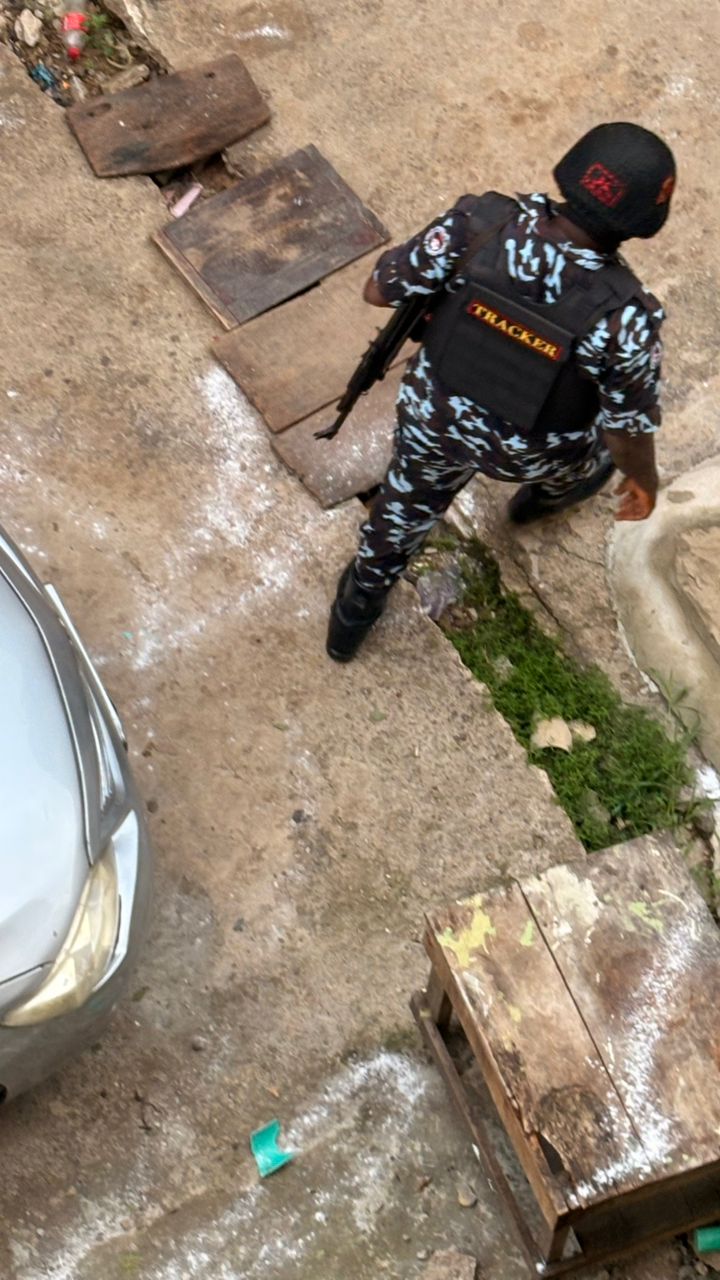
Police Officers Detained as Family Property Dispute Sparks Demolition Controversy in Lagos
By Ifeoma Ikem
A property dispute within the Omotayo-Ojo family has taken a dramatic turn following a controversial demolition exercise at a residential building in Ikosi-Ketu, Lagos State, which reportedly left tenants displaced and led to the detention of some police officers allegedly involved in the operation.

The property, located at 23B Loveall Street, Ikosi-Ketu, has been the subject of a prolonged ownership tussle since the death of its owner, Chief Oludola Omotayo Ojo, the Babaalaje of Imesi-Ile, Osun State, in 2019.
Residents said tension erupted when a group of individuals, accompanied by security operatives, stormed the premises and commenced demolition activities.
According to eyewitnesses, portions of the building were pulled down while tenants rushed to salvage their belongings from affected apartments.
The residents alleged that windows, doors and roofing sheets were damaged during the exercise, exposing parts of the building to the elements and causing significant losses to occupants.
At the centre of the dispute is Mrs Mojisola Omotayo Ojo Alolagbe, who claimed that the property was allocated to her by her late father during his lifetime as a source of financial support.
She alleged that some family members had persistently challenged her ownership claim despite ongoing legal proceedings relating to the administration of the deceased’s estate.
Alolagbe further claimed that the latest incident was part of a series of attempts to wrest control of the property, citing previous cases of alleged vandalism and partial demolition in November 2025, January 2026 and February 2026.
The situation escalated further when reports emerged that police officers allegedly involved in the demolition were later apprehended and conveyed in a Black Maria vehicle over questions surrounding the legality of their participation in the operation.
Sources familiar with the matter said those behind the demolition had initially claimed to be acting on approval from the Lagos State Ministry of Lands. However, the authenticity and extent of such approval could not be independently verified as of the time of filing this report.
The development has generated concern among residents and community members, who questioned the involvement of security personnel in what they described as a civil matter.
Some tenants, who said they had recently renewed their tenancy agreements, lamented the destruction of their property and appealed to the authorities for protection and possible compensation.

They also called for a thorough investigation into the circumstances surrounding the demolition, insisting that the rights of all parties involved should be protected.
Stakeholders have urged the Lagos State Government, security agencies and the judiciary to intervene and ensure that the dispute is resolved through lawful means to prevent further escalation.
The controversy has continued to draw public attention, raising concerns over property rights, estate administration and the role of law enforcement agencies in civil disputes.

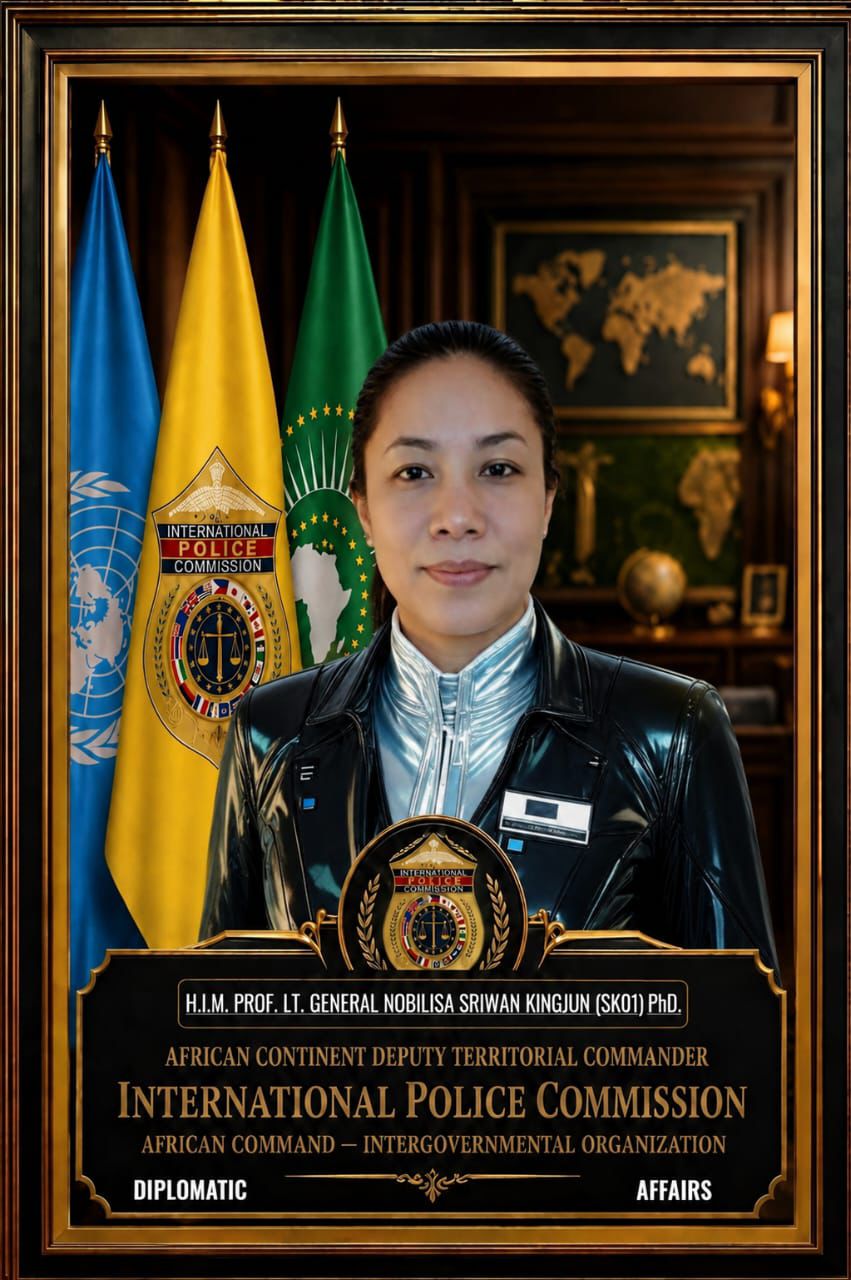
UKA Gears Up for Final ATC Exchangeability Test Run as June Preparations Begin.
May 30, 2026 – As the month of June gathers momentum, the *United Kingdom of Atlantis, UKA*, a sovereign nation has unveiled a series of vital guidelines and preparatory packages to ensure citizens and stakeholders run the *ATC Exchangeability* process effectively.
In an official update, the *President of Atlantic Crown Limited, Empress of Attica Empire UKA*, confirmed that the *Final Test Run of ATC Exchangeability* is scheduled for the month of June 2026. The exercise marks a key phase ahead of the *Official Exchangeability Window, set to run from July 2026 to February 2027*.
### Key Highlights from the Presidential Briefing
1. *Final Test Run – June 2026*
The test run is designed to validate systems, procedures, and user readiness before full activation. Citizens, partners, and designated participants are urged to follow all official advisories released by UKA authorities during this period.
2. *Official Exchangeability Period*
Following the successful completion of the June test run, the Official Exchangeability will commence in july 2026 and we are Expecting Full Exchange ability between July Ending, 2026 to February 2026.
UKA stated that detailed schedules, eligibility requirements, and step-by-step instructions will be communicated progressively through verified UKA channels.
3. *Benefiting Packages for June*
In line with UKA’s commitment to citizen empowerment, the month of June will feature “benefiting packages” aimed at education, preparation, and seamless onboarding. These packages are intended to equip the people of UKA with the knowledge and tools needed for effective participation.
4. *Commitment to Transparency*
Addressing the nation, the Empress of Attica Empire UKA emphasized:
_“Final Test Run of ATC Comes up in The Month of June, As We Prepare For The Official Exchangeability, Between July 2026 To Feb 2027. All Information Will Be Communicated.”_
UKA reaffirmed that only information released through official UKA platforms should be regarded as authoritative.
The United Kingdom of Atlantis is encouraging all citizens, representatives, and interested parties to remain alert to official communications, attend designated orientation sessions, and avoid unofficial sources. UKA’s dedication to order, clarity, and the collective benefit of its people as the nation moves into this significant phase.
For updates, advisories, and participation guidelines, citizens are advised to monitor official UKA communication channels.
United Kingdom of Atlantis, UKA, is a sovereign nation, committed to national development, citizen welfare, and structured economic participation through initiatives such as ATC Exchangeability.
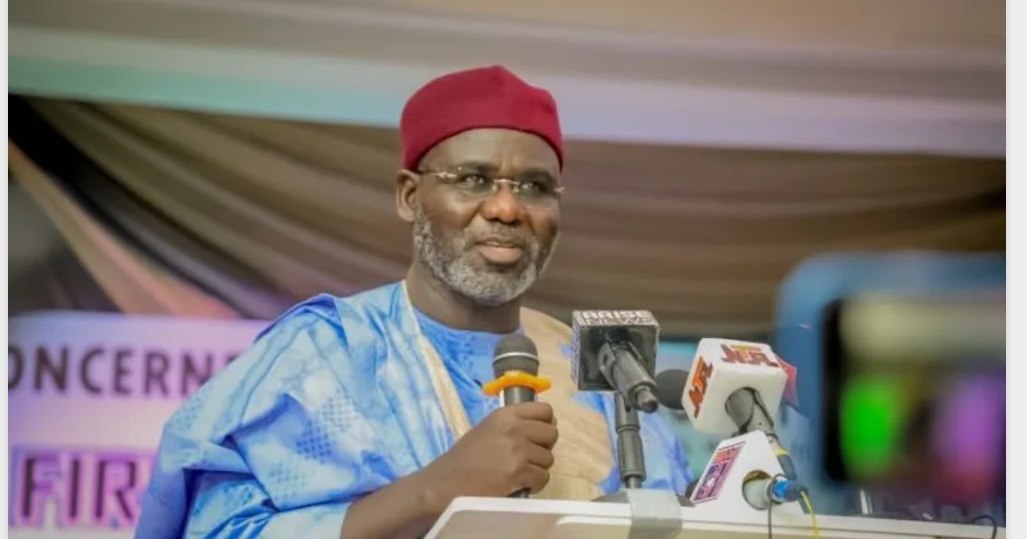
Three Years On, General Buratai Hails Tinubu’s Economic, Security Achievements
Former Chief of Army Staff, Lt. Gen. Tukur Buratai (retd.), has commended President Bola Ahmed Tinubu for what he described as bold economic reforms and improved security efforts as the President marks three years in office.
In a goodwill message on Thursday to commemorate Tinubu’s third anniversary as President and Commander-in-Chief of the Armed Forces, Buratai said the administration had taken courageous decisions that would leave a lasting impact on Nigeria’s development.

According to him, President Tinubu broke a long-standing cycle that had hindered national growth by removing fuel subsidy and implementing foreign exchange reforms aimed at stabilising the naira and strengthening the economy.
He noted that the reforms were beginning to yield positive results, citing the global acceptance of Nigerian debit cards, the gradual revival of local refineries, access to student loans, and ongoing road and infrastructure projects across the country.
“The FCT Administration has also recorded remarkable progress, completing major road projects that remained unfinished for over 16 years,” Buratai stated.
The former army chief also praised the administration’s security efforts, saying renewed military offensives against insurgents, terrorists and bandits had led to notable successes across various parts of the country.
He specifically lauded recent joint operations involving Nigerian and United States forces against Boko Haram and ISWAP in the North-East, as well as intensified counter-banditry operations in the North-West.
“We have seen notorious ISWAP commanders being neutralised. I congratulate the Commander-in-Chief, the Minister of Defence, the Chief of Defence Staff, the Service Chiefs, the Inspector-General of Police and heads of intelligence agencies for their efforts,” he said.
Buratai, however, acknowledged that challenges remained, stressing the need for more aggressive military operations and intelligence-driven strategies in the coming year.
While urging Nigerians to remain hopeful, he said celebrating the President’s achievements did not amount to ignoring the difficulties facing the nation.
“Because you truly care, you have shown the courage to trade short-term comfort for long-term hope. Nigerians need your reassurances, and that is why we remain optimistic and full of confidence,” he added.
The retired military officer reaffirmed his support for the Tinubu administration and expressed confidence that the foundation being laid by the government would deliver a brighter future for the country.
He also prayed for God’s guidance, wisdom, strength and good health for the President as he continues to lead Nigeria.


- When women farm better, Eswatini eats better June 3, 2026
- Togo Hosts the 8th Annual Forum of National Volunteer Agencies in the Economic Community of West African States (ECOWAS) Region June 3, 2026
- Indigenous Peoples gravely vulnerable to Ebola epidemic, warn United Nations (UN) independent experts June 3, 2026
- Meeting between Parliamentary Vice-Minister ONISHI and His Excellency (H.E.) Mr. Cosgrow, Principal Minister and Minister for Agriculture, Fisheries and Blue Economy of Seychelles June 3, 2026
- Eritrea: Construction of Elementary School in Gogni Sub-Zone June 3, 2026
- African Union Commission (AUC) Chairperson His Excellency (H.E.) Mahmoud Ali Youssouf highlighted thePermanent Representatives’ Committee (PRC) critical role in advancing the Union’s agenda and laying the groundwork for the forthcoming Mid-Year Coordination Meeting (MYCM) June 3, 2026
- Eritrea: Eighth Grade National Examination Commences June 3, 2026
- Many Africans see justice system as unequal, costly, and slow, Afrobarometer survey reveals June 3, 2026
- Prof. Benedict Oramah to Chair Finance Summit as African Energy Week (AEW) 2026 Prepares for Major Deal Flow June 3, 2026
- The Islamic Development Bank (IsDB) Group Affiliates to Host the 14th Private Sector Forum in Baku, Azerbaijan (16-19 June 2026) June 3, 2026
- When women farm better, Eswatini eats better June 3, 2026
- Togo Hosts the 8th Annual Forum of National Volunteer Agencies in the Economic Community of West African States (ECOWAS) Region June 3, 2026
- Indigenous Peoples gravely vulnerable to Ebola epidemic, warn United Nations (UN) independent experts June 3, 2026
- Meeting between Parliamentary Vice-Minister ONISHI and His Excellency (H.E.) Mr. Cosgrow, Principal Minister and Minister for Agriculture, Fisheries and Blue Economy of Seychelles June 3, 2026
- Eritrea: Construction of Elementary School in Gogni Sub-Zone June 3, 2026
- African Union Commission (AUC) Chairperson His Excellency (H.E.) Mahmoud Ali Youssouf highlighted thePermanent Representatives’ Committee (PRC) critical role in advancing the Union’s agenda and laying the groundwork for the forthcoming Mid-Year Coordination Meeting (MYCM) June 3, 2026
- Eritrea: Eighth Grade National Examination Commences June 3, 2026
-

 news6 months ago
WHO REALLY OWNS MONIEPOINT? The $290 Million Deal That Sold Nigeria’s Top Fintech to Foreign Interests
-

 society1 month ago
SOCIAL MEDIA IS NOT A BATTLEFIELD COMMAND – WHY THE NIGERIAN ARMY’S ACTION AGAINST JUSTICE CRACK IS A NATIONAL SECURITY IMPERATIVE
-

 celebrity radar - gossips4 months ago
Dr. Chris Okafor Returns with Power and Fire of the Spirit -Mounts Grace Nation Altar with Fresh Anointing and Restoration Grace on February 1, 2026
-

 celebrity radar - gossips6 months ago
Prophet Kingsley Aitafo Releases 2026 Prophecy: ‘Nigeria Will Rise, but the World Must Prepare for Turbulence’