
Politics
Kogi’s Transition To Oil Producing State And Gov Bello’s Midas Approach

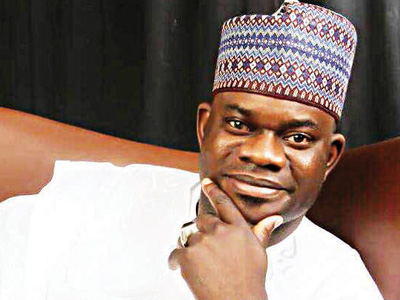
Kogi’s Transition To Oil Producing State And Gov Bello’s Midas Approach By Usman Audu
The White Lion, as Kogi State governor, Alhaji Yahaya Bello is fondly called, has four things as his work tools: diplomacy, emotional inteligence, courage and influence. These has helped him to dare and conquer on many fronts.
The Wednesday’s announcement, that Kogi, for the first time, has received it’s share of monthly 13 percent derivation, during the weekly State Executive Council meeting at the Lugard House, Lokoja, closes an epic story of governor’s unparalleled and deft power of diplomacy, leadership acumen and emotional inteligence.
Though Governor Bello’s serial leadership wins had for umpteenth time, proven that wisdom is better than strength, the latest development marks the end of history in the evolution of Kogi’s trajectory. This is because, most likely, no event in the future can be more than enlistment of Kogi as an Oil producing State.
With this latest feat, Bello has once again demonstrated what’s possible, where a leader thinks transgenerstional possibilities; where a leader prioritises common good above pedestal and narrow interests.
Bello’s foray into politics didn’t mean much to many at inception. But as the old saying goes, time is the revealer of truth. As time goes by, it has become clear that Bello was on a divine mandate to fix and give Kogi back to Kogites. This is what the latest development underpines.
Those who saw nothing good with anything he does before, now celebrate, throwing him Toscanini complement “tenacious in battle, wise in councel and magnanimous all round victory.
In retrospect, Kogi’s journey to Oil Producing Status was characterised by tears, blood and sweat of the people of Ibaji, who daily laid down their lives to ensure that Kogi’s boundary to Ibaji flank, is not lost to Anambra state. Until Bello’s era, successive administrations in the State merely paid lip service to Ibaji plight and the brazen denial of Kogi state of what rightfully belongs to it.
However, with Bello’s ascendence in 2015, the struggle received renewed zest and impetus. Seeing the complication in the Kogi/Anambra contestation for the large shunk of the Oil deposit, Bello immediately oiled and deployed his power of diplomacy and emotional intelligence. Under Nigeria’s government structure, the authority to determine who gets what, where, when and how in terms of resources lays with the Revenue Mobilisation, Allocation Development and Fiscal Commission (RMADFC). Thank goodness that Bello is not new to RMADFC, as he has had stint with the revenue. allocating Commission during his time in the public service.
The Agasa born politician realised early in his political journey, that though, no one fectches water because he/she wants to wash the cheek but it’s through the influence of the face.’ An African saying has it that, “a child who washes his hands clean, will eat with the elders.” Not undereatimating the power of influence and association, Bello began to positioned himself to court the admiration of who’s is who in the Nigerian polity. I stand to be corrected, today, there’s no cross generational politician like Governor Bello. He has successfully earned the trust of the older generation and court the admiration of the youth belt. In order words, Bello is a generational bridge of today.
Leveraging on this goodwill, the governor has attracted unphantomable development to the Confluence State. From federal government projects to interventions from World Bank and other multilateral institutions. A time-tested saying goes: ‘the taste of a pudding is in the eating”. Elsewhere, leadership exists in theory but the Governor Bello led Kogi State, leadership is with demonstrable results. That’s why the foes and critics of Bello School of leadership are having their tails between their legs. Because they mocked and underrated his capability from inception. Today, evidence is the end of arguments.
One remarkable leadership lesson to take home from Governor Bello is noiseless impacts. Doing so much, yet making little noise. For him, let the people judge. Or better still, “if the clouds gathers and the blind man does not see, he can certainly not deny it, when starts raining. For instance, he has been following up on commencement of payment of 13 percent derivation to Kogi, albeit, without fuss, now that the meal is ready, even his critics cannot deny the aroma.
With the issue of 13 percent derivation done and dusted, comes the fear of Oil curse. One of the sore points of Oil discovery and exploration in Nigeria, is the inability, lack or unwillingness of the governing elites to make Oil wealth reflect in the economic wellbeing of the people and accelerated development of the country. One can without bathing an eyelid, vouch that Kogi will be different. Kogi’s example will be so real like that of Qatar, UAE, Saudi Arabia etc. The reason for this broad optimism is based on Bello’s track records of entrenched probity and accountability in governance, for which he has been roundly commended and won many awards and commendation of the World Bank.
Let Kogi become the springboard for what good Oil money can do! Let the blood of Ibaji people, who died in this struggle not be in vain. Let Bello follow up with the setting up of Kogi Oil Producing Community Development Commission to accelerate the economic fortune of the area and Kogi as a whole.
In every steps of the way, Bello was never unmindful of the divine orchestration behind his emergence. Hence, he takes every decision as service and gratitude to God, to whom all power belongs.
The point those who criticised Bello from the onset missed was that, compassion for the people drives good leadership than long years of experience. When you have compassion and zeal to make things work and make life bearable for the people, nothing would be impossible for you. Its that passion that engendered the prevailing peace in Kogi State, despite bordering nine states of Nigeria and delicate ethnic balance. The spirit is the same. All appointees are held accountable for their actions and inactions. That’s why traditional leaders and local council leaders are the first line of accountability. In Bello’s political paradigm, ‘he who can hire can also fire, if a gap is noticed in expectations and delivery.
More than anytime in the history of Kogi State, no governmemt has made deliberate efforts to make youths centerpiece of societal transformation like Bello.
As Kogi joins Oil Producing States, it’s important, we assure Kogites that Bello posses the capacity to lay enduring foundation for optimal utilisation of the 13 percent derivation in such a way that Kogites and Nigerians in general will live to relish.
—Audu is a public affairs analyst based in Abuja.




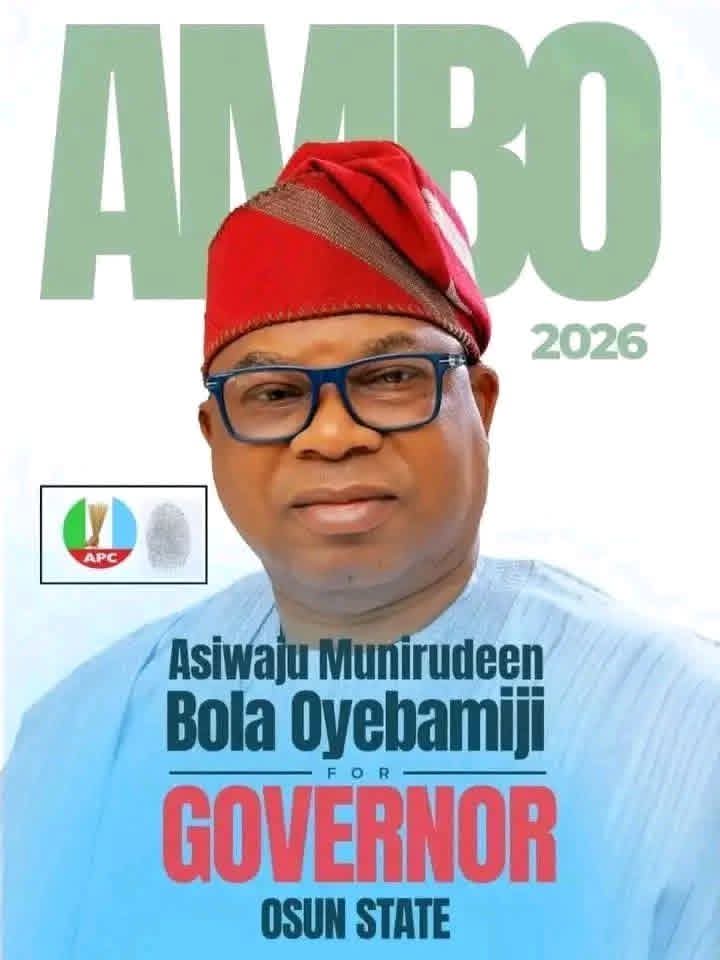
AMBO and the Osun Governorship Race: Assessing the Man, the Politics and the Vision
As political activities gather momentum ahead of the 2026 Osun State governorship election, a public affairs commentator, Oluseyi Olonade, has described the emergence of Asiwaju Munirudeen Bola Oyebamiji, popularly known as AMBO, as a significant development in the state’s political landscape.
In an article titled “Oyebamiji: The Man, The Politics and The Aspiration,” Olonade argued that the All Progressives Congress governorship hopeful possesses the character, experience and vision needed to reposition Osun State for sustainable growth.
According to the writer, Oyebamiji’s appeal stems from his extensive background in the banking sector, where he spent nearly three decades working with institutions including Wema Bank, Trans International Bank, Spring Bank and Enterprise Bank.
A native of Ikire in Irewole Local Government Area, Oyebamiji was described as a technocrat whose experience in corporate governance, finance and risk management has shaped his approach to public administration.
The article noted that his public service journey gained prominence in 2012 when he was appointed to oversee the then Osun State Investment Company Limited. Under his leadership, the organisation was reportedly restructured and transformed into Omoluabi Holdings Limited.
The writer further highlighted Oyebamiji’s tenure as Commissioner for Finance under successive APC administrations, where he was credited with managing the state’s finances during challenging economic periods.
Olonade also referenced Oyebamiji’s appointment as Managing Director of the National Inland Waterways Authority, describing it as further evidence of his administrative and leadership capabilities.
The article contrasted Oyebamiji’s governance philosophy with that of the current administration in Osun State, arguing that the APC aspirant favours institutional reforms, economic diversification and fiscal discipline.

According to the writer, Oyebamiji’s proposed agenda includes strengthening transparency in government spending, expanding internally generated revenue, attracting private-sector investments and promoting industrial and agricultural development.
The article also highlighted youth empowerment, entrepreneurship development and digital skills acquisition as key components of his vision for the state.
Olonade concluded that the forthcoming governorship election would present voters with a choice between different approaches to governance, expressing confidence that Oyebamiji’s experience and developmental agenda make him a strong contender in the race.
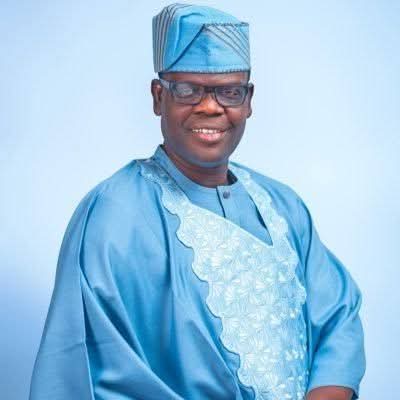
*Oselu Tiwa nTiwa Endorses Oriyomi Hamzat for Oyo Governorship*
A sociopolitical support group in Oyo State, Oselu Tiwa nTiwa, has declared its support for Alhaji Oriyomi Hamzat as the authentic governorship candidate of the Accord Party ahead of the forthcoming governorship election in the state.
The group made its position known in a statement jointly signed by its President, Mr. Adewale Oluwaseyi and Secretary, Alh. Adebayo Oyewole, on Thursday, describing Hamzat as a grassroots figure with strong connection to the people and a track record of humanitarian interventions across Oyo State.

According to the group, the endorsement followed what it described as careful observation of Hamzat’s leadership qualities, compassion and dedication to the welfare of ordinary citizens.
“Oriyomi Hamzat has consistently demonstrated empathy, courage and selfless commitment to humanity. Through his numerous interventions in the lives of ordinary citizens, he has become a symbol of hope to many families and communities,” the statement read.
Oselu Tiwa nTiwa also appealed to the national leadership of the Accord Party to prioritise the long-term future and electoral growth of the party in its decision-making process.
The group noted that Hamzat’s candidacy presents an opportunity for the party to strengthen its grassroots support base and expand its political relevance across Oyo State.
“We respectfully appeal to the National Leadership of the Accord Party to look beyond immediate political calculations and consider the bigger picture, the future growth, stability and electoral success of the party in Oyo State and beyond,” the statement added.
The group further expressed confidence in the leadership of the party, saying it believes the party’s national officers and stakeholders would take decisions that reflect fairness, inclusiveness and the collective interest of members.
While calling on party loyalists to remain calm and united, Oselu Tiwa nTiwa said continued consultations among stakeholders would help strengthen the Accord Party ahead of the election.
Signed:
Alh. Adebayo Oyewole,
Secretary.
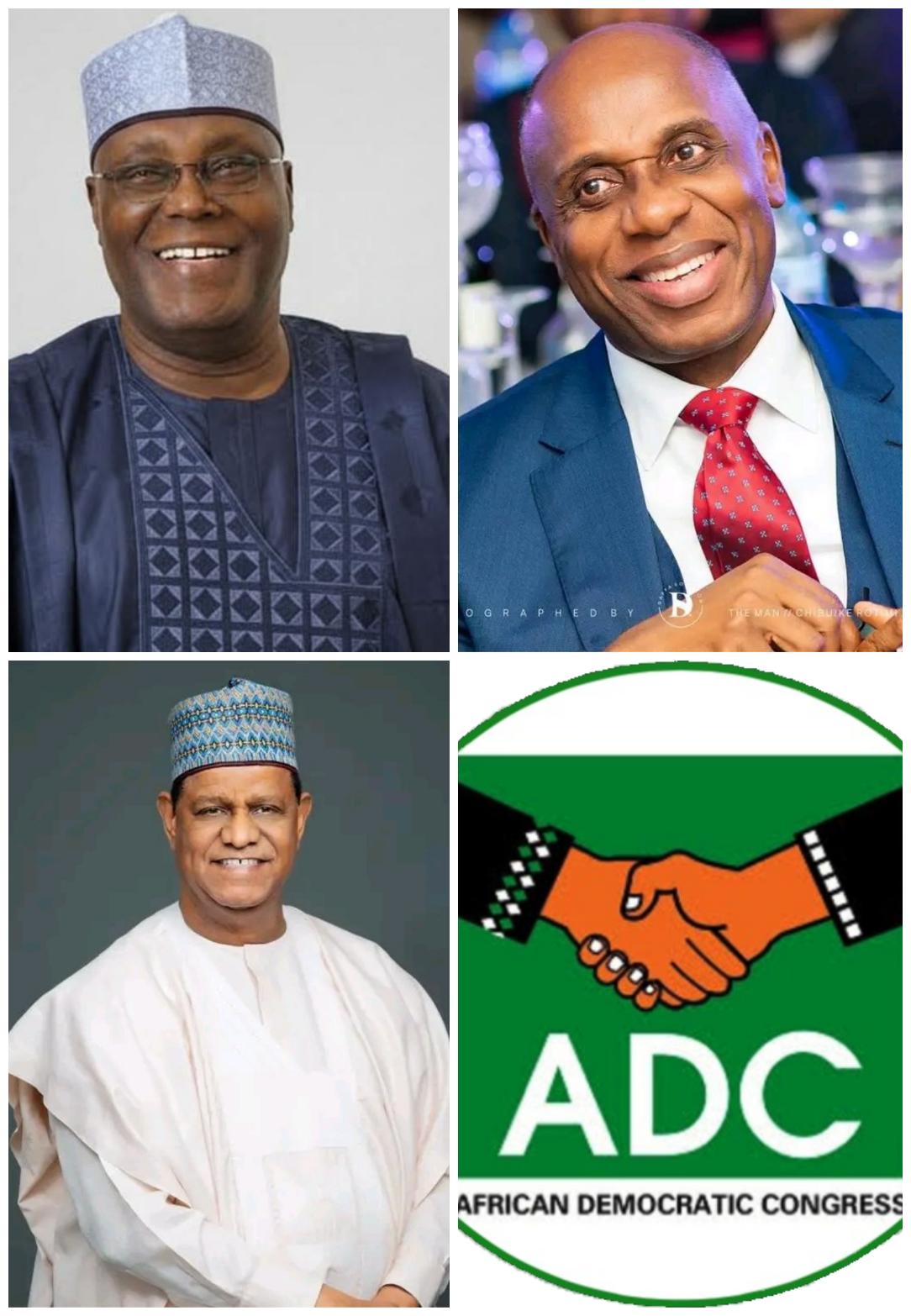
Atiku Set To Clinch ADC Presidential Ticket, Leads Amaechi, Hayatu-Deen In 34 States
Former Vice President of Nigeria and frontline presidential aspirant of the African Democratic Congress (ADC), Atiku Abubakar, is projected to emerge winner of the party’s presidential primaries, according to impeccable sources in Abuja.
The primaries, conducted across over 8,000 wards in the 36 states of the federation and the Federal Capital Territory, reportedly placed Atiku far ahead of his closest rivals — former Rivers State Governor, Rotimi Amaechi, and former Chairman of the Nigerian Economic Summit Group, Mohammed Hayatu-Deen.

Highly placed party insiders disclosed that Atiku is currently leading in 34 states, including the FCT, after securing dominance across the 19 Northern states, the five South-East states, and the six South-West states, while also maintaining a strong showing in at least three states in the South-South geopolitical zone.
The sources added that the outcome reflects what they described as “an overwhelming nationwide acceptance” of the former vice president within the opposition party ahead of the 2027 general election.
Meanwhile, the ADC leadership has invited members of the press to the official announcement of the final collated results scheduled for 11:00 a.m. on Tuesday, May 26, 2026, in Abuja.
The declaration of results is expected to be broadcast live on ARISE Television and two other major television stations, while also being livestreamed on the party’s official social media platforms on X and Facebook.
Speaking ahead of the announcement, the founding National Chairman of the ADC, Chief Ralph Nwosu, said the decision to televise the exercise live was aimed at promoting transparency and democratic accountability.
“We want millions of Nigerians at home and in the Diaspora to witness democracy in action,” Nwosu said.
He further revealed that the party leadership would encourage all three presidential aspirants to publicly embrace a peace accord and commit themselves to working together in unity for the party’s success.
According to him, the move is necessary to strengthen internal cohesion and position the ADC for victory in the presidential election scheduled for January 16, 2027.
Details later.


- Deputy (Dep.) Finance Minister Courts Investors to Transform Ghana’s rice Economy June 4, 2026
- Mobile health services in Kenya reduce the risk of stillbirths June 4, 2026
- JustMarkets Research Highlights Global Growth Divergence as a Key Market Driver June 4, 2026
- African Development Bank Group approves $125 million investment in African Trade and Investment Development Insurance (ATIDI) to expand risk insurance capacity in Africa June 4, 2026
- Congo Energy & Investment Forum 2027 to Position Brazzaville as a Hub for Global Energy Deal-Making June 4, 2026
- Africa Skills Hub (ASH) Transitions to ASH Africa as it Marks 10 Years of Impact June 4, 2026
- When women farm better, Eswatini eats better June 3, 2026
- Togo Hosts the 8th Annual Forum of National Volunteer Agencies in the Economic Community of West African States (ECOWAS) Region June 3, 2026
- Indigenous Peoples gravely vulnerable to Ebola epidemic, warn United Nations (UN) independent experts June 3, 2026
- Meeting between Parliamentary Vice-Minister ONISHI and His Excellency (H.E.) Mr. Cosgrow, Principal Minister and Minister for Agriculture, Fisheries and Blue Economy of Seychelles June 3, 2026
- Deputy (Dep.) Finance Minister Courts Investors to Transform Ghana’s rice Economy June 4, 2026
- Mobile health services in Kenya reduce the risk of stillbirths June 4, 2026
- JustMarkets Research Highlights Global Growth Divergence as a Key Market Driver June 4, 2026
- African Development Bank Group approves $125 million investment in African Trade and Investment Development Insurance (ATIDI) to expand risk insurance capacity in Africa June 4, 2026
- Congo Energy & Investment Forum 2027 to Position Brazzaville as a Hub for Global Energy Deal-Making June 4, 2026
- Africa Skills Hub (ASH) Transitions to ASH Africa as it Marks 10 Years of Impact June 4, 2026
- When women farm better, Eswatini eats better June 3, 2026
-

 news6 months ago
WHO REALLY OWNS MONIEPOINT? The $290 Million Deal That Sold Nigeria’s Top Fintech to Foreign Interests
-

 society1 month ago
SOCIAL MEDIA IS NOT A BATTLEFIELD COMMAND – WHY THE NIGERIAN ARMY’S ACTION AGAINST JUSTICE CRACK IS A NATIONAL SECURITY IMPERATIVE
-

 celebrity radar - gossips4 months ago
Dr. Chris Okafor Returns with Power and Fire of the Spirit -Mounts Grace Nation Altar with Fresh Anointing and Restoration Grace on February 1, 2026
-

 celebrity radar - gossips6 months ago
Prophet Kingsley Aitafo Releases 2026 Prophecy: ‘Nigeria Will Rise, but the World Must Prepare for Turbulence’