
Uncategorized
Lagos Commissioner of Commerce, Lola Akande, Oba Olusegun Awokoya, Oloja of Epe, Oba Kamarudeen Animashaun, Others In Alleged Land Grabbing Mess

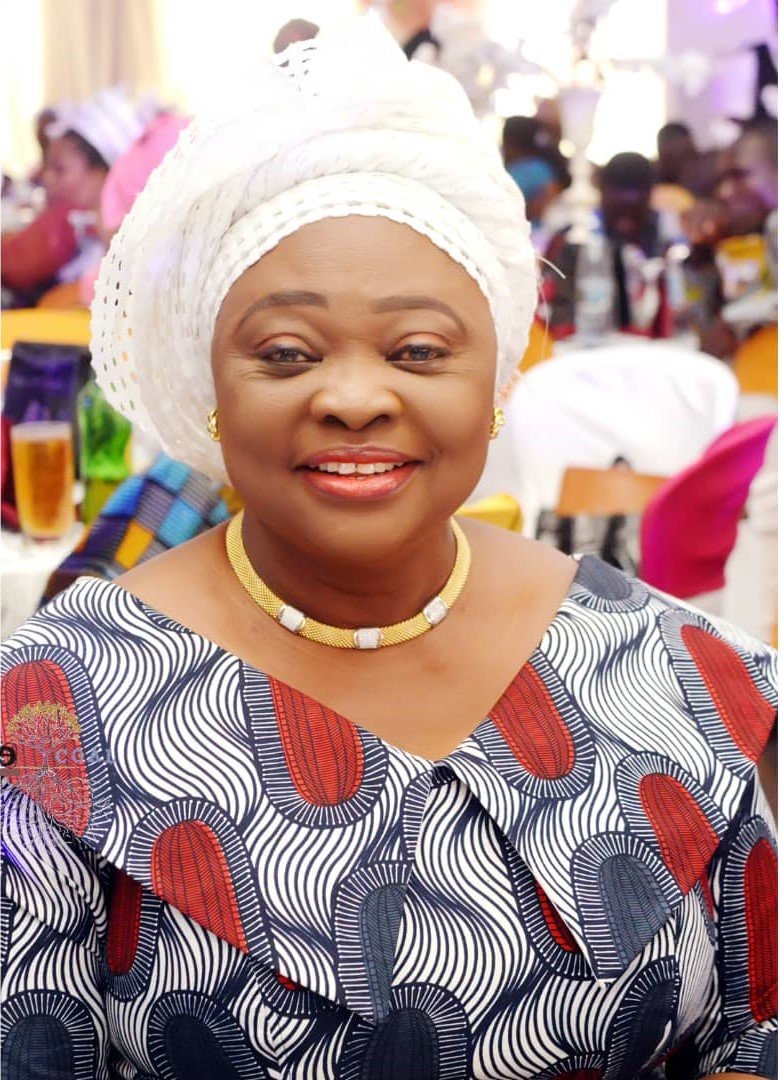
Lagos Commissioner of Commerce, Lola Akande, Oba Olusegun Awokoya, Oloja of Epe, Oba Kamarudeen Animashaun, Others In Alleged Land Grabbing Mess
By Ogunfela Ogunyebo

There are strong indications that there is a cold war going on underground in Epe, Lagos State which urgently begging for the attention of the state governor, His Excellency, Mr Babajide Olusola Sanwoolu, before it becomes uncontrollable regarding Abomiti, Yeguda and Eyin-osa Ressetlement.
In 2006, when Lekki Free Zone was created, about three communities got affected and they are Abomiti, Yeguda & Eyin-Osa, but the state government allocated another land which is 10% of what the government compulsorily acquired for the displaced communities elsewhere for their resettlement which some Lagos State Government officials and two traditional rulers in Epe and Ogun State are now allegedly hijack and converted to start selling through some real estate companies.
One of the chairmen and trustee member of Free Trade Zone Parcel B Resettlement Communities, Chief Obafemi Onayemi Obajimi (Baale Onigbagbo and other family representatives of Abomiti, Eyin-Osa, Yeguda-Parapo, the displaced Communities for Parcel B and Alaro City Projects have raised an alarm over the moves made by Mrs Lola Akande, the Honourable Commissioner of the Ministry of Commerce, Industry and Cooperative in collaboration with Oba Kamarudeen Animashaun, the Oloja of Epe conniving with one Oba Ganiyu Olusegun Awokoya aka {Alhaji White} the Onirete of Irete in Ogun State to convert the Abomiti, Yeguda & Eyin-Osa resettlement land for Kickbacks.
Some of the families representatives alledged that Oba Olusegun Awokoya has been claiming to be a Surveyor or atimes a consultants to the State Government which Mrs Lola Akande has been trying to compel them to handover their land, too for Surveying for 1 plot per acres even when she know that the Oba Olusegun Awokoya is not a registered surveyor
Information has it that Abomiti, Yeguda & Eyin-Osa Government Resettlement Land for the displaced communities is now an Instrument of Oba Olusegun Awokoya who is fronting for Mrs. Lola Akande and Oba Kamorudeen Animashaun. The Communities laments on how “Oba Olusegun Awokoya has been fueling Eko-Epe and Ijebu-Epe crises to thrive his alleged land grabbing business in the axis, believing that no one dares question his authorities because of his influence and relationship with some Lagos Statw civil servants and Nigeria Police Force.
We further gathered that one Lanre Ogunlesi, SAN conspired with Awokoya who claimed to be a Surveyor and Akande to fraudulently obtain the Abomiti, Yeguda & Eyin-osa Certificate of Occupancy from the Beneficiaries.
The communities, has however cried to the executive governor of Lagos State, the Attorney General and Honourable Commissioner for Justice of Lagos State to come to their rescue as Lola Akande and her members who have allegedly taken over the new land allocated to the communities.
The letter sent to the office of the Lagos State Governor Sanwoolu read thus: we act as representatives of Free Trade Zone Parcel B Resettlement indigene {Abomiti, Eyin-Osa, Yeguda} and we hereby write you on behalf of the Parapo of the three zones. Our protest is born out of seeing the duo of Oba Oba Kamorudeen Animashaun, the Oloja of Epe and Oba Ganiyu Olusegun Awokoya aka {Alhaji White} the Onirete of Irete, Ogun State fueling Eko-Epe and Ijebu-Epe crises to thrive his land grabbing business in connivance with some Lagos State civil servants not limited to one Mr. Ilu Oshikoya who has been serving as ‘Agbodegba’ for Lanre Ogunlesi SAN, {Oba Olusegun Awokoya’s Lawyer} and working hand in hand with Hon. Lola Akande to sell out all the resettlement land meant for resettling our displaced communities.
Epe is one of the Local Government Areas in Lagos and each State has her own territorial survey and by virtue of land Use Act 1978, which has vested each state land to the state governor and by that, Epe is part of Lagos state in which the state also give Oloja of Epe his staff of office, the said Oloja Epe is now ungratefully canvassing for Ijebu-Epe and Eko-Epe crises because of his land grabbing business.
The Oppressed indigines of Parcel B , resettlement called on the Attorney General (Moyosore Onigbajo) As the man in charge of Lagos State law enforcement, Mrs Adijat Apena representing Laporu in Eyin-Osa said it is time for the Commisioner of Justice to rise up to the occasion and protect the interest of the whole Lagosians and call everybody to a round table and educate them that Lagos Statw is Lagos State, either your forbears migrated from Ijebu to Epe or not, there is nothing like Ijebu-Epe or Eko-Epe, Epe is Epe in Lagos State.
Just as Mr. Okanlawon also called on His Excellency, Babajide Sanwoolu that the goal of Oba Animashaun in conjunction with Oba Awokoya is to cause chaos, division, tumult and upheaval in Epe so as to thrive his land grabbing business, if they are not restrain and stopped, the peace and the safety of the whole Epe might become history. We passionately appeal to you that you call everyone to order, to maintain the peaceful co-existence of the entire Epe Local Government.
It is not news that Lagos State Government acquired our land for the purpose of Free Trade Zone. As a result of acquisition of our land, the state government resettled the displaced communities under the umbrella of Free Zone Parcel B Resettlement communities which we are members of the 248 communities that formed Abomiti, Yeguda & Eyin-osa.
Sequel to the resettlement, a memorandum of understanding was executed with the representatives of the communities and same was signed by the Lagos State Government and the representatives of the committee.
However, most of those who signed as representatives are protégé of Lola Akande, Oba Olusegun, and Oba Animashaun. In furtherance of the memorandum of understanding for the resettlement of the displaced communities, the state government instructed the committee to register themselves so that their certificate of occupancy can be issued to them in their names. Oba Olusegun, who ported himself as a registered surveyor to the committee and recently referred to himself as the consultant to the Lagos state government, claiming to be fronting for some officers of the Lagos State government parastatal wherein the officers want two (2) per acres to settle some the officials of the Lagos State government through which the committee registered in proxy.
However, going through the trustees in each of the zone supervised by the Oba Olusegun Awokoya, it’s clearly showed that most of the registered Trustees are not even indigenous members of the committee but rather close associates of Oba Olusegun and that of the Oloja of Epe, particularly one Jelili Oluwaseyi Arimi who is a trustee on both the Eyin-Osa and Yeguda resettlement zone, one of the militants of the said Oba Onirete and doesn’t belong to any of the displaced communities that were settled. So, it amaze one how someone that doesn’t belong to a community became a trustee in the registration of such communities.
For a clearer understanding of our point sir, almost all the members in the committees are Oba Olusegun and Oba Kamarudeen’s proxy, the person of Chief Jelili Arimi Oluwaseyi, who is the Baale Deesa at Abule Foli, close to Eti-Osa not in any way related to parcel B resettlement committee. He is one of the armed militants of Oba Olusegun, he’s also a trustee of all the zones. Chief Waheed Oluwo, the Odofin of Oloja Epe and also the chairman ‘Central Working Committee’ is the number one sales man of fake surveyor Segun Awokoya selling the resettlement land. Mr. Shade Takiu (P.R.O Central Working Committee) a proxy of Oloja of Epe was made a trustee to protect the interest of Oloja of Epe to the detriment of the indigenous owners. Chief Muritala Gbadebo Lateef is the Kankanfo Epe Land and also a proxy of Oloja of Epe. Though, he’s from Oloja-Ibiwo family of Eyin-Osa but became a trustee of the committee to see to the interest of the Oba of Epe. Mr. Wakilu Lufomu and Mr. Saheed Ligali are both Oloja of Epe and Oba Olusegun’s militants and they were made trustee to serve their interests. Chief Olajide Ishola Shefiu is a secretary to CWC of Epe, he is also from Oloja-Ibiwo family in Eyin-Osa, and he is one of the militants of Oloja of Epe and sees to the interest of the king as a trustee of the committee. Animashaun Muyideen Olatunji is the son of the king and only serve the interest of his father who do not belong to Eyin-Osa, Abomiti and Yeguda people nor do they own property at the acquired place. Only few members of the actual Eyin-Osa, Abomiti and Yeguda were registered as trustees and these persons have been threatened and silenced by the Oba Onirete of Irete Ogun State.
The genuine members who are indigenous to Eyin-Osa, Abomiti and Yeguda communities such as but not limited to Omotayo Yusuf of Oke-Oko family in Abomiti zone, Chief Obafemi Onayemi Obajimi, Aba Onigbagbo family of Abomiti zone, Chief Tawaliu Oniga Moboluwaduro of Oniga Iposun Family ofEyin-Osa, Chief Kareem Otolerin Baruwa of Baruwa Shosho family of Eyin-Osa, Mrs Apena Adijat, the secretary to the Laporu family of Parcel B resettlement communities who is one of the subject of Chief Wahidi Obalewo Mohammodu, the Baale of Lapolu family all of Eyin-Osa community, Chief Femi Abdulai Isa of Fowotera village of Yuguda Lagos State Special Task Force on Land Grabbers who informed them that one Ilu Osikoya and some officers of the Attorney General office have been part of the ‘Agbodegba’ of selling our land and they were even boasting that they are selling in trust for Lola Akande and some workers of Lagos State government parastatals and as such they are untouchable as they have the backing of the high ranking officers of the Lagos State judiciary.
In the light of the above, we painstakingly pray that by virtue of your good office and position as the number one citizen of Lagos State, you will caution and restrain the person of Chief Mrs Lola Akande, Oba Olusegun Awokoya, Oba Kamarudeen Animashaun and Mr Ilu Osikoya from further harassing, maiming and threatening us. We hope that you admonish them that no one is above the law and also compel them to release our certificate of occupancy to us with immediate effect.
In as much as we do not believe in the rumour being frittered around by Oba Olusegun and Mr. Ilu, that the Attorney General of Lagos State and Lagos State Special Task Force on Land Grabbers are fully aware of the resettlement for kickback game, we hope that what we heard isn’t true, however, in the circumstance of our guess being correct, we will not hesitate to take the right action.
We called on the Alaro City as a company that if they choose not wage in to called the attention of the state government, they should expect us joining them in legal battle to recover our land in which the state forceful acquired, handover for their project and now handover our Ressetlement to a Quack Surveyor Awokoya who has converts same to an instrument of fraud in defrauding innocent landbuyers claiming he has bought all the land from the displaced communities, time for recouncilation.
Accept our kind regards”, they wrote.
The letter was signed by twenty four heads of families of the three communities.



FOPCHEN Calls for Dialogue as Court Fixes May 28 for Continuation
OTA, OGUN STATE — Proceedings in a widely followed legal case resumed on March 24, 2026, at the High Court of Ogun State, Ota Division, ending with a fresh adjournment as the court fixed May 28, 2026, for continuation.
During the session, legal representatives for all parties restated their positions and addressed preliminary matters, laying the groundwork for more substantive arguments at the next hearing. Observers noted that the case continues to attract significant public attention due to its perceived implications for law, culture, and societal values.
The Foundation for the Protection of Cultural Heritage in Nigeria (FOPCHEN) used the occasion to reiterate its call for constructive national dialogue. The group emphasized that while the judicial process must be respected, broader societal engagement remains essential.
According to the organization, issues relating to values, responsibility, and cultural identity should not be confined solely to courtroom deliberations but should involve active participation from various sectors of society.
Legal analysts present at the proceedings described the matter as one with far-reaching implications, noting that arguments advanced in court could shape future interpretations surrounding sensitive cultural and moral questions.
The presiding judge subsequently adjourned the case to May 28, granting all parties time to refine their submissions and respond to issues raised during the hearing.
As anticipation builds ahead of the next court date, Nigerians across different sectors continue to monitor developments closely, keen to see how the judiciary navigates the delicate balance between constitutional rights and cultural expectations.
Uncategorized
CRG: Politicians Must Stop Witch-Hunting, Focus on Nation Building — Says NYSC Cleared Deputy Speaker Since 2023
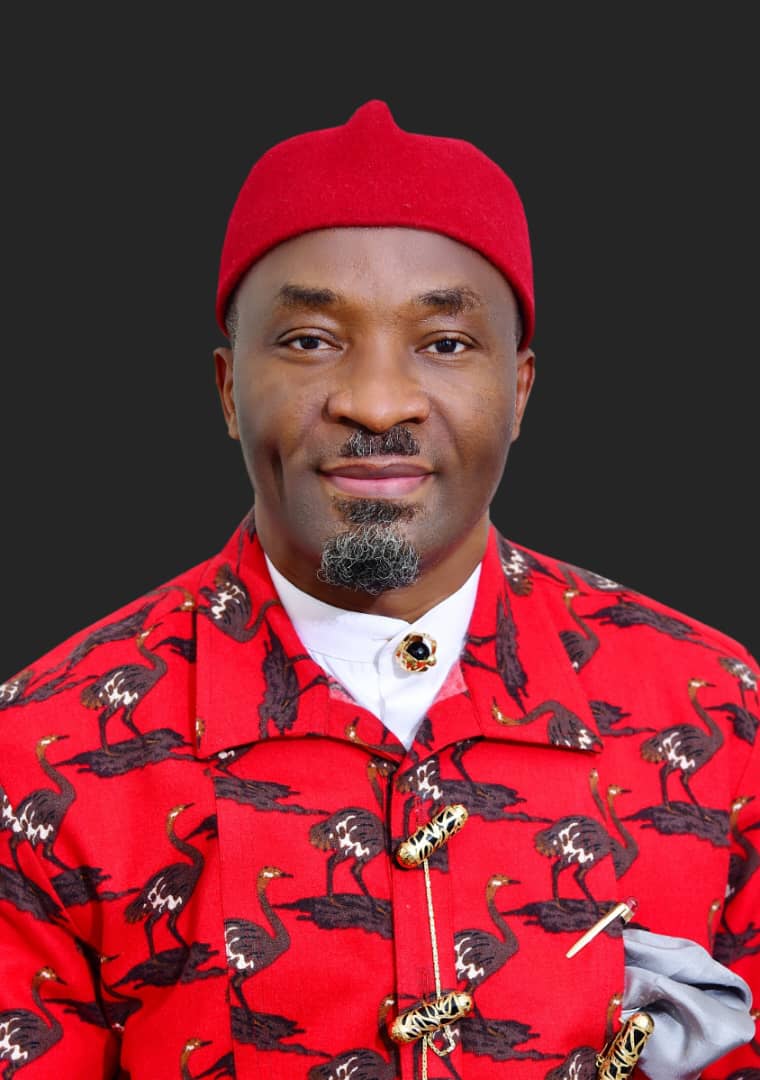
CRG: Politicians Must Stop Witch-Hunting, Focus on Nation Building — Says NYSC Cleared Deputy Speaker Since 2023
By: Boye Ola
The Centre for Responsible Governance (CRG) has called on political actors and interest groups to desist from what it described as needless witch-hunting of the Deputy Speaker of the House of Representatives, Benjamin Okezie Kalu, following renewed controversies surrounding his National Youth Service Corps records.
The organisation noted that the clarification by the National Youth Service Corps (NYSC) regarding the matter is not a recent development, as a formal verification letter had already been issued as far back as May 23, 2023.
The letter, referenced NYSC/CCD/VER/10/5.1/VOL1/02, had already addressed and cleared the questions surrounding the Deputy Speaker’s NYSC records.
Reacting to the renewed debate, the spokesman of the Centre,
Obande George, said it was troubling that issues which had already been clarified by a competent national institution were being resurrected for political purposes.
According to him, the time has come for political actors to move away from destructive engagements and concentrate on building the nation.
“It is important to note that the NYSC had already issued a verification letter dated May 23, 2023 addressing the matter.
Reopening issues that have already been clarified by a competent authority suggests that some individuals are more interested in political witch-hunting than in national progress,” George said.
The CRG stressed that democracy thrives when institutions are respected and their determinations are accepted in good faith rather than constantly questioned for political advantage.

George also commended the Deputy Speaker for demonstrating maturity and composure throughout the controversy, despite what he described as sustained provocations.
“Honourable Benjamin Kalu has shown remarkable calm and maturity in the face of intense public scrutiny and political provocation.
Instead of engaging in unnecessary public confrontation, he allowed institutions to speak through their records.”
The Centre warned that Nigeria’s political culture must evolve beyond constant character attacks and sensational allegations, which often distract public officials from their responsibilities.
According to the organisation, the country’s development requires constructive engagement among political actors rather than continuous attempts to discredit opponents.
“Nigeria cannot move forward if political energy is constantly spent on digging up allegations and amplifying rumours. Our leaders and political actors must redirect their focus to governance, policy and nation building.”
CRG therefore urged Nigerians to rely on verified information from credible institutions and avoid spreading speculative claims that could damage reputations or destabilise public discourse.
The organisation reiterated that respect for due process and institutional integrity remains essential for strengthening Nigeria’s democracy.

@The Centre for Responsible Governance, Email: [email protected], Instagram: crgngo6, Twitter: crgng06, Threads: crgngo6
Uncategorized
IWD 2026: Ajadi Celebrates Women, Urges Them To Seek More Elective Positions In Future Elections

IWD 2026: Ajadi Celebrates Women, Urges Them To Seek More Elective Positions In Future Elections
A Leading People’s Democratic Party, (PDP) Governorship Aspirant in Oyo State, Ambassador Olufemi Ajadi Oguntoyinbo has felicitates with women in the country on the occasion of this year’s International Women’s Day.
The international Women’s Day is celebrated on 8 March, commemorating women’s fight for equality and liberation along with the women right’s movement. It gives focus to issues such as gender equality and reproductive rights. International Women’s Day originated from labour movements in Europe and North America during the early 20th century.
In a statement issued on Sunday to commemorate this year’s edition of the International Women’s Day, Ajadi said the role of the women in nation building cannot be over emphasised.
He recalled the role played by prominent Nigerian women like Mrs Funmilayo Ransome- Kuti, Margaret Ekpo and Wuraola Esan towards the liberalization and the growth of the country and urges women to follow their footsteps by not only participate in the political process but seek more elective positions.
He urges the political leaders to encourage and give more chances to women for them to contest and occupy elective positions in the country.
Ajadi also called for more respect for women, saying they are definitely behind whatever success recorded by the menfolk.
He said domestic violence against women should be stopped, saying they deserves respect for their role in moulding the future leaders.
According to the statement, “I celebrate and congratulate our women on this year’s occasion of International Women’s Day. We cannot underestimate the role played by our women both at home, in the social circle and in politics. They deserve more respect.
“I equally called on them not only to be a passive participants in politics but to determine to seek more elected positions in future elections. They should aspire more from the position of dancing and singing at campaigns to seek more elective positions. The ratio of men to women in elective positions in the country is embarrassing. Women should stand up and fight for more elective positions.
“I also use the occasion of this year’s Women’s Day to appeal to Nigerians to stop domestic violence against the women. If we treat our women well, our country will witness unprecedented developments”.


-

 society7 months ago
Religion: Africa’s Oldest Weapon of Enslavement and the Forgotten Truth
-

 news4 months ago
WHO REALLY OWNS MONIEPOINT? The $290 Million Deal That Sold Nigeria’s Top Fintech to Foreign Interests
-

 society6 months ago
“You Are Never Without Help” – Pastor Gebhardt Berndt Inspires Hope Through Empower Church (Video)
-

 celebrity radar - gossips2 months ago
Dr. Chris Okafor Returns with Power and Fire of the Spirit -Mounts Grace Nation Altar with Fresh Anointing and Restoration Grace on February 1, 2026