
Business
Land Grabbing: Community Head writes SOS To Police, Ogun State Government Setting the record straight…….

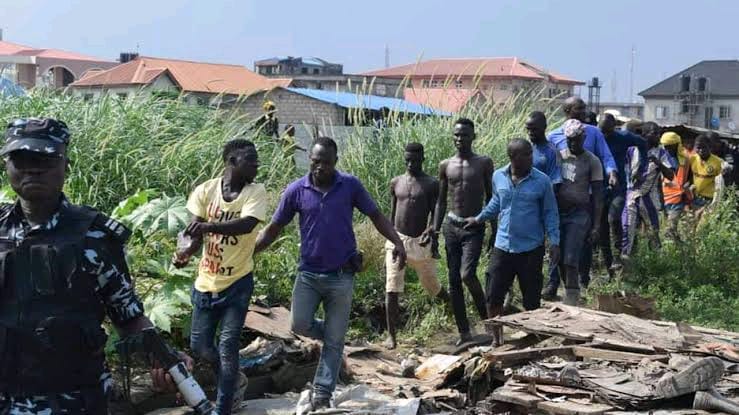
Land Grabbing: Community Head writes SOS To Police, Ogun State Government
Setting the record straight…….
SAVE OUR SOULS FROM THE HANDS OF IMPOSTORS, LAND GRABBERS TERRORISING EREBE IJEBU
A rejoinder to the crocodile tears of one Segun Abayomi Lawal,a political jobber, impostor and hypocritical human being

Erebe an ancient town in Odogbolu Local Government Area of Ogun State had being a peaceful society under the exclusive control of the eight (8) branches of the founding family of Erebe town, the OLOJA ADEKOYA (OFIRIGIDI) ANIKINAIYA FAMILY until recently when the Ogun State Government during the tenure of Otunba Gbenga Daniel (OGD) relocated the Sikiru Adetona College of Education, Science & Technology to Odo-Jobore directly beside Erebe. Mindful that Omu had no more vacant land in Ogun State as acknowledged in Omu’s Community’s submission before the Boundary Adjustment Commission of the Federal Government in 1976 and enviously motivated by the prime value of Erebeland due to it’s proximity to the said tertiary institution, one Oba Oludaisi Mosuro of Omu, Oba Segun Awokoya of Irete and one Obateru Akeem of Egbin near Ikorodu conspired amongst themselves with one Banjoko alias THREECO a popular land agent in the Lekki areas of Lagos State, one Jamiu Ojetete alias Jamani, Abayomi Adelaja alias Ogunyalu, Segun Lawal alias Eraser, Moshood Osinowo and others to create one ALADE OGBE ADELAJA SOKEFUN as their FAMILY name in Erebe in a bid to claim Erebeland. Our parent ruling House, the ANIKILAYA RULING HOUSE of the Awujale of Ijebuland, Ijebu Ode vide it’s letter dated 24/01/2007 warned the last Baale of Erebe, late Chief Moshood Osinowo to refrain from collaborating with the aforementioned land grabbers in their attempt to encroach on Oloja Adekoya Ofirigidi Anikinaiya’s Erebeland and advised them to tender their case before the ruling house if they have an iota of legitimacy in their claim to Erebeland.
The conspirators in issue rather than explore the opportunity offered by the Anikilaya Ruling House replied the Ruling House vide a letter dated July 21st, 2008 that they have no connection whatsoever with HRM Awujale Anikilaya’s family that HRM Anikilaya’s son Oloja Adekoya Ofirigidi was a refugee at Erebe.
These land grabbers in their aforementioned ALADE OGBE SOKEFUN ADELAJA name took the OLOJA ADEKOYA OFIRIGIDI ANIKINAIYA FAMILY, Erebe to court vide suit: HCJ/82/2009. Not wanting to beat a retreat after been overwhelmed by the traditional history of the Oloja Adekoya (Ofirigidi) Anikinaiya family with several documentary evidences affirming same from the Anikilaya Ruling House, Ijebu Ode as well as from Imota via Ikorodu, a town founded by same our ancestor, Oloja Adekoya (Ofirigidi) and records from independent sources such as the National Archives, Wikipedia and certain authored records of over 70years, the land grabbing conspirators in their fraudulent nature sometimes in November, 2015 went in the direction of abandoning their former name ALADE OGBE, created and adopted one SANGOKOYA OFIRIGIDI, a similar name to our family name; OLOJA ADEKOYA OFIRIGIDI, gave false information to the Ogun State Government and presented one of themselves Segun Lawal as Baale over our town, Erebe.
As a pretext to keep us away from our legitimate heritage these land grabbers took the Oloja elect to court that a letter addressed thus;
The Olori Ebi,
OLOJA ADEKOYA OFIRIGIDI ROYAL FAMILY, EREBE IJEBU signed by one of the land grabbers named ABAYOMI ADELAJA dated 5th February, 2016 was forged. Senior Magistrate Idowu Olayinka of the Odogbolu Magistrate court declared that the letter in issue subject of Charge No: MOD/46C/2018 is authentic and signed by the conspirators who were dubiously trying to deny reality as the said letter alone is an incontrovertible evidence invalidating impostors’ use of a similar name to our family name at the Ijebu Ode High Court to claim land at Erebe.
We had written several petitions to the Ogun State Government in this regard but the conspirators boasts of being backed by their Otunba Gbenga Daniel (OGD) who they claimed has the Nigerian Police, Ogun state Government and the judiciary in his pocket cannot be further from the truth as the land grabbers tendered forged documents, lied on oath and committed perjury to acquire 20.981 acres of the same land subject of suit: HCJ/82/2009 in another suit: HCJ/121/2015 with their new name SANGOKOYA. Contrary to the land grabbers misleading information to the public that they have a judgment covering entire Erebe land, the judgment is strictly on 20.981 acres of land and had been appealed based on the fact that it was fraudulently obtained as amongst other obvious reasons the judge rather than treating the facts of the case opted for technicality that the letter U as it appeared in EREBE IJEBU in the survey tendered by our family was traced in ink and not signed whereas we defined the location of the land as required in law.
The public are hereby informed that SANGOKOYA as son of Awujale Anikilaya WAS NOT part of the prayers sought and granted by the said court. While we have taken further steps to protect our heritage from the impostors latest (sangokoya) of Omu, the aforementioned land agents have recently being partitioning our lands, using the instrumentality of complicit police formations to take over the remaining Erebeland including 880 acres of land outside the 20.981 acres subject of appeal court litigation. To achieve their fraudulent objective the impostors have created several other aegis, such as a parallel Erebe Community Development Association and others which receipts they issue for Erebe lands illegally being sold. As at the time of making this public notice our lives are in danger as these illegal money crazy conspirators have engaged cultists and hired assassins to kill the Oloja elect of Erebe, Omoba Olawunmi Samuel, myself and other members of our family.
The parties sometimes in the year 2009 went to the Association of Osugbo Ijebuland which gave judgment in 2009 that Erebe is the exclusive business of the Oloja of Erebe, Oba Adekoya Ofirigidi descendants.
The conspirators are not only forgers of documents and history to grab land but men whose love for cheap land money has been made slaves to their stomachs.
For the records, Omu town became a landmark for Erebe area being the place where a market for sales of mat “Eni” a general trade of Erebe and environs was first established and as such visitors from Ibadan, Oyo, Ikorodu and other places usually refer to the area as Omu Eleni which earned the town her undisputed popularity this day. However, the fact remains that Erebe granted its fern farmland “Oko Imu” corrupted to Omu this day as a settlement in 1849 to refugees of the Owu war and some Igbehin-Egba migrants as approved by our ancestor, HRM Awujale Anikilaya after the Owu Ipole war of 1822 – 1829.
Sometimes in May, 2023 the conspirators ganged up with others at large with their thugs unleashed terror on Erebe community, burnt Oloja’s ancestral palace, demolished same, forcefully entered the community’s farmland – destroying our cash crops, removed traditional totems causing mayhem and using Police to harass innocent people and still went to report to the police that our people perpetrated those crimes in a bid to implicate us over very straight land matters. Our family members were unjustly charged to court over false information raised to the police by Segun Lawal that we burnt his fathers house at Omu till the Ogun State Directorate of Pubic Prosecution’s legal advise to the court exonerated our people and exposed the fact that there is no extent which these land grabbers could not go in the pursuit of cheap land money.
These land grabbers and their client one Banjoko alias THREECO whose thugs and complicit police formations have continued to find means to kills my humble, other members of our family while parading the fraudulently acquired 20.981 acres of land judgement to be selling part of the remaining 880.981 acres of Erebe land to unsuspecting members of the public. The general public, Odogbolu Local Government, the Senator-Representing Ogun East Senatorial District, Ijebu Traditional Council, the Awujale Place and the Ogun State Government are hereby alerted of these developments and should note that;
1. Erebe towns’ founding family, OLOJA ADEKOYA OFIRIGIDI ANIKILAYA FAMILY is neither the same nor connected to Owu Omu’s SANGOKOYA’s recently created to expand and annex Erebe land.
2. No Baale or any chieftaincy whatsoever in history has ever being made over any section of Erebeland outside the consent, approval and supervision of the OLOJA ADEKOYA (OFIRIGIDI) ANIKINAIYA FAMILY who are the legitimate owners of Erebe land.
3.Baale as erroneously been recently misrepresented by the land grabbers is relevant only in communities whose founders are not royals, it is a taboo for a Prince of credible background to be appointed a Baale.
4. Oloja which is the ancestral title of the Oloja Adekoya Ofirigidi descendants is not in the category of Baale or Rarun in Ijebuland.
2. SEGUN LAWAL and anyone else made Baale by the Olomu on Erebe territory against the interest and consent of the OLOJA ADEKOYA (OFIRIGIDI) FAMILY is an impostor who has neither authority nor connection with Erebeland.
3. It is a generally acknowledged fact that our ancestor OLOJA ADEKOYA OFIRIGIDI son of AWUJALE ANIKILAYA founded Imota town via Ikorodu, anyone trying to change the name to SANGOKOYA as is being attempted by these landgrabbers are fraudsterds and undoubtedly men with questionable character.
4. The ANIKILAYA RULING HOUSE, Ijebu Ode where late Prince Adebola Sanya was General Secretary and the incumbent Treasurer, Prince Onabanjo Segun both from our branch, OLOJA ADEKOYA OFIRIGIDI is not for sale and as such the impostors should be mindful that their days to answer for all acts of impersonation is numbered.
5. Government should sanction Obas who on the guise of chieftaincy privileges create Baales over traditionally superior territories as it is the case with Omu, Irete in relation to Erebe in a bid to grab, incite violence to benefit land for personal gains and as fronts for politicians on which behalf they deal in lands.
6. Any Obaship candidate whose business is land related should sign undertaking not to involve in land in his area as it it is the case with Onirete who has not turn a new leaf from the plethora of land grabbing accusations against him in Lekki area of Lagos and has now found Erebe town and villages as his next line of business, in company of his friend THREECO signing agreements with several Omu families to claim Erebe villages.
8. If these impostors could come out and be making false claims which we hereby disclaim, one could understand the kind of information they used to persuade His Excellncy, Otunba Gbenga Daniel (OGD) whose influence and name they claim to usually employ to circumvent the police and the judicial processes in their bid to grab our land and even claim certain acres of our land is allotted to OGD which we are anxiously waiting for him to come and take possession and tell us if one has money, influence and position, getting other people’s properties and ancestry is the next line of business as his allies are claiming he does in this case.
Though, the undersigned has done all along several petitions at various times to the following governmental offices for help, which are to no avail before now
1. Ogun State, Governor’s office
2. Ogun State ministry of Justice
3. Commissioner of Police, Ogun State command
4.The State Director
Ogun State security services ( SSS)
And it was discovered that same impostors went extra miles to misinform the general public and government agencies that they have a judgment declaring SANGOKOYA as a son of AWUJALE ANIKILAYA as well as covering the entire EREBE landmass. IT WAS ALL LIES FROM THE FIGMENT OF THE NARRATORS IMAGINATION. WE CHALLENGE THEM TO TENDER SAME TO THE PUBLIC
We wish to inform the public that the latest false information from these land grabbers through Segun Lawal is a ploy to defend to change the narrative for evading police service of invitation letter, evading arrest, damaging of police vehicles, shooting at police and using cultists to prevent police in exercise of their lawful duty which caused pandemonium at Erebe on the 31st of January, 2024 in which cultists engaged police in shoot out to pave the way for the shedder of crocodile tears (Segun Lawal).
He who commits no crime needs not to run away from police invitation, we as a responsible family have always honored every invitation even arrest including the unlawful arrest and detention of our over 80 years old head of family, Omoba Titilola Olawunmi at the behest of frivolous charges orchestrated by Segun Lawal. Hence if the police are investigating a claim of raising false information to the police occasioning malicious prosecution of opponents and other issues perpetrated by the land grabbers why running away and manufacturing lies to the public in search of sympathy.
The baseless narrative being pushed by these land grabbers mischievously branding our family, who are the legitimate owners of Erebeland as land grabbers is a reflection of the debased level which our society has found itself in terms of morals and integrity.
Please, I am using this medium to get to all well meaning people to come to our aid. Save us from the grab of these Owu war refugee Ajagungbales paying the good intentions of our ancestors with evil such that this expansionist campaign of the present Omu leadership won’t be a repeat of what transpired in 1862 when the quarrelsome attitude of their ancestors as reported by the Europeans visitors to Ijebuland culminated in the avoidable loss of human life at Omu. We pause here.
E-Signed
Omoba Yisa Akintunde Mumuni
For and on behalf of the
OLOJA elect of Erebe Ijebu and the OLOJA ADEKOYA (OFIRIGIDI) ANIKINAIYA DESCENDANTS’ UNION
Erebe Ijebu Town, Ogun State.





Fidelity Bank grows gross earnings by 38% to N434.95b in Q1
Fidelity Bank Plc recorded 37.9 per cent growth in gross earnings to N434.95 billion in first quarter 2026 as the international commercial bank continued to expand its core banking market share.
Interim report and accounts of Fidelity Bank for the three months ended March 31, 2026 released at the Nigerian Exchange (NGX) showed that gross earnings rose from N315.42 billion in first quarter 20025 to N434.95 billion in first quarter 2026, representing an increase of 37.9 per cent.
The top-line performance was driven by impressive growth in the bank’s core business operations with interest incomes rising by 22.8 per cent to N314.48 billion in first quarter 2026 as against N256.10 billion in first quarter 2025.
With net interest income at N180.97 billion, the bank closed the period with profit before tax of N92.48 billion. After taxes, net profit stood at N74.47 billion for the three-month period. Earnings per share remained high at N5.69, underlining the capacity of the bank to reward its shareholders.
The balance sheet of the bank also emerged stronger. Total assets crossed the N11 trillion mark to N11.35 trillion by March 2026 compared with N10.46 trillion recorded in December 2025. Customers’ deposits increased from N6.89 trillion to N7.38 trillion. Total equity rode on the back of earnings growth to a 27.5 per cent increase from N1.09 trillion in December 2025 to N1.39 trillion by March 2026.
The first quarter 2026 results further consolidated the strong earnings outlook of the bank, which had successfully completed its recapitalisation amidst impressive earnings performance in 2025.
Fidelity Bank had recorded double-digit growths in interest and non-interest incomes as well as key balance sheet items during the year ended December 31, 2025.
The audited report showed that gross earnings rose from N1.04 trillion in 2024 to N1.52 trillion in 2025, an increase of 45.6 per cent. Interest and similar incomes had grown by 38.7 per cent from N803.1 billion in 2024 to N1.11 trillion in 2025. Fees and commission incomes also rose by 44.7 per cent from N78.4 billion to N113.4 billion. The bank recorded net profit after tax of N242.4 billion in 2025.
The bank’s balance sheet emerged stronger with total assets rising by 18.6 per cent to N10.46 trillion in 2025 as against N8.82 trillion in 2024. Customer deposits increased by 16.1 per cent from N5.94 trillion to N6.89 trillion, reflecting continued franchise strength and an improved funding profile. Net loans and advances meanwhile declined by 2.4 per cent to N4.28 trillion in 2025 as against N4.39 trillion in 2024, attributable to customers paying down on their mature obligations.
The bank had in 2025 strengthened its capital position, with eligible capital rising to N561 billion, above the regulatory minimum of N500 billion for banks with international authorisation. In addition, capital adequacy had remained robust, with Capital Adequacy Ratio of 30.94 per cent by December 2025 as against 23.47 per cent by December 2024.
Managing Director, Fidelity Bank Plc, Dr. Nneka Onyeali-Ikpe, said the first quarter 2026 results reinforced the bank’s strong and resilient business model.
She noted that with the remarkable success of its recapitalisation programme and continuing expansion, Fidelity Bank has entered a new era of growth and impressive returns.
“We are on a stronger footing and confident that we will set new growth records that are reflective of our legacy and the future we are working on,” Onyeali-Ikpe said.
Business
Dangote Refinery Ends Nigeria’s Era of Fuel Import Dependence, Boosts GDP, FX Earnings — EIU
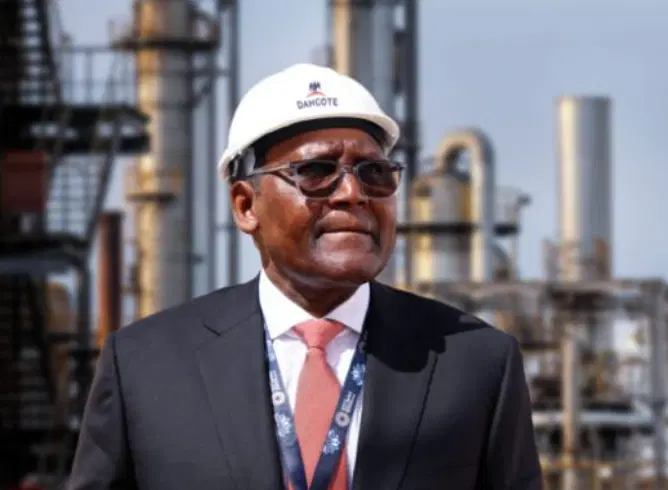
Dangote Refinery Ends Nigeria’s Era of Fuel Import Dependence, Boosts GDP, FX Earnings — EIU
The operational ramp up of the 650,000 barrels per day Dangote Petroleum Refinery & Petrochemicals is fundamentally reshaping Nigeria’s downstream oil sector, significantly reducing the country’s dependence on imported refined petroleum products and strengthening its external position, according to the Economist Intelligence Unit (EIU).
In its latest assessment on Nigeria’s fuel market and regulatory environment, the EIU said the refinery has already transformed a sector that was previously characterised by heavy reliance on imported fuel despite Nigeria being Africa’s largest crude oil producer. The report noted that the refinery met nearly 80 per cent of domestic petrol demand in April and produced enough volumes to satisfy local consumption requirements as operations approached full capacity.
The EIU described Nigeria’s downstream petroleum sector before the refinery as “long dysfunctional”, noting that the country had remained almost entirely dependent on costly imported fuel while producing nearly 1.5 million barrels of crude oil daily.
According to the report, the emergence of the refinery has reduced import dependence, improved domestic fuel availability and strengthened Nigeria’s balance of payments position through lower import demand and rising exports of refined petroleum products.
“The gradual ramp up of the 650,000 barrel/day Dangote refinery since May 2023 has transformed Nigeria’s long dysfunctional downstream sector,” the report stated. “The country’s main refineries, all state owned, had been inoperative for years and Nigeria was almost entirely reliant on costly imported fuel.”
The research and analysis division of The Economist Group, London added that the refinery’s attainment of full operational capacity and its planned expansion would further support Nigeria’s economic growth and foreign exchange earnings over the medium term.
“Meanwhile, the attainment of full capacity at, and an increase in exports from, the Dangote refinery will support real GDP growth and foreign exchange earnings in 2026 and 2027 and beyond, as a planned doubling of the plant’s output comes on stream around the end of the decade,” it added.
Industry analysts said the refinery is increasingly positioning Nigeria as an emerging refining and export hub, altering energy trade flows across Africa and reducing the vulnerability associated with fuel import dependence.
The EIU noted that the refinery’s expansion has coincided with major reforms in Nigeria’s downstream sector, including the removal of fuel subsidies and the introduction of market driven pricing mechanisms.
The report, however, said the transition from a state dominated fuel import structure to large scale domestic refining has triggered resistance from interests linked to the old import regime.
The latest tensions emerged following the decision by the Nigerian Midstream and Downstream Petroleum Regulatory Authority to relax restrictions on petrol imports despite the refinery’s growing capacity to meet domestic demand.
Dangote Industries subsequently initiated legal action, arguing that continued import approvals undermine domestic refining investments and conflict with the objectives of the Petroleum Industry Act, which seeks to encourage local refining capacity and reduce import dependence.
Analysts noted that the availability of large-scale domestic refining capacity has improved Nigeria’s energy security and reduced exposure to external supply shocks and foreign exchange volatility.
The Centre for the Promotion of Private Enterprise also cautioned against unrestrained importation of petroleum products, warning that such a policy could weaken Nigeria’s industrialisation drive and discourage investments in domestic refining.
Chief Executive Officer of CPPE, Muda Yusuf, said continued dependence on imported fuel had historically contributed to pressure on foreign reserves, exchange rate instability and fiscal leakages.
The refinery’s growing impact is also being reflected in Nigeria’s broader macroeconomic indicators. Earlier this month, S&P Global Ratings cited increased domestic refining capacity and rising hydrocarbon exports among the major factors supporting Nigeria’s sovereign credit rating upgrade – the first in 14 years.
Beyond Nigeria, analysts said the refinery is increasingly being viewed as a strategic industrial asset for Africa, where many countries remain heavily dependent on imported fuel despite rising demand for transportation, manufacturing, and power generation.
Business
BREAKING: Court Dismisses $19.6 Million Claim Against NNPCL — Rules Contract Scope Cannot Be Changed Orally
BREAKING: Court Dismisses $19.6 Million Claim Against NNPCL — Rules Contract Scope Cannot Be Changed Orally
In a landmark ruling on Friday, May 22, 2026, the Federal Capital Territory High Court in Abuja threw out a $19.6 million lawsuit filed by Alternate Dimensions Ventures Ltd against the Nigerian National Petroleum Company Limited (NNPCL), affirming a key legal principle: a written contract cannot be expanded through oral agreements or conduct.
Alternate Dimensions had sought $19,600,000 in professional fees, claiming the scope of its Direct Sale, Direct Purchase (DSDP e-pro) contract with NNPCL was orally expanded. Represented by counsel Patrick Peter, the firm argued it was entitled to the revised sum for services rendered under the alleged new terms.
But NNPCL, through its lawyer Ituah Imhanze of KENNA LP, pushed back sharply, arguing that parties are bound exclusively by the clear terms of their written agreement. Imhanze contended that without any written amendment, the claim was legally unsound, and the court agreed.
Delivering judgment, Justice Hamza Mu’azu upheld NNPCL’s defense, stating that the contract was unambiguous and that no evidence was adduced during the trial, which supported the alleged scope expansion. The court further found that NNPCL fully complied with all contractual terms and committed no breach.
Dismissing the suit as meritless, Justice Mu’azu reinforced the doctrine of sanctity of contract: any amendment to a written agreement must be express, unequivocal, and documented, not implied or verbal.
The ruling spares NNPCL from the S19.6 million claim and also a floodgate of similar potential liabilities.


- When women farm better, Eswatini eats better June 3, 2026
- Togo Hosts the 8th Annual Forum of National Volunteer Agencies in the Economic Community of West African States (ECOWAS) Region June 3, 2026
- Indigenous Peoples gravely vulnerable to Ebola epidemic, warn United Nations (UN) independent experts June 3, 2026
- Meeting between Parliamentary Vice-Minister ONISHI and His Excellency (H.E.) Mr. Cosgrow, Principal Minister and Minister for Agriculture, Fisheries and Blue Economy of Seychelles June 3, 2026
- Eritrea: Construction of Elementary School in Gogni Sub-Zone June 3, 2026
- African Union Commission (AUC) Chairperson His Excellency (H.E.) Mahmoud Ali Youssouf highlighted thePermanent Representatives’ Committee (PRC) critical role in advancing the Union’s agenda and laying the groundwork for the forthcoming Mid-Year Coordination Meeting (MYCM) June 3, 2026
- Eritrea: Eighth Grade National Examination Commences June 3, 2026
- Many Africans see justice system as unequal, costly, and slow, Afrobarometer survey reveals June 3, 2026
- Prof. Benedict Oramah to Chair Finance Summit as African Energy Week (AEW) 2026 Prepares for Major Deal Flow June 3, 2026
- The Islamic Development Bank (IsDB) Group Affiliates to Host the 14th Private Sector Forum in Baku, Azerbaijan (16-19 June 2026) June 3, 2026
- When women farm better, Eswatini eats better June 3, 2026
- Togo Hosts the 8th Annual Forum of National Volunteer Agencies in the Economic Community of West African States (ECOWAS) Region June 3, 2026
- Indigenous Peoples gravely vulnerable to Ebola epidemic, warn United Nations (UN) independent experts June 3, 2026
- Meeting between Parliamentary Vice-Minister ONISHI and His Excellency (H.E.) Mr. Cosgrow, Principal Minister and Minister for Agriculture, Fisheries and Blue Economy of Seychelles June 3, 2026
- Eritrea: Construction of Elementary School in Gogni Sub-Zone June 3, 2026
- African Union Commission (AUC) Chairperson His Excellency (H.E.) Mahmoud Ali Youssouf highlighted thePermanent Representatives’ Committee (PRC) critical role in advancing the Union’s agenda and laying the groundwork for the forthcoming Mid-Year Coordination Meeting (MYCM) June 3, 2026
- Eritrea: Eighth Grade National Examination Commences June 3, 2026
-

 news6 months ago
WHO REALLY OWNS MONIEPOINT? The $290 Million Deal That Sold Nigeria’s Top Fintech to Foreign Interests
-

 society1 month ago
SOCIAL MEDIA IS NOT A BATTLEFIELD COMMAND – WHY THE NIGERIAN ARMY’S ACTION AGAINST JUSTICE CRACK IS A NATIONAL SECURITY IMPERATIVE
-

 celebrity radar - gossips4 months ago
Dr. Chris Okafor Returns with Power and Fire of the Spirit -Mounts Grace Nation Altar with Fresh Anointing and Restoration Grace on February 1, 2026
-

 celebrity radar - gossips6 months ago
Prophet Kingsley Aitafo Releases 2026 Prophecy: ‘Nigeria Will Rise, but the World Must Prepare for Turbulence’