
celebrity radar - gossips
Legacy Is Not a Meme: Why Comparing Wizkid to Fela Kuti Is a Cultural Disservice

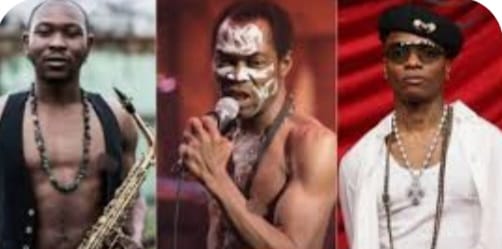
Legacy Is Not a Meme: Why Comparing Wizkid to Fela Kuti Is a Cultural Disservice.
By George Omagbemi Sylvester | For saharaweeklyng.com
“Seun Kuti’s Fiery Rebuttal and What It Reveals About Nigerian Music, History and Respect for Cultural Icons.”
In a moment that ignited fervent debate across social media, Grammy-nominated musician Seun Kuti delivered a blunt and unapologetic rebuke to fans who have taken to comparing contemporary Afrobeats star Wizkid to his father, legendary Afrobeat pioneer Fela Anikulapo-Kuti. In a viral Instagram livestream, Seun Kuti described the comparison not merely as inaccurate, but as “DISRESPECTFUL”, rooted in “IGNORANCE,” and symptomatic of a cultural trend that conflates popularity with historical relevance, a trend that risks trivialising one of Nigeria’s most revolutionary artistic legacies.
Seun’s remarks, passionate and raw, were not a simple defence of family honour. They were a clarion call to cultural literacy, a demand that Nigerians, especially music lovers and artists, distinguish between sound and substance; fame and legacy.
Roots of the Controversy.
The debate stems from persistent online claims (largely emanating from segments of Wizkid’s fanbase (“Wizkid FC”) that the singer represents a modern incarnation of Fela Kuti, or even that he has “SURPASSED” the Afrobeat legend in global influence. Seun Kuti responded emphatically:

“Wizkid FC, keep Fela’s name out of your mouths. You try to claim that your fake artiste is the new Fela, It’s an insult to Fela to call Wizkid the new Fela.”
These words, incendiary as they are, underscore a deeper debate: What does it mean to carry a legacy? And can commercial success ever be equated with revolutionary cultural impact?
Fela Kuti: More Than Music — A Movement.
To understand why Seun’s outburst resonates with many cultural historians and music scholars, we must revisit the magnitude of Fela Anikulapo-Kuti’s contributions.
Fela was not just a musician; he was the founder of Afrobeat, a genre combining jazz, funk, highlife, traditional Yoruba rhythms, and potent political commentary. His compositions were long, hypnotic, socially charged, and unapologetically defiant — songs like Zombie, Expensive Shit, and Water No Get Enemy were soundtracks of resistance against military dictatorship, corruption, and social injustice in Nigeria.
More than that, Fela’s music became a social movement; inspiring consciousness, unity, and defiance. The late scholar and critic Robert Farris Thompson once noted that Afrobeat was “a creative revolution that fused music with social transformation,” something few genres in world history have achieved with such potency. This was not merely performance art and it was performance protest.
His life was a campaign against oppression, resulting in repeated arrests, the notorious military attack on his Kalakuta Republic commune, and relentless persecution and yet he persisted, turning every struggle into artistic fuel. This context is crucial: Fela’s legacy is not measured by chart positions; it is inscribed in the political memory of a nation.
Wizkid: A Global Star, But in a Different Arena.
There is no denying Wizkid’s achievements. Emerging from Ojuelegba to global prominence, Wizkid has performed on legendary stages, collaborated with international icons, and brought Nigerian music to unprecedented commercial heights. He is a brand, a cultural ambassador, and a global export of Nigerian artistry.
Yet, there is a critical distinction: Wizkid’s influence is predominantly commercial and cultural, not overtly political or revolutionary in the mould of Fela Kuti’s mission.

Many of Wizkid’s songs (energetic, melodic, and deeply appealing) serve celebration more than revolution. They resonate with love, lifestyle, and Afrocentric swagger, but do not directly confront the systemic failings or power structures that shaped Fela’s oeuvre. This is not a diminishment of Wizkid’s craft, but a categorical difference, not hierarchy.
Wizkid himself acknowledged this nuance years ago, stating in an interview that “You cannot compare me with Fela, Fela is an inspiration.” He emphasised respect for Fela’s influence without equating their artistic identities.
Why the Comparison Is Misguided; And Harmful.
Seun Kuti’s criticism points to several key issues:
1. Ignorance of Historical Context
Seun labelled the ongoing comparisons as stemming from a lack of understanding of Fela’s historical struggle. Fela’s work was deeply embedded in political activism — something modern pop stardom rarely demands of artists today.
2. Erasure of Cultural Complexity
Reducing Fela to a brand name for hype disregards the layers of resistance and African identity he championed. As cultural theorist Paul Gilroy once said: “The politics of music cannot be separated from the politics of power.” By flattening Fela into a buzzword, we lose that textured insight.

3. Fueling Toxic Fan Culture
Seun also pointed to how fan rivalries (particularly online) can stifle genuine artistic collaboration. He cautioned that comparing one artist to another in combative terms leads to division rather than celebration of diverse musical contributions.
4. Conflating Commercial Success with Revolutionary Impact
This is perhaps the most salient point: global streaming numbers and sold-out shows are not the same as challenging oppressive systems. Fela’s legacy is measured not just in acclaim, but in societal change. Online popularity cannot mirror that.
Voices from Scholars and Cultural Critics.
Renowned ethnomusicologist Dr. E. Taylor Atkins once argued that “Afrobeat was fundamentally an intellectual and political project before it was a musical genre.” It was a language of dissent. In contrast, modern Afrobeats (while sonically rich) thrives within global pop structures and commercial ecosystems, rather than outside them.
Similarly, music historian Ingrid Monson has observed that “legends are not born from applause alone; they are forged in resistance and resonance with the people’s struggles.” In this light, Fela becomes a figure not easily paralleled.
A Cultural Reckoning : Honour Without Diminishment.
The debate ignited by Seun Kuti is more than a social media sensation. It is a cultural reckoning and a reminder that Nigerian music history is rich, layered, and deserves nuanced appreciation.
This is not to say that Wizkid’s achievements are irrelevant. They are monumental in their own right. But to elevate a contemporary pop star into the lineage of a revolutionary icon without context is, as Seun Kuti correctly pointed out, a disservice to history, to artistry, and to cultural memory.
In the words of acclaimed philosopher Kwame Anthony Appiah: “A culture that forgets its foundations forfeits its future.” Let us celebrate Wizkid for what he has achieved, and honour Fela Kuti for what he fought for, without conflating the two into a false equivalence.
For genuine cultural growth, Nigerian music must embrace its past, honour its icons, and encourage artistic excellence across all fronts; commercial, cultural, and political.





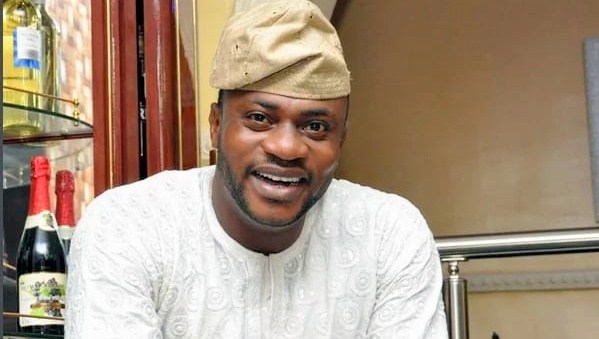
King of the Screen: Why Odunlade, Muyiwa, Femi Adebayo Remain Yoruba Movie Giants
The Yoruba movie industry has continued to produce legendary talents whose influence stretches beyond Nigeria to global audiences. Over the years, some actors have distinguished themselves through consistency, versatility, box office success, and cultural impact.
Among the numerous stars in Nollywood’s Yoruba sector, three actors have remained dominant figures whose names constantly resonate with fans and filmmakers alike — Odunlade Adekola, Muyiwa Ademola, and Femi Adebayo.

Odunlade Adekola: The Street King of Yoruba Cinema
Popularly regarded as one of the most entertaining actors in Nollywood, Odunlade Adekola has built a unique reputation through his energetic delivery, comic timing, emotional depth, and strong connection with grassroots audiences.
From comedy to action and emotional family dramas, the actor has consistently proven his versatility in blockbuster productions. His ability to interpret diverse roles effortlessly has made him a household name across Nigeria.
Industry observers believe his dominance on social media platforms, where his movie clips frequently go viral, has further strengthened his popularity among younger audiences.
Beyond acting, Odunlade has also contributed immensely to mentoring upcoming talents and expanding the commercial value of Yoruba films.
Muyiwa Ademola: The Master Storyteller

For many lovers of indigenous movies, Muyiwa Ademola remains one of the finest storytellers the Yoruba film industry has produced.
Widely respected for producing emotional and morally driven movies, the actor earned massive recognition through classic productions that focused on family values, culture, betrayal, perseverance, and societal lessons.
His calm delivery, deep scripts, and originality have kept him relevant despite changing trends in the entertainment industry.
Film critics often describe Muyiwa Ademola as one of the few actors whose productions combine entertainment with strong cultural education, making his movies timeless among older and younger viewers alike.
Femi Adebayo: The Modern-Day Box Office Force

Femi Adebayo has successfully combined traditional Yoruba storytelling with modern cinematic excellence, helping to project indigenous films to international audiences.
The actor, filmmaker, and producer has recorded major successes with high-budget productions that gained attention on streaming platforms and cinemas.
Known for his professionalism and attention to detail, Femi Adebayo has continued to push Yoruba movies beyond local boundaries while preserving cultural identity.
Entertainment analysts say his ability to blend culture, technology, and quality production has positioned him among the leading faces shaping the future of Yoruba cinema.
Growing Global Influence
The success of these actors reflects the increasing acceptance of indigenous Nigerian content globally. With streaming platforms creating wider access to local movies, Yoruba actors are now gaining international recognition and attracting new audiences.
Fans and stakeholders in the entertainment industry believe the contributions of Odunlade Adekola, Muyiwa Ademola, and Femi Adebayo have not only sustained Yoruba culture through film but have also elevated Nollywood’s global reputation.
celebrity radar - gossips
Eid-el-Kabir: Olowu of Kuta Urges Peace, Unity, Selflessness Among Nigerians
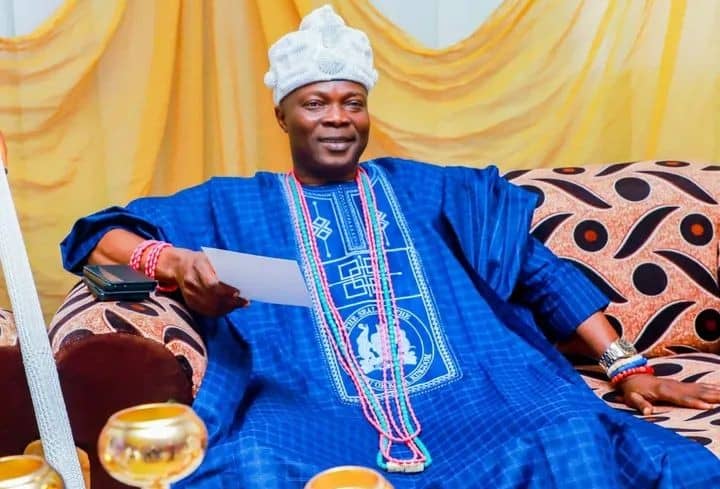
Eid-el-Kabir: Olowu of Kuta Urges Peace, Unity, Selflessness Among Nigerians
The Olowu of Kuta, HRM Oba Dr. Hammed Makama Oyelude, CON, Tegbosun III, has called on the Muslim Ummah and all Nigerians to make peace, unity, and selflessness their guiding principles as the world marks this year’s Eid-el-Kabir celebration.
In his Sallah message, the revered monarch described Eid-el-Kabir as a “highly spiritual occasion that demands dedication, commitment, and selflessness.”
Oba Makama said the period should be used to reflect on societal happenings and promote messages of hope and unity without inciting provocation.
He urged Nigerians to live together harmoniously, irrespective of religious, political, or tribal affiliations, stressing that politicians should exercise restraint and avoid inflammatory rhetoric ahead of the 2027 general elections.
“What should be uppermost in the mind of every patriotic Nigerian is **‘Country first,’” he said.
The monarch also appealed to citizens to remain vigilant in the face of insecurity, reassuring that the armed forces and paramilitary agencies are working round the clock to ensure a smooth and peaceful celebration.
“The price wise men pay for eternal liberty is vigilance. I urge everyone to celebrate moderately and extend a helping hand to the less privileged, widows, and orphans, embracing them as our brothers and sisters,” Olowu Makama added.
He concluded by wishing all Nigerians a peaceful and fulfilling Eid-el-Kabir celebration.
celebrity radar - gossips
Oba Babatunde Saliu Elebo II Felicitates Muslims on Eid-el-Kabir Celebration
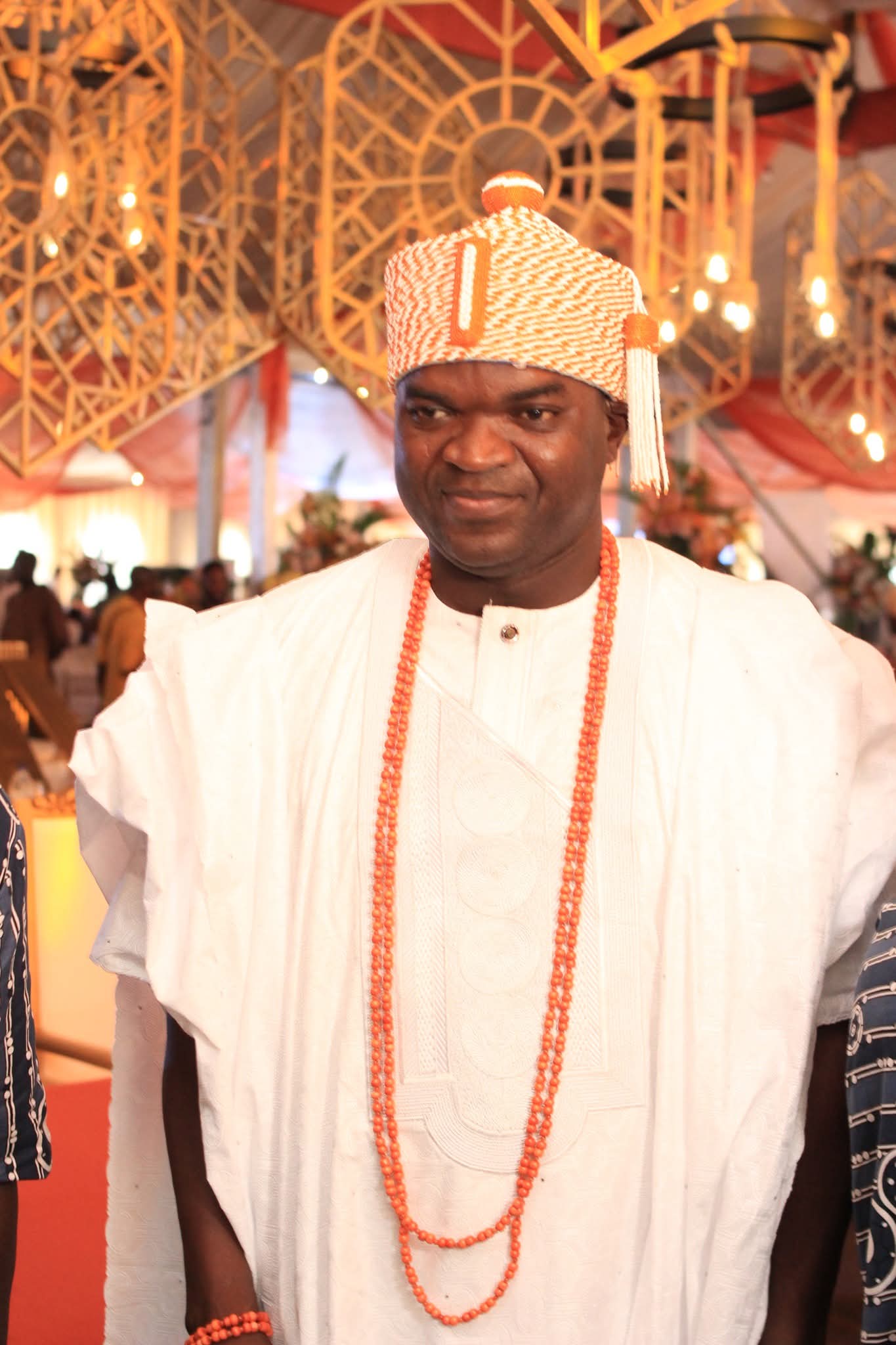
Oba Babatunde Saliu Elebo II Felicitates Muslims on Eid-el-Kabir Celebration
By Adeyemi Obadimu Veron
The Oloworo of Oworosoki Kingdom, Oba Babatunde Saliu Elebo II, has extended warm greetings and heartfelt felicitations to Muslims across Nigeria and the world at large on the joyous occasion of the 2026 Eid-el-Kabir celebration.
In a statement made available to Newsmen, the revered monarch urged Muslims to embrace the true teachings of Islam by promoting peace, love, unity, sacrifice, and compassion during and after the festive period.
Oba Babatunde Saliu Elebo II noted that Eid-el-Kabir, also known as Salah, remains one of the most significant celebrations in Islam as it symbolizes total obedience, faith, and devotion to Almighty Allah, drawing inspiration from the unwavering sacrifice of Prophet Ibrahim (Abraham), who demonstrated complete submission to the will of God.
According to the monarch, the Holy Qur’an teaches believers the importance of righteousness, kindness to humanity, tolerance, and support for the less privileged in society. He emphasized that the season should serve as a reminder for all Nigerians to live in harmony irrespective of religion, ethnicity, or political differences.
The royal father further called on Muslims to use the sacred period to pray fervently for peace, stability, economic growth, and sustainable development in Nigeria, stressing that national progress can only thrive in an atmosphere of unity and mutual understanding.
Oba Saliu also encouraged the faithful to extend hands of generosity to widows, orphans, and vulnerable members of society, noting that the essence of Eid-el-Kabir goes beyond celebration and feasting, but also reflects the spirit of sharing and caring for humanity as instructed in the Qur’an.
While wishing Muslims a peaceful and memorable Eid celebration, the Oloworo of Oworosoki prayed for divine blessings, prosperity, good health, and continued harmony in homes and communities.
“May this year’s Eid-el-Kabir strengthen our faith, deepen our love for one another, and bring renewed hope and abundant blessings to our nation,” the monarch stated.


- Pitcher Awards Announces 2026 Winners, Marking a Landmark Year for Pan‑African Creativity May 30, 2026
- Ghana Commemorates 78th International Day of United Nations Peacekeepers May 30, 2026
- South Africa: President Ramaphosa receives second interim report of Madlanga Commission May 30, 2026
- Asmara Marathon 2026 to be held May 30, 2026
- Powerful call for dialogue and compromise to secure peace in South Sudan issued on International Peacekeepers Day May 30, 2026
- Over 1,000 Participants Join Rwenzori Marathon Activation Run in Mombasa May 30, 2026
- World Health Organization (WHO) actively participated in the 2nd Summit on Healthcare Integration in Portuguese-speaking countries May 30, 2026
- Annual Meetings (AM) 2026: “Africa has what It takes” - Experts call for stronger financial systems to help Africa mobilise capital at scale May 30, 2026
- Eritrea Participates at Organization of African, Caribbean and Pacific States Meetings May 30, 2026
- Annual Meetings 2026 (AM2026): African Development Bank Group’s 2025 Annual Report Highlights Strong Results and a New Chapter for Africa’s Transformation May 29, 2026
- Pitcher Awards Announces 2026 Winners, Marking a Landmark Year for Pan‑African Creativity May 30, 2026
- Ghana Commemorates 78th International Day of United Nations Peacekeepers May 30, 2026
- South Africa: President Ramaphosa receives second interim report of Madlanga Commission May 30, 2026
- Asmara Marathon 2026 to be held May 30, 2026
- Powerful call for dialogue and compromise to secure peace in South Sudan issued on International Peacekeepers Day May 30, 2026
- Over 1,000 Participants Join Rwenzori Marathon Activation Run in Mombasa May 30, 2026
- World Health Organization (WHO) actively participated in the 2nd Summit on Healthcare Integration in Portuguese-speaking countries May 30, 2026
-

 news6 months ago
WHO REALLY OWNS MONIEPOINT? The $290 Million Deal That Sold Nigeria’s Top Fintech to Foreign Interests
-

 society4 weeks ago
SOCIAL MEDIA IS NOT A BATTLEFIELD COMMAND – WHY THE NIGERIAN ARMY’S ACTION AGAINST JUSTICE CRACK IS A NATIONAL SECURITY IMPERATIVE
-

 celebrity radar - gossips4 months ago
Dr. Chris Okafor Returns with Power and Fire of the Spirit -Mounts Grace Nation Altar with Fresh Anointing and Restoration Grace on February 1, 2026
-

 celebrity radar - gossips6 months ago
Prophet Kingsley Aitafo Releases 2026 Prophecy: ‘Nigeria Will Rise, but the World Must Prepare for Turbulence’