
Business
Meet The Convener and Discussants of YIGGI

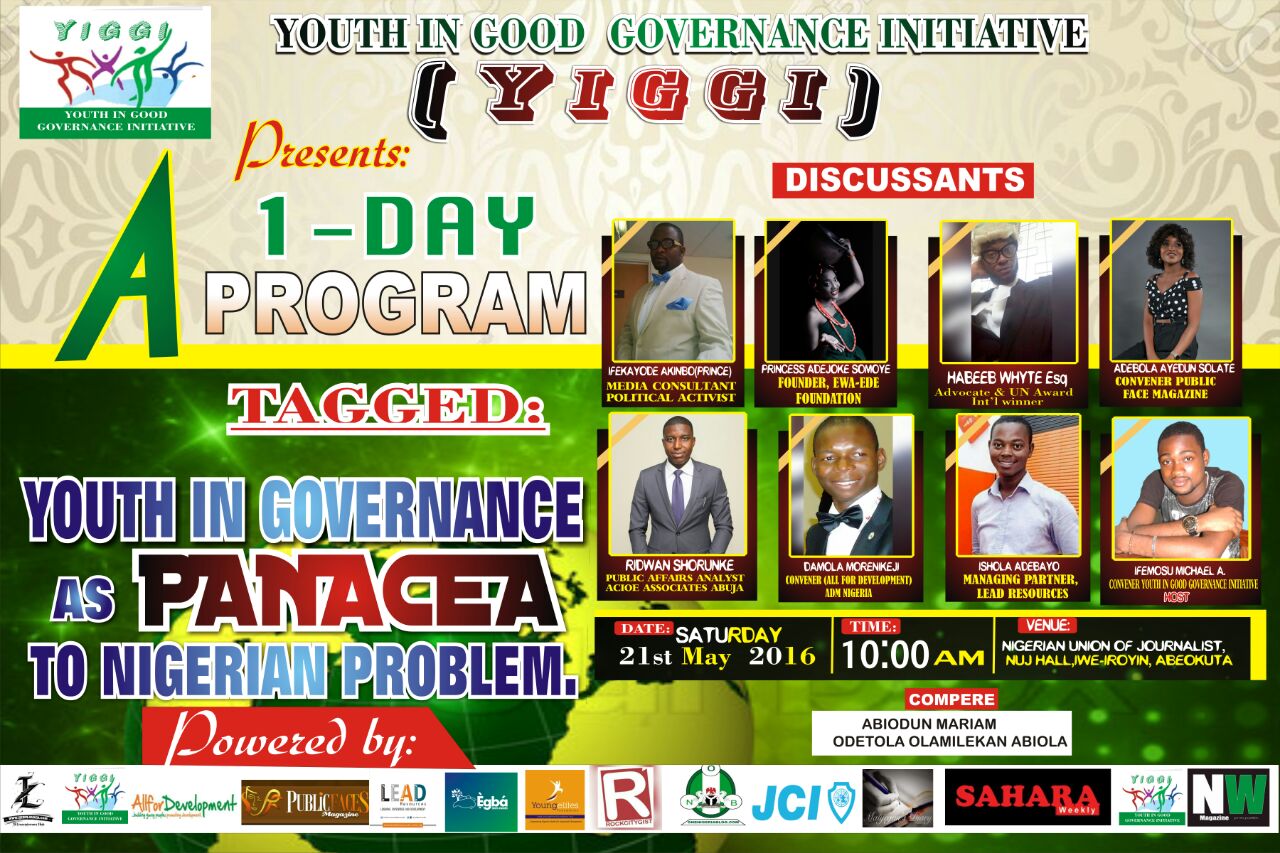

The Youth in Good Governance Initiative, Ogun state is ready to set everywhere ablaze On the 21st of May, 2016 as it presents a Life-changing Programmme tagged ‘Youth In Governance As Panacea To Nigerian Problem’. The Programme promises to lighten up the world of every youth and everyone that will be present with the set of the discussants who are role models in their respective field.
It’s 12days to go, it is going to be expository and educating. You can’t afford to miss it.
Save the date. May 21,2016 @NUJ HALL Iwe-iroyin, Abeokuta
ABOUT THE CONVENER.
Ifemosu Michael Adewale.
Ifemosu Michael Adewale, an indigene of Ogun State, is born into the family of Mr and Mrs Ifemosu, he attended his primary school at Bevola international nursery and primary school, where he was made the Head boy(2001), he later proceeded to Ijebu-Ode grammar School for his senior school certificate where he was made the Chapel Prefect(2008), He proceeded to Federal college of education, osiele, Abeokuta (2010), for his NCE program, where he graduated as an Agricultural science educationist(2013).
During his days at Federal College of Education Abeokuta, he engaged in a lot of activities, where he bagged a lot of certificate and award to his credit.
He was the Agricultural Science Student Association(ASSA) King between 2010-2011, he was two term Honourable member of federal college of education, Student Representative Assembly, Student Union Government between 2010-2013 , he was the Students Electoral committee (Seleco) Coordinator 2012-2013,he was given a merit award by National Association of Ogun State Students (Federal college of education, Abeokuta Chapter) in 2013, he was the National Assistant general secretary of National Association of Ogun State Students (NAOSS National) between 2013-2014, he was the National President, National Association of Ogun State Students (NAOSS National) between 2014-2015, as part of his dedication to the association, his administration is the first to ever release a gyration album which can be downloaded via inputing NAOSS Gyration on any search engines, he is currently the National Coordinator of National Association of Ogun State Students for the 2016 Electioneering.
He is a member of Kegite Club international, ilya Fatika, where he was made the Elder of the club between 2012-2013, he was awarded best Supportive Senior Fellow of Ilya Fatika between 2015-2016,
The executive Governor of Ogun State acknowledged the open letter he wrote to him especially when he challenged the Governor on the truthfulness of the 40projects commisioned during Ogun State at 40.
Ifemosu Michael Adewale recently made a bright effort when he took a case of a battered student of Abraham Adesanya Polythecnic submitted to him by RRA and consult, on behalf of National Association of Ogun State Students (NAOSS National) upon himself to ensure justice is done, the matter got the attention of Nigerians as it was published on various top Nigeria blogs and Newspapers. The popular Nigerian blogger Maiyeguns Diary published the story on the 19th of April, 2016, the Nation Newspaper and Punch newspaper published the story on the 23rd and 24th April, 2016 respectively.
Ifemosu Michael Adewale also declared his intentions to contest for the Councillorship elections in the 2016 Local Government elections under Ifesowapo LCDA, Odogbolu Local Government.
Ifemosu Michael Adewale is a prolific writer that an attempt to input his name on any of the search engines will surprise you.
He is currently the convener, initiator of Youth in Good Governance Initiative (YIGGI).
ABOUT OUR DISCUSSANTS
ISHOLA ADEBAYO, MANAGING PARTNER – LEAD RESOURCES
As a social-media techpreneur, Ishola Adebayo is the Managing Partner of LEAD Resources Centre — LEAD Resources Centre is housed at the Asero Housing Estate, Abeokuta; LEAD Resources is a social-tech innovation hub space in Abeokuta, which serves as a pre-incubation lab for technologists, social entrepreneurs, government, tech companies, and impact investors in and around Ogun State to co-found new solutions to the many social problems in Nigeria.
He is currently undergoing a postgraduate degree program (MSc) in Economics at the Olabisi Onabanjo University, Ago-Iwoye and holds a BSc (Ed) in Economics from the prestigious Tai Solarin University of Education, Ijagun, Ijebu-Ode, Ogun State. He served as a youth corps member at the National Assembly attached to the Senate Committee on Agricultural and Rural Development during his NYSC program.
DAMOLA MORENIKEJI
Is a social entrepreneur, and rising voice in education, youth capacity and leadership development in Africa with over six years experience in the development sector. He leads the team at All for Development (@All4Development), an organization he founded at age 16 in Abeokuta, with a commitment to building young leaders and promoting education, leadership & governance, social entrepreneurship, and youth participation in development.
Through All for Development, he had engaged thousands of young people through several initiatives including the Young and Emerging Leaders Summit, Pupil Leadership Programme, Studership (the annual international youth leadership academy), Youth Roundtables, Undergraduate Education Seminar Series and a host of other projects organized in partnership with other organisations across the country. These engagements encourage young people to further understand purpose and live right; serve as platforms and provide resources for continuous growth, education and development; build networks for leadership development and capacities for deepening positive democratic governance; encourage youth-driven social change – through social entrepreneurship –, and harness youthful strengths to optimize purposeful youth participation in nation building.
A 2013 Fellow of the Social Leadership Academy, USA, and 2012 DESPLAY Africa Fellow, Damola currently serves as a Global Youth Ambassador, with a commitment to improving the quality of global education, through advocacy. The Global Youth Ambassadors group, initiated by A World at School, was launched by the United Nations’ Secretary-General Ban Ki-moon and the UN Special Envoy for Global Education, former Prime Minister of the United Kingdom, Gordon Brown on April 10, 2014 in Washington DC, U.S.A. His passion for youth development had been witnessed through his contributions at some platforms for policy development including World Economic Forum on Africa (2014), National Education Stakeholders Dialogue, representing Nigeria at the African Youth and Governance Conference (2012, at age 19), and as a Delegate at the Global Youth Forum held in Bali, Indonesia (December 2012), among others.
He co-founded the Innovate! Hub, a social innovation community that encourages value creation through social innovation/entrepreneurship among young people at age 21 and initiated Studership, the annual international youth leadership academy that connects and equips emerging young leaders at age 19. Studership has since inception enrolled over 100 young leaders from over 30 countries, while members of the Studership community are creating positive change in their communities. A 2013 semi-finalist for the Thiel Under20 Fellowship for social innovators, Damola led Team Innovate! of the Federal University of Agriculture, Abeokuta and emerged one of the best teams in Nigeria and finalist at the ANEW National Ideas Contest organized by the Nigerian Universities Commission for all 128 Nigerian universities, in commemoration of the 2014 Global Entrepreneurship Week.
An avid writer and leadership/personal effectiveness trainer, Damola cut his tooth in creative writing after writing his first book titled ‘Spare the rod and spoil the child’ in year 2002, at age 9. He remains committed to helping young people grow through growth-inclined deliberations, and contributes to development through harnessing platforms for equipping young people to become better leaders and solve societal problems through civic participation and value-based leadership; promoting societal growth and acquiring professional experiences across diverse environments.
Damola is an alumnus of the International Leadership and Organisational Behaviour course offered by SDA Boconni School of Management, Boconni University, Italy; Social Entrepreneurship course by The DO School, Germany; and Adaptive Leadership course by Cambridge Leadership Associate, United Kingdom & +Acumen – among others. An alumnus of Comprehensive High School, Ayetoro, Ogun State, Damola lives his passion for youth leadership and educational development, and is currently concluding his studies at the Federal University of Agriculture, Abeokuta.
He has been commended for his work with several prestigious awards, including a formal commendation from President Olusegun Obasanjo [GCFR]; emerging the only undergraduate recipient of the Vice Chancellor’s Productivity Award from the Senate of the Federal University of Agriculture, Abeokuta; pioneer recipient of the Ogun State Youth Award for Excellence, adjudged by the Ogun State Government of Nigeria (May 2012); Finalist for the ‘Life Changer’s Rising Star award’, United Kingdom (November 2011); ‘Integrity Practitioner Award’ adjudged by ICPC/NAVC, Ogun state (October 2010); ‘The Most Outstanding Secondary School Student in Ogun State (Nigeria) award’ by the Ogun State Teaching Service Commission (January 2010); and 2nd runner up, Ogun State 2006 Artiste of the Year Award, by the Ogun State Government of Nigeria (August 2007), among others.
RIDWAN SORUNKE
Ridwan Sorunke is the Public Affairs Lead of a reputable advisory services firm based in Nigeria, ACIOE Associates, a firm of management, energy, power, government relations and finance consultants. His position covers Government Relations and Public Relations for the firm. He has worked with different local and multinational organizations including the Procter & Gamble Company and Seven-Up Bottling Company. He is experienced in government relations, public relations, crisis and issues management, quality control, and business development.
At ACIOE Associates, Ridwan Sorunke consults for organizations like Corporate Council on Africa, Procter & Gamble, Albright Stonebridge Group and the Nigeria Government. He was a key player in the Corporate Council on Africa’s US-Africa Business Summit and the US Trade Mission to Nigeria where he facilitated business discussions between foreign investors and senior government officials.
Ridwan has engaged in businesses with top officials in the Nigerian Government, captains of industry and international diplomats. He has facilitated and led business discussions between his firm, leading investors in the country and Honorable Ministers of the Federal Republic of Nigeria. He led ACIOE team to the Corporate Council on Africa’s roundtable discussion with the Vice President of Nigeria, His Excellency, Professor Yemi Osinbajo.
Prior to joining ACIOE Associates, he worked for Procter & Gamble Nigeria where he was the Lead for Corporate Communications. He executed key projects like the Procter & Gamble partnership with 5 MDAs on the Growing Girls and Women in Nigeria (GWIN) Initiative. He led Communications and E2E execution of the P&G Hygiene Campaign which supported the Federal Government, Lagos State Government and Ogun State Government through the donation of over 50,000 bars of soaps during the Ebola outbreak in Nigeria. Other key projects include the School Health and Nutrition projects with Save the Children International. He also led various employee engagement initiatives, sustainability programs, and media relations for the company.
He is very passionate about driving investments into the country, empowering the local SMEs and the Nigerian youths. Ambassador Koby Koomson of Ghana described him as the “next big personality in Africa”. During his leisure, he volunteers for Akiode Foundation, a non-governmental organization in Ogun State, with an interest in youth empowerment.
He has delivered career talks to hundreds of youths in the country.
He has a B.Sc. in Microbiology from the Obafemi Awolowo University and has taken courses and trainings in business management, conflict resolution, negotiation, marketing and media relations.
WHYTE HABEEB IBIDAPO
He is a Solicitor and Barrister of the Supreme Court of Nigeria. He is the Principal of Habeeb Whyte Legal and Co. He is a noble minded advocate who works hard to change the course of this generation with the power of the pen and words. He is a young, energetic lawyer who advocates for child protection and creativity amongst youth.
Habeeb has an impressive leadership history coupled with a fantastic writing career.
He is a force to reckon with in Nigeria, when it comes to youth, advocacy and child development and he has been greatly awarded by several organisations for his developmental contributions to the nation’s development.
Habeeb has bagged several international national and awards for his distinctiveness and proactive contributions. These awards include several awards for the moot court competitions; he won the United Nations Fund Population Agency (NIGERIA) International Poster Contest 2004 (KEEPING THE PROMISE): ICPD AT TEN. CATEGOTY III (13 – 15yrs). SECOND POSITION. (Reported in Gateway News & Views: UNFPA NEWSLETTER, VOL: 3, NO. 1, July Edition, 2006). Also the First Regional International Arbitration Moot Competition among African Universities, Lacio, Regency Hotels, Nairobi Kenya. 2011 (FIRST POSITION) reported by The Nation Newspaper on August 25th, 2011. Also reported by Compass Newspaper on August 24th, 2011 and The Tribune Newspaper on August 25th, 2011. The Coca Cola/ NBC The Nation CAMPUSLIFE Award as the PERSONALITY PROFILE REPORTER 2012. (This was reported by The Nation Newspaper on 6th of December, 2012 at page 30 – 32. Also reported by The Nigerian Compass Newspaper on 5th of December, 2012 at page 19). Coca Cola/ NBC The Nation CAMPUSLIFE Award as a runner up in PERSONALITY PROFILE REPORTER 2013. (This was reported by The Nation Newspaper on 19th of December, 2013).
He bagged the QuilPromasidor Second Runner-up for the Best Nigeria Future Writer, 2015. (This was reported by The Nation Newspaper on 25th of May, 2015) among others. Also, he was conferred with the honourary status of a Senior Advocate of the Union by the Student Union Judiciary of University of Ilorin.
Habeeb writes for most of the Nigerian newspapers and this has made him a force to reckon with in the youth circle. Top of his writings in the Newspaper has earned him meetings with great minds and top political leaders in the country. He has over 100 newspaper publications and most can be accessed through Google upon entering his name in the search engine platform. His writings skills have made him got recognition in the Youth sector in Nigeria, He has been adjudged to be one of the most influential Nigerian Youths. He was acknowledged by the President Muhammadu Buhari when he wrote him an Open letter upon assumption of office and also on his plans for the Nigerian Youth constituency in 2015. The executive Governor of Ogun State has acknowledged the open letter he wrote to him especially when he challenged the Governor on the truthfulness or otherwise of the payment of law school bursary during his stay at the Nigerian Law School.
In addition to his fantastic writing career he has at the moment nine academic papers published on various academic journals basically on law from topics based on human rights, electoral law, Islamic law and International Jurisprudence. He has also delivered three papers different symposium and summit all focused on the youth constituency in Nigeria.
He has featured on various radio and television programmes making submissions on things that can be done to better the youth constituency in Nigeria.
As a versatile youth, he has participated and contributed to a lot of events such as the Coca Cola NBC CampusLife Workshops, Building Bridges International Conference, University of Ilorin (2015), 1st African Students For Liberty West African Region Conference, 4th Annual Faculty International Conference on Security, Peace and Conflict Management In Africa: Options For National Integration In Nigeria Conference (2012) and the International Day of African Child Celebration, Abeokuta, Ogun State (2006). And recently he got endorsed by Dream Project Africa (A US based organization) to be among speakers that would be educating students across Nigerian universities on the constitutional rights of victims of sexual harassment and rape on Nigerian Campuses.
Habeeb recently made a bright effort when he took a case of a battered student of Abraham Adesanya Polythecnic upon himself to ensure justice is done.
The matter got the attention of Nigerians as it was published on various top Nigeria blogs and Newspapers.
The popular Nigerian blogger Linda Ikeji published the story on the 19th of April, 2016.
The Nation Newspaper and Punch newspaper published the story on the 23rd and 24th April, 2016 respectively.
As at now he is African Children Voices Ambassador (2007 – 2015), iCI-Hustle Nigeria Initiative Ambassador (2015), Gen Voices Ogun Ambassador (2014), Co-covener Legal Frontiers (2015), Editor Egba Youth Awards Foundation, Convener Egba Future Leaders Summit (2015) and Director of Programmes and advocacy Brain Builder International (2015) and Young Elites Foundation as Director of Sponsorship and Partnerships.
IFEKAYODE AKINBODE
He was born on the 28th of March to the family of Prince S.A Akinbode and Mrs J A Akinbode. He attended Our Lady of Apostles pry School, Ibara Abeokuta and later Macjob Grammar School between 1984-1990. He proceeded to OGUN State Polytechnic to Study Mass Communication (Broadcast Major). He started out early as Human right activist as an undergraduate and held several positions as Student Leader and rose to become chairman of NANS in Ogun Axis
He was also Secretary General of Ogunpoly SUG and Senator to NANS for 4 Years.
He led many popular anti Students Struggles and was detained severally by government security apparatus. As a professional Broadcaster / Journalist he worked in many Media Organizations and won several awards for outstanding performance
He was an Information Officer in Ogun State and he was an independent Presenter/Producer with OGTV and was Head of Presentation with NTA Channel 8 Enugu. On the Political front He was the Chairmanship Candidate of PPN in Abeokuta North in 2012 and served as Special Assistant on Youth Affairs between 2007-2011 to the former Governor of Ogun State (Otunba Gbenga Daniel). He is presently the CEO of Imperial Media.
Adebola Ayedun – Solate
She is the Publisher and Editor – in – chief of the reader’s choice magazine- PublicFaces Magazine a colourful general interest magazine in the south Western part of Nigeria. She is also the brain behind the prestigious M19 Ushers.
Recently she initiated an Empowerment programme for young female entrepreneurs called EVEPRENEUR.
The Award winning goal getter is the youngest publisher in Nigeria and the Ogun state secretary of Community Newspapers Publisher Association of Nigeria ( CONPAN )
She recently bags another international Award for VIBRANT ENTREPRENEUR IN ACCRA GHANA.
A product of Moshood Abiola Polytechnic Abeokuta where she studied Mass Communication.
Adejoke Somoye.
Adejoke Somoye is a graduate of Moshood abiola polytechnic, Abeokuta.
She is a freelance media practitioner, she pioneered the cultural radio programme known as EGBA DOTUN LAYE OBA ADEDOTUN.
For adejoke Somoye, the revitalization of Yoruba traditions, especially Yoruba language is her utmost priority.
She amazed and wild everybody when she launched her Foundation called Ewa-ede Caty.
The feat went viral and gained massive publicity through top leading news magazines, The TELL which featured about a four page interview of her visions.
She is currently the convener and initiator of Ewa-ede culture Foundation.if




Business
BREAKING: Court Dismisses $19.6 Million Claim Against NNPCL — Rules Contract Scope Cannot Be Changed Orally

BREAKING: Court Dismisses $19.6 Million Claim Against NNPCL — Rules Contract Scope Cannot Be Changed Orally
In a landmark ruling on Friday, May 22, 2026, the Federal Capital Territory High Court in Abuja threw out a $19.6 million lawsuit filed by Alternate Dimensions Ventures Ltd against the Nigerian National Petroleum Company Limited (NNPCL), affirming a key legal principle: a written contract cannot be expanded through oral agreements or conduct.
Alternate Dimensions had sought $19,600,000 in professional fees, claiming the scope of its Direct Sale, Direct Purchase (DSDP e-pro) contract with NNPCL was orally expanded. Represented by counsel Patrick Peter, the firm argued it was entitled to the revised sum for services rendered under the alleged new terms.
But NNPCL, through its lawyer Ituah Imhanze of KENNA LP, pushed back sharply, arguing that parties are bound exclusively by the clear terms of their written agreement. Imhanze contended that without any written amendment, the claim was legally unsound, and the court agreed.
Delivering judgment, Justice Hamza Mu’azu upheld NNPCL’s defense, stating that the contract was unambiguous and that no evidence was adduced during the trial, which supported the alleged scope expansion. The court further found that NNPCL fully complied with all contractual terms and committed no breach.
Dismissing the suit as meritless, Justice Mu’azu reinforced the doctrine of sanctity of contract: any amendment to a written agreement must be express, unequivocal, and documented, not implied or verbal.
The ruling spares NNPCL from the S19.6 million claim and also a floodgate of similar potential liabilities.
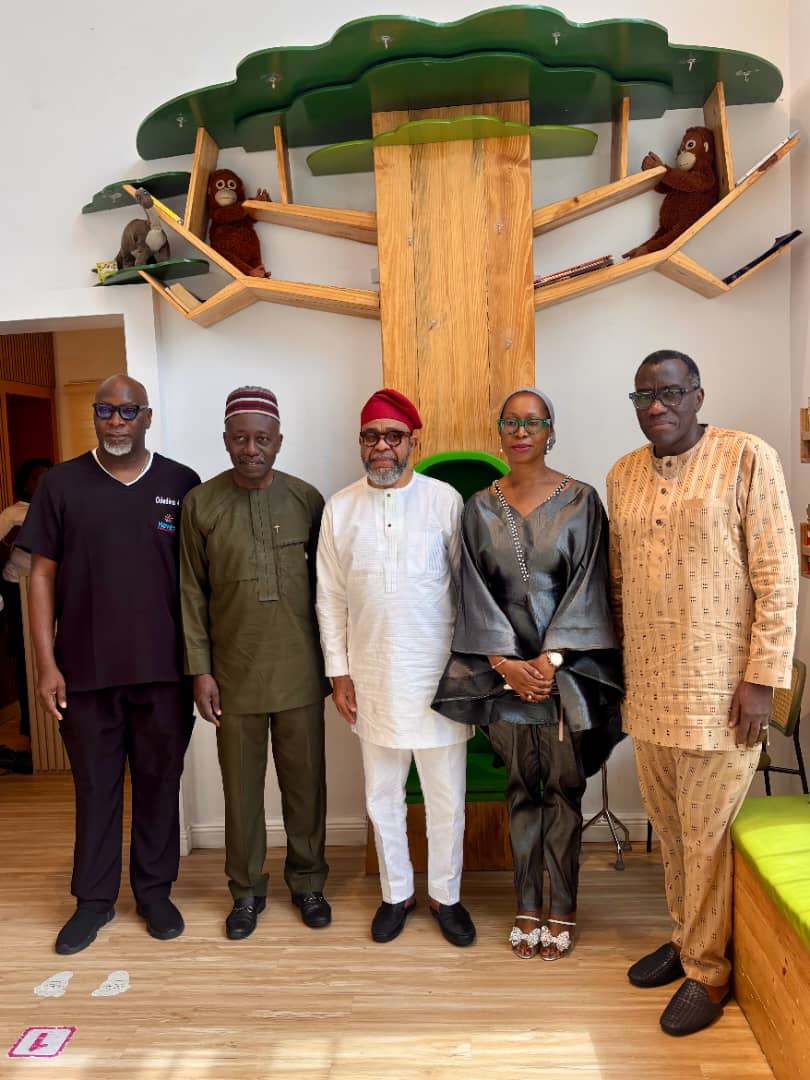
Advanced Neonatal and Pediatric ICU births in Ikeja
Haven Pediatric Practice has officially launched a state-of-the-art Neonatal Intensive Care Unit (NICU) in Ikeja, Lagos State today.
This facility is a direct response to the urgent need for specialized care, bridging the gap between despair and survival for families in Lagos and beyond.
In the world over, the dream for every expectant mother is simple: to carry to term and hold a healthy baby. But when that dream is interrupted by preterm birth, the emotional toll is devastating. In Nigeria, currently ranked as one of the most challenging environments for premature infant survival, the stakes have never been higher.
But by synergizing cutting-edge technology with the highest level of professional expertise, Haven Pediatric Practice has assembled a dedicated team of Neonatologists and pediatric specialists. Recognizing that respiration is the greatest hurdle for “born too early” champions, the clinic has invested in top of the range ventilation technology capable of supporting infants weighing as little as 0.4kg.
The Chief Medical Director of Haven Pediatric Practice Dr. Adebajo Odedina told our correspondent at the event that,
“We aren’t just launching a ward; we are deploying a lifeline. By combining world-class ventilators with specialized, experienced medical hands, we are significantly increasing the chances of survival for even our smallest warriors.”
This expansion reaffirms Haven Pediatrics’ commitment to providing comprehensive, advanced care from the very first breath, ensuring that being born early no longer means losing the fight for life.

Nigeria’s Booming Banks And A Collapsing Economy
BY BLAISE UDUNZE
Nigeria’s banking industry appears to be booming, largely driven by the policies of the Central Bank of Nigeria (CBN), under Governor Olayemi Cardoso, while the real economy continues to suffocate.
At a time when millions of Nigerians are sinking deeper into poverty, when inflation continues to erode household incomes, when businesses are collapsing under unbearable operating costs, and when migration has become a survival strategy for many young professionals, Nigerian banks are announcing staggering profits, stronger capital positions and unprecedented liquidity growth.
According to the bank’s financial statements, the financial system appears healthy. In reality, the economy where citizens work, trade and survive is gasping for breath.
This growing disconnect between financial sector prosperity and economic suffering now represents one of the gravest threats to Nigeria’s long-term economic stability and its ambition of building a $1 trillion economy.
The numbers are indeed impressive. Nigerian banks’ shareholders’ funds reportedly surged to about N27 trillion following the recapitalisation exercise. The top five banks now command balance sheets estimated at over N164 trillion. Tier-1 banks collectively generated trillions in profits within the first quarter of 2026 alone, while the sector-wide recapitalisation exercise raised over N4.56 trillion.
Ordinarily, such figures should inspire confidence about the future of the economy. Stronger banks are expected to translate into stronger businesses, more jobs, industrial expansion and wider economic opportunities. But Nigeria’s experience is proving otherwise.
Instead of serving as engines of productive growth, banks are increasingly becoming custodians of liquidity trapped within the financial system itself. That is the real danger.
Even as banking liquidity expands sharply, lending to the productive economy remains weak and constrained. Reports indicate that banks parked a record N24.13 trillion with the CBN, while simultaneously increasing investments in government securities and treasury bills because these avenues are safer, more profitable and less risky than lending to businesses operating within Nigeria’s harsh economic climate. This reality exposes a dangerous contradiction.
A developing economy desperately in need of industrialisation, manufacturing growth, infrastructure expansion and job creation cannot afford a banking system that prefers financial safety over productive economic risk.
A sustainable economy cannot thrive where the real sector is starved of funds. Yet this is exactly where Nigeria now stands.
Despite the massive liquidity in the banking system, growth in lending to the private sector continues to lag behind the pace of liquidity expansion. The implication is clear. Financial sector strength is no longer translating into real economic development. This is not how healthy economies function.
Ordinarily, banks in developing economies are expected to operate as catalysts for economic transformation. Across successful economies, commercial banks finance manufacturing, agriculture, innovation, infrastructure and entrepreneurship because those sectors generate jobs, productivity and national wealth.
Small and Medium Enterprises (SMEs), especially, are globally recognised as the backbone of grassroots economic development. Nigeria is no exception.
SMEs account for over 70 percent of registered businesses, contribute nearly half of Nigeria’s GDP and generate between 84 and 90 percent of employment opportunities. Yet despite their overwhelming importance, SMEs reportedly receive barely between 0.5 percent and one percent of total commercial bank lending. That is not merely a policy failure. It is an economic tragedy.
Every denied SME loan is a denied employment opportunity. Every failed business represents another frustrated entrepreneur. Every frustrated entrepreneur becomes another Nigerian contemplating migration.
This is how economic dysfunction transforms into human displacement. The so-called “Japa” phenomenon did not emerge in isolation. It is deeply connected to economic hopelessness. When productive citizens lose faith in their country’s economic future, migration stops being a lifestyle choice and becomes a survival mechanism.
Unbeknownst to the policymakers is that Nigeria cannot realistically build a $1 trillion economy while productive sectors remain financially suffocated.
A closer glance at the trend of events helps to reveal that the danger becomes even more severe when viewed against the backdrop of the recent outcome of the 305th Monetary Policy Committee (MPC) meeting, where the CBN retained the Monetary Policy Rate (MPR) at 26.5 percent in its bid to sustain disinflation and macroeconomic stability.
It is understandable and certain that inflation control is important, but the fact is that at 15.69 percent, inflation remains painfully high and continues to weaken purchasing power. Food prices remain elevated. Transportation costs remain unbearable. Consumer demand is weakening. The middle class is shrinking rapidly.
But maintaining elevated interest rates also comes with painful consequences. Simple arithmetic tells us that higher interest rates mean higher lending costs. Higher lending costs mean higher production costs. Higher production costs worsen inflationary pressures and weaken business survival rates.
Invariably, this also tells us that for Nigerian manufacturers and corporates already battling a weak naira, volatile exchange rates, expensive diesel, energy insecurity and declining consumer demand, access to affordable credit is becoming almost impossible.
Many businesses are no longer borrowing to expand production or employ workers. They are borrowing merely to survive. This is economic suffocation.
Meanwhile, banks continue to profit massively from high-yield government securities and treasury investments. Reports indicate that major Nigerian banks generated over N6.68 trillion from investment securities and treasury bills instead of financing productive enterprises capable of stimulating growth and employment.
Government’s appetite for borrowing itself shows no sign of slowing down. Public borrowing reportedly climbed above N39 trillion. Historically, excessive government borrowing crowds out private sector investment because banks naturally prefer lending to government rather than exposing themselves to risks associated with businesses operating in unstable economic conditions.
The result is predictable. The real sector weakens while speculative and non-productive financial activities flourish. This explains why Nigeria increasingly resembles a financial system disconnected from the realities of ordinary citizens.
While banks celebrate rising profits, poverty and hunger worsen visibly across the country. Unemployment continues to rise. Small businesses are dying quietly. Household purchasing power is collapsing under inflationary pressure.
Yet the financial system appears more liquid than ever. That contradiction should alarm policymakers. The recapitalisation exercise itself now raises difficult questions.
What exactly is the purpose of stronger banks if stronger banks do not strengthen national productivity?
If recapitalisation merely empowers banks to deepen investments in government debt instruments while manufacturers, farmers, exporters and SMEs remain starved of affordable credit, then the exercise risks becoming financially impressive but economically hollow.
Indeed, the current monetary environment appears to reward financial conservatism over productive risk-taking.
The stringent Cash Reserve Requirement (CRR), elevated interest rates and broader macroeconomic uncertainty continue to discourage aggressive lending to the private sector. Banks understandably seek safety. But nations do not industrialise through excessive financial caution.
No economy develops when capital circulates primarily within treasury bills and government securities instead of flowing into factories, farms, logistics, housing, innovation and production.
This is the larger danger confronting Nigeria today. Economic crises rarely begin with recession statistics alone. Sometimes, they begin when financial institutions become detached from the suffering realities of the wider economy. They begin when growth exists only within banking balance sheets but disappears from households, factories and streets.
Without productive credit expansion, economic growth becomes artificial and exclusionary. Without affordable financing, businesses cannot scale. Without business expansion, jobs cannot emerge. Also, it must be noted that without jobs, insecurity, poverty and migration inevitably worsen. The implications for social stability are enormous.
One painful fact is that citizens already burdened by inflation, debt pressures and widespread distrust now face a system where economic opportunities continue shrinking despite apparent financial sector prosperity. One of the lurking dangers is that this deepens resentment, weakens confidence in institutions and threatens long-term economic cohesion.
The CBN’s inflation fight may be necessary, but monetary stability alone cannot substitute for productive economic expansion. Financial stability without inclusive growth eventually becomes unsustainable.
The real economy matters more than banking optics. Nigeria urgently needs policies that incentivise real sector lending, reduce structural risks facing manufacturers and SMEs, strengthen credit infrastructure, lower production bottlenecks and redirect liquidity toward productive economic activity.
As a matter of fact, it is high time for Nigeria to start rethinking the growing dependence on debt-driven fiscal management that continues to crowd out private investment. Development cannot occur when government borrowing consumes the financial oxygen needed by businesses.
Ultimately, banking profitability should not become an isolated island of prosperity surrounded by a collapsing productive economy.
A nation cannot celebrate trillion-naira banking profits while millions of citizens sink deeper into economic despair. No society sustains such a contradiction indefinitely.
If Nigeria truly hopes to build a resilient and inclusive economy, then the banking sector must once again become a vehicle for national development rather than merely a beneficiary of government debt and monetary tightening.
Otherwise, the country risks creating a contradictory economy where banks grow richer while citizens grow poorer and where financial prosperity exists only on paper while economic hardship defines everyday life.


Blaise, a journalist and PR professional, writes from Lagos and can be reached via: [email protected]


- Venezuela Under Rodriguez: Turning Back Toward Stability and Opportunity (By NJ Ayuk) May 25, 2026
- Dubai Chamber of Commerce concludes trade mission in Addis Ababa with series of bilateral business meetings between companies from Dubai and Ethiopia May 25, 2026
- How Congo’s Offshore Legacy Fields Are Powering a New Production Upswing May 25, 2026
- Rugby Africa Appoints Former National Basketball Association (NBA) Africa Executive Aïcha Diop as Chief of Staff to the President May 25, 2026
- Global Africa Business Initiative shifts Digital and Health Action Pathways into higher gear to accelerate continent’s economic transformation May 25, 2026
- The Board of Trustees of the Al-Sumait Prize for African Development announces the award winner for the year 2025; It has been awarded to an African institution and researcher in the field of food security May 25, 2026
- Statement of the International Contact Group for the Great Lakes (ICG) on the situation in the eastern Democratic Republic of the Congo (DRC) May 24, 2026
- Eritrea: Messages of Congratulations May 24, 2026
- African Development Bank (AfDB) – 2026 Annual Meeting: Full live coverage on Africa 24 May 24, 2026
- Countries in the Horn of Africa and Yemen recommit to ending variant poliovirus May 23, 2026
- Venezuela Under Rodriguez: Turning Back Toward Stability and Opportunity (By NJ Ayuk) May 25, 2026
- Dubai Chamber of Commerce concludes trade mission in Addis Ababa with series of bilateral business meetings between companies from Dubai and Ethiopia May 25, 2026
- How Congo’s Offshore Legacy Fields Are Powering a New Production Upswing May 25, 2026
- Rugby Africa Appoints Former National Basketball Association (NBA) Africa Executive Aïcha Diop as Chief of Staff to the President May 25, 2026
- Global Africa Business Initiative shifts Digital and Health Action Pathways into higher gear to accelerate continent’s economic transformation May 25, 2026
- The Board of Trustees of the Al-Sumait Prize for African Development announces the award winner for the year 2025; It has been awarded to an African institution and researcher in the field of food security May 25, 2026
- Statement of the International Contact Group for the Great Lakes (ICG) on the situation in the eastern Democratic Republic of the Congo (DRC) May 24, 2026
-

 news5 months ago
WHO REALLY OWNS MONIEPOINT? The $290 Million Deal That Sold Nigeria’s Top Fintech to Foreign Interests
-

 society3 weeks ago
SOCIAL MEDIA IS NOT A BATTLEFIELD COMMAND – WHY THE NIGERIAN ARMY’S ACTION AGAINST JUSTICE CRACK IS A NATIONAL SECURITY IMPERATIVE
-

 celebrity radar - gossips4 months ago
Dr. Chris Okafor Returns with Power and Fire of the Spirit -Mounts Grace Nation Altar with Fresh Anointing and Restoration Grace on February 1, 2026
-

 celebrity radar - gossips5 months ago
Prophet Kingsley Aitafo Releases 2026 Prophecy: ‘Nigeria Will Rise, but the World Must Prepare for Turbulence’
You must be logged in to post a comment Login
You must log in to post a comment.