
society
Memory as a Weapon: How Nations Use History to Protect Their Future

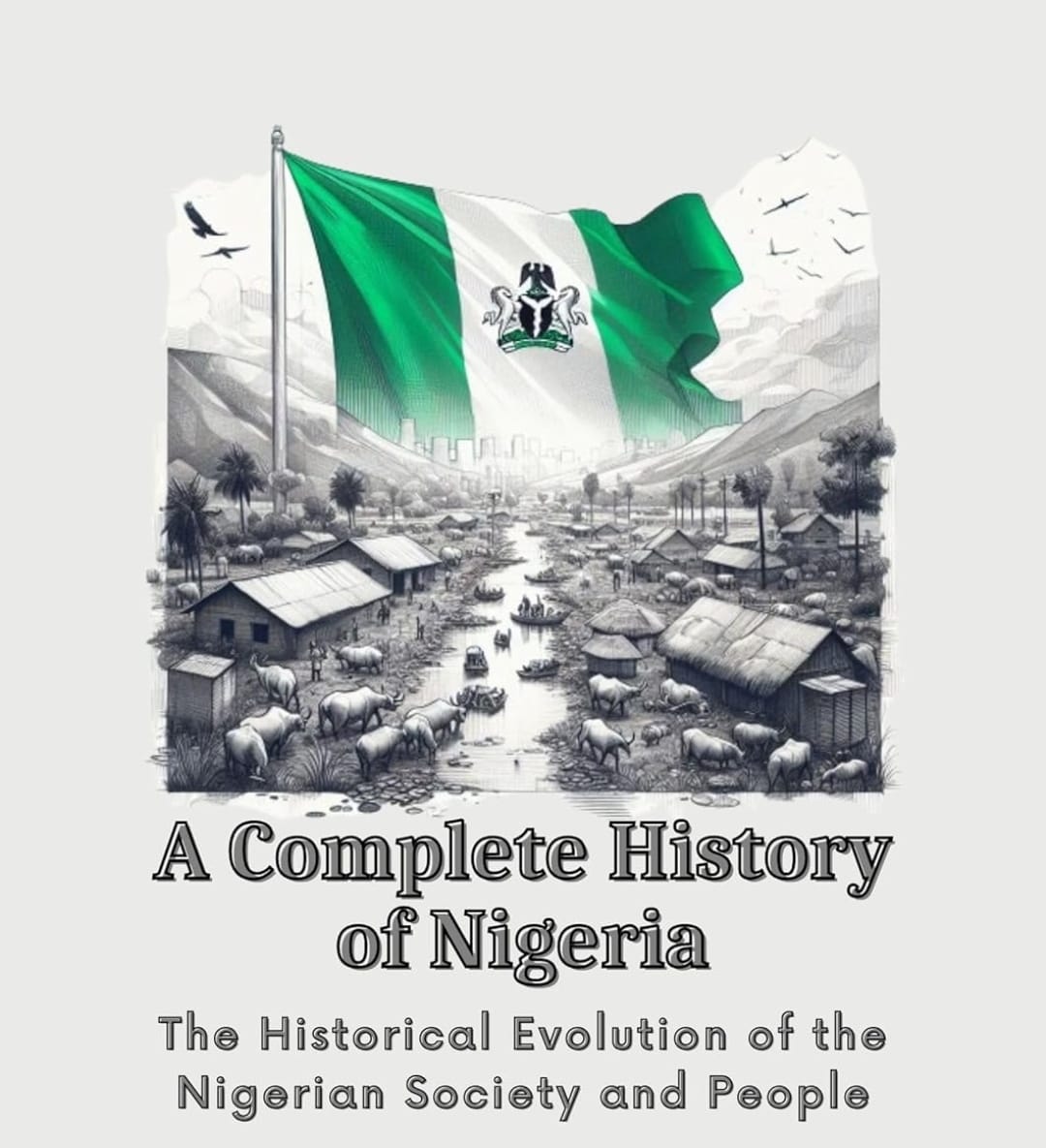
Memory as a Weapon: How Nations Use History to Protect Their Future.
By George Omagbemi Sylvester | Published by Saharaweeklyng.com
Nations that forget are nations that fall. Memory is not nostalgia; it is defense.
History is not merely a record of what happened; it is a tool, a weapon and a shield. Nations that harness the power of memory can protect themselves from repeating mistakes, guide citizens toward accountability and build institutions that endure. Nations that forget, by contrast are condemned to cyclical failure. Nigeria sits at this crossroads today.

George Santayana’s timeless warning resonates more urgently now: “Those who cannot remember the past are condemned to repeat it.” In Nigeria, forgetting has become habitual; a dangerous silence that allows corruption, misgovernance and tribalism to thrive.
Memory as Strategy.
Globally, nations have long used history as a strategic asset:
Germany institutionalized remembrance after World War II. Holocaust education, memorials and civic programs transformed a society capable of atrocities into a nation committed to accountability, human rights and rule of law.

South Africa employed truth and reconciliation commissions to confront the horrors of apartheid. Remembering allowed the country to rebuild trust and national cohesion.
Rwanda uses genocide memorials and civic education to prevent recurrence of ethnic violence, demonstrating that collective memory is a safeguard for peace.
Memory is not passive; it is an active, disciplined practice that informs decision-making, governance and citizen vigilance.
Nigeria’s Lost Opportunity.
Nigeria has often treated history as optional. Civil war, coups, electoral fraud, corruption scandals and political betrayals are taught selectively, if at all. The consequences are visible:

Political Recidivism: Leaders who failed in the past often return to power with little scrutiny.
Institutional Fragility: Agencies remain weak because lessons from mismanagement are ignored.
Cultural Fragmentation: Tribalism and religious favoritism persist because the memory of the cost of division is neglected.
By neglecting memory, Nigeria has armed itself poorly against recurring crises. Every cycle of misrule could have been mitigated had the lessons of the past been institutionalized.
Memory in Civic Life.
Memory strengthens democracy by empowering citizens:
Historical Literacy: Citizens who know their past are better judges of political promises and campaign rhetoric.
Accountability: Public officials act more cautiously when past abuses are remembered and enforced through institutional mechanisms.
Unity Through Shared Narrative: Recognizing both the triumphs and failures of all regions reduces ethnic rivalry and fosters national cohesion.

Consider the June 12, 1993 election. Remembering Chief Moshood Abiola’s struggle and the annulment of his mandate is not mere nostalgia; it is a lesson in civic courage, the cost of impunity and the value of collective vigilance.
Tools for Memory.
Nigeria can weaponize memory in practical ways:
Curriculum Reform: Schools should embed comprehensive Nigerian history (independence struggles, civil war, civil rights movements) emphasizing the causes, consequences and moral lessons.
National Archives and Museums: Document and display the nation’s triumphs and failures for public engagement.
Public Commemorations: Memorial days, statues and lectures celebrate sacrifices and caution against repeating errors.
Media Engagement: Documentaries, podcasts and investigative journalism can translate history into accessible narratives, reaching citizens outside classrooms.
By turning memory into practice, Nigeria can create a culture where accountability is expected not optional.

Memory as Resistance.
Memory is also resistance; resistance against manipulation, tribalism, corruption and historical erasure. When citizens remember who built Nigeria, who resisted oppression and who sacrificed for democracy, they are empowered to demand better governance.
The historian Toyin Falola notes: “The past is never dead in Africa; it lives in politics, policy and the pulse of society.” Nigeria’s past is alive, whether we acknowledge it or not. The question is whether we will use it consciously as a shield, or remain passive victims of repetition.
Nationalistic Imperative.
Nigerians must internalize memory as a civic weapon. Every child taught about Herbert Macaulay, Funmilayo Ransome-Kuti or Michael Imoudu is a citizen less likely to tolerate impunity. Every remembrance of failed coups, annulled elections and civil war casualties is an inoculation against repeat mistakes.
Memory transforms despair into action. It converts historical pain into lessons that guide governance, policy and civic engagement. A nation armed with memory cannot be easily misled by propaganda, tribalism or populist deception.
Final Thoughts.
Memory is more than reflection. It is preparation, protection and power. Nigeria’s future depends not on ignoring history, nor on selective remembrance, but on fully weaponizing it; teaching it, commemorating it, debating it and enforcing its lessons through institutions and civic culture.
History is knocking. Memory is the weapon to answer. Will Nigeria lift the shield or continue marching blind into repetition?





Dr. Bernard Shiaunda Eete Mobilizes Loyalists Ahead of Kenya’s General Election
Ahead of Kenya’s 2027 general election, Nyanza ODM aspirant Dr. Bernard Shiaunda Eete, popularly known as Dumex3, has intensified grassroots mobilization by holding a strategic meeting with his loyalists across the region. The gathering was aimed at aligning his team, refining campaign strategies, and positioning the movement for a decisive outcome at the polls.
The meeting provided an important platform for open consultation, idea exchange, and consensus building. Dr. Eete emphasized the need for unity, discipline, and clear communication as the campaign enters a critical phase. According to attendees, the discussions focused on strengthening the political structure on the ground, addressing community concerns, and ensuring that the movement remains responsive to the aspirations of the people.
A key focus was Dr. Eete’s developmental agenda for Nyanza. He outlined his commitments to education, youth empowerment, healthcare access, and infrastructure development, noting that these areas remain central to transforming lives in the region. He urged his loyalists to carry the message to the grassroots, explaining both what has been achieved so far and what the region stands to gain if they rally behind his candidacy.
“This is not just about winning an election. It’s about building a stronger, united political movement that delivers real change for our people,” Dr. Eete told the gathering. He called on his supporters to remain focused, avoid divisive rhetoric, and engage voters with facts about his track record and plans.
The meeting ended with a renewed commitment from the loyalists to expand outreach, coordinate ward-level activities, and mobilize voters ahead of party primaries and the general election. Organizers described the session as productive, noting that it sharpened the team’s resolve and clarified immediate next steps.
As political activity heats up in Nyanza, Dr. Eete’s camp says the strategy is clear: consolidate support, communicate consistently, and deliver a campaign anchored on service and results.


Live update from Kenya by Hon. Babatunde Seidu, Youths Ambassador._
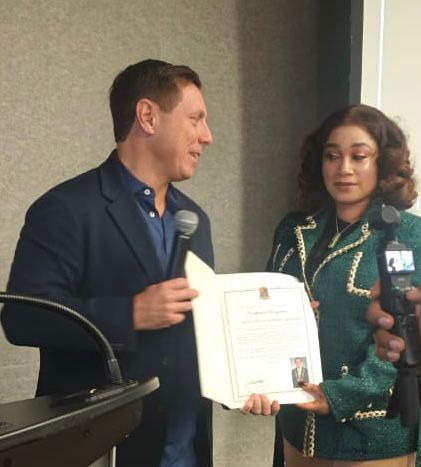
Mayor of Brampton Honours Olajumoke Abegunde For Charitable Works
…Foundation Touches Over 8,000 Women, Widows, and Youth in Ondo State…..
…Collaborates with International Partners for Free Skill Acquisition in Canada…
For Chief Mrs. Olajumoke Abegunde, the act of touching lives positively and contributing meaningfully to societal development is not merely a pastime but a deeply ingrained existential mandate. With unwavering gusto, she has remained faithful to this noble vision, championing the esoteric principle that cheerful giving and advocacy for the downtrodden are responsibilities too sacred to be left exclusively in the hands of the government.
This resolute philosophy has not only engendered transformative impact within her immediate locality but has also catapulted her onto the global stage. Recently, her passionate charitable exertions—executed both within and outside the shores of Nigeria—earned her prestigious international recognition.
A Legacy of Grassroots Transformation
As the visionary founder of the Jummy I Care Foundation, Chief Mrs. Abegunde has systematically dismantled barriers of vulnerability across Ondo State. Through sustained philanthropic gestures, she has disbursed extensive humanitarian relief and social assistance to over 3,000 indigent widows and elderly persons. In parallel, her foundation has galvanized robust support for orphaned and vulnerable children while orchestrating an ambitious women’s empowerment programme. To date, over 5,000 women have benefited from skills acquisition and income-generating activities designed to cultivate self-reliance and entrepreneurial audacity. Many of these beneficiaries have also received start-up seed capital to establish their own enterprises.
A proud alumna of Criminology and Security Studies from the National Open University of Nigeria, Chief Mrs. Abegunde has also distinguished herself as a patron of youth development. She has sponsored numerous essay writing and entrepreneurship competitions across Ondo State, in addition to funding medical outreaches, orphanage interventions, Iftar and Easter entrepreneurship programmes, and sustained feeding initiatives for the less privileged.
Her core philosophy remains immutable: when those who are well-to-do invest strategically in their immediate society, the collective becomes safer, more stable, and poised for greater heights.
International Collaboration and Brampton Honour
In a decisive move to intensify her developmental footprint, the Jummy I Care Foundation recently entered into a strategic tripartite collaboration with the Habeeb Okunola Foundation and the MakeMee Elegant Foundation. Together, they delivered a gratuitous, high-impact skill acquisition training programme to residents of Brampton, Canada.
Participants were immersed in an array of artisan crafts, including the production of resin bags, photo books, picture otters, resin key holders and frame holders, ornamental flower vases, rhinestone embellishment, and the advanced technique of printing images on fabrics.
In a ceremonial recognition of her sustained benevolence, the Mayor of Brampton formally hosted Chief Mrs. Abegunde and her delegation at the mayor’s office. The mayor personally expressed profound gratitude for her unwavering support of community development and entrepreneurship. As a tangible emblem of this appreciation, she was presented with a personally signed certificate of appreciation and commendation.
Unwavering Commitment to the Future
While accepting the honour, Chief Mrs. Olajumoke Abegunde reaffirmed her immutable resolve. She declared that her commitment to touching lives remains absolute and non-negotiable. According to her, she will not relent in ensuring that more lives are touched, more support is channeled to the people, and greater stability is secured for communities. She further emphasized her dedication to cultivating the spirit of entrepreneurship among women and youths as a cornerstone for sustainable development.
With over 8,000 direct beneficiaries in Nigeria alone and an expanding international footprint, Chief Mrs. Abegunde stands as a formidable testament to the profound change one determined philanthropist can effectuate when passion meets purpose.



APM Senatorial Candidate Ajadi Distributes Over 500 Bags of Rice
The Senatorial candidate of Oyo Central Senatorial District under the Allied Peoples Movement (APM), Ambassador Olufemi Ajadi Oguntoyinbo, has distributed over 500 bags of rice to residents, party members, state executives, and key stakeholders across Oyo State ahead of the forthcoming Eid al-Adha celebration.
The gesture, which forms part of his annual humanitarian outreach, was aimed at easing economic hardship and strengthening unity among party executives, party members, and residents within the senatorial district during the festive period.
Ajadi said the distribution was a continuation of his commitment to supporting vulnerable households and fostering community solidarity, especially at a time when many families are facing rising food prices and economic pressure.
He explained that Eid al-Adha is rooted in sacrifice, sharing, and compassion, adding that political leadership must consistently reflect empathy for the people, regardless of political affiliation or election cycles.
According to him, the intervention was extended to party executives, grassroots mobilizers, youth groups, and key stakeholders across the senatorial district to ensure equitable distribution across different segments of the political structure in Oyo State.
Ajadi further noted that the initiative was designed to complement household food needs during the festive season, stressing that small acts of support can significantly ease the burden on families affected by economic challenges.
He urged political leaders at all levels to prioritize welfare-driven initiatives that have direct impact on citizens, emphasizing that leadership should go beyond campaigns to sustained service delivery and humanitarian engagement.
Beneficiaries of the rice distribution expressed appreciation for the gesture, describing it as timely and thoughtful amid rising food costs across the country.
They commended Ajadi for maintaining close contact with grassroots members and consistently demonstrating what they described as people-oriented leadership.
The distribution exercise was carried out across selected locations within Oyo Central Senatorial District and coordinated through local party structures to ensure fairness and orderly sharing.
Political observers in the state noted that such interventions have become a key feature of political engagement in Nigeria, particularly during festive seasons, as politicians seek to connect with constituents beyond electoral promises.
As the Eid al-Adha celebration approaches, Ajadi reaffirmed his commitment to continuing similar initiatives aimed at supporting families and promoting unity among residents of Oyo State.


- Transforming Healthcare and Empowering Women: Dr. Rasha Kelej Recognized Among Africa’s 100 Most Influential Women May 25, 2026
- 2026 BASKETBALL AFRICA LEAGUE SEASON: BY THE NUMBERS May 25, 2026
- Guyana Confirmed to Host Caribbean Energy Week 2027 as Regional Energy Integration Gains Momentum May 25, 2026
- Canon Demonstrates Print’s ‘Power to Move’ with On-Stand Experience and Latest Large Format Technologies at Federation of European Screen Printers Associations (FESPA) Global Print Expo 2026 May 25, 2026
- Africa Doesn't Need to Be Translated; It Needs to Be Heard (By Rania El Rafie) May 25, 2026
- Venezuela Under Rodriguez: Turning Back Toward Stability and Opportunity (By NJ Ayuk) May 25, 2026
- Dubai Chamber of Commerce concludes trade mission in Addis Ababa with series of bilateral business meetings between companies from Dubai and Ethiopia May 25, 2026
- How Congo’s Offshore Legacy Fields Are Powering a New Production Upswing May 25, 2026
- Rugby Africa Appoints Former National Basketball Association (NBA) Africa Executive Aïcha Diop as Chief of Staff to the President May 25, 2026
- Global Africa Business Initiative shifts Digital and Health Action Pathways into higher gear to accelerate continent’s economic transformation May 25, 2026
- Transforming Healthcare and Empowering Women: Dr. Rasha Kelej Recognized Among Africa’s 100 Most Influential Women May 25, 2026
- 2026 BASKETBALL AFRICA LEAGUE SEASON: BY THE NUMBERS May 25, 2026
- Guyana Confirmed to Host Caribbean Energy Week 2027 as Regional Energy Integration Gains Momentum May 25, 2026
- Canon Demonstrates Print’s ‘Power to Move’ with On-Stand Experience and Latest Large Format Technologies at Federation of European Screen Printers Associations (FESPA) Global Print Expo 2026 May 25, 2026
- Africa Doesn't Need to Be Translated; It Needs to Be Heard (By Rania El Rafie) May 25, 2026
- Venezuela Under Rodriguez: Turning Back Toward Stability and Opportunity (By NJ Ayuk) May 25, 2026
- Dubai Chamber of Commerce concludes trade mission in Addis Ababa with series of bilateral business meetings between companies from Dubai and Ethiopia May 25, 2026
-

 news5 months ago
WHO REALLY OWNS MONIEPOINT? The $290 Million Deal That Sold Nigeria’s Top Fintech to Foreign Interests
-

 society3 weeks ago
SOCIAL MEDIA IS NOT A BATTLEFIELD COMMAND – WHY THE NIGERIAN ARMY’S ACTION AGAINST JUSTICE CRACK IS A NATIONAL SECURITY IMPERATIVE
-

 celebrity radar - gossips4 months ago
Dr. Chris Okafor Returns with Power and Fire of the Spirit -Mounts Grace Nation Altar with Fresh Anointing and Restoration Grace on February 1, 2026
-

 celebrity radar - gossips6 months ago
Prophet Kingsley Aitafo Releases 2026 Prophecy: ‘Nigeria Will Rise, but the World Must Prepare for Turbulence’