
Business
“MTN OF FRAUD”?: How MTN allegedly smuggles billions to shell companies abroad, to evade tax in Nigeria


MTN has consistently prided itself as the foremost telephone company that is getting Nigerians talking the most. Now the South African company is about to set tongues wagging across networks with revelations that it has routinely been shipping billions of dollars overseas to avoid paying its fair share of tax in Nigeria.
An 11-month-long joint investigation by PREMIUM TIMES, Finance Uncovered and amaBhugane reveals that MTN has been running circles around Nigerian revenue authorities using a complex but noxious tax avoidance scheme called Transfer Pricing.
For any economy, it is a slow death.
The red flag was raised the moment our investigations showed that MTN Nigeria has been making payments to two overseas companies – MTN Dubai and MTN International in Mauritius – both located in tax havens.
It was discovered that in 2013 for example, MTN set aside N11.398 Billion from MTN Nigeria to pay to MTN Dubai. A similar transfer of N11.789 Billion was made by MTN Ghana to the same MTN Dubai, making it a total of N23.187 Billion that was shipped to the Dubai offshore account.
In a rare disclosure in 2013, MTN admitted it made unauthorized payments of N37.6 Billion to MTN Dubai between 2010 and 2013. The transfers were then “on-paid” to Mauritius, a shell company with zero number of staff and which physical presence in the capital Port Louis is nothing more than a post office letter box. The disclosure amounted to a confession given that MTN made the dodgy transfers without seeking approval from the National Office for Technology Acquisition and Promotion (NOTAP), the body mandated to oversight such transfers.
On the basis of an earlier management fees agreement that was technically quashed by NOTAP and on the basis of MTN’s reported revenues, it is estimated that N90.2 Billion could have been transferred out of Nigeria in management fees alone since the company was founded in 2002.
Transfer Pricing
For corporate organizations determined to escape the taxman but still cleverly staying on the right side of the law, Transfer Pricing is the new cellar door constructed by the most ingenious of accountants. It is a new global disease to which Third World economies are the most vulnerable.
Multinationals employ Transfer Pricing to move their profits offshore, leaving behind a shrinking tax base in their host countries and inexorable cuts to public services.
In Africa, tax avoidance has been named as one of the factors holding the continent back by starving governments of the revenues it needs for development.
A report jointly commissioned by the United Nations and the African Union and drafted by a high level panel led by former South African president Thabo Mbeki considered tax avoidance by multinationals to be an “illicit financial flow” and a significant drain on government resources across the continent.
In total illicit financial flows, which included corruption and the proceeds of crime, were determined to be costing the continent $50 Billion a year $50bn.
Just last year, South Africa’s deputy president Cyril Ramaphosa had harsh words for tax dodgers. He said: “Tax evasion is not only a crime against the state; it’s also a crime against the people of our country, ordinary people.”
Curiously, the same Cyril Rhamaposa was non-executive chairman of the board of MTN between 2001 and 2013 before he became South Africa’s No.2 man. In effect, the same tax practices which the deputy president strongly condemned in his country as financial crime is vigorously being promoted in Nigeria.
MTN is the largest cell phone company in Africa with 227.5 million subscribers. The company, which operates in more than 20 countries across Africa and the Middle East, has Nigeria as its biggest operation.
Until now, tax justice investigations had focused on computer giants, corporations in the extractive industry, food and beverages; in fact everywhere but the mobile phone sector despite the cell phone industry in Africa being one of the largest and most important industries for the continent.
Mobile phone has been a cheap and quick way of rolling out the vital communications infrastructure that has underpinned Africa’s growth story over the last decade. As a result the industry has seen explosive growth. With 685million mobile phone users in Africa, the success story means that cell phone companies are now the largest contributor to government revenues in many African countries. That is when they pay their fair share of taxes.
Artificial operating costs
To pay little or no tax, companies determined to cheat begin by seeking ways to create artificial operating costs in the country where they operate. For example, a company is in Nigeria but has a parent or subsidiary company in another country. It makes huge profit but decides to declare a much lower profit-before-tax. To achieve this, it pays the parent and/ or subsidiary company for services not rendered and ships cash to them. Where services are rendered, the costs are inflated. Such services may include royalty for the use of brand name, procurement services, technical services and management services.
Typically, the recipient company is located in an offshore territory under a different financial jurisdiction. MTN has a substantial network of subsidiaries in offshore tax havens, including the British Virgin Islands, Dubai and Mauritius.
Because of the growing concerns that multinationals are using intra-company trading to shift profits around the world by overcharging for services delivered or in more extreme cases by creating artificial transactions where no services was rendered at all, respective countries have a maximum percentage of profits it can allow companies to pay out as management fees.
For example, in Senegal, accounts from the company Sonatel show that the company has a ‘cooperation agreement’ with parent company France Telecom that is capped at 1.43% of revenue.
Until 2010 MTN Nigeria had an agreement with MTN Dubai to pay 1.75% of revenues to the company for management, and royalties for the use of the MTN trademark. Nigeria requires that management fees paid by multinationals are approved by the National Office for Technology Acquisition and Promotion (NOTAP). The fee payments had been reversed following a failure to come to a new agreement on management fees with Nigerian regulators.
MTN’s previous agreement with NOTAP expired in 2010.
Notwithstanding, MTN has continued to make payments overseas. When we sent questions to MTN over these unauthorized payments, the company told us that this was because they expected NOTAP to approve a new deal and backdate it to the date of the expiry of the previous deal.
MTN’s financial activities are now being questioned by more than one tax authorizes in Africa.
In Ghana the MTN subsidiary, Scancom, has been paying vast management fees to companies located offshore. Our investigations reveal that Scancom paid 758m GHS in management and technical fees to MTN Dubai between 2008 and 2013. This was 9.64% of the company’s revenue. Normally the maximum fee level allowed in Ghana is 6%.
We can reveal that the high levels of fees attracted the attention of Ghana’s intelligence services, which launched an investigation into “economic fraud” between 2012 and 2013.
MTN’s management fees need approval from the Ghana Investment Promotion Centre (GIPC). The Ghanaian “National Security Taskforce” has called for a “review of all technology transfer and management service agreements currently held by GIPC to remove sections which are inapplicable and wrongly provided for” and upgrading and training of state systems and staff.
In response to this, MTN in Ghana told us: “The technical and management services agreements between Scancom and Investcom were duly approved by the GIPC.”
The current head of the GIPC is Mrs. Mawuena Trebarh, who between 2007 and 2012 was responsible for government relations at MTN Ghana. This reporting team asked Mrs Trebarh to comment on whether her previous role could be perceived a conflict of interest. She did not respond to our requests.
In response to our enquiries MTN confirmed that the company paid 12 billion West African Francs in 2012 and 14 billion West African Francs in 2013 in management fees to MTN International. The figure for 2013 is equivalent to 5% of the revenue made by MTN in Cote d’Ivoire.
Dubai paradox
Dubai is one of the places MTN ships huge profits to. Meanwhile, MTN does not operate any mobile phones in Dubai, yet it has significant operations in the small city state.
MTN told us that it employs around 115 people in Dubai who provides services to the MTN group such as group procurement, group finance, legal services, human resources and other corporate functions.
One tool that campaigners have said will be helpful is to look at company reporting on a country by country basis. If a company is making huge revenues in a country where it has few employees but there is a low tax rate, which would suggest that there may be some profit shifting taking place.
In Uganda, a dispute between the Uganda Revenue Authority and MTN has revealed that the company is paying 3% of its turnover in management fees to MTN International.
The fees have been challenged by the Uganda Revenue Authority (URA) who issued MTN with a “notice of assessment” in 2011. This was for a number of tax issues between 2003 and 2009, but a large portion was to do with a dispute over management fees, most of which had been paid to Mauritius.
Correspondence between the URA and MTN seen by us show that the URA questioned the legitimacy of these fees, and pointed out that MTNI, the company providing “management services” to MTN Uganda had not spent any money in the years they had looked into. The URA said this could only mean two things: that management services provided to MTN Uganda had either already been paid for by MTN Uganda (and so MTN was in effect charging twice for the same thing) or they were never provided at all.
The Ugandan authority told the company: “We have repeatedly asked for evidence of specific work performed by MTN Group for MTN Uganda for each of the tax years 2003 to 2009. We have only been provided with very little information relating to 2009 and the latter years. This information is very far from justifying a payment of 3 per cent of MTN Uganda’s turnover as management fees.”
NOTAP keeps mum
Asked to confirm the amount of fees paid out to MTN Dubai and Mauritius based on the company’s reported revenue between 2002 and today, MTN told PREMIUM TIMES: “There is no disclosure obligation for this information in South Africa or Nigeria.”
Asked to explain the possible justification for MTN Nigeria to pay fees for management and technical services to a company with no employees, MTN said: “It is the contracting party’s prerogative as to how it elects to discharge its contractual obligations.”
Meaning is that MTN Mauritius can perform its task without a single staff member.
PREMIUM TIMES made sustained efforts to get NOTAP and the Federal Inland Revenue Service (FIRS) to comment on the MTN practices in Nigeria.
The Director in charge of Technology Transfer and Agreement, Ephraim Okejiri, initially pleaded that he was in a meeting, and that the reporter should wait.
But after over four hours of waiting, he sent a secretary to say he would not be able to give any information on MTN.
Similarly at Nigeria’s tax agency, the Federal Inland Revenue Service, the Director of Public Communications, Emmanuel Obeta, who had earlier promised on three occasion to make information available on the matter suddenly had a change of mind.
He said relevant officials who should provide him with the information sought were all not available.
Additional report by Bassey Udo




Business
BREAKING: Court Dismisses $19.6 Million Claim Against NNPCL — Rules Contract Scope Cannot Be Changed Orally

BREAKING: Court Dismisses $19.6 Million Claim Against NNPCL — Rules Contract Scope Cannot Be Changed Orally
In a landmark ruling on Friday, May 22, 2026, the Federal Capital Territory High Court in Abuja threw out a $19.6 million lawsuit filed by Alternate Dimensions Ventures Ltd against the Nigerian National Petroleum Company Limited (NNPCL), affirming a key legal principle: a written contract cannot be expanded through oral agreements or conduct.
Alternate Dimensions had sought $19,600,000 in professional fees, claiming the scope of its Direct Sale, Direct Purchase (DSDP e-pro) contract with NNPCL was orally expanded. Represented by counsel Patrick Peter, the firm argued it was entitled to the revised sum for services rendered under the alleged new terms.
But NNPCL, through its lawyer Ituah Imhanze of KENNA LP, pushed back sharply, arguing that parties are bound exclusively by the clear terms of their written agreement. Imhanze contended that without any written amendment, the claim was legally unsound, and the court agreed.
Delivering judgment, Justice Hamza Mu’azu upheld NNPCL’s defense, stating that the contract was unambiguous and that no evidence was adduced during the trial, which supported the alleged scope expansion. The court further found that NNPCL fully complied with all contractual terms and committed no breach.
Dismissing the suit as meritless, Justice Mu’azu reinforced the doctrine of sanctity of contract: any amendment to a written agreement must be express, unequivocal, and documented, not implied or verbal.
The ruling spares NNPCL from the S19.6 million claim and also a floodgate of similar potential liabilities.
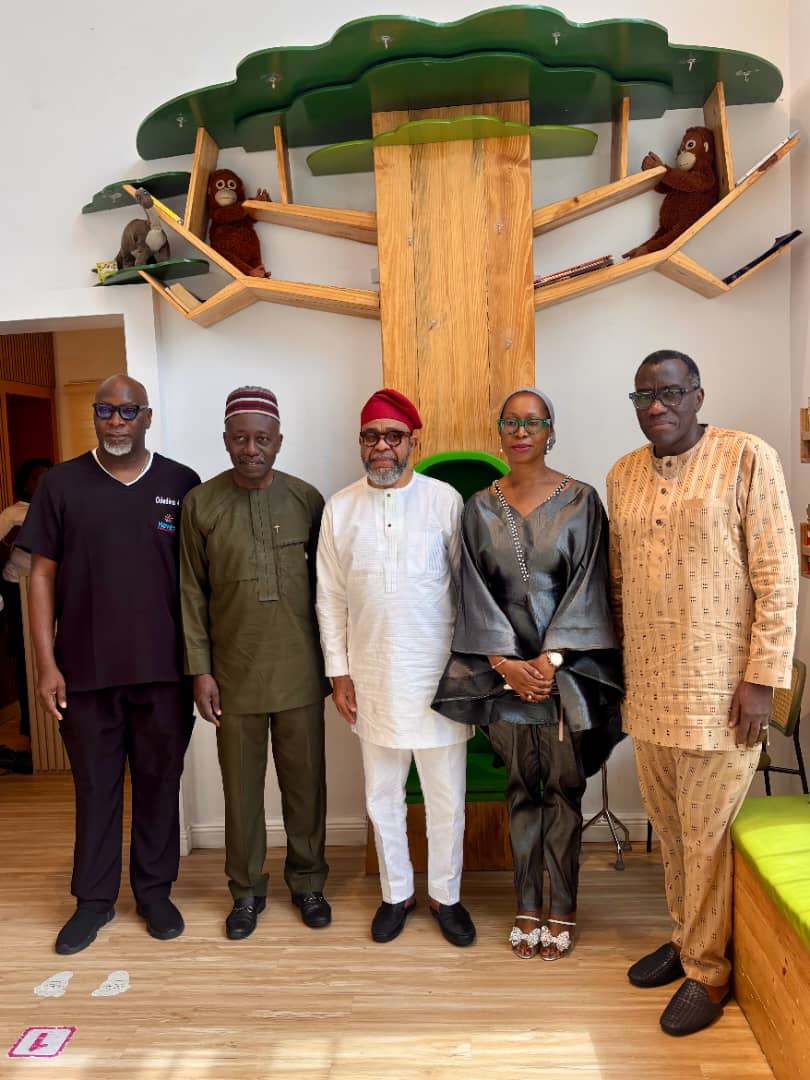
Advanced Neonatal and Pediatric ICU births in Ikeja
Haven Pediatric Practice has officially launched a state-of-the-art Neonatal Intensive Care Unit (NICU) in Ikeja, Lagos State today.
This facility is a direct response to the urgent need for specialized care, bridging the gap between despair and survival for families in Lagos and beyond.
In the world over, the dream for every expectant mother is simple: to carry to term and hold a healthy baby. But when that dream is interrupted by preterm birth, the emotional toll is devastating. In Nigeria, currently ranked as one of the most challenging environments for premature infant survival, the stakes have never been higher.
But by synergizing cutting-edge technology with the highest level of professional expertise, Haven Pediatric Practice has assembled a dedicated team of Neonatologists and pediatric specialists. Recognizing that respiration is the greatest hurdle for “born too early” champions, the clinic has invested in top of the range ventilation technology capable of supporting infants weighing as little as 0.4kg.
The Chief Medical Director of Haven Pediatric Practice Dr. Adebajo Odedina told our correspondent at the event that,
“We aren’t just launching a ward; we are deploying a lifeline. By combining world-class ventilators with specialized, experienced medical hands, we are significantly increasing the chances of survival for even our smallest warriors.”
This expansion reaffirms Haven Pediatrics’ commitment to providing comprehensive, advanced care from the very first breath, ensuring that being born early no longer means losing the fight for life.
Nigeria’s Booming Banks And A Collapsing Economy
BY BLAISE UDUNZE
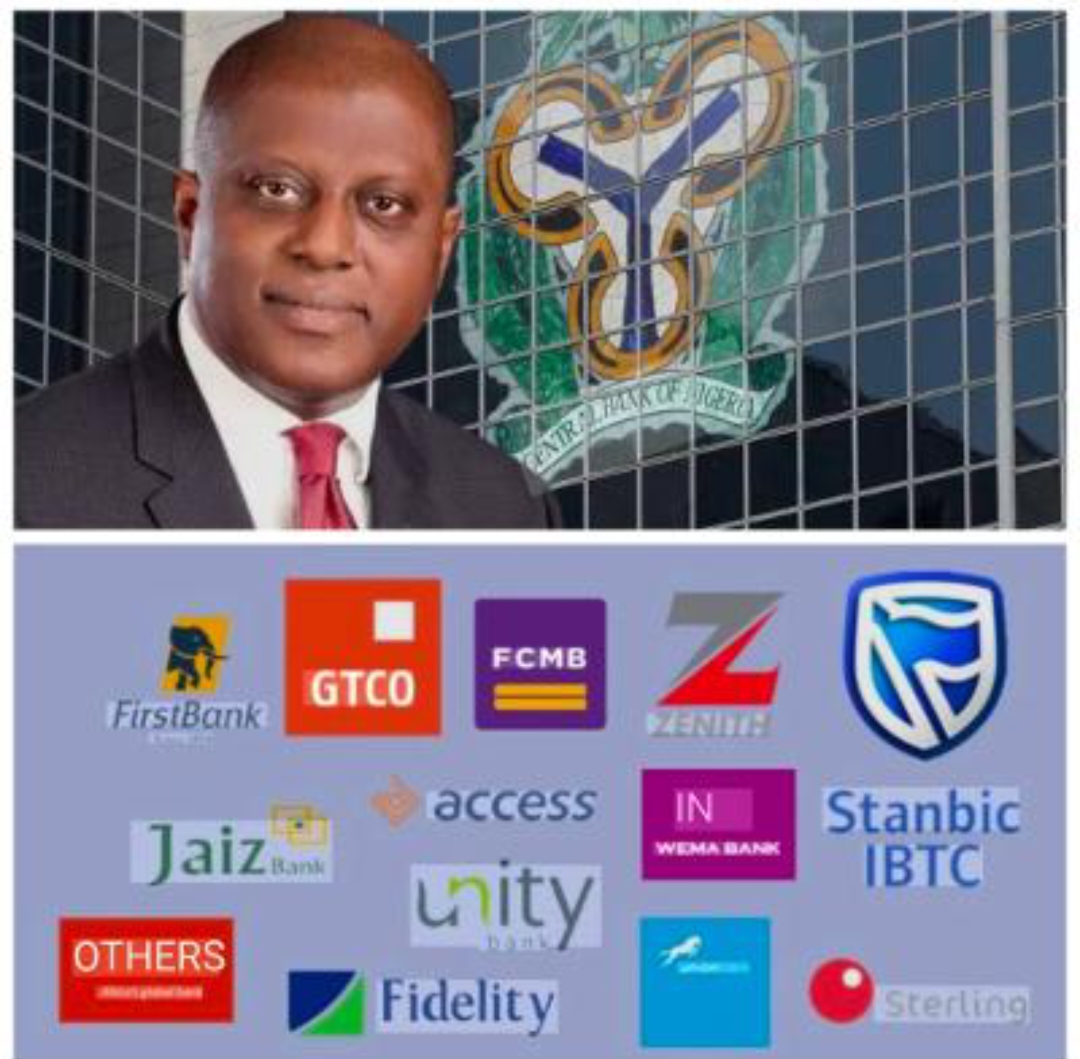
Nigeria’s banking industry appears to be booming, largely driven by the policies of the Central Bank of Nigeria (CBN), under Governor Olayemi Cardoso, while the real economy continues to suffocate.
At a time when millions of Nigerians are sinking deeper into poverty, when inflation continues to erode household incomes, when businesses are collapsing under unbearable operating costs, and when migration has become a survival strategy for many young professionals, Nigerian banks are announcing staggering profits, stronger capital positions and unprecedented liquidity growth.
According to the bank’s financial statements, the financial system appears healthy. In reality, the economy where citizens work, trade and survive is gasping for breath.
This growing disconnect between financial sector prosperity and economic suffering now represents one of the gravest threats to Nigeria’s long-term economic stability and its ambition of building a $1 trillion economy.
The numbers are indeed impressive. Nigerian banks’ shareholders’ funds reportedly surged to about N27 trillion following the recapitalisation exercise. The top five banks now command balance sheets estimated at over N164 trillion. Tier-1 banks collectively generated trillions in profits within the first quarter of 2026 alone, while the sector-wide recapitalisation exercise raised over N4.56 trillion.
Ordinarily, such figures should inspire confidence about the future of the economy. Stronger banks are expected to translate into stronger businesses, more jobs, industrial expansion and wider economic opportunities. But Nigeria’s experience is proving otherwise.
Instead of serving as engines of productive growth, banks are increasingly becoming custodians of liquidity trapped within the financial system itself. That is the real danger.
Even as banking liquidity expands sharply, lending to the productive economy remains weak and constrained. Reports indicate that banks parked a record N24.13 trillion with the CBN, while simultaneously increasing investments in government securities and treasury bills because these avenues are safer, more profitable and less risky than lending to businesses operating within Nigeria’s harsh economic climate. This reality exposes a dangerous contradiction.
A developing economy desperately in need of industrialisation, manufacturing growth, infrastructure expansion and job creation cannot afford a banking system that prefers financial safety over productive economic risk.
A sustainable economy cannot thrive where the real sector is starved of funds. Yet this is exactly where Nigeria now stands.
Despite the massive liquidity in the banking system, growth in lending to the private sector continues to lag behind the pace of liquidity expansion. The implication is clear. Financial sector strength is no longer translating into real economic development. This is not how healthy economies function.
Ordinarily, banks in developing economies are expected to operate as catalysts for economic transformation. Across successful economies, commercial banks finance manufacturing, agriculture, innovation, infrastructure and entrepreneurship because those sectors generate jobs, productivity and national wealth.
Small and Medium Enterprises (SMEs), especially, are globally recognised as the backbone of grassroots economic development. Nigeria is no exception.
SMEs account for over 70 percent of registered businesses, contribute nearly half of Nigeria’s GDP and generate between 84 and 90 percent of employment opportunities. Yet despite their overwhelming importance, SMEs reportedly receive barely between 0.5 percent and one percent of total commercial bank lending. That is not merely a policy failure. It is an economic tragedy.
Every denied SME loan is a denied employment opportunity. Every failed business represents another frustrated entrepreneur. Every frustrated entrepreneur becomes another Nigerian contemplating migration.
This is how economic dysfunction transforms into human displacement. The so-called “Japa” phenomenon did not emerge in isolation. It is deeply connected to economic hopelessness. When productive citizens lose faith in their country’s economic future, migration stops being a lifestyle choice and becomes a survival mechanism.
Unbeknownst to the policymakers is that Nigeria cannot realistically build a $1 trillion economy while productive sectors remain financially suffocated.
A closer glance at the trend of events helps to reveal that the danger becomes even more severe when viewed against the backdrop of the recent outcome of the 305th Monetary Policy Committee (MPC) meeting, where the CBN retained the Monetary Policy Rate (MPR) at 26.5 percent in its bid to sustain disinflation and macroeconomic stability.
It is understandable and certain that inflation control is important, but the fact is that at 15.69 percent, inflation remains painfully high and continues to weaken purchasing power. Food prices remain elevated. Transportation costs remain unbearable. Consumer demand is weakening. The middle class is shrinking rapidly.
But maintaining elevated interest rates also comes with painful consequences. Simple arithmetic tells us that higher interest rates mean higher lending costs. Higher lending costs mean higher production costs. Higher production costs worsen inflationary pressures and weaken business survival rates.
Invariably, this also tells us that for Nigerian manufacturers and corporates already battling a weak naira, volatile exchange rates, expensive diesel, energy insecurity and declining consumer demand, access to affordable credit is becoming almost impossible.
Many businesses are no longer borrowing to expand production or employ workers. They are borrowing merely to survive. This is economic suffocation.
Meanwhile, banks continue to profit massively from high-yield government securities and treasury investments. Reports indicate that major Nigerian banks generated over N6.68 trillion from investment securities and treasury bills instead of financing productive enterprises capable of stimulating growth and employment.
Government’s appetite for borrowing itself shows no sign of slowing down. Public borrowing reportedly climbed above N39 trillion. Historically, excessive government borrowing crowds out private sector investment because banks naturally prefer lending to government rather than exposing themselves to risks associated with businesses operating in unstable economic conditions.
The result is predictable. The real sector weakens while speculative and non-productive financial activities flourish. This explains why Nigeria increasingly resembles a financial system disconnected from the realities of ordinary citizens.
While banks celebrate rising profits, poverty and hunger worsen visibly across the country. Unemployment continues to rise. Small businesses are dying quietly. Household purchasing power is collapsing under inflationary pressure.
Yet the financial system appears more liquid than ever. That contradiction should alarm policymakers. The recapitalisation exercise itself now raises difficult questions.
What exactly is the purpose of stronger banks if stronger banks do not strengthen national productivity?
If recapitalisation merely empowers banks to deepen investments in government debt instruments while manufacturers, farmers, exporters and SMEs remain starved of affordable credit, then the exercise risks becoming financially impressive but economically hollow.
Indeed, the current monetary environment appears to reward financial conservatism over productive risk-taking.
The stringent Cash Reserve Requirement (CRR), elevated interest rates and broader macroeconomic uncertainty continue to discourage aggressive lending to the private sector. Banks understandably seek safety. But nations do not industrialise through excessive financial caution.
No economy develops when capital circulates primarily within treasury bills and government securities instead of flowing into factories, farms, logistics, housing, innovation and production.
This is the larger danger confronting Nigeria today. Economic crises rarely begin with recession statistics alone. Sometimes, they begin when financial institutions become detached from the suffering realities of the wider economy. They begin when growth exists only within banking balance sheets but disappears from households, factories and streets.
Without productive credit expansion, economic growth becomes artificial and exclusionary. Without affordable financing, businesses cannot scale. Without business expansion, jobs cannot emerge. Also, it must be noted that without jobs, insecurity, poverty and migration inevitably worsen. The implications for social stability are enormous.
One painful fact is that citizens already burdened by inflation, debt pressures and widespread distrust now face a system where economic opportunities continue shrinking despite apparent financial sector prosperity. One of the lurking dangers is that this deepens resentment, weakens confidence in institutions and threatens long-term economic cohesion.
The CBN’s inflation fight may be necessary, but monetary stability alone cannot substitute for productive economic expansion. Financial stability without inclusive growth eventually becomes unsustainable.
The real economy matters more than banking optics. Nigeria urgently needs policies that incentivise real sector lending, reduce structural risks facing manufacturers and SMEs, strengthen credit infrastructure, lower production bottlenecks and redirect liquidity toward productive economic activity.
As a matter of fact, it is high time for Nigeria to start rethinking the growing dependence on debt-driven fiscal management that continues to crowd out private investment. Development cannot occur when government borrowing consumes the financial oxygen needed by businesses.
Ultimately, banking profitability should not become an isolated island of prosperity surrounded by a collapsing productive economy.
A nation cannot celebrate trillion-naira banking profits while millions of citizens sink deeper into economic despair. No society sustains such a contradiction indefinitely.
If Nigeria truly hopes to build a resilient and inclusive economy, then the banking sector must once again become a vehicle for national development rather than merely a beneficiary of government debt and monetary tightening.
Otherwise, the country risks creating a contradictory economy where banks grow richer while citizens grow poorer and where financial prosperity exists only on paper while economic hardship defines everyday life.


Blaise, a journalist and PR professional, writes from Lagos and can be reached via: [email protected]


- Venezuela Under Rodriguez: Turning Back Toward Stability and Opportunity (By NJ Ayuk) May 25, 2026
- Dubai Chamber of Commerce concludes trade mission in Addis Ababa with series of bilateral business meetings between companies from Dubai and Ethiopia May 25, 2026
- How Congo’s Offshore Legacy Fields Are Powering a New Production Upswing May 25, 2026
- Rugby Africa Appoints Former National Basketball Association (NBA) Africa Executive Aïcha Diop as Chief of Staff to the President May 25, 2026
- Global Africa Business Initiative shifts Digital and Health Action Pathways into higher gear to accelerate continent’s economic transformation May 25, 2026
- The Board of Trustees of the Al-Sumait Prize for African Development announces the award winner for the year 2025; It has been awarded to an African institution and researcher in the field of food security May 25, 2026
- Statement of the International Contact Group for the Great Lakes (ICG) on the situation in the eastern Democratic Republic of the Congo (DRC) May 24, 2026
- Eritrea: Messages of Congratulations May 24, 2026
- African Development Bank (AfDB) – 2026 Annual Meeting: Full live coverage on Africa 24 May 24, 2026
- Countries in the Horn of Africa and Yemen recommit to ending variant poliovirus May 23, 2026
- Venezuela Under Rodriguez: Turning Back Toward Stability and Opportunity (By NJ Ayuk) May 25, 2026
- Dubai Chamber of Commerce concludes trade mission in Addis Ababa with series of bilateral business meetings between companies from Dubai and Ethiopia May 25, 2026
- How Congo’s Offshore Legacy Fields Are Powering a New Production Upswing May 25, 2026
- Rugby Africa Appoints Former National Basketball Association (NBA) Africa Executive Aïcha Diop as Chief of Staff to the President May 25, 2026
- Global Africa Business Initiative shifts Digital and Health Action Pathways into higher gear to accelerate continent’s economic transformation May 25, 2026
- The Board of Trustees of the Al-Sumait Prize for African Development announces the award winner for the year 2025; It has been awarded to an African institution and researcher in the field of food security May 25, 2026
- Statement of the International Contact Group for the Great Lakes (ICG) on the situation in the eastern Democratic Republic of the Congo (DRC) May 24, 2026
-

 news5 months ago
WHO REALLY OWNS MONIEPOINT? The $290 Million Deal That Sold Nigeria’s Top Fintech to Foreign Interests
-

 society3 weeks ago
SOCIAL MEDIA IS NOT A BATTLEFIELD COMMAND – WHY THE NIGERIAN ARMY’S ACTION AGAINST JUSTICE CRACK IS A NATIONAL SECURITY IMPERATIVE
-

 celebrity radar - gossips4 months ago
Dr. Chris Okafor Returns with Power and Fire of the Spirit -Mounts Grace Nation Altar with Fresh Anointing and Restoration Grace on February 1, 2026
-

 celebrity radar - gossips5 months ago
Prophet Kingsley Aitafo Releases 2026 Prophecy: ‘Nigeria Will Rise, but the World Must Prepare for Turbulence’
You must be logged in to post a comment Login
You must log in to post a comment.