
Sports
NAOSRE CONFERENCE: MD Abubakar, Attah, Ubani, Akhaine task security agents on discipline

In pursuit of a re invigorated game plane for a well secured environment, necessitated by prevailing Covid-19 security challenges in Nigeria, high ranking military operatives, legal and human rights experts, the academic on Thursday, July 30, converged on a National Security Virtual Conference, eNAOSRE’20, to proffer short and long-term solutions.
At the conference organised by the National Association of Online Security Reporters, NAOSRE, speakers identified distrusts, extortions, lack of political will, policy inconsistency and poor implementation of the rule of engagements as some of the ugly scenarios associated with managing insecurity in the pandemic.
Various speakers at the webinar harped on the twin evils of physical and health security challenges confronting the citizens and took exemptions to the gross abuse of rights by military agents. They pointed out an urgent need to check the disturbing trend from further escalation into an untamed monster.
The Keynote speaker, Mohammed Dikko Abubakar, former Inspector General of Police, ret’d started by commending the organizers of the conference saying security is the basis of being secured and safe for economic development. He emphasized that Nigeria’s security landscape and the current architecture are vulnerable to various risks generated by peculiarities as a country, adding that since the universal essence of government is security, those in authority should endeavour to fund training of military officers for effective discharge of security duties.
Said he: “Intelligence gathering is very key in modern security operations. Officers must think outside the box. They must engage in information sharing to be able to nip criminal activities in the bud. Retired and experienced security experts should be included in the security architecture so that citizens and businesses can move unhindered.”
He asserted that security is a situational discipline involving direct and indirect threats. This, according to the former IGP, requires sound understanding of the operating environment through effective intelligence for decision mechanism capable of mitigating security risks.
Abubakar further sued for adequate welfare for officers and men in uniform. “How much is the salary? Most of the officers went about their duties at the early stages of Covid-19 without nose masks. They would go on duty for several hours without adequate provision for welfare. They were sufficiently exposed to dangers. I call on the high command to give attention to officers training and welfare,” he said.
One of the speakers, Barrister Monday Ubani, said Covid-19 insecurity provoked infringements on citizens’ fundamental rights, a development, he said, requires permission for accused persons to be allowed access to phones for incident recording while in security agents’ custody.
“In the month of March, security agents wasted more lives than save lives. Records revealed that while the disease killed 11 people in the period under review, security agents killed 18,” he said.
On the theme of the conference, ‘Tackling Insecurity in Nigeria Amidst Covid-19: The Nigeria Experience,’ he sees it as timely in view of twisted mindset of security agents who cash in on the prevailing situation to exploit innocent and unsuspecting citizens.
“Recently, I travelled to the eastern part of Nigeria. At Niger Bridge, the boundary between Delta and Anambra States, security agents were in open market collecting money from passengers and drivers. They made so much money. Their primary mission to ensure unauthorized persons were not allowed to move about freely as a way of checking further spread of the disease became a lucrative enterprise for extortions. Government’s genuine plan to halt further spread was defeated on the altar of unpatriotic personal enrichment,” he lamented.
He however, commended the Police high command who consistently assured Nigerians of protection and admonished citizens to video record any untoward attitude exhibited by any of its officers for prompt disciplinary actions.
Professor Odion Akhaine of Lagos State University agreed with Ubani’s overview of the lockdown and lamented the prevailing high level of ignorance amongst security agents who were extorting raw cash from citizens “The raw cash they were collecting as bribe from motorists may have been contaminated. They were oblivious of the dangers in their actions, thereby spreading it to family members and friends,” he said.
As a remedy, Akhaine advocated a creative response to the abnormalities that define security operations. He called for training and intelligent approach to tackling insecurity including political will that transcends political party affinity to deal with all forms of immediate and foreseen insecurity threats.
Nigerian Customs spokesman, Deputy Comptroller Joseph Attah, espoused the needs for citizens’ co operation with security agents for effective tackling of insecurity in Nigeria amidst Covid-19 saying the challenges are quite enormous than envisaged. He pointed out the risks of securing borders, sea and air ports given that goods cleared by Customs officers are coming from high risk countries. He explained that the Customs Service is a frontline agency that engages what goes out and what comes into the country every second of the day. “Most of our officers suffered consequences. Some were and still being quarantined because we are always available to receive items even from high risk countries.”
However, he urged citizens to capture violation of their rights including illegal fee collections with short video recording for necessary disciplinary actions, assuring that the Customs is committed to adequate and professional border security including respects of the rule of law.
All the speakers unanimously agreed that government must, as a matter of urgent national importance, review the nation’s security policy to reflect current security challenges.
They called on citizens, security personnel, stakeholders, private security sector, traditional and religious leaders to synergize for collective solutions to the prevailing pandemic insecurity.
Earlier, NAOSRE’s President, Samson Oki, in his remarks, re affirmed the association’s focus in bridging information gap between the public and security operatives. He solicited for proactive measures in not only solving security issues but promoting peaceful communities and attracting foreign investments.
Oki, who foresees probable citizen’s weakened trust on operatives on the hegemonic curves called for prompt rescue remedies through working relationship and synergy between security formations and NAOSRE.
In her remarks, the association’s Vice President, Favour Benson explained the Covid-19 complex modes of insecurity in Nigeria occasioned by different narratives of abuse of rights, extortions and outright molestations. The situation, she stated, requires immediate review for sustainable solution.





Sports
FirstBank Sponsors Samuel Okwaraji U-16 Football Championship 2026, Promotes Education Through School Sports
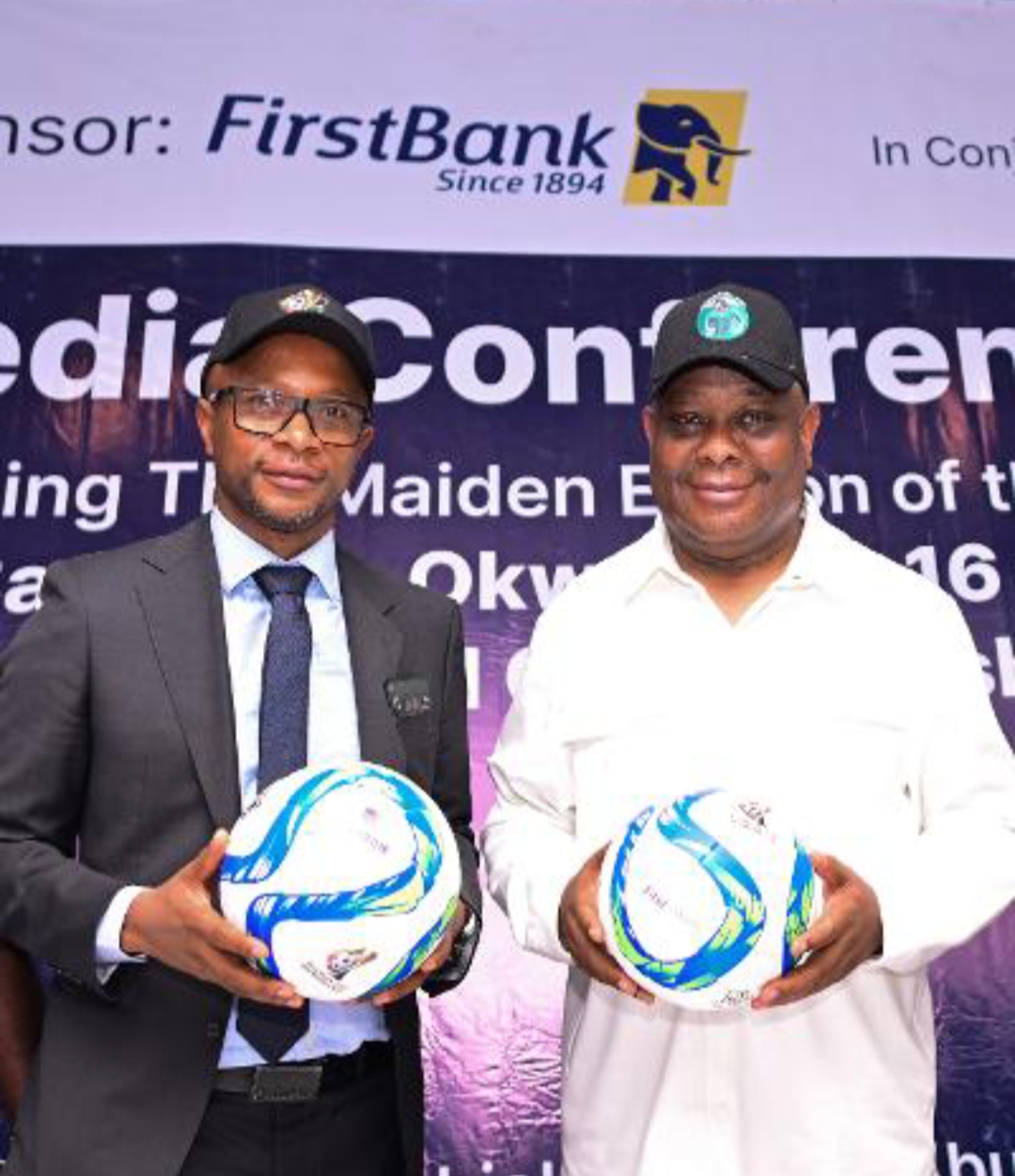
FirstBank Sponsors Samuel Okwaraji U-16 Football Championship 2026, Promotes Education Through School Sports
Lagos, 31 March 2026 – FirstBank, the premier bank in West Africa and a leading financial inclusion service provider, is thrilled to announce its sponsorship of the maiden edition of the Samuel Okwaraji Under 16 Football Championship, a nationwide youth football tournament organised to honour the late Samuel Okwaraji, one of Nigeria’s most celebrated football legends renowned for his patriotism, discipline, and commitment to national service.
The tournament will engage secondary schools from all 36 states and the FCT, in a two-stage competition. The first stage will feature zonal eliminations across the six geopolitical zones, followed by a national final in Abuja featuring the top 12 qualifying teams. The event will also include cultural displays, memorial lectures, and talent scouting opportunities by national team coaches, ensuring a blend of sporting excellence and social impact.
Speaking on the sponsorship, Managing Director and Chief Executive Officer of FirstBank, Olusegun Alebiosu, said: “Football is the strongest unifier of Nigerians. It brings communities together, inspires discipline, and nurtures talents across the country. FirstBank is making a deliberate incursion into grassroots football development with this sponsorship, creating an enabling environment for the next generation of Samuel Okwarajis to discover, refine, and maximise their potential, thereby shaping the future of Nigerian football.”
In his remarks, Senator Osita Izunaso, the Chairman of the Championship Organising Committee commended FirstBank for throwing its weight around the championship. He said “FirstBank’s legacy predates modern Nigerian football. The bank has once again shown that true corporate leadership lies in nation building. We thank FirstBank for their participation in this championship and we hope that other corporates will take a leaf and provide an enabling environment for young ones to thrive in education through sports.”
Through its First@Sports initiative, FirstBank has sustained an unbroken role in promoting the development of football and sports across Nigeria. The Bank is invested in nurturing talent through its ownership of the Elephant Boys Football Team currently competing in the Nigerian National League. The FirstBank Basketball Club popular known as the “Elephant Girls” is also owned by the Bank.
The Bank has supported youth-oriented and sporting initiatives including the National Sports Festival, South-West Youth Games, the Dala Hard Court Tennis Championship for 35 years, Lagos Amateur Golf Open Championship for 65 years, and the Georgian Polo Cup for 105 years.


The Bank’s sponsorship of the Samuel Okwaraji U-16 Tournament underscores its commitment to national unity, empowering communities, and fostering youth development.
Sports
Adeniyi Urges Customs Officers to Stay Fit, Commissions Sports Arena at Western Marine Command
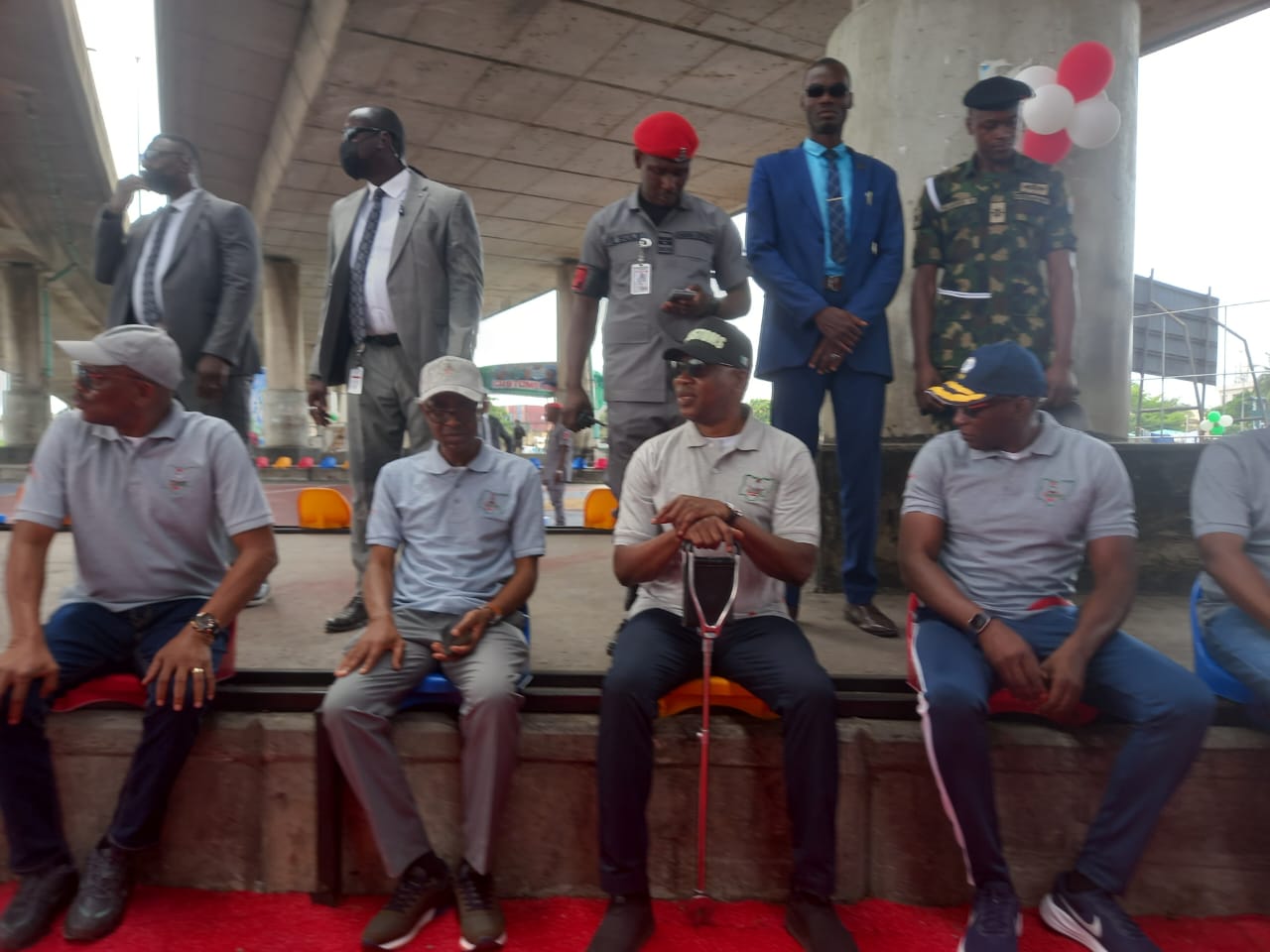
Adeniyi Urges Customs Officers to Stay Fit, Commissions Sports Arena at Western Marine Command
By Ifeoma Ikem


Sports
Fans Mock Pinnick’s ‘Morocco-Level’ Pitch Claim as Credibility Debate Returns to Nigerian Football
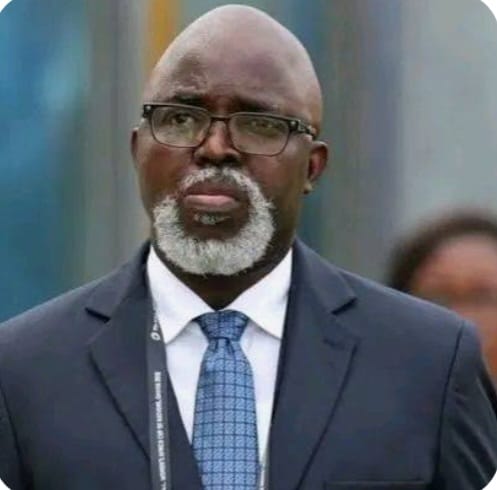
Fans Mock Pinnick’s ‘Morocco-Level’ Pitch Claim as Credibility Debate Returns to Nigerian Football
By George Omagbemi Sylvester | Published by SaharaWeeklyNG
“Former NFF boss promises five world-class surfaces in 18 months, but supporters question record and reality.”
A fresh controversy has erupted in Nigerian football after former Nigeria Football Federation (NFF) president and FIFA Council member Amaju Melvin Pinnick declared that Nigeria would soon have football pitches comparable to those used at major tournaments in Morocco. The statement, intended to signal a new phase of infrastructure upgrades, instead triggered widespread skepticism among fans.
The backlash followed Pinnick’s remarks in early February 2026, when he said Nigeria would have at least five pitches matching Moroccan standards within 18 months. According to him, the team responsible for Morocco’s acclaimed stadium surfaces had already arrived in Nigeria to begin the upgrades. He identified the targeted venues as Warri City Stadium, two stadiums in Bayelsa State, Teslim Balogun Stadium in Lagos, and the Moshood Abiola National Stadium in Abuja.

Rather than inspiring confidence, the announcement was met with sarcasm and disbelief across social media. Many supporters dismissed the claim as unrealistic, pointing to the current state of numerous Nigerian pitches, several of which have failed to meet international standards in recent years. Some fans described the promise as something to “believe at your own risk,” reflecting deep mistrust toward football administrators.
The reaction comes against the backdrop of long-standing infrastructure problems in Nigerian football. For years, the country has struggled to maintain stadiums to the standards required by FIFA and the Confederation of African Football (CAF). On multiple occasions, national-team matches have been moved or played in alternative venues because approved facilities were unavailable.
Pinnick himself has previously acknowledged the depth of the problem. In earlier interviews, he admitted that many Nigerian stadiums lack basic amenities and cannot meet international requirements, noting that the country is currently unable to host major FIFA competitions because of substandard facilities. He also contrasted Nigeria’s situation with Morocco’s, describing the North African country as having a “plug-and-play” football infrastructure capable of hosting major tournaments at short notice.
Morocco’s progress has been widely praised by football authorities. The country has invested heavily in modern stadiums, training facilities, and pitch technology, positioning itself as one of Africa’s leading hosts for international competitions. Its infrastructure upgrades have played a major role in securing hosting rights for major tournaments, including the Africa Cup of Nations.
Nigeria’s situation has followed a different trajectory. Many stadiums built or renovated at significant cost have deteriorated within a few years, often due to poor maintenance, irregular funding, and administrative disputes. Sports policy experts argue that the core problem is not simply the construction of facilities but the absence of sustainable management structures.
Global sports business scholar Professor Simon Chadwick has argued that infrastructure projects must be backed by sound governance. “Facilities are only as effective as the systems that sustain them,” he notes. “Without management discipline, even the best stadiums deteriorate quickly.”
Economist Andrew Zimbalist, a leading authority on sports infrastructure, has also warned that stadium promises often fail without transparent planning and long-term operational strategies. His research shows that politically driven projects frequently fall short of expectations when maintenance and funding models are unclear.
These broader concerns help explain the intensity of the reaction to Pinnick’s latest claim. Many supporters remember his eight-year tenure as NFF president from 2014 to 2022, a period that produced mixed results. While the national team qualified for major tournaments and maintained administrative stability, the infrastructure question remained largely unresolved.
Beyond public debate, the issue carries practical consequences. Stadium quality directly affects Nigeria’s ability to host international matches. When facilities fail to meet required standards, national teams are forced to play “home” fixtures in foreign countries, increasing costs and weakening home advantage.
The impact is also felt at the grassroots level. Without quality pitches, young players are forced to train in poor conditions that do not match international standards, creating long-term developmental disadvantages.
Supporters of Pinnick argue that the new plan could mark a genuine effort to address these long-standing problems. They note that the proposal involves collaboration with international pitch experts and focuses on specific stadiums rather than vague nationwide promises.
Critics, however, insist that credibility will depend entirely on execution. They argue that Nigerian football has heard similar assurances for decades, with little to show in terms of sustained improvement.
For now, the 18-month timeline has set a clear benchmark. If the promised upgrades materialize and the selected stadiums meet international standards, the initiative could help restore public confidence. Though if the deadline passes without visible results, the skepticism surrounding the announcement is likely to deepen.

In a football-obsessed nation, infrastructure promises are no longer judged by speeches or press statements. They are judged by results and by the condition of the pitch on match day.


-

 society6 months ago
Religion: Africa’s Oldest Weapon of Enslavement and the Forgotten Truth
-

 news4 months ago
WHO REALLY OWNS MONIEPOINT? The $290 Million Deal That Sold Nigeria’s Top Fintech to Foreign Interests
-

 society6 months ago
“You Are Never Without Help” – Pastor Gebhardt Berndt Inspires Hope Through Empower Church (Video)
-

 celebrity radar - gossips2 months ago
Dr. Chris Okafor Returns with Power and Fire of the Spirit -Mounts Grace Nation Altar with Fresh Anointing and Restoration Grace on February 1, 2026