
society
Nigeria at 65: A Celebration or a Call to Conscience?


Nigeria at 65: A Celebration or a Call to Conscience?
By George O. Sylvester | Published by SaharaWeeklyNG.com
“65 years after independence, Nigerians at home and abroad must ask: Are we celebrating freedom or enduring failure?”
Introduction: Between Celebration and Reflection.
On October 1st, 2025, Nigeria marked its 65th Independence Anniversary. Around the world, Nigerians unfurled the GREEN-WHITE-GREEN flag, sang the national anthem and are organizing gatherings in unity. Among the voices of commemoration was Adv. Smart I. Nwobi, President General of the Nigerian Union South Africa (NUSA). In his message, he reminded Nigerians in the diaspora to remain steadfast and not relent in their daily pursuits, despite the odds.

“We Nigerians in Diaspora should not relent. We must always strive to thrive in our daily activities and endeavors,” he told SaharaWeeklyNG.com. His words, while encouraging, also raise a deeper question: what exactly are Nigerians celebrating at 65? Is it true independence, or is it endurance in the face of recurring hardship?
A History of Hope and Betrayal.
Nigeria gained independence from Britain on October 1st, 1960, amid great optimism. With vast natural resources, fertile lands and one of the largest populations in Africa, the nation was tipped to be a continental powerhouse. At independence, Nigeria’s GDP per capita was higher than South Korea’s and the country had a robust agricultural sector feeding not only its people but also serving as a major exporter of cocoa, groundnuts and palm oil.
Yet, six decades later, Nigeria tells a different story: Ranked poverty capital of the world in 2018 (Brookings Institution).

Over 133 million Nigerians living in multidimensional poverty as of 2023 (National Bureau of Statistics).
A youth unemployment rate surpassing 42%.
A failing public education system and chronic power shortages.
Nobel laureate Wole Soyinka once observed, “Nigeria is a nation perpetually at war with itself.” At 65, the nation still struggles with LEADERSHIP FAILURES, TRIBALISM, CORRUPTION and INSECURITY.
Diaspora Voices: The Resilient Nigerians Abroad.
Adv. Smart I. Nwobi’s words highlight a critical reality, Nigeria’s diaspora community has become not just an extension but a lifeline of the nation. According to the World Bank, Nigerians abroad remitted $20.1 billion in 2022, an amount higher than Nigeria’s federal allocation to education and health combined.
Nigerians abroad excel in academia, medicine, technology and business. From Ngozi Okonjo-Iweala, Director-General of the WTO, to Dr. Bennet Omalu, the Nigerian-American physician who discovered Chronic Traumatic Encephalopathy (CTE), to countless entrepreneurs and innovators, the diaspora consistently proves the resilience of the Nigerian spirit.
As comedian I Go Dye once joked, “Nigerians do not travel abroad, we export solutions.” While humorous, his words capture a truth: Nigerians abroad thrive despite the failures of the state.

The Homefront Crisis: Poverty Amid Plenty.
Nigeria is Africa’s largest oil producer, yet its citizens endure endless fuel scarcity. The paradox of wealth and poverty is glaring. Economist Ngozi Okonjo-Iweala has repeatedly warned: “Nigeria is not poor because it lacks resources. Nigeria is poor because of mismanagement and corruption.”
Consider this:
Nigeria earned over $1 trillion from oil since the 1970s, yet most citizens lack access to clean water, quality healthcare and steady electricity.
Over 20 states in 2024 failed to implement the ₦70,000 minimum wage despite rising inflation and cost of living.
Universities were shut for eight months in 2022 due to strikes, while politicians continued to collect allowances running into millions of naira monthly.
Atiku Abubakar, Nigeria’s former Vice President, noted: “Nigeria’s problem has never been resources; it has always been leadership.”
Corruption and Leadership Failure.
At 65, Nigeria remains plagued by leaders who treat governance as personal inheritance. The Senate earns some of the highest salaries in the world, yet delivers some of the lowest governance outcomes. Governors loot state coffers, while local governments have become shadows of their constitutional purpose.
Activist Omoyele Sowore bluntly stated: “Nigeria is not a poor country; it has been made poor by a criminal political class that thrives on stealing from the people.”
Meanwhile, insecurity continues to ravage the country:
Boko Haram and banditry in the North.
Kidnapping epidemics in the South.
Farmers abandoning farmlands due to fear of attacks.
As comedian Gordons once quipped, “The only place Nigerians are sure of light is inside the mortuary.” Behind the humor is a bitter truth, basic infrastructure remains a mirage.
65 Years of Missed Opportunities.
Nigeria’s trajectory since independence has been marred by missed opportunities:
Agricultural collapse – from being a food exporter in the 1960s to relying on imports worth over $10 billion annually.
Industrial failure – factories shut down due to power shortages and policy inconsistency.
Brain drain – thousands of skilled professionals leaving under the “JAPA” wave, draining the nation of doctors, engineers and academics.
Political instability – six coups between 1966 and 1999, followed by two decades of democracy riddled with electoral malpractice.
The Call of Diaspora Responsibility.
Adv. Nwobi’s call is not merely ceremonial. Nigerians abroad must ask how their success can translate into national transformation. Beyond remittances, the diaspora must:
Influence policy by engaging with home-based governance structures.
Invest responsibly in small and medium enterprises to create jobs.
Champion accountability by demanding transparency in Nigeria’s institutions.
As Nelson Mandela once said: “Sometimes it falls upon a generation to be great. You can be that great generation.” The Nigerian diaspora has the potential to be that generation.
Nigeria at 65: Cause for Celebration or Protest?
So, is there a cause to celebrate? Yes – Nigerians have survived despite overwhelming odds. They have built communities, thrived in foreign lands and refused to surrender their identity. The Nigerian spirit remains unbroken.
Survival is not the same as success. At 65, the nation should have moved from survival to prosperity. It should have secured electricity for all, functional schools and hospitals that save lives instead of killing hope.
Chinua Achebe, Nigeria’s literary giant, once wrote: “The trouble with Nigeria is simply and squarely a FAILURE of LEADERSHIP.” That remains the nation’s central truth.
Final Word: A Call to Conscience.
As Nigerians raise the flag at 65, the real question is not about the number of years since independence, but the quality of life those years have delivered.
Adv. Smart I. Nwobi’s reminder to remain steadfast is valid. Yet steadfastness must go hand in hand with accountability. Nigerians at home and abroad must demand more from their leaders, refuse to normalize corruption and insist on a country worthy of its immense potential.
The green-white-green flag is not just cloth; it is a symbol of hope. Though symbols cannot feed the hungry or protect the vulnerable. Only LEADERSHIP, VISION and UNITY can.
At 65, Nigeria must decide: will it continue as a nation of SQUANDERED WEALTH and BROKEN PROMISES or will it RISE, at last, to its rightful place as Africa’s giant?






Dr. Bernard Shiaunda Eete Mobilizes Loyalists Ahead of Kenya’s General Election
Ahead of Kenya’s 2027 general election, Nyanza ODM aspirant Dr. Bernard Shiaunda Eete, popularly known as Dumex3, has intensified grassroots mobilization by holding a strategic meeting with his loyalists across the region. The gathering was aimed at aligning his team, refining campaign strategies, and positioning the movement for a decisive outcome at the polls.
The meeting provided an important platform for open consultation, idea exchange, and consensus building. Dr. Eete emphasized the need for unity, discipline, and clear communication as the campaign enters a critical phase. According to attendees, the discussions focused on strengthening the political structure on the ground, addressing community concerns, and ensuring that the movement remains responsive to the aspirations of the people.
A key focus was Dr. Eete’s developmental agenda for Nyanza. He outlined his commitments to education, youth empowerment, healthcare access, and infrastructure development, noting that these areas remain central to transforming lives in the region. He urged his loyalists to carry the message to the grassroots, explaining both what has been achieved so far and what the region stands to gain if they rally behind his candidacy.
“This is not just about winning an election. It’s about building a stronger, united political movement that delivers real change for our people,” Dr. Eete told the gathering. He called on his supporters to remain focused, avoid divisive rhetoric, and engage voters with facts about his track record and plans.
The meeting ended with a renewed commitment from the loyalists to expand outreach, coordinate ward-level activities, and mobilize voters ahead of party primaries and the general election. Organizers described the session as productive, noting that it sharpened the team’s resolve and clarified immediate next steps.
As political activity heats up in Nyanza, Dr. Eete’s camp says the strategy is clear: consolidate support, communicate consistently, and deliver a campaign anchored on service and results.


Live update from Kenya by Hon. Babatunde Seidu, Youths Ambassador._
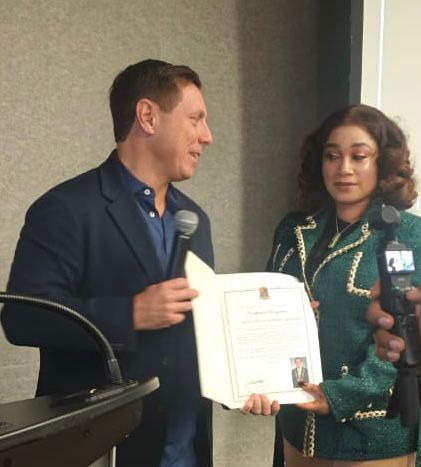
Mayor of Brampton Honours Olajumoke Abegunde For Charitable Works
…Foundation Touches Over 8,000 Women, Widows, and Youth in Ondo State…..
…Collaborates with International Partners for Free Skill Acquisition in Canada…
For Chief Mrs. Olajumoke Abegunde, the act of touching lives positively and contributing meaningfully to societal development is not merely a pastime but a deeply ingrained existential mandate. With unwavering gusto, she has remained faithful to this noble vision, championing the esoteric principle that cheerful giving and advocacy for the downtrodden are responsibilities too sacred to be left exclusively in the hands of the government.
This resolute philosophy has not only engendered transformative impact within her immediate locality but has also catapulted her onto the global stage. Recently, her passionate charitable exertions—executed both within and outside the shores of Nigeria—earned her prestigious international recognition.
A Legacy of Grassroots Transformation
As the visionary founder of the Jummy I Care Foundation, Chief Mrs. Abegunde has systematically dismantled barriers of vulnerability across Ondo State. Through sustained philanthropic gestures, she has disbursed extensive humanitarian relief and social assistance to over 3,000 indigent widows and elderly persons. In parallel, her foundation has galvanized robust support for orphaned and vulnerable children while orchestrating an ambitious women’s empowerment programme. To date, over 5,000 women have benefited from skills acquisition and income-generating activities designed to cultivate self-reliance and entrepreneurial audacity. Many of these beneficiaries have also received start-up seed capital to establish their own enterprises.
A proud alumna of Criminology and Security Studies from the National Open University of Nigeria, Chief Mrs. Abegunde has also distinguished herself as a patron of youth development. She has sponsored numerous essay writing and entrepreneurship competitions across Ondo State, in addition to funding medical outreaches, orphanage interventions, Iftar and Easter entrepreneurship programmes, and sustained feeding initiatives for the less privileged.
Her core philosophy remains immutable: when those who are well-to-do invest strategically in their immediate society, the collective becomes safer, more stable, and poised for greater heights.
International Collaboration and Brampton Honour
In a decisive move to intensify her developmental footprint, the Jummy I Care Foundation recently entered into a strategic tripartite collaboration with the Habeeb Okunola Foundation and the MakeMee Elegant Foundation. Together, they delivered a gratuitous, high-impact skill acquisition training programme to residents of Brampton, Canada.
Participants were immersed in an array of artisan crafts, including the production of resin bags, photo books, picture otters, resin key holders and frame holders, ornamental flower vases, rhinestone embellishment, and the advanced technique of printing images on fabrics.
In a ceremonial recognition of her sustained benevolence, the Mayor of Brampton formally hosted Chief Mrs. Abegunde and her delegation at the mayor’s office. The mayor personally expressed profound gratitude for her unwavering support of community development and entrepreneurship. As a tangible emblem of this appreciation, she was presented with a personally signed certificate of appreciation and commendation.
Unwavering Commitment to the Future
While accepting the honour, Chief Mrs. Olajumoke Abegunde reaffirmed her immutable resolve. She declared that her commitment to touching lives remains absolute and non-negotiable. According to her, she will not relent in ensuring that more lives are touched, more support is channeled to the people, and greater stability is secured for communities. She further emphasized her dedication to cultivating the spirit of entrepreneurship among women and youths as a cornerstone for sustainable development.
With over 8,000 direct beneficiaries in Nigeria alone and an expanding international footprint, Chief Mrs. Abegunde stands as a formidable testament to the profound change one determined philanthropist can effectuate when passion meets purpose.


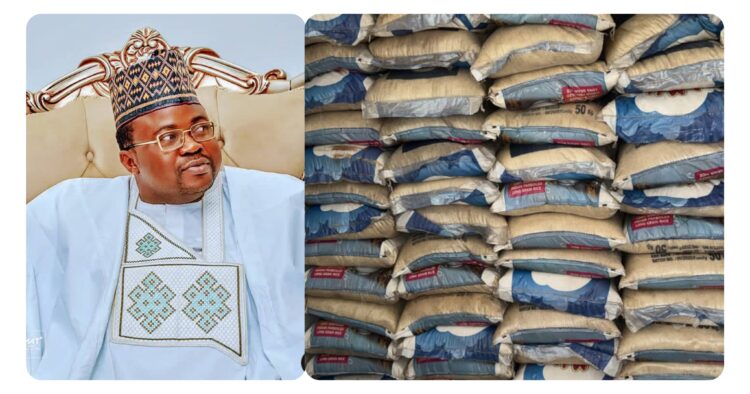
APM Senatorial Candidate Ajadi Distributes Over 500 Bags of Rice
The Senatorial candidate of Oyo Central Senatorial District under the Allied Peoples Movement (APM), Ambassador Olufemi Ajadi Oguntoyinbo, has distributed over 500 bags of rice to residents, party members, state executives, and key stakeholders across Oyo State ahead of the forthcoming Eid al-Adha celebration.
The gesture, which forms part of his annual humanitarian outreach, was aimed at easing economic hardship and strengthening unity among party executives, party members, and residents within the senatorial district during the festive period.
Ajadi said the distribution was a continuation of his commitment to supporting vulnerable households and fostering community solidarity, especially at a time when many families are facing rising food prices and economic pressure.
He explained that Eid al-Adha is rooted in sacrifice, sharing, and compassion, adding that political leadership must consistently reflect empathy for the people, regardless of political affiliation or election cycles.
According to him, the intervention was extended to party executives, grassroots mobilizers, youth groups, and key stakeholders across the senatorial district to ensure equitable distribution across different segments of the political structure in Oyo State.
Ajadi further noted that the initiative was designed to complement household food needs during the festive season, stressing that small acts of support can significantly ease the burden on families affected by economic challenges.
He urged political leaders at all levels to prioritize welfare-driven initiatives that have direct impact on citizens, emphasizing that leadership should go beyond campaigns to sustained service delivery and humanitarian engagement.
Beneficiaries of the rice distribution expressed appreciation for the gesture, describing it as timely and thoughtful amid rising food costs across the country.
They commended Ajadi for maintaining close contact with grassroots members and consistently demonstrating what they described as people-oriented leadership.
The distribution exercise was carried out across selected locations within Oyo Central Senatorial District and coordinated through local party structures to ensure fairness and orderly sharing.
Political observers in the state noted that such interventions have become a key feature of political engagement in Nigeria, particularly during festive seasons, as politicians seek to connect with constituents beyond electoral promises.
As the Eid al-Adha celebration approaches, Ajadi reaffirmed his commitment to continuing similar initiatives aimed at supporting families and promoting unity among residents of Oyo State.


- Transforming Healthcare and Empowering Women: Dr. Rasha Kelej Recognized Among Africa’s 100 Most Influential Women May 25, 2026
- 2026 BASKETBALL AFRICA LEAGUE SEASON: BY THE NUMBERS May 25, 2026
- Guyana Confirmed to Host Caribbean Energy Week 2027 as Regional Energy Integration Gains Momentum May 25, 2026
- Canon Demonstrates Print’s ‘Power to Move’ with On-Stand Experience and Latest Large Format Technologies at Federation of European Screen Printers Associations (FESPA) Global Print Expo 2026 May 25, 2026
- Africa Doesn't Need to Be Translated; It Needs to Be Heard (By Rania El Rafie) May 25, 2026
- Venezuela Under Rodriguez: Turning Back Toward Stability and Opportunity (By NJ Ayuk) May 25, 2026
- Dubai Chamber of Commerce concludes trade mission in Addis Ababa with series of bilateral business meetings between companies from Dubai and Ethiopia May 25, 2026
- How Congo’s Offshore Legacy Fields Are Powering a New Production Upswing May 25, 2026
- Rugby Africa Appoints Former National Basketball Association (NBA) Africa Executive Aïcha Diop as Chief of Staff to the President May 25, 2026
- Global Africa Business Initiative shifts Digital and Health Action Pathways into higher gear to accelerate continent’s economic transformation May 25, 2026
- Transforming Healthcare and Empowering Women: Dr. Rasha Kelej Recognized Among Africa’s 100 Most Influential Women May 25, 2026
- 2026 BASKETBALL AFRICA LEAGUE SEASON: BY THE NUMBERS May 25, 2026
- Guyana Confirmed to Host Caribbean Energy Week 2027 as Regional Energy Integration Gains Momentum May 25, 2026
- Canon Demonstrates Print’s ‘Power to Move’ with On-Stand Experience and Latest Large Format Technologies at Federation of European Screen Printers Associations (FESPA) Global Print Expo 2026 May 25, 2026
- Africa Doesn't Need to Be Translated; It Needs to Be Heard (By Rania El Rafie) May 25, 2026
- Venezuela Under Rodriguez: Turning Back Toward Stability and Opportunity (By NJ Ayuk) May 25, 2026
- Dubai Chamber of Commerce concludes trade mission in Addis Ababa with series of bilateral business meetings between companies from Dubai and Ethiopia May 25, 2026
-

 news5 months ago
WHO REALLY OWNS MONIEPOINT? The $290 Million Deal That Sold Nigeria’s Top Fintech to Foreign Interests
-

 society3 weeks ago
SOCIAL MEDIA IS NOT A BATTLEFIELD COMMAND – WHY THE NIGERIAN ARMY’S ACTION AGAINST JUSTICE CRACK IS A NATIONAL SECURITY IMPERATIVE
-

 celebrity radar - gossips4 months ago
Dr. Chris Okafor Returns with Power and Fire of the Spirit -Mounts Grace Nation Altar with Fresh Anointing and Restoration Grace on February 1, 2026
-

 celebrity radar - gossips6 months ago
Prophet Kingsley Aitafo Releases 2026 Prophecy: ‘Nigeria Will Rise, but the World Must Prepare for Turbulence’