
society
Nigeria at the Crossroads: Structural Gains Amid Human Cost under Tinubu‑APC


Nigeria at the Crossroads: Structural Gains Amid Human Cost under Tinubu‑APC.
By George Omagbemi Sylvester | Published by SaharaWeeklyNG.com
Where Nigeria is Working?
1. Economic Reforms and Fiscal Discipline
One of Tinubu’s first executive actions was removing the costly fuel subsidy; a move praised by global institutions like the IMF and World Bank. The naira, previously shackled by multiple exchange rates, has now been floated, which has narrowed the black market gap and increased forex liquidity.
According to the Central Bank of Nigeria (CBN), this move saved the country over ₦3.6 trillion within the first year. The fiscal deficit dropped from 5.4% of GDP in 2023 to 3.0% in 2024. Oil production, long battered by theft and militancy, rebounded from 1.1 million barrels per day to over 1.5 million bpd by mid-2025.
Moreover, Nigeria recently signed a $1 billion agriculture investment pact with Brazil aimed at mechanising farms, boosting exports and transforming rural economies. If implemented fully, this could shift the nation from subsistence farming to agribusiness.
“For the first time in decades, we have a president willing to take the hard path,” noted Professor Akpan Henshaw, economist at the University of Uyo. “But reform without shock absorbers is cruelty disguised as policy.”
2. Central Bank Independence and Monetary Realignment
Gone are the days of reckless monetary policy under Godwin Emefiele. Tinubu’s administration has begun restoring credibility to the CBN. Interest rates were hiked to counter inflation and excessive monetary financing of deficits has ceased. These moves have improved investor confidence, with the Nigerian Stock Exchange becoming one of the best-performing in Africa in 2024.
Also, the naira has stabilized somewhat and foreign direct investment is trickling in again, particularly in fintech and agritech.
3. Social Safety Initiatives
Despite public perception, the administration has rolled out several targeted interventions:
₦35,000 wage award to federal workers for 6 months
₦25,000 monthly cash transfers to 15 million vulnerable households
₦75 billion investment fund for manufacturing businesses
CNG-powered vehicle rollout and energy transition projects
However, most of these efforts are limited in scope and lack structural depth. The World Bank noted in March 2025 that “more than half of the interventions remain urban-based, leaving rural populations behind.”
Where Nigeria is Failing?
1. Soaring Cost of Living and Rising Poverty
While macroeconomic indicators may be improving, the average Nigerian is sliding deeper into despair. Inflation hovers at 24%, food inflation at 40%. A 50kg bag of rice now sells for over ₦80,000. Petrol costs have tripled. Transportation, rent and school fees are choking middle and lower-income earners.
According to the National Bureau of Statistics (NBS), over 129 million Nigerians now live below the poverty line; nearly 56% of the population.
“We are stabilizing the economy while destabilizing human lives,” said Dr. Olufemi Ogunlade, a policy analyst at the Lagos Business School. “There is no social justice in a reform that creates more beggars.”
2. Wage Crisis and Labour Discontent
The Nigerian Labour Congress (NLC) and Trade Union Congress (TUC) shut down the country for two weeks in mid-2024, demanding a ₦250,000 minimum wage. The federal government responded with ₦70,000, citing fiscal constraints.
While better than the old ₦30,000 wage, it’s still a far cry from reality. Workers have not recovered from the triple inflation shocks of subsidy removal, naira float and increased taxation.
“How can one survive on ₦70,000 when a bag of rice is ₦80,000?” asked a public school teacher in Osun State. “This is slavery dressed as salary.”
3. Insecurity and Governance Paralysis
Despite the militarized rhetoric, insecurity continues to rage. From Zamfara to Borno, from the Middle Belt to the South-East, banditry, terrorism and kidnapping for ransom remain unchecked.
A tragic drone strike in Tudun Biri, Kaduna State, killed dozens of civilians; an incident that mirrored the operational chaos in Nigeria’s military structure.
Former Kaduna Governor Nasir El-Rufai recently declared:
“Insecurity has increased, the economy is dwindling (Whoever he is giving an appointment to must be someone he knows or from his tribe) this is sheer injustice and nepotism.”
The South-East remains heavily militarized, yet under-policed in terms of community trust. The North-East continues to bleed despite massive security budgets.
4. Cronyism, Corruption and Luxury Spending
As citizens tighten belts, public officials loosen theirs. President Tinubu approved:
₦21 billion to renovate the Vice President’s residence
₦5 billion for SUVs for lawmakers
₦15 billion for a presidential yacht
₦39 billion for a new presidential conference centre
These numbers insult the intelligence of suffering Nigerians.
“How can President Tinubu justify allocating ₦21 billion to renovate the Vice President’s residence when federal universities are struggling?” asked Comrade Ayo Olorunfemi of the Academic Staff Union of Universities (ASUU).
The Lagos-Calabar coastal highway project, a ₦15 trillion mega-contract awarded without competitive bidding, has raised alarm bells across civil society, who question both its timing and transparency.
5. Debt, Deficit and Dissonance
Public debt has ballooned from ₦49 trillion in 2023 to over ₦114 trillion by Q2 2025. Servicing debt now consumes over 70% of government revenue.
Despite this, the Tinubu administration continues borrowing, claiming it needs funds for reforms. The IMF has warned Nigeria about its “unsustainable debt trajectory” and urged the country to broaden its tax base; though tax hikes without value-for-money only breed rebellion.
Recommendations
If the Tinubu administration seeks to transform “Renewed Hope” into real human development, it must:
Expand and institutionalize social protection: Build a national welfare system that protects the poor during economic transitions.
Raise wages: Peg minimum wage to inflation and cost of living.
End wasteful spending: Cancel luxury procurements and redirect funds to healthcare, education, and food security.
Tackle insecurity systemically: Reform the military, invest in local policing and deploy intelligence not brute force.
Enforce meritocracy: Appoint based on competence not nepotism. Nigeria is not a private estate.
Final Reflection
President Tinubu’s economic agenda is bold. His willingness to take hard decisions shows resolve. What use is reform when it’s felt only in spreadsheets not stomachs?
Nigeria may be fiscally afloat, but morally adrift. It’s a nation stabilizing its books while destabilizing its people. A country where GDP growth headlines mask graveyard silences in villages wiped out by bandits. Where billions are spent on buildings while babies die from hunger.
If Tinubu wants to be remembered as a true reformer, not just a technocratic gambler, he must pivot from elite economics to human development. Otherwise, the question Nigerians will ask in 2027 won’t be about inflation or forex; it’ll be simple:
“Did my life get better under Tinubu?”
Right now, for too many, the answer is a heartbreaking NO.


Written by George Omagbemi Sylvester | Published by SaharaWeeklyNG.com




society
Buratai Highlights Leadership, Community Support In Defeating Insurgency As Shettima, Defence Chiefs Rally Support For Counterterrorism Documentation At Book Launch
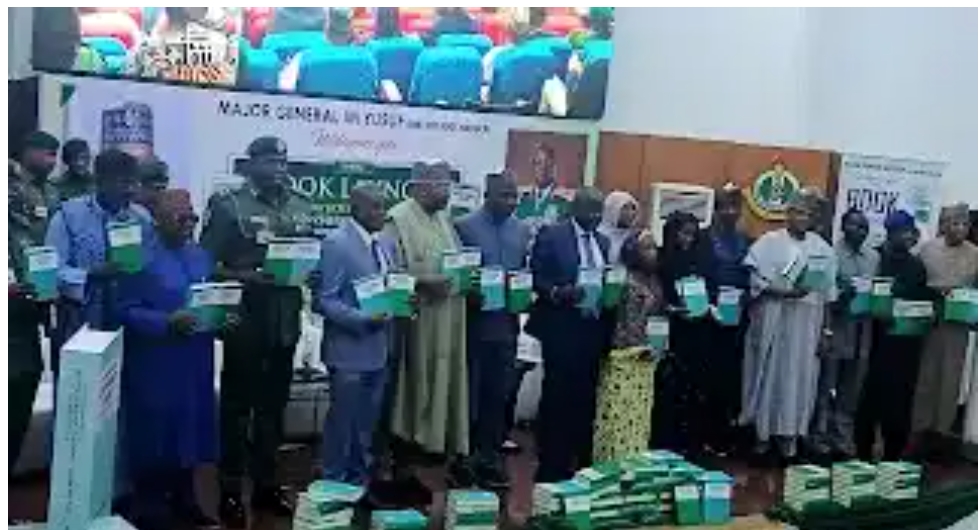
Buratai Highlights Leadership, Community Support In Defeating Insurgency As Shettima, Defence Chiefs Rally Support For Counterterrorism Documentation At Book Launch
Prominent Nigerians including Vice President Kashim Shettima, Defence Minister Christopher Musa, senior military officers, and political leaders on Thursday underscored the importance of documentation, collective national responsibility, and sustained military professionalism in the fight against terrorism during the unveiling of a new book titled “Counterterrorism and Counterinsurgency Operations in North East Nigeria (Volumes 1 & 2)” authored by retired Major-General Ibrahim Yusuf.

Representing Vice President Kashim Shettima, the Special Adviser on General Duties, Dr. Aliyu Modibbo, described the publication as a timely and strategic contribution to Nigeria’s national security discourse.
According to him, Nigeria’s experience with terrorism and insurgency in the North-East reflects not a nation defeated by insecurity, but the resilience and courage of citizens and security forces defending the country’s shared destiny.
He noted that the conflict in the North-East remained a deep human tragedy affecting communities with rich historical and cultural heritage, stressing that terrorism requires sustained vigilance, intelligence gathering, diplomacy, technology, and strong civil-military cooperation.
The Vice President further commended the author for documenting operational experiences and strategic lessons from the theatre of operations, saying such insights would prove invaluable to policymakers, scholars, and future military leaders.
He also reaffirmed the commitment of President Bola Ahmed Tinubu’s administration to strengthening the operational readiness, welfare, and dignity of members of the Armed Forces.
In his goodwill message, the Minister of Defence, Christopher Musa, praised the author as a respected mentor whose professionalism and leadership continued to inspire younger officers even after retirement.
“The lion may be retired, but he is certainly not tired,” he remarked.
Musa described the insurgency in the North-East as one of Nigeria’s most complex security challenges, noting that the asymmetric nature of the conflict means it cannot be won by military force alone.
According to him, victory against terrorism depends on collective national responsibility involving the Armed Forces, civil authorities, and citizens working together to deny insurgents support and legitimacy.
He also urged serving military officers to study the publication carefully, noting that it contains valuable operational lessons from years of counterinsurgency operations.
The Chief of Defence Staff, Olufemi Oluyede, described the two-volume publication as a major intellectual contribution bridging theory and practice in counterterrorism and counterinsurgency operations.
Oluyede commended the author for preserving decades of operational knowledge gained from commanding the 21 Brigade, 7 Division, and the Multinational Joint Task Force.
He stressed that modern security threats demand continuous learning, adaptation, and proper documentation of operational experiences, adding that the publication would serve as a useful resource for military practitioners, researchers, and policymakers.
Former Chief of Army Staff, Lt. Gen. Tukur Buratai, also applauded the author for documenting operational experiences from the counterinsurgency campaign in the North-East.
Buratai stated that operational success in counterinsurgency warfare depends largely on the quality of commanders in the field and the ability of military leaders to adapt to complex realities.
He recalled the significance of operations such as Deep Punch I and Deep Punch II, as well as the critical role played by the Nigerian Air Force in degrading terrorist capabilities between 2015 and 2017.
According to him, resilient leadership and community support remain crucial elements in defeating insurgency.
Earlier, retired Major-General Ibrahim Yusuf said the publication represented the fulfilment of an eight-year intellectual ambition aimed at contributing to military scholarship and national security discourse.
He explained that the book was inspired by a desire to provide younger military officers and policymakers with first-hand insights into the successes and challenges of counterterrorism operations in Nigeria.
The retired general added that the publication drew from over a decade of operational experience in the North-East and the Lake Chad Basin while deliberately avoiding sensitive information capable of compromising ongoing operations.
He also urged retired military officers to document their operational experiences for future generations, stressing that such efforts are essential for institutional memory and national development.
Reviewing the publication, renowned scholar Eghosa Osaghae described the work as a landmark contribution to military scholarship.
Osaghae noted that the two volumes combine academic depth with practical operational experience, offering insights into intelligence-led operations, joint force coordination, psychological warfare, and post-conflict management.
He added that the publication effectively situates Nigeria’s counterinsurgency experience within the broader realities of modern asymmetric warfare and evolving global security threats.
The event attracted senior serving and retired military officers, heads of security agencies, members of the diplomatic corps, academics, and policymakers from across the country.
society
Oduduwa Integrity Association Announces Adoption of Governor Ademola Adeleke as “Performing Governor” in the Southwest*
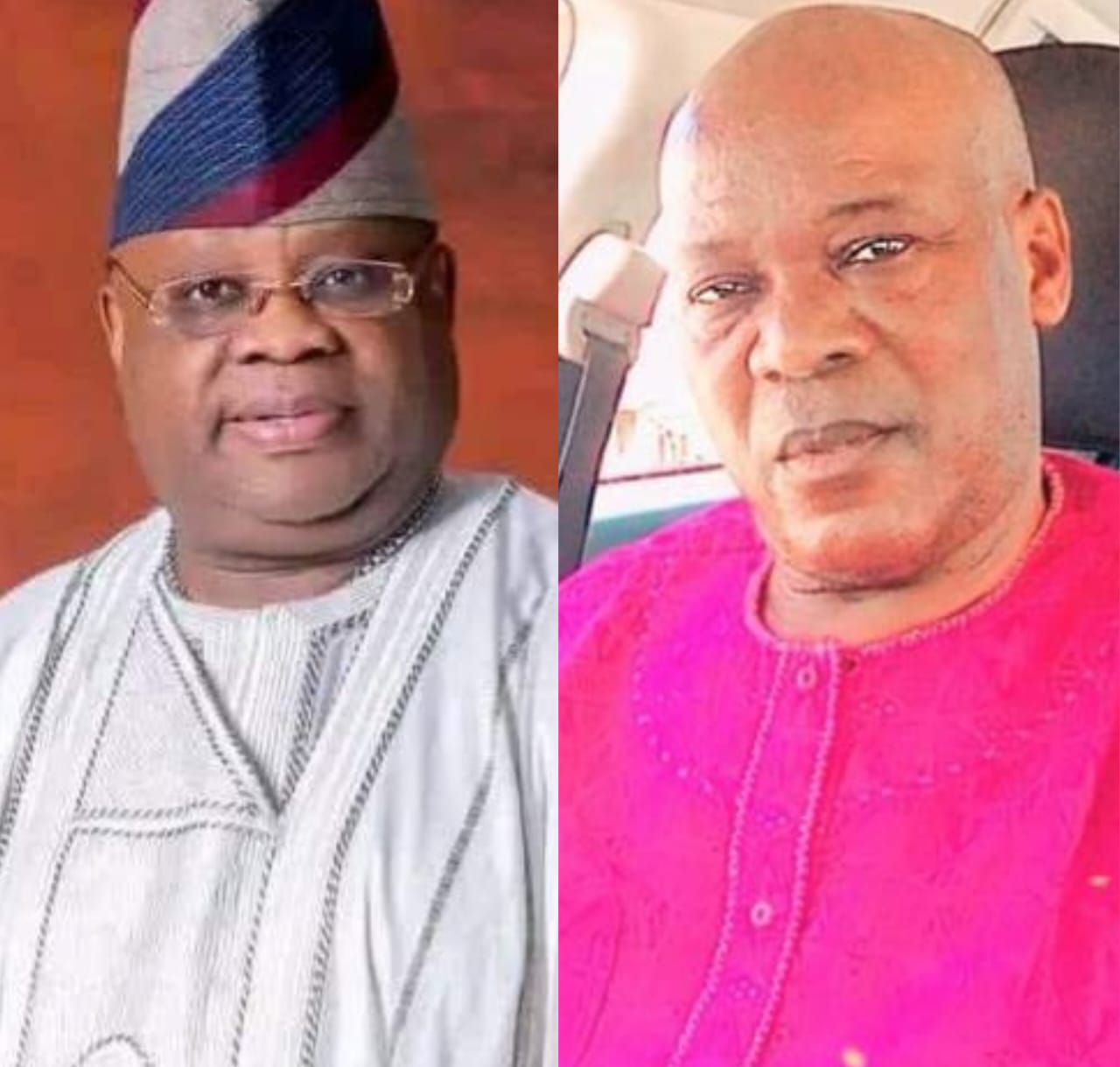
Oduduwa Integrity Association Announces Adoption of Governor Ademola Adeleke as “Performing Governor” in the Southwest*
*Osun State, Nigeria* – The Oduduwa Integrity Association, one of the prominent socio-cultural and advocacy groups in the Southwest region, has announced its decision to adopt and publicly recognize Governor Ademola Adeleke of Osun State as a performing governor in the Southwest.
According to the Association, the adoption is based on its independent monitoring of governance and project delivery across the region. The group stated that Governor Adeleke’s administration has demonstrated measurable progress in areas including infrastructure, workers’ welfare, education, and youth empowerment, which aligns with the association’s mandate to promote accountability and good governance.
“This adoption is our way of encouraging performance and responsible leadership,” Evang /Hon Omotoso Banji, the President and Founder of Oduduwa Integrity Association said. “We believe that recognizing leaders who are delivering on their mandate helps strengthen democratic values and motivates others to prioritize the people.”
The Association noted that its adoption does not imply political affiliation but is a non-partisan endorsement of what it describes as visible and verifiable governance outcomes within Osun State. It added that the move is part of its broader initiative to highlight and support public officials across the Southwest who meet its standards for transparency, service delivery, and integrity.
Governor Adeleke’s administration has been marked by policy focus on infrastructural renewal, payment of salary arrears, and investment in grassroots development since assuming office. The Oduduwa Integrity Association said it will continue to monitor and document these efforts as part of its civic oversight role.
The formal adoption ceremony and presentation of recognition materials are expected to be announced in the coming weeks.
The Oduduwa Integrity Association is a Southwest-based civil society and advocacy group committed to promoting good governance, transparency, and accountability across Yoruba-speaking states presided by Evang / Hon Omotoso Banji.The Association conducts independent assessments of public service delivery and engages in community enlightenment programs.
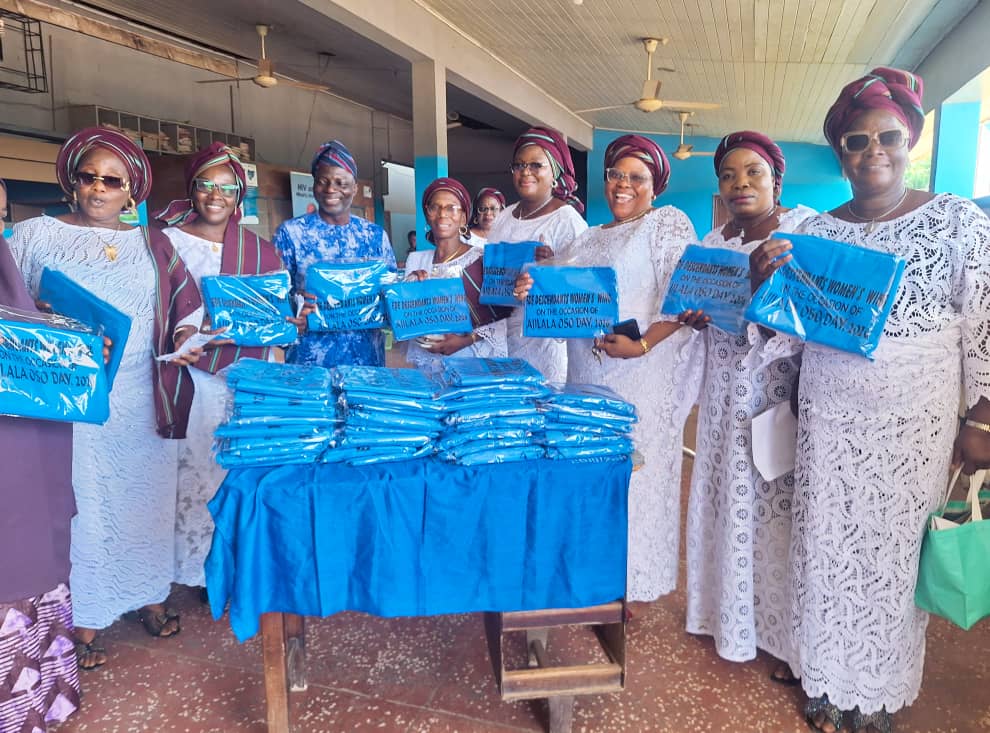
AjilalaOso Day 2026: Women Union Make Donations To Hospital
The women wing of the Ede Descendants Union has donated 42 bedsheets and 44 pillow cases to Cottage Hospital, Ede, in Osun State, as part of activities marking preparations for AjilalaOso Day 2026.
The donation was aimed at supporting healthcare services at the hospital while also demonstrating the union’s commitment to community development and humanitarian service.
Members of the union said the gesture formed part of efforts to give back to society and contribute meaningfully to the wellbeing of patients receiving treatment at the health facility.
Speaking during the presentation, the leader of the women wing, Mrs Silifat Shittu, described the initiative as a reflection of the values of compassion, unity and service which AjilalaOso Day represents.
She noted that the annual cultural celebration is not only about showcasing the rich heritage of Ede but also about promoting development-oriented projects capable of impacting lives positively.
The group further urged individuals, organisations and stakeholders in Edeland to continue supporting community-based initiatives aimed at improving the welfare of residents.
Speaking on behalf of the hospital management, the Chief Medical Officer, Dr Isiaka Alade, appreciated the women group for the donation, describing the items as timely and beneficial to patients and the hospital environment.
Chairman of the AjilalaOso Day 2026 Planning Committee, Prince Adewale Laoye while addressing the gathering appealed to other well-meaning individuals and organisations to extend similar gestures to the hospital, noting that some roofing sections of the facility require urgent repairs.
He also commended the women wing of the union for the initiative and support shown to Cottage Hospital.
Prince Laoye, who spoke extensively on the objectives of the AjilalaOso festival, explained that the annual celebration would not only be about funfair and merriment but would also focus on touching the lives of the needy through impactful community projects.
According to him,“We also want associations to have a project executed in Ede every year, such as what the women wing of EDU has done today.”


- Africa’s $65 Billion Fintech Industry Under the Spotlight in Latest Pan African Visions Magazine Special Edition May 21, 2026
- TotalEnergies Expands Angola Offshore Strategy as Martin Deffontaines Returns to Angola Oil & Gas (AOG) 2026 May 21, 2026
- New Africa Centres for Disease Control and Prevention (Africa CDC)–Global Fund Partnership to Strengthen Africa’s Health Systems May 21, 2026
- U.S. International Development Finance Corporation (DFC's) Vibhuti Jain Joins African Mining Week (AMW) as United States (U.S.) Expands Regional Critical Mineral Partnerships May 21, 2026
- PAC Capital Limited Secures Seven Prestigious International Awards, Reinforcing Leadership in Investment Banking and Advisory May 21, 2026
- African Energy Chamber (AEC) Strengthens Strategic Engagement with African Petroleum Producers’ Organization (APPO), Venezuela to Advance Regional Energy Cooperation May 21, 2026
- How the Product Leadership Accelerator (PLA) is Re-Engineering African Enterprises for a Digital-First Economy May 20, 2026
- Congo’s Minister Onanga to Fast-Track Deals, Drive Local Content and Expand Floating Liquefied Natural Gas (FLNG) in New Investment Push May 20, 2026
- PayPal Brings PayPal USD to Users Across 70 Markets Worldwide and Expands Access in Africa May 20, 2026
- Afreximbank Extends USD 15 Million Facility to Ecobank Zimbabwe Limited to Support Small and Medium Enterprises (SME) Participation in Export Value Chains May 20, 2026
- Africa’s $65 Billion Fintech Industry Under the Spotlight in Latest Pan African Visions Magazine Special Edition May 21, 2026
- TotalEnergies Expands Angola Offshore Strategy as Martin Deffontaines Returns to Angola Oil & Gas (AOG) 2026 May 21, 2026
- New Africa Centres for Disease Control and Prevention (Africa CDC)–Global Fund Partnership to Strengthen Africa’s Health Systems May 21, 2026
- U.S. International Development Finance Corporation (DFC's) Vibhuti Jain Joins African Mining Week (AMW) as United States (U.S.) Expands Regional Critical Mineral Partnerships May 21, 2026
- PAC Capital Limited Secures Seven Prestigious International Awards, Reinforcing Leadership in Investment Banking and Advisory May 21, 2026
- African Energy Chamber (AEC) Strengthens Strategic Engagement with African Petroleum Producers’ Organization (APPO), Venezuela to Advance Regional Energy Cooperation May 21, 2026
- How the Product Leadership Accelerator (PLA) is Re-Engineering African Enterprises for a Digital-First Economy May 20, 2026
-

 news5 months ago
WHO REALLY OWNS MONIEPOINT? The $290 Million Deal That Sold Nigeria’s Top Fintech to Foreign Interests
-

 society3 weeks ago
SOCIAL MEDIA IS NOT A BATTLEFIELD COMMAND – WHY THE NIGERIAN ARMY’S ACTION AGAINST JUSTICE CRACK IS A NATIONAL SECURITY IMPERATIVE
-

 celebrity radar - gossips4 months ago
Dr. Chris Okafor Returns with Power and Fire of the Spirit -Mounts Grace Nation Altar with Fresh Anointing and Restoration Grace on February 1, 2026
-

 celebrity radar - gossips5 months ago
Prophet Kingsley Aitafo Releases 2026 Prophecy: ‘Nigeria Will Rise, but the World Must Prepare for Turbulence’