
society
Nigeria Didn’t Happen to Us. We Happened to Nigeria. By George Omagbemi Sylvester

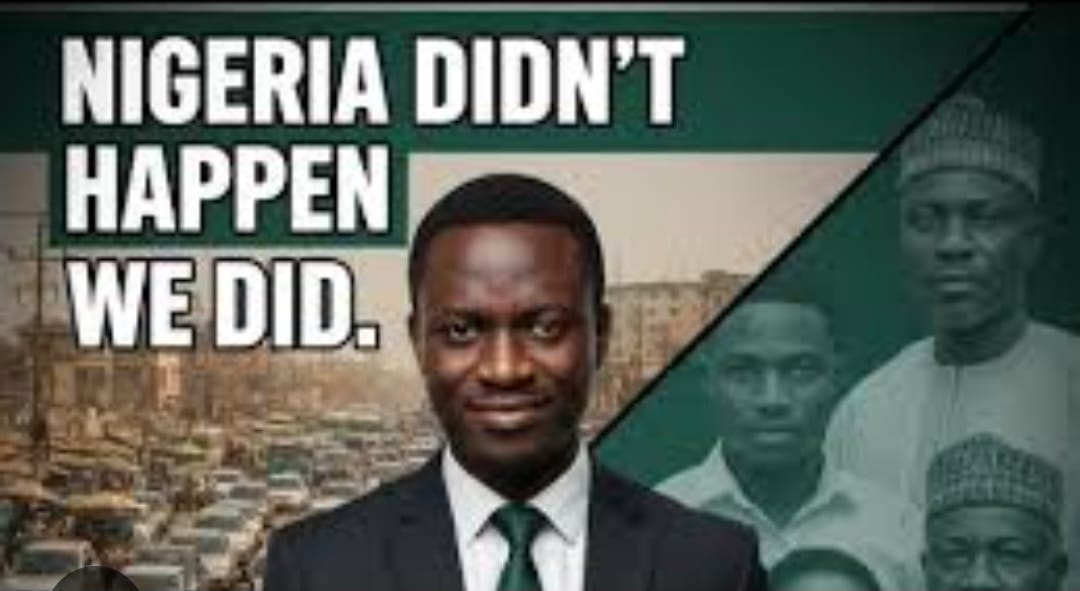
Nigeria Didn’t Happen to Us. We Happened to Nigeria.
By George Omagbemi Sylvester
“A Brutally Honest Monologue and an Even Harder Truth: Our Nation’s Struggles Are Self‑Inflicted Unless We Change Ourselves First.”
Nigeria is not a NATURAL ACCIDENT. It is not a HAPLESS INHERITANCE. It is not a CRUMBLING STRUCTURE that simply happened to us. The truth (UNCOMFORTABLE, UNFLINCHING and MERCILESS) is this: Nigeria did not just happen. We happened to Nigeria. This is not a feel‑good slogan; it is a mirror held up to our collective face.
This powerful monologue, recently captured in the viral video “Nigeria Did not Happen to Us; We Happened to Nigeria”, is a SHARP, SATIRICAL and CANDID INDICTMENT of the Nigerian condition, delivered in the spirit of brutal honesty that the nation sorely needs. It forces us to confront a core question: ARE WE VICTIMS OF NIGERIA’S FAILURES, OR HAVE WE BECOME CONTRIBUTORS TO THEM?

As Nigerians, we must understand both the external foundations of this nation and the internal contradictions we have allowed to fester for decades.
The Myth of Nigeria’s Accidental Nationhood.
Nigeria’s origins are COLONIAL not ORGANIC.
In 1914, British colonial authorities amalgamated the disparate Northern and Southern protectorates (regions culturally, linguistically, economically and religiously distinct) into one colony called Nigeria. This union was motivated by convenience for colonial administration, not by any existing sense of shared identity among Nigerians.
One respected historian put it bluntly:
“Nigeria is not a nation. It is a mere geographical expression.” Chief Obafemi Awolowo, 1947 (paraphrased by scholars describing his position).
Even prominent nationalist leaders were skeptical about Nigeria’s prospects. Sir Abubakar Tafawa Balewa observed that more than a century after the amalgamation, many groups had little in common and did not “show themselves any signs of willingness to unite.”
This is critical context. Nigeria’s foundation was never one of shared identity or mutual purpose; it was political convenience cemented over fault lines of ethnicity, religion and regional disparities. Yet, instead of overcoming these differences, we have often exploited them.
Beyond Colonialism: Internal Failures We Must Own.
It is one thing to acknowledge that Nigeria was born of colonial imposition. It is another to ignore how we have shaped her destiny since independence.
Leadership Failure. Chinua Achebe (one of Nigeria’s greatest voices) wrote in his seminal essay The Trouble with Nigeria:
“The problem with Nigeria is simply and squarely a failure of leadership. Nigerians are what they are because their leaders have not been what they should be.”

This assessment remains painfully true. Leadership failures have pervaded our governance, from military rule to civilian administrations. Leaders who lack vision, commitment, integrity and or accountability have allowed corruption to become normalized and PUBLIC SERVICE to become SELF‑SERVICE. Their conduct entrenches distrust, weakens institutions and erodes citizens faith in progress.
Leadership Is not the Only Problem; We Are Too.
The monologue itself cuts deeper: it argues that Nigerians often project responsibility outward (blaming the country) instead of looking inward at our collective choices and behaviors.
Consider the Nigerian voting public. For too long, electoral choices have been driven by ethnicity, religion, patronage or patron‑client loyalty rather than merit, service records or competence. When citizens consistently elect leaders who perpetuate corruption, insecurity and economic mismanagement, that is not NIGERIA HAPPENING TO US; THAT IS NIGERIA HAPPENING BECAUSE OF US.

Corruption and Impunity. Corruption (the manipulation of public resources for private gain) is one of the most pervasive problems in Nigeria. Transparency International’s Corruption Perceptions Index and local audits have repeatedly shown Nigeria’s struggle with corruption across public institutions. When corruption becomes normalised, citizens lose trust in governance and the state’s capacity to deliver basic services collapses. This is not an abstract concept; it is a lived reality for millions.
Poverty, Inequality and Underdevelopment Are Symptoms, Not the Disease.
According to the World Bank and independent analysts, more than half of Nigeria’s population lives in POVERTY, with SEVERE INFRASTRUCTURE DEFICITS, POOR EDUCATION, LIMITED HEALTHCARE ACCESS and an ELECTRICITY CRISIS that leaves millions without RELIABLE POWER.
These are not natural disasters. They are structural failures and failures of policy, priorities, investment and long‑term national planning.
For example:
Electricity generation remains weak compared to other African nations. Nigeria’s peak electricity generation often fluctuates between 5,500 and 6,000 MW, a fraction of what is needed for sustained industrial growth.

Education gaps leave millions of school‑aged children without basic education, undermining human capital development.
Poverty persists alongside massive resource wealth, highlighting a disconnect between potential and reality.
These challenges do not mean NIGERIA is INHERENTLY DOOMED. They mean that poor governance, weak institutions and a LACK OF STRUCTURAL REFORMS have BLOCKED our PATH to PROSPERITY.
Nationhood Is Still a Work in Progress.
Decades after independence and a civil war that sought to defend national unity, Nigeria continues to grapple with the concept of nationhood.
Scholars note that Nigeria’s pluralistic society (over 250 ethnic groups with diverse languages and belief systems) makes forging a cohesive national identity extremely complex.
National identity is not automatic. It is built through shared purpose, inclusive governance, equitable resource distribution and recognition of diversity within unity.
Yet, too often Nigerians fall back on narrow identities (TRIBE, RELIGION, REGION) rather than seeing themselves first as NIGERIANS.
True nationhood demands that we recognize our differences but refuse to let them divide us.

The Narrative of Blame Must Change.
There is a popular expression among Nigerians: “MAY NIGERIA NEVER HAPPEN TO YOU.” It is a curse, born out of frustration and despair. Yet experts argue this narrative is counterproductive.
Taiwo Oyedele, then Chairman of the Presidential Fiscal Policy and Tax Reform Committee, called it “UNPATRIOTIC” and suggested instead: “MAY NIGERIA WORK FOR ME.” His point is clear: citizens must shift from fatalism to constructive engagement.
This shift requires rejecting narratives that externalize responsibility. If we truly believe Nigeria “HAPPENED TO US,” then we resign ourselves to victimhood. But if we admit that we shaped Nigeria with our votes, actions and apathy, then we acknowledge that we also have the power to rebuild it.
A Call to Conscious Patriotism.
The video monologue does not end in defeat; it is a call for accountability; both from leaders and citizens. This is not cynicism. This is patriotism disguised as harsh truth.
The future of Nigeria lies not in wishful thinking, not in optimism alone and not in blaming past wrongs. It lies in self‑reflection, collective responsibility and national renewal.
“Every country has the government it deserves.” according to Joseph de Maistre
This timeless aphorism is relevant to Nigeria today. When citizens elect leaders who fail to provide security, economic opportunity and dignity, then they must ask themselves why such leaders were chosen in the first place.
The Bigger Picture: Reclaiming Nigeria’s Destiny.
Nigeria did not simply happen to us. We (through our CHOICES, our COMPLACENCY, our SILENCE and at times our COMPLICITY) happened to Nigeria.
This truth is not a condemnation without hope. It is an invitation to engage and to participate in nation‑building as citizens who hold leaders accountable, embrace unity in diversity and demand governance that uplifts every Nigerian.
A nation is not an accident. It is an ongoing project and that of IDEOLOGY, POLICY, CULTURE and COURAGE.
Nigeria’s story is unfinished. And because it is unfinished, it can be REWRITTEN, but only if we stop seeing ourselves as victims and start seeing ourselves as architects of our common future.
— Published by saharaweeklyng.com




society
ONDO STATE GOVERNMENT MOBILIZES ON #UniteAgainstTerror CAMPAIGN, CALLS FOR NATIONAL UNITY AGAINST TERRORISM
ONDO STATE GOVERNMENT MOBILIZES ON #UniteAgainstTerror CAMPAIGN, CALLS FOR NATIONAL UNITY AGAINST TERRORISM
The Ondo State Government has announced its support for the nationwide #UniteAgainstTerror campaign, calling on all Nigerians to rise above political, ethnic, and religious differences in a collective effort to combat terrorism and other forms of violent crimes threatening the nation’s peace and stability.
2. The campaign mobilization comes in the wake of the recent conviction and sentencing of individuals linked to the horrific Owo church massacre of June 2022, a tragedy that claimed innocent lives and left lasting scars on families, communities, and the nation. While welcoming the judicial outcome as a significant step toward justice, the Government emphasized that the fight against terrorism requires sustained vigilance and the active participation of all citizens.
3. Speaking on Channels Television’s Politics Today, Governor Lucky Orimisan Aiyedatiwa stated that this is a defining moment for Nigerians to come together with one voice against terrorism, stressing that national security must transcend partisan interests. According to the Governor, “when we see something, we must say something,” urging citizens to promptly report suspicious activities and security concerns to the appropriate authorities.
4. The Government commends the Armed Forces of Nigeria, the Nigeria Police Force, the Department of State Services, the Nigeria Security and Civil Defence Corps, Amotekun Corps, and other security agencies for their courage, sacrifice, and unwavering commitment to protecting lives and defending the nation’s territorial integrity.
5. Ondo State Government therefore calls on traditional rulers, religious leaders, community associations, youth groups, civil society organizations, media practitioners, and all well-meaning Nigerians to embrace the #UniteAgainstTerror campaign as a patriotic movement aimed at strengthening intelligence gathering, promoting public awareness, and denying criminal elements the space to operate within our communities.
6. The Government reaffirms its commitment to supporting all lawful measures that enhance national security and urges every citizen to remain alert, responsible, and actively involved in the collective task of safeguarding Nigeria. Together, united in purpose and action, we can defeat terrorism and build a safer and more secure nation for present and future generations.
Hon. Idowu Ajanaku,
Commissioner for Information and Orientation
June 5, 2026
society
WAZOBIA: Nigeria’s Hardly Separable Tripod Stand Since 1914; It’s Time To Rotate Presidency Among 6 Geo-Political Zones In 2027
WAZOBIA: Nigeria’s Hardly Separable Tripod Stand Since 1914; It’s Time To Rotate Presidency Among 6 Geo-Political Zones In 2027
Dear High Chief Jibrin Okutepa (SAN), I bring you calvary greetings from the land of Lincoln. I want to first of all commend your continued sincerity of purpose for a united, peaceful, and prosperous Nigeria.
But with all due respect sir, let me reaffirm that since 1914, when the British colonialists led by Lord Frederick Lugard, amalgamated the Northern and Southern Protectorates, Nigeria has always stood on a Tripod called WAZOBIA (Yoruba, Hausa/Fulani, and Igbo). In fact, it is the alleged domination of these three major ethnic nationalities that brought about the doctrine of necessity called the Six Geo-political Zones proposed by Chief Alex Ekwueme, et al., at the 1994/1995 Constitutional Conference chaired by the late Justice Adolphus Karibi-Whyte and empaneled by General Sanni Abacha.
Prior to, and during this period under review, there were legitimate claims and concerns from ethnic minorities across the old Eastern region, the old Northern region, as well as the old Western region that they were being dominated, marginalized, oppressed, and strangulated by the abovementioned three major ethnic nationalities in Nigeria.
So, to solve this hydra-headed problem capable of imploding Nigeria, via a doctrine of necessity, General Sanni Abacha in 1996, partitioned Nigeria into six geo-political zones, namely: North Central, North East, North West, South East, South South, and South West.
The minorities in the old Northern region were majorly zoned into the North Central. This is even as the minorities in the old Eastern region and old Western region were respectively zoned into the South South (a cardinal point unknown to history).
As one of the ardent students of contemporary Nigerian history and politics, permit me to affirm that pertitioning Nigeria into six geo-political zones is the best bet at guaranteeing justice, equity, fairness, national unity, national cohesion, national peace, and commandeering national loyalty in a country like Nigeria with over 385 ethnic nationalities and over 500 languages.
Going forward into 2027, to make Nigeria work, all that is needed has been proferred by Chief Alex Ekwueme during the 1994/1995 Constitutional Conference. Let’s rotate the presidency among the six geo-political zones for a single term of five or six years. This is in line with the spirit and letters of Section 14(3) of Nigeria’s 1999 Constitution (as amended).
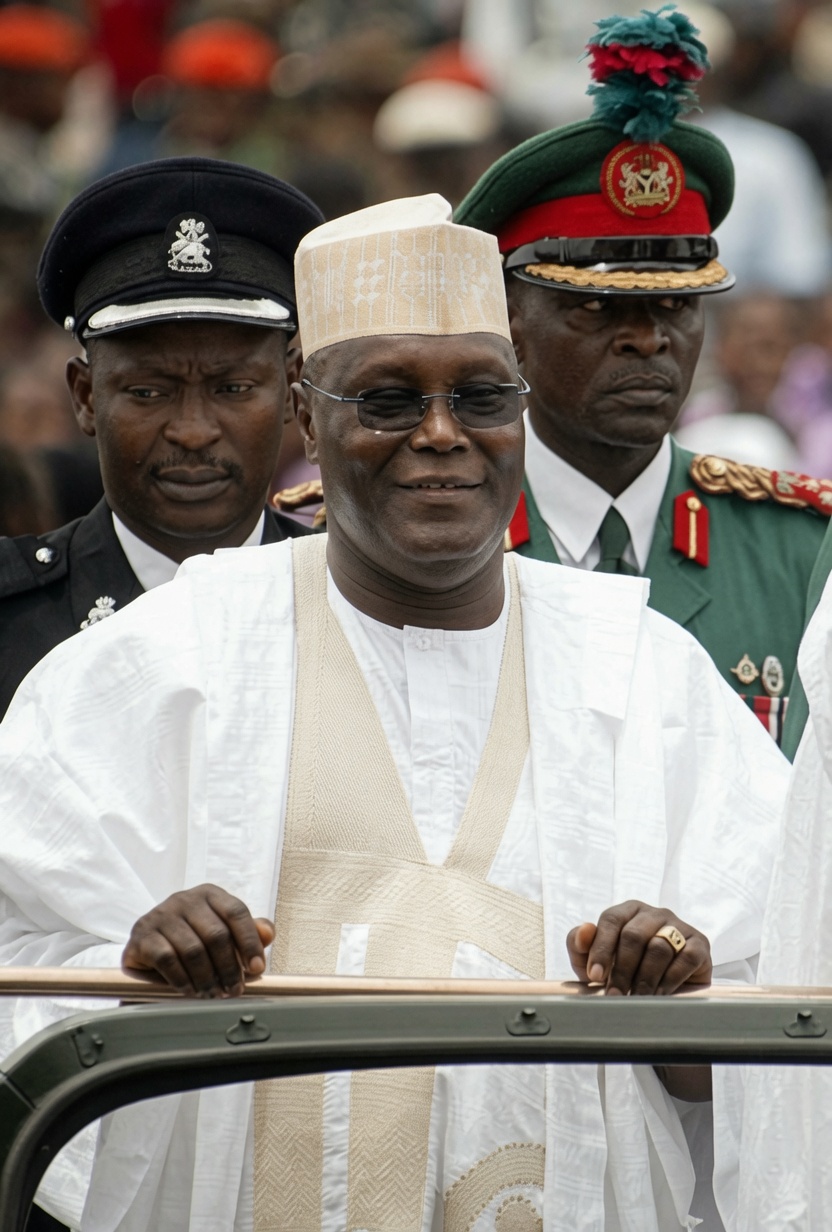
Of all the frontline Presidential candidates for the 2027 all-important elections, only His Excellency Atiku Abubakar- @atiku espouses and religiously supports this equitable zoning arrangement. The North/South zoning arrangement has been a scam all along. It has not been able to restore national unity, national peace, and commandeer national loyalty among Nigerians from across the six geo-political zones for their beloved country.
It is therefore, self-evident and conspicuous like the North Star that when power goes North, the more populated North West hijacks it and runs away with it. And when power comes South, the more populated South West using its mainstream media and propaganda prowess, hijacks it and runs away with it. This malady has continued unabated since 1999 to the chagrin of the marginalized North East, South East, and North Central.
As an emerging political scientist and investigative journalist, I affirm that at this auspicious moment in Nigeria’s chequered history, the country now urgently needs an experienced reformer with the political will and balls of steel like Waziri Adamawa; the Zege Mule u Tiv; and the Ogo wu chi onye 1 of Igboland, to get the failing country out of the woods.
Your (Okutepa’s) proposition to downplay the fact that Nigeria is standing on a Tripod called WAZOBIA can be described as an academic exercise tantamount to futility. Nigeria will always stand on a Tripod. All that is needed is for the 1999 Constitution to be amended to make it an impeachable offence for the Nigerian President to abuse his powers and going contrary against the spirit and letters of Section 14(3) of the 1999 Constitution of the Federal Republic of Nigeria (as amended).
Muhammadu Buhari did it and was not punished with impeachment proceedings from the rubber-stamp Senate Presidency of Ahmed Lawan. Bola Tinubu continued from where Buhari stopped and has not been punished with impeachment proceedings from the rubber-stamp Senate Presidency of Godswill Akpabio.
By and large, I reckon with you in toto, that Nigeria’s problem is not in the 1999 Constitution nor in the law, but in the blatant disregard and disrespect for law and order. Gift the American Constitution to these current crop of rogue politicians in Nigeria, they will still plunge Nigeria into the unfathomable chaos like they have done today.
Going into 2027 all-important presidential election billed for Saturday, January 16, 2027, let me conclude by saying that since 2015, having tried and tested two successive regimes of the ruling All Progressives Congress, APC, it’s time to try and test the main opposition African Democratic Congress, ADC, whose charge is led by His Excellency Atiku Abubakar.
May the Nigerian State and the Nigerian people succeed in 2027!
Ikenna Asomba is a political scientist and journalist. He writes from the State of Illinois, United States.
The Abyss of Silence: Why We All Failed the Oyo Abductees
By Femi Oyewale
The haunting cadence of W.B. Yeats’ The Second Coming, quoted so often by the late Chinua Achebe, has ceased to be mere poetry. It has become a grim, real-time mirror reflecting our national existence: “Things fall apart; the centre cannot hold; / Mere anarchy is loosed upon the world.”

In a nation that boasts some of the brightest minds globally, a land steeped in the communal sanctity of “it takes a village to raise a child,” we have descended into an unthinkable abyss. Daredevil criminals have reached into the heart of Oyo State, snatched our children—the very architects of our future—and vanished. Yet, as the sun rises and sets, from the gilded halls of the Presidency to the dusty corners of the local street, we remain paralyzed, tethered to a collective ignorance that is as chilling as it is shameful.
The Theatre of Performative Outrage
We have become a nation of “noises.” We trade blame with surgical precision—the Presidency points to the state, the state points to the security architecture, and the populace directs its vitriol toward the political elite. We have seen the press releases, the hashtags, the fleeting television appearances, and the hollow promises of “concerted efforts.”
But let us be painfully honest: these are not efforts; they are performances. There is not even a whisper of a “near-success syndrome.” While we debate and defend our preferred political affiliations, our children are sleeping under the cold, unforgiving stars of a forest floor. They are subjected to the kind of trauma that shatters souls long before it breaks bodies. They are waiting for a rescue that we are too divided to coordinate.
The Mirror of Empathy
Let us strip away the facade of civic detachment. I challenge every father in this country: if that abducted child were your only son, would you be content with a tweet? To every mother: if that child were the fruit of your old age, would you accept a press statement as enough?
To our governors, our senators, and our political titans: if these children were the heirs to your empires, would the current pace of “investigation” satisfy you? To our billionaires, our security chiefs, and our local traditional warriors, those who claim the mantle of protectors, what if these children were born of your own loins?
The silence that would follow that personal connection is the same silence currently haunting the homes of these victims. We have allowed the abstraction of “national crisis” to desensitize us to the visceral reality of a child’s terror.
Beyond the “One-Man” Savior Complex
We have developed a dangerous habit of outsourcing our conscience. We wait for the radical activist, the viral influencer, or the singular loud voice to carry the burden of the nation. We expect a solitary figure like VDM or a lone firebrand like Sowore to move mountains that require the combined weight of a movement.
But no singular individual can replace the collective pulse of a people. Their rescue is not a one-man job; it is a fundamental test of our humanity.
The Path to Reclamation
We are currently a house divided by party lines, religious silos, and ethnic prejudices. Yet, we have seen that we possess a dormant capacity for unity. When the Super Eagles take to the pitch, our differences vanish. We become one heartbeat, one voice, one nation. Why is it that a game can unify us, but the abduction of our children leaves us fractured?
We do not need more talk. We do not need more inquiries that lead to no arrests. We need to acknowledge a hard truth: we have failed. We have failed the children, we have failed their teachers, and we have failed ourselves.
No stranger knows our terrain better than we do. No satellite imagery can replace the intelligence of a community that refuses to be silent. It is our land. These are our children.
The systemic rot has metastasized to the point where “efforts” no longer count. Only results matter. The time for performative sorrow is over; the time for a unified, uncompromising demand for their return is now. If we do not rise, if we do not act with the singular intensity of a people reclaiming their future, then let the history books record that when our children were taken, Nigeria chose its politics over its people.
We must rescue them. Not tomorrow. Not after the next meeting. Now.
Femi Oyewale is the publisher of Sahara Online and President of NASRE who
writes on national affairs, security, and social development.


- President Isaias Afwerki Departs for Egypt June 7, 2026
- Eritrea: Athlete Nahom Ermias Champion of Asmara Marathon 2026 June 7, 2026
- World Health Organization (WHO) Hands Over Ebola Preparedness Supplies to Strengthen Zambia’s Readiness June 7, 2026
- Joint Statement by the World Health Organization (WHO) and Food and Agriculture Organization of the United Nations (FAO) in South Africa on World Food Safety Day 2026: From burden to solutions – safe food everywhere June 7, 2026
- Liberia: President Boakai Oversees Signing of US$125 Million in World Bank Financing Agreements for Digital Connectivity, Renewable Energy, and Road Infrastructure June 7, 2026
- President Mahama explores Belarus’ agro-industrial hub; seeks partnerships to boost Ghana’s food security June 7, 2026
- National Insurance Corporation of Eritrea (NICE): Shareholders’ Annual Regular Meeting June 6, 2026
- World Cup accredited journalists raise concerns over unfair United States (US) visa restrictions, International Sports Press Association (AIPS) calls on FIFA to intervene June 6, 2026
- Ghana: President Mahama arrives in Belarus, lays wreath at Victory Monument June 6, 2026
- Liberia: President Boakai Advances Clean Energy Agenda; Dedicates 20-Megawatt Solar Power Plant at Mount Coffee June 6, 2026
- President Isaias Afwerki Departs for Egypt June 7, 2026
- Eritrea: Athlete Nahom Ermias Champion of Asmara Marathon 2026 June 7, 2026
- World Health Organization (WHO) Hands Over Ebola Preparedness Supplies to Strengthen Zambia’s Readiness June 7, 2026
- Joint Statement by the World Health Organization (WHO) and Food and Agriculture Organization of the United Nations (FAO) in South Africa on World Food Safety Day 2026: From burden to solutions – safe food everywhere June 7, 2026
- Liberia: President Boakai Oversees Signing of US$125 Million in World Bank Financing Agreements for Digital Connectivity, Renewable Energy, and Road Infrastructure June 7, 2026
- President Mahama explores Belarus’ agro-industrial hub; seeks partnerships to boost Ghana’s food security June 7, 2026
- National Insurance Corporation of Eritrea (NICE): Shareholders’ Annual Regular Meeting June 6, 2026
-

 news6 months ago
WHO REALLY OWNS MONIEPOINT? The $290 Million Deal That Sold Nigeria’s Top Fintech to Foreign Interests
-

 society1 month ago
SOCIAL MEDIA IS NOT A BATTLEFIELD COMMAND – WHY THE NIGERIAN ARMY’S ACTION AGAINST JUSTICE CRACK IS A NATIONAL SECURITY IMPERATIVE
-

 celebrity radar - gossips4 months ago
Dr. Chris Okafor Returns with Power and Fire of the Spirit -Mounts Grace Nation Altar with Fresh Anointing and Restoration Grace on February 1, 2026
-

 celebrity radar - gossips6 months ago
Prophet Kingsley Aitafo Releases 2026 Prophecy: ‘Nigeria Will Rise, but the World Must Prepare for Turbulence’