
Politics
Nigeria dying under Buhari’s jackboot

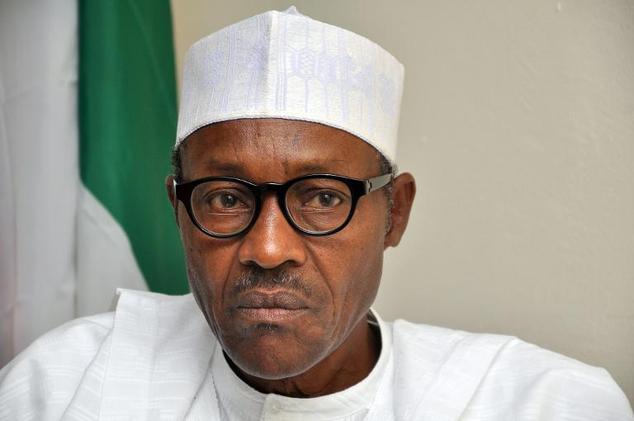
Tunde Odesola
Once upon a Babel, there was a tower that reached to the heavens. Like Nigeria, Babel was a country that thrived on visionless tyranny, but eventually fell off the global map into extinction. For Babel to disintegrate, the country’s tongue lost the unifying power of communication and the falcon no longer heard the falconer.
Nimrod, the great-grandson of Noah, who built the all-saving Ark, led the construction of the all-destructive Tower. Sometimes, a prodigal son trashes excellent heritage by burning the tree of inheritance. Located in present-day Iraq, the remains of Babel ruled by Nimrod, a mighty hunter, fascist and narcissist, have become critical references in archeological studies and political misrule.
Babel shares a few disturbing traits with Nigeria. Like Babel, Nigeria, under Major General Muhammadu Buhari (retd.), appears irreversibly committed to self-death, yet hounding all voices of reason pleading soul-searching and repentance from the sworn path of doom.
The breakdown of communication in Nigeria, as it was in Babel, is on three levels. They include intra-government level, government-citizen level and government-government level. Instructively, however, extreme leadership failure is the dagger to the heart of Nigeria’s communication breakdown and the harbinger of the accompanying hardship on the citizenry – just as it was in Babel.
The breakdown in intra-government communication is evident in the senseless wars that have rocked the Muhammadu Buhari nepotistic administration. They include the shameful combat between Buhari’s late relative and Chief of Staff, Abba Kyari and the National Security Adviser, Babagana Monguno; the insult by Okija Shrine client and Minister of Labour, Chris Ngige, against Asiwaju Bola Tinubu of Bullion Van fame and his failed Kogi governorship hopeful godson, James Faleke; Inspector General of Police, Muhammamed Adamu vs the Chairman, Nigeria Police Service Commission, Musliu Smith; disgraced Chairman, Economic and Financial Crimes Commission, Ibrahim Magu vs Department of State Service; Attorney General of the Federation, Abubakar Malami vs Magu; Minister of State for Petroleum Resources, Ibe Kachikwu vs the late Group Managing Director, Nigerian National Petroleum Corporation, Maikanti Baru.
Within the mismanaged Buhari government, sacked National Chairman of the All Progressives Congress, Adams Oshiomhole and Ngige the giant, assaulted Nigerians with individual public hubris. In line with the chauvinistic body language of the Buhari administration which limits women to ‘the kitchen and the other room’, the intra-government war within the Buhari rulership is clearly no respecter of women as the Chairman, Nigerians in Diaspora Commission, Abike Dabiri-Erewa, said the Minister of Communication, Ali Pantami, used armed men to chase her and her staff out of the office space given to her commission. The list of intra-government insurgencies in Buhari’s confused government is endless but I’ll limit myself to the above-mentioned examples in the spirit of fairness as I ask a simple question: Are all these fights in the interest of the nation or the pocket?
Communication breakdown on government-citizen level is the government’s unheeding of the daily lamentations of anarchy, starvation, diseases, poverty, insecurity and hopelessness by millions of citizens who regret the country’s political leadership and wished they were citizens of other countries where leadership is meaningful. It’s also the agony of thousands of citizens who’ve lost their loved ones to killer Fulani herdsmen, murdering Boko Haram and terminator kidnappers and bandits who daily paint the country with the blood of innocent souls while the Buhari government folds its arms akimbo and lounges on the throne with legs crossed in indifferent majesty.
The Buhari-led APC government is light years away from ordinary citizens. It’s not close to influential citizens, either. The government is just stranded in a world of its own do-nothing.
Nobel laureate, Wole Soyinka, grabbed his fertile pen last week and warned that Nigeria was fast sailing to the cliff of extinction. For the first time in the foreseeable past, Soyinka publicly agreed with former President Olusegun Obasanjo on the perilous direction of the Nigerian ship.
In a frightening depiction entitled, “Between ‘Dividers-in-Chief’ and Dividers-in-Law,” Soyinka said, “We are close to extinction as a viable comity of peoples…On Africa Day, May 2019, organised by Union Bank of Africa, I similarly seized an opening to direct the attention of this government to warnings by the Ota farmer over the self-destruct turn that the nation had taken, urged the wisdom of heeding the message even while remaining chary of the messenger.
“That advice appears to have fallen on deaf ears. In place of reasoned response and openness to some serious dialogue, what this nation has been obliged to endure has been insolent distractions from garrulous and coarsened functionaries, apologists and sectarian opportunists.
“This nation is divided as never before, and this ripping division has taken place under the policies and conduct of none other than President Buhari…Does anyone deny that it was this president who went to sleep while communities were consistently ravaged by cattle marauders, were raped and displaced in their thousands and turned into beggars all over the landscape?”
Soyinka went on to bemoan the suffering of pensioners, numberless Benue farmers slaughtered by suspected Fulani herdsmen, army of jobless Nigerian youths, age-long corruption in the petroleum ministry headed by Buhari in military khaki and the lopsided unitary system of government being deliberately practised by the country.
For a global literary colossus of Soyinka’s stature, preemptive intuition should be a given. Having been in the vanguard of social re-engineering struggle for 70 years, Soyinka perfectly preempted the unintelligent response of the Buhari administration to his admonition. He said, “The rains did not just begin to beat us yesterday in the nation… Past leaders will not be permitted to forget or gloss over own self-centered interests and nation corrosive lapses that brought us to this parlous present.
“But we do endure in this here and now, in the immediacy of current governance, so let no uppity flunkey attempt to divert attention from current realities, realities that now clearly pronounce this nation of once promising prospects a basket case of abject penury and insecurity, where hordes of trained minds and sturdy limbs roam the streets as beggars, as haphazard vendors of the products of other people, other lands.”
By his response to Soyinka’s advice, Buhari’s Special Adviser on Media and Publicity, Femi Adesina, is a perfect fit for the uppity flunkey character described by the octogenarian. And uppity flunkey means arrogant uniform-wearing manservant.
In his characteristically insulting reply to the myriad of cracks identified by Soyinka on Nigeria’s famished geography but which Buhari has widened into abysses, Adesina said Buhari inherited a ‘terribly’ divided Nigeria from Goodluck Jonathan in 2015, adding that there was nothing special about Soyinka’s warning.
If a terribly divided country was truly inherited from Jonathan, Buhari’s misgovernance has terribly shattered the delicate egg of the Nigerian nation into smithereens. If Buhari reads the news and has answers to Nigeria’s problems, he would’ve long known he doesn’t need uppity flunkeys like Adesina around him. Unfortunately, however, the delusive Adesina probably knows far too much than Buhari in everything except cocking a gun and herding.
Last but not least level of communication breakdown inherent in the Babel and Buhari governments is the government-to-government communication breakdown. The inability of the Buhari regime to get repatriated former public officers, who stole billions during the Jonathan years and fled abroad, is a telling indictment on the ability of the Daura leader to communicate the goals of his government to other world leaders.
Also, Buhari’s reaction to the visa ban imposed by the US and the UK on perpetrators of violence during the Kogi and Bayelsa governorship elections exposes the mouth of a crying government in diapers. If democracy had been improved by a grain in the last five years of the Buhari leadership, the US and UK needn’t hold up the cane of visa ban.
Make no mistake, countrymen, I hear deep snoring from the cockpit of the green-white-green plane on auto-pilot. The signs are ominous.
Email: [email protected]




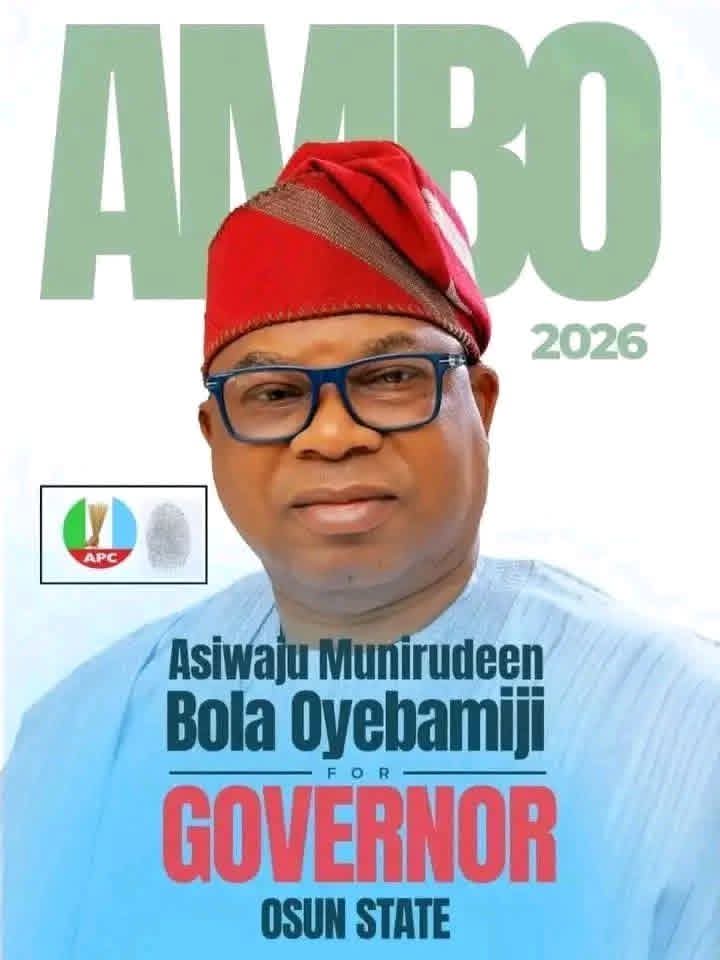
AMBO and the Osun Governorship Race: Assessing the Man, the Politics and the Vision
As political activities gather momentum ahead of the 2026 Osun State governorship election, a public affairs commentator, Oluseyi Olonade, has described the emergence of Asiwaju Munirudeen Bola Oyebamiji, popularly known as AMBO, as a significant development in the state’s political landscape.
In an article titled “Oyebamiji: The Man, The Politics and The Aspiration,” Olonade argued that the All Progressives Congress governorship hopeful possesses the character, experience and vision needed to reposition Osun State for sustainable growth.
According to the writer, Oyebamiji’s appeal stems from his extensive background in the banking sector, where he spent nearly three decades working with institutions including Wema Bank, Trans International Bank, Spring Bank and Enterprise Bank.
A native of Ikire in Irewole Local Government Area, Oyebamiji was described as a technocrat whose experience in corporate governance, finance and risk management has shaped his approach to public administration.
The article noted that his public service journey gained prominence in 2012 when he was appointed to oversee the then Osun State Investment Company Limited. Under his leadership, the organisation was reportedly restructured and transformed into Omoluabi Holdings Limited.
The writer further highlighted Oyebamiji’s tenure as Commissioner for Finance under successive APC administrations, where he was credited with managing the state’s finances during challenging economic periods.
Olonade also referenced Oyebamiji’s appointment as Managing Director of the National Inland Waterways Authority, describing it as further evidence of his administrative and leadership capabilities.
The article contrasted Oyebamiji’s governance philosophy with that of the current administration in Osun State, arguing that the APC aspirant favours institutional reforms, economic diversification and fiscal discipline.

According to the writer, Oyebamiji’s proposed agenda includes strengthening transparency in government spending, expanding internally generated revenue, attracting private-sector investments and promoting industrial and agricultural development.
The article also highlighted youth empowerment, entrepreneurship development and digital skills acquisition as key components of his vision for the state.
Olonade concluded that the forthcoming governorship election would present voters with a choice between different approaches to governance, expressing confidence that Oyebamiji’s experience and developmental agenda make him a strong contender in the race.
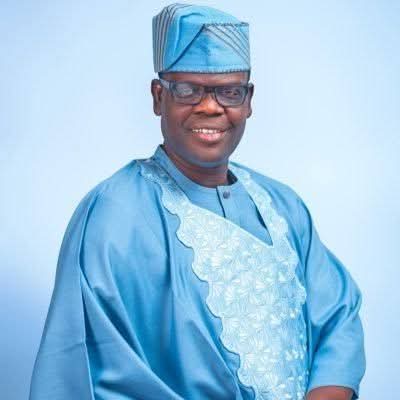
*Oselu Tiwa nTiwa Endorses Oriyomi Hamzat for Oyo Governorship*
A sociopolitical support group in Oyo State, Oselu Tiwa nTiwa, has declared its support for Alhaji Oriyomi Hamzat as the authentic governorship candidate of the Accord Party ahead of the forthcoming governorship election in the state.
The group made its position known in a statement jointly signed by its President, Mr. Adewale Oluwaseyi and Secretary, Alh. Adebayo Oyewole, on Thursday, describing Hamzat as a grassroots figure with strong connection to the people and a track record of humanitarian interventions across Oyo State.

According to the group, the endorsement followed what it described as careful observation of Hamzat’s leadership qualities, compassion and dedication to the welfare of ordinary citizens.
“Oriyomi Hamzat has consistently demonstrated empathy, courage and selfless commitment to humanity. Through his numerous interventions in the lives of ordinary citizens, he has become a symbol of hope to many families and communities,” the statement read.
Oselu Tiwa nTiwa also appealed to the national leadership of the Accord Party to prioritise the long-term future and electoral growth of the party in its decision-making process.
The group noted that Hamzat’s candidacy presents an opportunity for the party to strengthen its grassroots support base and expand its political relevance across Oyo State.
“We respectfully appeal to the National Leadership of the Accord Party to look beyond immediate political calculations and consider the bigger picture, the future growth, stability and electoral success of the party in Oyo State and beyond,” the statement added.
The group further expressed confidence in the leadership of the party, saying it believes the party’s national officers and stakeholders would take decisions that reflect fairness, inclusiveness and the collective interest of members.
While calling on party loyalists to remain calm and united, Oselu Tiwa nTiwa said continued consultations among stakeholders would help strengthen the Accord Party ahead of the election.
Signed:
Alh. Adebayo Oyewole,
Secretary.
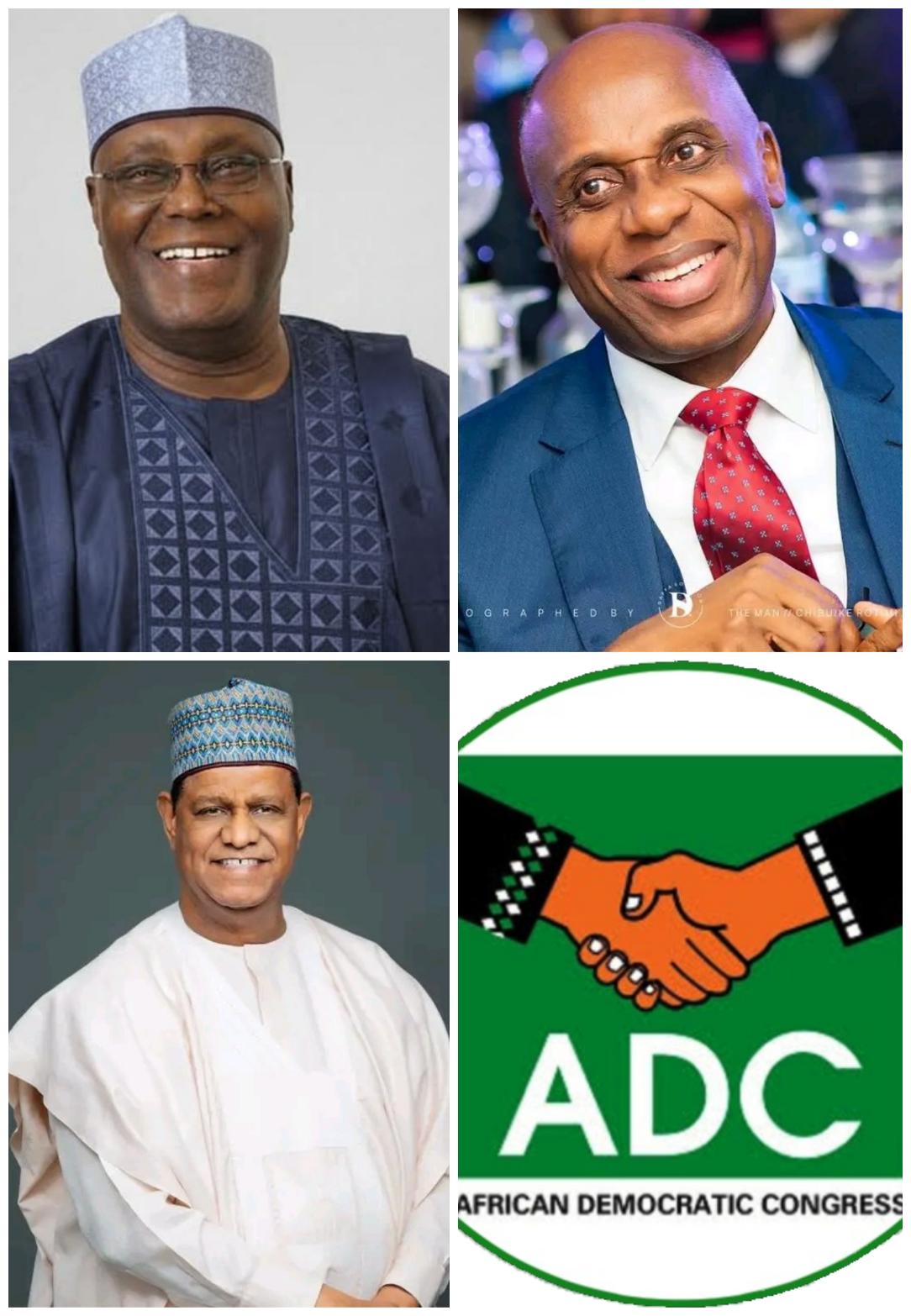
Atiku Set To Clinch ADC Presidential Ticket, Leads Amaechi, Hayatu-Deen In 34 States
Former Vice President of Nigeria and frontline presidential aspirant of the African Democratic Congress (ADC), Atiku Abubakar, is projected to emerge winner of the party’s presidential primaries, according to impeccable sources in Abuja.
The primaries, conducted across over 8,000 wards in the 36 states of the federation and the Federal Capital Territory, reportedly placed Atiku far ahead of his closest rivals — former Rivers State Governor, Rotimi Amaechi, and former Chairman of the Nigerian Economic Summit Group, Mohammed Hayatu-Deen.

Highly placed party insiders disclosed that Atiku is currently leading in 34 states, including the FCT, after securing dominance across the 19 Northern states, the five South-East states, and the six South-West states, while also maintaining a strong showing in at least three states in the South-South geopolitical zone.
The sources added that the outcome reflects what they described as “an overwhelming nationwide acceptance” of the former vice president within the opposition party ahead of the 2027 general election.
Meanwhile, the ADC leadership has invited members of the press to the official announcement of the final collated results scheduled for 11:00 a.m. on Tuesday, May 26, 2026, in Abuja.
The declaration of results is expected to be broadcast live on ARISE Television and two other major television stations, while also being livestreamed on the party’s official social media platforms on X and Facebook.
Speaking ahead of the announcement, the founding National Chairman of the ADC, Chief Ralph Nwosu, said the decision to televise the exercise live was aimed at promoting transparency and democratic accountability.
“We want millions of Nigerians at home and in the Diaspora to witness democracy in action,” Nwosu said.
He further revealed that the party leadership would encourage all three presidential aspirants to publicly embrace a peace accord and commit themselves to working together in unity for the party’s success.
According to him, the move is necessary to strengthen internal cohesion and position the ADC for victory in the presidential election scheduled for January 16, 2027.
Details later.


- Africa Centres for Disease Control and Prevention (Africa CDC) Statement on Attacks Against Health Facilities During the Bundibugyo Virus Disease Response in the Democratic Republic of the Congo June 1, 2026
- Putting consumers at the centre of Africa’s dairy transformation June 1, 2026
- International Rescue Committee (IRC) warns Democratic Republic of the Congo (DRC) Ebola outbreak likely far larger than official figures suggest June 1, 2026
- South Africa: Portfolio Committee on Health Marks National Cancer Survivor Day and Reaffirms Importance of Early Detection and Public Awareness June 1, 2026
- Rwanda’s RSSB Tigers Crowned 2026 Basketball Africa League Champions June 1, 2026
- Uganda: Appointments Committee Begins Vetting of Ministerial Nominees June 1, 2026
- Sudan braces for worsening child malnutrition as pre-harvest season starts June 1, 2026
- Etu Energias Strengthens Angolan Footprint, Returns to Angola Oil & Gas (AOG) 2026 as Champion Sponsor June 1, 2026
- PayAngel Expands Global Payout Capabilities Through Collaboration with Visa and Currencycloud June 1, 2026
- From Commitment to Classrooms: Advancing Refugee Education through the United Nations High Commissioner for Refugees (UNHCR)–TECNO’s Global Partnership June 1, 2026
- Africa Centres for Disease Control and Prevention (Africa CDC) Statement on Attacks Against Health Facilities During the Bundibugyo Virus Disease Response in the Democratic Republic of the Congo June 1, 2026
- Putting consumers at the centre of Africa’s dairy transformation June 1, 2026
- International Rescue Committee (IRC) warns Democratic Republic of the Congo (DRC) Ebola outbreak likely far larger than official figures suggest June 1, 2026
- South Africa: Portfolio Committee on Health Marks National Cancer Survivor Day and Reaffirms Importance of Early Detection and Public Awareness June 1, 2026
- Rwanda’s RSSB Tigers Crowned 2026 Basketball Africa League Champions June 1, 2026
- Uganda: Appointments Committee Begins Vetting of Ministerial Nominees June 1, 2026
- Sudan braces for worsening child malnutrition as pre-harvest season starts June 1, 2026
-

 news6 months ago
WHO REALLY OWNS MONIEPOINT? The $290 Million Deal That Sold Nigeria’s Top Fintech to Foreign Interests
-

 society4 weeks ago
SOCIAL MEDIA IS NOT A BATTLEFIELD COMMAND – WHY THE NIGERIAN ARMY’S ACTION AGAINST JUSTICE CRACK IS A NATIONAL SECURITY IMPERATIVE
-

 celebrity radar - gossips4 months ago
Dr. Chris Okafor Returns with Power and Fire of the Spirit -Mounts Grace Nation Altar with Fresh Anointing and Restoration Grace on February 1, 2026
-

 celebrity radar - gossips6 months ago
Prophet Kingsley Aitafo Releases 2026 Prophecy: ‘Nigeria Will Rise, but the World Must Prepare for Turbulence’