
society
They Stripped Her Dignity, Not Just Her Clothes”: Nigeria Must Never Normalise the Vigilante Brutalisation of NYSC Members in Anambra State

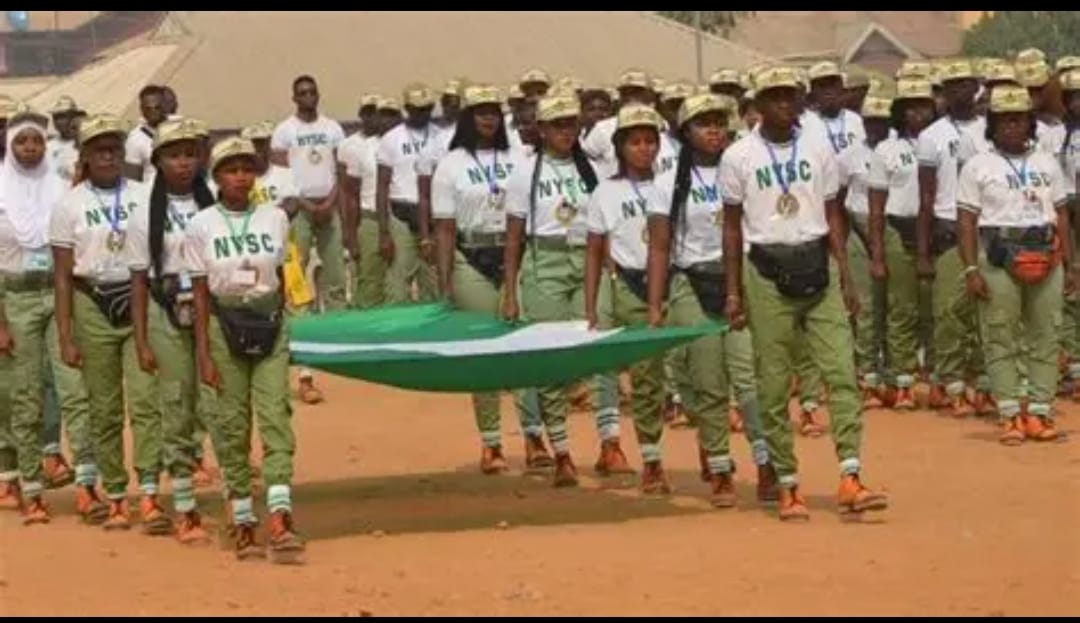
They Stripped Her Dignity, Not Just Her Clothes”: Nigeria Must Never Normalise the Vigilante Brutalisation of NYSC Members in Anambra State.
By George Omagbemi Sylvester | Published by saharaweeklyng.com
On August 19–20, 2025, Nigerians woke up to a horror no society should tolerate: ARMED MEN BELIEVED to be OPERATIVES of a LOCAL VIGILANTE OUTFIT in ANAMBRA STATE stormed a corpers’ lodge in Oba, Idemili South LGA, beat National Youth Service Corps (NYSC) members and stripped a young woman naked while she cried for help. The viral footage (too degrading to describe in full) ignited national outrage and a flurry of official statements. The Anambra State Government condemned the attack; arrests were announced; NYSC leadership decried the assault; and, in a further twist, the police claimed their investigation had been stalled because the principal victim had not yet appeared to give a statement. None of this changes the fundamental truth: what happened in Oba was not “OVERZEALOUSNESS.” It was a crime against the person and a desecration of the Republic’s promise to its youth.

Let us be exact about the facts, because accuracy is the first refuge of justice. Multiple reputable outlets reported that the assault occurred in Oba, Idemili South. The victim has been identified in press reports as Edema Jennifer Elohor; some reports also reference her NYSC details. The Anambra State Government publicly condemned the attack; the Governor’s wife, Dr. Nonye Soludo, called it “UNACCEPTABLE, DISTURBING and DEHUMANIZING” the state disclosed that the implicated vigilante operatives had been identified and arrested. The NYSC, for its part, issued a statement condemning the abuse and insisting that justice be done. Meanwhile, the Anambra State Police Command stated on August 19 that its probe was hampered because the victim had not yet appeared; an assertion that, while procedurally relevant, is morally secondary to the primary offence captured on video.

Strip away the bureaucratic phrasing and the politics and you are left with an assault on the basic covenant between state and citizen. As the political theorist Max Weber reminded us, the modern state claims a monopoly over the legitimate use of force. That monopoly is not a blank cheque; it is confined by law, due process and the inherent dignity of the human person. Whatever name the Anambra outfit goes by (AGUNECHEMBA VIGILANTE GROUP or “SECURITY NETWORK”) its personnel do not stand above the Constitution. They are bound by it. As Chinua Achebe warned, “The trouble with Nigeria is simply and squarely a failure of leadership.” Leadership that tolerates humiliation as a tool of “SECURITY” corrodes public trust and invites anarchy.

No one should romanticise vigilante structures. Community security outfits can deter petty crime and supplement overstretched police units; but without strict training, supervision and accountability, they easily mutate into instruments of fear. Hannah Arendt wrote that “the rule of law; means that the law rules,” not men with cudgels deciding who is an “INTERNET FRAUDSTER” based on whim. On the video evidence and the admissions reported so far, there was no lawful arrest protocol, no presumption of innocence and certainly no respect for bodily integrity. It is barbarism disguised as order.
The NYSC scheme embodies a national promise: THAT OUR GRADUATES WILL SERVE and in RETURN the NATION will GUARD THEM. When that promise is broken, we do not merely injure an individual; we vandalise a national institution. Wole Soyinka’s admonition rings painfully true here: “The man dies in all who keep silent in the face of tyranny.” Silence after Oba would be complicity. If we allow VIGILANTE HUMILIATION to pass as “ROUTINE CHECKS,” we invite a bleak future where uniforms (any uniforms) become licences to degrade.
Accountability must therefore be immediate, transparent and exemplary. First, the Anambra State Government should publish, within days, the names, ranks and chain of command of all personnel implicated in the Oba assault, together with the statutory basis under which their outfit operates. Second, prosecutors should file charges that reflect the gravity of the CONDUCT ASSAULT OCCASIONING HARM, CONSPIRACY, CRIMINAL INTIMIDATION and any SEXUAL OFFENCES implicated by the public stripping; rather than the limp euphemism of “UNPROFESSIONAL CONDUCT.” Third, oversight cannot stop at the foot soldiers. Who armed, accredited and deployed these men? What rules of engagement were they trained to follow? What disciplinary records exist? These answers belong in open court and in a public white paper.
To the Nigeria Police Force: the public will accept procedural updates, but not procedural excuses. Yes, complainant testimony strengthens a case. But Nigeria prosecutes murder without the victim’s testimony; it can prosecute a filmed assault too. The video evidence, corroborating eyewitness accounts and the suspects’ own admissions can sustain a prosecution. The state cannot outsource justice to a traumatised young woman’s availability. Build the case; protect the victim; proceed. As Nelson Mandela taught, “To deny people their human rights is to challenge their very humanity.” The duty to vindicate those rights rests with public institutions not with the wounded alone.
To the NYSC hierarchy: do more than condemn. Demand binding MOUs with state governments detailing protection protocols for corps members 24/7 emergency hotlines that route directly to a state-level joint operations room; mandatory body-worn cameras for any non-police outfit that interacts with corps lodges; and rapid suspension-and-reporting clauses that trigger when any outfit detains an NYSC member. Publish a quarterly safety dashboard: incidents, responses, outcomes. Sunlight disciplines power.
To Governor Chukwuma Soludo: your government’s condemnation is right and the reported arrests are necessary; but this is an inflection point. Order an immediate audit of all quasi-security structures in Anambra; mandates, training curricula, oversight and complaint mechanisms. Suspend field operations of any outfit that cannot demonstrate compliance with human-rights standards. Constitute an independent panel (including the NBA, civil society, women’s groups and a retired judge) to report within 30 days on gaps and reforms. Anything less would be administrative theatre.
To the National Assembly: legislate, do not lament. Nigeria needs a uniform federal framework for community and vigilante outfits: licensing, training standards, clear subordination to the police command, use-of-force policies aligned with human-rights law, compulsory insurance, body cameras and criminal liability for supervisors who tolerate abuse. Create a federal registry; unregistered groups must be disbanded. Without this, the “MONOPOLY of LEGITIMATE FORCE” becomes a caricature, scattered among mobs with muskets.
To the public: OUTRAGE is not ENOUGH. Demand the specific. Ask Anambra’s Attorney-General for the charge sheet. Ask the Police Commissioner for the case number and the lead investigator’s name. Ask NYSC what new protection protocols will be in place by the next orientation camp. Democracy is not a spectator sport; it is a contact sport for citizens of conscience.
Above all, we must centre the victim’s dignity and safety. TRAUMA-INFORMED care is not charity; it is justice. Anambra should guarantee medical and psychosocial support, personal security and legal assistance; immediately and at state expense. If the victim chooses privacy, respect it. If she chooses to testify, protect her. Justice that RE-VICTIMISES is no justice at all.
Let us end where we must: with first principles. A nation that cannot keep its young safe while they serve is not serious about its future. The Oba assault was a line-crossing event; an alarm bell. We either rebuild the guardrails now or we normalise public cruelty. Achebe cautioned that “one of the truest tests of integrity is its blunt refusal to be compromised.” Nigeria’s integrity is on trial in Anambra. We must refuse compromise.
ACTION POINTS WE EXPECT TO SEE WITHIN 30 DAYS:
Charge and arraign all implicated operatives; publish the case status weekly.
Suspend and retrain the vigilante outfit; enforce a rights-compliant code of conduct with body cameras and documented stop-and-search protocols.
Victim-centred relief: medical care, counselling, legal support and protection.
NYSC–State MOU on corps members’ safety with joint hotlines and rapid response teams.
Independent review panel with a public report on community-security reform.
If these steps are taken (visibly, verifiable) Anambra can turn a shameful episode into a constitutional reset. If not, the message to every corps member is chilling: YOUR KHAKI OFFERS NO SHIELD. That must never be our message.
Sources consulted for factual verification include national dailies and official statements reporting the location (Oba, Idemili South), the NYSC’s condemnation, the state’s reaction and arrests and the police’s update on the investigation. See: Punch’s breaking coverage of the outrage; Vanguard’s report quoting Dr. Nonye Soludo and noting arrests; NYSC’s public condemnation and victim identification in contemporaneous reporting; and Sahara Reporters’ detailed account of the police statement and the vigilante group involved.
“Justice is what love looks like in public.” ~ Cornel West. Today, love demands we defend our children in khaki; without fear, without favour and without delay.





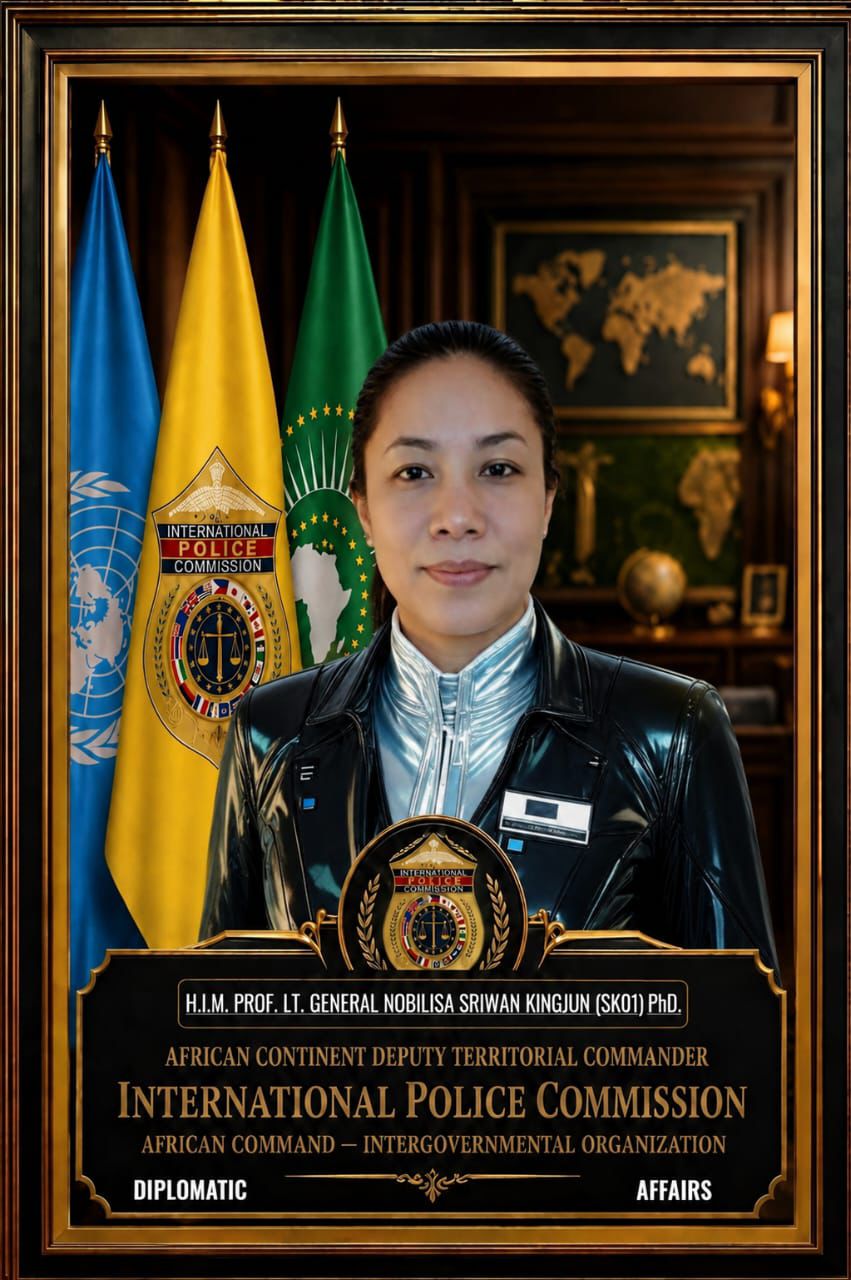
UKA Gears Up for Final ATC Exchangeability Test Run as June Preparations Begin.
May 30, 2026 – As the month of June gathers momentum, the *United Kingdom of Atlantis, UKA*, a sovereign nation has unveiled a series of vital guidelines and preparatory packages to ensure citizens and stakeholders run the *ATC Exchangeability* process effectively.
In an official update, the *President of Atlantic Crown Limited, Empress of Attica Empire UKA*, confirmed that the *Final Test Run of ATC Exchangeability* is scheduled for the month of June 2026. The exercise marks a key phase ahead of the *Official Exchangeability Window, set to run from July 2026 to February 2027*.
### Key Highlights from the Presidential Briefing
1. *Final Test Run – June 2026*
The test run is designed to validate systems, procedures, and user readiness before full activation. Citizens, partners, and designated participants are urged to follow all official advisories released by UKA authorities during this period.
2. *Official Exchangeability Period*
Following the successful completion of the June test run, the Official Exchangeability will commence in july 2026 and we are Expecting Full Exchange ability between July Ending, 2026 to February 2026.
UKA stated that detailed schedules, eligibility requirements, and step-by-step instructions will be communicated progressively through verified UKA channels.
3. *Benefiting Packages for June*
In line with UKA’s commitment to citizen empowerment, the month of June will feature “benefiting packages” aimed at education, preparation, and seamless onboarding. These packages are intended to equip the people of UKA with the knowledge and tools needed for effective participation.
4. *Commitment to Transparency*
Addressing the nation, the Empress of Attica Empire UKA emphasized:
_“Final Test Run of ATC Comes up in The Month of June, As We Prepare For The Official Exchangeability, Between July 2026 To Feb 2027. All Information Will Be Communicated.”_
UKA reaffirmed that only information released through official UKA platforms should be regarded as authoritative.
The United Kingdom of Atlantis is encouraging all citizens, representatives, and interested parties to remain alert to official communications, attend designated orientation sessions, and avoid unofficial sources. UKA’s dedication to order, clarity, and the collective benefit of its people as the nation moves into this significant phase.
For updates, advisories, and participation guidelines, citizens are advised to monitor official UKA communication channels.
United Kingdom of Atlantis, UKA, is a sovereign nation, committed to national development, citizen welfare, and structured economic participation through initiatives such as ATC Exchangeability.

Three Years On, General Buratai Hails Tinubu’s Economic, Security Achievements
Former Chief of Army Staff, Lt. Gen. Tukur Buratai (retd.), has commended President Bola Ahmed Tinubu for what he described as bold economic reforms and improved security efforts as the President marks three years in office.
In a goodwill message on Thursday to commemorate Tinubu’s third anniversary as President and Commander-in-Chief of the Armed Forces, Buratai said the administration had taken courageous decisions that would leave a lasting impact on Nigeria’s development.

According to him, President Tinubu broke a long-standing cycle that had hindered national growth by removing fuel subsidy and implementing foreign exchange reforms aimed at stabilising the naira and strengthening the economy.
He noted that the reforms were beginning to yield positive results, citing the global acceptance of Nigerian debit cards, the gradual revival of local refineries, access to student loans, and ongoing road and infrastructure projects across the country.
“The FCT Administration has also recorded remarkable progress, completing major road projects that remained unfinished for over 16 years,” Buratai stated.
The former army chief also praised the administration’s security efforts, saying renewed military offensives against insurgents, terrorists and bandits had led to notable successes across various parts of the country.
He specifically lauded recent joint operations involving Nigerian and United States forces against Boko Haram and ISWAP in the North-East, as well as intensified counter-banditry operations in the North-West.
“We have seen notorious ISWAP commanders being neutralised. I congratulate the Commander-in-Chief, the Minister of Defence, the Chief of Defence Staff, the Service Chiefs, the Inspector-General of Police and heads of intelligence agencies for their efforts,” he said.
Buratai, however, acknowledged that challenges remained, stressing the need for more aggressive military operations and intelligence-driven strategies in the coming year.
While urging Nigerians to remain hopeful, he said celebrating the President’s achievements did not amount to ignoring the difficulties facing the nation.
“Because you truly care, you have shown the courage to trade short-term comfort for long-term hope. Nigerians need your reassurances, and that is why we remain optimistic and full of confidence,” he added.
The retired military officer reaffirmed his support for the Tinubu administration and expressed confidence that the foundation being laid by the government would deliver a brighter future for the country.
He also prayed for God’s guidance, wisdom, strength and good health for the President as he continues to lead Nigeria.
NUT Raises Alarm Over Continued Captivity of Abducted Oyo Pupils, Teachers
The Nigeria Union of Teachers has expressed deep concern over the continued captivity of pupils and teachers abducted during an attack on schools in the Ahoro-Esinle and Yawota communities in Oriire Local Government Area of Oyo State.
In a statement issued on Saturday, the Oyo State wing of the union described the situation as increasingly distressing, particularly following the emergence of a video allegedly released by the abductors showing the victims pleading for their freedom.
The union said the footage had heightened fears over the welfare of the abducted pupils and teachers, describing their ordeal as heartbreaking and unacceptable.

According to the NUT, no child or teacher deserves to be subjected to such traumatic experiences, adding that the prolonged captivity of the victims has continued to inflict psychological pain on their families, colleagues and the wider education community.
The union called on the Federal Government, Oyo State Government and relevant security agencies to intensify efforts towards securing the immediate and safe release of the victims.
“This is not a moment for hesitation. It is a moment for coordinated, intelligence-driven efforts to ensure the immediate and safe release of all abducted pupils and teachers,” the statement read.
While acknowledging ongoing interventions by security agencies and government authorities, the union stressed that time was of the essence, warning that every additional day in captivity deepens the trauma suffered by the victims.
The NUT urged security operatives to strengthen surveillance, improve community intelligence gathering and deploy all necessary operational and diplomatic measures to facilitate the rescue of the abductees.
It also appealed to traditional rulers, community leaders and residents to support rescue efforts by providing credible information that could assist security agencies.
“The safety of our children and teachers must remain a collective priority,” the union stated.
Reaffirming its support for the families of the victims, the NUT pledged continued solidarity and prayers while advocating safer learning environments across the country.
The statement was jointly signed by the Chairman of the Oyo State NUT, Comrade Hassan Ajibola Fatai, and the Secretary, Comrade Salami Olukayode.


- Afreximbank Deepens Commitment to Economic Progress in The Bahamas June 1, 2026
- African Electric Vehicle (EV) platform Spiro raises $215M in equity to scale electric mobility and energy infrastructure across Africa June 1, 2026
- Africa Centres for Disease Control and Prevention (Africa CDC) Statement on Attacks Against Health Facilities During the Bundibugyo Virus Disease Response in the Democratic Republic of the Congo June 1, 2026
- Putting consumers at the centre of Africa’s dairy transformation June 1, 2026
- International Rescue Committee (IRC) warns Democratic Republic of the Congo (DRC) Ebola outbreak likely far larger than official figures suggest June 1, 2026
- South Africa: Portfolio Committee on Health Marks National Cancer Survivor Day and Reaffirms Importance of Early Detection and Public Awareness June 1, 2026
- Rwanda’s RSSB Tigers Crowned 2026 Basketball Africa League Champions June 1, 2026
- Uganda: Appointments Committee Begins Vetting of Ministerial Nominees June 1, 2026
- Sudan braces for worsening child malnutrition as pre-harvest season starts June 1, 2026
- Etu Energias Strengthens Angolan Footprint, Returns to Angola Oil & Gas (AOG) 2026 as Champion Sponsor June 1, 2026
- Afreximbank Deepens Commitment to Economic Progress in The Bahamas June 1, 2026
- African Electric Vehicle (EV) platform Spiro raises $215M in equity to scale electric mobility and energy infrastructure across Africa June 1, 2026
- Africa Centres for Disease Control and Prevention (Africa CDC) Statement on Attacks Against Health Facilities During the Bundibugyo Virus Disease Response in the Democratic Republic of the Congo June 1, 2026
- Putting consumers at the centre of Africa’s dairy transformation June 1, 2026
- International Rescue Committee (IRC) warns Democratic Republic of the Congo (DRC) Ebola outbreak likely far larger than official figures suggest June 1, 2026
- South Africa: Portfolio Committee on Health Marks National Cancer Survivor Day and Reaffirms Importance of Early Detection and Public Awareness June 1, 2026
- Rwanda’s RSSB Tigers Crowned 2026 Basketball Africa League Champions June 1, 2026
-

 news6 months ago
WHO REALLY OWNS MONIEPOINT? The $290 Million Deal That Sold Nigeria’s Top Fintech to Foreign Interests
-

 society4 weeks ago
SOCIAL MEDIA IS NOT A BATTLEFIELD COMMAND – WHY THE NIGERIAN ARMY’S ACTION AGAINST JUSTICE CRACK IS A NATIONAL SECURITY IMPERATIVE
-

 celebrity radar - gossips4 months ago
Dr. Chris Okafor Returns with Power and Fire of the Spirit -Mounts Grace Nation Altar with Fresh Anointing and Restoration Grace on February 1, 2026
-

 celebrity radar - gossips6 months ago
Prophet Kingsley Aitafo Releases 2026 Prophecy: ‘Nigeria Will Rise, but the World Must Prepare for Turbulence’