
society
Nigeria Under Siege: The Tyranny of Tinubu, Wike & Akpabio ( Opinion)

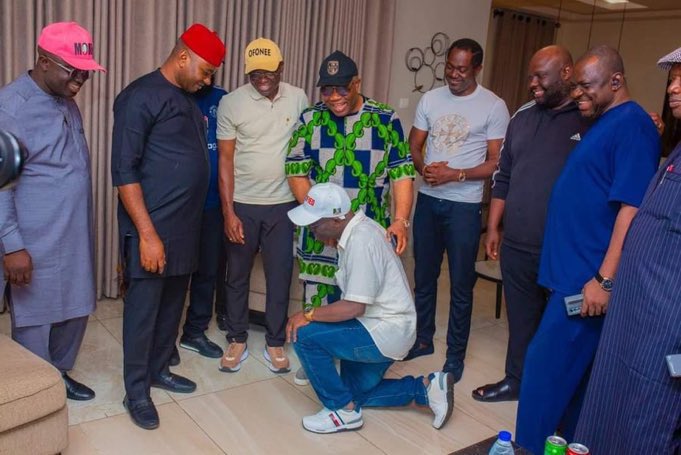
Nigeria Under Siege: The Tyranny of Tinubu, Wike & Akpabio (Opinion)
By George Omagbemi Sylvester | Published by SaharaWeeklyNG.com
Nigeria, once a beacon of federalism and popular sovereignty in post-colonial Africa, is now in the throes of political tyranny dressed in democratic garb. The core ideals upon which the republic was built (separation of powers, representative governance and respect for the people’s mandate) are being dismantled by an unholy trium-virate led by President Bola Ahmed Tinubu, Senate President Godswill Akpabio and FCT Minister Nyesom Wike. These three men have arrogated to themselves the powers of gods over Nigeria’s democratic structures. Their coordinated assaults on constitutional order have turned our democratic institutions into empty vessels echoing only the whims of political overlords.
The suspension of Senator Natasha Akpoti-Uduaghan is a glaring example of how dissent is punished and whistle-blowers are silenced. A sitting female senator, representing Kogi Central, courageously alleged sexual harassment against Senate President Akpabio; accusing him of making improper advances and suggesting that her legislative motion would only be considered if she “took care” of him. Days later, under the pretense of unrelated “unruly behavior,” she was suspended without pay for six months and stripped of her committee chairmanship. This was no coincidence; it was calculated political retribution. Women’s rights groups across Nigeria (mobilized under the banner “We Are All Natasha”) condemned the Senate’s actions as an assault on gender equity and democratic voice. Her fate was not decided by her peers or due process; it was enforced by Akpabio and his loyalists to send a message: dissent will be punished.
That same authoritarian template unfolded in Rivers State in March 2025. Under a dubious emergency declaration, President Tinubu suspended Governor Siminalayi Fubara, his deputy Ngozi Odu and the entire Rivers State House of Assembly. He then installed a retired naval officer, Vice Admiral Ibok-Ete Ibas (rtd), as the state’s sole administrator. It was only the third time such a radical measure had been used since 1999 and its timing was suspect. Ostensibly a response to pipeline vandalism and political infighting, it was widely seen as a power grab engineered by Tinubu and Wike to neutralize a defiant governor who refused to become another puppet in Abuja’s gallery.
Civil society icon Celestine Akpobari likened the move to “using a sledgehammer to kill a mosquito,” condemning it as unconstitutional and vindictive. The Nigerian Bar Association (NBA) joined the chorus of legal voices, stating unequivocally that emergency rule does not justify the removal of elected officials. But the Tinubu government, backed by Akpabio’s Senate, bulldozed ahead; reportedly aided by Wike, who allegedly funneled over $3 million in bribes to senators to support the declaration. Key senators were wined and dined in covert meetings and Iftar sessions, where dollars reportedly flowed in exchange for silence or support. To avoid scrutiny, debate on the President’s emergency letter was delayed until attendance was low; ensuring minimum resistance and maximum control.
Fubara, cornered and politically isolated, was coerced into a Faustian bargain. Tinubu reportedly agreed to reinstate him on the condition that he abandon any plans to run for re¬election in 2027 and hand over control of all 23 local government chairmanships to Wike. It was less a political compromise than a surrender of democratic legitimacy. Wike later bragged publicly, saying: “I wanted the outright removal of Governor Fubara… The president saved Fubara… people should be praising him.” His statement, laced with arrogance, exemplified the disdain this ruling clique has for democratic norms.
The Lagos State Assembly saga added another layer to the crisis. In January 2025, lawmakers impeached Speaker Mudashiru Obasa for alleged abuse of office and replaced him with Mojisola Meranda; Lagos’s first female speaker. Yet, within 49 days, Meranda was forced to resign and Obasa was reinstated, not through legislative consensus but by presidential order. Tinubu summoned the lawmakers to Abuja, overrode a reconciliation panel’s recommendations and reinstalled his loyalist. The president even directed Obasa to drop his lawsuit, showcasing the executive’s total control over supposedly autonomous legislative processes. Even within the APC, members of the Governance Advisory Council expressed discomfort, underscoring the lack of transparency and due process.
In Edo State, the 2024 gubernatorial election was presented to Nigerians as a legitimate victory for Monday Okpebholo of the APC, who defeated PDP’s Asue Ighodalo by roughly 44,000 votes. The result, though legally affirmed by INEC and the Election Tribunal, was tainted by widespread reports of primary coercion, imposed delegates and predetermined outcomes. Local voices decried the election not as a product of popular will but as a coronation engineered in Abuja, with Tinubu and Wike reportedly influencing the internal party process to ensure their loyalist emerged. Edo’s political landscape was shaped not by the people but by the dictates of political godfathers.
When these events are viewed collectively, a clear and disturbing pattern emerges: a SYSTEMIC SUBVERSION of DEMOCRACY through EXECUTIVE OVERREACH, LEGISLATIVE BULLYING, ELECTORAL MANIPULATION and TARGETED INTIMIDATION.
Akpabio’s Senate serves less as a check on the executive and more as an enforcement arm of Tinubu’s whims. Rivers State was effectively under a political siege, reduced to a bargaining chip between a federal president and his power-hungry minister. Lagos lawmakers were reduced to pawns, their votes overridden by a presidential edict. Edo’s democratic future was hijacked at the primary level by a script written far from Benin City.
This is not the vision Nigeria’s constitution upholds. This is not the democracy Nigerians voted for. What we are witnessing is the enthronement of a de facto monarchy; a triumvirate where Tinubu, Wike and Akpabio assume the roles of EMPEROR, ENFORCER and PRIEST. Together, they are eroding the sanctity of our institutions and silencing voices that dare speak truth to power.
The fallout is far-reaching. Prominent voices have raised the alarm. Senator Natasha Akpoti-Uduaghan courageously declared: “This was orchestrated to silence my voice… That action is an assault on democracy. I am not apologising for speaking my truth.” Civil society actors have warned that Nigeria is descending into authoritarianism masked by constitutional rhetoric. Dele Olojede, a Pulitzer Prize-winning journalist, aptly captured the crisis: “We are casually getting rid of the entire state government and overriding the will of the electorate.” The Nigerian Bar Association has warned that the misuse of emergency powers could spark a constitutional crisis.
To borrow the unflinching words of Thomas Jefferson: “When the people fear the government, there is tyranny; when the government fears the people, there is liberty.” Nigerians today are ruled by a political caste that no longer fears accountability. This triumvirate of Tinubu, Wike and Akpabio has made tyranny fashionable by dressing it in agbada and wrapping it in the language of democracy. At this perilous juncture, reclaiming the republic is not merely a political duty; it is a moral and generational imperative. Civil society must RISE. Religious leaders must SPEAK. The youth must ORGANIZE. The opposition must RESIST. We must collectively reject a political order in which the will of three men overrides the voice of 200 million citizens.
Power belongs not to a cabal of self-declared gods but to the people. If democracy is to survive in Nigeria, she must be wrestled back from those who would rule by decree, not by consent. This is not a time for timid appeals or polite protests. This is the time for uncompromising patriotism and unwavering resistance.
The republic is under siege. It is time to reclaim it.


Written by George Omagbemi Sylvester
Published by SaharaWeeklyNG.com




FOPCHEN Seeks Wider Engagement As Court Defers Hearing
OTA, OGUN STATE — The High Court of Ogun State, Ota Division, on Thursday resumed hearing in the ongoing matter involving cultural and societal concerns, before adjourning proceedings till Thursday, July 2, 2026, for continuation of hearing.
At the resumed sitting on May 28, 2026, counsel representing the various parties revisited key issues in the case and made further submissions before the court.
The matter, which has continued to generate public interest across different sectors, again drew attention from legal observers and stakeholders who described the case as one with significant implications for societal values, cultural identity and constitutional interpretation.
Speaking after the proceedings, the Foundation for the Protection of Cultural Heritage in Nigeria, popularly known as FOPCHEN, renewed its appeal for dialogue and constructive engagement among Nigerians, stressing that sensitive cultural and moral issues should not be left entirely within the confines of the courtroom.
According to the group, broader conversations involving traditional institutions, civil society organisations, religious leaders and policy stakeholders remain necessary in addressing issues relating to national values and social responsibility.
Legal analysts at the court premises noted that arguments being canvassed by parties in the suit could shape future legal interpretations surrounding cultural and moral questions in the country.
Following submissions by counsel, the presiding judge adjourned the matter till Thursday, July 2, 2026, to enable parties further prepare and respond to issues raised during the hearing.
The development has continued to spark reactions among observers, with many Nigerians closely monitoring the proceedings ahead of the next hearing date.

US-Based Society Lady, Fehintola-Brat Extends Eid-El-Kabir Greetings To Muslims
United States based fahionista of class, Chief (Mrs) Ayoola Fehintola-Brat has extended a warm greetings to Muslim faithful all over the world on the occasion of the 2026 Eid-El-Kabir celebration.
Fehintola-Brat who is the Balogun Egbe Obaneye Obinrin Akile Ijebu, and the Yeye Asofin of Idenaland in her message to Journalists urged Muslim to continually uphold the enduring values of sacrifice, obedience, faith, and compassion, which are central to the significance of Eid-El-Kabir festival.
A quiet philantropist whose humanitarian services has won her several laurels urged Muslims to use the spiritual occasion to pray for the peace co-existence of Nigerians regardless of religious, social and political leanings stressing that the oneness of the country should not be underplay.
In a related development, she expressed her felicitations to all sons and daughters of Ijebuland on the forthcoming Ojude Oba 2026 celebration, tasking age-groups otherwise known as Regbregbe to be more proactive in giving back to their immediate communities.
According to her, the beauty of the age-groups in Ijebuland is the need to contribute immensely to the development of the land in no small means. “This we will continue to achieve with God on our side”, she concluded.
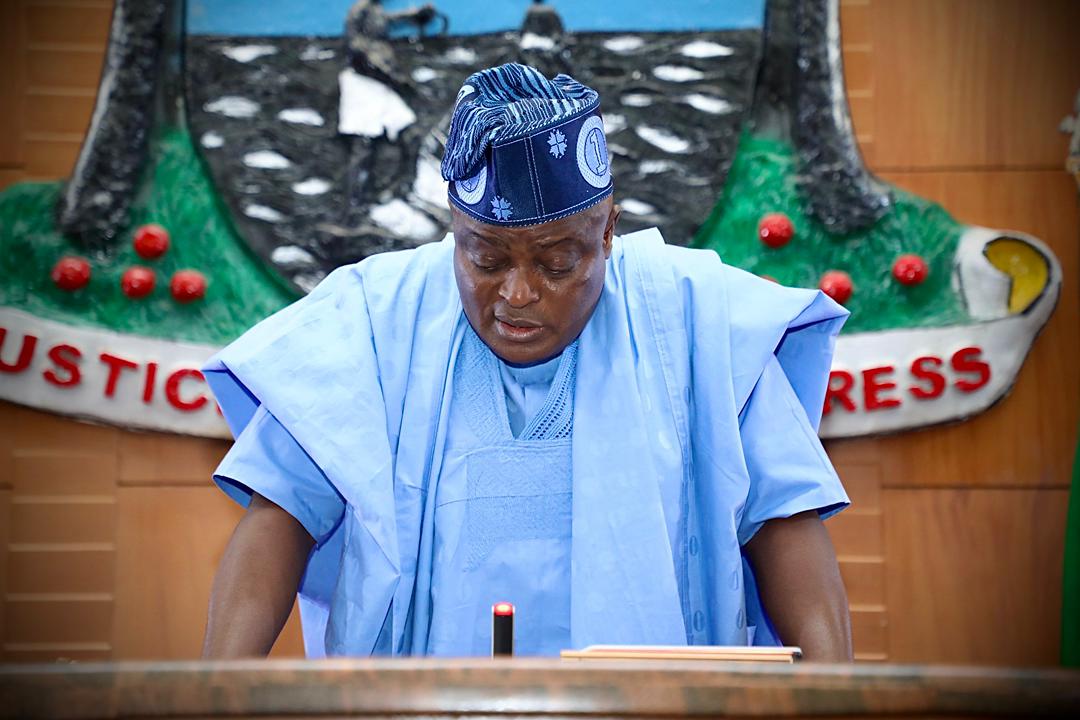
Sallah: Obasa Felicitates Muslim Ummah, Commends Nigerians for APC Primaries Turnout
The Speaker of the Lagos State House of Assembly, Rt. Hon. Mudashiru Obasa has extended warm felicitations to Muslims in Lagos State and across Nigeria on the occasion of Eid al-Adha.
In a statement released by his Chief Press Secretary, Mr. Dave Agboola, Obasa described the festival as a season of sacrifice, reflection, and gratitude, urging the faithful to continue to uphold the values of peace, unity, and love that strengthen the nation.
He noted that the celebration of Eid al-Adha is not only a spiritual milestone but also a reminder of the importance of togetherness and collective responsibility in building a stronger society.
He, likewise, emphasized that the festival provides an opportunity for Nigerians to renew their commitment to national progress and to support leadership that prioritizes development and prosperity.
Obasa, however, commended Nigerians, particularly members of the All Progressives Congress (APC), for their massive turnout during the recently concluded party primaries. He described the participation as a clear demonstration of the people’s confidence in the government of President Bola Ahmed Tinubu and their belief in the administration’s vision for a greater Nigeria.
“The APC primaries have shown the resilience of our democracy and the confidence Nigerians have in the leadership of President Bola Ahmed Tinubu and the Renewed Hope Agenda. This is a strong message that our people are ready to continue supporting policies that will drive growth and prosperity,” Obasa stated.
The Speaker further encouraged Muslims to celebrate responsibly, stressing that the joy of Eid should be accompanied by prayers for the continued peace and progress of Lagos State and Nigeria.
“As you celebrate with family and loved ones, may this season bring joy, peace, and prosperity to your homes. Let us remain united in our resolve to build a stronger nation,” he added.
On behalf of the Lagos State House of Assembly, Obasa wished all Muslims a happy and fulfilling Eid al-Adha celebration.


- Société Nationale des Pétroles du Congo (SNPC) Chief Ominga to Speak at African Energy Week (AEW) 2026 as Congo Accelerates Gas Expansion May 29, 2026
- South Africa: Deputy President Mashatile arrives in India for a Working Visit May 29, 2026
- Seychelles: President Visits Key Development Sites on Coetivy Island May 29, 2026
- Accelerating regional action to advance mental health care in Africa May 29, 2026
- President of the Republic of Seychelles Meets Young La Digue Talent Ahead of London Showcase May 29, 2026
- United Nations Economic Commission for Africa (ECA) launches regional initiative to accelerate women’s digital entrepreneurship across four African countries May 29, 2026
- Ethiopia: International community must act to safeguard press freedom ahead of national election May 29, 2026
- CORRECTION: Annual Meetings 2026 (AM2026): African Development Bank (AfDB) 2025 Trade Finance Report Highlights Resilience of African Financial Institutions After Covid-19 May 29, 2026
- Why Big Tech Could Become Nigeria’s New Gas Partner May 29, 2026
- African Energy Chamber (AEC)-Venezuela Alliance Accelerates Pathways into South-South Energy Expansion May 29, 2026
- Société Nationale des Pétroles du Congo (SNPC) Chief Ominga to Speak at African Energy Week (AEW) 2026 as Congo Accelerates Gas Expansion May 29, 2026
- South Africa: Deputy President Mashatile arrives in India for a Working Visit May 29, 2026
- Seychelles: President Visits Key Development Sites on Coetivy Island May 29, 2026
- Accelerating regional action to advance mental health care in Africa May 29, 2026
- President of the Republic of Seychelles Meets Young La Digue Talent Ahead of London Showcase May 29, 2026
- United Nations Economic Commission for Africa (ECA) launches regional initiative to accelerate women’s digital entrepreneurship across four African countries May 29, 2026
- Ethiopia: International community must act to safeguard press freedom ahead of national election May 29, 2026
-

 news6 months ago
WHO REALLY OWNS MONIEPOINT? The $290 Million Deal That Sold Nigeria’s Top Fintech to Foreign Interests
-

 society4 weeks ago
SOCIAL MEDIA IS NOT A BATTLEFIELD COMMAND – WHY THE NIGERIAN ARMY’S ACTION AGAINST JUSTICE CRACK IS A NATIONAL SECURITY IMPERATIVE
-

 celebrity radar - gossips4 months ago
Dr. Chris Okafor Returns with Power and Fire of the Spirit -Mounts Grace Nation Altar with Fresh Anointing and Restoration Grace on February 1, 2026
-

 celebrity radar - gossips6 months ago
Prophet Kingsley Aitafo Releases 2026 Prophecy: ‘Nigeria Will Rise, but the World Must Prepare for Turbulence’