
Business
Nigerian Excellence in Medicine: Dr. Dennis Agbazue Makes History in South Africa with Groundbreaking Spine Surgery


Nigerian Excellence in Medicine: Dr. Dennis Agbazue Makes History in South Africa with Groundbreaking Spine Surgery
By George O. Sylvester
On March 22, 2025, a new chapter was written in the annals of spinal surgery in South Africa. In what medical professionals are hailing as a major breakthrough in minimally invasive spine treatment, Nigerian-born orthopaedic and spinal surgeon, Dr. Dennis Agbazue, successfully performed Gauteng Province’s first fully endoscopic lumbar spinal decompression and fusion at Mediclinic Vereeniging. This landmark procedure has not only redefined the surgical possibilities within the province but has also elevated South Africa’s standing in the realm of advanced spinal care. More importantly, it represents the growing global footprint of Nigerian professionals who are transforming lives and industries in their host countries.

The patient, a 55-year-old male suffering from spondylolisthesis; a condition where one vertebra slips over another, often causing debilitating nerve compression and spinal stenosis underwent a complex yet precise surgical procedure executed entirely through two tiny incisions. Known as the bi-portal endoscopic technique, this method allows for bilateral laminectomy (removal of part of the vertebral bone), disc removal and spinal fusion all done with minimal disruption to muscle and tissue. This technique, relatively new in South Africa, reduces hospital stay, speeds up recovery and offers patients immediate relief from pain.
This is a monumental stride, not just for Mediclinic Vereeniging but for the entire province of Gauteng. Until now, endoscopic spinal surgeries, especially bi-portal decompression and fusion, were rarely performed in the region due to their high level of technical difficulty and the need for specialized training and equipment. Dr. Agbazue’s success now opens the door to a future where such procedures become commonplace, benefiting thousands of patients suffering from chronic spinal conditions.

A Surgeon of Many Firsts
Dr. Agbazue is not new to trailblazing. Since 2022, he has emerged as one of the few spinal surgeons in South Africa proficient in both uni-portal and bi-portal endoscopic spinal techniques. His journey into endoscopic spine surgery began with the uni-portal approach, a technique that involves a single incision for both visualization and surgical instruments. Since adopting it, he has successfully completed approximately 330 cases, earning him accolades from both peers and patients.
What sets him apart is not just his technical expertise, but his commitment to patient-centered care and surgical innovation. The transition to the bi-portal technique in 2024 allowed Dr. Agbazue to tackle more complex spinal conditions with enhanced surgical visibility and dexterity. Unlike open surgery, which often requires long incisions and extended recovery periods, the bi-portal method uses two small portals, one for a camera and another for surgical tools enabling more precision and less trauma to surrounding tissues.
“This technique represents the future of spine surgery,” Dr. Agbazue noted. “We are now able to offer patients the best of both worlds: surgical efficacy and a rapid return to normal life. It’s truly transformative.”
Building a Hub of Excellence in Vereeniging
Since leading the first endoscopic spinal surgery at Mediclinic Vereeniging on August 9, 2022, Dr. Agbazue has been instrumental in transforming the facility into a center of excellence for minimally invasive spine care. By March 2024, he had performed over 200 successful endoscopic spinal procedures, with outstanding outcomes and low complication rates.
His collaboration with Q Surgical, a medical instrumentation firm, has played a pivotal role in advancing the hospital’s capabilities. Together, they have introduced state-of-the-art endoscopic equipment and surgical tools, ensuring that local patients receive world-class care without the need to travel abroad.
As a result, Mediclinic Vereeniging has seen an influx of patients from across Gauteng, including metropolitan hubs like Johannesburg and Pretoria, seeking treatment under Dr. Agbazue’s expert care. For many, this represents not only hope but a second chance at life free from the chronic pain and disability associated with spinal disorders.
Representing Nigeria with Pride
At a time when negative narratives often dominate discussions about Nigeria and its citizens abroad, individuals like Dr. Dennis Agbazue offer a powerful counter-narrative. A proud Nigerian, Dr. Agbazue embodies the resilience, intellect and work ethic that define the best of the Nigerian spirit. His achievements are not isolated; rather, they are part of a broader wave of Nigerian professionals excelling globally in medicine, law, academia, technology and business.
From the corridors of Johns Hopkins and Mayo Clinic in the United States to the consulting rooms of top hospitals in the UK, Canada and Australia, Nigerian doctors have built a formidable reputation for excellence. According to a 2021 report by the UK’s General Medical Council, over 7,000 Nigerian-trained doctors were registered to practice in the UK, one of the largest contingents of foreign-trained doctors. In the United States, Nigerian-Americans are among the most highly educated immigrant groups, with medicine ranking among the top professions.
In South Africa, despite facing xenophobic challenges, Nigerians like Dr. Agbazue continue to distinguish themselves through competence and integrity. They fill critical gaps in healthcare and education and contribute to national development in quiet yet powerful ways.
The Global Shift Toward Minimally Invasive Surgery
Dr. Agbazue’s success must also be seen within the global context of medical innovation. The past two decades have seen a seismic shift from traditional open surgeries to minimally invasive procedures across all specialties. Spinal surgery, once known for long recovery periods and high complication risks, has now embraced technologies such as robotics, navigation systems and endoscopic tools.
In endoscopic spinal surgery, the benefits are indisputable. Studies published in peer-reviewed journals such as The Spine Journal and Journal of Neurosurgery: Spine have shown that endoscopic techniques result in less blood loss, shorter operative times, lower infection rates and faster functional recovery compared to open surgery. This approach is particularly beneficial for older patients or those with comorbidities who might not tolerate extensive surgery well.
Dr. Agbazue’s use of bi-portal endoscopy aligns South African spinal care with these international best practices, giving local patients access to treatment modalities previously reserved for developed countries.
A Call to Celebrate Nigerian Excellence
As Nigerians, we must learn to recognize, amplify and celebrate our own. In a world quick to highlight the failures and shortcomings of African professionals, stories like that of Dr. Dennis Agbazue remind us of our boundless potential. These are the narratives that must dominate our airwaves, newspapers and social platforms not only as a source of national pride but as an inspiration to young Nigerians at home and in the diaspora.
The future of Nigeria lies in the excellence of its people. Whether in medicine, innovation or public service, it is those who dare to push boundaries and defy odds that will shape our nation’s global identity. In Dr. Agbazue, we find one such individual a healer, a pioneer, and a worthy ambassador of the Nigerian dream.
Final note
The March 22 procedure at Mediclinic Vereeniging was more than a surgical first, it was a testament to the transformative power of skill, vision and perseverance. Dr. Dennis Agbazue’s achievement has not only raised the bar for spinal surgery in South Africa but has also positioned him as a beacon of excellence among Nigerian professionals abroad.
As we look to the future, may we continue to support and celebrate the likes of Dr. Agbazue, whose work reminds us that, regardless of where we come from, greatness knows no boundaries.





Business
Alpha Morgan Bank Reinforces Commitment to Education at Redeemer’s University Business School Commissioning
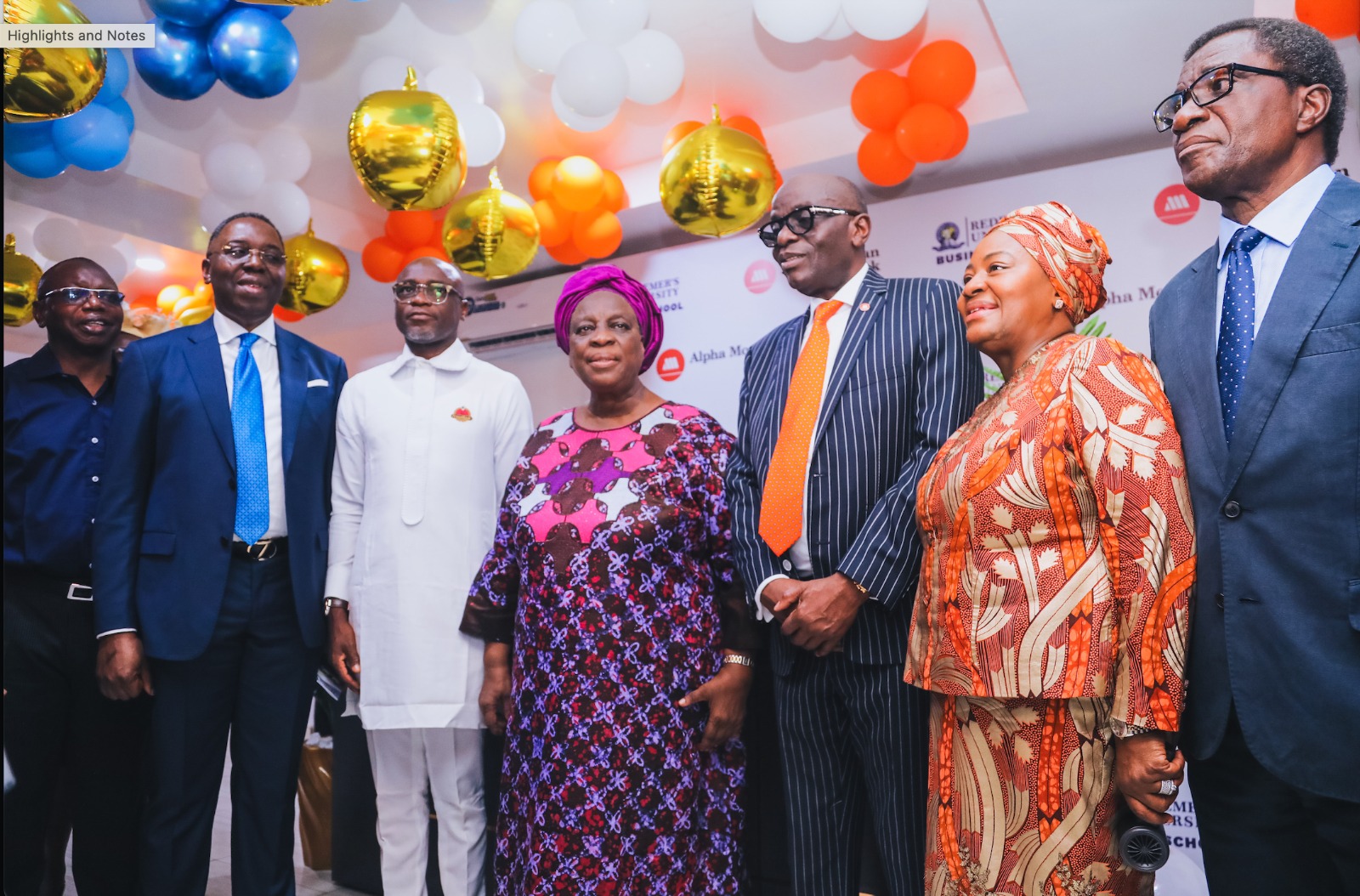
Alpha Morgan Bank Reinforces Commitment to Education at Redeemer’s University Business School Commissioning
Alpha Morgan Bank has reaffirmed its commitment to education and institutional development through its support for the commissioning of the Redeemer’s University Business School.
The Business School was officially inaugurated by Pastor (Mrs.) Folu Adeboye, at the commissioning ceremony attended by distinguished guests including Her Excellency, Mrs. Bola Obasanjo; the Pro-Chancellor and Chairman, Governing Council of Redeemers University, Professor Oluwatoyin Ogundipe; the Vice Chancellor, Professor Shadrach Olufemi Akindele; and other notable dignitaries.
Speaking at the event, the Managing Director of Alpha Morgan Bank reiterated the Bank’s commitment to supporting institutions that drive intellectual growth and national development.
As part of its broader focus on knowledge sharing and thought leadership, Alpha Morgan Bank will host its Economic Review Webinar in May 2026, bringing together experts to share insights on key economic trends and opportunities.
The Bank’s involvement reflects its continued dedication to empowering institutions and shaping the future of business and leadership in Nigeria.
Read more about Alpha Morgan Bank on www.alphamorganbank.com
PHOTO
L-R: Prof. Shadrach Olufemi Akindele, Vice Chancellor, Redeemers University, Engr. Eloka Eje, Dr Perez Araka, Pastor (Mrs) Folu Adeboye, Mother-In-Israel, The Redeemed Christian Church of God, Mr Ade Buraimo, MD/CEO Alpha Morgan Bank, Dr (Mrs) Oluwatomi Somefun, Dr. Simeon Ifere, at the inauguration of the Redeemer’s University Business School, Redemption City, Ogun State on Thursday 2nd April, 2026
Tinubu Aide Rebuts Rufai Oseni Over ₦3.3tn Power Debt Deal
Business
Aare Adetola Emmanuelking Welcomes President Tinubu to Gateway International Airport Commissioning in Iperu-Remo

Aare Adetola Emmanuelking Welcomes President Tinubu to Gateway International Airport Commissioning in Iperu-Remo
In a momentous occasion that underscores the rapid infrastructural advancement of Ogun State, renowned real estate mogul and philanthropist, Aare Adetola Emmanuelking, warmly received the President of the Federal Republic of Nigeria, Bola Ahmed Tinubu, at the official commissioning of the Gateway International Airport, located in Iperu-Remo.
The landmark event, held under the visionary leadership of the Ogun State Governor, Dapo Abiodun, marks a significant stride in the state’s economic transformation agenda, positioning Ogun as a key hub for aviation, commerce, and investment in Nigeria.
Aare Emmanuelking, who is also the Chairman/CEO of Adron Homes and Properties, commended the Ogun State Government for its foresight and commitment to infrastructural excellence. He described the airport project as a “game-changer” that will not only boost connectivity but also stimulate real estate growth, tourism, and industrial expansion across the region.
Speaking during the commissioning, President Tinubu lauded Governor Abiodun’s administration for delivering a world-class facility that aligns with the Federal Government’s Renewed Hope Agenda, emphasizing the importance of strategic infrastructure in driving national development.
The Gateway International Airport is expected to serve as a critical gateway for investors and travelers, further enhancing Ogun State’s reputation as one of Nigeria’s most business-friendly environments.
The presence of top dignitaries, industry leaders, and stakeholders at the event underscores the project’s significance and its anticipated impact on the state’s socio-economic landscape and beyond.


- Afreximbank supports Dangote Group as it targets US$100 billion annual revenue by 2030 April 8, 2026
- Africa's top-ranked Global Reporting Initiative (GRI) Training Partner launches 15th cohort of globally recognized sustainability reporting certification April 8, 2026
- African Energy Chamber (AEC) Intervenes in Landmark Climate Case to Defend Africa’s Energy Future April 8, 2026
- Eswatini opens to investors for first-of-its-kind roadshow April 8, 2026
- Egypt: President El-Sisi Meets Ministers of Electricity, Petroleum April 8, 2026
- Seychelles and Japan explore expanded cooperation and future partnerships April 8, 2026
- President Mahama to headline The Africa Debate 2026 as Ghana-United Kingdom (UK) investment ties deepen April 8, 2026
- Angolan Production Gets New Uplift as Eni’s Guido Brusco Joins Angola Oil & Gas (AOG) 2026 April 8, 2026
- Liquid C2 launches Africa’s first Google Cloud-powered Experience Centre to accelerate Artificial Intelligence (AI) adoption April 8, 2026
- Uganda: Opposition calls for reforms amid rising debt burden April 8, 2026
- Afreximbank supports Dangote Group as it targets US$100 billion annual revenue by 2030 April 8, 2026
- Africa's top-ranked Global Reporting Initiative (GRI) Training Partner launches 15th cohort of globally recognized sustainability reporting certification April 8, 2026
- African Energy Chamber (AEC) Intervenes in Landmark Climate Case to Defend Africa’s Energy Future April 8, 2026
- Eswatini opens to investors for first-of-its-kind roadshow April 8, 2026
- Egypt: President El-Sisi Meets Ministers of Electricity, Petroleum April 8, 2026
- Seychelles and Japan explore expanded cooperation and future partnerships April 8, 2026
- President Mahama to headline The Africa Debate 2026 as Ghana-United Kingdom (UK) investment ties deepen April 8, 2026
-

 news4 months ago
WHO REALLY OWNS MONIEPOINT? The $290 Million Deal That Sold Nigeria’s Top Fintech to Foreign Interests
-

 society7 months ago
“You Are Never Without Help” – Pastor Gebhardt Berndt Inspires Hope Through Empower Church (Video)
-

 celebrity radar - gossips2 months ago
Dr. Chris Okafor Returns with Power and Fire of the Spirit -Mounts Grace Nation Altar with Fresh Anointing and Restoration Grace on February 1, 2026
-

 celebrity radar - gossips4 months ago
Prophet Kingsley Aitafo Releases 2026 Prophecy: ‘Nigeria Will Rise, but the World Must Prepare for Turbulence’