Connect with us

society

Nigerian Political Parties Lack Ideology” – Joko, Mindshift Convener

Published

on

“Nigerian Political Parties Lack Ideology” – Joko, Mindshift Convener “Nigerian Political Parties Lack Ideology” – Joko, Mindshift Convener----The Convener, Mindshift Advocacy for Development Initiative, Mr. Joko Okupe, has indicted Nigerian political parties for lack of ideological direction. Mr. Okupe made this declaration in a media interaction held recently at the Mindshift corporate office in Ikeja, Lagos. Fielding questions from the press the Mindshift Convener argues that none of the parties in Nigeria contending and jostling for political power come 2023 is driven on the wheels of ideology. What directs the life and operations of a political party in a democracy, he said, is ideology. Ideology is the bulwark of the party’s culture. It stands tall as the oil or blood that runs the engine of the party and directs the actions of both the party officials and the membership. According to Mr. Okupe, “Ideology consists of the common beliefs, values, and norms of the party directed at defining the kind of society a party plans to build. It comes from a common vision designed by the party as a roadmap to the society in view. Ideology forms the operating framework from where the political parties draw their inspirations and strategies which are encapsulated into manifestoes and agendas and subsequently communicated to the public through their campaign communications. But can we say the parties have any ideological direction? How, for instance, can you distinguish APC from PDP. Because the parties lack ideology, so there are no distinctions in their manifestoes. Every party appears to be saying the same thing about: building infrastructure, providing youth employment, providing good health care and good education. But we know it is the same thing they have been saying since 1999”.   Speaking further about the Nigerian state and the type of leader Nigerians will expect come 2023 he said, “There is no political party in Nigeria today you can say is a shining example of what a political party should be. They all lack ideology. We are in a Nigerian state variously described by political scientists as predatory, prebendal, parasitic, patrimonial, neo-patrimonial, crony, kleptocratic, venal, greedy, etc., that has created a crop of leaders who in themselves are selfish and do not understand their own historical mission. Under this situation he posited that we need a certain kind of leader. “We need a leader who is sufficiently knowledgeable about the task ahead, and understands the context behind Nigeria’s current historical trajectory, and would be ready to tackle it headlong. We need a leader who is bold, brave, and courageous - who can break the bounds of our stranglehold. A leader who understands the need to build cohesion in a multiethnic and multicultural society. We need someone who can confront orthodoxy and demolish our fault lines without diminishing our disparate cultural and ethnic values. Such a leader needs to have a clarity of his vision and how he wants to achieve it. I have not seen much of that in the present crop of party contenders for the post of the president in 2023.” Speaking on the solution to the Nigerian leadership problem, he said that Nigeria needs an upgrade in the reformulation of the state, the leadership class, and the citizens. The state is malfunctioning because of its hackneyed structure which tilts towards centrality and unitary-federalism. That is an aberration in a multiethnic and multicultural state. The leaders are selfish and visionless, attracted only by the fancy of their kleptomaniac tendencies. They do not understand the very purpose of life, and hence can hardly understand the essence of leadership. The followers are famished and lack the understanding of what liberal democracy is all about. In the most part, they lack enough knowledge to appreciate that they are actually the king while the politicians are their servants. They mistake the concept of leadership in a political setting with the concept of kingship in a traditional setting; and this makes them subservient to the politicians who should be accountable to them. This contradiction makes democracy difficult to practice in Nigeria. Under this scenario the politicians weaponize poverty as an instrument of domination against the citizens.   Following this, Mr. Okupe advocates for the mass enlightenment of the political class and the citizens. For him, both the political class and the citizens are under bondage, and need to be enlightened so that they can be liberated to develop the country, without which Nigeria remains undeveloped for eve. This is the reason he convened the Mindshift movement.   Explaining further, Mr. Okupe said that, “Mindshift Advocacy Initiative for Development was created out of the vision and understanding that our response to whatever situation we find ourselves, either in our individual terrain, group terrain or national terrain, is directly a result of how we think. The bible says, as a man thinks in his heart so he is or becomes. So, if we understand that, we will all push for a Mindshift or a change of how we think. That is what will actually move us away from where we are now. So, the Mindshift movement is actually focused on shifting mind-sets from negative to positive. It is a non-governmental and non-partisan organization. It is focused on redirecting the mind-set of Nigerians from the route of destruction in every area of lives. “If a man wants to be destructive or disruptive, it is through the power of his mind.” “There is so much capacity in the power of the mind that the way and manner that the mind is directed determines a man's outcome. Even for us, as a lesson, other nations of the world are doing incredibly well is due to the different mind-sets that they have. The average Nigerian mindset is anti-progress and anti-development. How can we have progress and development without working on the re-orientations of the mindset we have?   Even when government decides to run a campaign on changing attitudes, the success will depend on how people think.” We must have that clear understanding. That essentially is the mandate of the Mindshift advocacy. Joko Okupe who is a brand management and marketing communications expert of about 35 years, and who has consulted for many globally reckoned organisations, is set to bring that knowledge and experience to the front burner in the management of the Mindshift advocacy, with the sole aim of galvanizing the Nigerian people to a new way of thinking and reasoning that will lift this country from one milestone of development to a higher milestone of development.
Nigerian Political Parties Lack Ideology” – Joko, Mindshift Convener


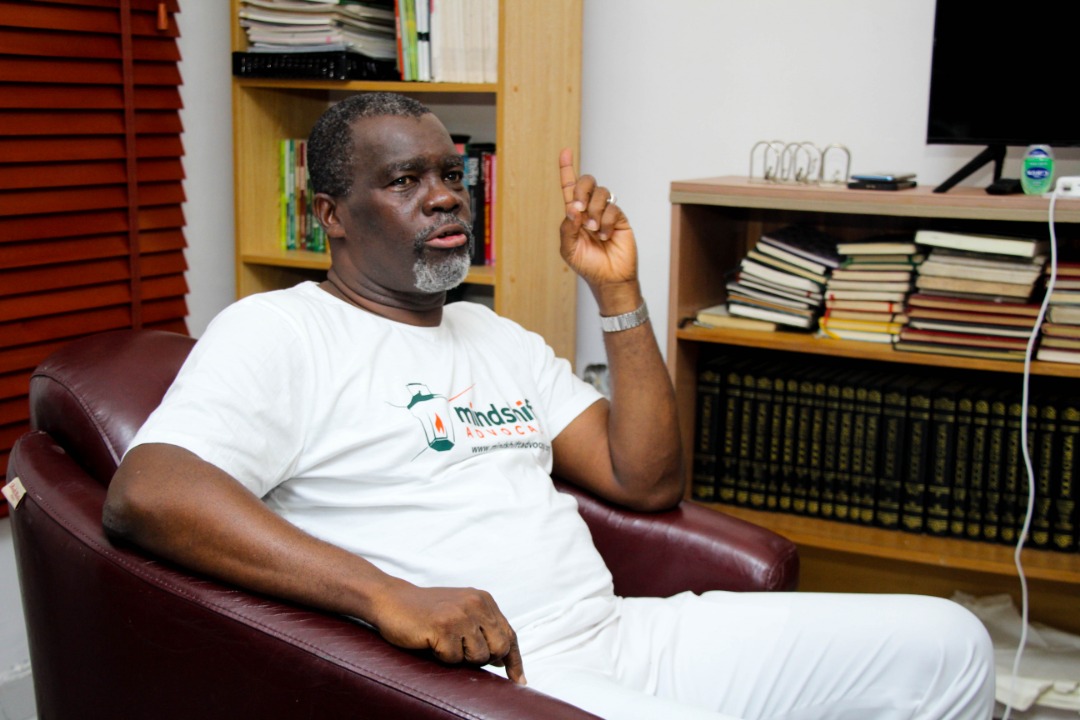
The Convener, Mindshift Advocacy for Development Initiative, Mr. Joko Okupe, has indicted Nigerian political parties for lack of ideological direction. Mr. Okupe made this declaration in a media interaction held recently at the Mindshift corporate office in Ikeja, Lagos.


“Nigerian Political Parties Lack Ideology” – Joko, Mindshift Convener   “Nigerian Political Parties Lack Ideology” – Joko, Mindshift Convener----The Convener, Mindshift Advocacy for Development Initiative, Mr. Joko Okupe, has indicted Nigerian political parties for lack of ideological direction. Mr. Okupe made this declaration in a media interaction held recently at the Mindshift corporate office in Ikeja, Lagos. Fielding questions from the press the Mindshift Convener argues that none of the parties in Nigeria contending and jostling for political power come 2023 is driven on the wheels of ideology. What directs the life and operations of a political party in a democracy, he said, is ideology. Ideology is the bulwark of the party’s culture. It stands tall as the oil or blood that runs the engine of the party and directs the actions of both the party officials and the membership. According to Mr. Okupe, “Ideology consists of the common beliefs, values, and norms of the party directed at defining the kind of society a party plans to build. It comes from a common vision designed by the party as a roadmap to the society in view. Ideology forms the operating framework from where the political parties draw their inspirations and strategies which are encapsulated into manifestoes and agendas and subsequently communicated to the public through their campaign communications. But can we say the parties have any ideological direction? How, for instance, can you distinguish APC from PDP. Because the parties lack ideology, so there are no distinctions in their manifestoes. Every party appears to be saying the same thing about: building infrastructure, providing youth employment, providing good health care and good education. But we know it is the same thing they have been saying since 1999”.   Speaking further about the Nigerian state and the type of leader Nigerians will expect come 2023 he said, “There is no political party in Nigeria today you can say is a shining example of what a political party should be. They all lack ideology. We are in a Nigerian state variously described by political scientists as predatory, prebendal, parasitic, patrimonial, neo-patrimonial, crony, kleptocratic, venal, greedy, etc., that has created a crop of leaders who in themselves are selfish and do not understand their own historical mission. Under this situation he posited that we need a certain kind of leader. “We need a leader who is sufficiently knowledgeable about the task ahead, and understands the context behind Nigeria’s current historical trajectory, and would be ready to tackle it headlong. We need a leader who is bold, brave, and courageous - who can break the bounds of our stranglehold. A leader who understands the need to build cohesion in a multiethnic and multicultural society. We need someone who can confront orthodoxy and demolish our fault lines without diminishing our disparate cultural and ethnic values. Such a leader needs to have a clarity of his vision and how he wants to achieve it. I have not seen much of that in the present crop of party contenders for the post of the president in 2023.” Speaking on the solution to the Nigerian leadership problem, he said that Nigeria needs an upgrade in the reformulation of the state, the leadership class, and the citizens. The state is malfunctioning because of its hackneyed structure which tilts towards centrality and unitary-federalism. That is an aberration in a multiethnic and multicultural state. The leaders are selfish and visionless, attracted only by the fancy of their kleptomaniac tendencies. They do not understand the very purpose of life, and hence can hardly understand the essence of leadership. The followers are famished and lack the understanding of what liberal democracy is all about. In the most part, they lack enough knowledge to appreciate that they are actually the king while the politicians are their servants. They mistake the concept of leadership in a political setting with the concept of kingship in a traditional setting; and this makes them subservient to the politicians who should be accountable to them. This contradiction makes democracy difficult to practice in Nigeria. Under this scenario the politicians weaponize poverty as an instrument of domination against the citizens.   Following this, Mr. Okupe advocates for the mass enlightenment of the political class and the citizens. For him, both the political class and the citizens are under bondage, and need to be enlightened so that they can be liberated to develop the country, without which Nigeria remains undeveloped for eve. This is the reason he convened the Mindshift movement.   Explaining further, Mr. Okupe said that, “Mindshift Advocacy Initiative for Development was created out of the vision and understanding that our response to whatever situation we find ourselves, either in our individual terrain, group terrain or national terrain, is directly a result of how we think. The bible says, as a man thinks in his heart so he is or becomes. So, if we understand that, we will all push for a Mindshift or a change of how we think. That is what will actually move us away from where we are now. So, the Mindshift movement is actually focused on shifting mind-sets from negative to positive. It is a non-governmental and non-partisan organization. It is focused on redirecting the mind-set of Nigerians from the route of destruction in every area of lives. “If a man wants to be destructive or disruptive, it is through the power of his mind.” “There is so much capacity in the power of the mind that the way and manner that the mind is directed determines a man's outcome. Even for us, as a lesson, other nations of the world are doing incredibly well is due to the different mind-sets that they have. The average Nigerian mindset is anti-progress and anti-development. How can we have progress and development without working on the re-orientations of the mindset we have?   Even when government decides to run a campaign on changing attitudes, the success will depend on how people think.” We must have that clear understanding. That essentially is the mandate of the Mindshift advocacy. Joko Okupe who is a brand management and marketing communications expert of about 35 years, and who has consulted for many globally reckoned organisations, is set to bring that knowledge and experience to the front burner in the management of the Mindshift advocacy, with the sole aim of galvanizing the Nigerian people to a new way of thinking and reasoning that will lift this country from one milestone of development to a higher milestone of development.




Fielding questions from the press the Mindshift Convener argues that none of the parties in Nigeria contending and jostling for political power come 2023 is driven on the wheels of ideology. What directs the life and operations of a political party in a democracy, he said, is ideology. Ideology is the bulwark of the party’s culture. It stands tall as the oil or blood that runs the engine of the party and directs the actions of both the party officials and the membership.


According to Mr. Okupe, “Ideology consists of the common beliefs, values, and norms of the party directed at defining the kind of society a party plans to build. It comes from a common vision designed by the party as a roadmap to the society in view. Ideology forms the operating framework from where the political parties draw their inspirations and strategies which are encapsulated into manifestoes and agendas and subsequently communicated to the public through their campaign communications. But can we say the parties have any ideological direction? How, for instance, can you distinguish APC from PDP. Because the parties lack ideology, so there are no distinctions in their manifestoes. Every party appears to be saying the same thing about: building infrastructure, providing youth employment, providing good health care and good education. But we know it is the same thing they have been saying since 1999”.


Speaking further about the Nigerian state and the type of leader Nigerians will expect come 2023 he said, “There is no political party in Nigeria today you can say is a shining example of what a political party should be. They all lack ideology. We are in a Nigerian state variously described by political scientists as predatory, prebendal, parasitic, patrimonial, neo-patrimonial, crony, kleptocratic, venal, greedy, etc., that has created a crop of leaders who in themselves are selfish and do not understand their own historical mission. Under this situation he posited that we need a certain kind of leader. “We need a leader who is sufficiently knowledgeable about the task ahead, and understands the context behind Nigeria’s current historical trajectory, and would be ready to tackle it headlong. We need a leader who is bold, brave, and courageous – who can break the bounds of our stranglehold. A leader who understands the need to build cohesion in a multiethnic and multicultural society. We need someone who can confront orthodoxy and demolish our fault lines without diminishing our disparate cultural and ethnic values. Such a leader needs to have a clarity of his vision and how he wants to achieve it. I have not seen much of that in the present crop of party contenders for the post of the president in 2023.”


Speaking on the solution to the Nigerian leadership problem, he said that Nigeria needs an upgrade in the reformulation of the state, the leadership class, and the citizens. The state is malfunctioning because of its hackneyed structure which tilts towards centrality and unitary-federalism. That is an aberration in a multiethnic and multicultural state. The leaders are selfish and visionless, attracted only by the fancy of their kleptomaniac tendencies. They do not understand the very purpose of life, and hence can hardly understand the essence of leadership. The followers are famished and lack the understanding of what liberal democracy is all about. In the most part, they lack enough knowledge to appreciate that they are actually the king while the politicians are their servants. They mistake the concept of leadership in a political setting with the concept of kingship in a traditional setting; and this makes them subservient to the politicians who should be accountable to them. This contradiction makes democracy difficult to practice in Nigeria. Under this scenario the politicians weaponize poverty as an instrument of domination against the citizens.


Following this, Mr. Okupe advocates for the mass enlightenment of the political class and the citizens. For him, both the political class and the citizens are under bondage, and need to be enlightened so that they can be liberated to develop the country, without which Nigeria remains undeveloped for eve. This is the reason he convened the Mindshift movement.


Explaining further, Mr. Okupe said that, “Mindshift Advocacy Initiative for Development was created out of the vision and understanding that our response to whatever situation we find ourselves, either in our individual terrain, group terrain or national terrain, is directly a result of how we think. The bible says, as a man thinks in his heart so he is or becomes. So, if we understand that, we will all push for a Mindshift or a change of how we think. That is what will actually move us away from where we are now. So, the Mindshift movement is actually focused on shifting mind-sets from negative to positive. It is a non-governmental and non-partisan organization. It is focused on redirecting the mind-set of Nigerians from the route of destruction in every area of lives. “If a man wants to be destructive or disruptive, it is through the power of his mind.”


“There is so much capacity in the power of the mind that the way and manner that the mind is directed determines a man’s outcome. Even for us, as a lesson, other nations of the world are doing incredibly well is due to the different mind-sets that they have. The average Nigerian mindset is anti-progress and anti-development. How can we have progress and development without working on the re-orientations of the mindset we have?   Even when government decides to run a campaign on changing attitudes, the success will depend on how people think.” We must have that clear understanding. That essentially is the mandate of the Mindshift advocacy.
Joko Okupe who is a brand management and marketing communications expert of about 35 years, and who has consulted for many globally reckoned organisations, is set to bring that knowledge and experience to the front burner in the management of the Mindshift advocacy, with the sole aim of galvanizing the Nigerian people to a new way of thinking and reasoning that will lift this country from one milestone of development to a higher milestone of development.

society

Banwo Questions Bwala’s Credibility After Al Jazeera Interview ‎

Published

on

Banwo Questions Bwala’s Credibility After Al Jazeera Interview

‎Public commentator, Dr. Ope Banwo, has criticised Daniel Bwala, the Presidential Spokesperson on Policy Communication for President Bola Ahmed Tinubu, following a contentious interview on Al Jazeera, describing the appearance as damaging to the credibility of Nigeria’s public communication.

‎Bwala had appeared on a programme hosted by journalist Mehdi Hasan, where he faced a series of questions about past statements attributed to him. During the exchange, Hasan presented video clips of previous remarks by the government spokesman and asked him to reconcile them with his responses during the interview.

‎The exchange, which has since circulated widely online, drew attention after Bwala appeared to dispute statements that were subsequently played back during the programme.

‎Reacting to the development, Banwo said the episode reflected poorly on Nigeria’s representation on international media platforms.

‎According to him, the availability of digital records and online archives means public officials must be prepared to defend their past statements whenever they appear on global television.

‎“In the era of instant fact-checking, any public figure going on international television must assume that every previous statement can be easily retrieved,” Banwo said.

‎He added that the controversy surrounding the interview was particularly troubling because the contradictions presented during the programme were supported with video evidence.

‎Banwo noted that while political interviews can be confrontational, government representatives should expect tough questioning when appearing before international audiences.

‎The founder of Naija Lives Matters also expressed concern over Bwala’s reaction during the interview, especially his claim that he was not informed he would be required to defend his personal record.

‎“A government spokesman should never be surprised by questions about his own public statements,” Banwo said.

‎During the programme, Bwala also responded to criticism of Nigeria’s governance challenges by arguing that similar problems exist in other parts of the world.

‎However, Banwo argued that such comparisons do not address the specific issues raised about Nigeria.

‎According to him, the episode should serve as a reminder of the importance of preparation and credibility when Nigerian officials appear before international media platforms.

‎The interview has continued to generate reactions across social media and political commentary circles, with observers debating both the conduct of the interview and the implications for Nigeria’s global image.

Continue Reading

society

THE IMPERIAL GOLD COIN OF THE UNITED KINGDOM OF ATLANTIS UNVEILED AS SYMBOL OF SOVEREIGNTY AND HERITAGE

Published

on

THE IMPERIAL GOLD COIN OF THE UNITED KINGDOM OF ATLANTIS UNVEILED AS SYMBOL OF SOVEREIGNTY AND HERITAGE


_[Atlantis City, United Kingdom of Atlantis – March 2026]_ – The United Kingdom of Atlantis proudly announces the introduction of its *Imperial Gold Coin*, a magnificent emblem of sovereignty, authority, and imperial heritage. The exquisite gold coin has been crafted to represent the nation’s regal tradition, economic strength, and the visionary leadership of its monarch.

The centerpiece of the coin features the dignified portrait of *His Imperial Majesty, Professor Solomon Wining*, depicted in full royal regalia. Crowned with a majestic golden crown and adorned with intricately crafted ornaments, the portrait embodies honor, wisdom, and noble leadership befitting a sovereign ruler. The depiction celebrates the monarch’s reign, which is associated with wisdom, development, and the pursuit of justice.

The golden coin itself signifies *prosperity, stability, and the enduring legacy* of the Atlantis Kingdom. Gold, historically a universal symbol of power, wealth, and permanence, reflects the strength and vision of the kingdom’s leadership and its aspirations for lasting greatness.

Encircling the royal portrait is the carefully engraved inscription *“United Kingdom of Atlantis”*, reinforcing the state’s identity any the authority of its sovereign ruler. The lower rim of the coin prominently displays the name *Solomon Wining*, commemorating the monarch whose leadership is linked to noble governance and national advancement.

The phrase *“Gold Coin”* highlights not only the currency’s intrinsic value but also its symbolic significance as a representation of the kingdom’s economic structure and royal treasury. Beyond its aesthetic elegance, the coin serves as a *mark of sovereignty*, a seal of authority, and a reminder of the royal institution governing the United Kingdom of Atlantis.

The Imperial Gold Coin represents:
– *Unity* among citizens,
– *Loyalty* to the crown,
– A vision of a kingdom built upon *justice, prosperity, and noble leadership*.

Every detail—from the engraved crown to the polished golden surface—makes the coin a timeless emblem of imperial prestige and national pride. It stands as both a symbol of wealth and a monument to the legacy of royal leadership, reminding all who behold it of the enduring power and majesty of the United Kingdom of Atlantis.

The United Kingdom of Atlantis is a sovereign nation dedicated to upholding traditions of regal governance, cultural heritage, and economic prosperity, guided by the wisdom of its imperial leadership.

_Notes to Editors_:
The Imperial Gold Coin is intended for commemorative and symbolic purposes, representing the nation’s imperial heritage and royal authority.

Continue Reading

society

Ajadi Visits Ibadan Chief Imam, Receives Blessings

Published

on

Ajadi Visits Ibadan Chief Imam, Receives Blessings

Ajadi Visits Ibadan Chief Imam, Receives Blessings


The leading gubernatorial aspirant in Oyo State on the platform of the Peoples Democratic Party (PDP), Ambassador Olufemi Ajadi Oguntoyinbo, on Wednesday paid a courtesy visit to the Grand Chief Imam of Ibadanland, Sheikh Imam Abdul Ganiy Abubakir Agbotomokekere, at his Oja’ba residence in Ibadan, where discussions centred on leadership, integrity, and the role of prayers in governance.


Ajadi, who described the revered Islamic cleric as a spiritual pillar in Oyo State, said his visit was to seek prayers and wise counsel as he continues consultations ahead of the 2027 governorship race.


While addressing the Chief Imam, Ajadi commended his consistent prayers for Ibadanland, Oyo State and Nigeria, noting that religious leaders remain critical stakeholders in nation building.


“I have come to seek your prayers and spiritual blessings because of your important role in promoting peace, unity and moral guidance in our society,” Ajadi said.


“I also want to appreciate your continuous prayers for the progress of Ibadanland, Oyo State and Nigeria as a whole. My prayer is that Almighty Allah will continue to grant you sound health and long life to witness many more Ramadan seasons on earth.”


Speaking further, the PDP gubernatorial aspirant emphasised the need for leadership driven by compassion, fairness and accountability, stressing that his political aspiration is rooted in service to the people.


“My ambition is not just about occupying an office but about serving the people with sincerity and fear of God. We must continue to encourage politics that will bring development and improve the welfare of our people,” he added.


While speaking with journalists after the visit, Ajadi also assured the people of Oyo State and Nigerians at large that the internal crisis and political tensions within the Peoples Democratic Party (PDP) have been brought under control by the grace of God. He expressed optimism that the party would emerge victorious in all elective positions in the 2027 general elections.


In his response, Sheikh Agbotomokekere advised the governorship hopeful to remain focused on the principles of good governance, warning against corrupt practices often associated with politics.


The respected Islamic scholar noted that while politics is practised differently by individuals, only leaders with integrity and fear of God can truly deliver the dividends of democracy.


“Politics is practised by different kinds of people. Some play politics in a corrupt way, while others practise it with sincerity. My prayer is that you will be among those who will practise democracy in the right way if you become governor,” the Chief Imam said.


He reminded the aspirant that human ambition can only be fulfilled by divine approval, stressing that ultimate power belongs to God.


“Whoever is seeking a position should know that only Allah can make such an ambition come true. Whether a person becomes famous or remains unknown is also by the will of Allah,” he said.


Offering prayers for the politician, the cleric added: “Many people may be struggling for a position meant for one person, and it is only God who knows the rightful person. I pray that Almighty Allah will make you the chosen one among all the contenders.”


Using a football analogy to further illustrate his point, the cleric advised Ajadi to be wary of political distractions and misleading influences.


“On the football field, sometimes spectators believe they understand the game more than the players themselves. I pray that you will not be misled by so-called political gurus and that God will guide your steps aright,” he said.


Sheikh Agbotomokekere, the 18th Chief Imam of Ibadanland, is widely respected across South-Western Nigeria for his scholarship, spiritual leadership and advocacy for peaceful coexistence among religious and political groups.

Observers say the visit forms part of Ajadi’s ongoing consultations with key stakeholders, traditional rulers and religious leaders as political activities gradually gather momentum ahead of the next electoral cycle in Oyo State.

Ajadi Visits Ibadan Chief Imam, Receives Blessings

The cleric offered special prayers for peace in Oyo State, successful leadership, and continued unity among the people despite political and religious differences.

Continue Reading

Cover Of The Week

Trending