
society
Nigeria’s Misplaced Priorities: Why Deploying Troops to Benin Republic Instead of the North Underscores a Dangerous Security Blindspot

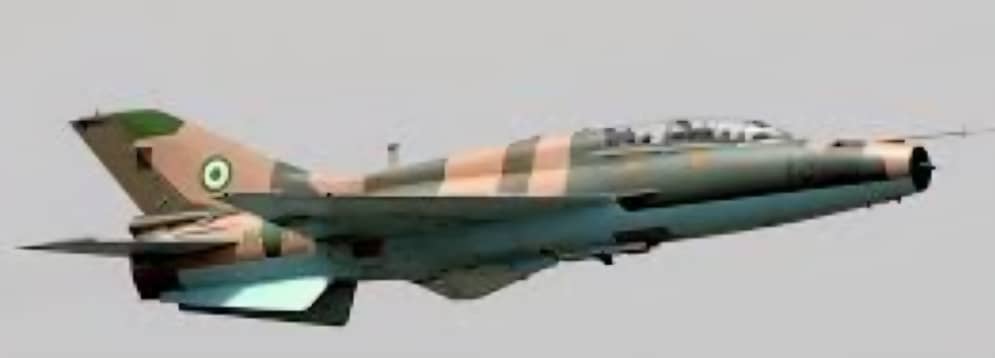
Nigeria’s Misplaced Priorities: Why Deploying Troops to Benin Republic Instead of the North Underscores a Dangerous Security Blindspot
By Ifeanyi Obinali
As the dust settles from last weekend’s failed coup in Benin Republic, and the Nigerian Senate’s recent approval of troops deployment to assist the Beninese government, many Nigerians are asking: Was this really the right call — especially given the worsening security disaster back home?
On December 7, 2025, the government of Benin requested military intervention after mutinying soldiers attempted to overthrow their president. Responding swiftly, President Bola Tinubu ordered the mobilization of Nigerian fighter jets and ground troops to help restore constitutional order in the neighboring country. Reports say the intervention succeeded: airstrikes and ground forces helped quash the coup attempt. This indeed is a bold gesture to a neighbor, but at what domestic cost?
In the eyes of many observers including Nigeria’s leaders, this demonstrates solidarity with a neighbor and reaffirms Nigeria’s role as a stabilizer in the region. President Tinubu framed the move as an affirmation of shared democratic values under ECOWAS. But for many Nigerians who face daily threats from kidnappings, banditry and village massacres, the spectacle of foreign intervention feels dangerously disconnected from the urgent reality of life in the country, especially Nigeria’s north.
The northern crisis is now more than a security challenge but a humanitarian disaster. Over the last decade, large parts of northern Nigeria especially the northwest and north-central zones have been ravaged by violence: kidnappings, bandit raids, mass abductions of schoolchildren, attacks on villages and farms, and deadly raids on houses of worship.
Today, killings, kidnappings, and violent raids by so-called bandit gangs” are everyday realities of citizens in Kaduna, Zamfara, Katsina and Niger. It is a shame and sad to note that 15 years after Chibok, we are still dealing with the same challenges that led to school students in Kebbi and Niger facing the same inhumane situation that they will never recover from. The worst part remains that the posture of the government still does not prove its readiness to deal with this issue decisively. How can someone order the removal of military officers and security men protecting the school in Kebbi mere hours before the bandits attacked, killed the principal and kidnapped the students, yet Nigerians still do not officially know the name of that specific individual who gave the order of removal, and worst still that person is not in custody yet – a stark manifestation of how entrenched in the system the insecurity has become, especially because it’s unusual for military movements to occur without clear authorization, especially in high-risk areas.
These attacks do more than just endanger lives: they destroy communities, displace families, force farmers off their land, and worsen poverty and hunger, a reality already highlighted in recent food-insecurity projections.
As with every sovereign nation, the government’s number one responsibility is to ensure security and the protection of the lives of every citizen. When the government commits troops abroad, especially in a reactive operation, it sends a message about what it sees as its priorities. Deploying personnel to Benin may shore up regional influence, but it comes at a cost: the very real and growing insecurity at home and the millions of naira that could have been invested in the fight against insecurity.
Given the scale of terror, banditry, and kidnapping in the north, diverting troops and military assets to another country is a miscalculation. Just the way our troops were guns-blazing to Cotonou, they could have done the same in response to the insecurity in the north, at a time when many citizens believed they most needed protection.
What message does this send to a family in, say, Katsina or Zamfara, whose village was raided last week, whose children were snatched, whose farm is burning when military jets are flying to foreign capitals instead of guarding their schools or farmland?
Beyond optics, our government’s focus should be internal, because the human cost of insecurity in the country is huge and rapidly rising. The numbers of attacks, abductions, and killings in the north have soared over the last decade. For thousands of families, insecurity is no longer abstract, but a daily terror. Citizens expect their government to guard their safety, safeguard their children’s education, and protect their land. When security appears selectively deployed abroad while domestic threats rage, public trust erodes.
There is no doubt that regional instability threatens all West African nations, and that solidarity among neighbors is sometimes necessary. But for a country still grappling with rampant kidnappings, banditry, and deadly attacks across its own territory inside which lives, livelihoods, and futures hang in the balance, stability at home must come first.
Nigerians cannot continue to remain vulnerable, their lands insecure, and their families unprotected, while foreign capitals enjoy the protection of Nigerian jets and troops. The government must before any foreign adventures, deploy the full force of its security apparatus to where it is most needed: at home in the Northeast, Northwest and North Central in particular, and Nigeria in general.





US-Based Society Lady, Fehintola-Brat Extends Eid-El-Kabir Greetings To Muslims
United States based fahionista of class, Chief (Mrs) Ayoola Fehintola-Brat has extended a warm greetings to Muslim faithful all over the world on the occasion of the 2026 Eid-El-Kabir celebration.
Fehintola-Brat who is the Balogun Egbe Obaneye Obinrin Akile Ijebu, and the Yeye Asofin of Idenaland in her message to Journalists urged Muslim to continually uphold the enduring values of sacrifice, obedience, faith, and compassion, which are central to the significance of Eid-El-Kabir festival.
A quiet philantropist whose humanitarian services has won her several laurels urged Muslims to use the spiritual occasion to pray for the peace co-existence of Nigerians regardless of religious, social and political leanings stressing that the oneness of the country should not be underplay.
In a related development, she expressed her felicitations to all sons and daughters of Ijebuland on the forthcoming Ojude Oba 2026 celebration, tasking age-groups otherwise known as Regbregbe to be more proactive in giving back to their immediate communities.
According to her, the beauty of the age-groups in Ijebuland is the need to contribute immensely to the development of the land in no small means. “This we will continue to achieve with God on our side”, she concluded.
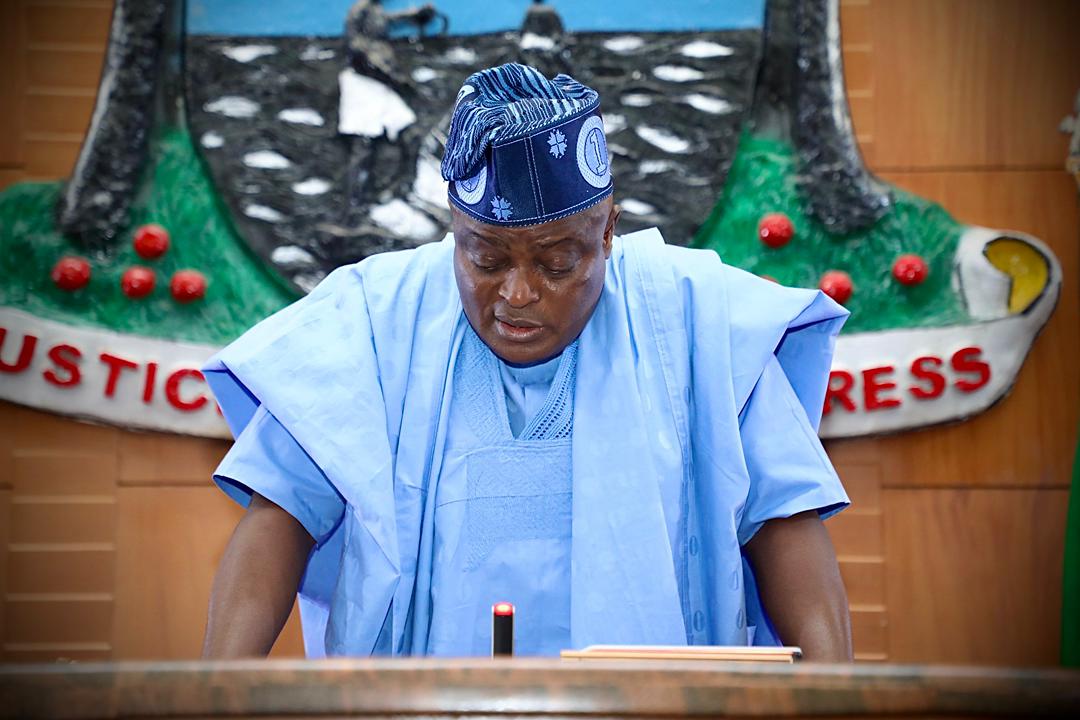
Sallah: Obasa Felicitates Muslim Ummah, Commends Nigerians for APC Primaries Turnout
The Speaker of the Lagos State House of Assembly, Rt. Hon. Mudashiru Obasa has extended warm felicitations to Muslims in Lagos State and across Nigeria on the occasion of Eid al-Adha.
In a statement released by his Chief Press Secretary, Mr. Dave Agboola, Obasa described the festival as a season of sacrifice, reflection, and gratitude, urging the faithful to continue to uphold the values of peace, unity, and love that strengthen the nation.
He noted that the celebration of Eid al-Adha is not only a spiritual milestone but also a reminder of the importance of togetherness and collective responsibility in building a stronger society.
He, likewise, emphasized that the festival provides an opportunity for Nigerians to renew their commitment to national progress and to support leadership that prioritizes development and prosperity.
Obasa, however, commended Nigerians, particularly members of the All Progressives Congress (APC), for their massive turnout during the recently concluded party primaries. He described the participation as a clear demonstration of the people’s confidence in the government of President Bola Ahmed Tinubu and their belief in the administration’s vision for a greater Nigeria.
“The APC primaries have shown the resilience of our democracy and the confidence Nigerians have in the leadership of President Bola Ahmed Tinubu and the Renewed Hope Agenda. This is a strong message that our people are ready to continue supporting policies that will drive growth and prosperity,” Obasa stated.
The Speaker further encouraged Muslims to celebrate responsibly, stressing that the joy of Eid should be accompanied by prayers for the continued peace and progress of Lagos State and Nigeria.
“As you celebrate with family and loved ones, may this season bring joy, peace, and prosperity to your homes. Let us remain united in our resolve to build a stronger nation,” he added.
On behalf of the Lagos State House of Assembly, Obasa wished all Muslims a happy and fulfilling Eid al-Adha celebration.

ABEOKUTA FILM FESTIVAL AT ILEYA
Kayshow Multimedia a filmmaking and Media organization this year 2026 holds its annual Abeokuta film festival at the Ake Palace in Abeokuta.
Alake of Egba land, Ọba Michael Adedotun Arẹmu Gbadebo has graciously endorsed the Free Training of Egba Youths on Film and Arts and the Entertainment of the the People with a FREE FILM SHOW at the AKE PAVILION. as part of the ABEOKUTA FILM FESTIVAL 2.0.
The Convener of the Film Festival Honorable Kehinde Soaga says this year’s event promises to be more exciting as distinguished personalities are sure to attend.
This includes the honorable Minister for Art Culture and Creative Economy in Nigeria, Barr. Hannatu Musa Musawa, Ààrẹ Lai Labode, Sen. Ibikunle Amosun and other special guests.
The event will feature Film, Cultural Dance Cultural foods and Award Ceremony.
The general public is hereby invited to the Free film show at the Abeokuta film festival at the Alake Palace Pavilion on Thursday 28th of May 2026 by 4:00 p.m.
Only well dressed is the Entry. The Abeokuta Film Festival is an annual event taking place in the capital city of Ogun State state.


- Qrent says delaying Information Technology (IT) refresh cycles may be increasing operational risk for businesses in Africa May 27, 2026
- Dentons’ Iyunola Adekanye Appointed to African Mining Week (AMW) Advisory Board May 27, 2026
- United Nations (UN) Women Liberia and Partners Convene for Spotlight Initiative 2.0 Women’s Economic Empowerment Inception Meeting May 27, 2026
- African Mining Week (AMW) to Host Central Bank Governors Roundtable as Monetary Authorities Deepen Role in Mining Sector Growth May 27, 2026
- Eritrea: Diaspora Nationals Celebrate Independence Day Anniversary May 27, 2026
- Africa Unveils Landmark Humanitarian Coordination Platform to Strengthen aligned Response to Humanitarian Crises May 27, 2026
- Seychelles: President Herminie Engages with Police and Fire Services on Praslin May 27, 2026
- Issue 3 of Mining Review Africa now available for free download May 27, 2026
- NOV Joins African Energy Week (AEW) 2026 as Gold Sponsor Amid Africa’s Offshore Expansion Push May 26, 2026
- African Union of Broadcasting (AUB) and United Nations University Institute for Water, Environment and Health (UNU-INWEH) Launch Landmark Webinar Series on Africa’s Water Crisis, Starting June 2, 2026 May 26, 2026
- Qrent says delaying Information Technology (IT) refresh cycles may be increasing operational risk for businesses in Africa May 27, 2026
- Dentons’ Iyunola Adekanye Appointed to African Mining Week (AMW) Advisory Board May 27, 2026
- United Nations (UN) Women Liberia and Partners Convene for Spotlight Initiative 2.0 Women’s Economic Empowerment Inception Meeting May 27, 2026
- African Mining Week (AMW) to Host Central Bank Governors Roundtable as Monetary Authorities Deepen Role in Mining Sector Growth May 27, 2026
- Eritrea: Diaspora Nationals Celebrate Independence Day Anniversary May 27, 2026
- Africa Unveils Landmark Humanitarian Coordination Platform to Strengthen aligned Response to Humanitarian Crises May 27, 2026
- Seychelles: President Herminie Engages with Police and Fire Services on Praslin May 27, 2026
-

 news5 months ago
WHO REALLY OWNS MONIEPOINT? The $290 Million Deal That Sold Nigeria’s Top Fintech to Foreign Interests
-

 society3 weeks ago
SOCIAL MEDIA IS NOT A BATTLEFIELD COMMAND – WHY THE NIGERIAN ARMY’S ACTION AGAINST JUSTICE CRACK IS A NATIONAL SECURITY IMPERATIVE
-

 celebrity radar - gossips4 months ago
Dr. Chris Okafor Returns with Power and Fire of the Spirit -Mounts Grace Nation Altar with Fresh Anointing and Restoration Grace on February 1, 2026
-

 celebrity radar - gossips6 months ago
Prophet Kingsley Aitafo Releases 2026 Prophecy: ‘Nigeria Will Rise, but the World Must Prepare for Turbulence’