
society
Nigeria’s Power Grid Collapse: How Gas Shortages Left the Nation in Darkness

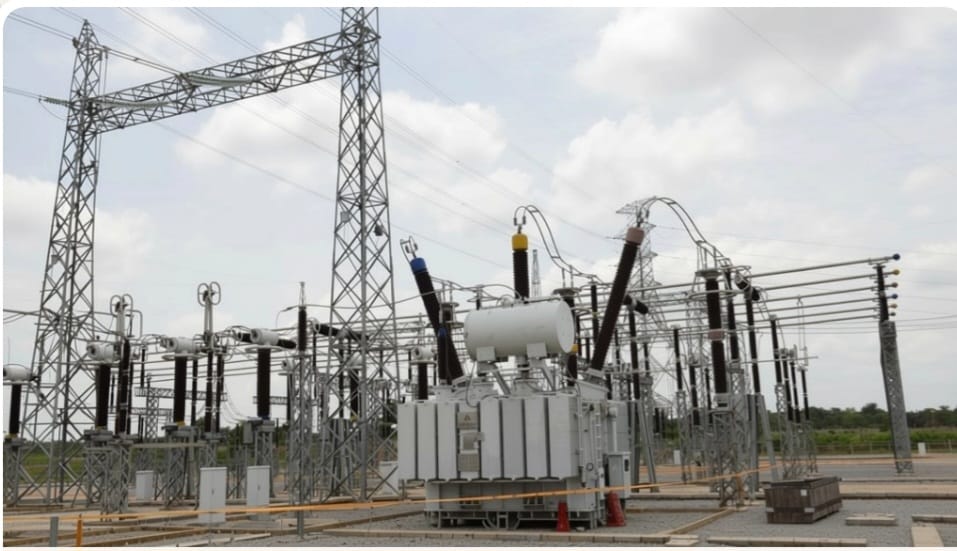
Nigeria’s Power Grid Collapse: How Gas Shortages Left the Nation in Darkness
By George Omagbemi Sylvester | Published by SaharaWeeklyNG
“With only 2,830MW generated, homes and industries grapple with outages, while leaders promise solutions amid systemic energy failure.”
Nigeria’s electricity grid tumbled into one of its worst service crises yet on 5 March 2026, as Electricity Distribution Companies (DisCos) received only 2,830 megawatts (MW) of electricity; barely a quarter of the nation’s installed generating capacity. The shortfall left millions of Nigerians across Lagos, Abuja, Port Harcourt, Ibadan, Kano and other urban centres plunged into extended darkness, grinding factories to a halt and intensifying the perennial power crisis that has dogged Africa’s most populous country for decades.
The abrupt collapse was triggered by severe gas supply shortages that choked thermal power plants (the backbone of Nigeria’s power system) and forced them to scale back generation. Plants that should ordinarily ramp up production to between 4,000MW and 5,000MW faltered late last week as gas deliveries were disrupted, leaving the Nigerian Electricity System Operator (NESO) to ration output to DisCos.
In an official statement, NESO spokesperson Mr. Jide Oseni confirmed the precipitous drop in supply, noting:
“On 5 March 2026, total generation available for dispatch was 2,830MW due to ongoing gas constraints at several major power stations. This level of supply is unsustainable for a nation of over 200 million people.”
Analysts, power engineers and industrial operators have described the situation as a “systemic failure” rather than an isolated outage; one rooted in structural weaknesses within Nigeria’s energy value chain.
Gas Vexes the Grid
Unlike nations that rely significantly on hydropower, Nigeria’s power generation is dominated by thermal plants that run on natural gas; expected to be abundant given the country’s status as one of Africa’s largest gas producers. Yet poor pipeline maintenance, endemic vandalism, inadequate investment, and policy gaps have rendered that supposed advantage moot.
A senior engineer at a major thermal plant in central Nigeria, who spoke on condition of anonymity, explained the depth of the crisis:
“We have the installed capacity to produce more, but we simply don’t have reliable gas supply. Some days we receive less than half of what is contracted, and when pipelines are vandalised, there’s nothing we can do.”
Vandalism remains one of the largest contributors to the supply shortfall. In communities where pipelines traverse remote areas, attacks and theft have severely disrupted deliveries, forcing plants to switch to expensive alternative fuels or shut down entirely.
According to Mr. Samuel Ifeanyi, an energy consultant based in Abuja:
“The power sector’s problems are no longer just about generation cost or distribution inefficiency; they are about gas infrastructure security and policy implementation. You cannot operate thermal plants if the fuel supply is as unpredictable as it is now.”
Everyday Blackouts, Everyday Losses
For most Nigerians, the implications translated into extended outages and cascading economic loss. In Lagos’ Yaba and Surulere districts, residents reported more than 16 hours without electricity. Small‑scale businesses relying on arcade stores, internet cafés and cold storage facilities were forced to resort to diesel generators, increasing operating costs dramatically.
“I woke up at 4am to put fuel in the generator,” said Mrs. Comfort Akpan, a food vendor along the Lekki‑Epe Expressway.
“Without power, my refrigerator melts all my produce. I’m spending more on diesel than I make in profit.”
Manufacturers were equally hard hit. Across Kano’s industrial district, factories either downed tools or ran at reduced capacity, citing both power unreliability and sharply rising generator fuel costs.
“This is crippling productivity,” said Mr. Emeka Obi, CEO of a textile factory.
“We planned to increase output this quarter, but we cannot sustain operations at this pace or cost.”
Industrial operators have reported losses amounting to millions of naira per day, and economists warn that prolonged outages can stunt economic growth, deter investment, and inflate inflationary pressures as production costs climb.
Government and NERC Respond
In response to the crisis, the Federal Ministry of Power issued a statement acknowledging the “unacceptable levels of disruption” and promising immediate action. The ministry pointed to recent efforts to diversify electricity sources, including expanding renewable energy capacity and strengthening gas aggregation networks.
Minister of Power, Dr. Adaora Umeoji, told SaharaWeeklyNG:
“We are acutely aware of the impact this shortfall is having on Nigerians. The government is coordinating with critical stakeholders (gas producers, transmission operators and DisCos) to ensure that supply interruptions are addressed and not repeated.”
However, critics argue that such assurances have been recurring with little tangible improvement over the years.
The Nigerian Electricity Regulatory Commission (NERC) also issued a caution against blaming DisCos for a situation beyond their control. In a press release, Director of Market Monitoring and Compliance, Ms. Blessing Okonkwo, said:
“Distribution companies are intermediaries; they distribute what they receive. The real bottleneck is upstream, in gas supply and generation. We are actively engaging stakeholders, but we also urge Nigerians to remain patient as we navigate these complexities.”
The Long Shadow of Structural Flaws
Nigeria’s power sector has long been bedevilled by disjointed policy frameworks, inadequate private investment, tariff shortfalls and poor infrastructure. Experts say that while gas shortages are now the most visible trigger of the latest crisis, they are symptomatic of deeper, unresolved systemic flaws.
Dr. Halima Suleiman, a power sector analyst at the African Centre for Energy Studies, explained:
“Nigeria’s grid was never designed to withstand sustained fuel uncertainty. Without real structural reform (including investment in gas infrastructure, adoption of alternative generation sources such as solar, and legal frameworks that secure investor confidence) these intermittent collapses will continue.”
She pointed to emerging technologies like compressed natural gas (CNG) generation, distributed renewable micro‑grids, and battery storage as complementary solutions that could reduce reliance on gas alone.
Power at the Edge: Renewables and Innovation
Some communities have turned to renewables as a grassroots response to grid failure. Across parts of the north and south, solar mini‑grids have provided pockets of reliable power, especially for essential infrastructure like health clinics and schools.
“Solar keeps our clinic refrigeration running,” said Nurse Esther Adebayo, manager of a public health centre in rural Oyo State.
“We may not have full grid power, but at least we aren’t completely in the dark.”
Energy startups are capitalising on this trend, providing pay‑as‑you‑go solar solutions in peri‑urban and rural localities. Institutional investors are increasingly interested, but sector experts stress that without enabling government policies and financing, such innovations cannot scale fast enough to meet national demand.
Public Trust and the Political Price
Power supply has become a highly politicised issue, with politicians regularly making promises that fail to materialise. Civil society groups and consumer rights organisations have criticised the government for what they regard as reactive management instead of strategic planning.
The Consumers’ Protection Network (CPN) released a statement calling for an urgent independent task force to address the crisis:
“We believe that only an unbiased, cross‑sectoral body can diagnose and recommend immediate and long‑term solutions that restore confidence in Nigeria’s power sector.”
Some opposition lawmakers have also called for parliamentary hearings to hold responsible ministries and agencies accountable, describing the current crisis as “a national emergency, not just an energy problem.”
The Road Ahead
As Nigeria grapples with the latest power breakdown, solutions remain elusive but not impossible. Strengthening gas infrastructure and security, unlocking investment, diversifying generation sources, and expanding renewables are among the necessary steps recommended by experts. But turning these recommendations into reality will require political will, sustained financing, and collaboration between government, private sector and civil society.
For everyday Nigerians, the hope is simple:
“We want light and not just promises.”
Whether the nation will finally emerge from its longstanding energy darkness depends not just on policy announcements, but on measurable actions that ensure structural resilience, reliable supply and, ultimately, a power system that serves the needs of millions, not just the ambitions of a few.




FOPCHEN Seeks Wider Engagement As Court Defers Hearing
OTA, OGUN STATE — The High Court of Ogun State, Ota Division, on Thursday resumed hearing in the ongoing matter involving cultural and societal concerns, before adjourning proceedings till Thursday, July 2, 2026, for continuation of hearing.
At the resumed sitting on May 28, 2026, counsel representing the various parties revisited key issues in the case and made further submissions before the court.
The matter, which has continued to generate public interest across different sectors, again drew attention from legal observers and stakeholders who described the case as one with significant implications for societal values, cultural identity and constitutional interpretation.
Speaking after the proceedings, the Foundation for the Protection of Cultural Heritage in Nigeria, popularly known as FOPCHEN, renewed its appeal for dialogue and constructive engagement among Nigerians, stressing that sensitive cultural and moral issues should not be left entirely within the confines of the courtroom.
According to the group, broader conversations involving traditional institutions, civil society organisations, religious leaders and policy stakeholders remain necessary in addressing issues relating to national values and social responsibility.
Legal analysts at the court premises noted that arguments being canvassed by parties in the suit could shape future legal interpretations surrounding cultural and moral questions in the country.
Following submissions by counsel, the presiding judge adjourned the matter till Thursday, July 2, 2026, to enable parties further prepare and respond to issues raised during the hearing.
The development has continued to spark reactions among observers, with many Nigerians closely monitoring the proceedings ahead of the next hearing date.

US-Based Society Lady, Fehintola-Brat Extends Eid-El-Kabir Greetings To Muslims
United States based fahionista of class, Chief (Mrs) Ayoola Fehintola-Brat has extended a warm greetings to Muslim faithful all over the world on the occasion of the 2026 Eid-El-Kabir celebration.
Fehintola-Brat who is the Balogun Egbe Obaneye Obinrin Akile Ijebu, and the Yeye Asofin of Idenaland in her message to Journalists urged Muslim to continually uphold the enduring values of sacrifice, obedience, faith, and compassion, which are central to the significance of Eid-El-Kabir festival.
A quiet philantropist whose humanitarian services has won her several laurels urged Muslims to use the spiritual occasion to pray for the peace co-existence of Nigerians regardless of religious, social and political leanings stressing that the oneness of the country should not be underplay.
In a related development, she expressed her felicitations to all sons and daughters of Ijebuland on the forthcoming Ojude Oba 2026 celebration, tasking age-groups otherwise known as Regbregbe to be more proactive in giving back to their immediate communities.
According to her, the beauty of the age-groups in Ijebuland is the need to contribute immensely to the development of the land in no small means. “This we will continue to achieve with God on our side”, she concluded.
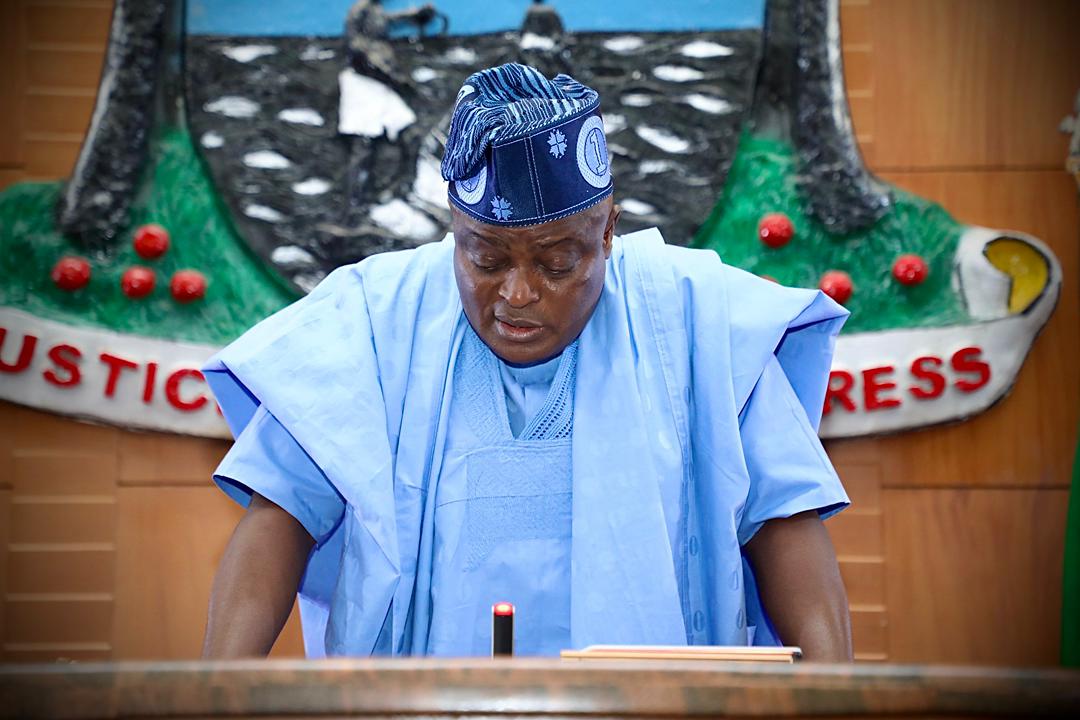
Sallah: Obasa Felicitates Muslim Ummah, Commends Nigerians for APC Primaries Turnout
The Speaker of the Lagos State House of Assembly, Rt. Hon. Mudashiru Obasa has extended warm felicitations to Muslims in Lagos State and across Nigeria on the occasion of Eid al-Adha.
In a statement released by his Chief Press Secretary, Mr. Dave Agboola, Obasa described the festival as a season of sacrifice, reflection, and gratitude, urging the faithful to continue to uphold the values of peace, unity, and love that strengthen the nation.
He noted that the celebration of Eid al-Adha is not only a spiritual milestone but also a reminder of the importance of togetherness and collective responsibility in building a stronger society.
He, likewise, emphasized that the festival provides an opportunity for Nigerians to renew their commitment to national progress and to support leadership that prioritizes development and prosperity.
Obasa, however, commended Nigerians, particularly members of the All Progressives Congress (APC), for their massive turnout during the recently concluded party primaries. He described the participation as a clear demonstration of the people’s confidence in the government of President Bola Ahmed Tinubu and their belief in the administration’s vision for a greater Nigeria.
“The APC primaries have shown the resilience of our democracy and the confidence Nigerians have in the leadership of President Bola Ahmed Tinubu and the Renewed Hope Agenda. This is a strong message that our people are ready to continue supporting policies that will drive growth and prosperity,” Obasa stated.
The Speaker further encouraged Muslims to celebrate responsibly, stressing that the joy of Eid should be accompanied by prayers for the continued peace and progress of Lagos State and Nigeria.
“As you celebrate with family and loved ones, may this season bring joy, peace, and prosperity to your homes. Let us remain united in our resolve to build a stronger nation,” he added.
On behalf of the Lagos State House of Assembly, Obasa wished all Muslims a happy and fulfilling Eid al-Adha celebration.


- Société Nationale des Pétroles du Congo (SNPC) Chief Ominga to Speak at African Energy Week (AEW) 2026 as Congo Accelerates Gas Expansion May 29, 2026
- South Africa: Deputy President Mashatile arrives in India for a Working Visit May 29, 2026
- Seychelles: President Visits Key Development Sites on Coetivy Island May 29, 2026
- Accelerating regional action to advance mental health care in Africa May 29, 2026
- President of the Republic of Seychelles Meets Young La Digue Talent Ahead of London Showcase May 29, 2026
- United Nations Economic Commission for Africa (ECA) launches regional initiative to accelerate women’s digital entrepreneurship across four African countries May 29, 2026
- Ethiopia: International community must act to safeguard press freedom ahead of national election May 29, 2026
- CORRECTION: Annual Meetings 2026 (AM2026): African Development Bank (AfDB) 2025 Trade Finance Report Highlights Resilience of African Financial Institutions After Covid-19 May 29, 2026
- Why Big Tech Could Become Nigeria’s New Gas Partner May 29, 2026
- African Energy Chamber (AEC)-Venezuela Alliance Accelerates Pathways into South-South Energy Expansion May 29, 2026
- Société Nationale des Pétroles du Congo (SNPC) Chief Ominga to Speak at African Energy Week (AEW) 2026 as Congo Accelerates Gas Expansion May 29, 2026
- South Africa: Deputy President Mashatile arrives in India for a Working Visit May 29, 2026
- Seychelles: President Visits Key Development Sites on Coetivy Island May 29, 2026
- Accelerating regional action to advance mental health care in Africa May 29, 2026
- President of the Republic of Seychelles Meets Young La Digue Talent Ahead of London Showcase May 29, 2026
- United Nations Economic Commission for Africa (ECA) launches regional initiative to accelerate women’s digital entrepreneurship across four African countries May 29, 2026
- Ethiopia: International community must act to safeguard press freedom ahead of national election May 29, 2026
-

 news6 months ago
WHO REALLY OWNS MONIEPOINT? The $290 Million Deal That Sold Nigeria’s Top Fintech to Foreign Interests
-

 society4 weeks ago
SOCIAL MEDIA IS NOT A BATTLEFIELD COMMAND – WHY THE NIGERIAN ARMY’S ACTION AGAINST JUSTICE CRACK IS A NATIONAL SECURITY IMPERATIVE
-

 celebrity radar - gossips4 months ago
Dr. Chris Okafor Returns with Power and Fire of the Spirit -Mounts Grace Nation Altar with Fresh Anointing and Restoration Grace on February 1, 2026
-

 celebrity radar - gossips6 months ago
Prophet Kingsley Aitafo Releases 2026 Prophecy: ‘Nigeria Will Rise, but the World Must Prepare for Turbulence’