
society
Nigeria’s Social Media Crackdown: A Symptom of Deeper Governance Failure


Nigeria’s Social Media Crackdown: A Symptom of Deeper Governance Failure.
By George Omagbemi Sylvester | Published by saharaweeklyng.com
“Why Banning Platforms for Under-15s Will Not Solve Insecurity, Corruption, Economic Crisis or the Collapse of Public Trust.”
On January 1, 2026, headlines across digital and print media carried a peculiar story: governments abroad, notably in France, are moving to ban social media access for children under 15 in response to growing concerns about online safety.
While this may be well-intentioned in the context of protecting minors from harmful content, the fact that such news raises debate here in Nigeria tells us more about what the Nigerian state is choosing to focus on rather than what it urgently needs to fix.

Across every sector of public life (security, the economy, governance, infrastructure, basic services) Nigeria is unraveling. Yet politicians and policymakers seem fixated on controlling social media instead of addressing the real and worsening crises confronting citizens. This is not just a policy error; it is a governance catastrophe.
The Social Media Narrative: Protecting Youth or Suppressing Dissent?
Proposals to regulate or restrict social media have a long history in Nigeria. As far back as 2019, the National Assembly debated the Protection from Internet Falsehoods and Manipulations Bill (widely dubbed the Anti-Social Media Bill) which sought to criminalise social media posts deemed prejudicial to national security or public confidence. Critics warned it would “unduly restrict the rights to freedom of expression and privacy,” and might contradict constitutional guarantees of free speech.
Nigeria previously banned Twitter (now X) from mid-2021 to early 2022 after the platform deleted a tweet by the president, on grounds that misinformation on the platform could undermine national unity.
That experience, however, devastated the digital economy, reportedly costing billions of naira as businesses lost critical communication and marketing channels, and dampening investor confidence.
Nigeria’s current debate on social media restrictions risks repeating past mistakes: focusing on controlling voices rather than solving problems so profound that people use social media to highlight them.
Insecurity: The Real Crisis
Nigeria is facing its most severe internal security crisis in decades. In northern Nigeria alone, the United Nations World Food Programme projects that 35 million people will face severe food insecurity in 2026 due to militant attacks disrupting agriculture and supply chains.
Saharaweeklyng.com recently reported that Nigeria’s security challenges stem from deep-seated marginalisation of ethnic, religious and regional minorities, compounded by weak policing and proliferation of weapons.
Yet instead of prioritising security reforms and effective territorial control, policymakers spend time debating how to regulate online speech. This divergence exposes a deeper malaise and a government more concerned with controlling narratives than safeguarding citizens.
Insecurity has tangible socio-economic impacts. Studies show that heightened insecurity in agricultural states directly reduces crop yields and livestock output, tightening food supplies and exacerbating hunger.
It is no coincidence that food inflation remains a crushing burden for ordinary Nigerians, even as headline inflation shows technical ease.

A respected Nigerian economist, Edward Effiom, recently observed: “Despite reforms, households live in the present, not future projections and exposure to insecurity only worsens inflation and real incomes.”
In other words: insecurity is not just a tragic headline, but it is an economic shockwave that deepens poverty, limits production and destroys confidence.
Corruption: The Systemic Cancer. At the heart of Nigeria’s systemic failure lies corruption; though widely understood not merely as isolated theft but as a culture of impunity. According to an explanatory report from Saharaweeklyng.com, many Nigerians tolerate corruption as a survival strategy in a dysfunctional system, because “there is little to no consequence for wrongdoing.”
Experts have documented how corruption pervades all tiers of government from tender processes that bypass transparency, to embezzlement of funds intended for public utilities and services.
This pervasive graft turns governance into a predatory exercise, where public money funds private luxury while fundamental services collapse.
What possible logic exists in debating the age limit of Instagram or TikTok access when billions of naira earmarked for roads, electricity and healthcare routinely vanish into private pockets? Addressing corruption (not muzzling public discourse) is the prerequisite for enabling effective social media governance.
As Sanusi Lamido Sanusi, former Central Bank Governor, once observed, corruption harms the economy at macro and micro levels; it cannot be dislodged by censoring words online.
Lawlessness in Power: Senate, House, Judiciary
Nigeria’s legislative and judicial branches have also been unable (or unwilling) to stem the tide of misgovernance. Controversial bills affecting fundamental freedoms have been rushed with minimal public consultation, raising questions about transparency and accountability.
Meanwhile, when the executive faces opposition (as with new tax and regulatory laws in late 2025) critics allege discrepancies between what parliament passed and what was gazetted, sparking claims of overreach.
Such departures from constitutional norms erode trust in the rule of law. A democracy, after all, thrives not because it silences youth on social platforms, but because its institutions are robust, impartial and responsive.
Economic Collapse and Daily Hardship. Nigeria’s economic story over the past two years has been ambivalent: modest growth projections and stabilising inflation offer hope on paper, but reality on the ground tells another tale. World Bank data indicate that although GDP has expanded, the cost of a basic food basket has increased fivefold since 2019, forcing many households to spend upwards of 60–70% of their income on food alone.
For most Nigerians, life remains a painful negotiation between feeding their families or paying rent, buying medicine or affording transport, all while infrastructure, like electricity and roads, continues to underperform. The International Monetary Fund notes that poor infrastructure, especially electricity deficits, stifles productivity and enterprise.
This is a stark reminder: policy must tackle real economic burdens (jobs, power, transport) not just virtual chatter.
The Digital Debate: A Red Herring? Digital platforms have played vital roles in Nigeria’s democracy and civic life, from youth mobilisations during ENDSARS to grassroots economic entrepreneurship. Restricting access under the guise of “protecting minors” risks censoring voices that illuminate systemic failures.
Critics of social media regulation (including civil liberties advocates and legal scholars) argue that such laws gag freedom of expression and stifle public accountability, especially when existing libel, defamation and cybercrime laws already cover harmful conduct.
Instead of reflexive bans, what Nigeria urgently needs is an empowering digital policy framework: one that educates citizens, combats online harms with targeted safety mechanisms and ensures children’s protection without eroding democratic openness.
A Nation at the Crossroads. Nigeria stands today at a defining moment, one that demands honesty, courage and a ruthless reassessment of priorities. The fixation on regulating social media access for minors, while not inherently wrong in safer and more functional societies, exposes a troubling disconnect in a country battling existential crises. Nations do not collapse because teenagers use social platforms; they collapse when governments fail to secure lives, protect livelihoods and uphold justice.
Insecurity continues to bleed communities dry, from farmlands abandoned to highways turned into killing fields. Corruption remains entrenched, not as an anomaly but as a governing culture that rewards impunity and punishes integrity. The legislature and judiciary, institutions meant to be moral anchors of democracy, are increasingly perceived as theatres of lawlessness and elite bargaining. Meanwhile, food prices soar beyond the reach of ordinary citizens, wages stagnate, electricity remains unreliable, roads decay into death traps and public trust evaporates by the day.
Against this backdrop, social media has become less a menace than a mirror reflecting the failures, frustrations and fury of a neglected populace. Attempting to dim that mirror does not repair the cracks in the national foundation; it merely deepens suspicion and widens the gulf between rulers and the ruled. History is unforgiving to governments that choose censorship over competence, distraction over delivery and control over compassion.
The path forward is neither obscure nor complicated. Nigeria does not need symbolic bans or performative regulations; it needs courageous leadership, institutional reform and an unrelenting war against corruption and insecurity. It needs policies that put food on tables, light in homes, safety on roads and dignity back into citizenship. Until these fundamentals are addressed, debates about social media restrictions will remain what they are, a tragic misplacement of national priorities in a nation crying out for rescue.
At this crossroads, Nigeria must decide: confront the real crises head-on, or continue to chase shadows while the house burns.
History and the Nigerian people, are watching.





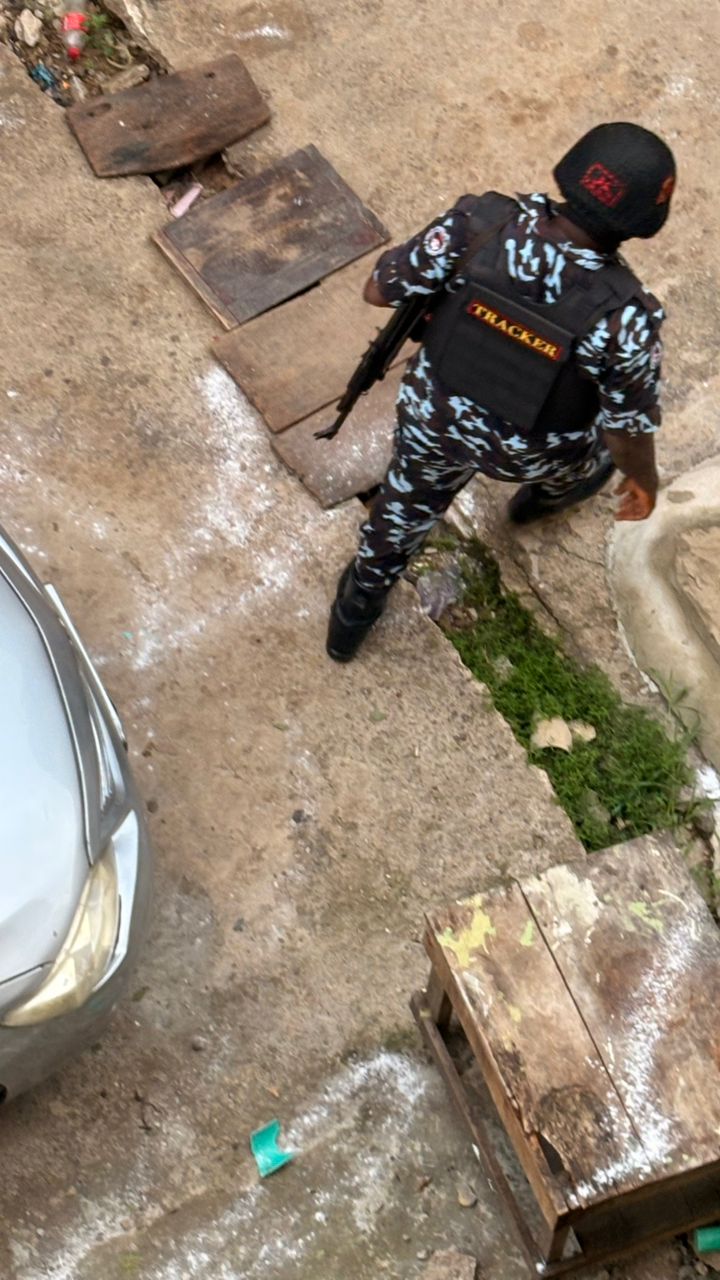
Police Officers Detained as Family Property Dispute Sparks Demolition Controversy in Lagos
By Ifeoma Ikem
A property dispute within the Omotayo-Ojo family has taken a dramatic turn following a controversial demolition exercise at a residential building in Ikosi-Ketu, Lagos State, which reportedly left tenants displaced and led to the detention of some police officers allegedly involved in the operation.

The property, located at 23B Loveall Street, Ikosi-Ketu, has been the subject of a prolonged ownership tussle since the death of its owner, Chief Oludola Omotayo Ojo, the Babaalaje of Imesi-Ile, Osun State, in 2019.
Residents said tension erupted when a group of individuals, accompanied by security operatives, stormed the premises and commenced demolition activities.
According to eyewitnesses, portions of the building were pulled down while tenants rushed to salvage their belongings from affected apartments.
The residents alleged that windows, doors and roofing sheets were damaged during the exercise, exposing parts of the building to the elements and causing significant losses to occupants.
At the centre of the dispute is Mrs Mojisola Omotayo Ojo Alolagbe, who claimed that the property was allocated to her by her late father during his lifetime as a source of financial support.
She alleged that some family members had persistently challenged her ownership claim despite ongoing legal proceedings relating to the administration of the deceased’s estate.
Alolagbe further claimed that the latest incident was part of a series of attempts to wrest control of the property, citing previous cases of alleged vandalism and partial demolition in November 2025, January 2026 and February 2026.
The situation escalated further when reports emerged that police officers allegedly involved in the demolition were later apprehended and conveyed in a Black Maria vehicle over questions surrounding the legality of their participation in the operation.
Sources familiar with the matter said those behind the demolition had initially claimed to be acting on approval from the Lagos State Ministry of Lands. However, the authenticity and extent of such approval could not be independently verified as of the time of filing this report.
The development has generated concern among residents and community members, who questioned the involvement of security personnel in what they described as a civil matter.
Some tenants, who said they had recently renewed their tenancy agreements, lamented the destruction of their property and appealed to the authorities for protection and possible compensation.

They also called for a thorough investigation into the circumstances surrounding the demolition, insisting that the rights of all parties involved should be protected.
Stakeholders have urged the Lagos State Government, security agencies and the judiciary to intervene and ensure that the dispute is resolved through lawful means to prevent further escalation.
The controversy has continued to draw public attention, raising concerns over property rights, estate administration and the role of law enforcement agencies in civil disputes.

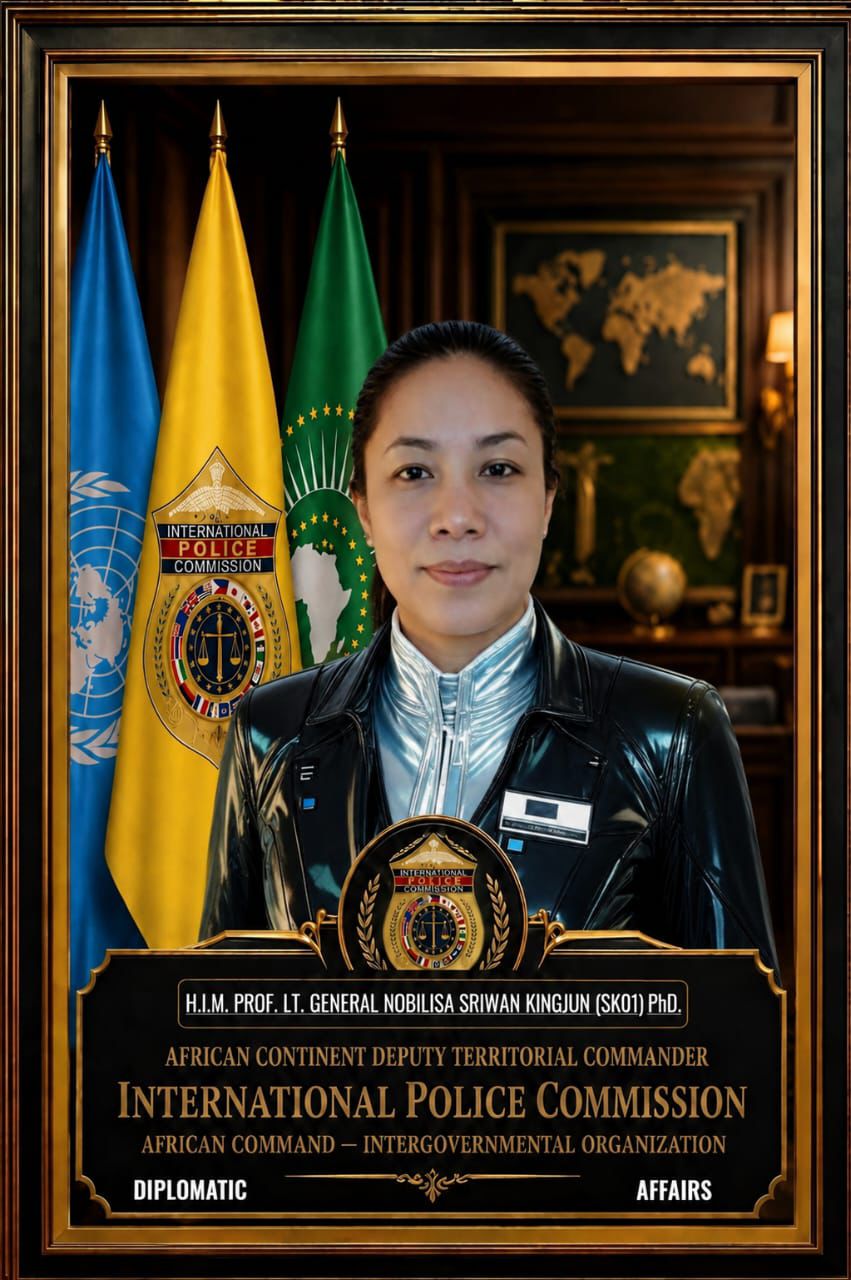
UKA Gears Up for Final ATC Exchangeability Test Run as June Preparations Begin.
May 30, 2026 – As the month of June gathers momentum, the *United Kingdom of Atlantis, UKA*, a sovereign nation has unveiled a series of vital guidelines and preparatory packages to ensure citizens and stakeholders run the *ATC Exchangeability* process effectively.
In an official update, the *President of Atlantic Crown Limited, Empress of Attica Empire UKA*, confirmed that the *Final Test Run of ATC Exchangeability* is scheduled for the month of June 2026. The exercise marks a key phase ahead of the *Official Exchangeability Window, set to run from July 2026 to February 2027*.
### Key Highlights from the Presidential Briefing
1. *Final Test Run – June 2026*
The test run is designed to validate systems, procedures, and user readiness before full activation. Citizens, partners, and designated participants are urged to follow all official advisories released by UKA authorities during this period.
2. *Official Exchangeability Period*
Following the successful completion of the June test run, the Official Exchangeability will commence in july 2026 and we are Expecting Full Exchange ability between July Ending, 2026 to February 2026.
UKA stated that detailed schedules, eligibility requirements, and step-by-step instructions will be communicated progressively through verified UKA channels.
3. *Benefiting Packages for June*
In line with UKA’s commitment to citizen empowerment, the month of June will feature “benefiting packages” aimed at education, preparation, and seamless onboarding. These packages are intended to equip the people of UKA with the knowledge and tools needed for effective participation.
4. *Commitment to Transparency*
Addressing the nation, the Empress of Attica Empire UKA emphasized:
_“Final Test Run of ATC Comes up in The Month of June, As We Prepare For The Official Exchangeability, Between July 2026 To Feb 2027. All Information Will Be Communicated.”_
UKA reaffirmed that only information released through official UKA platforms should be regarded as authoritative.
The United Kingdom of Atlantis is encouraging all citizens, representatives, and interested parties to remain alert to official communications, attend designated orientation sessions, and avoid unofficial sources. UKA’s dedication to order, clarity, and the collective benefit of its people as the nation moves into this significant phase.
For updates, advisories, and participation guidelines, citizens are advised to monitor official UKA communication channels.
United Kingdom of Atlantis, UKA, is a sovereign nation, committed to national development, citizen welfare, and structured economic participation through initiatives such as ATC Exchangeability.
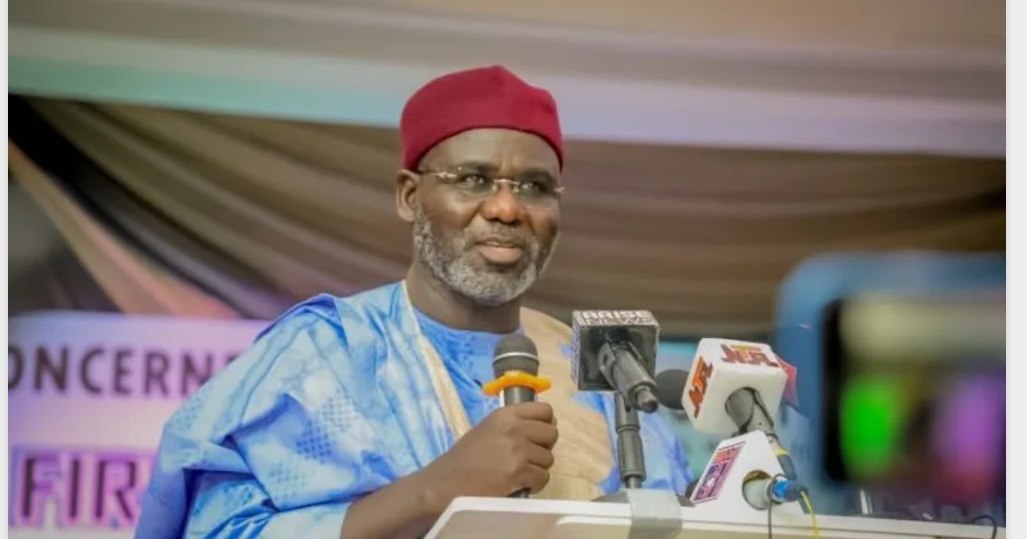
Three Years On, General Buratai Hails Tinubu’s Economic, Security Achievements
Former Chief of Army Staff, Lt. Gen. Tukur Buratai (retd.), has commended President Bola Ahmed Tinubu for what he described as bold economic reforms and improved security efforts as the President marks three years in office.
In a goodwill message on Thursday to commemorate Tinubu’s third anniversary as President and Commander-in-Chief of the Armed Forces, Buratai said the administration had taken courageous decisions that would leave a lasting impact on Nigeria’s development.

According to him, President Tinubu broke a long-standing cycle that had hindered national growth by removing fuel subsidy and implementing foreign exchange reforms aimed at stabilising the naira and strengthening the economy.
He noted that the reforms were beginning to yield positive results, citing the global acceptance of Nigerian debit cards, the gradual revival of local refineries, access to student loans, and ongoing road and infrastructure projects across the country.
“The FCT Administration has also recorded remarkable progress, completing major road projects that remained unfinished for over 16 years,” Buratai stated.
The former army chief also praised the administration’s security efforts, saying renewed military offensives against insurgents, terrorists and bandits had led to notable successes across various parts of the country.
He specifically lauded recent joint operations involving Nigerian and United States forces against Boko Haram and ISWAP in the North-East, as well as intensified counter-banditry operations in the North-West.
“We have seen notorious ISWAP commanders being neutralised. I congratulate the Commander-in-Chief, the Minister of Defence, the Chief of Defence Staff, the Service Chiefs, the Inspector-General of Police and heads of intelligence agencies for their efforts,” he said.
Buratai, however, acknowledged that challenges remained, stressing the need for more aggressive military operations and intelligence-driven strategies in the coming year.
While urging Nigerians to remain hopeful, he said celebrating the President’s achievements did not amount to ignoring the difficulties facing the nation.
“Because you truly care, you have shown the courage to trade short-term comfort for long-term hope. Nigerians need your reassurances, and that is why we remain optimistic and full of confidence,” he added.
The retired military officer reaffirmed his support for the Tinubu administration and expressed confidence that the foundation being laid by the government would deliver a brighter future for the country.
He also prayed for God’s guidance, wisdom, strength and good health for the President as he continues to lead Nigeria.


- When women farm better, Eswatini eats better June 3, 2026
- Togo Hosts the 8th Annual Forum of National Volunteer Agencies in the Economic Community of West African States (ECOWAS) Region June 3, 2026
- Indigenous Peoples gravely vulnerable to Ebola epidemic, warn United Nations (UN) independent experts June 3, 2026
- Meeting between Parliamentary Vice-Minister ONISHI and His Excellency (H.E.) Mr. Cosgrow, Principal Minister and Minister for Agriculture, Fisheries and Blue Economy of Seychelles June 3, 2026
- Eritrea: Construction of Elementary School in Gogni Sub-Zone June 3, 2026
- African Union Commission (AUC) Chairperson His Excellency (H.E.) Mahmoud Ali Youssouf highlighted thePermanent Representatives’ Committee (PRC) critical role in advancing the Union’s agenda and laying the groundwork for the forthcoming Mid-Year Coordination Meeting (MYCM) June 3, 2026
- Eritrea: Eighth Grade National Examination Commences June 3, 2026
- Many Africans see justice system as unequal, costly, and slow, Afrobarometer survey reveals June 3, 2026
- Prof. Benedict Oramah to Chair Finance Summit as African Energy Week (AEW) 2026 Prepares for Major Deal Flow June 3, 2026
- The Islamic Development Bank (IsDB) Group Affiliates to Host the 14th Private Sector Forum in Baku, Azerbaijan (16-19 June 2026) June 3, 2026
- When women farm better, Eswatini eats better June 3, 2026
- Togo Hosts the 8th Annual Forum of National Volunteer Agencies in the Economic Community of West African States (ECOWAS) Region June 3, 2026
- Indigenous Peoples gravely vulnerable to Ebola epidemic, warn United Nations (UN) independent experts June 3, 2026
- Meeting between Parliamentary Vice-Minister ONISHI and His Excellency (H.E.) Mr. Cosgrow, Principal Minister and Minister for Agriculture, Fisheries and Blue Economy of Seychelles June 3, 2026
- Eritrea: Construction of Elementary School in Gogni Sub-Zone June 3, 2026
- African Union Commission (AUC) Chairperson His Excellency (H.E.) Mahmoud Ali Youssouf highlighted thePermanent Representatives’ Committee (PRC) critical role in advancing the Union’s agenda and laying the groundwork for the forthcoming Mid-Year Coordination Meeting (MYCM) June 3, 2026
- Eritrea: Eighth Grade National Examination Commences June 3, 2026
-

 news6 months ago
WHO REALLY OWNS MONIEPOINT? The $290 Million Deal That Sold Nigeria’s Top Fintech to Foreign Interests
-

 society1 month ago
SOCIAL MEDIA IS NOT A BATTLEFIELD COMMAND – WHY THE NIGERIAN ARMY’S ACTION AGAINST JUSTICE CRACK IS A NATIONAL SECURITY IMPERATIVE
-

 celebrity radar - gossips4 months ago
Dr. Chris Okafor Returns with Power and Fire of the Spirit -Mounts Grace Nation Altar with Fresh Anointing and Restoration Grace on February 1, 2026
-

 celebrity radar - gossips6 months ago
Prophet Kingsley Aitafo Releases 2026 Prophecy: ‘Nigeria Will Rise, but the World Must Prepare for Turbulence’