
society
Nigeria’s Tragedy of Leadership: Why Bad Governance Refuses to Die. (NIGERIA BLEEDS NOT FROM POVERTY BUT FROM LEADERSHIP FAILURE)

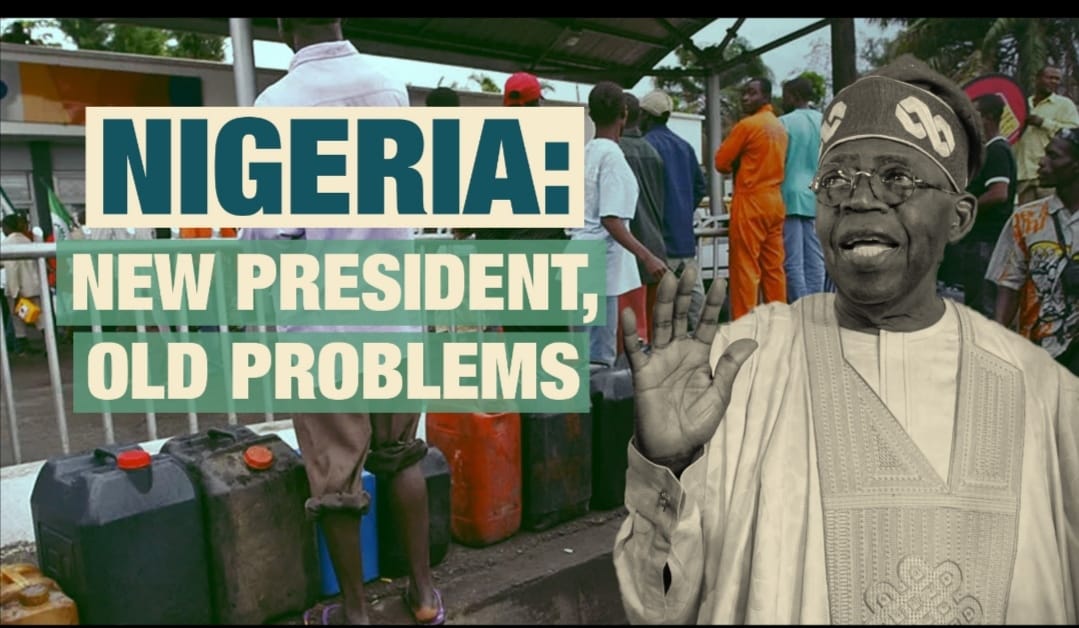
Nigeria’s Tragedy of Leadership: Why Bad Governance Refuses to Die. (NIGERIA BLEEDS NOT FROM POVERTY BUT FROM LEADERSHIP FAILURE)
By George Omagbemi Sylvester | Sahara Weekly
Nigeria, Africa’s most populous country and one of its richest in natural resources, stands today as a paradox: WEALTHY in RESOURCES but IMPOVERISHED in GOVERNANCE. Despite having the continent’s largest economy, abundant crude oil reserves and an intelligent youth population, Nigeria remains crippled by bad governance. The reasons are not HIDDEN; they are VISIBLE, REPEATABLE and PREDICTABLE. Yet, like a nation cursed, Nigeria continues to recycle the same patterns of leadership failure.
The question is simple: Why does bad governance persist in Nigeria despite DECADES of INDEPENDENCE, ABUNDANT TALENT and ENORMOUS OPPORTUNITIES? The answer lies in seven critical realities, each a dagger stabbing at the nation’s future.

1. BLIND LOYALTY and FEAR of CORRECTION.
In most functioning democracies, advisers, ministers and cabinet members serve as checks on executive excesses. In Nigeria, SYCOPHANCY has replaced CONSTRUCTIVE CRITICISM. Ministers and aides often see themselves not as public servants but as errand boys for the president, governor or local chairman.
The fear of losing political appointments silences voices of truth. Instead of correcting a leader’s mistakes, they applaud them, even when such errors drive the nation deeper into crisis. This culture of blind loyalty perpetuates incompetence.
The late Chinua Achebe, Nigeria’s literary giant, captured it aptly: “THE TROUBLE WITH NIGERIA IS SIMPLY AND SQUARELY A FAILURE OF LEADERSHIP.” Leaders are surrounded by praise singers who lack the courage to tell them hard truths. Without correction, misgovernance festers unchecked.
2. CORRUPTION and SELF-INTEREST.

Corruption remains Nigeria’s biggest albatross. From the first republic till today, it has swallowed billions of dollars meant for hospitals, schools, roads and electricity. Transparency International’s 2023 Corruption Perception Index ranked Nigeria 145th out of 180 countries, a dismal position for Africa’s so-called giant.
Former U.S. Secretary of State Hillary Clinton once said in Abuja: “The failure of governance in Nigeria is the failure of leadership at every level, and it is fueled by corruption.”
Public office in Nigeria is often treated as a private investment. Politicians view elections as an opportunity to recoup campaign funds and amass wealth. This greed diverts resources from national development into personal pockets. Little wonder why Nigeria, despite earning over $1 trillion from oil exports since the 1970s, still suffers epileptic electricity supply and crumbling infrastructure.

3. WEAK INSTITUTIONS.
Strong institutions (not strong men) sustain democracies. Unfortunately, Nigeria’s judiciary, legislature and anti-corruption agencies are weak, compromised and often controlled by the executive.
The judiciary, meant to be the last hope of the common man, is widely perceived as corrupt. Election tribunals have become markets where judgments are allegedly bought by the highest bidder. Legislators, instead of holding the executive accountable, often bow in submission for political survival or “CONSTITUENCY PROJECTS” padded with corruption.
Political scientist Larry Diamond once warned: “Where institutions are weak, democracy cannot thrive.” Nigeria is living proof of that. Without impartial institutions, leaders operate unchecked, deepening cycles of abuse of power.
4. TRIBALISM, RELIGION and NEPOTISM.
Nigeria’s diversity should be a blessing, but in the hands of selfish leaders, it has become a curse. Appointments are not based on MERIT but on TRIBE, RELIGION and NEPOTISM. This culture sidelines competent technocrats while promoting mediocrity.
President Muhammadu Buhari’s administration (2015–2023) was widely criticized for EXCESSIVE NEPOTISM, with key security and economic positions allegedly dominated by one section of the country. Such lopsidedness fuels resentment, deepens ethnic mistrust and kills the spirit of nationalism.
As former UN Secretary-General Kofi Annan once said: “Good governance is perhaps the single most important factor in eradicating poverty and promoting development.” Where leaders choose LOYALTY over COMPETENCE, PROGRESS is IMPOSSIBLE.
5. LACK of CITIZEN PARTICIPATION.
A passive citizenry sustains bad governance. In Nigeria, millions of citizens complain in private but fail to challenge corruption in public. Protests are rare and when they occur, they are often hijacked or crushed by state security forces.
During the #EndSARS protests of 2020, Nigerian youths demonstrated the power of collective action against police brutality. The brutal military crackdown at Lekki Toll Gate sent a chilling message: RESISTANCE comes with DEADLY CONSEQUENCES. Since then, citizen participation has weakened and many Nigerians now suffer in silence.
Political theorist Edmund Burke’s timeless warning comes alive: “The only thing necessary for the triumph of evil is for good men to do nothing.” Silence is Complicity and in Nigeria, it emboldens corrupt leaders.
6. POOR LEADERSHIP VISION.
Great nations are built on visionary leadership. Lee Kuan Yew transformed Singapore from a swamp into a global hub. Rwanda, under Paul Kagame, rose from genocide to become Africa’s model of governance. Nigeria’s leaders lack such foresight.
Nigerian politics is not driven by ideology or policy but by SURVIVAL, PATRONAGE and SHORT-TERM GAINS. Most leaders think only of the next election, not the next generation. Long-term planning is abandoned for QUICK-FIX POPULISM.
The late Nelson Mandela once said: “Visionary leadership means setting out a future that may not be popular but is necessary for progress.” Unfortunately, Nigerian leaders prefer POPULARITY over PROGRESS.
7. POVERTY and IGNORANCE.
Perhaps the most dangerous weapon sustaining bad governance is poverty. With over 133 million Nigerians living in multidimensional poverty (NBS 2022), politicians easily exploit the masses with food, cash or hollow promises during elections.
Hungry citizens rarely vote based on policy; they vote based on survival. A bag of rice, a few thousand naira or a temporary job is enough to buy loyalty. Poverty erodes critical thinking and weakens resistance against corrupt leaders.
Ignorance compounds the problem. Many citizens are unaware of their constitutional rights or the true responsibilities of government. Instead of demanding accountability, they worship politicians as benefactors. This ignorance is what keeps bad governance alive.
The Way Forward: CAN NIGERIA BREAK THE CYCLE?
Nigeria’s story need not remain a tragedy. Change is possible, but it requires COURAGE, VISION and SACRIFICE. First, institutions must be strengthened to checkmate leaders’ excesses. Second, MERIT (not ethnicity or religion) must drive appointments. Third, civic education must awaken citizens to their power. Finally, poverty alleviation must become central to governance, because a hungry population cannot defend democracy.
As former U.S. President Barack Obama once declared during his visit to Ghana: “Africa doesn’t need strong men. It needs strong institutions.” Nigeria must heed this call if it is to escape its endless dance with bad governance.
Final Thoughts.
Bad governance in Nigeria is not accidental; it is SYSTEMIC, DELIBERATE and SUSTAINED by CORRUPTION, WEAK INSTITUTIONS, TRIBALISM, POVERTY and CITIZEN APATHY. Until these cancers are addressed, Nigeria will continue to bleed, despite its enormous potential.
The destiny of over 200 million people cannot be left in the hands of selfish leaders and corrupt institutions. Citizens must rise, demand accountability and reject mediocrity. Otherwise, as Achebe warned decades ago, the trouble with Nigeria will remain SIMPLY and SQUARELY a FAILURE of LEADERSHIP.





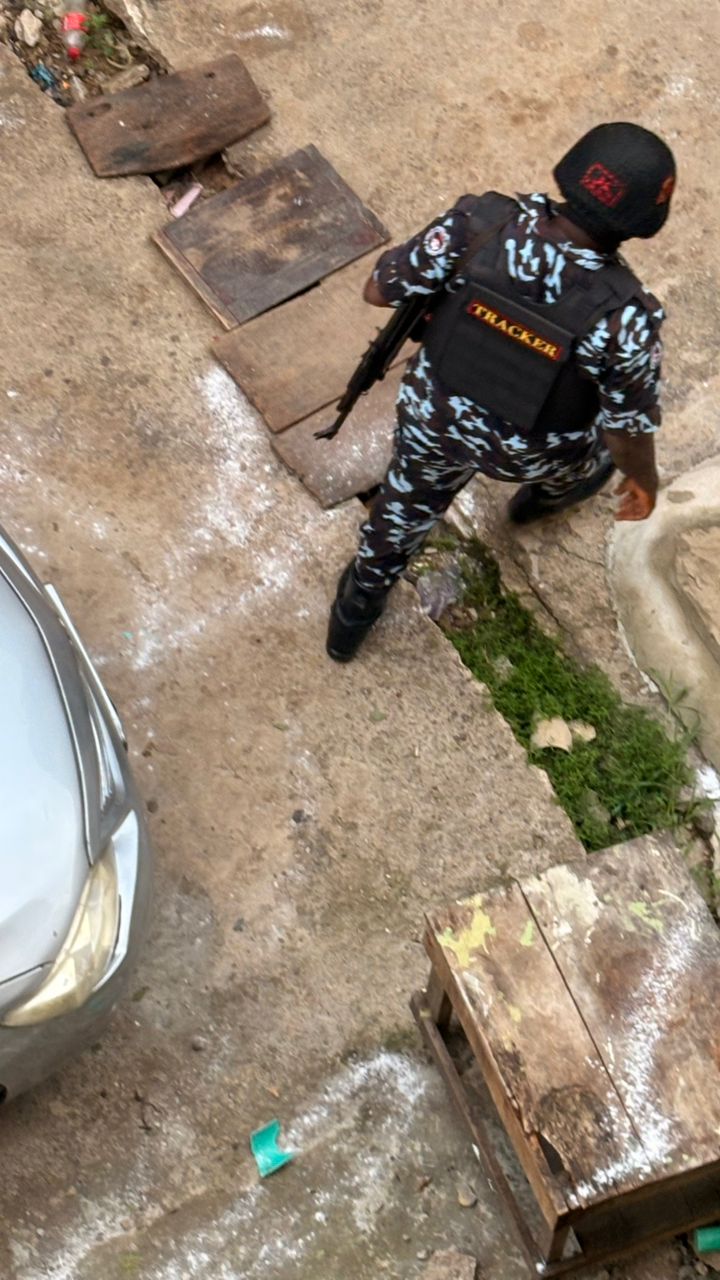
Police Officers Detained as Family Property Dispute Sparks Demolition Controversy in Lagos
By Ifeoma Ikem
A property dispute within the Omotayo-Ojo family has taken a dramatic turn following a controversial demolition exercise at a residential building in Ikosi-Ketu, Lagos State, which reportedly left tenants displaced and led to the detention of some police officers allegedly involved in the operation.

The property, located at 23B Loveall Street, Ikosi-Ketu, has been the subject of a prolonged ownership tussle since the death of its owner, Chief Oludola Omotayo Ojo, the Babaalaje of Imesi-Ile, Osun State, in 2019.
Residents said tension erupted when a group of individuals, accompanied by security operatives, stormed the premises and commenced demolition activities.
According to eyewitnesses, portions of the building were pulled down while tenants rushed to salvage their belongings from affected apartments.
The residents alleged that windows, doors and roofing sheets were damaged during the exercise, exposing parts of the building to the elements and causing significant losses to occupants.
At the centre of the dispute is Mrs Mojisola Omotayo Ojo Alolagbe, who claimed that the property was allocated to her by her late father during his lifetime as a source of financial support.
She alleged that some family members had persistently challenged her ownership claim despite ongoing legal proceedings relating to the administration of the deceased’s estate.
Alolagbe further claimed that the latest incident was part of a series of attempts to wrest control of the property, citing previous cases of alleged vandalism and partial demolition in November 2025, January 2026 and February 2026.
The situation escalated further when reports emerged that police officers allegedly involved in the demolition were later apprehended and conveyed in a Black Maria vehicle over questions surrounding the legality of their participation in the operation.
Sources familiar with the matter said those behind the demolition had initially claimed to be acting on approval from the Lagos State Ministry of Lands. However, the authenticity and extent of such approval could not be independently verified as of the time of filing this report.
The development has generated concern among residents and community members, who questioned the involvement of security personnel in what they described as a civil matter.
Some tenants, who said they had recently renewed their tenancy agreements, lamented the destruction of their property and appealed to the authorities for protection and possible compensation.

They also called for a thorough investigation into the circumstances surrounding the demolition, insisting that the rights of all parties involved should be protected.
Stakeholders have urged the Lagos State Government, security agencies and the judiciary to intervene and ensure that the dispute is resolved through lawful means to prevent further escalation.
The controversy has continued to draw public attention, raising concerns over property rights, estate administration and the role of law enforcement agencies in civil disputes.

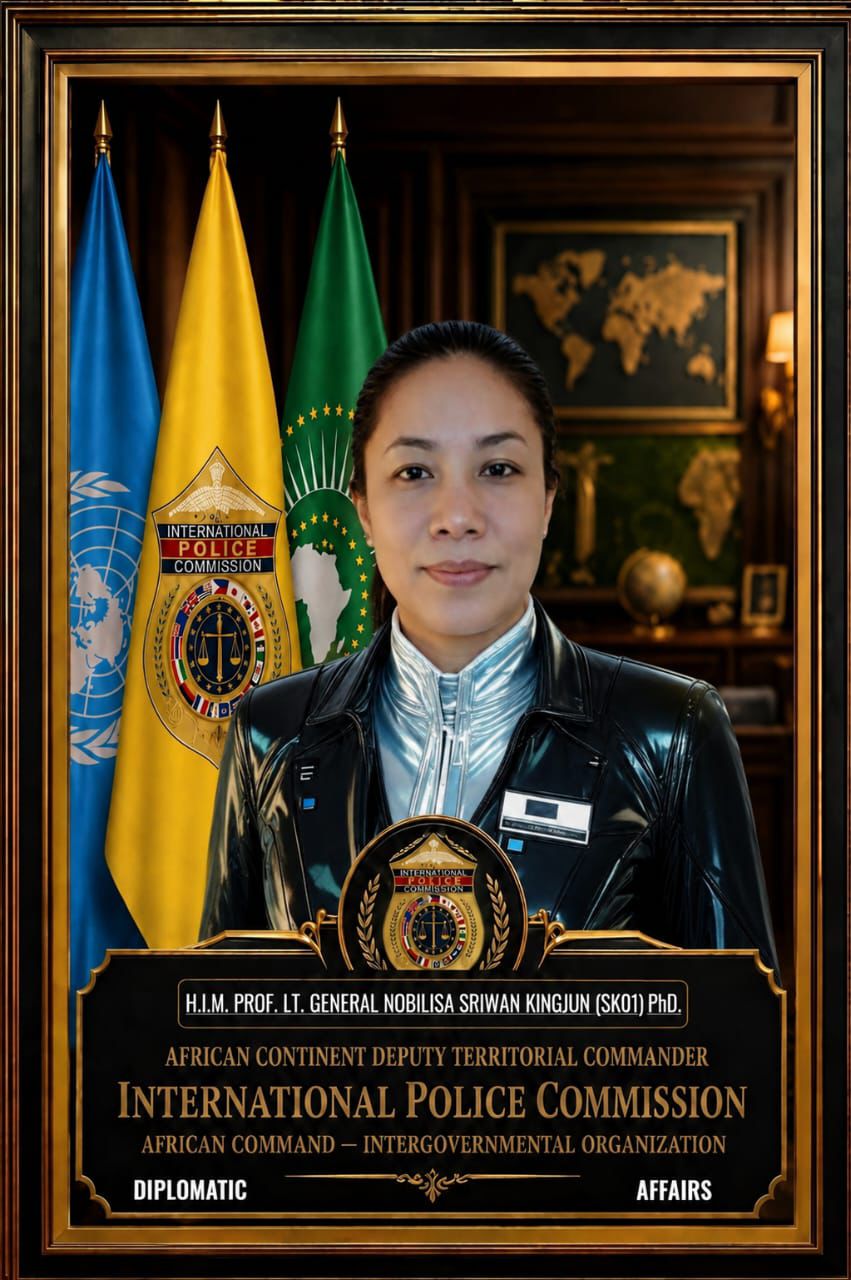
UKA Gears Up for Final ATC Exchangeability Test Run as June Preparations Begin.
May 30, 2026 – As the month of June gathers momentum, the *United Kingdom of Atlantis, UKA*, a sovereign nation has unveiled a series of vital guidelines and preparatory packages to ensure citizens and stakeholders run the *ATC Exchangeability* process effectively.
In an official update, the *President of Atlantic Crown Limited, Empress of Attica Empire UKA*, confirmed that the *Final Test Run of ATC Exchangeability* is scheduled for the month of June 2026. The exercise marks a key phase ahead of the *Official Exchangeability Window, set to run from July 2026 to February 2027*.
### Key Highlights from the Presidential Briefing
1. *Final Test Run – June 2026*
The test run is designed to validate systems, procedures, and user readiness before full activation. Citizens, partners, and designated participants are urged to follow all official advisories released by UKA authorities during this period.
2. *Official Exchangeability Period*
Following the successful completion of the June test run, the Official Exchangeability will commence in july 2026 and we are Expecting Full Exchange ability between July Ending, 2026 to February 2026.
UKA stated that detailed schedules, eligibility requirements, and step-by-step instructions will be communicated progressively through verified UKA channels.
3. *Benefiting Packages for June*
In line with UKA’s commitment to citizen empowerment, the month of June will feature “benefiting packages” aimed at education, preparation, and seamless onboarding. These packages are intended to equip the people of UKA with the knowledge and tools needed for effective participation.
4. *Commitment to Transparency*
Addressing the nation, the Empress of Attica Empire UKA emphasized:
_“Final Test Run of ATC Comes up in The Month of June, As We Prepare For The Official Exchangeability, Between July 2026 To Feb 2027. All Information Will Be Communicated.”_
UKA reaffirmed that only information released through official UKA platforms should be regarded as authoritative.
The United Kingdom of Atlantis is encouraging all citizens, representatives, and interested parties to remain alert to official communications, attend designated orientation sessions, and avoid unofficial sources. UKA’s dedication to order, clarity, and the collective benefit of its people as the nation moves into this significant phase.
For updates, advisories, and participation guidelines, citizens are advised to monitor official UKA communication channels.
United Kingdom of Atlantis, UKA, is a sovereign nation, committed to national development, citizen welfare, and structured economic participation through initiatives such as ATC Exchangeability.
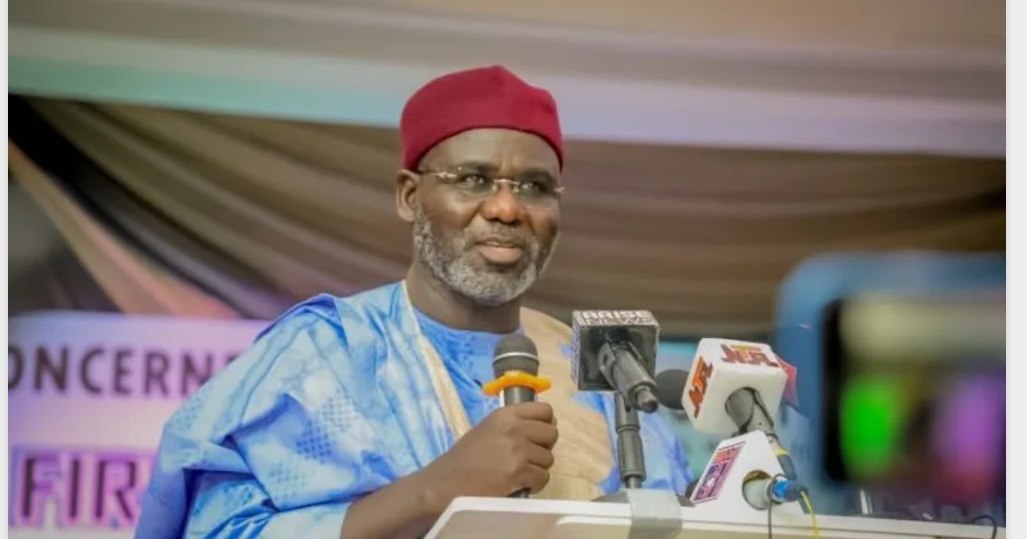
Three Years On, General Buratai Hails Tinubu’s Economic, Security Achievements
Former Chief of Army Staff, Lt. Gen. Tukur Buratai (retd.), has commended President Bola Ahmed Tinubu for what he described as bold economic reforms and improved security efforts as the President marks three years in office.
In a goodwill message on Thursday to commemorate Tinubu’s third anniversary as President and Commander-in-Chief of the Armed Forces, Buratai said the administration had taken courageous decisions that would leave a lasting impact on Nigeria’s development.

According to him, President Tinubu broke a long-standing cycle that had hindered national growth by removing fuel subsidy and implementing foreign exchange reforms aimed at stabilising the naira and strengthening the economy.
He noted that the reforms were beginning to yield positive results, citing the global acceptance of Nigerian debit cards, the gradual revival of local refineries, access to student loans, and ongoing road and infrastructure projects across the country.
“The FCT Administration has also recorded remarkable progress, completing major road projects that remained unfinished for over 16 years,” Buratai stated.
The former army chief also praised the administration’s security efforts, saying renewed military offensives against insurgents, terrorists and bandits had led to notable successes across various parts of the country.
He specifically lauded recent joint operations involving Nigerian and United States forces against Boko Haram and ISWAP in the North-East, as well as intensified counter-banditry operations in the North-West.
“We have seen notorious ISWAP commanders being neutralised. I congratulate the Commander-in-Chief, the Minister of Defence, the Chief of Defence Staff, the Service Chiefs, the Inspector-General of Police and heads of intelligence agencies for their efforts,” he said.
Buratai, however, acknowledged that challenges remained, stressing the need for more aggressive military operations and intelligence-driven strategies in the coming year.
While urging Nigerians to remain hopeful, he said celebrating the President’s achievements did not amount to ignoring the difficulties facing the nation.
“Because you truly care, you have shown the courage to trade short-term comfort for long-term hope. Nigerians need your reassurances, and that is why we remain optimistic and full of confidence,” he added.
The retired military officer reaffirmed his support for the Tinubu administration and expressed confidence that the foundation being laid by the government would deliver a brighter future for the country.
He also prayed for God’s guidance, wisdom, strength and good health for the President as he continues to lead Nigeria.


- Junior Achievement (JA) Africa Delivers 1.6 Million Learning Experiences in a Single Year, Marking Twelve-Fold Growth in Five Years June 5, 2026
- United Nations Mission in South Sudan (UNMISS) helps plant hope among youth on World Environment Day June 5, 2026
- Afreximbank Deepens Engagement with Jamaica to Drive Trade, Investment and Industrialisation June 5, 2026
- World Health Organization (WHO) supports reactive yellow fever vaccination campaign and Bundibugyo virus disease (BVD) preparedness in Liberia June 5, 2026
- Uganda: Museveni pushes for wealth creation through development programmes June 5, 2026
- Africa: UNAIDS calls for renewed global solidarity as UN Secretary-General’s report warns that AIDS is not over and fragile gains are at risk June 4, 2026
- Eritrea: Vocational training provided to college students June 4, 2026
- World Bank Group Launches Ten-Year Strategy to Drive Jobs and Prosperity in Uganda June 4, 2026
- Prof Oramah’s appointments to the Royal African Society Patronage and Kenya’s National Infrastructure Fund herald continued recognition of his global leadership and pan-African impact June 4, 2026
- Africa Finance Corporation Raises Record US$2 Billion Syndicated Loan in Landmark Show of Confidence in Transformational Infrastructure Strategy June 4, 2026
- Junior Achievement (JA) Africa Delivers 1.6 Million Learning Experiences in a Single Year, Marking Twelve-Fold Growth in Five Years June 5, 2026
- United Nations Mission in South Sudan (UNMISS) helps plant hope among youth on World Environment Day June 5, 2026
- Afreximbank Deepens Engagement with Jamaica to Drive Trade, Investment and Industrialisation June 5, 2026
- World Health Organization (WHO) supports reactive yellow fever vaccination campaign and Bundibugyo virus disease (BVD) preparedness in Liberia June 5, 2026
- Uganda: Museveni pushes for wealth creation through development programmes June 5, 2026
- Africa: UNAIDS calls for renewed global solidarity as UN Secretary-General’s report warns that AIDS is not over and fragile gains are at risk June 4, 2026
- Eritrea: Vocational training provided to college students June 4, 2026
-

 news6 months ago
WHO REALLY OWNS MONIEPOINT? The $290 Million Deal That Sold Nigeria’s Top Fintech to Foreign Interests
-

 society1 month ago
SOCIAL MEDIA IS NOT A BATTLEFIELD COMMAND – WHY THE NIGERIAN ARMY’S ACTION AGAINST JUSTICE CRACK IS A NATIONAL SECURITY IMPERATIVE
-

 celebrity radar - gossips4 months ago
Dr. Chris Okafor Returns with Power and Fire of the Spirit -Mounts Grace Nation Altar with Fresh Anointing and Restoration Grace on February 1, 2026
-

 celebrity radar - gossips6 months ago
Prophet Kingsley Aitafo Releases 2026 Prophecy: ‘Nigeria Will Rise, but the World Must Prepare for Turbulence’