
society
Nigeria’s Wealth Must Not Be Buried in a Family’s Account


Nigeria’s Wealth Must Not Be Buried in a Family’s Account.
By George Omagbemi Sylvester — published by SaharaWeeklyNG.com
“Stop the looting; start the lifting; our oil, our schools, our future.”
Nigeria sits on a treasure trove – OIL, GAS, ARABLE LAND, MINERALS and a HUMAN CAPITAL POOL BRIMMING with TALENT. Yet year after year, decade after decade, those riches vanish into a narrow CUL-DE-SAC: private bank accounts, shell companies, luxury mansions and politically-protected empires. This is not accident. It is deliberate. It is theft dressed in law, in contracts and in the cloak of impunity. Make no mistake: when a nation’s wealth is siphoned into a few family accounts, the country dies a little more each day; its hospitals crumble, its children go hungry, its schools rot and its future is mortgaged to foreign lenders.

The scale of the damage is not rhetorical. Nearly half of Nigerians (an estimated 45–47 percent) live in poverty today, a backslide from gains made in previous decades. This is not HAPPENSTANCE; it tracks directly with a failure to translate national resources into public goods and inclusive growth. When resource rents are privatized, the social contract ruptures. The numbers come from the World Bank and national poverty assessments: tens of millions of Nigerians count themselves among the dispossessed while national treasure is diverted.
Corruption in Nigeria is structural and systemic, not episodic. Transparency International ranks Nigeria among the countries with the lowest public-sector integrity scores, placing it deep in the lower third of the global table. That ranking is not just a badge; it is a diagnostic: weak institutions, opaque procurement, entrenched patronage networks and a justice system that is slow or selective. When you have that ecosystem, state wealth becomes private wealth.
We must be precise about who benefits and who loses. In the past years, Nigeria’s anti-graft bodies reported significant recoveries (nearly half a billion dollars in one year) a sign both of the scale of grand corruption and the capacity of law enforcement when political will aligns with teeth. Yet recoveries are only part of the picture: they point to an enormous stock of looted assets and a flow of stolen revenues that have already damaged infrastructure, education and health for generations. Recoveries are APPLAUSE-WORTHY only if followed by institutional reform that prevents RE-LOOTING. Otherwise, they read like mopping the floor while the tap remains open.

Why does this matter? National wealth is the fuel for public services. When royalties, taxes and export receipts are diverted to private coffers, the obvious consequences follow: SCHOOLS lack TEACHERS, HOSPITALS lack MEDICATION/TABLETS, ROADS remain UNBUILT and SECURITY FORCES are UNDER-RESOURCED. The International Monetary Fund and World Bank have repeatedly warned that revenue leakages and weak governance constrict fiscal space for development and leave ordinary citizens exposed to austerity that benefits no one but the already wealthy. The IMF’s policy teams have documented how mismanagement and corruption eat into budgets that should be used for human development.
This is not a problem without solutions. Though solutions demand ferocity; legal, institutional and civic. First: transparency. Every contract, every licence, every major procurement in extractive sectors must be published, audited and put in the public domain. Citizens have a right to know how much was earned, how much was spent and who benefited. The Extractive Industries Transparency Initiative and similar frameworks exist for a reason: sunlight is the antiseptic that kills many corrupt arrangements. Countries that have enforced publishing and independent audit have seen substantial reductions in leakages and higher public trust. Lack of transparency is the first oxygen upon which looting breathes.
Second: strengthen legal institutions and make enforcement impartial. It is not enough to recover stolen assets when prosecutions are rare, sentences light and legal processes drag on. The EFCC and other bodies must be independent, funded and legally insulated from political interference. Fast-track courts for corruption cases, asset-freezing orders that take effect immediately and international cooperation to follow illicit flows must be scaled up. The recent record of asset recovery shows capability; but capability must be matched with consistency and due process.

Third: redesign public finance to minimize single-point vulnerabilities. RESOURCE-DEPENDENT economies must create sovereign wealth vehicles with strict governance rules; independent boards, multi-year budgeting rules and mandatory social spending floors that cannot be altered by one executive’s whim. A WELL-GOVERNED sovereign fund transforms resource volatility into predictable investment in education, healthcare and infrastructure. When properly governed, resource wealth becomes a buffer, not a temptation. The IMF and World Bank have repeatedly endorsed these mechanisms.
Fourth: rebuild civic culture and elite responsibility. No law can substitute a society that tolerates theft. As economist and global thinker Dambisa Moyo warns about dependency and poor governance, SUSTAINABLE GROWTH REQUIRES ACCOUNTABILITY and ELITE COMMITMENT to NATIONAL WELLBEING; not personal accumulation masquerading as public service. And as a salient voice in Nigerian public life, Ngozi Okonjo-Iweala has long reminded us that fighting corruption requires citizens at every level; there are no bystanders in a functional democratic fight against kleptocracy. These are not empty slogans: they are the moral spine of reform.
There will be pushback. Those who have enjoyed privatized state wealth will invoke NATIONALISM, BUREAUCRATIC COMPLEXITY, or “POLITICAL WITCH-HUNTS.” Ignore him. This is not about revenge; it is about recovery, fairness and survival. It is about replacing patronage with performance, secrecy with scrutiny and capture with competence.

Let us be blunt: ACCOUNTABILITY IS NOT A COSMETIC EXERCISE. It will require targeting HIGH-LEVEL ENABLERS; accountants, lawyers, bankers and foreign intermediaries who design and conceal schemes. It will require cooperation from international financial centers, tougher ANTI-MONEY-LAUNDERING ENFORCEMENT and a refusal to treat recovered assets as political bargaining chips. When the law is crisp and the will is fixed, stolen wealth returns to public use to build SCHOOLS, to widen CLINICS, to make POWER available for factories and farms.
Finally, Nigerians must demand a different social bargain. Vote, protest, litigate and monitor. Civil society must be endowed, not harassed. Journalists must be free and protected to follow stories that lead to offshore accounts and private islands. Citizens must refuse the bargain where family enrichment substitutes for national stewardship. The country’s wealth must be a NATIONAL INHERITANCE and not a FAMILY HEIRLOOM buried in an invisible account.
To paraphrase the blunt truth of our times: wealth hidden in a family account is wealth wasted for a nation. Every naira that disappears from public books is a teacher who will not be hired, a clinic that will remain without medication/tablets, a road that will never be paved. If we do not act, we consign our children to inherit a nation of truncated promise.
This is not pessimism. It is a call to arms. Nigeria’s riches are not fated to enrich only a few. With transparency, legal rigor, institutional redesign, international cooperation and civic insistence, we can finally ensure that what belongs to Nigeria benefits Nigerians. We must refuse the theft of tomorrow’s opportunities to pay for today’s ostentation.
“STOP BURYING OUR WEALTH IN PRIVATE GRAVES” should be more than a slogan; it should be a NATIONAL DEMAND. The time to speak it aloud, loudly and collectively is NOW.




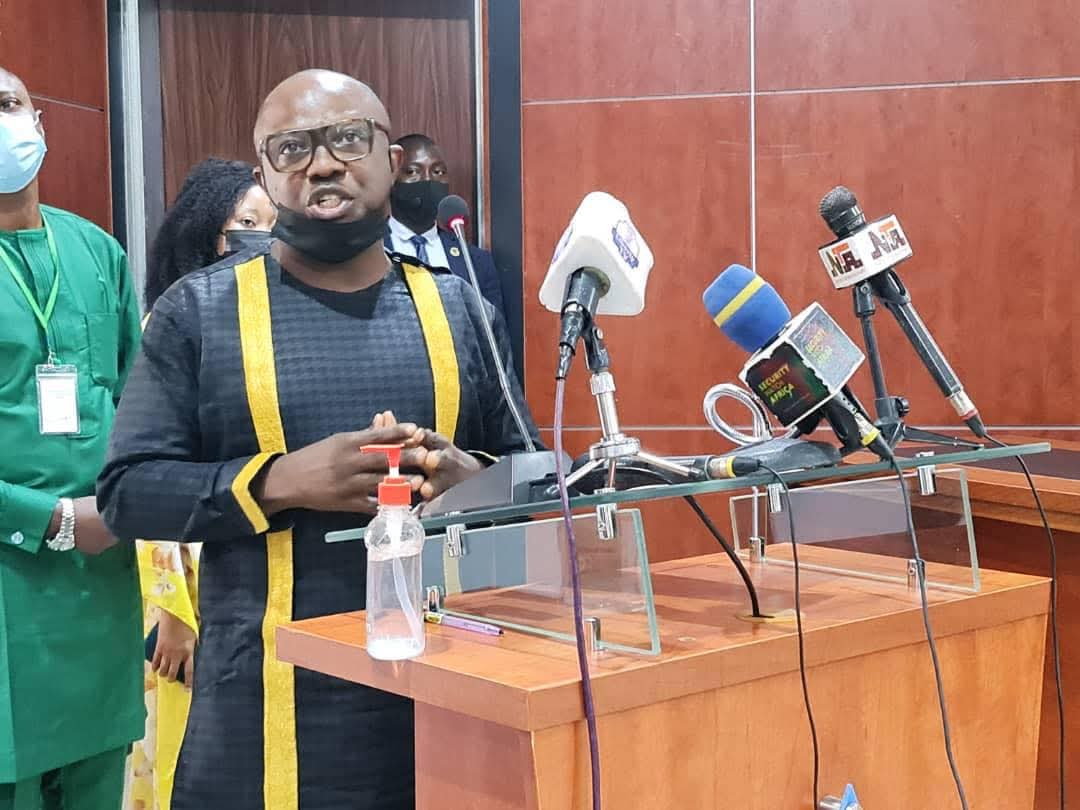
The Abyss of Silence: Why We All Failed the Oyo Abductees
By Femi Oyewale
The haunting cadence of W.B. Yeats’ The Second Coming, quoted so often by the late Chinua Achebe, has ceased to be mere poetry. It has become a grim, real-time mirror reflecting our national existence: “Things fall apart; the centre cannot hold; / Mere anarchy is loosed upon the world.”

In a nation that boasts some of the brightest minds globally, a land steeped in the communal sanctity of “it takes a village to raise a child,” we have descended into an unthinkable abyss. Daredevil criminals have reached into the heart of Oyo State, snatched our children—the very architects of our future—and vanished. Yet, as the sun rises and sets, from the gilded halls of the Presidency to the dusty corners of the local street, we remain paralyzed, tethered to a collective ignorance that is as chilling as it is shameful.
The Theatre of Performative Outrage
We have become a nation of “noises.” We trade blame with surgical precision—the Presidency points to the state, the state points to the security architecture, and the populace directs its vitriol toward the political elite. We have seen the press releases, the hashtags, the fleeting television appearances, and the hollow promises of “concerted efforts.”
But let us be painfully honest: these are not efforts; they are performances. There is not even a whisper of a “near-success syndrome.” While we debate and defend our preferred political affiliations, our children are sleeping under the cold, unforgiving stars of a forest floor. They are subjected to the kind of trauma that shatters souls long before it breaks bodies. They are waiting for a rescue that we are too divided to coordinate.
The Mirror of Empathy
Let us strip away the facade of civic detachment. I challenge every father in this country: if that abducted child were your only son, would you be content with a tweet? To every mother: if that child were the fruit of your old age, would you accept a press statement as enough?
To our governors, our senators, and our political titans: if these children were the heirs to your empires, would the current pace of “investigation” satisfy you? To our billionaires, our security chiefs, and our local traditional warriors, those who claim the mantle of protectors, what if these children were born of your own loins?
The silence that would follow that personal connection is the same silence currently haunting the homes of these victims. We have allowed the abstraction of “national crisis” to desensitize us to the visceral reality of a child’s terror.
Beyond the “One-Man” Savior Complex
We have developed a dangerous habit of outsourcing our conscience. We wait for the radical activist, the viral influencer, or the singular loud voice to carry the burden of the nation. We expect a solitary figure like VDM or a lone firebrand like Sowore to move mountains that require the combined weight of a movement.
But no singular individual can replace the collective pulse of a people. Their rescue is not a one-man job; it is a fundamental test of our humanity.
The Path to Reclamation
We are currently a house divided by party lines, religious silos, and ethnic prejudices. Yet, we have seen that we possess a dormant capacity for unity. When the Super Eagles take to the pitch, our differences vanish. We become one heartbeat, one voice, one nation. Why is it that a game can unify us, but the abduction of our children leaves us fractured?
We do not need more talk. We do not need more inquiries that lead to no arrests. We need to acknowledge a hard truth: we have failed. We have failed the children, we have failed their teachers, and we have failed ourselves.
No stranger knows our terrain better than we do. No satellite imagery can replace the intelligence of a community that refuses to be silent. It is our land. These are our children.
The systemic rot has metastasized to the point where “efforts” no longer count. Only results matter. The time for performative sorrow is over; the time for a unified, uncompromising demand for their return is now. If we do not rise, if we do not act with the singular intensity of a people reclaiming their future, then let the history books record that when our children were taken, Nigeria chose its politics over its people.
We must rescue them. Not tomorrow. Not after the next meeting. Now.
Femi Oyewale is the publisher of Sahara Online and President of NASRE who
writes on national affairs, security, and social development.
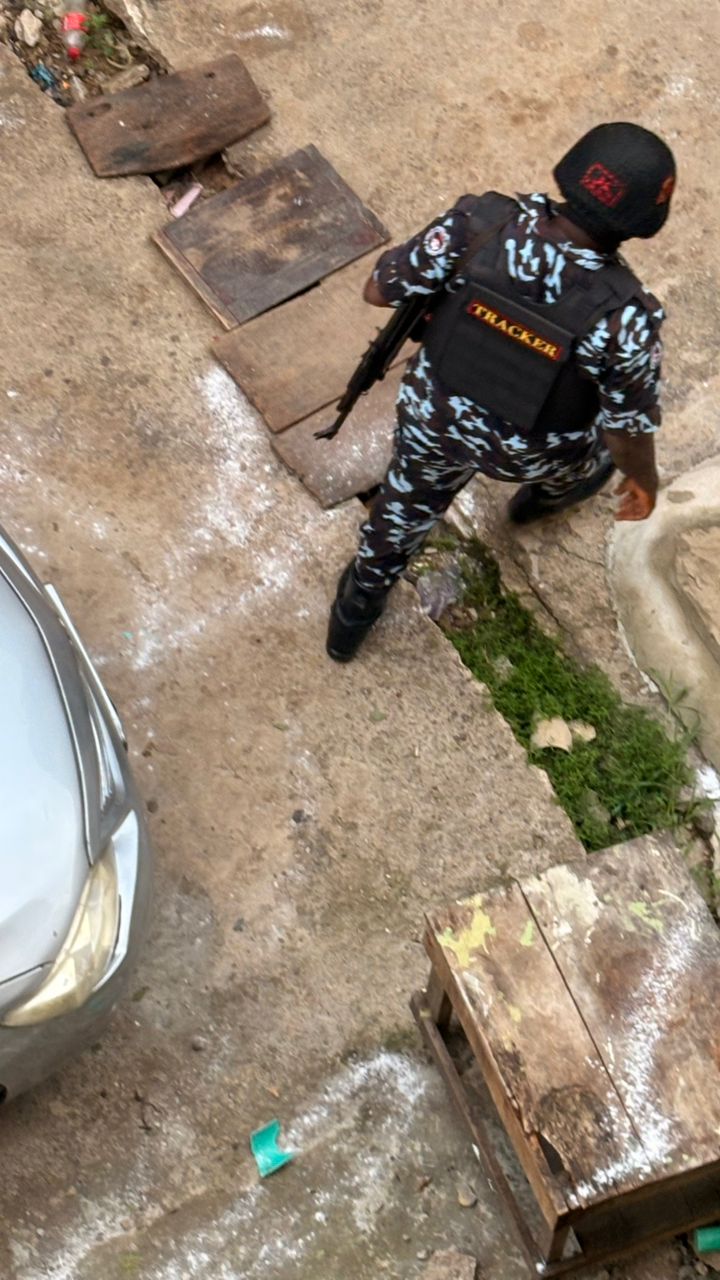
Police Officers Detained as Family Property Dispute Sparks Demolition Controversy in Lagos
By Ifeoma Ikem
A property dispute within the Omotayo-Ojo family has taken a dramatic turn following a controversial demolition exercise at a residential building in Ikosi-Ketu, Lagos State, which reportedly left tenants displaced and led to the detention of some police officers allegedly involved in the operation.

The property, located at 23B Loveall Street, Ikosi-Ketu, has been the subject of a prolonged ownership tussle since the death of its owner, Chief Oludola Omotayo Ojo, the Babaalaje of Imesi-Ile, Osun State, in 2019.
Residents said tension erupted when a group of individuals, accompanied by security operatives, stormed the premises and commenced demolition activities.
According to eyewitnesses, portions of the building were pulled down while tenants rushed to salvage their belongings from affected apartments.
The residents alleged that windows, doors and roofing sheets were damaged during the exercise, exposing parts of the building to the elements and causing significant losses to occupants.
At the centre of the dispute is Mrs Mojisola Omotayo Ojo Alolagbe, who claimed that the property was allocated to her by her late father during his lifetime as a source of financial support.
She alleged that some family members had persistently challenged her ownership claim despite ongoing legal proceedings relating to the administration of the deceased’s estate.
Alolagbe further claimed that the latest incident was part of a series of attempts to wrest control of the property, citing previous cases of alleged vandalism and partial demolition in November 2025, January 2026 and February 2026.
The situation escalated further when reports emerged that police officers allegedly involved in the demolition were later apprehended and conveyed in a Black Maria vehicle over questions surrounding the legality of their participation in the operation.
Sources familiar with the matter said those behind the demolition had initially claimed to be acting on approval from the Lagos State Ministry of Lands. However, the authenticity and extent of such approval could not be independently verified as of the time of filing this report.
The development has generated concern among residents and community members, who questioned the involvement of security personnel in what they described as a civil matter.
Some tenants, who said they had recently renewed their tenancy agreements, lamented the destruction of their property and appealed to the authorities for protection and possible compensation.

They also called for a thorough investigation into the circumstances surrounding the demolition, insisting that the rights of all parties involved should be protected.
Stakeholders have urged the Lagos State Government, security agencies and the judiciary to intervene and ensure that the dispute is resolved through lawful means to prevent further escalation.
The controversy has continued to draw public attention, raising concerns over property rights, estate administration and the role of law enforcement agencies in civil disputes.

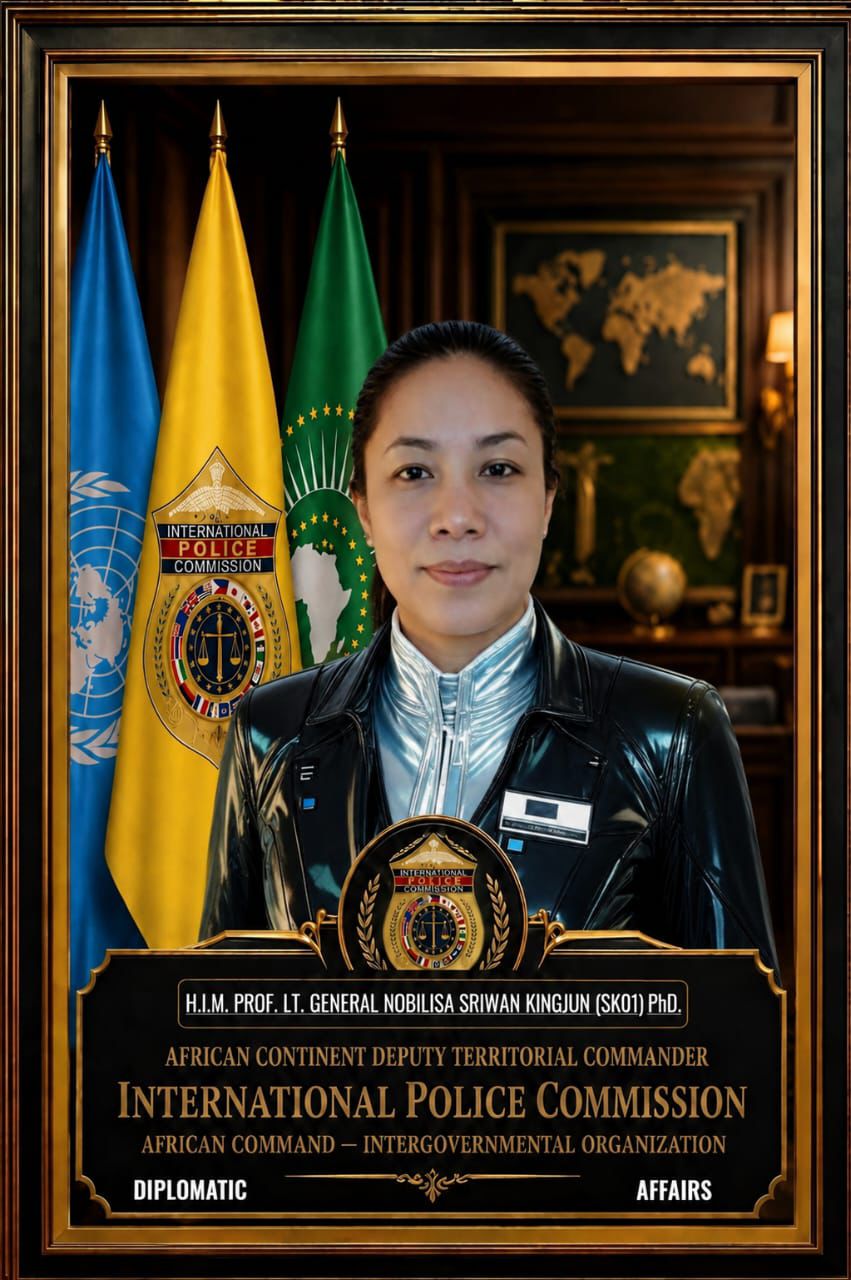
UKA Gears Up for Final ATC Exchangeability Test Run as June Preparations Begin.
May 30, 2026 – As the month of June gathers momentum, the *United Kingdom of Atlantis, UKA*, a sovereign nation has unveiled a series of vital guidelines and preparatory packages to ensure citizens and stakeholders run the *ATC Exchangeability* process effectively.
In an official update, the *President of Atlantic Crown Limited, Empress of Attica Empire UKA*, confirmed that the *Final Test Run of ATC Exchangeability* is scheduled for the month of June 2026. The exercise marks a key phase ahead of the *Official Exchangeability Window, set to run from July 2026 to February 2027*.
### Key Highlights from the Presidential Briefing
1. *Final Test Run – June 2026*
The test run is designed to validate systems, procedures, and user readiness before full activation. Citizens, partners, and designated participants are urged to follow all official advisories released by UKA authorities during this period.
2. *Official Exchangeability Period*
Following the successful completion of the June test run, the Official Exchangeability will commence in july 2026 and we are Expecting Full Exchange ability between July Ending, 2026 to February 2026.
UKA stated that detailed schedules, eligibility requirements, and step-by-step instructions will be communicated progressively through verified UKA channels.
3. *Benefiting Packages for June*
In line with UKA’s commitment to citizen empowerment, the month of June will feature “benefiting packages” aimed at education, preparation, and seamless onboarding. These packages are intended to equip the people of UKA with the knowledge and tools needed for effective participation.
4. *Commitment to Transparency*
Addressing the nation, the Empress of Attica Empire UKA emphasized:
_“Final Test Run of ATC Comes up in The Month of June, As We Prepare For The Official Exchangeability, Between July 2026 To Feb 2027. All Information Will Be Communicated.”_
UKA reaffirmed that only information released through official UKA platforms should be regarded as authoritative.
The United Kingdom of Atlantis is encouraging all citizens, representatives, and interested parties to remain alert to official communications, attend designated orientation sessions, and avoid unofficial sources. UKA’s dedication to order, clarity, and the collective benefit of its people as the nation moves into this significant phase.
For updates, advisories, and participation guidelines, citizens are advised to monitor official UKA communication channels.
United Kingdom of Atlantis, UKA, is a sovereign nation, committed to national development, citizen welfare, and structured economic participation through initiatives such as ATC Exchangeability.


- President Isaias Afwerki Departs for Egypt June 7, 2026
- Eritrea: Athlete Nahom Ermias Champion of Asmara Marathon 2026 June 7, 2026
- World Health Organization (WHO) Hands Over Ebola Preparedness Supplies to Strengthen Zambia’s Readiness June 7, 2026
- Joint Statement by the World Health Organization (WHO) and Food and Agriculture Organization of the United Nations (FAO) in South Africa on World Food Safety Day 2026: From burden to solutions – safe food everywhere June 7, 2026
- Liberia: President Boakai Oversees Signing of US$125 Million in World Bank Financing Agreements for Digital Connectivity, Renewable Energy, and Road Infrastructure June 7, 2026
- President Mahama explores Belarus’ agro-industrial hub; seeks partnerships to boost Ghana’s food security June 7, 2026
- National Insurance Corporation of Eritrea (NICE): Shareholders’ Annual Regular Meeting June 6, 2026
- World Cup accredited journalists raise concerns over unfair United States (US) visa restrictions, International Sports Press Association (AIPS) calls on FIFA to intervene June 6, 2026
- Ghana: President Mahama arrives in Belarus, lays wreath at Victory Monument June 6, 2026
- Liberia: President Boakai Advances Clean Energy Agenda; Dedicates 20-Megawatt Solar Power Plant at Mount Coffee June 6, 2026
- President Isaias Afwerki Departs for Egypt June 7, 2026
- Eritrea: Athlete Nahom Ermias Champion of Asmara Marathon 2026 June 7, 2026
- World Health Organization (WHO) Hands Over Ebola Preparedness Supplies to Strengthen Zambia’s Readiness June 7, 2026
- Joint Statement by the World Health Organization (WHO) and Food and Agriculture Organization of the United Nations (FAO) in South Africa on World Food Safety Day 2026: From burden to solutions – safe food everywhere June 7, 2026
- Liberia: President Boakai Oversees Signing of US$125 Million in World Bank Financing Agreements for Digital Connectivity, Renewable Energy, and Road Infrastructure June 7, 2026
- President Mahama explores Belarus’ agro-industrial hub; seeks partnerships to boost Ghana’s food security June 7, 2026
- National Insurance Corporation of Eritrea (NICE): Shareholders’ Annual Regular Meeting June 6, 2026
-

 news6 months ago
WHO REALLY OWNS MONIEPOINT? The $290 Million Deal That Sold Nigeria’s Top Fintech to Foreign Interests
-

 society1 month ago
SOCIAL MEDIA IS NOT A BATTLEFIELD COMMAND – WHY THE NIGERIAN ARMY’S ACTION AGAINST JUSTICE CRACK IS A NATIONAL SECURITY IMPERATIVE
-

 celebrity radar - gossips4 months ago
Dr. Chris Okafor Returns with Power and Fire of the Spirit -Mounts Grace Nation Altar with Fresh Anointing and Restoration Grace on February 1, 2026
-

 celebrity radar - gossips6 months ago
Prophet Kingsley Aitafo Releases 2026 Prophecy: ‘Nigeria Will Rise, but the World Must Prepare for Turbulence’