
society
NLC/TUC STRIKE, IN WHO’S INTEREST?

NLC/TUC STRIKE, IN WHO’S INTEREST?
Barring last minute change of decision by the organized labour unions in obeisance to the restraining court ruling on its strike, the Nigeria society from the 3rd of October 2023 might witness another round of industrial unrest as championed by the NLC/TUC arising from their national executive council meeting, in reaction to the federal government response to the aftermath of the fuel subsidy removal on the Nigerian worker.

Before we proceed in this exercise, it is important for us to situate the issues in proper perspectives for understanding and clarity of purpose. However, in doing so, one is not oblivious of the fact that sentiments and emotions might becloud the reasoning of some persons whose only idea of objectivity, truth and pro people, is if one takes or support positions against government actions or policies in the absence of rationality, fact and logic. Nevertheless, we are unmoved and cannot be cowed from expressing our views on national issues which is a fundamental human right, no matter whose ox is gored.
On the issue of fuel subsidy removal, it’s an indisputable fact that Nigerians are collectively on the same page over the removal of this virus that has ravaged the Nigerian economy to our collective detriment and which must be exterminated to allow the economy and Nigerians breathe.
It is not in doubt that strike action by labour unions is one of the legitimate instruments employed to ventilate its grievances to employers or government over work conditions. From that premise, the resort to strike is a legitimate and fundamental right of the worker or workers which is indisputable and non-negotiable.
In addition, an indisputable truism is that strike action is a serious business that ought to be employed as a last resort and must not be turned into a blackmailing tool, else it becomes trivialized and loses its cherished import.
As regards the threatened latest round of strike by the organized labour, the question that should bother any discerning mind, is in whose interest is this strike?
One recollects that immediately after the presidential pronouncement of the removal of fuel subsidy, Mr. President also made a public announcement of the need to effect a positive change in the welfare of the Nigerian worker in line with economic reality and to put in place measures to ameliorate the conditions of not only the working class but the generality of Nigerians in the immediate and long term through the retooling of the economy for national prosperity.
Thus, following the removal of fuel subsidy and the attendant economic distortions, the federal government constituted a committee comprising representatives of the federal and states governments, the organized private sector and the organized labour to come up with recommendations on the way forward with regards to the economic conditions of the working class population.
Even while the constituted committee was work in progress, we are all living witnesses to the palliatives programmes of states governments like Kwara, Ogun, Edo, Lagos, Bornu, Oyo, etc who came up with policies such as reducing the official working days from 5 to 3, award of N10, 000 per month to workers, reduction of transport fares in BRT buses, purchase and deployment of mass transit buses at subsidized boarding costs among other relief measures to cushion the impact of the fuel subsidy removal.
In the midst of the economic dislocation and inconvenience caused by the removal of fuel subsidy which was expected and affecting all strata of the society, as a way forward, the federal government relinquished and decentralized some aspects of the distribution of the relief measures or palliatives to states governments and it’s a fact, that we are living witnesses to the distribution of the palliatives in some states of which we have seen reportage in the media, but in some others, we are in the dark about what is being done, but it is expected that in due course, all the states governments will be made to render account of stewardship in this regard.
One must also add that in Lagos State, where yours sincerely lives, one has experienced as an eye witness, distribution of palliatives not only by the state government, but also by local government council and local development council areas administrations.
Even as Nigerians battle the economic hardship which is a global phenomenon, the organized labour at every turn of its engagement with the federal government on the aftermath of the removal of fuel subsidy, threatened going on strike, went on a one day strike and rally and later, on a 2 days strike and public rally to ventilate it’s anger over the plight of workers and it’s disapproval of government response to the issue of the palliatives and other matters.
However, an aspect of the labour statement on why it is going on strike is its claim that it’s action is because of the suffering of the generality of the Nigerian people over the removal of fuel subsidy, which needs to be examined to determine the truth.
This statement in view of our present economic circumstances looks more like an attempt to pull wool over the eyes of Nigerians who have become traumatized by the broken record threat of strike by the organized labour at the slightest opportunity. That the Nigerian people are going through a lot because of the economic hardship is not in doubt, but the present situation though painful, is one in which the people have exhibited patience and understanding and are only looking for relief rather than the pains which the proposed strike portends.
So one wonders why the organized labour is trying to deflect from the truth that the primary focus of its present agitations at the federal level is the interest of federal workers which is legitimate and in order? In sincerity, one might be safe to assume that workers at the state and local government levels don’t need to be part of this strike, because some of the palliatives which the federal workers are clamouring for through the organized labour, is already being enjoyed in the states even by the federal workers too, save for wage issues which is a national matter and is already being looked into by the tripartite committee.
But this is not to assert that the society as a whole has not benefitted from the struggles of the organized labour in the past, absolutely not. Infact, we must commend the organized labour for its sacrificial role in nation building which is indelible and must continue to constructively engage with this institution of national unity for our collective benefits.
But on this planned strike, we must affirm that it is not in the best interest of the generality of the Nigerian people and her economy that will be at the receiving end of this action. At the moment, over 80% of our working population are in the informal sector where they live on daily earnings, without which, it will be economic catastrophe and so we ask, how will the interest of this mass of our population and their dependents be ameliorated by an indefinite strike? Also if workers go on strike, the economy that is being retooled for optimal governmental responsibility will be deprived of the expected returns of the retooling process for the good of the people.
As at the last count, the organized labour went on a 2 days warning strike between September 5th and 6th 2023, the effect of that strike on individuals, businesses and the economy was incalculably in the negative in all ramifications.
If the ideals of labour is to create wealth for a better and prosperous society for all, then the planned indefinite strike needs to be rethinked, shelved and the federal government given more time to engage with labour on all the issues.
Therefore, without doubt, the proposed indefinite strike by NLC/TUC is not in the interest of Nigerians and Nigerian workers.
God bless the Federal Republic of Nigeria.
Thank you.
Yours Sincerely,
E-signed,
Nelson Ekujumi,





UKA Gears Up for Final ATC Exchangeability Test Run as June Preparations Begin.
May 30, 2026 – As the month of June gathers momentum, the *United Kingdom of Atlantis, UKA*, a sovereign nation has unveiled a series of vital guidelines and preparatory packages to ensure citizens and stakeholders run the *ATC Exchangeability* process effectively.
In an official update, the *President of Atlantic Crown Limited, Empress of Attica Empire UKA*, confirmed that the *Final Test Run of ATC Exchangeability* is scheduled for the month of June 2026. The exercise marks a key phase ahead of the *Official Exchangeability Window, set to run from July 2026 to February 2027*.
### Key Highlights from the Presidential Briefing
1. *Final Test Run – June 2026*
The test run is designed to validate systems, procedures, and user readiness before full activation. Citizens, partners, and designated participants are urged to follow all official advisories released by UKA authorities during this period.
2. *Official Exchangeability Period*
Following the successful completion of the June test run, the Official Exchangeability will commence in july 2026 and we are Expecting Full Exchange ability between July Ending, 2026 to February 2026.
UKA stated that detailed schedules, eligibility requirements, and step-by-step instructions will be communicated progressively through verified UKA channels.
3. *Benefiting Packages for June*
In line with UKA’s commitment to citizen empowerment, the month of June will feature “benefiting packages” aimed at education, preparation, and seamless onboarding. These packages are intended to equip the people of UKA with the knowledge and tools needed for effective participation.
4. *Commitment to Transparency*
Addressing the nation, the Empress of Attica Empire UKA emphasized:
_“Final Test Run of ATC Comes up in The Month of June, As We Prepare For The Official Exchangeability, Between July 2026 To Feb 2027. All Information Will Be Communicated.”_
UKA reaffirmed that only information released through official UKA platforms should be regarded as authoritative.
The United Kingdom of Atlantis is encouraging all citizens, representatives, and interested parties to remain alert to official communications, attend designated orientation sessions, and avoid unofficial sources. UKA’s dedication to order, clarity, and the collective benefit of its people as the nation moves into this significant phase.
For updates, advisories, and participation guidelines, citizens are advised to monitor official UKA communication channels.
United Kingdom of Atlantis, UKA, is a sovereign nation, committed to national development, citizen welfare, and structured economic participation through initiatives such as ATC Exchangeability.
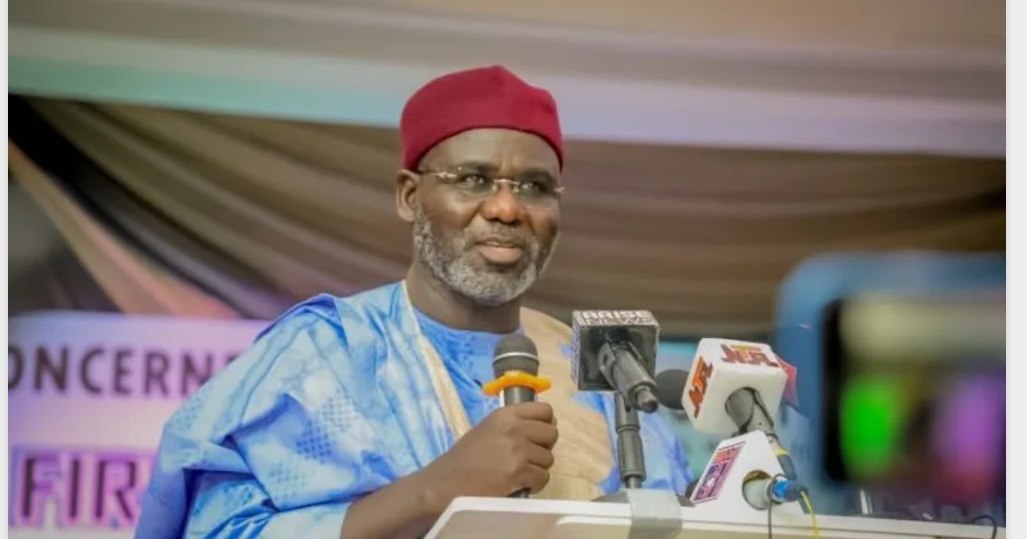
Three Years On, General Buratai Hails Tinubu’s Economic, Security Achievements
Former Chief of Army Staff, Lt. Gen. Tukur Buratai (retd.), has commended President Bola Ahmed Tinubu for what he described as bold economic reforms and improved security efforts as the President marks three years in office.
In a goodwill message on Thursday to commemorate Tinubu’s third anniversary as President and Commander-in-Chief of the Armed Forces, Buratai said the administration had taken courageous decisions that would leave a lasting impact on Nigeria’s development.

According to him, President Tinubu broke a long-standing cycle that had hindered national growth by removing fuel subsidy and implementing foreign exchange reforms aimed at stabilising the naira and strengthening the economy.
He noted that the reforms were beginning to yield positive results, citing the global acceptance of Nigerian debit cards, the gradual revival of local refineries, access to student loans, and ongoing road and infrastructure projects across the country.
“The FCT Administration has also recorded remarkable progress, completing major road projects that remained unfinished for over 16 years,” Buratai stated.
The former army chief also praised the administration’s security efforts, saying renewed military offensives against insurgents, terrorists and bandits had led to notable successes across various parts of the country.
He specifically lauded recent joint operations involving Nigerian and United States forces against Boko Haram and ISWAP in the North-East, as well as intensified counter-banditry operations in the North-West.
“We have seen notorious ISWAP commanders being neutralised. I congratulate the Commander-in-Chief, the Minister of Defence, the Chief of Defence Staff, the Service Chiefs, the Inspector-General of Police and heads of intelligence agencies for their efforts,” he said.
Buratai, however, acknowledged that challenges remained, stressing the need for more aggressive military operations and intelligence-driven strategies in the coming year.
While urging Nigerians to remain hopeful, he said celebrating the President’s achievements did not amount to ignoring the difficulties facing the nation.
“Because you truly care, you have shown the courage to trade short-term comfort for long-term hope. Nigerians need your reassurances, and that is why we remain optimistic and full of confidence,” he added.
The retired military officer reaffirmed his support for the Tinubu administration and expressed confidence that the foundation being laid by the government would deliver a brighter future for the country.
He also prayed for God’s guidance, wisdom, strength and good health for the President as he continues to lead Nigeria.
NUT Raises Alarm Over Continued Captivity of Abducted Oyo Pupils, Teachers
The Nigeria Union of Teachers has expressed deep concern over the continued captivity of pupils and teachers abducted during an attack on schools in the Ahoro-Esinle and Yawota communities in Oriire Local Government Area of Oyo State.
In a statement issued on Saturday, the Oyo State wing of the union described the situation as increasingly distressing, particularly following the emergence of a video allegedly released by the abductors showing the victims pleading for their freedom.
The union said the footage had heightened fears over the welfare of the abducted pupils and teachers, describing their ordeal as heartbreaking and unacceptable.

According to the NUT, no child or teacher deserves to be subjected to such traumatic experiences, adding that the prolonged captivity of the victims has continued to inflict psychological pain on their families, colleagues and the wider education community.
The union called on the Federal Government, Oyo State Government and relevant security agencies to intensify efforts towards securing the immediate and safe release of the victims.
“This is not a moment for hesitation. It is a moment for coordinated, intelligence-driven efforts to ensure the immediate and safe release of all abducted pupils and teachers,” the statement read.
While acknowledging ongoing interventions by security agencies and government authorities, the union stressed that time was of the essence, warning that every additional day in captivity deepens the trauma suffered by the victims.
The NUT urged security operatives to strengthen surveillance, improve community intelligence gathering and deploy all necessary operational and diplomatic measures to facilitate the rescue of the abductees.
It also appealed to traditional rulers, community leaders and residents to support rescue efforts by providing credible information that could assist security agencies.
“The safety of our children and teachers must remain a collective priority,” the union stated.
Reaffirming its support for the families of the victims, the NUT pledged continued solidarity and prayers while advocating safer learning environments across the country.
The statement was jointly signed by the Chairman of the Oyo State NUT, Comrade Hassan Ajibola Fatai, and the Secretary, Comrade Salami Olukayode.


- Pitcher Awards Announces 2026 Winners, Marking a Landmark Year for Pan‑African Creativity May 30, 2026
- Ghana Commemorates 78th International Day of United Nations Peacekeepers May 30, 2026
- South Africa: President Ramaphosa receives second interim report of Madlanga Commission May 30, 2026
- Asmara Marathon 2026 to be held May 30, 2026
- Powerful call for dialogue and compromise to secure peace in South Sudan issued on International Peacekeepers Day May 30, 2026
- Over 1,000 Participants Join Rwenzori Marathon Activation Run in Mombasa May 30, 2026
- World Health Organization (WHO) actively participated in the 2nd Summit on Healthcare Integration in Portuguese-speaking countries May 30, 2026
- Annual Meetings (AM) 2026: “Africa has what It takes” - Experts call for stronger financial systems to help Africa mobilise capital at scale May 30, 2026
- Eritrea Participates at Organization of African, Caribbean and Pacific States Meetings May 30, 2026
- Annual Meetings 2026 (AM2026): African Development Bank Group’s 2025 Annual Report Highlights Strong Results and a New Chapter for Africa’s Transformation May 29, 2026
- Pitcher Awards Announces 2026 Winners, Marking a Landmark Year for Pan‑African Creativity May 30, 2026
- Ghana Commemorates 78th International Day of United Nations Peacekeepers May 30, 2026
- South Africa: President Ramaphosa receives second interim report of Madlanga Commission May 30, 2026
- Asmara Marathon 2026 to be held May 30, 2026
- Powerful call for dialogue and compromise to secure peace in South Sudan issued on International Peacekeepers Day May 30, 2026
- Over 1,000 Participants Join Rwenzori Marathon Activation Run in Mombasa May 30, 2026
- World Health Organization (WHO) actively participated in the 2nd Summit on Healthcare Integration in Portuguese-speaking countries May 30, 2026
-

 news6 months ago
WHO REALLY OWNS MONIEPOINT? The $290 Million Deal That Sold Nigeria’s Top Fintech to Foreign Interests
-

 society4 weeks ago
SOCIAL MEDIA IS NOT A BATTLEFIELD COMMAND – WHY THE NIGERIAN ARMY’S ACTION AGAINST JUSTICE CRACK IS A NATIONAL SECURITY IMPERATIVE
-

 celebrity radar - gossips4 months ago
Dr. Chris Okafor Returns with Power and Fire of the Spirit -Mounts Grace Nation Altar with Fresh Anointing and Restoration Grace on February 1, 2026
-

 celebrity radar - gossips6 months ago
Prophet Kingsley Aitafo Releases 2026 Prophecy: ‘Nigeria Will Rise, but the World Must Prepare for Turbulence’