
society
Top 10 Reasons to Invest in Nigerian Urban Properties by Dennis Isong


Top 10 Reasons to Invest in Nigerian Urban Properties by Dennis Isong
Sahara Weekly Reports That A number of reasons have contributed to a significant increase in urban property investment in Nigeria in recent years. Urban property investing is a desirable potential for both local and foreign investors due to a mix of a rapidly growing population, continual economic developments, and altering demographics. This article delves into ten persuasive justifications that highlight the possible wisdom of deciding to invest in Nigerian urban real estate.

Several important variables are responsible for Nigeria’s increased interest in urban real estate. First off, there is a growing demand for residential and commercial space due to the country’s rapidly increasing population, especially in urban regions. Infrastructure improvements, more job possibilities, and a growing middle class are just a few of the current economic factors that are fueling this demand.
Furthermore, changing demographics play a pivotal role. As more young professionals and families seek modern and convenient living spaces, the demand for well-located urban properties continues to rise. The shift towards urbanization is reshaping lifestyles and preferences, making investments in well-designed and strategically located properties a lucrative option.
Nigeria’s favorable investment climate, which includes various incentives and reforms aimed at attracting foreign investors, has also contributed to the increasing interest in urban property ventures.
The government’s efforts to improve the ease of doing business and provide legal protections for investors enhance the overall appeal of investing in urban properties.
A major attraction is also the potential for capital growth and rental revenue. Due to the great demand for urban properties, they frequently produce consistent rental returns, making them a dependable source of passive income.
Additionally, property values are projected to increase over time as metropolitan areas continue to expand and gentrify, providing investors with the possibility of long-term financial advantages.
Rapid Urbanization:
Nigeria is currently undergoing a pronounced phase of urbanization, marked by a significant surge in population migration towards urban centers. This transformative trend is instigating a noteworthy surge in the need for urban real estate, encompassing a diverse array of properties ranging from residential apartments to dynamic commercial spaces, as well as innovative mixed-use developments that cater to the multifaceted demands of modern urban living.
Growing Middle Class:
The growing middle class is driving a higher need for contemporary and convenient living spaces, leading to a notable uptick in the urban real estate market for properties. This trend is being fueled by the desire for improved lifestyles and urbanization, as more individuals seek modern housing options in bustling city environments. As a result, the demand for well-designed, accessible, and technologically advanced urban properties is on the rise, propelling the real estate market to new heights.
Economic Growth:
Nigeria’s bustling urban centers serve as vibrant epicenters of economic vitality, drawing in a myriad of enterprises, innovative entrepreneurs, and ambitious job seekers. Exploring the prospect of property investments within these flourishing locales not only promises the allure of substantial rental returns but also opens the door to significant appreciation in capital value over time.
Infrastructure Development:
Both government initiatives and private sector investments in infrastructure are playing a pivotal role in enhancing the connectivity and accessibility of urban areas. Improved transportation links in these regions often lead to a surge in property demand and an increase in property value.
The collaboration between government efforts and private sector investments has become instrumental in shaping the connectivity and accessibility of urban landscapes. These initiatives encompass a wide range of infrastructure developments, including the expansion of road networks, the establishment of efficient public transportation systems, and the integration of advanced technologies that facilitate smoother mobility within cities.
As a direct consequence of these advancements, areas that benefit from enhanced transportation links tend to witness a substantial transformation in their property dynamics. The demand for properties in these well-connected neighborhoods experiences a noticeable upswing, driven by the convenience and ease of movement that improved infrastructure offers to residents.
Moreover, the value of properties in such areas also sees a significant appreciation, as the enhanced accessibility and connectivity contribute to the overall desirability of the location.
This phenomenon can be attributed to several factors. First, the accessibility provided by well-connected transportation systems attracts both individuals and businesses looking for convenient commuting options.
As a result, the demand for properties in these regions increases, exerting upward pressure on property prices. Second, improved urban connectivity often leads to an influx of economic activities, which can stimulate local economies and create a virtuous cycle of growth.
This economic vibrancy further enhances the appeal of the area, translating into heightened property values.
Diversification:
Real estate investment provides diversification in an investment portfolio. Urban properties offer an alternative asset class that can act as a hedge against inflation and market volatility.
Foreign Direct Investment (FDI):
Nigeria’s urban property market is attracting foreign investors looking to capitalize on the country’s emerging opportunities. FDI inflows can contribute to overall market growth.
Tourism and Hospitality Boom:
Nigeria’s growing tourism and hospitality sector is driving demand for short-term rental properties, particularly in popular urban destinations. Investors can benefit from consistent rental income.
Government Incentives:
Government policies aimed at promoting real estate investment, such as tax incentives and ease of doing business reforms, are creating a favorable environment for urban property investors.
Cultural and Commercial Centers:
Lagos, Abuja, and Port Harcourt stand as vibrant cultural and economic epicenters, drawing in inhabitants, enterprises, and visitors. Placing investments in real estate within these thriving urban cores can lead to significant financial gains due to their dynamic nature and constant appeal to a wide range of stakeholders.
Long-Term Appreciation:
Over time, real estate has demonstrated its ability to appreciate significantly. As urban centers grow and flourish, there is a strong likelihood that property values will continue to increase due to ongoing development and prosperity. This potential for long-term appreciation makes real estate an attractive investment option.
Dennis Isong is a TOP REALTOR IN LAGOS.He Helps Nigerians in Diaspora to Own Property In Lagos Nigeria STRESS-FREE. For Questions WhatsApp/Call 2348164741041





UKA Gears Up for Final ATC Exchangeability Test Run as June Preparations Begin.
May 30, 2026 – As the month of June gathers momentum, the *United Kingdom of Atlantis, UKA*, a sovereign nation has unveiled a series of vital guidelines and preparatory packages to ensure citizens and stakeholders run the *ATC Exchangeability* process effectively.
In an official update, the *President of Atlantic Crown Limited, Empress of Attica Empire UKA*, confirmed that the *Final Test Run of ATC Exchangeability* is scheduled for the month of June 2026. The exercise marks a key phase ahead of the *Official Exchangeability Window, set to run from July 2026 to February 2027*.
### Key Highlights from the Presidential Briefing
1. *Final Test Run – June 2026*
The test run is designed to validate systems, procedures, and user readiness before full activation. Citizens, partners, and designated participants are urged to follow all official advisories released by UKA authorities during this period.
2. *Official Exchangeability Period*
Following the successful completion of the June test run, the Official Exchangeability will commence in july 2026 and we are Expecting Full Exchange ability between July Ending, 2026 to February 2026.
UKA stated that detailed schedules, eligibility requirements, and step-by-step instructions will be communicated progressively through verified UKA channels.
3. *Benefiting Packages for June*
In line with UKA’s commitment to citizen empowerment, the month of June will feature “benefiting packages” aimed at education, preparation, and seamless onboarding. These packages are intended to equip the people of UKA with the knowledge and tools needed for effective participation.
4. *Commitment to Transparency*
Addressing the nation, the Empress of Attica Empire UKA emphasized:
_“Final Test Run of ATC Comes up in The Month of June, As We Prepare For The Official Exchangeability, Between July 2026 To Feb 2027. All Information Will Be Communicated.”_
UKA reaffirmed that only information released through official UKA platforms should be regarded as authoritative.
The United Kingdom of Atlantis is encouraging all citizens, representatives, and interested parties to remain alert to official communications, attend designated orientation sessions, and avoid unofficial sources. UKA’s dedication to order, clarity, and the collective benefit of its people as the nation moves into this significant phase.
For updates, advisories, and participation guidelines, citizens are advised to monitor official UKA communication channels.
United Kingdom of Atlantis, UKA, is a sovereign nation, committed to national development, citizen welfare, and structured economic participation through initiatives such as ATC Exchangeability.
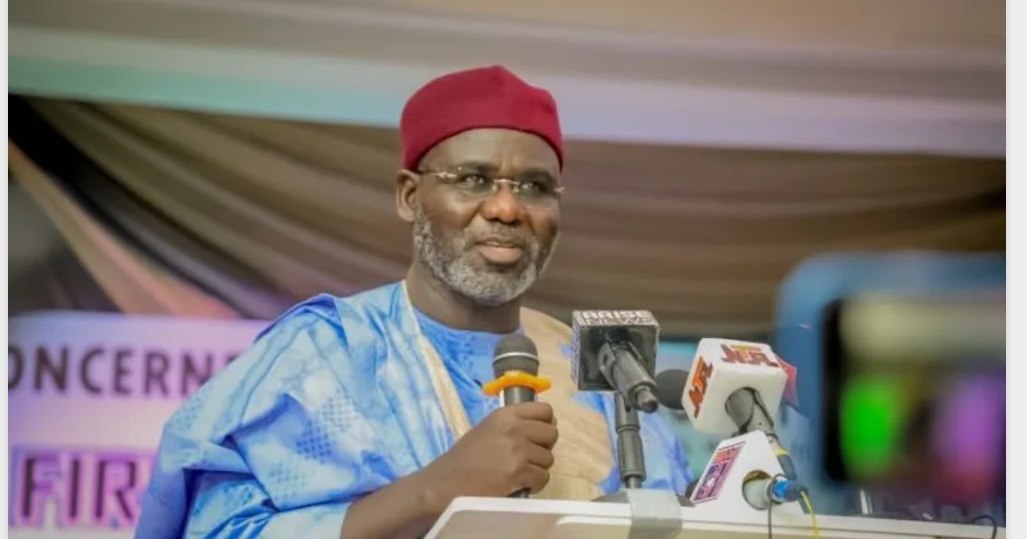
Three Years On, General Buratai Hails Tinubu’s Economic, Security Achievements
Former Chief of Army Staff, Lt. Gen. Tukur Buratai (retd.), has commended President Bola Ahmed Tinubu for what he described as bold economic reforms and improved security efforts as the President marks three years in office.
In a goodwill message on Thursday to commemorate Tinubu’s third anniversary as President and Commander-in-Chief of the Armed Forces, Buratai said the administration had taken courageous decisions that would leave a lasting impact on Nigeria’s development.

According to him, President Tinubu broke a long-standing cycle that had hindered national growth by removing fuel subsidy and implementing foreign exchange reforms aimed at stabilising the naira and strengthening the economy.
He noted that the reforms were beginning to yield positive results, citing the global acceptance of Nigerian debit cards, the gradual revival of local refineries, access to student loans, and ongoing road and infrastructure projects across the country.
“The FCT Administration has also recorded remarkable progress, completing major road projects that remained unfinished for over 16 years,” Buratai stated.
The former army chief also praised the administration’s security efforts, saying renewed military offensives against insurgents, terrorists and bandits had led to notable successes across various parts of the country.
He specifically lauded recent joint operations involving Nigerian and United States forces against Boko Haram and ISWAP in the North-East, as well as intensified counter-banditry operations in the North-West.
“We have seen notorious ISWAP commanders being neutralised. I congratulate the Commander-in-Chief, the Minister of Defence, the Chief of Defence Staff, the Service Chiefs, the Inspector-General of Police and heads of intelligence agencies for their efforts,” he said.
Buratai, however, acknowledged that challenges remained, stressing the need for more aggressive military operations and intelligence-driven strategies in the coming year.
While urging Nigerians to remain hopeful, he said celebrating the President’s achievements did not amount to ignoring the difficulties facing the nation.
“Because you truly care, you have shown the courage to trade short-term comfort for long-term hope. Nigerians need your reassurances, and that is why we remain optimistic and full of confidence,” he added.
The retired military officer reaffirmed his support for the Tinubu administration and expressed confidence that the foundation being laid by the government would deliver a brighter future for the country.
He also prayed for God’s guidance, wisdom, strength and good health for the President as he continues to lead Nigeria.

NUT Raises Alarm Over Continued Captivity of Abducted Oyo Pupils, Teachers
The Nigeria Union of Teachers has expressed deep concern over the continued captivity of pupils and teachers abducted during an attack on schools in the Ahoro-Esinle and Yawota communities in Oriire Local Government Area of Oyo State.
In a statement issued on Saturday, the Oyo State wing of the union described the situation as increasingly distressing, particularly following the emergence of a video allegedly released by the abductors showing the victims pleading for their freedom.
The union said the footage had heightened fears over the welfare of the abducted pupils and teachers, describing their ordeal as heartbreaking and unacceptable.

According to the NUT, no child or teacher deserves to be subjected to such traumatic experiences, adding that the prolonged captivity of the victims has continued to inflict psychological pain on their families, colleagues and the wider education community.
The union called on the Federal Government, Oyo State Government and relevant security agencies to intensify efforts towards securing the immediate and safe release of the victims.
“This is not a moment for hesitation. It is a moment for coordinated, intelligence-driven efforts to ensure the immediate and safe release of all abducted pupils and teachers,” the statement read.
While acknowledging ongoing interventions by security agencies and government authorities, the union stressed that time was of the essence, warning that every additional day in captivity deepens the trauma suffered by the victims.
The NUT urged security operatives to strengthen surveillance, improve community intelligence gathering and deploy all necessary operational and diplomatic measures to facilitate the rescue of the abductees.
It also appealed to traditional rulers, community leaders and residents to support rescue efforts by providing credible information that could assist security agencies.
“The safety of our children and teachers must remain a collective priority,” the union stated.
Reaffirming its support for the families of the victims, the NUT pledged continued solidarity and prayers while advocating safer learning environments across the country.
The statement was jointly signed by the Chairman of the Oyo State NUT, Comrade Hassan Ajibola Fatai, and the Secretary, Comrade Salami Olukayode.


- Pitcher Awards Announces 2026 Winners, Marking a Landmark Year for Pan‑African Creativity May 30, 2026
- Ghana Commemorates 78th International Day of United Nations Peacekeepers May 30, 2026
- South Africa: President Ramaphosa receives second interim report of Madlanga Commission May 30, 2026
- Asmara Marathon 2026 to be held May 30, 2026
- Powerful call for dialogue and compromise to secure peace in South Sudan issued on International Peacekeepers Day May 30, 2026
- Over 1,000 Participants Join Rwenzori Marathon Activation Run in Mombasa May 30, 2026
- World Health Organization (WHO) actively participated in the 2nd Summit on Healthcare Integration in Portuguese-speaking countries May 30, 2026
- Annual Meetings (AM) 2026: “Africa has what It takes” - Experts call for stronger financial systems to help Africa mobilise capital at scale May 30, 2026
- Eritrea Participates at Organization of African, Caribbean and Pacific States Meetings May 30, 2026
- Annual Meetings 2026 (AM2026): African Development Bank Group’s 2025 Annual Report Highlights Strong Results and a New Chapter for Africa’s Transformation May 29, 2026
- Pitcher Awards Announces 2026 Winners, Marking a Landmark Year for Pan‑African Creativity May 30, 2026
- Ghana Commemorates 78th International Day of United Nations Peacekeepers May 30, 2026
- South Africa: President Ramaphosa receives second interim report of Madlanga Commission May 30, 2026
- Asmara Marathon 2026 to be held May 30, 2026
- Powerful call for dialogue and compromise to secure peace in South Sudan issued on International Peacekeepers Day May 30, 2026
- Over 1,000 Participants Join Rwenzori Marathon Activation Run in Mombasa May 30, 2026
- World Health Organization (WHO) actively participated in the 2nd Summit on Healthcare Integration in Portuguese-speaking countries May 30, 2026
-

 news6 months ago
WHO REALLY OWNS MONIEPOINT? The $290 Million Deal That Sold Nigeria’s Top Fintech to Foreign Interests
-

 society4 weeks ago
SOCIAL MEDIA IS NOT A BATTLEFIELD COMMAND – WHY THE NIGERIAN ARMY’S ACTION AGAINST JUSTICE CRACK IS A NATIONAL SECURITY IMPERATIVE
-

 celebrity radar - gossips4 months ago
Dr. Chris Okafor Returns with Power and Fire of the Spirit -Mounts Grace Nation Altar with Fresh Anointing and Restoration Grace on February 1, 2026
-

 celebrity radar - gossips6 months ago
Prophet Kingsley Aitafo Releases 2026 Prophecy: ‘Nigeria Will Rise, but the World Must Prepare for Turbulence’