
Business
NNPCL Remits N123bn Into Federation Account After Exiting Fuel Subsidy Shackles

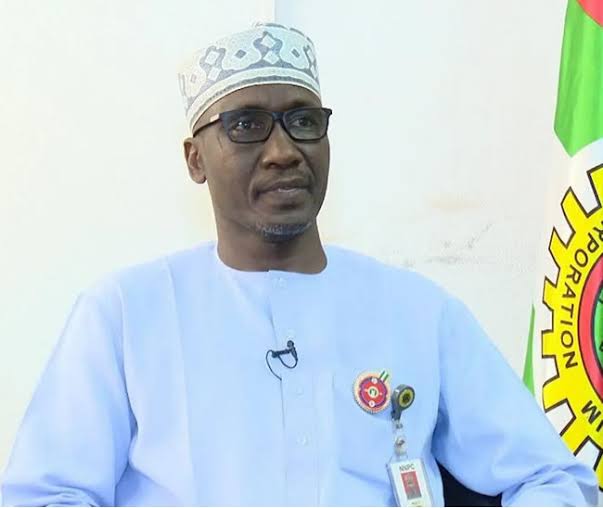
In line with the provisions of the Petroleum Industry Act 2021, the Nigerian National Petroleum Company Limited has commenced the payment of dividend into the federation account.
The NNPC Limited on Thursday begun the payment of interim dividend and PSC profit oil as part of the N907bn shared by the Federation Account Allocation Committee to the three tiers of government.
The remittance is coming barely two months after the NNPC exited the fuel subsidy shackle following the removal by President Bola Tinubu.
During the FAAC distribution,which was chaired by the Accountant General of the Federation, Dr. Oluwatoyin Madein, the NNPCL remitted N123bn into the coffers of government.
A breakdown of the N123bn showed that the National Oil Company paid N81bn as a monthly interim dividend and N42bn as 40 per cent PSC profit oil.
This is in addition to compliance on payment of royalties and taxes.
The payment of dividend by the NNPC Limited clearly shows that the company under the leadership of the Group Chief Executive Officer, Mallam Mele Kyari is moving in a positive trajectory as enshrined in the PIA.
Since he assumed office, Kyari has pursued his Transparency, Accountability and Performance Excellence (TAPE) agenda, a five-step strategic roadmap for NNPC’s attainment of efficiency and global excellence.
Kyari, during the inauguration, had said pursuing TAPE was the only way to turn around the corporation and make it competitive.
Under the roadmap, the Transparency component of the agenda was aimed at maintaining positive image, share values of integrity and transparency to all stakeholders, while the Accountability segment of the campaign is to assure compliance with business ethics, policies, regulations and accountability to all stakeholders.
In terms of the two-prong item of Performance Excellence, Kyari had said the idea was to entrench a high level of efficiency anchored on efficient implementation of business processes which would also emplace an appropriate reward system for exceptional performance among the workforce.
During the FAAC meeting held in Abuja on Thursday, N907.054bn total distributable revenue was shared to the three tiers of government
This comprised distributable statutory revenue of N301.501bn, distributable Value Added Tax (VAT) revenue of N273.225bn, Electronic Money Transfer Levy (EMTL) revenue of N11.436bn and Exchange Difference revenue of N320.892bn.
In June 2023, the total deductions for cost of collection was N73.235bn and total deductions for savings, transfers and refunds was N979.078bn.
The balance in the Excess Crude Account (ECA) was $473,754.57
The communiqué stated that from the total distributable revenue of N907.054bn; the Federal Government received N345.564bn, the State Governments received N295.948bn and the Local Government Councils received N218.064bn. A total sum of N47.478bn was shared to the relevant States as 13% derivation revenue.
It stated that gross statutory revenue of N1.152trn was received for the month of June 2023. This was higher than the sum of N701.787bn received in the previous month by N451.134bn.
From the N301.501bn distributable statutory revenue, the Federal Government received N146.710bn, the State Governments received N74.413bn and the Local Government Councils received N57.370bn. The sum of N23.008bn was shared to the relevant States as 13 per cent derivation revenue.
For the month of June 2023, the gross revenue available from the Value Added Tax (VAT) was N293.411bn. This was higher than the N270.197bn available in the month of May 2023 by N23.214 billion.
The Federal Government received N40.984bn, the State Governments received N136.613bn and the Local Government Councils received N95.629bn from the N273.225bn distributable Value Added Tax (VAT) revenue.
The N11.436bn Electronic Money Transfer Levy (EMTL) was shared as follows: the Federal Government received N1.715bn, the State Governments received N5.718bn and the Local Government Councils received N4.003bn.
From the N320.892 billion Exchange Difference revenue, the Federal Government received N156.155bn, the State Governments received N79.204bn, the Local Government Councils received N61.063bn and the sum of N24.470bn was shared to the relevant States as 13 percent mineral revenue.
According to the communiqué, in the month of June 2023, Companies Income Tax (CIT) recorded tremendous increase.


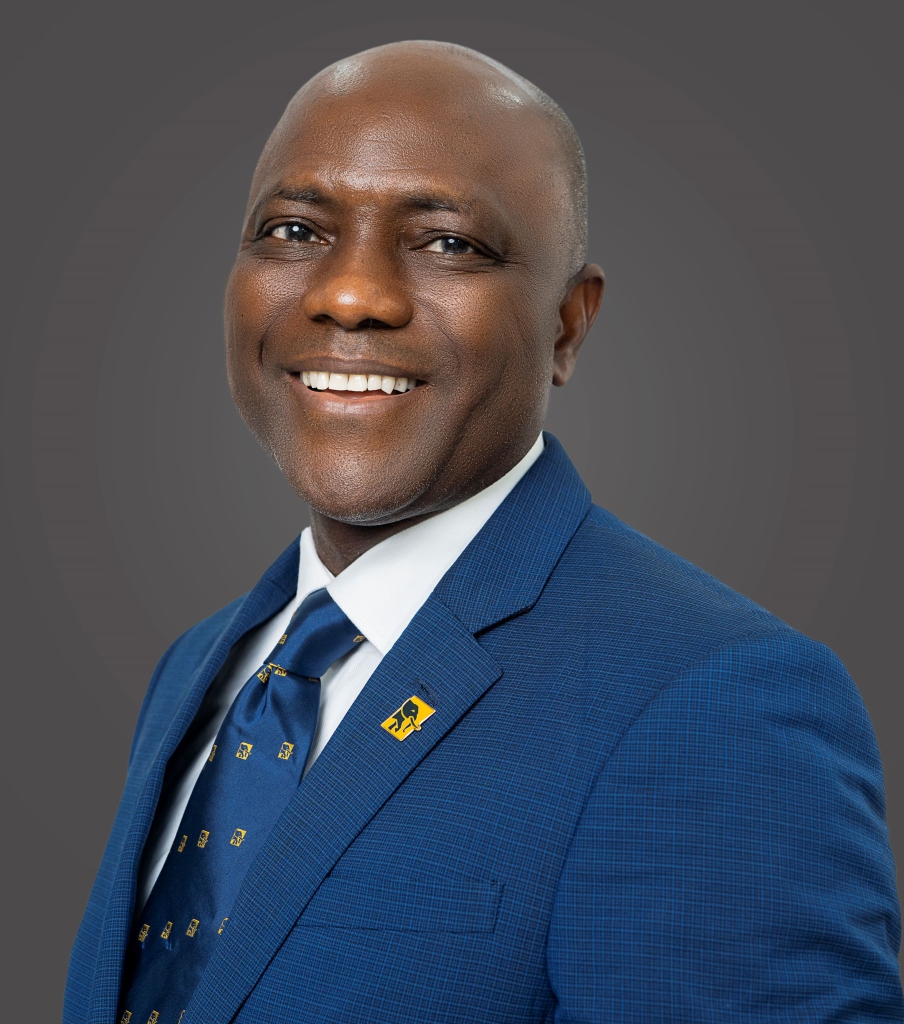
FirstBank Partners Eko Hotels & KEY Academy for ChessMasters 2026 Tournament
Lagos, 30 March 2025 – FirstBank, West Africa’s premier financial institution and the leading financial inclusion service provider, has announced its strategic sponsorship of the second edition of ChessMasters, Africa’s largest school chess tournament. The announcement was made at the official press conference of the tournament held on 16 March 2026 at Eko Hotels and Suites, Lagos.
ChessMasters is an annual chess tournament designed to equip the next generation with critical thinking, problem-solving, and leadership skills. The competition targets children in primary school aged between 6 and 11 years old. Organised by Eko Hotels and Suites & KEY Academy , ChessMasters was created to provide thousands of children across Nigeria with opportunities to develop modern educational skills, bringing schools together on a national stage.
Speaking at the press conference, Olayinka Ijabiyi, Acting Group Head, Marketing & Corporate Communications at FirstBank, said, “Our sponsorship of ChessMasters 2026 reflects our commitment to building talents and communities, driving inclusion, and deepening engagement through our First@Sports initiative, a platform that celebrates talent and promotes social impact through sports. With over a century of supporting legacy sports in Nigeria, we are proud of our enduring partnerships – 105 years with the Georgian Cup, 65 years with the Lagos Amateur Golf Championship and 35 years with the Dala Hard Court Tennis Championship.”
Ijabiyi further highlighted how the sponsorship aligns with FirstBank’s sustainability pillars of Education, Health, and Welfare. “We recognise the potential of chess to help school-age children challenge themselves, think critically, and compete at the highest level, hence we see the tournament as a launchpad for a pan-African movement leveraging chess as a tool for education, empowerment, and leadership development. We are utilising this platform as another avenue to promote social impact and drive positive change in the community.”
Caline Chagoury Moudabar, Director and Co- Founder of ChessMasters and her partner Damilola Okonkwo of Key Academy, expressed appreciation for FirstBank’s support, noting that the partnership will help scale the impact of ChessMasters and inspire more schools to participate. “We are happy to welcome FirstBank on board. This collaboration will boost chess development in Nigeria and promote critical thinking among young minds. With support from partners like FirstBank, we are opening the doors of participation to more children and more schools in this year’s edition.”
Prince Adeyinka Adewole, Vice President of the Nigeria Chess Federation, commended the initiative, emphasising its role in nurturing future chess talents. “Chess connects people, ideas, and opportunities. It teaches children to be analytical, patient, and manage their time and resources effectively. Chess also improves concentration and has been particularly beneficial for children with autism.”
The second edition of ChessMasters will be held on Saturday, 2 May 2026 at Eko Hotels and Suites, Lagos. The competition is open to 150 schools across Lagos, with over 700 students expected to participate and vie for a total prize pool of N10 million.
FirstBank’s involvement in the 2026 edition of the tournament reinforces the potential of ChessMasters to become a launchpad for African children, leveraging chess as a tool for education, empowerment, and leadership development.
Business
Alpha Morgan Bank Reinforces Commitment to Education at Redeemer’s University Business School Commissioning
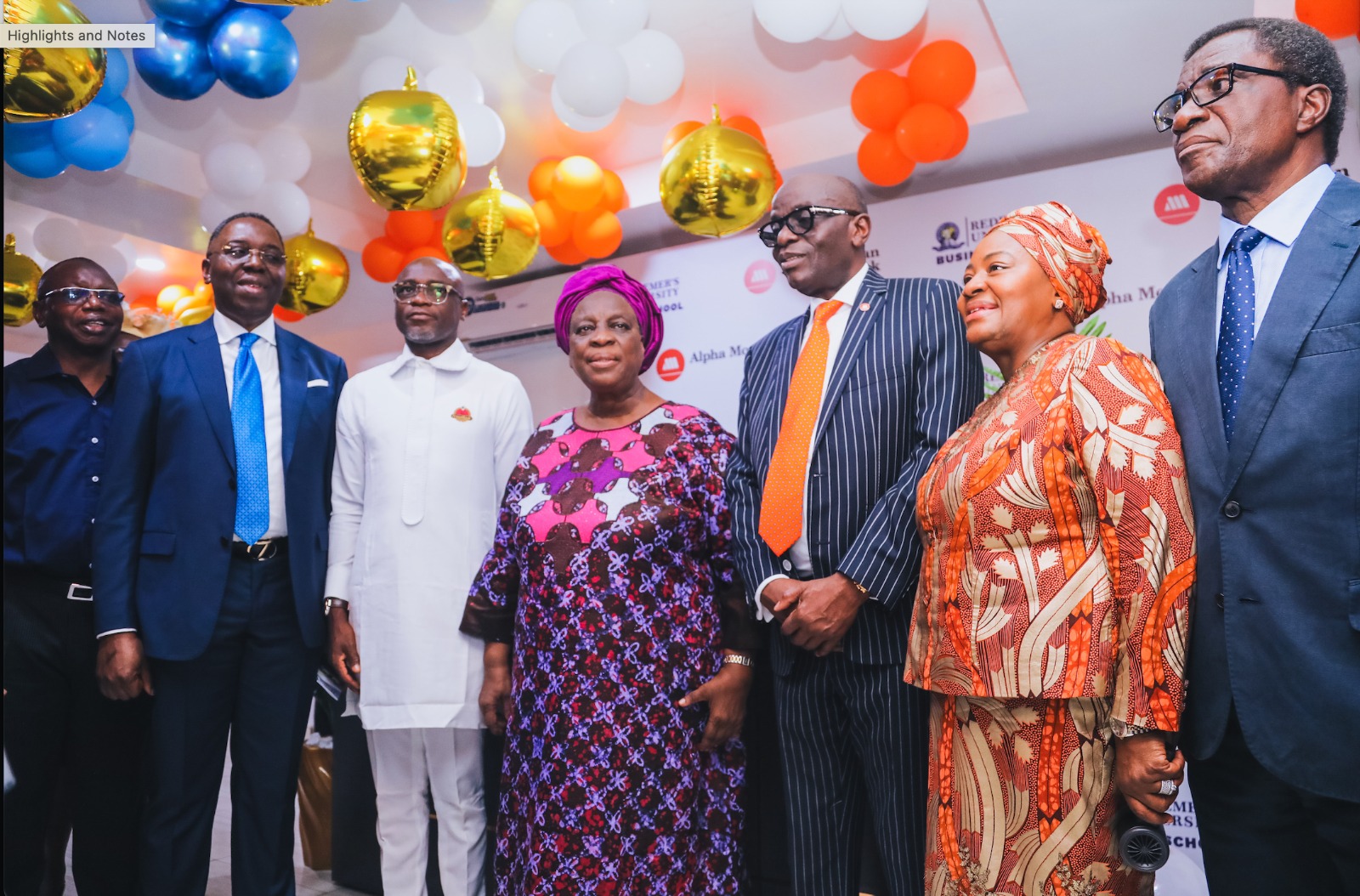
Alpha Morgan Bank Reinforces Commitment to Education at Redeemer’s University Business School Commissioning
Alpha Morgan Bank has reaffirmed its commitment to education and institutional development through its support for the commissioning of the Redeemer’s University Business School.
The Business School was officially inaugurated by Pastor (Mrs.) Folu Adeboye, at the commissioning ceremony attended by distinguished guests including Her Excellency, Mrs. Bola Obasanjo; the Pro-Chancellor and Chairman, Governing Council of Redeemers University, Professor Oluwatoyin Ogundipe; the Vice Chancellor, Professor Shadrach Olufemi Akindele; and other notable dignitaries.
Speaking at the event, the Managing Director of Alpha Morgan Bank reiterated the Bank’s commitment to supporting institutions that drive intellectual growth and national development.
As part of its broader focus on knowledge sharing and thought leadership, Alpha Morgan Bank will host its Economic Review Webinar in May 2026, bringing together experts to share insights on key economic trends and opportunities.
The Bank’s involvement reflects its continued dedication to empowering institutions and shaping the future of business and leadership in Nigeria.
Read more about Alpha Morgan Bank on www.alphamorganbank.com
PHOTO
L-R: Prof. Shadrach Olufemi Akindele, Vice Chancellor, Redeemers University, Engr. Eloka Eje, Dr Perez Araka, Pastor (Mrs) Folu Adeboye, Mother-In-Israel, The Redeemed Christian Church of God, Mr Ade Buraimo, MD/CEO Alpha Morgan Bank, Dr (Mrs) Oluwatomi Somefun, Dr. Simeon Ifere, at the inauguration of the Redeemer’s University Business School, Redemption City, Ogun State on Thursday 2nd April, 2026

Tinubu Aide Rebuts Rufai Oseni Over ₦3.3tn Power Debt Deal


- National Council for Curriculum Development (NCDC) seeks Shs17 Billion for curriculum review, teacher training April 9, 2026
- Senegal: A Decade of Unresolved Climate Displacement April 9, 2026
- Uganda engages its diaspora in Japan on national policy framework for inclusive development April 9, 2026
- Afreximbank supports Dangote Group as it targets US$100 billion annual revenue by 2030 April 8, 2026
- Africa's top-ranked Global Reporting Initiative (GRI) Training Partner launches 15th cohort of globally recognized sustainability reporting certification April 8, 2026
- African Energy Chamber (AEC) Intervenes in Landmark Climate Case to Defend Africa’s Energy Future April 8, 2026
- Eswatini opens to investors for first-of-its-kind roadshow April 8, 2026
- Egypt: President El-Sisi Meets Ministers of Electricity, Petroleum April 8, 2026
- Seychelles and Japan explore expanded cooperation and future partnerships April 8, 2026
- President Mahama to headline The Africa Debate 2026 as Ghana-United Kingdom (UK) investment ties deepen April 8, 2026
- National Council for Curriculum Development (NCDC) seeks Shs17 Billion for curriculum review, teacher training April 9, 2026
- Senegal: A Decade of Unresolved Climate Displacement April 9, 2026
- Uganda engages its diaspora in Japan on national policy framework for inclusive development April 9, 2026
- Afreximbank supports Dangote Group as it targets US$100 billion annual revenue by 2030 April 8, 2026
- Africa's top-ranked Global Reporting Initiative (GRI) Training Partner launches 15th cohort of globally recognized sustainability reporting certification April 8, 2026
- African Energy Chamber (AEC) Intervenes in Landmark Climate Case to Defend Africa’s Energy Future April 8, 2026
- Eswatini opens to investors for first-of-its-kind roadshow April 8, 2026
-

 news4 months ago
WHO REALLY OWNS MONIEPOINT? The $290 Million Deal That Sold Nigeria’s Top Fintech to Foreign Interests
-

 society7 months ago
“You Are Never Without Help” – Pastor Gebhardt Berndt Inspires Hope Through Empower Church (Video)
-

 celebrity radar - gossips2 months ago
Dr. Chris Okafor Returns with Power and Fire of the Spirit -Mounts Grace Nation Altar with Fresh Anointing and Restoration Grace on February 1, 2026
-

 celebrity radar - gossips4 months ago
Prophet Kingsley Aitafo Releases 2026 Prophecy: ‘Nigeria Will Rise, but the World Must Prepare for Turbulence’